
Why RV Insurance Is Essential for Your Journey
Affordable RV insurance is essential for protecting your recreational vehicle investment while keeping costs manageable. Whether you own a compact pop-up camper or a luxury Class A coach, the right policy is what stands between a minor mishap and a budget-breaking expense.
Quick Answer: Getting Affordable RV Insurance
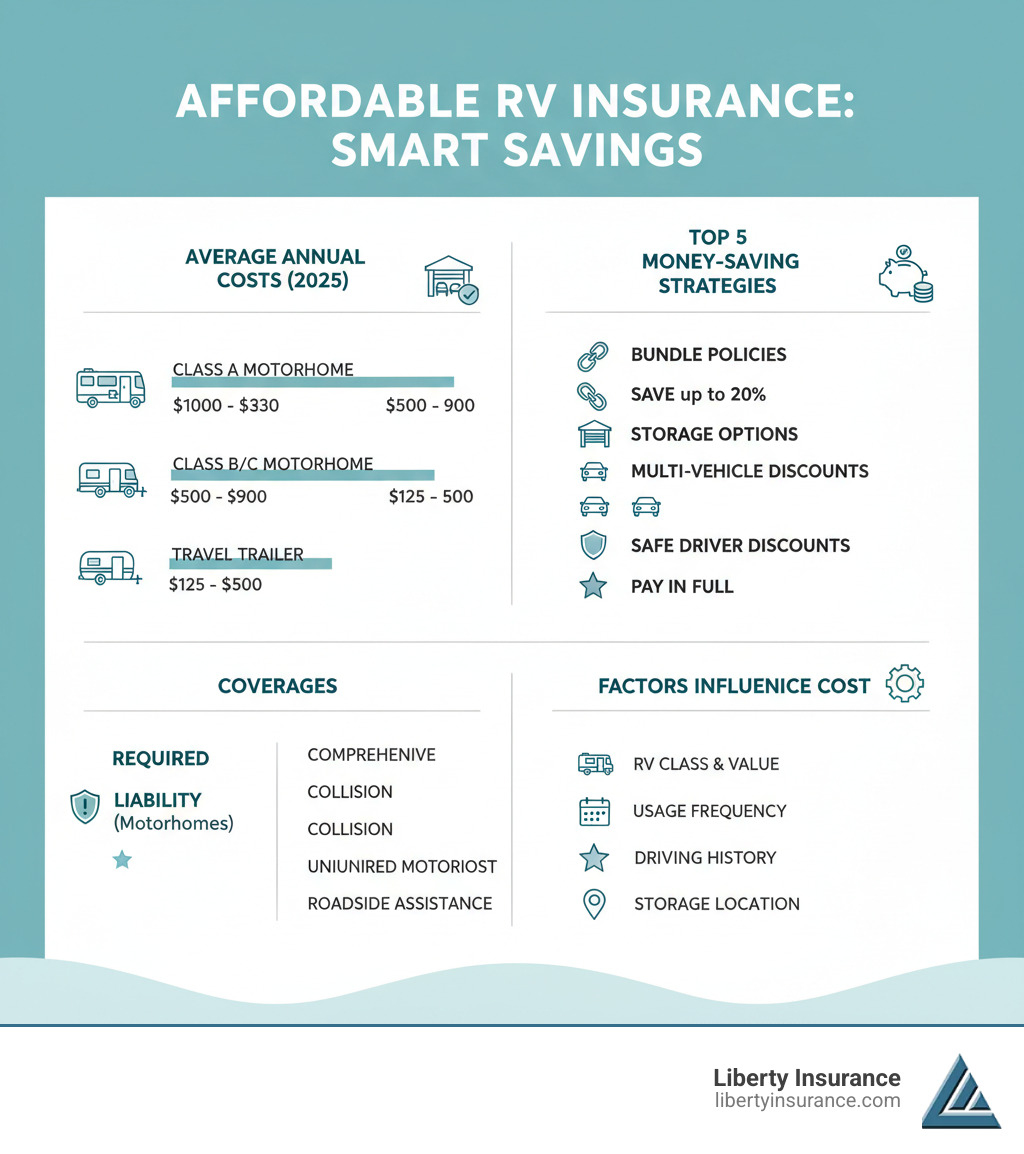
- Average Cost: $125–$1,300 per year depending on RV type and coverage
- Best Savings Strategies: Bundle policies (save up to 20%), use storage options (save up to 53%), maintain a clean driving record
- Required Coverage: Liability insurance (mandatory for motorhomes), plus optional comprehensive and collision
- Key Factors: RV class, usage frequency, driving history, and storage location all impact your premium
The appeal of RV travel is undeniable—freedom, flexibility, and the ability to bring the comforts of home wherever you roam. But with that freedom comes the responsibility to protect a significant asset and the people riding in it.
Unlike standard auto or home insurance, RV insurance is a specialized hybrid policy designed for the unique risks recreational vehicles face. Statistics highlight these risks: the National Highway Traffic Safety Administration reports rising accident trends over the past decade, while fire incidents, theft, weather events, and liability exposures at campsites add layers of risk that a typical policy isn’t built to handle.
The good news is that finding affordable, comprehensive coverage is entirely possible. With the right strategies, you can secure quality insurance without breaking the bank. Affordable doesn’t mean bare-bones; it means smart, targeted coverage that matches how, where, and how often you use your RV.
I’m Andrew Harris, a Certified Insurance Counselor. Through my work with Liberty Insurance, I’ve helped countless RV owners find affordable RV insurance solutions that balance protection with budget-conscious premiums. Below, you’ll find a complete guide to understanding coverages, controlling costs, comparing quotes, and navigating claims with confidence.
Who Needs RV Insurance?
- Owners of motorhomes (Class A, B, C) are generally required by law to carry liability insurance when driving on public roads.
- Owners of towable RVs (travel trailers, fifth wheels, pop-ups, truck campers) typically aren’t legally required to carry a separate liability policy for the unit itself while towing—your tow vehicle’s liability generally extends while on the road—but comprehensive and collision for the trailer are highly recommended to protect your asset.
- Full-time RVers need expanded protections similar to homeowners insurance due to higher liability and personal property exposures.
Why “Affordable” Doesn’t Mean “Underinsured”
Affordability should be measured by value—how well your coverage limits, deductibles, and options fit your risks and your budget. Cutting essential coverages to trim premium can create costly gaps, especially with large vehicles that carry valuable personal property and can cause significant damage in an accident. The better approach is to:
- Prioritize must-have protections (liability, comprehensive, collision for higher-value units)
- Optimize deductibles and discounts
- Use storage options and seasonal adjustments
- Add only the optional coverages that you truly need
Common Pitfalls to Avoid
- Relying solely on auto or home insurance and leaving gaps (e.g., campsite liability, personal effects, full-time use)
- Understating usage or mileage to reduce premium (this can jeopardize claims)
- Forgetting to list customizations (awnings, solar, satellite) and then lacking coverage for them
- Choosing liability limits that are too low for a large vehicle
Armed with the fundamentals, you can confidently tailor a policy that keeps you protected and your premium predictable.
Understanding the Fundamentals of RV Insurance
Your RV isn’t just a car or a house—it’s a unique combination of both. That’s why affordable RV insurance must be a specialized hybrid policy, blending elements of auto, home, and even travel coverage to address risks on the road, at the campsite, and while in storage.
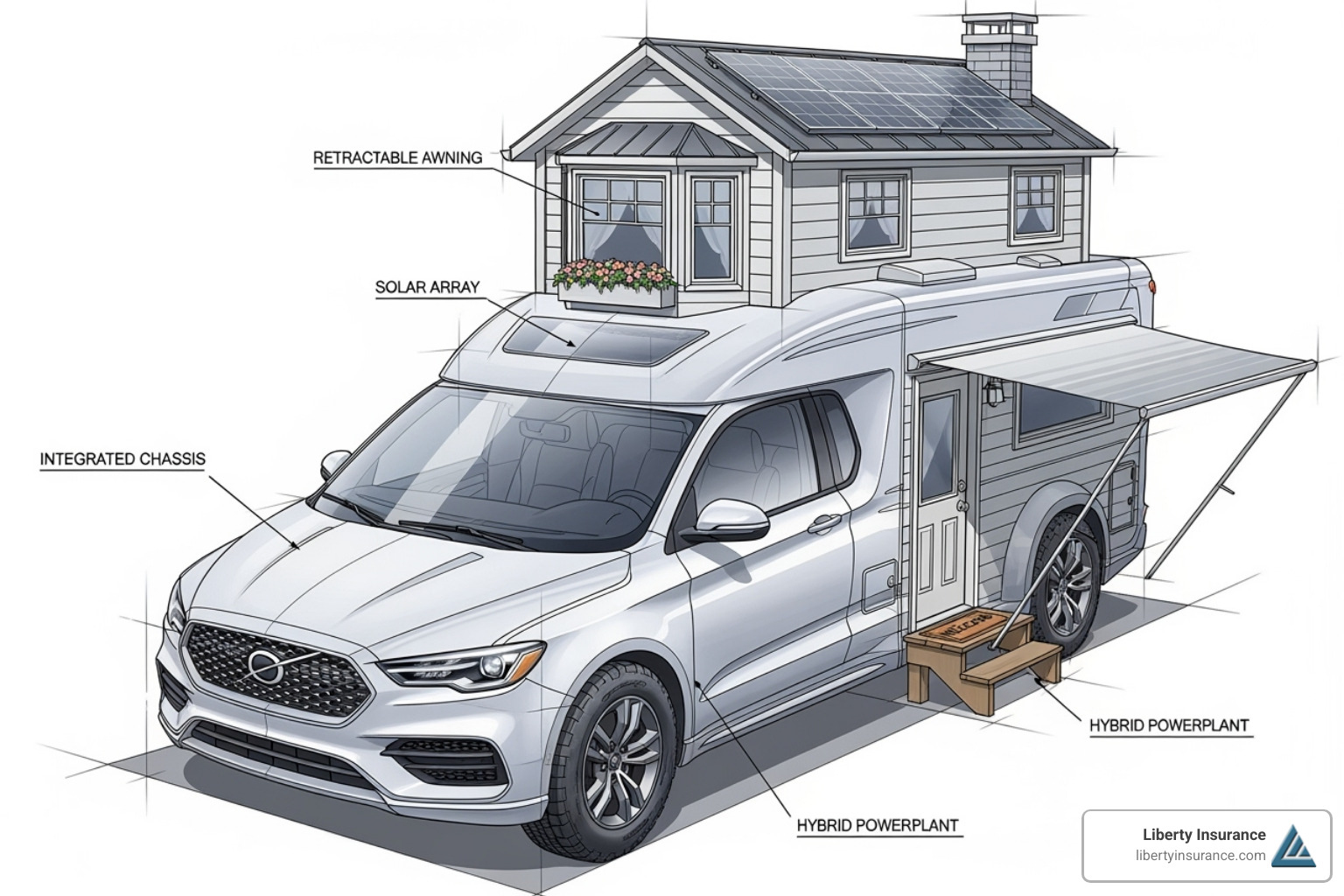
What RV Insurance Is Designed To Do
RV insurance provides a financial safety net when things go wrong, whether your vehicle is damaged, you cause harm to someone else, or your belongings are stolen. For motorhomes, liability coverage is legally required in most states, just like with a standard car. But RVs are larger, heavier, and more valuable, and they double as living spaces—creating unique exposures that standard policies aren’t meant to cover.
Think beyond collisions: campfire sparks, awning damage in a storm, theft of camping gear, a slip-and-fall at your campsite, a burst pipe while winterized, or a rock strike that cracks a massive panoramic windshield. According to the National Highway Traffic Safety Administration, RV accidents have shown concerning trends over recent years, making comprehensive coverage essential.
Why Standard Auto or Home Insurance Isn’t Enough
- Auto: Typically focuses on vehicle liability and physical damage; often too-low liability limits for large RVs; rarely covers personal effects inside; won’t add campsite liability.
- Home: Designed for a stationary residence; usually excludes incidents that happen on the road or at a campsite; often doesn’t fully cover property kept in a vehicle.
- Travel policies: May address trip interruptions but not the high-value property damage and liability exposures of an RV itself.
Types of RVs and Their Insurance Needs
Understanding your RV type is the first step toward right-sized coverage and pricing.
- Class A Motorhomes: Largest and typically most expensive. Prioritize higher liability limits, comprehensive, collision, and roadside assistance.
- Class B Camper Vans: Compact and maneuverable, often with custom interiors. Consider coverage for custom equipment and personal effects.
- Class C Motorhomes: Mid-size with cab-over design. Balanced approach to liability and comp/collision is common.
- Fifth-Wheel Trailers: High-value towables with residential features. Consider comprehensive and collision on the trailer.
- Travel Trailers: Wide range of values; generally more affordable to insure.
- Pop-up Campers: Lightweight; premiums are typically low.
- Truck Campers: Mounted in a pickup bed; coverage for the camper is separate from the truck.
For more detailed guidance on motorized RVs, see our Motorhome RV Insurance resource: https://libertyinsurance.com/motorhome-rv-insurance/
A Deep Dive into RV Insurance Coverages
Building an RV insurance policy involves selecting a foundation of standard protections and adding optional coverages that fit your travel style. This customization is key to creating a policy that is both comprehensive and affordable.
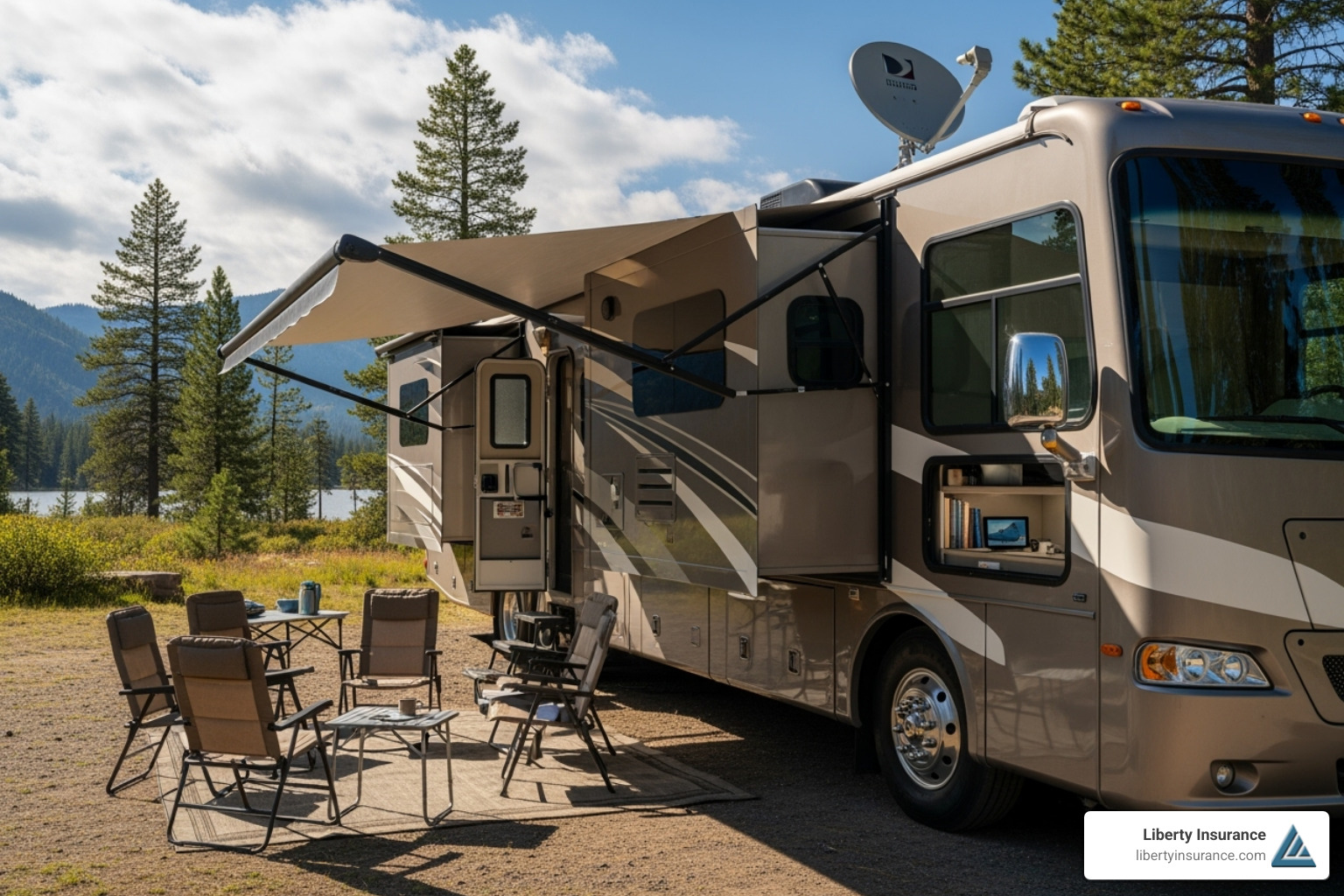
With affordable RV insurance, you can start with the basics and build a policy that protects your investment without paying for features you don’t need.
Standard RV Insurance Coverage
- Liability Coverage: Legally required for motorhomes, this covers bodily injury and property damage you cause to others in an accident.
- Collision Coverage: Pays to repair your RV after an accident, regardless of fault.
- Comprehensive Coverage: Protects your RV from non-collision events like theft, vandalism, fire, hail, and falling objects.
- Uninsured/Underinsured Motorist: Helps with bodily injury and property damage when the at-fault driver lacks sufficient insurance.
- Medical Payments (MedPay): Pays for immediate medical costs for you and your passengers after an accident.
Popular Optional Coverages for Improved Protection
- Personal Effects Replacement: Covers your personal belongings inside the RV if stolen or damaged.
- Vacation Liability: Protects you if someone is injured at your campsite or inside your parked RV.
- Emergency Expense Coverage: Reimburses temporary lodging and meals if your RV becomes uninhabitable.
- Total Loss Replacement: For newer RVs, replaces your totaled vehicle with a brand-new, similar model.
- Roadside Assistance: Specialized towing, tire changes, fuel delivery, and lockout service built for large RVs.
- Custom Equipment: Covers aftermarket upgrades such as solar arrays, awnings, and entertainment systems.
Selecting the Right Limits and Deductibles
- Liability Limits: Large vehicles can cause significant damage; consider higher limits or an umbrella policy.
- Physical Damage Deductibles: Choose deductibles that align with your savings. Increasing from $500 to $1,000 can reduce premiums.
- Personal Property Limits: Inventory your gear and set a limit that reflects replacement cost.
How to Tailor Coverage to Your Travel Style
- Weekend Warriors: Focus on affordable liability, comp/collision, roadside, and modest personal effects limits.
- Seasonal Travelers: Add storage options for the off-season and ensure vacation liability for campground stays.
- Full-Timers: Treat your policy like homeowners insurance—higher personal liability and broader living expense coverage.
The key to affordable RV insurance is selecting the optional coverages that match your specific needs. Explore our guide on RV Insurance Coverage Options: https://libertyinsurance.com/rv-insurance-coverage-options/
What Factors Influence Your RV Insurance Premium?
RV insurance premiums are calculated based on a careful assessment of risk. Insurers analyze dozens of factors related to your RV, your driving habits, and your personal history to determine the likelihood and potential cost of a claim.

Vehicle-Specific Factors
- RV Class and Type: Larger units (Class A, luxury fifth wheels) cost more to insure than smaller trailers.
- Age and Condition: Newer RVs cost more to insure; premiums may decrease with depreciation.
- Original Cost and Current Value: Higher potential payout means higher premium.
- Safety Features: Anti-lock brakes, cameras, and alarms can help reduce risk and qualify for discounts.
- Customizations: Document upgrades so they’re properly covered.
Usage and Driver-Related Factors
- Driving Record: A clean record with no accidents or violations can significantly reduce rates.
- Claims History: Frequent prior claims can raise premiums.
- Annual Mileage: Lower mileage often means lower risk.
- Full-Time vs. Part-Time Use: Full-time living increases liability and requires broader protection.
- Storage Location: Indoor or covered storage, locked facilities reduce risk and may lower rates.
- Garaging Territory: Rates vary by state and ZIP code due to weather patterns, theft, and repair costs.
- Credit-Based Insurance Score: Strong scores may improve pricing where allowed.
What You Can Control—Actionable Ways to Lower Premiums
- Right-Size Your Coverage: Don’t pay for extras you won’t use, but avoid gaps.
- Adjust Deductibles: Increasing deductibles can reduce premiums—balance savings with out-of-pocket exposure.
- Bundle Policies: Combine RV with home or auto for multi-policy discounts.
- Install Security Gear: Alarms, GPS trackers, and tire pressure monitors can cut both risk and cost.
- Store Smart: Park in secure, covered storage; use wheel locks on towables.
- Refresh Your Quote Annually: RV values and usage change—revisit limits and discounts each year.
Knowing these levers helps you shape a policy that is both protective and price-efficient.
Your Ultimate Guide to Finding Affordable RV Insurance
Finding affordable RV insurance doesn’t have to be overwhelming. By being strategic and proactive, you can secure comprehensive protection at a price that fits your budget. There is almost always room to save without sacrificing the coverage you need.
Top Strategies for Securing Affordable RV Insurance
- Bundling Policies: Combine your RV policy with your auto or home insurance to earn loyalty savings, often up to 20%.
- Multi-Vehicle Discount: Insuring your RV alongside your daily driver or other vehicles with the same company can also yield savings of 20% or more.
- Good Driver Discount: A clean driving record with no accidents or violations is rewarded with lower rates.
- Paying in Full: Avoid monthly installment fees by paying your entire annual premium upfront.
- Higher Deductibles: Opting for a $1,000 deductible instead of $500 can lower premiums—ensure you have this amount accessible.
- Safety Courses: Completing an approved RV driving safety course can qualify you for a discount and helps reduce real-world risk.
- Anti-Theft and Safety Devices: Alarms, GPS trackers, and tire pressure monitoring systems reduce the risk of theft or damage.
- Membership and Affinity: Ask about discounts for RV associations or clubs and long-term policy tenure.
How to Get Affordable RV Insurance with a Storage Option
If your RV is parked for part of the year, you shouldn’t pay for full coverage. Storage-only insurance allows you to suspend road-related coverages like collision and liability while your RV is not in use. This simple change can reduce your premium by up to 53% during the storage period.
However, it is critical to maintain comprehensive protection during storage. Your RV remains vulnerable to theft, vandalism, fire, and weather damage even when stationary. Comprehensive coverage ensures you’re protected against these non-driving risks.
Practical tip: Set calendar reminders for seasonal changes. When you plan to take the RV out of storage, call your insurer before you hit the road to restore liability and collision.
The Smart Shopping and Quote Comparison Process
- Make an Apples-to-Apples Comparison: Quote the same liability limits, deductibles, and optional coverages across carriers.
- Provide Accurate Usage: Honest mileage and storage details ensure correct pricing and avoid claim issues.
- Inventory Your Gear: Estimate personal effects value (camping gear, tools, bikes, electronics) and set limits accordingly.
- Document Upgrades: Share receipts and photos of customizations so they’re covered.
- Ask About Endorsements: Inquire about total loss replacement, vacation liability, and emergency expense coverage.
Example Savings Moves That Don’t Sacrifice Protection
- Keep comprehensive year-round; add storage-only suspensions for collision/liability in off-season.
- Raise deductibles modestly (e.g., from $500 to $1,000) while maintaining essential limits.
- Bundle with home/auto to compound savings without cutting coverage.
- Add roadside assistance tailored for large rigs instead of relying on basic towing (often more cost-effective than large out-of-pocket tows).
Specialized Needs: Full-Time RVers and Rentals
Different RV lifestyles require different types of insurance.
- Full-Timer Policies: If your RV is your primary residence, you need a full-timer policy. This functions like homeowners insurance, offering improved personal liability coverage for incidents at your campsite and loss assessment coverage for fees from RV park associations. Learn more: https://libertyinsurance.com/rv-insurance-for-full-time-living/
- Rental Insurance: If you plan to rent out your RV, your personal policy won’t provide coverage. You’ll need a specific commercial policy. If you’re renting an RV for a trip, understand the rental company’s insurance and consider supplemental coverage. See our Temporary Motorhome Hire Insurance guide: https://libertyinsurance.com/temporary-motorhome-hire-insurance/
When to Revisit Your Policy
- After Major Upgrades: Solar, lithium batteries, suspension mods, or interior renovations
- Before Long Trips: Cross-country or international travel
- Value Changes: Rapid depreciation or payoff of a loan may change your coverage choices
- Life Events: New drivers in the household, change of storage location, or moving to another state
Follow this playbook and you’ll keep your coverage strong and your premium in check.
Navigating the Claims Process: A Step-by-Step Guide
Even with the best affordable RV insurance, accidents can happen. Being prepared and knowing what to do can make a stressful situation manageable and help you get back on the road faster. Think of this guide as your roadmap for when your journey takes an unexpected turn.
What to Do Immediately After an Incident
- Ensure Safety: Check for injuries and move your RV to a safe location if possible. Turn on hazard lights and set out triangles if you carry them.
- Call for Help: Dial 911 if anyone is injured or if there is significant damage. Request a police report number when applicable.
- Document the Scene: Take photos and videos of damage to all vehicles, the surrounding area, road conditions, traffic signs, and any relevant campsite features. Note the date, time, and location.
- Exchange Information: Collect names, phone numbers, insurance details, license plate numbers, and driver’s license numbers. Get witness contact info if available.
- Do Not Admit Fault: Avoid discussing fault with anyone other than the police and your insurance provider.
Filing Your Claim and Getting Repairs
- Contact Your Insurer Promptly: Report the incident to Liberty Insurance as soon as possible. Quick reporting helps with timely inspection and repair scheduling.
- Provide All Documentation: Share the police report, photos, videos, receipts for upgrades, and witness statements with your claims adjuster.
- Work with Your Claims Adjuster: Your adjuster will assess damage, explain coverage (ACV vs. replacement cost), and outline next steps. Ask questions if anything is unclear.
- Choose a Repair Shop: Depending on your policy, you may select any qualified RV repair facility or use a recommended partner from our network of certified RV repair specialists.
- Understand Your Settlement: Your adjuster will explain how the settlement is calculated and how your deductible applies.
Common Claim Scenarios and Tips
- Collision with Another Vehicle: Provide dashcam footage if you have it. Note lane markings, traffic signals, and weather conditions.
- Storm/Hail/Wind Damage: Document the storm date and location; keep receipts for temporary repairs (tarps, sealing) to prevent further damage.
- Theft or Vandalism: File a police report promptly. Provide serial numbers and receipts for stolen items where possible.
- Campsite Liability: Document the area (cables, mats, steps) and conditions (lighting, weather). Get witness statements.
- Glass/Windshield: Note any prior chips or repairs; take clear photos before and after if possible.
Speeding Up the Process
- Keep Digital Copies Handy: Photos of your RV’s exterior, interior, VIN, odometer, and upgrades help establish condition and value.
- Maintain an Inventory: A simple list of personal effects with approximate values accelerates personal property claims.
- Prevent Secondary Damage: Take reasonable steps to prevent further loss (e.g., cover leaks). Keep receipts; they may be reimbursable.
After the Repair
- Inspect Thoroughly: Test slide-outs, plumbing, electrical systems, and seals. Road test if appropriate.
- Keep Records: Save repair invoices and warranty information. Update your insurer with significant changes or upgrades during repair.
A calm, methodical approach—document, report, cooperate—keeps your claim moving and maximizes your outcome.
Frequently Asked Questions about Affordable RV Insurance
When searching for affordable RV insurance, many people have the same questions. Here are clear, concise answers to the most common ones.
How much does RV insurance cost on average?
Costs vary by RV type, value, location, coverage, and driving history. Basic liability for a small travel trailer can be as low as about $125 per year. Comprehensive coverage for a large Class A motorhome might range from roughly $1,000 to $1,300 per year.
Can I pause my RV insurance when it’s in storage?
Yes. With a storage option, you can suspend collision and liability coverages when your RV is not in use, potentially saving up to 53% on your premium. Maintain comprehensive coverage during storage to protect against theft, fire, vandalism, and storms.
Does RV insurance cover water damage?
It depends on the cause. Comprehensive coverage typically protects against sudden and accidental water damage (storm, burst pipe). Gradual issues due to neglect (slow leaks, seepage, mold) are usually excluded.
Is my personal property covered inside the RV?
Yes, if you add personal effects coverage. This can pay to replace belongings like clothing, electronics, tools, and camping gear. Look for replacement cost coverage and set adequate limits.
Does my auto insurance cover my trailer while towing?
Your tow vehicle’s liability generally extends to a towed trailer on the road. However, the trailer itself usually needs its own comprehensive and collision coverage to protect against damage.
What about coverage at the campground?
Vacation liability or campsite liability provides coverage if someone is injured at your campsite or inside your parked RV. Full-timers typically need broader personal liability similar to homeowners insurance.
Are awnings and accessories covered?
They can be, but list them. Custom equipment/accessory coverage protects aftermarket items. Keep receipts and photos so they’re covered at the proper value.
Do I need full-time RV coverage?
If your RV is your primary residence, full-timer coverage is recommended. It expands liability, personal property, and additional living expense protections.
What’s the difference between ACV and replacement cost?
- Actual Cash Value (ACV): Pays the depreciated value of your RV or item at the time of loss.
- Replacement Cost: Pays what it costs to replace with new, without depreciation (subject to policy terms).
Are there discounts available?
Yes—bundling home/auto, safe driver, multi-vehicle, safety course completion, security devices, paying in full, and storage-only options can lower premium.
Does RV insurance cover international travel?
Coverage varies. Canada travel may be straightforward; Mexico often requires special proof of financial responsibility and country-specific endorsements.
How does roadside assistance differ for RVs?
RV roadside programs offer heavy-duty towing, mobile mechanics, and services suitable for large vehicles. Standard auto roadside may not be adequate for a big rig.
If you have other questions unique to your rig or travel plans, we can help tailor a policy that fits.
Conclusion
The open road is calling, and true freedom comes from knowing you’re protected. Throughout this guide, we’ve covered the essentials of affordable RV insurance—from its hybrid nature and core coverages to premium drivers, smart savings strategies, and step-by-step claims guidance.
RV insurance is not one-size-fits-all. A pop-up camper used on summer weekends and a luxury Class A coach used for full-time living face different risks, and your policy should reflect that. The right approach is a customized blend of necessary protections, thoughtfully chosen optional coverages, and savvy discount strategies like bundling and storage options.
At Liberty Insurance, our expertise is in protecting valuable assets. While our roots are in commercial property insurance, we apply that same dedication to safeguarding your personal investments. Your RV represents freedom, family time, and significant financial value—and we’re committed to helping you protect it without straining your budget.
Next steps:
- Gather your RV details, upgrades, storage plans, and travel habits
- Decide on must-have coverages and reasonable deductibles
- Ask about discounts, storage options, and full-timer or rental needs if applicable
- Get comparable quotes and choose the policy that fits your lifestyle and budget
The peace of mind that comes with quality insurance is priceless. Don’t let cost concerns prevent you from getting the protection you deserve. Your next adventure awaits. Get a comprehensive quote for your Motorhome RV Insurance today, and let us help you find the smart savings and complete confidence you need for the journey ahead: https://libertyinsurance.com/motorhome-rv-insurance/

