
Understanding New Jersey Auto Insurance: What Every Driver Needs to Know
Navigating auto insurance New Jersey can feel like merging onto the Turnpike during rush hour – a bit overwhelming at first, but manageable once you know the rules. The Garden State has specific requirements that every driver needs to understand to stay protected (and legal) on the road.
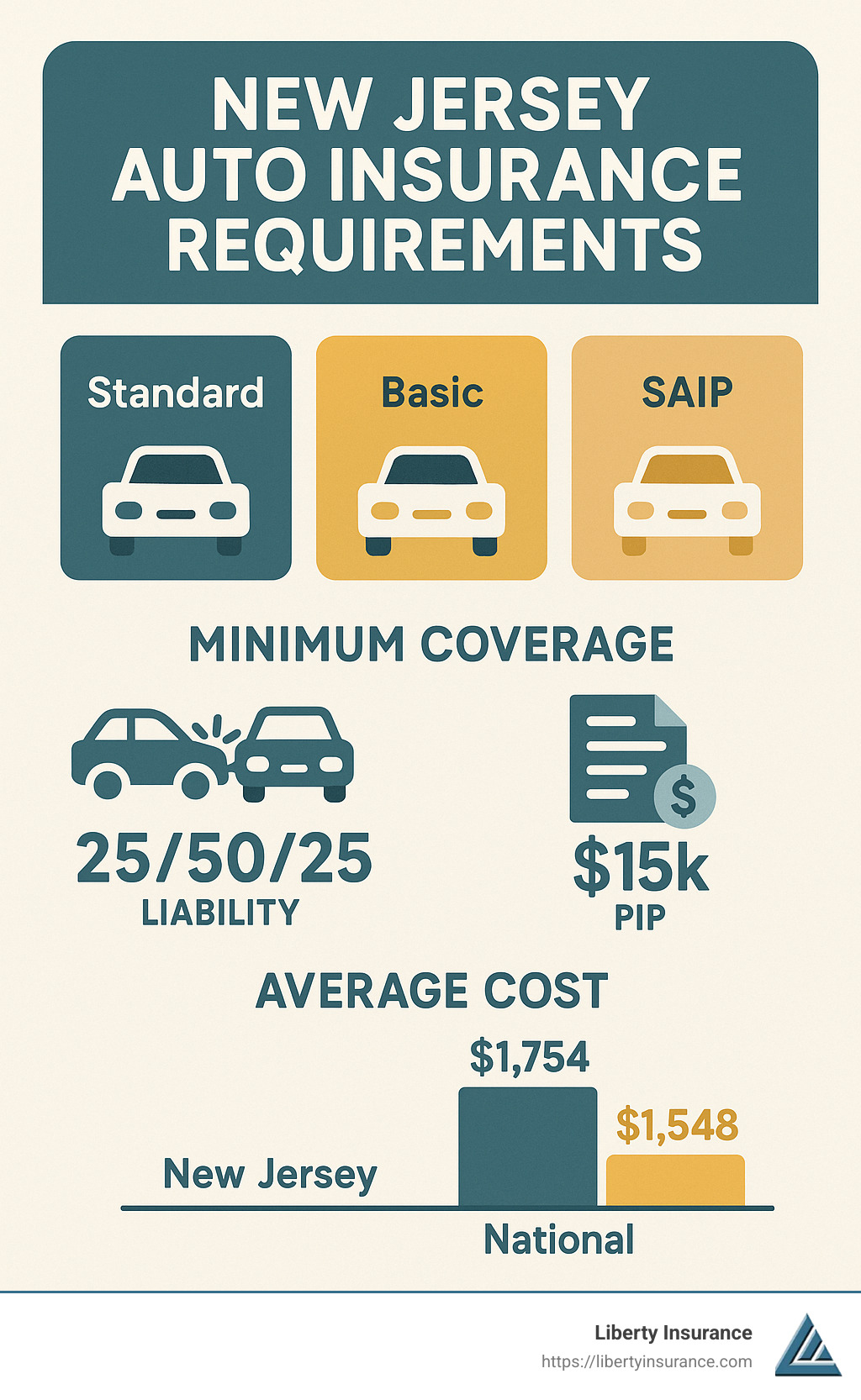
Let me break it down for you: All New Jersey drivers must have auto insurance – it’s not just a good idea, it’s the law. The state requires minimum coverage of $25,000/$50,000 for bodily injury and $25,000 for property damage. Since New Jersey operates as a no-fault state, Personal Injury Protection (PIP) isn’t optional – it’s a must-have on your policy.
When shopping for coverage, you’ll encounter three main policy types: Standard (the most comprehensive), Basic (the bare minimum), and the Special Automobile Insurance Policy (SAIP, also known as the “Dollar-a-Day” program for those who qualify). Most New Jersey drivers can expect to pay around $1,511 annually – that’s about $126 per month, which runs higher than the national average of $1,204.
Auto insurance New Jersey drivers face unique challenges that residents of other states might not encounter. Our densely populated roadways, from the congested Parkway to busy urban centers like Newark and Jersey City, create higher risks that influence insurance requirements and costs. Whether you’ve just moved to Edison or you’ve been driving in Cape May for decades, understanding your coverage options is crucial for both legal compliance and financial protection.
I’m Andrew Harris, a Certified Insurance Counselor who’s helped countless drivers steer the complexities of auto insurance New Jersey regulations. As the Treasurer for the Professional Insurance Agents of New Jersey, I’ve seen how the right coverage can make all the difference after an accident. Let me be your guide through the Garden State’s insurance landscape.
Looking for specific auto insurance new jersey solutions? Check out these helpful resources:
Why This Guide Matters
This isn’t just another article about insurance rules – it’s about protecting what matters to you. Understanding your auto insurance New Jersey options can have real-world benefits that affect your daily life.
With the right knowledge, you could save hundreds of dollars each year on your premiums. That’s money back in your pocket for the things you actually want to spend on. Beyond savings, proper coverage ensures you’re protected when the unexpected happens – whether it’s a fender bender on Route 1 or a more serious collision.
Knowing your rights when filing claims can make all the difference during stressful post-accident situations. Plus, you’ll avoid those nasty penalties that come with insufficient coverage – including fines, license suspension, and even vehicle impoundment.
Most importantly, this guide helps you make choices that fit your specific situation. A young driver in Hoboken has different needs than a family in Cherry Hill or a retiree in Ocean City.
At Liberty Insurance, we’ve helped thousands of New Jersey drivers find the right coverage at fair prices. From Princeton professors to Toms River teachers, we’ve seen how personalized insurance solutions bring peace of mind to drivers across the state. This guide shares the wisdom we’ve gathered from years of serving our Garden State neighbors – practical information you can use today to better protect yourself on the road.
Auto Insurance New Jersey Laws: The Legal Basics
Auto insurance New Jersey laws might seem complicated at first, but they’re designed with your protection in mind. Think of them as the rulebook that keeps our roads safer for everyone.
New Jersey uses what’s called a modified no-fault insurance system. This means that regardless of who caused the accident, your own insurance company pays for your medical expenses and certain economic losses through Personal Injury Protection (PIP). It’s like having your own safety net, no matter who made the mistake. However, when it comes to vehicle damage, we still follow the traditional system where the at-fault driver’s insurance covers repair costs.
The New Jersey Department of Banking and Insurance (DOBI) keeps a watchful eye on all auto insurance providers in the state. They make sure companies play by the rules and treat you fairly. Think of them as the referees in the insurance game they’re there to make sure everyone follows the rules.
After an accident, knowing exactly what to do can save you time, money, and stress. The National Association of Insurance Commissioners offers a helpful resource called the WreckCheck guide that walks you through the essential post-accident steps (you can download the free PDF here).
Do I Really Need Auto Insurance? New Jersey Law Says “Yes”
The short answer? Absolutely yes. Auto insurance New Jersey law isn’t just a suggestion it’s a requirement for every vehicle registered in the state.
Driving without insurance in New Jersey isn’t just risky it’s illegal. You must carry proof of insurance whenever you’re behind the wheel, whether it’s a digital version on your phone or the paper ID card from your insurance company. Police officers can (and will) ask for this proof during traffic stops, and you’ll need it when registering your vehicle too.
Going without insurance might seem like a way to save money in the short term, but the consequences can be devastating. Beyond facing steep legal penalties, imagine being in an accident and having to pay for someone else’s medical bills and car repairs out of your own pocket. For many people, that kind of financial hit could mean losing their savings, their home, or worse.
Minimum Coverage Requirements
When we talk about auto insurance New Jersey minimum requirements, you’ll often hear the numbers 25/50/25. Here’s what that actually means for you:
You need $25,000 bodily injury coverage per person this pays for injuries you cause to someone else in an accident. Your policy must cover up to $50,000 total bodily injury per accident if multiple people are hurt. And you need $25,000 property damage liability to cover the cost of repairing other people’s vehicles or property.
But that’s not all. New Jersey also requires:
Personal Injury Protection (PIP) of at least $15,000 per person, per accident. This is your medical coverage, regardless of fault. For certain serious injuries (like brain or spinal injuries), coverage automatically jumps to $250,000 regardless of your selected limit a crucial safety net for catastrophic situations.
Uninsured/Underinsured Motorist Coverage matching your liability limits (at least 25/50/25). This protects you if you’re hit by a driver with no insurance or too little coverage.
While these minimums keep you legal, at Liberty Insurance, we typically recommend higher limits. Why? Because medical bills and newer vehicle repair costs can quickly exceed these minimums, leaving you personally responsible for the difference. Especially if you own a home or have savings to protect, higher limits provide peace of mind that’s worth the modest premium increase.
Consequences of Skipping Auto Insurance: New Jersey Penalties
New Jersey takes uninsured driving very seriously, with penalties that can impact your life for years. If you’re caught driving without auto insurance New Jersey authorities don’t take it lightly.
For a first offense, you’re looking at fines between $300-$1,000, possible license suspension for up to a year, community service requirements, and a $250 surcharge on your driving record for three years.
Repeat offenders face even steeper consequences: fines up to $5,000, a two-year license suspension, mandatory community service, and higher surcharges. Your vehicle might even be impounded, and you’ll need to file an SR-22 (a special form for high-risk drivers) which typically means much higher premiums when you do get coverage.
Beyond these official penalties, there’s the personal financial risk. Without insurance, you’re personally on the hook for all damages in an accident you cause. This could mean losing your savings, having your wages garnished, or even facing bankruptcy if the damages are significant.
As the New Jersey Department of Banking and Insurance wisely cautions: “Any company can give you an attractive price on auto insurance in New Jersey, but don’t be fooledthey may be sacrificing your coverage or customer care.”
The bottom line? The money you might save by skipping insurance isn’t worth the enormous financial and legal risks. Getting proper coverage isn’t just about following the lawit’s about protecting yourself, your family, and your future.
Understanding Policy Options: Basic vs. Standard vs. SAIP
New Jersey offers three distinct policy types to accommodate different driver needs and budgets:
Basic Policy at a Glance
The Basic Policy is New Jersey’s lowest-cost option designed for drivers with minimal assets and few family responsibilities. Key features include:
- Property Damage Liability: $5,000 per accident
- Personal Injury Protection (PIP): $15,000 per person, per accident
- Bodily Injury Liability: Not included standard, but $10,000 per accident available as an option
The Basic Policy notably lacks:
- Standard bodily injury liability coverage
- Uninsured/underinsured motorist coverage
- Option to purchase comprehensive or collision coverage
While the Basic Policy meets legal requirements at a lower cost, it provides minimal protection. At Liberty Insurance, we typically only recommend this option for drivers with no assets, no property, and minimal driving exposure.
Standard Policy Features
The Standard Policy is what most New Jersey drivers choose, offering more comprehensive protection and flexibility:
- Bodily Injury Liability: $25,000 per person/$50,000 per accident minimum, with options up to $250,000/$500,000
- Property Damage Liability: $25,000 minimum, with options up to $100,000
- Personal Injury Protection: $15,000 standard, with options up to $250,000
- Uninsured/Underinsured Motorist Coverage: Matching your liability limits
The Standard Policy also allows you to add:
- Collision coverage (for damage to your vehicle from accidents)
- Comprehensive coverage (for non-collision damage like theft, vandalism, or weather)
- Gap insurance
- Rental reimbursement
- Roadside assistance
For most drivers in New Jersey, the Standard Policy provides the right balance of protection and affordability. You can learn more about our Personal Auto Insurance options on our website.
SAIP (“Dollar-a-Day”) Safety Net
The Special Automobile Insurance Policy (SAIP), commonly known as the “Dollar-a-Day” program, is a limited coverage option designed specifically for low-income New Jersey residents who:
- Are enrolled in Federal Medicaid with hospitalization benefits
- Would otherwise likely drive uninsured
For approximately $365 annually (hence “dollar-a-day”), the SAIP provides:
- Emergency medical treatment immediately following an accident
- $10,000 death benefit
- Limited coverage for medical expenses
The SAIP notably does NOT include:
- Liability coverage
- Collision coverage
- Comprehensive coverage
- Coverage for outpatient treatments
This policy is truly a last-resort option for those who cannot afford standard coverage but need to drive legally. If you’re considering this option, we recommend consulting with one of our agents at Liberty Insurance to explore all possible alternatives first.
Essential Coverages & Custom Add-Ons
Beyond the basic legal requirements, auto insurance New Jersey policies include several key components that every driver should understand:
Personal Injury Protection (PIP) Demystified
Think of Personal Injury Protection as your medical safety net after an accident. As the cornerstone of New Jersey’s no-fault system, PIP steps in regardless of who caused the crash.
When you’re hurt in an accident, PIP covers essential expenses like medical bills from your injuries and even lost wages if you can’t work while recovering. It also helps with services you might need but can’t perform yourself during recovery, and in worst-case scenarios, it provides funeral expense coverage.
New Jersey drivers can choose PIP limits between $15,000 and $250,000 per person. Here’s something many drivers don’t realize: even if you select a lower limit, certain catastrophic injuries—like brain and spinal cord trauma—automatically receive coverage up to $250,000.
One unique feature of auto insurance New Jersey policies is the health insurer option. You can designate your health insurance as primary for accident injuries, potentially lowering your premium. But before choosing this money-saving option, understand its limitations. Your health insurance must specifically cover auto injuries, and Medicare and Medicaid can’t serve as primary. Plus, you’ll still need PIP to cover expenses your health plan doesn’t touch.
As the New Jersey Department of Banking and Insurance points out, “Personal Injury Protection covers a portion of wage loss and medical expenses for passengers and pedestrians,” highlighting how this coverage extends beyond just protecting you.
Limited vs. Unlimited Right to Sue
One of the most impactful choices you’ll make with your auto insurance New Jersey policy involves your legal rights after an accident.
With the Limited Right to Sue option, you’re agreeing to restrictions on when you can sue for non-economic damages (think pain and suffering). You can only pursue such claims if your injuries cross specific thresholds: death, dismemberment, significant disfigurement or scarring, displaced fractures, loss of a fetus, or permanent injury.
The Unlimited Right to Sue option preserves your complete legal rights to seek compensation for pain and suffering regardless of injury type.
The Limited option typically saves drivers 15-20% on premiums—tempting for budget-conscious families. But this isn’t just about money; it’s about what rights you’re willing to give up.
At Liberty Insurance, we sit down with clients from Princeton to New Brunswick and throughout New Jersey to help them understand this crucial choice based on their unique situation, comfort with risk, and financial constraints.
Optional Coverages to Fit Your Ride
Your car deserves protection custom to your specific needs. Beyond the basics, several optional coverages can provide peace of mind on New Jersey’s busy roads.
Collision Coverage pays for repairs to your vehicle after an accident, regardless of who was at fault. You’ll select a deductible—typically $500 or $1,000—which is your out-of-pocket contribution before insurance kicks in. This coverage becomes especially important if you drive a newer vehicle or have an auto loan or lease.
Comprehensive Coverage handles almost everything else that might damage your car: theft, vandalism, falling tree branches during those fierce Jersey storms, fire, and even deer encounters on rural roads. Like collision, it comes with a deductible you choose. If you’re curious about details, check out our Comprehensive Auto Coverage page.
If you’ve financed or leased your vehicle, Gap Insurance is worth considering. It covers the difference between what you owe and what your car is actually worth if it’s totaled. This small addition to your policy can save you thousands, especially with new vehicles that depreciate quickly once they leave the lot.
Nothing ruins a day faster than a breakdown on the Garden State Parkway. Roadside Assistance provides help when you’re locked out, have a flat tire, need a jump-start, or require towing. For older vehicles or if your commute takes you through less-populated areas, this coverage brings tremendous peace of mind.
When your car’s in the shop after a covered claim, Rental Reimbursement keeps you mobile by covering rental car costs. For busy professionals and families who can’t afford to be without transportation, this coverage is invaluable.
Everyone makes mistakes—even careful drivers. Accident Forgiveness prevents your rates from increasing after your first at-fault accident. While you’ll typically need a clean driving record to qualify, this feature can save you hundreds or even thousands over time.
The right mix of coverages varies for everyone. What works for your neighbor in Cherry Hill might not be ideal for your situation in Trenton. We’re here to help you find that perfect balance of protection and affordability.
How Much Does Car Insurance Cost in New Jersey—And How to Save
New Jersey consistently ranks among the most expensive states for auto insurance, but costs vary widely based on numerous factors:

What New Jersey Drivers Pay
Let’s face it—auto insurance New Jersey prices can cause a bit of sticker shock. The average driver pays about $1,511 annually (or $126 monthly) for full coverage, which is significantly higher than the national average of $1,204 per year.
But don’t let these averages discourage you! Your actual costs might be quite different. If you live in Newark or Jersey City, you’ll typically pay more than someone in quieter Millstone Township. That sporty convertible will cost more to insure than a family sedan. And of course, the coverage levels you choose make a big difference too.
I’ve worked with clients who were paying dramatically different premiums for nearly identical coverage. Just last month, I helped a family in Cherry Hill save over $700 annually by switching insurers—same coverage, just a different company. This is why shopping around is so crucial in our state.
Rate Factors You Can Control
While you can’t change your age or gender (factors that insurers consider), you have more control over your auto insurance New Jersey rates than you might think.
Your driving record speaks volumes to insurers. Every ticket-free year is a win for your wallet. Many of my clients have saved 10-15% by completing defensive driving courses—a small investment of time for significant savings.
Your credit matters too. New Jersey allows insurers to check your credit when setting rates. I’ve seen premiums drop by 20% when a client improved their credit score. Simple habits like paying bills on time and reducing debt can make a real difference.
Vehicle choice is another area where thoughtful decisions pay off. That Mercedes might turn heads, but insuring it will likely cost more than a Honda with excellent safety ratings. Adding anti-theft devices and safety features can also qualify you for discounts.
Consider your deductible carefully. Raising it from $500 to $1,000 might save you $100-200 annually, but make sure you have that extra $500 available if you need to file a claim. It’s all about balancing monthly savings against potential out-of-pocket costs.
For older vehicles, it might make financial sense to drop collision and comprehensive coverage. As a rule of thumb, if your car is worth less than $4,000, the premium for these coverages might exceed what you’d receive in a claim.
Discounts & Smart Savings Moves
Here’s where the real magic happens. New Jersey insurers offer a treasure trove of discounts that many drivers don’t know about.
Taking a defensive driving course is one of my favorite recommendations. It not only makes you safer on the road but can save 5-10% on certain coverages for three years. That’s a pretty good return on a six-hour investment of your time!
Bundling policies is another smart move. When you combine your auto insurance with homeowners, renters, or other policies, you could save 5-25% across all your insurance costs. Plus, it’s convenient to have everything with one company.
Do you have multiple vehicles? Insuring them on the same policy typically saves 10-25% per vehicle. This works even if different family members primarily drive each car.
Parents of teen drivers, listen up: good student discounts can reduce those intimidating young driver rates by 10-15% if your student maintains a 3.0 GPA or higher. Given how expensive it is to insure teens, this discount is well worth encouraging those study habits!
Don’t forget about vehicle safety features. Modern cars with anti-lock brakes, multiple airbags, anti-theft devices, and advanced driver assistance systems often qualify for various discounts. When buying a new car, these features can pay for themselves over time through insurance savings.
Ready to start saving? You can request a Free Auto Insurance Quote right on our website. We’ll help identify every discount you qualify for.
Special Programs for High-Risk & Low-Income Drivers
New Jersey doesn’t leave anyone behind when it comes to auto insurance New Jersey options. If you’ve had accidents or violations that make standard insurance difficult to obtain, the New Jersey Personal Automobile Insurance Plan (NJPAIP) ensures you can still get coverage. It works by distributing high-risk drivers among all NJ auto insurers. While it’s typically more expensive than standard insurance, it provides a path back to regular coverage as your driving record improves.
For those facing financial challenges, the Special Automobile Insurance Policy (SAIP) or “Dollar-a-Day” program offers a lifeline. If you receive Medicaid with hospitalization benefits, you can obtain this basic coverage for about $365 annually. While it provides only emergency medical coverage and a death benefit, it meets the legal requirement for insurance.
Usage-based insurance is gaining popularity among careful drivers. These programs either track your actual mileage or monitor driving habits through a smartphone app or device plugged into your car. If you don’t drive much or are a particularly safe driver, these programs could save you 10-40% compared to traditional insurance.
At Liberty Insurance, we believe everyone deserves quality coverage at a fair price. We’ll help you steer these special programs if standard insurance isn’t currently an option for you. Our goal is to find you the best protection for your unique situation—because peace of mind shouldn’t be a luxury.
Shopping, Comparing & Claiming: Your Step-by-Step Guide
Finding the right auto insurance New Jersey policy doesn’t have to feel overwhelming. With a thoughtful approach, you can steer your options and find coverage that protects you without breaking the bank.

Getting Quotes & Comparing Policies
When I talk with New Jersey drivers about finding the best insurance value, I always recommend following the strategy endorsed by the New Jersey Department of Banking and Insurance.
Start by taking a good look at what you actually need. Consider your assets (like your home and savings), your vehicle’s value, and how comfortable you are with risk. A young driver in Jersey City with a new car will have different needs than a retiree in rural Sussex County with a paid-off vehicle.
Next, gather all your information before you start shopping. This includes details about all drivers in your household, your vehicles, and your current coverage. Being prepared saves time and ensures accurate quotes.
The state’s Auto Insurance Purchasing Planner is a fantastic resource that helps you compare options side-by-side. I also recommend checking the annual Auto Insurance Consumer Information Report, which shows complaint ratios for different insurers. Companies with fewer complaints per customer tend to provide better service when you need it most.
Get at least three quotes for similar coverage levels. This gives you a realistic picture of the market and often reveals surprising price differences. When you request quotes, always ask about available discounts – many people miss out on savings simply because they didn’t inquire.
Don’t forget to check each insurer’s financial strength ratings from agencies like A.M. Best or Standard & Poor’s. These ratings indicate an insurer’s ability to pay claims, especially after widespread disasters.
At Liberty Insurance, we make this process much easier with our Auto Insurance Quote Online service. We help you steer your options with personal guidance that considers your unique situation.
The lowest premium isn’t always the best value. Consider deductibles, coverage limits, exclusions, the company’s claims reputation, and customer service quality. As the National Association of Insurance Commissioners wisely notes, “Identifying the coverage you need, then comparing prices and deductibles of similar policies from different companies is the best way to find insurance that provides good value at a reasonable cost.”
Filing a Claim—What to Expect
Even the safest drivers sometimes find themselves dealing with accidents. Knowing what to expect from your auto insurance New Jersey provider can make a stressful situation more manageable.
If you’re in an accident, safety comes first. Check that everyone is okay and call for medical help if needed. Contact police for injuries or significant damage – you’ll need an official report for your claim. Exchange information with other drivers involved, including names, contact details, insurance information, and license plate numbers. Take plenty of photos of the scene and make notes while details are fresh in your mind. One important tip: avoid discussing who was at fault or making statements that could be seen as admitting responsibility.
When you’re ready to report the claim, contact your insurer promptly – most have 24/7 claims services for exactly this reason. Be honest and complete with all information you provide. Ask about what happens next and when you can expect updates. Write down your claim number and your adjuster’s contact information for future reference.
During claim processing, an adjuster will evaluate the damage and review your coverage. You might need to get repair estimates from approved shops. If you’re injured, your Personal Injury Protection (PIP) coverage will coordinate your medical claims. Your insurer will determine coverage and payment based on your policy terms and the circumstances of the accident. If another driver caused the accident, your insurance company may seek reimbursement from their insurer through a process called subrogation.
If you disagree with your insurer’s decision, you have options. Start by requesting a formal review from your insurance company. If that doesn’t resolve the issue, you can file a complaint with the NJ Department of Banking and Insurance. For more complex disputes, consider mediation or arbitration services, or consult with an attorney who specializes in insurance matters.
The NAIC’s WreckCheck mobile app is a helpful tool that guides you through post-accident steps, ensuring you collect all necessary information for a smooth claims process.
Resources Every NJ Driver Should Bookmark
Navigating auto insurance New Jersey becomes much easier when you know where to find reliable information. These resources have helped countless drivers make informed decisions.
The New Jersey Department of Banking and Insurance (DOBI) offers valuable consumer guides and comparison tools that cut through the insurance jargon. Their website includes a straightforward complaint filing system if you encounter problems with your insurer. They also provide an insurer lookup and verification service to confirm a company’s legitimacy.
The New Jersey Motor Vehicle Commission (MVC) maintains an insurance verification system that can prove helpful when questions arise about coverage. They also provide driver history reports and insurance company codes that you might need when switching insurers.
If you’re looking to save money, check out the state’s Approved Defensive Driving Courses. These state-approved programs not only make you a safer driver but can also earn you insurance discounts. Options include both online and classroom formats, and you’ll receive a certificate that your insurer will recognize.
At Liberty Insurance, we regularly help clients throughout New Jersey—from Princeton to New Brunswick to Trenton—access and understand these resources. We believe that informed drivers make better choices about their coverage, which ultimately leads to better protection and peace of mind on the road.
Frequently Asked Questions about New Jersey Auto Insurance
If you’re navigating auto insurance New Jersey requirements, you probably have some questions. Let’s tackle the most common ones I hear from drivers across the Garden State, from Cherry Hill to Hoboken.
Is PIP always primary in NJ?
Not necessarily! While New Jersey’s no-fault system typically places your Personal Injury Protection (PIP) as the first line of defense after an accident, you actually have options.
You can designate your health insurance as primary for accident injuries through what’s called the “health insurer option.” This choice can trim your premium costs noticeably. But before you rush to make this change, there are important limitations to understand:
Your health insurance plan must specifically cover auto accident injuries (not all do). Medicare and Medicaid cannot be designated as primary – this isn’t allowed under state regulations. And you’ll still need PIP coverage for expenses your health insurance won’t touch, like lost wages and essential services.
Many of our Liberty Insurance clients in places like Trenton and Princeton find that keeping PIP as primary provides more comprehensive protection, especially since health insurance often comes with higher deductibles and copays for emergency services.
How do I change my Right to Sue option?
Changing between Limited and Unlimited Right to Sue isn’t complicated, but it does have timing restrictions. You have two main opportunities to make this switch:
At your policy renewal time – this is the simplest approach and won’t disrupt your coverage. When you experience qualifying life changes such as marriage, divorce, or moving to a new address.
To make the change, simply contact your insurer and request the modification. Be prepared for premium adjustments though – switching from Limited to Unlimited will increase your costs (typically by 15-20%), while moving from Unlimited to Limited will reduce your premium.
This choice significantly impacts your rights after an accident. The Limited option restricts your ability to sue for pain and suffering unless your injuries meet specific thresholds. At Liberty Insurance, we help our clients understand the implications of this important decision based on their unique circumstances.
Can I insure a leased car under the Basic Policy?
In almost all cases, the answer is no. Here’s why: leasing companies have their own insurance requirements to protect their investment in the vehicle, and these requirements almost always exceed what the Basic Policy provides.
Most lease agreements specifically require:
- Comprehensive and collision coverage (not available with the Basic Policy)
- Liability limits well above the Basic Policy’s minimal or non-existent coverage
- Lower deductibles than you might choose on your own
If you’re leasing, you’ll need a Standard Policy with full coverage that meets your leasing company’s requirements. Before signing any lease, check the insurance section of your agreement carefully so you understand exactly what coverage you’ll need to maintain.
Many Liberty Insurance customers who lease vehicles find that bundling their auto policy with homeowners or renters insurance helps offset the higher premium costs associated with leased vehicle coverage requirements.
Have more questions about auto insurance New Jersey requirements? Our team at Liberty Insurance is always ready to help you find the right coverage at competitive rates. You can explore our personal auto insurance options or contact us directly for personalized assistance.
Conclusion
Finding your way through the maze of auto insurance New Jersey requirements can feel overwhelming, but it doesn’t have to be. With the right knowledge in your toolkit, you can drive with confidence knowing you’ve got the protection you need without overpaying.
Throughout this guide, we’ve covered the essentials that every Garden State driver should understand. Let’s take a moment to reflect on what matters most:
Auto insurance isn’t just required by law in New Jersey—it’s your financial safety net. The state’s minimum liability limits of 25/50/25 provide a baseline of protection, but many drivers benefit from higher coverage limits that better shield their assets and future earnings.
New Jersey’s three distinct policy types give you flexibility based on your unique situation. The Standard Policy offers comprehensive protection for most drivers, while the Basic Policy provides a lower-cost alternative for those with minimal assets. The SAIP “Dollar-a-Day” program ensures even the most financially challenged drivers can stay legal on the road.
Personal Injury Protection (PIP) forms the backbone of New Jersey’s no-fault system, covering your medical expenses regardless of who caused the accident. Your Right to Sue option—whether Limited or Unlimited—profoundly impacts both your legal rights after an accident and your premium costs.
Don’t settle for the first quote you receive. Comparison shopping remains the single most effective strategy for finding affordable coverage in New Jersey’s competitive insurance market. Rates for identical coverage can vary by hundreds or even thousands of dollars between insurers.
Take advantage of the many available discounts to offset New Jersey’s higher-than-average premiums. From defensive driving courses to multi-policy bundling, these savings opportunities can significantly reduce your insurance costs while maintaining robust protection.
At Liberty Insurance, we’ve helped thousands of New Jersey drivers from Millstone Township to Trenton, Toms River to New Brunswick, and Princeton to all points between find the perfect balance of protection and affordability. Our local expertise means we understand the unique challenges Garden State drivers face—whether navigating busy urban centers or enjoying the state’s scenic byways.
Ready to take the next step toward better, more affordable coverage? Visit our personal auto insurance page to explore your options or reach out to one of our friendly agents today. We’re here to help you make sense of auto insurance New Jersey requirements and find a policy that fits your life and budget perfectly.
The road ahead is yours to travel with confidence when you have the right protection in place. Let’s get you there together.

