
Protecting Your Property from Disaster: Why Building Insurance Matters
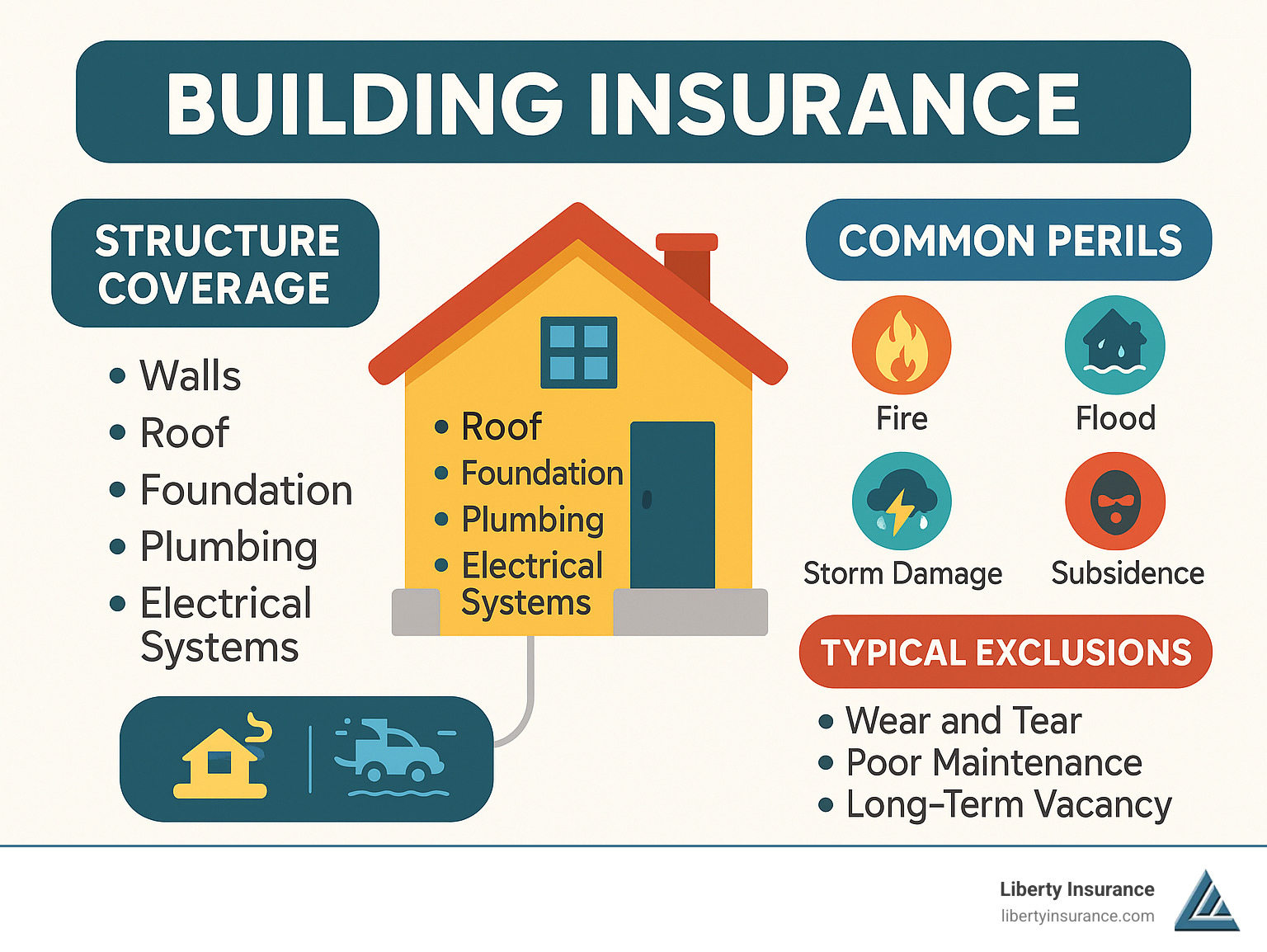
Building insurance is a type of property insurance that covers the cost of repairing or rebuilding the physical structure of your property if it’s damaged or destroyed by events like fire, flood, storm, or theft.
What is Building Insurance?
- Definition: Insurance that covers the structure and permanent fixtures of a building
- Who needs it: Homeowners, commercial property owners, landlords (not typically renters)
- What it covers: Building structure, permanent fixtures, plumbing, wiring, built-in kitchens
- Common perils covered: Fire, flood, storm, subsidence, theft, burst pipes, vandalism
- Average cost: £329 for buildings-only coverage in the UK (Q3 2024)
In 2019, local fire departments responded to over 1.2 million fires causing nearly $15 billion in property damage. Without adequate coverage, a single disaster could wipe out years of investment and hard work. Whether you own a commercial building or lease office space, building insurance provides essential financial protection against unexpected events that could otherwise devastate your business.
The reality is stark: more than one-third of building insurance claims were rejected in 2023. This highlights the critical importance of understanding exactly what your policy covers and ensuring you have the right protection in place.
I’m Andrew Harris, a Certified Insurance Counselor with extensive experience helping businesses find the right building insurance coverage to protect their investments. As a board member of Professional Insurance Agents of New Jersey and recipient of PIA National’s Agent of the Year award, I’ve guided countless property owners through the complex world of insurance protection.
Quick building insurance definitions:
– commercial property insurance
– types of business insurance
– general liability insurance small business
Building Insurance 101: What It Is, Who Needs It, & Key Differences
When you think about protecting your property, building insurance is that essential safety net that keeps you sleeping soundly at night. It’s financial protection for the actual structure of your property – those walls that shelter you, the roof over your head, the floors beneath your feet, and all those permanent fixtures that make your building functional.
Your property is likely one of your biggest investments, and building insurance ensures it stays protected through life’s unexpected moments. But who actually needs this coverage?
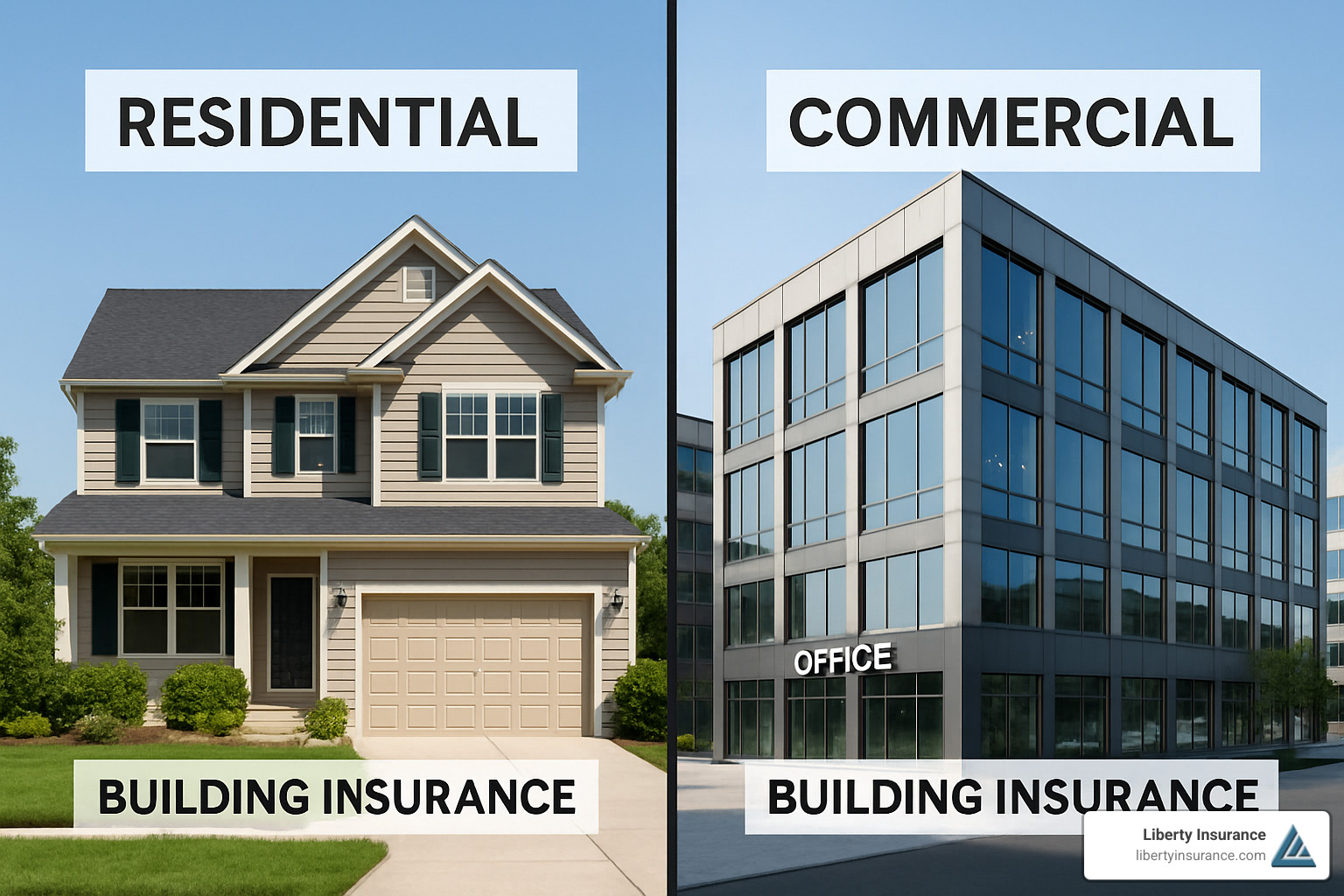
Almost anyone who owns property should consider building insurance. This includes homeowners (whether you’ve paid off your mortgage or not), commercial property owners running businesses from their own premises, landlords renting out properties, leaseholders (depending on your specific lease terms), and property management companies overseeing apartment complexes or blocks of flats.
If you have a mortgage, your lender will almost certainly require building insurance. It makes perfect sense – they want to protect their investment in your property just as much as you do. Most lenders won’t even finalize a mortgage without seeing proof that you’re properly insured.
Building Insurance vs Contents Insurance
One question we hear all the time is: “What’s the difference between building insurance and contents insurance?” Let me clear that up for you.
Think of building insurance as covering everything that would stay put if you could magically turn your property upside down and shake it. That’s the physical structure (walls, roof, floors), permanent fixtures (bathrooms, kitchens), built-in appliances, outbuildings like garages and sheds, boundary walls and fences, driveways, patios, and even underground pipes and cables.
Contents insurance, on the other hand, covers all those things that would fall out if you did that upside-down shake – your furniture, personal belongings, electrical items, clothing, jewelry, carpets, and curtains. Basically, anything you’d pack up and take with you if you moved.
Another key difference is in how claims work. Building insurance is based on rebuild cost, not market value. If disaster strikes, what matters is how much it would cost to rebuild your property, not what you could sell it for. Contents insurance typically offers “new-for-old” coverage, meaning you get the replacement cost of items rather than their current, depreciated value.
Is Building Insurance Mandatory?
Legally speaking, there’s no law requiring you to have building insurance in the United States. However, in practical terms, it often becomes effectively mandatory in several situations:
If you have a mortgage, your lender will almost certainly require building insurance as a condition of your loan. For leaseholders, your lease agreement might stipulate that you must maintain building insurance, or the freeholder might arrange it and charge you through service fees. And while landlords aren’t legally required to have it, it’s highly advisable and may be necessary for certain licenses or to meet legal obligations to tenants.
For commercial properties, building insurance forms a critical part of your overall risk management strategy, even when not strictly required by law.
Building Insurance for Landlords & Tenants
If you’re a landlord, standard building insurance might not give you all the protection you need. You should look into specialized landlord insurance that includes lessor’s risk only (LRO) coverage specifically designed for those leasing out commercial space.
Good landlord policies also include loss of rent coverage (if your property becomes uninhabitable due to a covered event), alternative accommodation costs for residential tenants who need temporary housing, and liability protection in case someone gets injured on your property.
For tenants, the responsibility for building insurance typically falls to your landlord or property owner. But that doesn’t mean you should just assume everything’s covered. Smart tenants will confirm with their landlord that adequate building insurance is in place, obtain contents insurance for their own belongings, and consider business interruption insurance if they’re operating a business from the premises.
Our Commercial Property Insurance at Liberty Insurance provides comprehensive protection for landlords and business owners, with options you can customize to fit your specific situation and property needs.
What’s Covered vs. Not Covered: Perils, Exclusions, Add-Ons
When you invest in building insurance, you’re buying peace of mind—but that peace only extends as far as your policy’s coverage. Let’s pull back the curtain on what’s typically included and what might leave you footing the bill.
Standard Covered Perils
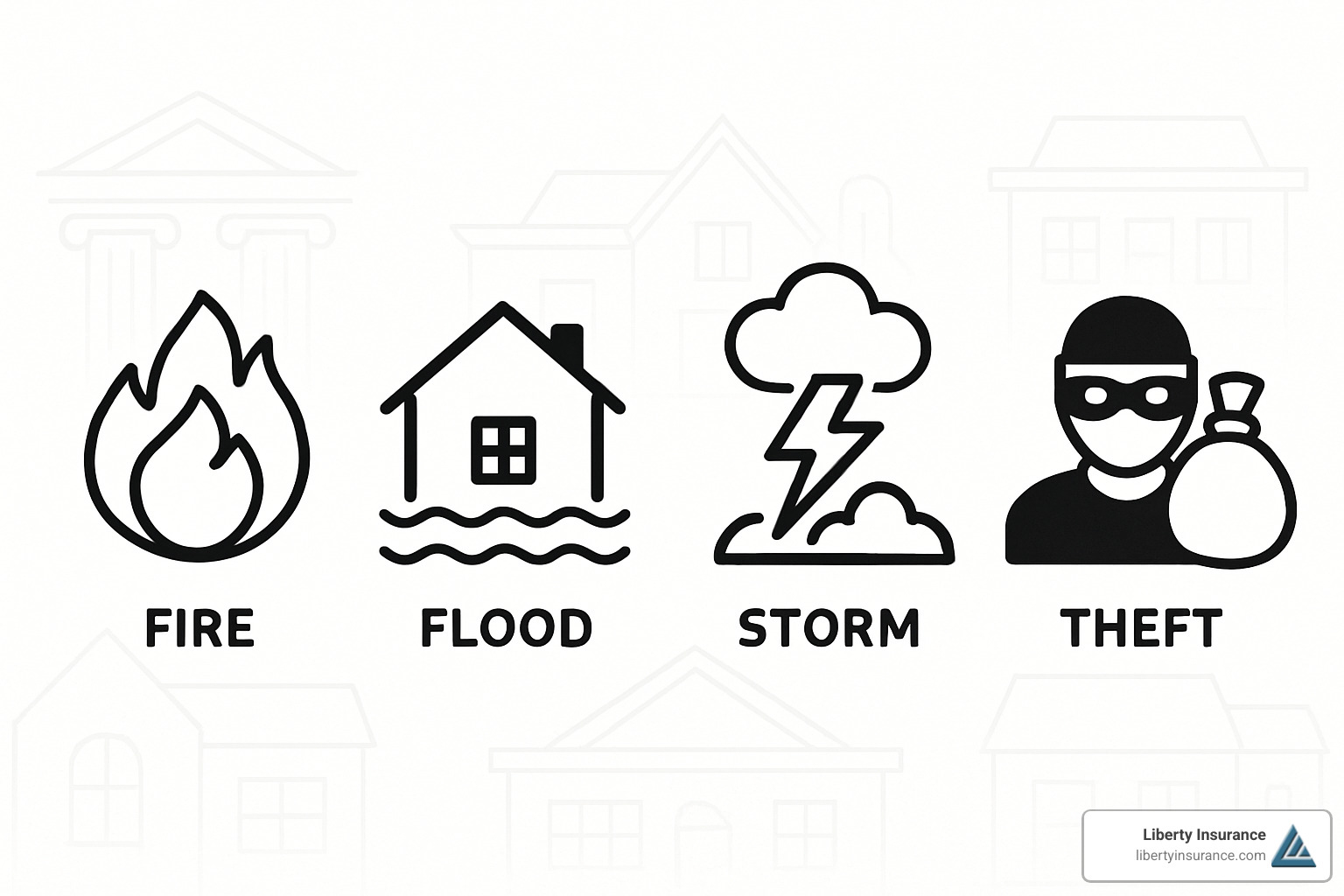
Your building insurance is your financial shield against a range of disasters that could damage your property. Most policies will have your back when it comes to fire damage, not just from the flames themselves but also from smoke and the water used to extinguish the blaze. Lightning strikes that zap your electrical systems are typically covered too.
Mother Nature can be unpredictable, and your policy knows it. Storm damage from howling winds and pelting hail usually falls under standard coverage. The same goes for flooding, though the extent of protection might vary depending on your location and risk level.
If someone decides your property is a canvas for their destructive artwork, building insurance typically covers vandalism and theft damage. And should a car veer off the road into your storefront or a tree topple onto your roof during a storm, impact damage is generally included.
Less visible but equally destructive, subsidence—where the ground beneath your building shifts—is usually covered, as are those dreaded burst pipes that can turn your property into an impromptu indoor pool.
Common Exclusions & Limitations
Here’s where the fine print matters. Your policy isn’t designed to be a maintenance plan—it’s for unexpected disasters, not inevitable deterioration. Building insurance won’t cover general wear and tear that happens to every property over time. That creaky floor or peeling paint? That’s on you.
The insurance industry expects you to be a responsible property owner. Damage resulting from poor maintenance—like that leak you ignored for months that eventually caused your ceiling to collapse—typically won’t be covered. The same goes for any deliberate damage caused by you or your tenants.
Those unwelcome critters making themselves at home? Unfortunately, pest infestations usually fall outside standard coverage. Your policy also likely draws the line at mechanical breakdowns of systems or appliances, which is why separate warranty plans exist.
An eye-opening statistic: more than a third of claims on buildings-only policies were rejected in 2023. Often, this happens because policyholders misunderstood their coverage limits or exclusions. The policy excess (your deductible) is another limitation—you’ll need to pay this amount out-of-pocket before your insurance kicks in, typically a few hundred dollars for standard claims but potentially $1,000 or more for subsidence issues.
Be especially careful if your property will be empty for extended periods. Most policies have vacancy clauses that limit or void coverage if a building is unoccupied for more than 30-60 days. And if you’re using a residential property for business purposes without the right coverage, you might be in for an unpleasant surprise when making a claim.
Optional Add-Ons That Fill the Gaps
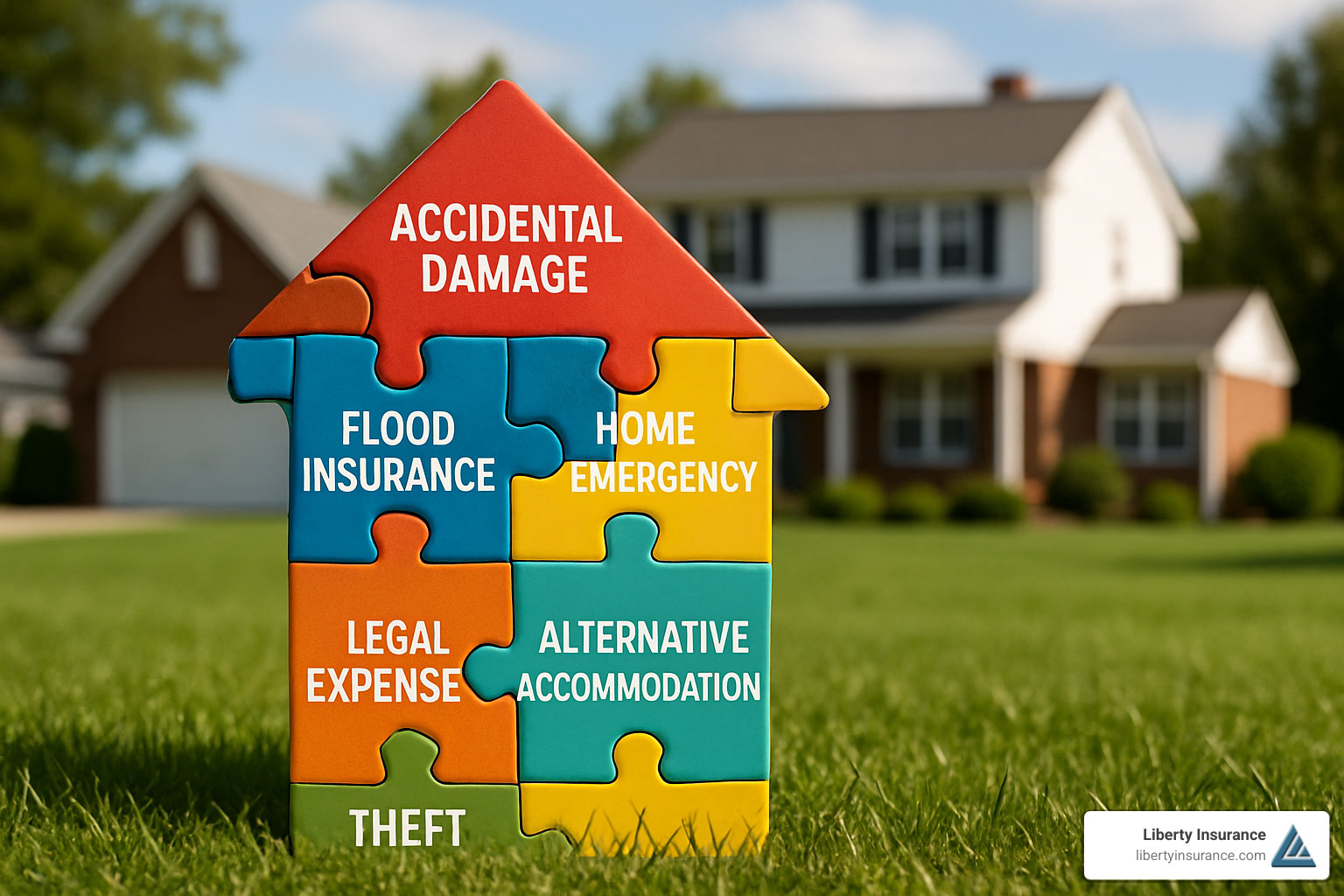
Think of your basic building insurance as a starter home—functional, but you might want to add some custom features. Accidental damage coverage is perhaps the most valuable add-on, covering those “oops” moments that aren’t included in standard policies.
If disaster strikes and you can’t use your property, alternative accommodation coverage ensures you have somewhere to stay while repairs are made—a lifesaver for both homeowners and landlords with displaced tenants.
Legal expenses coverage can be worth its weight in gold if you find yourself in a property dispute. Meanwhile, home emergency cover provides rapid response for urgent issues like broken boilers or burst pipes, preventing minor problems from becoming major disasters.
For business owners, glass and signage coverage is particularly valuable—storefront windows and signs are vulnerable but essential to your operation. Underground services extension protects those out-of-sight pipes and cables that can lead to eye-watering repair bills when damaged.
If your property sits in a flood-prone area or earthquake zone, specialized coverage for these perils is worth considering, as standard policies often limit protection for these high-risk events.
For the most current information on building insurance standards and best practices, I recommend checking the latest ABI guidance. And remember, at Liberty Insurance, we’re always happy to walk you through the specifics of what our Commercial Property Insurance covers and how we can tailor it to your unique needs.
Pricing Your Protection: Sum Insured, Premium Factors, Index Linking
Let’s talk about getting the right coverage at a fair price – something I know can feel overwhelming when you’re trying to protect your property investment.
How to Calculate the Correct Sum Insured
Here’s something many property owners get wrong: the “sum insured” isn’t your property’s market value or what you paid for it. It’s actually the amount needed to completely rebuild your property from scratch if disaster strikes.
Your sum insured should cover everything involved in starting over:

Think of it as a complete project – you’ll need money for demolition costs to clear away what’s left, professional fees for architects and engineers who’ll design the rebuild, debris removal services, and of course, all the materials and labor to reconstruct your building. For historic or listed buildings, these costs can be significantly higher due to specialized materials and craftsmanship requirements.
For standard homes, online calculators using Building Cost Information Service data can give you a starting point. But if your property has unique features or is commercially used, I strongly recommend hiring a surveyor for an accurate valuation. The peace of mind is worth it.
I’ve seen too many clients fall into the underinsurance trap. If you’re only insured for 70% of your true rebuilding cost, insurers may only pay 70% of any claim – even for partial damage. That shortfall can be devastating when you’re already dealing with property damage.
Index Linking and Inflation Protection
Building costs rarely stay still – they typically climb with inflation, material costs, and labor rates. That’s where index linking comes in handy.
Building insurance policies with index linking automatically adjust your sum insured to keep pace with these rising costs. Most insurers use quarterly indices from the Royal Institute of Chartered Surveyors to update coverage amounts at renewal time.
But here’s the catch – index linking only works if your starting point is correct. It also won’t account for that beautiful extension you added or the high-end kitchen renovation you completed. That’s why I recommend:
- Reviewing your sum insured annually
- Telling your insurer promptly about significant improvements
- Getting a professional revaluation every few years
These simple steps can save you from serious financial headaches down the road.
Factors That Affect Premiums
When insurers calculate your premium, they’re essentially assessing risk. Several factors influence what you’ll pay:
Your location matters tremendously – properties in flood zones or areas with high subsidence risk naturally cost more to insure. The age and condition of your building play a role too, as older structures often require more expensive repairs.
The construction type affects pricing – non-standard materials might raise eyebrows (and premiums) with insurers. Your claims history tells insurers about past problems, while good security measures like alarm systems and proper locks can actually help lower your costs.
You can often reduce premiums by choosing a higher voluntary excess – that’s the amount you’ll pay out-of-pocket before insurance kicks in. Just make sure it’s an amount you could actually afford if needed.
While the average UK buildings-only insurance cost about £329 in recent months, your actual premium could vary widely based on these factors. Commercial properties in particular need customized assessment since their risks and rebuilding costs differ significantly from residential buildings.
At Liberty Insurance, we understand that every property has unique protection needs. Whether you’re safeguarding a small retail space or a large manufacturing facility, getting the right coverage at the right price starts with an accurate understanding of your rebuilding costs and risk factors.
Claims, Compliance & Cost-Cutting Strategies
When disaster strikes your property, knowing how to steer the claims process can make all the difference between a stressful ordeal and a smooth road to recovery. Let’s face it – nobody wants to deal with insurance claims, but when you need to, having a clear strategy helps tremendously.
Making a Claim Without Stress
The moment you find damage to your property, your first instinct might be to panic. Take a deep breath instead. Contact your insurer’s emergency helpline right away – most building insurance providers offer 24/7 assistance for precisely these moments. At Liberty Insurance, we understand that quick response times are crucial, especially when your business operations are at stake.
Documentation is your best friend during this process. Take plenty of photos and videos of the damage before you touch anything. These visual records will be invaluable when discussing your claim with the insurance company. Keep every receipt for emergency repairs or alternative accommodation – these expenses are often covered but can’t be reimbursed without proof.
When the loss adjuster visits (and they likely will for significant claims), be present to answer questions and point out damage. Their assessment directly impacts your settlement offer, so clear communication is essential. Your policy excess will apply – this is your contribution toward each claim, typically consisting of your standard excess plus any voluntary excess you chose when purchasing your policy.
Some claims, like those involving subsidence, often have higher excess amounts. Review your policy documents if you’re unsure about what applies to your situation.
How to Reduce Building Insurance Costs
Protection doesn’t have to break the bank. There are several legitimate ways to lower your building insurance premiums while maintaining solid coverage.
Consider increasing your voluntary excess if you’re comfortable with paying more out-of-pocket when making a claim. This trade-off usually results in lower monthly or annual premiums. Improving your property’s security features – like installing approved locks, alarm systems, and smoke detectors – can also lead to discounts from many insurers.

Building a no-claims discount over time can significantly reduce your costs. Many insurers reward loyal, claim-free customers with lower premiums year after year. If you’re paying monthly, consider switching to annual payments to avoid the interest charges that typically come with installment plans.
For business owners, bundling different types of coverage can create substantial savings. Our Business Asset Protection Insurance offers comprehensive protection that’s often more cost-effective than purchasing separate policies.
Perhaps the most overlooked cost-cutting strategy is preventive maintenance. Regular upkeep helps you spot and address small issues before they become major problems requiring expensive insurance claims. Following a structured Preventive maintenance guide can save you thousands in the long run. Simple actions like clearing gutters, checking for roof damage after storms, and promptly addressing small leaks can prevent catastrophic failures later.
When renewal time comes around, don’t automatically accept your current insurer’s offer. Shop around to compare quotes, but make sure you’re comparing equivalent coverage – the cheapest option isn’t always the best if it leaves critical gaps in your protection. For specialized properties or unique business situations, working with insurers who understand your specific needs often provides better value than one-size-fits-all policies.
Building insurance is an investment in your property’s future. The right coverage at the right price gives you both protection and peace of mind.
Frequently Asked Questions about Building Insurance
What risks are most commonly covered by building insurance?
When you invest in building insurance, you’re protecting yourself against a range of everyday disasters. Most standard policies cover the essentials: fire damage, lightning strikes, explosions, and storm damage. You’ll also typically be covered for floods, theft, malicious damage, and impacts (like when your neighbor’s tree decides your roof looks comfortable). Subsidence, heave, landslip, and those dreaded burst pipes are usually included too.
I’ve seen countless claims over the years, and the statistics back up what I’ve observed firsthand. Water damage from burst pipes tops the list of common claims, followed closely by storm damage to roofs and fire-related incidents. It’s particularly telling that about 30% of small business claims stem from weather damage. Mother Nature doesn’t discriminate between homes and businesses, which is why comprehensive coverage matters so much.
Remember though, no two policies are identical. The fine print matters, so take a few minutes to understand exactly what your specific policy covers. Those few minutes reading now could save you thousands later.
How do I choose between actual cash value and replacement cost?
This is one of the most important decisions you’ll make when selecting your building insurance. Let me break it down in simple terms:
Actual Cash Value (ACV) pays you what your property is worth today, accounting for depreciation. Think of it like selling your five-year-old sofa on a marketplace app – you won’t get what you paid for it new.
Replacement Cost Value (RCV) pays what it actually costs to repair or replace your damaged property today, without subtracting for depreciation. This means you can rebuild or replace without reaching into your own pocket to cover the difference.
While replacement cost coverage comes with higher premiums, it typically provides much more complete protection. For most property owners, I recommend replacement cost coverage if your budget allows it. The peace of mind is worth the extra dollars per month.
When making your decision, consider your property’s age and condition, your financial ability to cover depreciation costs out-of-pocket, and your personal comfort level with risk. At Liberty Insurance, we’re happy to walk you through these considerations based on your specific situation – no cookie-cutter solutions here.
Can I change my sum insured mid-term without penalties?
Yes, you absolutely can adjust your sum insured during your policy term, and it’s sometimes necessary. Perhaps you’ve just completed that kitchen renovation you’ve been dreaming about, or maybe you finded your property was incorrectly valued initially. You might have added built-in cabinets or other permanent fixtures that increase your property’s value.
In most cases, increasing your sum insured is straightforward, though it will typically result in a premium adjustment for the remainder of your term. Some insurers do charge an administration fee for making changes mid-term, so it’s worth asking about this upfront.
I generally don’t recommend decreasing your sum insured mid-term. The premium refund is often minimal, and you risk leaving yourself underinsured – a dangerous position to be in if disaster strikes. If you’re considering lowering your coverage, I’d strongly suggest getting a professional valuation first. The small savings rarely justify the increased risk.
Having the right coverage is about protecting what matters most to you. We’re here to help you find that perfect balance between comprehensive protection and affordability – because your peace of mind is what building insurance is ultimately all about.
Conclusion
Building insurance is not just a box to tick—it’s a critical safeguard for what may be your most valuable asset. Whether you’re protecting your home, commercial property, or rental investments, understanding the nuances of coverage ensures you won’t face financial ruin when disaster strikes.
Remember these key takeaways:
- Insure for rebuild cost, not market value: This is the foundation of adequate protection
- Understand exclusions: Know what isn’t covered to avoid nasty surprises
- Review regularly: Building costs change, and so should your coverage
- Consider add-ons: Standard policies may leave gaps in protection
- Document everything: Keep records of improvements and maintenance
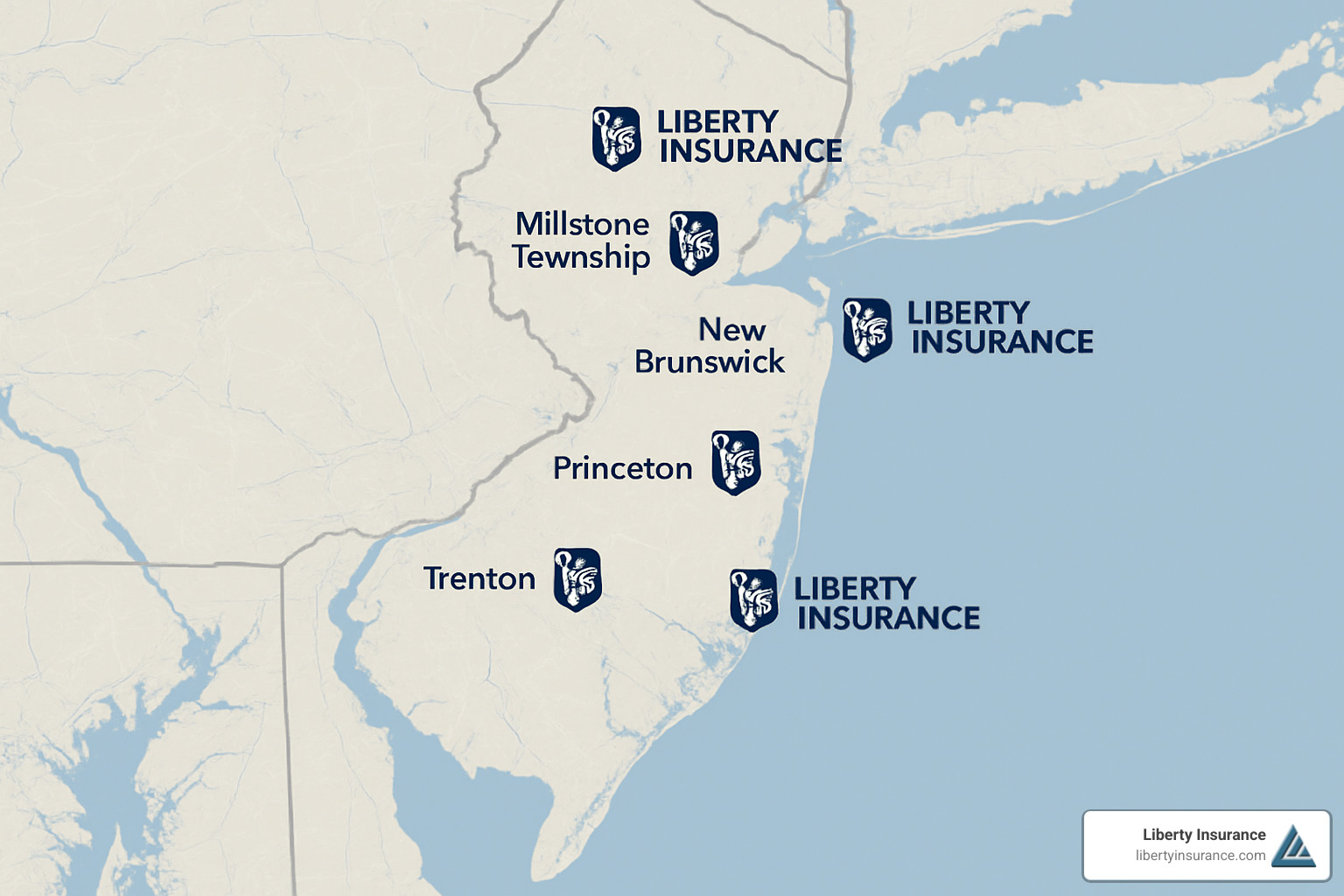
At Liberty Insurance, we specialize in providing custom building insurance solutions for both residential and commercial properties across New Jersey, including Millstone Township, Trenton, Toms River, New Brunswick, and Princeton. Our experienced team understands the unique risks in these areas and can help you design coverage that addresses your specific needs.
The peace of mind that comes with proper building insurance is invaluable. When you’re adequately protected, you can focus on what matters—growing your business, enjoying your home, or managing your investment properties—without the shadow of potential disaster hanging over you.
For more information about protecting your business property, explore our More info about business property insurance resources or contact our team for personalized guidance.
Don’t wait until disaster strikes to find gaps in your coverage. Review your building insurance today and ensure you’re fully protected for whatever tomorrow may bring.

