
Why Business Asset Protection Insurance Is Essential for Every Business Owner
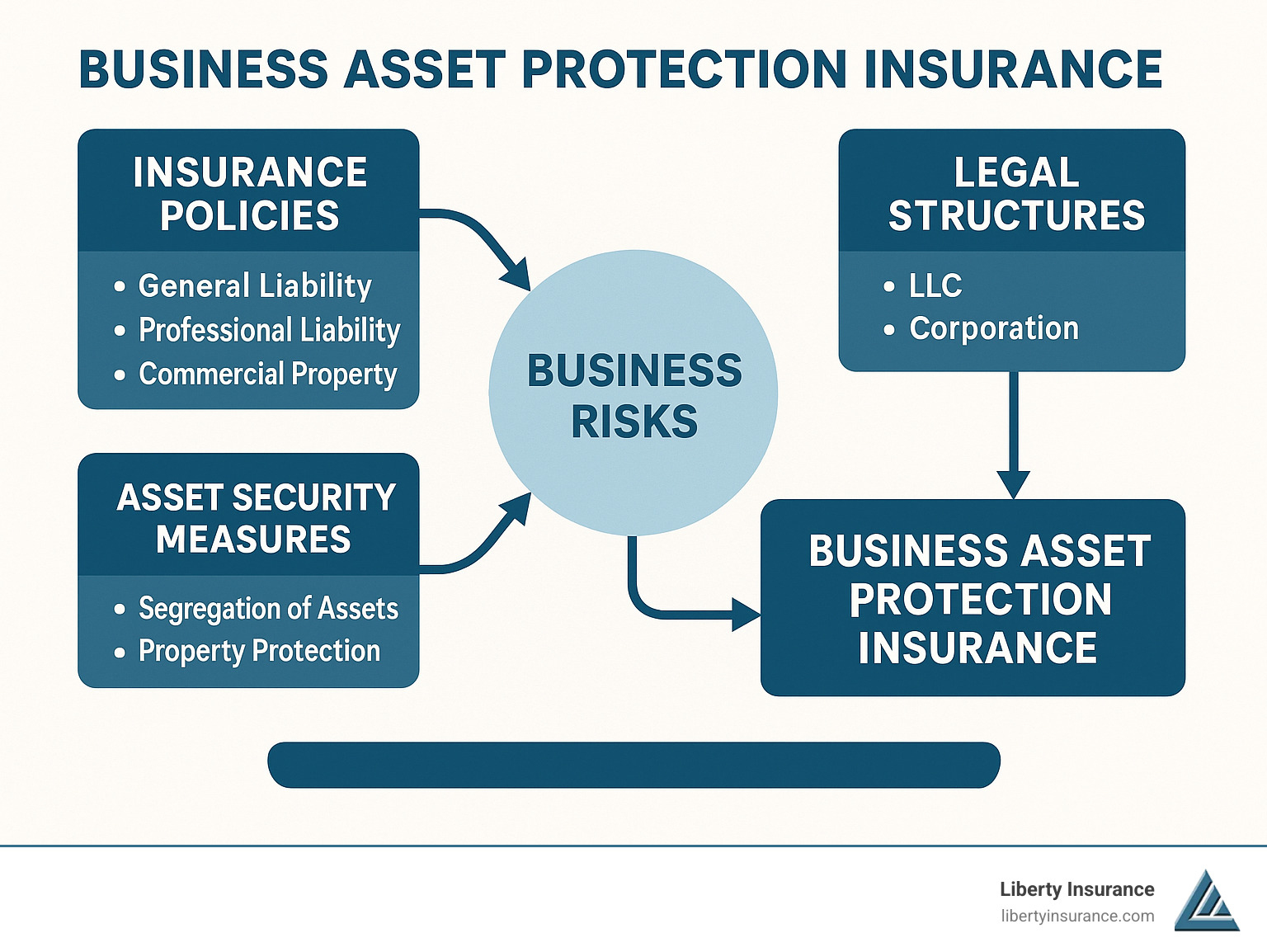
Business asset protection insurance is a comprehensive strategy that combines various insurance policies and legal structures to shield your company’s assets from lawsuits, creditor claims, and unexpected disasters. If you’re searching for quick protection for your business assets, here’s what you need to know:
| Key Components of Business Asset Protection | Purpose |
|---|---|
| General Liability Insurance | Protects against third-party bodily injury and property damage claims |
| Professional Liability Insurance | Covers errors, omissions, and negligence in professional services |
| Commercial Property Insurance | Safeguards physical assets from fire, theft, and natural disasters |
| Umbrella Liability Insurance | Provides additional coverage beyond standard policy limits |
| Business Structure (LLC/Corporation) | Creates legal separation between personal and business assets |
In today’s litigious business environment, where over 880,000 lawyers are licensed to file lawsuits and the FBI reports approximately 250,000 criminals make their living through litigation, protecting your business assets isn’t optional—it’s essential.
When a business faces a lawsuit or catastrophic event without proper protection, the consequences can be devastating. Consider this sobering reality: a standard slip-and-fall case can result in awards exceeding $800,000 ($300,000 compensatory plus $500,000 punitive damages), yet many basic insurance policies cap coverage at just $1 million.
What happens when claims exceed your coverage? Without proper asset protection, your personal savings, investments, and even your home could be at risk.
I’m Andrew Harris, a Certified Insurance Counselor with extensive experience helping business owners develop comprehensive business asset protection insurance strategies to safeguard their hard-earned assets from unexpected claims and litigation.
Important business asset protection insurance terms:
– commercial fire damage insurance
– manufacturing liability insurance
– business interruption insurance
Business Asset Protection Insurance 101
The American business landscape buzzes with both opportunity and risk. With 33.3 million small businesses operating nationwide, entrepreneurs steer a complex risk environment daily—from customers slipping on wet floors to sophisticated cyber attacks targeting sensitive data.
At its heart, business asset protection insurance acts as your financial bodyguard, standing between your hard-earned assets and the claims that could drain them dry. This protection becomes especially vital for small business owners, who often have their personal financial future intertwined with their business success.
Uncle Sam requires certain basic protections for any business with employees:
- Workers’ compensation insurance
- Unemployment insurance
- Disability insurance (in some states)
But these mandatory coverages are just the foundation of what your business truly needs to stay secure.
What Is Business Asset Protection Insurance?
Despite its name, business asset protection insurance isn’t a single policy you can purchase with one phone call. It’s more like a financial security system—a strategic combination of insurance policies and legal structures that work together to create multiple layers of defense.
“Think of business asset protection insurance as your business’s immune system,” explains John Rothbury, a veteran insurance broker. “Just as your body has multiple defenses against illness, your business needs multiple layers of protection against financial threats.”
This protection typically combines primary insurance policies addressing specific risks (like general liability), supplemental coverage extending beyond normal limits (umbrella policies), legal business structures separating personal and business assets (LLCs, corporations), and smart financial practices that maintain clear boundaries between your business and personal finances.
When properly implemented, this system creates a sturdy wall between business liabilities and your personal wealth—keeping your home, savings, and future secure even if disaster strikes your company.
Why Your Company Can’t Afford to Skip Business Asset Protection Insurance
Many business owners dismiss their vulnerability until they’re facing a crisis. The reality is sobering:
America has over 880,000 lawyers, each licensed to file lawsuits. According to FBI data, approximately 250,000 criminals actually make their living through litigation. A typical bodily injury claim averages $20,000—but can easily balloon to hundreds of thousands or even millions in damages.
Sally, who owns a small bakery in Princeton, learned this lesson the painful way: “I thought my business was low-risk—until a customer slipped on a wet floor and sued for $350,000. My basic policy only covered $300,000, leaving me personally exposed for the difference plus legal fees. I nearly lost my home.”
The truth is, business asset protection insurance isn’t an expense to minimize—it’s an investment in your business’s survival and your personal financial security.
Risks & Liabilities That Target Your Wealth
Today’s business owners face threats that can transform from minor incidents into financial catastrophes with frightening speed.
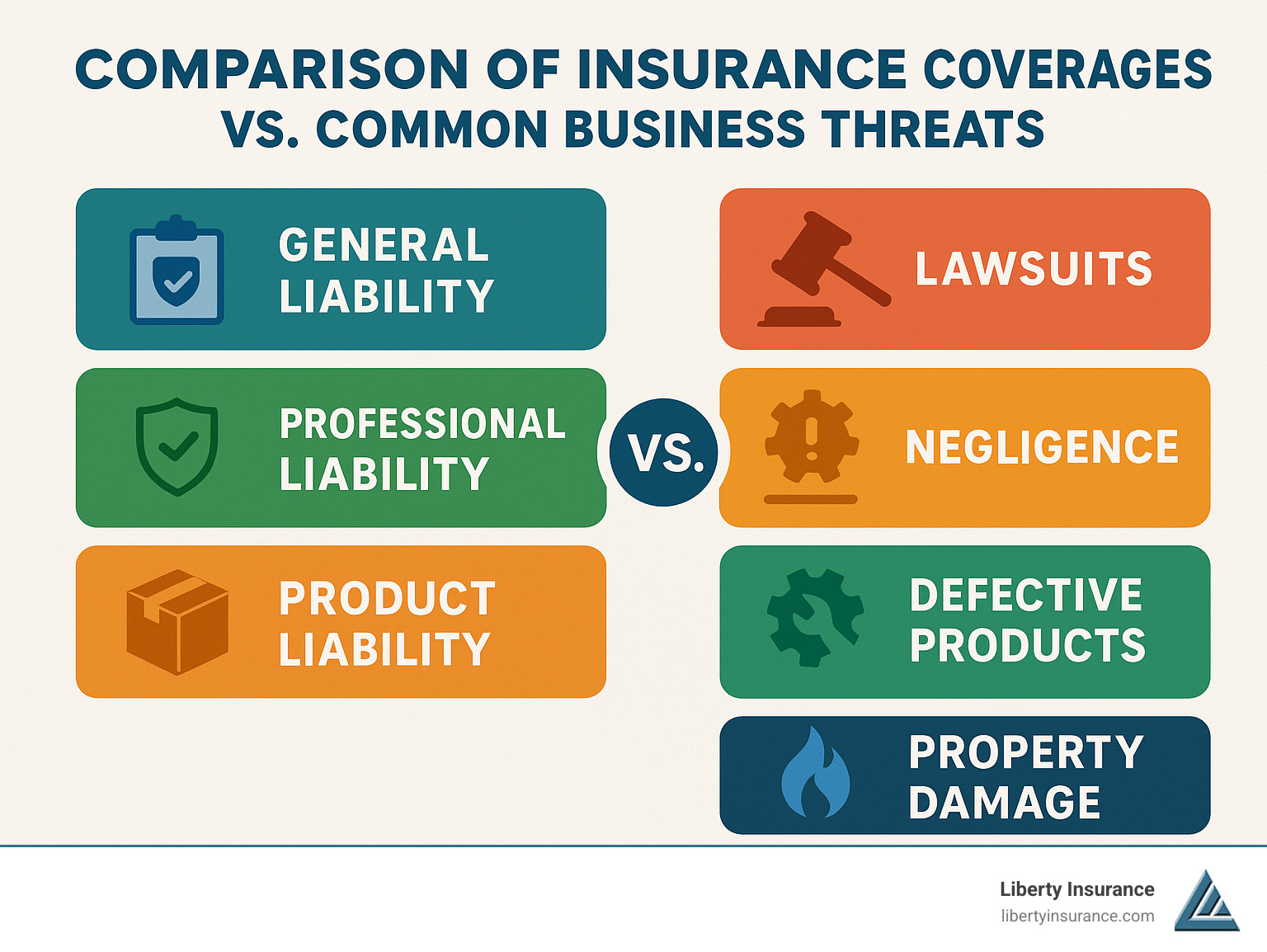
Business asset protection insurance shields you from physical premises risks like customer injuries and slip-and-fall accidents. It protects against operational dangers including fire, theft, and natural disasters that could destroy equipment and inventory. Your professional reputation faces threats too—from errors and omissions to breach of contract claims that can result in costly lawsuits.
In our digital world, data breaches and cyber attacks represent growing concerns, while employment-related issues like wrongful termination claims continue to plague businesses of all sizes.
Perhaps most concerning is the rise of “nuclear verdicts”—jury awards exceeding $10 million. These catastrophic judgments can instantly destroy inadequately protected businesses and reach into owners’ personal assets if proper legal structures aren’t established.
Without comprehensive business asset protection insurance, everything you’ve worked for stands vulnerable to these threats. With proper protection, you can focus on growing your business instead of worrying about what might go wrong.
Core Insurance Policies That Shield Your Assets
Creating an effective business asset protection insurance strategy is like building a fortress around your company’s valuable assets. You need different types of protection working together to create a truly secure defense. Let’s explore the essential policies that form this protective barrier.

General Liability & Property—Your First Line of Defense
Think of general liability insurance as your business’s front gate—it’s where your protection begins. This foundational coverage shields you when customers slip on your wet floor, when your employee accidentally damages a client’s property, or when your marketing materials unintentionally copy a competitor’s slogan.
“General liability is like the front door lock on your home,” says Maria Thompson of Liberty Insurance in Trenton, NJ. “It’s your basic protection against the most common threats, but it shouldn’t be your only security measure.”
The average small business pays around $810 annually (about $68 monthly) for this essential coverage, though your costs will vary based on your industry’s risks, location, and how much coverage you need.
Paired with general liability, Commercial Property Insurance protects the physical heart of your business—your building, equipment, inventory, and furnishings. When disasters strike—whether it’s a kitchen fire in your restaurant, storm damage to your roof, or vandals breaking your storefront windows—this coverage helps you rebuild without emptying your savings.
Here in New Jersey, where we’ve seen increasingly severe weather events, proper property insurance has been a lifesaver for our clients. We’ve watched businesses in Toms River and New Brunswick bounce back after unexpected disasters instead of closing their doors permanently.
Professional & Product Liability for Service and Manufacturing Risks
If your business provides advice or services, professional liability insurance (also called E&O) is your safety net when things go wrong. For about $744 annually ($62 monthly), you gain protection against claims that your work caused financial harm to clients.
This coverage is particularly vital if you’re an accountant whose tax advice led to penalties, a consultant whose strategy didn’t deliver promised results, or a tech provider whose software glitched at a critical moment. Even when claims are groundless, this insurance covers your legal defense costs—which can be substantial even when you’ve done nothing wrong.
For businesses that make or sell products, product liability insurance provides crucial protection. Whether you manufacture custom furniture in Millstone Township or distribute health supplements from your Princeton warehouse, this coverage shields you from claims about defective products, manufacturing flaws, or inadequate warnings. It can even help cover the enormous costs of product recalls.
In today’s consumer-protection-focused legal environment, product liability insurance isn’t optional for manufacturers—it’s as essential as your production equipment.
Umbrella Liability: Extra Mileage for Your Limits
Even with solid primary coverage, catastrophic events can quickly exhaust your policy limits. That’s when Umbrella Liability Insurance becomes your financial lifesaver.
“Think of umbrella coverage as your financial parachute,” explains Chris Bennett, a risk management consultant. “You hope you never need it, but if your primary coverage limits are breached, you’ll be incredibly grateful to have that extra layer of protection.”
Here’s how it works: If you have $1 million in general liability coverage and face a $3.5 million judgment, without umbrella coverage, you’d be personally responsible for the $2.5 million gap. With a $5 million umbrella policy, however, that excess is covered—protecting not just your business assets but potentially your personal savings, home, and investments too.
Many of our Liberty Insurance clients find that umbrella coverage delivers remarkable peace of mind for a surprisingly affordable premium—often just a fraction of their primary policy costs.
Beyond Insurance: Extra Layers of Protection
When it comes to safeguarding your business, insurance is just the beginning. The smartest business owners know that true peace of mind comes from building multiple defensive walls around their assets. Think of it as creating a modern-day fortress for your business—with each layer making it harder for threats to reach what you’ve worked so hard to build.

Choosing the Right Business Structure
Your business structure isn’t just paperwork—it’s your first line of defense against personal liability. Let me break this down in plain English:
If you’re operating as a sole proprietorship, there’s zero separation between you and your business. That coffee shop lawsuit? It could cost you your house. That’s because everything you own is fair game if your business gets sued.
General partnerships aren’t much better—you could end up paying for your partner’s mistakes, which is a risk many don’t fully appreciate until it’s too late.
The game-changer for most small businesses is forming an LLC (Limited Liability Company). This creates a legal wall between your personal assets and your business debts. According to IRS research on LLC benefits, this structure offers the perfect balance of protection and flexibility for most small businesses.
“I can’t tell you how many sleepless nights I avoided by forming an LLC,” shares Maria, a bakery owner in Princeton. “When a delivery driver slipped on our steps last winter, my business insurance handled it—and my family home was never at risk.”
If you need even more formality, corporations (S or C) provide robust protection, though they come with more paperwork and different tax considerations.
Financial & Legal Firewalls
Beyond your business structure, there are practical steps that strengthen your protection strategy. These aren’t complicated, but they make a world of difference:
Keep everything separate. The simplest yet most overlooked protection is maintaining clear boundaries between personal and business finances. This means dedicated business bank accounts, separate credit cards, and paying yourself properly. When business and personal funds mix, courts can “pierce the corporate veil,” making your personal assets vulnerable.
Put it in writing. Handshake deals might feel friendly, but written contracts protect everyone. Clear agreements with clients, vendors, and employees prevent misunderstandings and provide critical protection if things go sideways.
Protect your ideas. Your intellectual property—from your logo to your proprietary processes—deserves legal protection through trademarks, copyrights, and patents.
Many of our Liberty Insurance clients also benefit from additional protection strategies like asset protection trusts, which can shield significant assets from creditors. ERISA-qualified retirement plans offer federal protection that keeps your retirement funds safe even in worst-case scenarios.
For New Jersey property owners, strategies like tenancy by entirety (for married couples) and homestead exemptions can provide additional layers of protection for your home.
James, a contractor from Toms River, told me recently: “After fifteen years in business, I finally got serious about business asset protection insurance and proper legal structures. Six months later, we had a major claim from a jobsite accident. My comprehensive plan with Liberty Insurance covered the damages, and because my business was properly structured, my family’s future remained secure.”
The strongest protection comes from combining the right insurance policies with smart legal structures and financial practices. This multi-layered approach ensures that one unexpected event doesn’t bring down everything you’ve built.
Building, Reviewing & Claiming: Your Roadmap to Coverage
Creating an effective business asset protection insurance strategy isn’t something you set up once and forget. It’s a living, breathing part of your business that grows and changes right alongside you. Let’s walk through how to build, maintain, and actually use this protection when you need it most.
How Much Does Business Asset Protection Insurance Cost?
When business owners ask me about costs, I always say, “It depends—but probably less than you fear and definitely less than going without it.”
The truth is, pricing varies widely based on several factors that make your business unique:
Your industry (a construction company typically pays more than a consulting firm), your location (premiums in flood-prone areas of New Jersey differ from those in Princeton’s business district), your team size, your claims history, and the coverage limits you choose all affect what you’ll pay.
That said, here are some helpful benchmarks from what we typically see:
The average small business pays around $810 per year ($68 monthly) for basic General Liability coverage. If you opt for a Business Owner’s Policy (BOP) that bundles liability and property coverage, expect around $1,687 annually ($141 monthly). Workers’ Compensation averages about $1,032 yearly ($86 monthly), while Professional Liability runs approximately $744 per year ($62 monthly).
At Liberty Insurance, we’ve found many of our New Jersey clients save up to 10% when they bundle their BOP with workers’ comp coverage—a significant savings that adds up over time.
As Thomas Richardson, one of our risk specialists, often tells clients: “The cost of adequate protection is always less than the cost of inadequate protection. I’ve watched businesses save $2,000 on premiums only to face $200,000 in uncovered losses—that’s a terrible bargain by any measure.”
When balancing costs against protection, consider your risk exposure (higher-risk businesses justify higher premiums), deductible options (higher deductibles mean lower premiums but more out-of-pocket costs when claims happen), appropriate coverage limits, and bundling opportunities that can significantly reduce your overall costs.
Filing a Claim Without the Headache
Even with the best protection strategy, claims happen. The true test of your insurance isn’t when you’re paying premiums—it’s when you need to file a claim.
When the unexpected occurs, follow these steps for a smoother experience:
First, document everything. Gather date, time, and location details; names and contact information for everyone involved; photos or videos of damages; witness statements; and any official reports. This documentation becomes your case foundation.
Next, notify your insurer immediately. Most policies require prompt notification, and delays can complicate your claim. At Liberty Insurance, our claims team is available 24/7 because we know disasters don’t wait for business hours.
Work with your adjuster as a partner, not an adversary. Provide requested information promptly and maintain open communication. Your adjuster wants to resolve your claim efficiently—that’s their job.
Understand the timeline expectations. Most standard claims resolve within 30-45 days, though complex cases naturally take longer. Ask your adjuster for a realistic timeline early in the process.
If you disagree with a claim determination, most policies provide formal appeal processes. Don’t hesitate to use them when warranted.
Robert, one of our claims specialists at Liberty Insurance, puts it perfectly: “The claims process is where you find the true value of your insurance. That’s why we focus on being responsive and transparent with our clients from Millstone Township to Princeton—when you’re dealing with a business crisis, the last thing you need is a complicated claims process.”
Top FAQs About Business Asset Protection Insurance
Do I need coverage if I already formed an LLC?
Yes, absolutely. I hear this question constantly from new business owners who believe their LLC makes them invincible. The reality? Your LLC creates a valuable legal barrier between your personal and business assets, but it doesn’t protect your business assets themselves from claims.
Think of it this way: your LLC might protect your personal home and savings if your business is sued, but without proper insurance, your business equipment, inventory, accounts receivable, and future earnings remain completely exposed.
Additionally, certain actions can “pierce the corporate veil,” potentially eliminating LLC protection entirely. Insurance provides an essential complementary layer of protection that works alongside your legal structure.
Maria, who’s helped hundreds of New Jersey businesses with their protection plans, shares: “I’ve seen too many business owners find the hard way that their LLC isn’t bulletproof. When a major claim hits and they find their business assets—representing years of hard work—completely exposed without proper insurance coverage, it’s devastating.”
What are common exclusions I should watch for?
Every policy has limitations, and understanding them before you need to file a claim is crucial. Most business insurance policies won’t cover:
Intentional acts (damages you deliberately cause), known pre-existing conditions (issues you were aware of before coverage began), and often punitive damages awarded by courts. Many policies also exclude certain high-risk activities specific to your industry and professional services (which typically require separate E&O coverage).
At Liberty Insurance, we conduct thorough coverage reviews with our clients to identify and address these potential gaps before they become expensive problems. We’d rather have an honest conversation about coverage limitations now than an uncomfortable one after a claim is denied.
How often should I review my asset protection plan?
Your protection strategy should evolve as your business does. At minimum, review your coverage:
Annually (mark it on your calendar alongside tax preparation), when your business experiences significant growth, when adding new products or services, when acquiring major assets, after any claim or near-miss incident, and when laws or regulations change.
As Jennifer from our Princeton office often reminds clients: “Business evolution demands protection evolution. The coverage that perfectly protected your startup may leave your growing business dangerously exposed as you add employees, locations, or services.”
Your business asset protection insurance strategy should be as dynamic and forward-thinking as you are. After all, you’re not building a business just for today—you’re building it for the future.
Conclusion

Let’s face it—we live in a world where a single lawsuit can derail years of hard work. I’ve seen it happen to businesses that thought “it won’t happen to me.” But the truth is, comprehensive business asset protection insurance isn’t just another expense to grudgingly check off your list—it’s the fortress that stands between your dreams and financial disaster.
Think of your protection strategy as layers in a cake. Each layer matters and serves a specific purpose. The foundation starts with those core insurance policies custom to your industry’s unique challenges. Whether you’re a contractor in Toms River worried about workplace injuries or a consultant in Princeton concerned about professional liability, your protection needs to be as individual as your business.
The legal structure of your business forms the second layer. I can’t tell you how many business owners I’ve met who formed an LLC but still used their personal checking account for business expenses! These separations only work when you maintain them consistently.
Your daily financial practices create the third layer. Those seemingly small habits—keeping separate accounts, documenting everything, using formal contracts—can make the difference between weathering a storm and losing everything you’ve built.
Finally, the protection that worked perfectly for your five-person startup might leave dangerous gaps as you grow to 25 employees with two locations. That’s why regular reviews aren’t optional—they’re essential maintenance for your business safety net.
At Liberty Insurance, we’ve walked alongside countless New Jersey business owners through every stage of growth. We’ve celebrated with them as they expanded, and we’ve stood firmly by their side when challenges arose. Our customizable solutions don’t just check boxes—they provide real peace of mind that allows you to focus on what you do best: running your business.
Here’s the hard truth many advisors won’t tell you: once a claim happens or a lawsuit lands on your desk, many protective doors slam shut. The time to strengthen your defenses is now, before you need them.
Don’t let everything you’ve worked for remain vulnerable another day. Your business deserves a protection plan as unique and resilient as you are. Visit our Business Insurance page to learn how we can help secure your business assets and personal wealth for the long haul.
After all, the best business asset protection insurance strategy isn’t the one that costs the least—it’s the one that’s there when you need it most.

