
Why Business Asset Protection is Critical for Your Company’s Survival
Business asset protection involves a set of legal strategies meticulously designed to shield your company’s valuable resources from creditors, lawsuits, and other significant financial threats. In today’s increasingly litigious society, where legal challenges can arise unexpectedly, safeguarding your business assets is not just a prudent measure—it is an essential component for long-term survival and sustainable success. The failure to implement a robust protection plan can expose your enterprise to catastrophic risks.
As a business owner, you pour your time, money, and passion into building your company. This dedication creates value, but it also creates unique vulnerabilities. Without proper protection, a single lawsuit, a disgruntled employee, or an unforeseen creditor claim could wipe out everything you’ve worked tirelessly to build. The assets at risk are not just the obvious ones; they include your physical equipment, valuable inventory, commercial real estate, bank accounts, and even your personal assets like your home and savings if your business is not structured correctly.
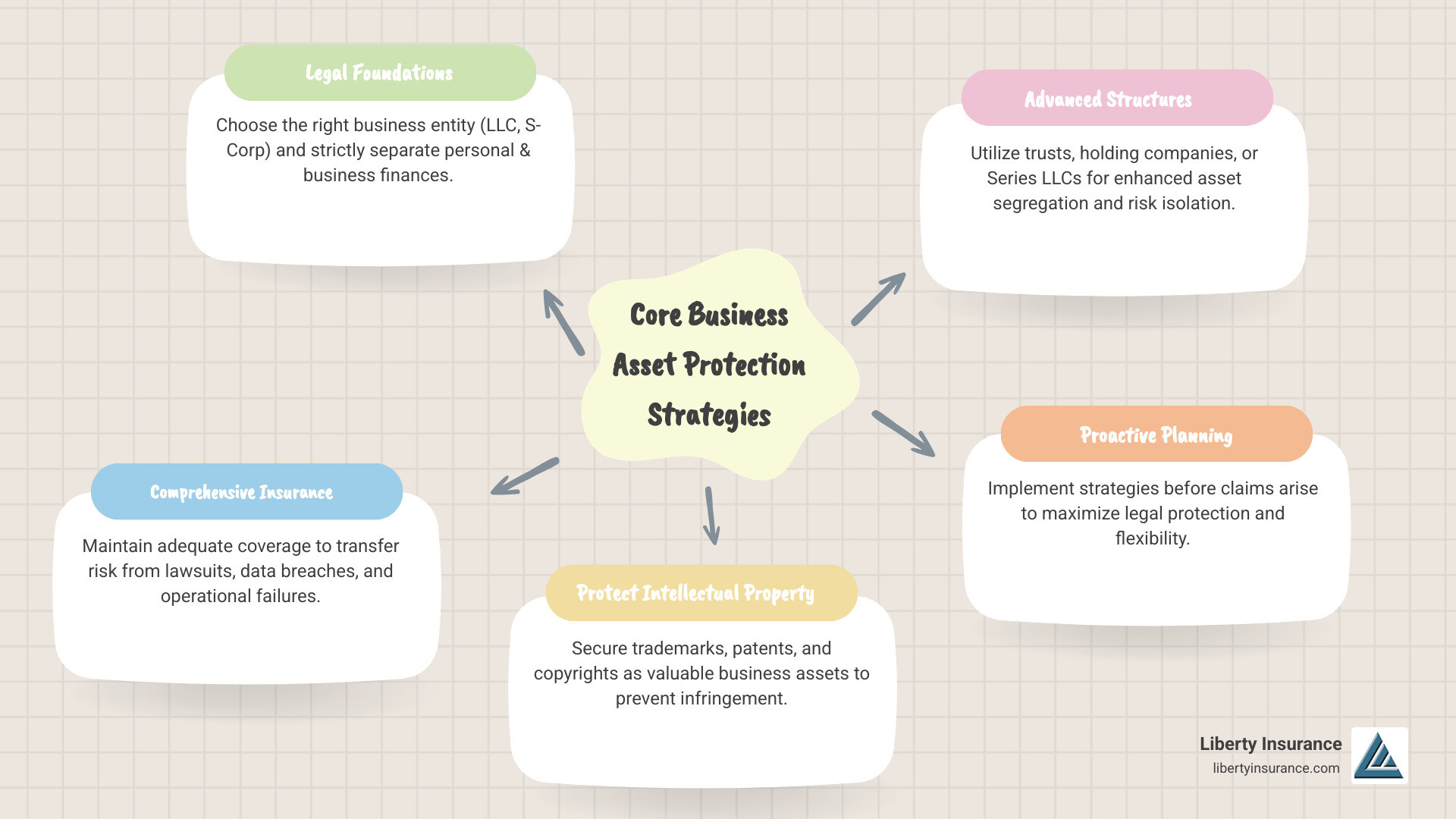
Effective asset protection planning is fundamentally proactive, not reactive. The most robust and legally sound strategies are implemented long before any problems arise. This foresight provides the maximum flexibility and the strongest legal protection. Once a claim has been made or a lawsuit filed, your options become severely limited, and any actions taken to protect assets can be viewed as fraudulent. Key strategies that form the bedrock of a solid plan include choosing the right business entity, maintaining a strict separation between personal and business finances, securing comprehensive insurance coverage, and diligently protecting intellectual property.
Modern businesses face a complex web of risks, from internal threats like employee disputes and data breaches to external pressures such as regulatory fines and economic downturns. The good news is that effective protection doesn’t always require convoluted or prohibitively expensive maneuvers. Simple, foundational strategies like forming a Limited Liability Company (LLC) and maintaining adequate general and professional liability insurance can provide a substantial shield of security against many common threats.
I’m Andrew Harris, a Certified Insurance Counselor (CIC) and Accredited Advisor in Insurance (AAI). Throughout my career, I have dedicated myself to helping business owners navigate these complexities. I specialize in protecting their hard-earned assets through comprehensive insurance solutions and strategic risk management. I understand precisely how business asset protection integrates with practical, tailored insurance planning to create the robust financial security that growing companies need to thrive with confidence.
Understanding the Foundations of Asset Protection
Business asset protection is the strategic art of creating legal and financial barriers to keep your valuable resources—such as equipment, cash flow, real estate, and intellectual property—safe from unexpected and potentially devastating threats. It is crucial to understand that this is not about illegally hiding money, evading taxes, or defrauding creditors. Good asset protection is completely legal and ethical when done correctly. It’s about smart, proactive structuring of your business and personal holdings before problems arise. As noted by financial experts, businesses need asset protection, too, yet a surprising number of entrepreneurs overlook this crucial planning until it’s far too late, when their options are limited and ineffective.
What Are the Primary Risks to Your Business Assets?
Every business, regardless of size or industry, faces a multitude of threats that can jeopardize its financial health and ultimate survival. Many owners operate with a false sense of security, not realizing their profound vulnerability until something goes catastrophically wrong.

Key risks include:
- Lawsuits: This is a broad category. A customer could slip and fall on your premises (premises liability), an employee could claim wrongful termination or harassment, or a competitor could allege patent infringement. Each can lead to crippling legal fees and judgments.
- Employee Disputes: Beyond discrimination, wage and hour claims are increasingly common and costly. Misclassifying employees as independent contractors or failing to pay proper overtime can result in significant class-action lawsuits and government penalties.
- Creditor Actions: If your business experiences cash flow problems and cannot service its debt, creditors may pursue your business assets to settle unpaid bills. If you’ve signed a personal guarantee, they can come after your personal assets as well.
- Data Breaches: A cyberattack that exposes sensitive customer or employee data can be ruinous. The costs include not only forensic investigation and system repair but also regulatory fines (like GDPR or CCPA), customer notification expenses, and immense reputational damage.
- Operational Failures: A defect in your product could cause harm, leading to expensive product liability lawsuits. Similarly, a critical error in a service you provide can trigger claims for financial damages.
- Internal Theft: Fraud or embezzlement by a trusted employee can drain a company’s resources over time. This can range from stealing inventory to sophisticated financial schemes.
- Regulatory Fines: Failure to comply with industry-specific regulations (like HIPAA in healthcare) or general business rules (like environmental standards) can lead to steep government penalties that threaten a company’s solvency.
It’s also important to understand statutory protections like the homestead exemption, which can shield a certain amount of equity in your primary residence from creditors. However, these protections vary dramatically by state and often do not protect against all types of debts, making them an unreliable sole defense.
Asset Protection vs. Liability Limitation: A Key Distinction
While often used interchangeably in casual conversation, these two concepts are distinct yet complementary pillars of a strong defense.
Asset protection is about shielding what you already own from future claims. It’s like building a fortress around your existing wealth—your personal savings, home, and investments—to prevent a business lawsuit from seizing them. This involves strategies like trusts and holding companies.
Liability limitation, on the other hand, is about containing problems at their source. Forming a separate legal entity like an LLC or a corporation creates this limitation. It ensures that business debts and lawsuits generally stay within the business entity, preventing them from automatically flowing through to you personally.
Think of it this way: liability limitation is the fire door in a building that prevents a fire in one room from spreading to the rest of the structure. Asset protection provides fireproof safes within each room to protect the valuables inside, even if the room itself is compromised. A comprehensive plan requires both. A multi-layered approach that combines a strong legal entity with smart asset titling and insurance makes it exponentially harder for creditors to reach your assets, giving you the peace of mind and financial stability to rebuild if your business ever faces a crisis.
Foundational Strategies: Legal Structures and Separation
Your business’s legal structure is the absolute foundation of your entire asset protection plan. Making the right choice from the very beginning can save you from unimaginable financial and personal distress down the road. The reality is that your choice of business entity can mean the difference between losing everything you own and keeping your personal assets safe and secure from business-related liabilities.
Choosing the Right Entity for Business Asset Protection
Running a business as a sole proprietorship or a general partnership is like driving without car insurance—the risk is immense and entirely unnecessary. These structures offer zero liability protection, meaning your personal assets (your home, car, savings) are legally indistinguishable from your business assets and are fair game if the business is sued or incurs debt.
- Sole Proprietorships & General Partnerships: These are the default structures if you do nothing. They expose you to unlimited personal liability. Creditors can and will pursue your personal assets to satisfy business debts.
- Limited Liability Companies (LLCs): An extremely popular choice for small to medium-sized businesses, an LLC creates a legal wall—often called the “corporate veil”—between your business and personal finances. It combines the liability protection of a corporation with the tax flexibility and operational simplicity of a partnership. Many states also offer enhanced protection for multi-member LLCs through “charging order” provisions, which can prevent a creditor from seizing control of a member’s interest.
- S Corporations (S-Corps): This is a tax election, not a separate legal entity. An LLC or a C-Corporation can elect to be taxed as an S-Corp. This allows profits and losses to be passed through directly to the owners’ personal income without being subject to corporate tax rates. A key benefit is the potential to save on self-employment taxes by paying owners a “reasonable salary” and distributing remaining profits as dividends.
- C Corporations (C-Corps): This structure provides very strong liability protection but introduces the concept of double taxation (the corporation pays tax on its profits, and shareholders pay tax again on dividends they receive). This structure is often better suited for larger companies that plan to reinvest most of their profits, go public, or raise significant capital from venture capitalists.
As legal experts on How to Protect Your Personal Assets as a Business Owner consistently advise, choosing and properly maintaining the right entity is the critical first step in any effective business asset protection strategy.
The Importance of Separating Personal and Business Finances
Even the strongest legal structure is rendered useless if you fail to respect its separate existence. Mixing personal and business funds, a practice known as commingling, can lead a court to “pierce the corporate veil.” This legal doctrine effectively dissolves the liability shield you created, destroying your protection and putting your personal assets squarely back on the table for business creditors.
To maintain the corporate veil and ensure separation, you must:
- Use separate bank accounts and credit cards: All business income and expenses must flow through dedicated business accounts. Never pay for personal items with business funds, or vice versa.
- Keep meticulous records: Document all significant business decisions, transactions, and meetings. For corporations, this means holding annual board meetings and keeping minutes. For LLCs, it means following the rules of your operating agreement.
- Avoid personal guarantees when possible: When you personally guarantee a business loan, you are voluntarily waiving the liability protection of your entity for that specific debt.
- Properly capitalize the business: The business should have sufficient capital to handle its foreseeable operational expenses.
Treat your business like the distinct legal entity that it is, not as an extension of your personal finances. This discipline is the absolute bedrock of effective asset protection.
Protecting Your Intellectual Property
In the modern digital economy, your intellectual property (IP)—your trademarks, patents, copyrights, and trade secrets—can often be your most valuable asset. Protecting it is not an option; it’s a necessity.
- Trademarks: Protect your brand identity, including your business name, logos, and slogans. Registering your trademark with the USPTO provides nationwide protection.
- Patents: Protect inventions and unique processes. This gives you the exclusive right to make, use, and sell your invention for a set period.
- Copyrights: Protect original creative works like website content, software code, books, and marketing materials. Protection is automatic upon creation, but registration provides stronger legal recourse.
- Trade Secrets: Protect confidential information that gives you a competitive edge, such as customer lists, proprietary formulas, or manufacturing processes. Protection relies on internal controls like Non-Disclosure Agreements (NDAs) and secure data management.
Just as you would secure a valuable real estate portfolio, you must secure your IP rights through proper registration, legal agreements, and proactive defense against infringement. Don’t wait for a competitor to steal your ideas; protect your intellectual capital from the very start.
The Critical Role of Insurance in Your Protection Plan
If legal structures like LLCs and corporations are your fortress walls, then insurance is your active, front-line shield. Insurance is a powerful financial tool that transfers specific risks from your business to an insurance company, turning potentially catastrophic, company-ending events into manageable, predictable premium payments. It is one of the most cost-effective and indispensable layers in any comprehensive business asset protection strategy.

Key Insurance Policies for Asset Protection
A robust insurance portfolio must be tailored to your specific operations. Consider these core coverages as a starting point:
- Business Insurance: Often packaged as a Business Owner’s Policy (BOP), this combines general liability and property insurance into one foundational policy for a wide range of everyday risks.
- Professional Liability Insurance: Also known as Errors & Omissions (E&O), this is essential for any business providing services or advice. It protects against claims of negligence, inadequate work, or professional mistakes that cause financial harm to a client.
- General Liability Insurance: Covers claims of bodily injury or property damage that your business causes to third parties. This is the policy that covers a “slip and fall” accident at your location or damage your employees cause at a client’s site.
- Business Property Insurance: Protects your physical assets, including buildings, equipment, computers, and inventory, from events like fire, theft, or storm damage. This is especially critical for businesses in New Jersey, which face diverse weather risks from coastal storms to winter blizzards.
- Cyber Risk Insurance: Addresses the rapidly growing threat of data breaches and cyberattacks. This policy can cover costs for data recovery, customer notification, credit monitoring, regulatory fines, and legal defense, which are increasingly targeting small and medium-sized businesses.
- Employment Practices Liability Insurance (EPLI): Protects your business against employee claims alleging wrongful termination, discrimination, harassment, and other employment-related issues. Wage and hour claims are a common and expensive risk that is almost always excluded from a general liability policy, making EPLI vital.
- Directors & Officers (D&O) Insurance: Protects the personal assets of company directors and officers from lawsuits alleging a breach of their fiduciary duties or mismanagement of the company.
- Excess Liability Insurance: Also called commercial umbrella insurance, this provides an additional layer of coverage above the limits of your primary policies (like general liability and auto). It kicks in when a catastrophic claim exhausts your underlying policy limits.
- Key Person Insurance: This is a life or disability policy taken out by the business on a critical owner or employee. The death benefit provides the company with funds to manage the transition, hire a replacement, or pay off debt, helping the business survive the loss.
How to Tailor Insurance to Your Business Needs
Insurance is not one-size-fits-all; it must be customized to your unique operational risks, industry, and revenue. Working with an experienced, independent insurance professional is key to getting this right.
At Liberty Insurance, we understand that Insurance for Business Owners in New Jersey requires deep local knowledge and industry-specific expertise. We conduct a thorough risk assessment to identify your unique exposures, helping you balance the cost of premiums with the level of coverage needed. Our goal is to ensure you have the right protection without overpaying for unnecessary policies.
Your business is not static, and your insurance portfolio shouldn’t be either. We recommend regular policy reviews, at least annually, and especially after significant changes like launching a new product, hiring more employees, or expanding to a new location. A customized and regularly updated insurance portfolio effectively transfers your biggest financial risks, allowing you to focus your energy and capital on growth.
Advanced Business Asset Protection Strategies
Once you have foundational protections in place—a properly maintained legal entity and a robust insurance portfolio—you can explore more sophisticated business asset protection strategies. These advanced techniques are designed to add powerful layers of defense, making it significantly more difficult and expensive for determined creditors to reach your most valuable assets.
Using Holding and Operating Companies
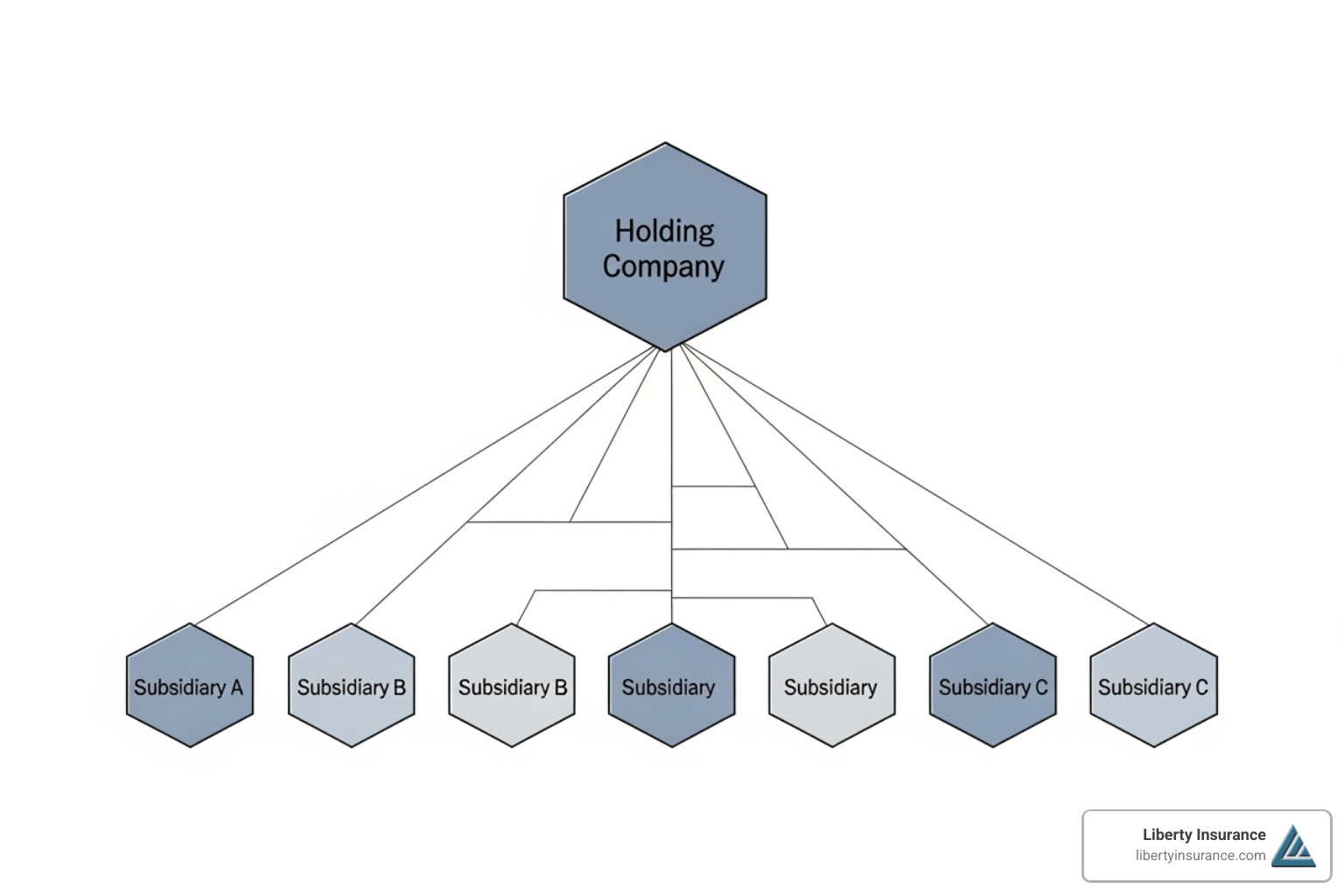
This powerful two-tiered structure is a cornerstone of advanced asset protection. It involves separating your valuable, “safe” assets from your daily, “risky” operations. Here’s how it works: A holding company (often an LLC) is created to own the company’s most valuable assets, such as real estate, expensive equipment, and intellectual property. A separate operating company is then formed to run the day-to-day business, handling customers, employees, and contracts. The operating company then leases the assets it needs from the holding company at a fair market rate.
The key benefit is profound risk isolation. If the operating company is sued (e.g., by a customer or employee), the lawsuit is contained within that entity. The valuable assets, safely housed in the separate holding company, are generally beyond the reach of that lawsuit’s judgment creditors. This strategy for business restructuring here effectively isolates and quarantines liability.
How Trusts Can Safeguard Business Assets
Trusts are highly effective legal tools that separate the legal ownership of an asset from the person who benefits from it (the beneficiary). By transferring assets into a properly structured trust, you can legally remove them from your ownership, making them unreachable by your future personal or business creditors.
- Irrevocable Trusts: When assets are transferred to an irrevocable trust, you, the grantor, relinquish control and ownership. Because the assets are no longer legally yours, they receive very strong protection from any future claims against you. This requires careful planning, as you cannot easily undo the transfer.
- Asset Protection Trusts (APTs): These are specialized trusts designed specifically to shield assets from creditors while often allowing the grantor to retain some level of benefit. Many U.S. states (like Delaware, Nevada, South Dakota, and Wyoming) now have strong statutes for Domestic Asset Protection Trusts (DAPTs), which can be a more practical and less complex alternative to traditional offshore trusts for many business owners.
The core principle is removing assets from your direct ownership before a problem arises. As detailed in these Six Strategies to Protect Your Assets, trusts offer significant, formidable protection, but they must be established proactively with the guidance of experienced legal counsel.
Understanding Series LLCs
A Series LLC is an innovative and powerful form of a limited liability company. It allows a single “master” LLC to create multiple internal “series” or “cells” underneath it. Each individual series can own its own distinct assets, have its own members, and, most importantly, operates as a separate legal entity with its own liability shield. This structure is ideal for businesses with distinct ventures, such as a real estate investor with multiple properties or a business with several unrelated product lines.
If a lawsuit arises from the activities of one series (e.g., a tenant dispute at Property A), the assets held in the other series (Property B, Property C) and the master LLC are protected from that liability. This structure, now available in over 20 states including Delaware, Texas, and Nevada, offers the liability protection of owning multiple LLCs but with potentially lower administrative burdens and costs. However, it is absolutely critical to maintain meticulous, separate records and bank accounts for each series to ensure the courts respect the internal liability shields. As experts on 7 Business Asset Protection Tactics to Limit Liability explain, Series LLCs are an innovative and highly effective tool for modern entrepreneurs when managed correctly.
Legal and Ethical Framework of Asset Protection
Effective and legitimate business asset protection operates within a strict legal and ethical framework. It is crucial to understand that these strategies are designed to protect against future, unforeseen claims. They are not tools to hide assets from existing creditors or to evade current legal obligations. Attempting to move or shield assets after a problem has already arisen can have severe legal consequences, including voiding the transaction and potentially leading to civil or even criminal penalties.
Navigating Fraudulent Transfer and Conveyance Laws
Every state has laws based on the Uniform Fraudulent Transfer Act (UFTA) or its successor, the Uniform Voidable Transactions Act (UVTA). These laws are specifically designed to prevent individuals and businesses from transferring assets to avoid paying legitimate debts. A transfer is generally considered fraudulent (or voidable) if it is made with the actual intent to hinder, delay, or defraud a creditor.
The timing of your planning is absolutely critical. The golden rule of asset protection is to implement strategies before a claim arises or is reasonably foreseeable. Transferring assets after a lawsuit has been filed, or even after you’ve been threatened with one, is a major red flag for courts. Courts have “look-back periods,” often ranging from two to four years (and sometimes longer under federal bankruptcy law), to examine past transfers. If a transfer is deemed fraudulent, a court can undo it, bringing the asset back within the creditor’s reach.
Courts look for certain “badges of fraud” to determine intent, such as:
- Transferring assets to an insider or family member.
- Retaining possession or control of the asset after the transfer.
- The transfer was concealed.
- The transfer occurred shortly after a substantial debt was incurred.
- The transfer involved substantially all of the debtor’s assets.
- The debtor received no reasonable value in exchange for the asset.
Legitimate asset protection has nothing to do with illegal activities like tax evasion laws. It’s about building a strong shield for future, unknown storms, not about dodging existing lightning strikes.
When Is the Right Time to Plan?
The best time to create an asset protection plan was the day you started your business; the second-best time is today. Proactive planning, done in a time of financial peace, provides the widest array of options and the strongest, most defensible legal protection. Waiting until trouble is on the horizon severely limits your choices and exposes any actions to claims of fraudulent conveyance.
Consider implementing or reviewing your asset protection plan at key business milestones:
- Business Formation: Build protection into your company’s DNA from day one.
- Periods of Significant Growth: As your assets and revenue increase, so does your risk profile and what you stand to lose.
- Taking on Debt or Investors: Understand how new loans, personal guarantees, or outside capital affect your risk profile and corporate structure.
- Major Life Events: Personal events like marriage or divorce can have implications for your business assets.
- Exit Planning: A well-structured, legally sound business has more value and is far easier to sell or transition to the next generation.
Consulting with experienced legal and financial advisors early and regularly is essential to create a compliant, effective, and durable plan. Business asset protection is not a one-time event; it is an ongoing process that should be reviewed and adjusted as your business and life circumstances change.
Conclusion
Throughout this guide, we’ve covered the essential landscape of business asset protection, from the foundational importance of legal structures and strict financial separation to the critical, risk-transferring role of insurance and the powerful fortifications of advanced strategies like holding companies and trusts. The single most important takeaway is that effective protection is never about a single, magic-bullet solution. It’s about creating multiple, intelligent layers of defense that work in concert to safeguard the business you have worked so hard to build.
Think of it as a comprehensive security system. Your business entity (like an LLC) provides the foundational legal structure. Your disciplined financial practices, like maintaining separate accounts, build the strong walls. Your comprehensive insurance portfolio acts as your primary, active shield against common and catastrophic risks. Finally, advanced strategies provide the high-security vaults for your most valuable assets. Proactive planning is the thread that ties it all together; waiting until a problem arises severely limits your options and the effectiveness of any strategy you try to implement. The best time to secure your assets was yesterday; the second-best time is right now.
As your business grows, hires new employees, enters new markets, and evolves, so too should your asset protection plan. Regular reviews with your team of legal, financial, and insurance advisors are crucial for maintaining your financial security and adapting to new challenges and opportunities.
At Liberty Insurance, we know that a solid protection plan is fundamentally incomplete without the right insurance coverage. We specialize in creating custom insurance and risk management programs that fit the unique needs of your business. From essential coverages like business property and professional liability to more specialized policies like systems breakdown insurance, we ensure your shield is as strong as it can be.
The risks of doing business are real, but they are manageable. With proper, proactive planning, you can face the future with the confidence that comes from knowing your legacy is protected. Don’t leave your business’s future to chance.
Ready to take the next step in securing your enterprise? Contact Us today. Let’s work together to build a comprehensive risk management and insurance solution that protects your hard-earned assets for years to come.

