
Why Business Interruption Coverage Matters for Your Small Business
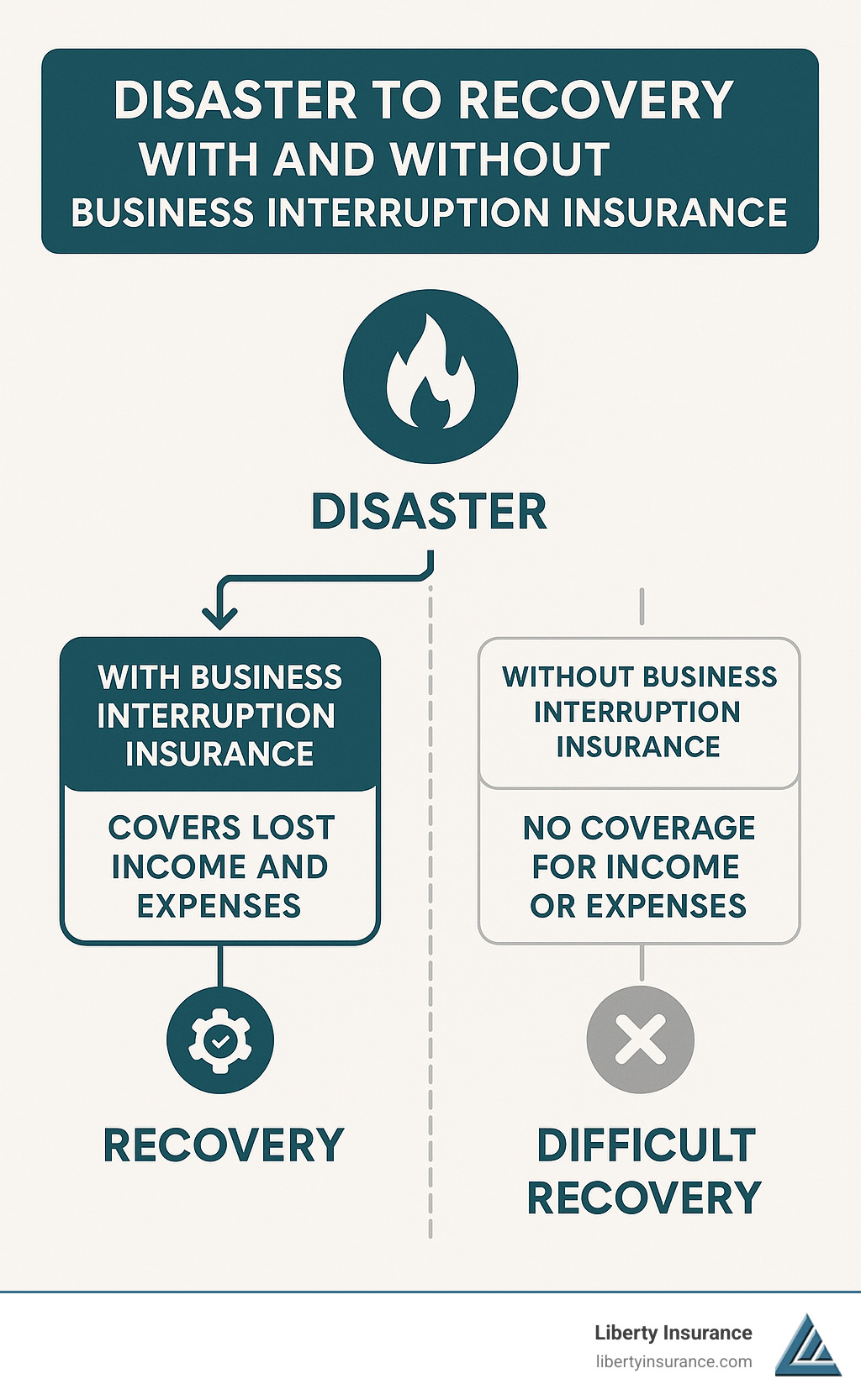
When unforeseen events hit, keeping your business afloat can feel impossible. Business interruption coverage is a vital insurance that steps in to replace lost income and cover ongoing expenses when your business temporarily closes due to physical damage from a covered event.
Here’s a quick look at what it does:
- What it covers: It helps you pay for lost profits, ongoing bills like rent and payroll, taxes, loan payments, and even the cost to set up a temporary location.
- What it generally doesn’t cover: This typically excludes undocumented income, losses from pandemics or viruses, and damage from floods or earthquakes unless you have specific additional policies. Routine utility outages are also usually not covered.
Imagine the unthinkable: a fire destroys your workshop, a thief steals your office computer, or a flood ruins your inventory. While commercial property insurance helps replace your physical assets, how do you keep your business running and pay your employees during the downtime? This is where business interruption coverage becomes your lifeline. Without it, many businesses struggle to recover. In fact, studies show that 25% of small businesses never reopen after a major disaster.
This guide will walk you through everything you need to know about business interruption coverage. We’ll explore what it covers, what it doesn’t, how to choose the right policy, and why it’s a non-negotiable part of your business’s financial safety net.
I’m Andrew Harris, and with over a decade in the insurance industry, specializing in protecting businesses from unforeseen risks, I’ve seen how critical proper business interruption coverage can be. My experience and expertise, honed through rigorous certifications and working with top industry leaders, are here to guide you.
What is Business Interruption Insurance and What Does It Cover?
We all know how important it is to protect our physical business assets. Things like your building, equipment, and inventory are usually covered by commercial property insurance. This coverage steps in to help repair or replace what’s physically damaged. But have you ever stopped to think about the income you lose when your doors are closed? What about all those bills that keep coming, even when your cash register isn’t ringing? That’s precisely the crucial gap that business interruption coverage fills.
Defining Business Interruption Insurance
At its heart, business interruption coverage (which you might also hear called business income insurance) is designed to do one key thing: replace the income your business loses. This happens when you’re forced to temporarily stop or significantly slow down operations because of physical damage from an event your policy covers. It’s not about rebuilding your storefront brick by brick. Instead, it’s about making sure your earning power and financial footing stay strong while your property is being put back together.
Think of it this way: your commercial property insurance is like the superhero that fixes a broken window. But business interruption coverage is the hero that pays you for all the sales you would have made if that window hadn’t been broken and forced you to close up shop. This type of coverage usually isn’t sold on its own. Instead, you’ll often find it as part of a comprehensive package, like a Business Owners Insurance policy. Or, you can add it on as an endorsement or rider to your existing Commercial Property Insurance. We always encourage you to chat with our experts to ensure your policy truly fits your business like a glove.
Covered Events: What Triggers a Claim?
For your business interruption coverage to spring into action, there’s usually a main requirement: your business property must have suffered direct physical loss or damage. And this damage needs to be caused by a “covered peril.” What does that mean exactly? It simply means the event that made your business stop running must be something specifically listed and protected by your insurance policy.
Common “covered perils” that can trigger business interruption coverage include:
- Fire: A devastating fire can completely shut down your ability to operate.
- Theft or Vandalism: If essential equipment is stolen, or your premises are vandalized so badly you can’t use them.
- Wind and Lightning: Damage from severe storms, like a roof ripped off by strong winds or a lightning strike causing major structural harm.
Most policies also have a “waiting period” before the coverage truly begins. Think of it as a small time deductible, typically lasting anywhere from 48 to 72 hours. So, if your business is only closed for a very short time, like just one day, the income lost during that specific day might not be covered. This waiting period helps make sure that claims are made for bigger disruptions, not just minor inconveniences.
Knowing what makes a claim valid is super important. If you want a deeper dive into what’s typically included and what’s not, resources like Business Interruption Insurance: What it Covers, What it Does Not can offer more details.
Covered Expenses: Protecting Your Bottom Line
When your business is forced to close, the revenue stops flowing, but many of your expenses certainly don’t! This is precisely where business interruption coverage truly shines. It steps in to help you cover those crucial costs and keep your financial boat steady during a crisis. The whole idea is to get your business back to the same financial spot it would have been in if the disruption had never happened.
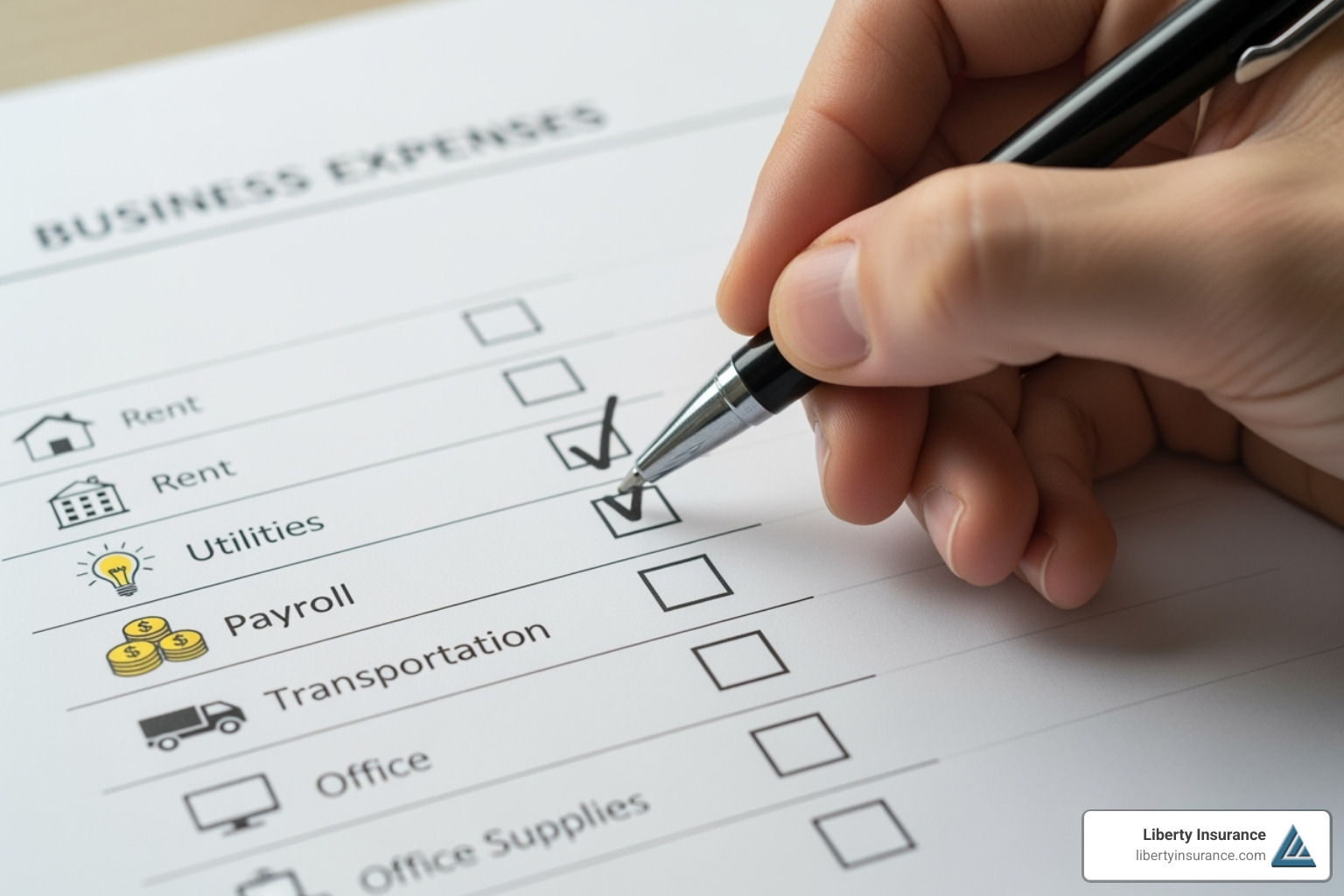
Let’s look at the kinds of expenses this coverage typically helps with:
First and foremost, it covers your Lost Net Income (Profits). This is the biggest piece of the puzzle, replacing the profits your business would have earned during the time you were shut down. We figure this out using your past financial records and future projections, so you’re not left guessing.
Next, it helps with those ongoing fixed costs like your Mortgage, Rent, and Lease Payments. Even if your doors are closed, your landlord still expects the rent, right? This coverage makes sure those bills are paid. It also helps cover Employee Payroll, which is vital for keeping your valuable team members on staff, even when you’re not making money. This makes for a much smoother reopening. Don’t forget Taxes! Business taxes don’t take a break just because your operations do, and this coverage helps you pay them on time to avoid penalties. Similarly, if you have Loan Payments for your business, this helps you keep making them, protecting your credit and financial standing.
Sometimes, to keep things moving, you might need to find a new place to work temporarily. That’s where Relocation Costs come in; expenses like renting new space or setting up utilities can be covered. Finally, there are Extra Expenses to Resume Operations. These are additional costs you might take on to minimize how long you’re closed or how much you lose. This could mean paying for expedited shipping for new equipment, paying employees overtime to speed up repairs, or even advertising to let everyone know you’re back open. These “extra expenses” are covered if they genuinely help reduce your overall business interruption loss.
Our main goal is to help you steer these often-complex details. For even more insights into how these elements are factored in, you might find information from state regulatory bodies quite helpful, such as the details provided in Microsoft Word – bizinterrupt307.doc.
Navigating the Different Types and Terms of Your Policy
Understanding the different facets of business interruption coverage can feel like learning a new language. But don’t worry, we’re here to explain it for you. Policies aren’t one-size-fits-all; they come with various types of coverage and specific terms that define how and when you’ll receive benefits. Getting familiar with these options is the first step toward building a truly resilient business.
Key Types of Business Interruption Coverage
While the core of business interruption coverage is replacing lost income and ongoing expenses, there are several key types and extensions that can provide a more comprehensive safety net for your business. Depending on your specific operations and risks, you might need more than just the standard form. Let’s break down the most important ones:
| Coverage Type | What it Covers |
|---|---|
| Actual Loss Sustained | This is the most common form. It covers the actual net income lost and continuing normal operating expenses, including payroll, up to the policy limit during the period of restoration. |
| Gross Earnings | An older form that covers the reduction in gross earnings minus non-continuing expenses. Coverage stops once the damaged property is repaired, which can be a shorter period than full business recovery. |
| Contingent Business Interruption | Protects against income loss due to physical damage to the property of a key supplier, customer, or “leader” property that attracts customers to your business (e.g., an anchor store in a mall). |
| Civil Authority Coverage | Kicks in when a government entity denies access to your business premises due to physical damage to a nearby property, not your own. For example, if police cordon off your block due to a fire at a neighboring building. |
| Extra Expense Coverage | Covers reasonable and necessary costs incurred to avoid or minimize the shutdown and continue operations. This can be included in the main policy or added as a separate endorsement. |
Let’s dig deeper into these options. Actual Loss Sustained is the modern standard, designed to make your business whole by covering the real financial loss you experience. In contrast, the Gross Earnings form is less common today because its coverage period can be restrictive, ending as soon as repairs are complete, even if your customers haven’t returned yet.
Contingent Business Interruption (CBI) is crucial for businesses that rely heavily on a specific supply chain. Imagine your business manufactures furniture, but the only factory that produces a unique hinge you need burns down. Your own property is fine, but you can’t produce your product. CBI would cover your lost income in this scenario. Similarly, if a major customer’s facility is damaged and they can no longer buy from you, CBI can help bridge the financial gap.
Civil Authority coverage addresses situations outside your direct control. If a gas leak in your neighborhood causes authorities to evacuate the area for a week, you can’t open your doors. This coverage would help replace the income you lose during that government-mandated shutdown, provided the underlying cause was physical damage to another property.
Finally, Extra Expense Coverage is about proactive mitigation. It pays for the above-and-beyond costs you incur to get back to business faster. This could mean paying for air freight to get replacement parts instead of waiting for ground shipping, or renting a temporary office space at a premium to avoid a complete shutdown. It’s designed to help you spend a little more now to prevent a much larger loss later.

