
Business personal property insurance is your small business’s shield against unexpected setbacks. Whether you’re a barber, an electrician, or a retailer, protecting your physical location and equipment from fire, theft, or natural disasters is crucial. This insurance ensures your business continues to thrive by covering the costs to repair or replace assets like tools, inventory, and furniture if they are damaged.
- Primary Purpose: Protects the equipment and assets essential for business operations.
- Coverage Includes: Fire damage, theft, lost income, and more.
- Essential For: Any business owner leasing space or owning valuable equipment.
As Andrew Harris, an experienced specialist in business personal property insurance, I understand how vital it is for small businesses to safeguard their assets. With years of expertise advising clients on comprehensive insurance solutions, I am dedicated to helping business owners in New Jersey protect their investments and ensure long-term success.
Easy business personal property insurance word list:
– commercial property insurance companies
– insurance for companies
What is Business Personal Property Insurance?
Business Personal Property Insurance is a type of coverage that shields the movable assets your business owns or rents. Think of it as a safety net for the things you need to keep your business running smoothly.
Coverage Essentials
This insurance is designed to protect against various risks, such as:
- Fire Damage: Imagine a fire breaking out and damaging your office equipment or inventory. This insurance can help cover repair or replacement costs.
- Theft: If someone breaks into your business and steals valuable items, business personal property insurance can help you recover financially.
- Lost Income: Sometimes, damage to your property can halt operations. This insurance can help cover the income you lose during such disruptions.
Tangible Assets
Tangible assets are physical items you can touch and see. They are crucial for daily operations and include:
- Computers and Technology: Essential for running any modern business.
- Furniture: Desks, chairs, and other office essentials.
- Tools and Equipment: Whether you’re a plumber or a graphic designer, these are vital for your trade.
Intangible Assets
Intangible assets are non-physical yet valuable. They include:
- Intellectual Property Rights: Patents and copyrights that define your business’s unique offerings.
- Digital Assets: Online resources and software that support your business operations.
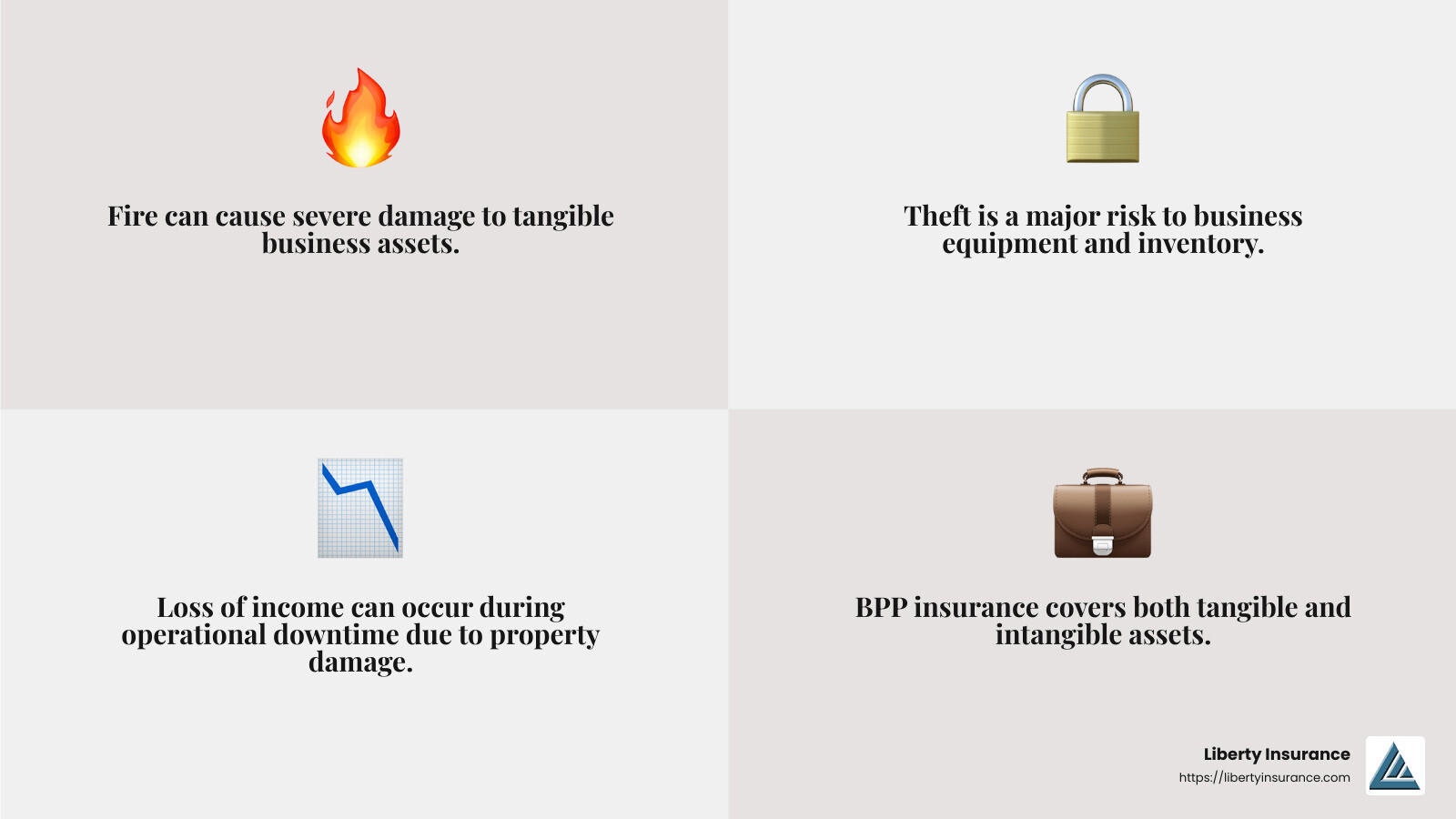
Business personal property insurance is not just about replacing lost items. It’s about ensuring your business can bounce back quickly from unexpected events. With the right coverage, you can focus on what you do best—growing your business.
Andrew Harris emphasizes the importance of understanding these assets: “Knowing what you own and its value is key to securing the right insurance and ensuring your business is protected.”
This insurance is a smart investment for any business owner who wants peace of mind and financial protection against unforeseen setbacks.
Key Coverage Areas
Business Personal Property Insurance is a crucial safety net for businesses, covering a wide range of risks. Let’s explore the key areas it protects:
Fire Damage
Fires can be devastating. They can destroy equipment, inventory, and even the furniture in your office. With business personal property insurance, you can get help to replace or repair these items. For example, if a fire damages the $5,000 custom shelves you just installed, this insurance can cover the costs.
Theft
Theft is a common risk for businesses. Imagine a break-in where thieves steal your valuable equipment or inventory. Business personal property insurance steps in to help you recover financially from the loss.
Equipment
Your business relies on equipment to function. Whether it’s computers, machinery, or specialized tools, these are the backbone of your operations. If they get damaged or stolen, this insurance helps you replace them, ensuring minimal disruption to your business.
Inventory
For businesses like retail stores or restaurants, inventory is crucial. A burst pipe or a power outage can ruin your stock. Business personal property insurance can cover the loss, helping you get back on your feet quickly. For instance, if a sprinkler system malfunctions and destroys your new inventory, like in Sam’s clothing store, the insurance would cover the replacement costs.
Furniture
Office furniture, like desks, chairs, and cabinets, are essential for creating a functional workspace. If they get damaged in an event like a flood or fire, business personal property insurance helps cover the repair or replacement costs.
Accounts Receivable
Sometimes, disasters can affect your ability to collect payments from customers. Business personal property insurance can cover the costs associated with lost or damaged accounts receivable records, ensuring your cash flow isn’t interrupted.
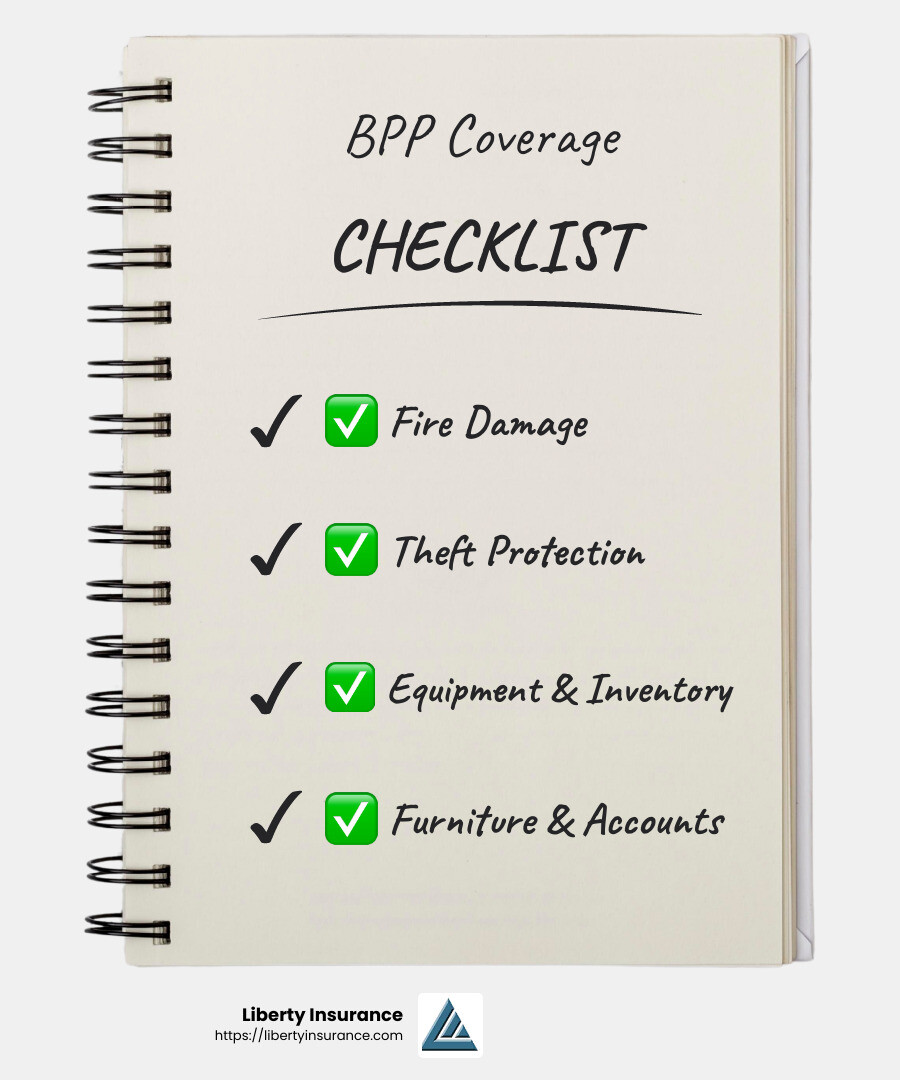
By covering these key areas, business personal property insurance ensures that your business can quickly recover from unexpected events, keeping you focused on growth and success.
Differences Between BPP and Other Insurance Types
Understanding how business personal property insurance (BPP) stacks up against other insurance types is crucial. Let’s break down the differences between BPP, homeowners insurance, business owner’s policy (BOP), and general liability insurance.
Homeowners Insurance
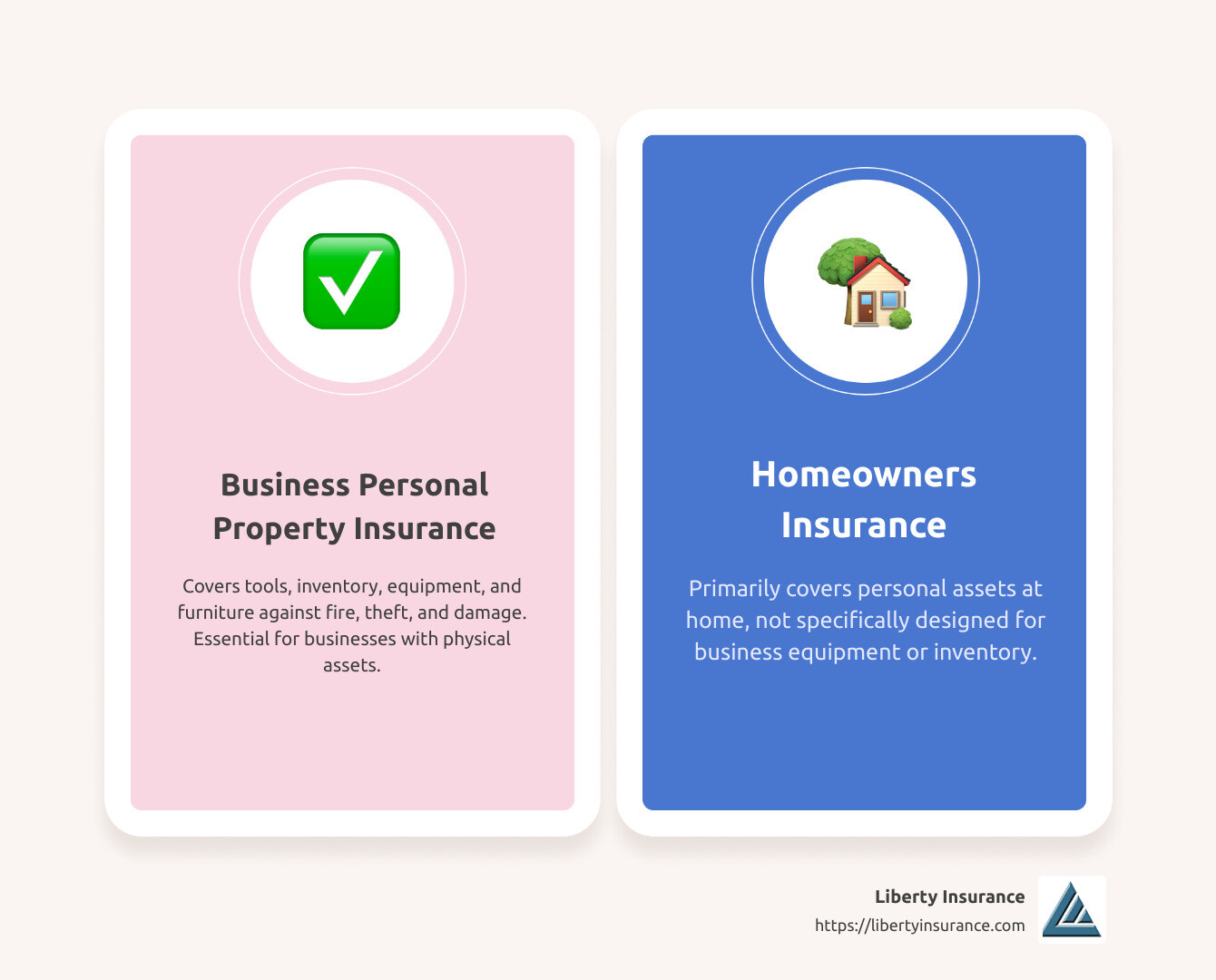
Homeowners insurance is designed to protect your home and personal belongings from risks like fire, theft, and natural disasters. However, it doesn’t typically cover business-related assets. If you run a business from home, your homeowners policy might not protect your business equipment or inventory. That’s where business personal property insurance comes in. It covers the tools, equipment, and inventory specifically used for your business, even if you operate from home.
Business Owner’s Policy (BOP)
A Business Owner’s Policy (BOP) is a convenient package that combines general liability insurance and commercial property insurance. It’s great for small to mid-sized businesses because it provides broad coverage. However, BOPs might not cover all the nuances of your business’s personal property. Unlike a BOP, business personal property insurance focuses on the specific items within your business, like computers and furniture, offering more custom protection.
General Liability Insurance
General liability insurance is often the first policy a business owner buys. It covers third-party claims of bodily injury, property damage, and advertising injury. But it doesn’t cover your business’s own property. So, if a client slips and falls in your office, general liability insurance would cover the medical expenses. However, if your office equipment is damaged, you’d need business personal property insurance to cover the repair or replacement costs.
By understanding these differences, you can make informed decisions about the insurance that best suits your business needs, ensuring comprehensive protection.
Valuation Methods for Business Personal Property
When it comes to business personal property insurance, understanding how your assets are valued is key. There are two primary valuation methods: actual cash value and replacement cost. Each method impacts how much you receive if you need to file a claim.
Actual Cash Value
Actual cash value (ACV) is the value of your property considering its depreciation. Think of it as what your item is worth today, not what you paid for it. For example, if you bought a laptop for $1,000 five years ago, its ACV might only be $200 now due to wear and tear. If the laptop is damaged or stolen, ACV coverage would reimburse you based on this reduced value.
Pros:
– Lower premiums compared to replacement cost coverage.
– Reflects the item’s current market value.
Cons:
– You may not get enough to buy a new replacement.
– Depreciation can significantly reduce payout amounts.
Replacement Cost
Replacement cost covers what it would take to replace your item with a new one of similar kind and quality. Unlike ACV, it doesn’t factor in depreciation. So, if your five-year-old laptop is stolen, replacement cost coverage would provide enough money to buy a new, similar laptop.
Pros:
– Higher payout since it covers new replacement costs.
– Ensures you can replace your items fully.
Cons:
– Typically higher premiums.
– Requires maintaining accurate records of property value.
Depreciation
Depreciation is the loss of value over time due to factors like age, wear, and obsolescence. It’s a crucial factor in determining ACV. While depreciation reduces the payout in ACV policies, it’s not considered in replacement cost policies.
When choosing between these valuation methods, consider your business’s specific needs and budget. If you prefer lower premiums and can handle the risk of receiving less for older items, ACV might be suitable. However, if you want to ensure full replacement without dipping into your savings, replacement cost could be the better choice.
Understanding these valuation methods helps you make informed decisions and ensures your business’s assets are adequately protected, leading us into the next section where we’ll address common questions about business personal property insurance.
Frequently Asked Questions about Business Personal Property Insurance
What does business personal property insurance cover?
Business personal property insurance is like a safety net for your business assets. It covers a wide range of items essential for your operations. Here’s a quick breakdown:
Tools and Equipment: Whether you’re a plumber with wrenches or a graphic designer with high-end printers, this insurance helps replace or repair tools and equipment if they’re stolen or damaged.
Computers: Computers are vital. Whether it’s desktops, laptops, or servers, this coverage ensures you can replace them if they’re lost to theft or disasters like fire.
Inventory: If you store products for sale, this insurance can cover the cost of replacing your inventory if it’s damaged or destroyed.
By covering these critical assets, business personal property insurance helps keep your business running smoothly, even when unexpected events occur.
Is business personal property insurance tax-deductible?
Yes, the premiums you pay for business personal property insurance are generally tax-deductible. According to the IRS, insurance costs are considered a business expense, which means you can deduct them from your taxable income.
Why is this important? Deducting your insurance premiums can lower your overall tax bill, freeing up cash for other business needs. Always consult with a tax professional to ensure you’re maximizing your deductions and complying with all tax regulations.
Do I need BPP insurance if I work from home?
If you’re running a home-based business, you might assume your homeowners policy covers your business assets. Unfortunately, that’s not usually the case. Homeowners insurance typically excludes business-related items like your work laptop, office furniture, or any inventory stored at home.
This is where business personal property insurance comes in. It provides the coverage your homeowners policy doesn’t, protecting your business assets at home or even if they’re stored elsewhere.
So, if you’re operating from a home office in places like Millstone Township or Trenton, New Jersey, getting BPP insurance can safeguard your business against unforeseen events. This ensures you can focus on growing your business without worrying about potential financial setbacks.
Conclusion
In business, protecting your assets isn’t just smart—it’s essential. At Liberty Insurance, we understand the unique needs of businesses, whether you’re in Millstone Township or Trenton, New Jersey. That’s why we offer customizable coverage options to fit your specific needs.
Why Choose Liberty Insurance?
Customizable Coverage: We believe in providing insurance that fits your business like a glove. Whether you own a retail store or run a home-based business, our policies are designed to cover the essentials, from equipment to inventory.
Safeguarding Assets: With our business personal property insurance, you’re not just buying a policy; you’re investing in peace of mind. Our coverage helps protect against risks like fire and theft, ensuring that unexpected events don’t derail your operations.
Expertise You Can Trust: With years of experience in the insurance industry, we know what it takes to keep a business secure. Our team is here to guide you through every step, ensuring you get the most out of your coverage.
Don’t leave your business assets to chance. Explore our Business Property Insurance options today and see how Liberty Insurance can help protect what you’ve worked so hard to build.

