
Why Captive Insurance Managers Are Essential to Your Risk Strategy
In a challenging insurance market marked by rising premiums, tightening capacity, and stricter underwriting, many organizations are turning to captive insurance—specialized insurance companies they form to insure their own risks. A well-designed captive can stabilize costs across cycles, tailor coverage where the commercial market falls short, accelerate claims resolution, and retain underwriting profits and investment income. It can also align risk financing with enterprise strategy and support broader objectives like resilience, supply chain reliability, and ESG commitments.
But a captive is an insurance company, not just a funding mechanism. It must price risk prudently, administer policies and claims, maintain capital, comply with domicile regulations, coordinate audits and actuarial opinions, and report results accurately. Most organizations don’t have the in-house capacity to run an insurer day to day. This is where captive insurance managers become indispensable.
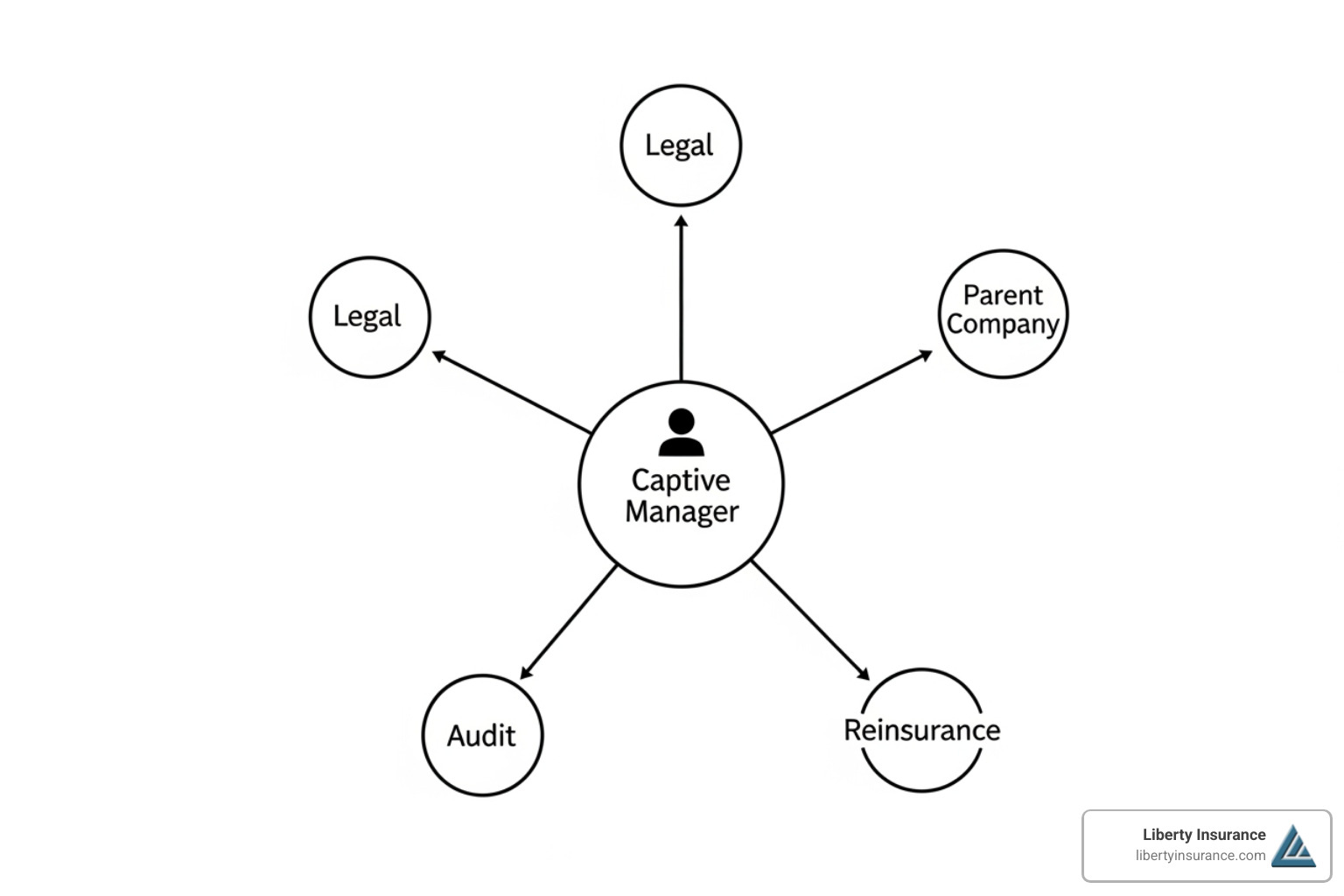
Captive insurance managers are licensed professional firms that operate as the captive’s day-to-day management team. They are the operational backbone and primary liaison to regulators, ensuring the captive is solvent, compliant, and strategically aligned with the parent’s goals. In practice, they combine the functions of a CEO, CFO, and COO for the captive—backed by teams spanning accounting, underwriting administration, claims coordination, governance, and regulatory affairs.
Key Responsibilities
- Operations: Daily administration, accounting, board support, investment coordination, and audit preparation.
- Coordination: Engagement and orchestration of actuaries, auditors, legal counsel, tax advisors, TPAs, reinsurers, and fronting carriers.
- Compliance: Regulatory filings, statutory reporting, and direct communication with domicile regulators.
- Oversight: Safeguarding assets, maintaining solvency, administering claims governance, and ensuring robust internal controls.
- Strategy: Advising on structure, reinsurance, capital management, and performance optimization through data insights.
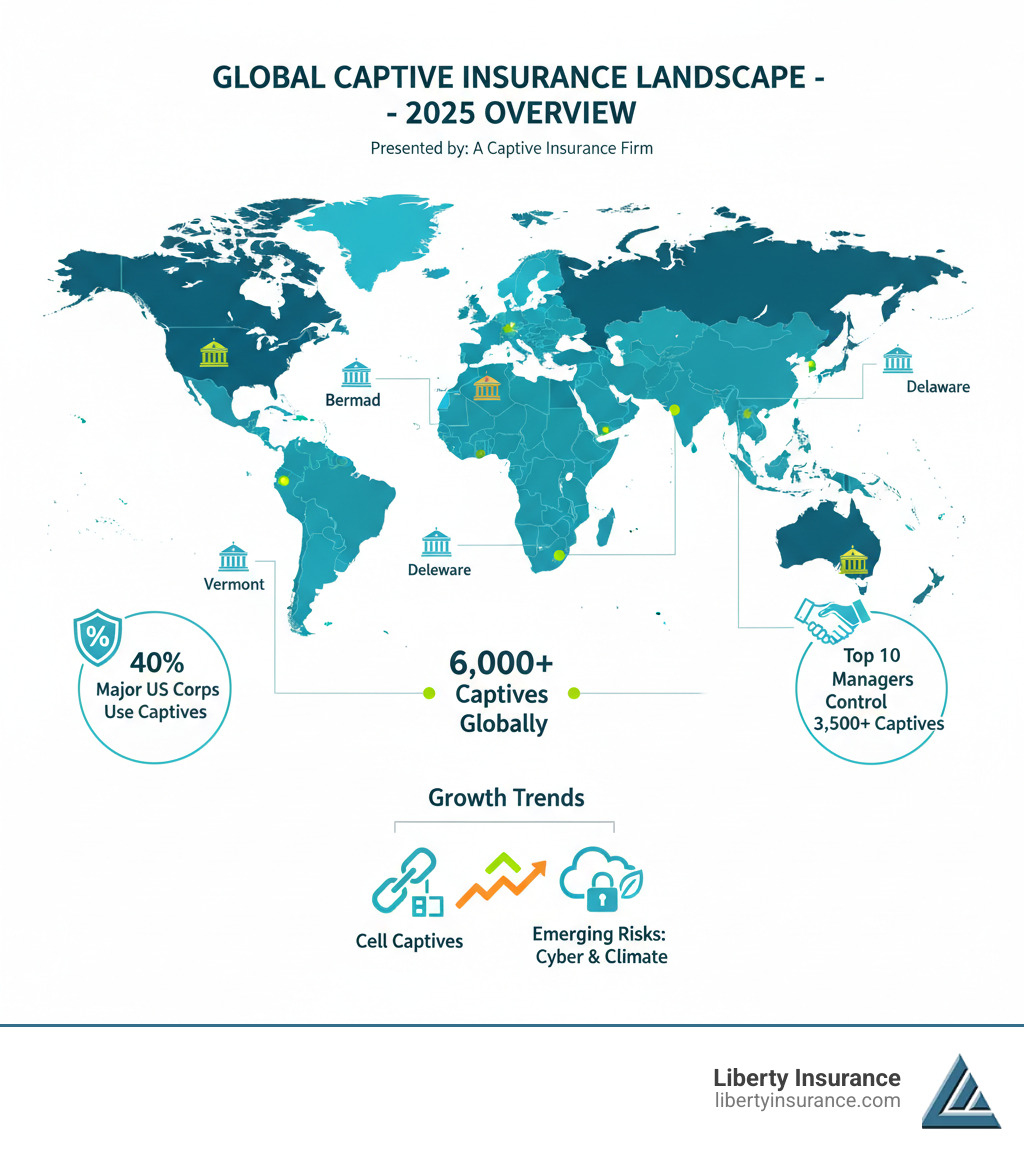
With more than 6,000 captives worldwide and participation by over 40% of major U.S. corporations, the question is less “can we create a captive?” and more “how do we run it well?” According to the National Association of Insurance Commissioners (NAIC), sponsored and cell captives have made entry accessible to small and mid-sized enterprises, yet the need for expert management remains constant across size and structure.
This comprehensive guide explains what captive insurance managers do, where they create value across the captive lifecycle, how to select the right manager, and how managers help steer structures, compliance, and market shifts.
The Central Role of a Captive Insurance Manager
Imagine launching your own insurance company: you’d need to keep accurate books, prepare financial statements, meet with regulators, set and renew policies, coordinate claims, manage capital and investments, and run board meetings. This is precisely what captive insurance managers do—reliably and at scale.
A captive insurance manager is the operational arm of your captive, authorized by regulators to execute core managerial functions and maintain the captive’s day-to-day operations. Beyond administrative support, managers deliver strong financial stewardship, rigorous governance, and proactive risk and capital oversight.
Core Areas of Value Creation
- Financial management: General ledger, premium billing, cash management, investment governance, reconciliations, and preparation of GAAP/STAT financials for audits.
- Underwriting administration: Policy issuance, endorsements, premium allocations, bordereaux management, and rating implementation consistent with actuarial guidance.
- Claims coordination: TPA onboarding and SLAs, claims authority frameworks, loss reserving processes, and reporting to the board and regulators.
- Regulatory liaison: Handling inquiries, coordinating examinations, staying ahead of rule changes, and ensuring timely and accurate filings.
- Governance: Board and committee planning, minute-taking, policy frameworks (e.g., investment policy statement, claims procedures, related-party transactions), and documentation of key decisions.
Managers also serve as the captive’s first line of operational defense—maintaining segregation of duties, implementing robust internal controls, and validating third-party performance via SOC reports and vendor due diligence. Strong firms bring documented business continuity, disaster recovery, and cyber/data security practices that protect your captive’s integrity.
In modern programs, managers further support strategic initiatives: structuring reinsurance, aligning asset-liability management to risk horizons, using analytics to reduce loss costs, and identifying opportunities for dividends or premium optimization. They are a trusted intermediary with regulators—capable of advising when proposed actions could jeopardize solvency or compliance—and a practical partner to the parent, translating strategy into day-to-day execution.
A seasoned captive insurance manager frees your team to focus on risk strategy while your captive operates efficiently and compliantly. Learn more about what captive managers do and how they can benefit your business: https://libertyinsurance.com/captive-insurance-management/
Services Across the Captive Lifecycle
A captive requires expert guidance from concept to closure. Captive insurance managers deliver specialized services at each stage to build, operate, and continuously improve your program.
Feasibility and Formation
Before forming a captive, a manager conducts a feasibility study to validate the business case. Typical components include:
- Risk profile and loss analytics: Exposure review, historic claims analysis, trend evaluation, and severity/frequency modeling.
- Program design: Lines of coverage, retentions and limits, reinsurance structure, and collateral strategy.
- Pro formas: Multi-year financial projections incorporating expected losses, expenses, investment income, capital needs, and RBC or other solvency metrics.
- Domicile selection: Comparative assessment of regulatory environment, capitalization requirements, speed to license, taxation, service ecosystem, and board/substance expectations.
- Governance framework: Draft charters, policies, and a preliminary board and committee structure.
The manager assembles the license application, coordinates with legal counsel, and engages the actuary to produce an opinion supporting rates and reserves. They also assist with capitalization planning and bank/LOC arrangements where permitted.
Implementation
After approval, implementation focuses on building operational infrastructure:
- Service provider onboarding: Actuary, auditor, legal counsel, tax advisor, TPA(s), investment advisor, fronting and reinsurers as applicable.
- Documentation: Policy wordings, reinsurance agreements, service-level agreements (SLAs), investment policy statement, claims protocols, and underwriting guidelines.
- Systems and data: Accounting and policy systems setup, data feeds from the parent and TPA, bordereaux standards, and a reporting calendar.
- Capital and collateral: Initial paid-in capital or surplus notes, LOC/trust arrangements for fronted or reinsured programs, and liquidity planning.
The manager ensures the captive can issue or assume policies on day one, with controls and reporting aligned to regulatory expectations.
Ongoing Management
Ongoing management is the manager’s core mandate:
- Operations: Policy issuance/renewals, premiums and collections, claims oversight, reinsurance administration, and cash/investment management.
- Financial reporting: Monthly closes, reconciliations, quarterly management reporting, statutory filings, and annual audit coordination.
- Regulatory compliance: Timely submissions (annual statements, actuarial opinions, RBC/solvency, regulatory returns), examination support, and regulator relations.
- Governance: Board and committee meetings, minutes, control testing, and policy maintenance.
- Performance management: KPI dashboards (loss ratio, expense ratio, combined ratio, reserve adequacy, investment yield), stress testing, and variance analysis.
For a deeper look at day-to-day management services: https://libertyinsurance.com/services-category/management/
Optimization and Modernization
As the captive matures, managers shift from setup to value optimization:
- Program evolution: Adding lines, expanding to third-party risks, or adjusting retentions to optimize capital usage and reinsurance costs.
- Capital strategy: Evaluating dividends, surplus notes, or capital infusions tied to growth, volatility, and regulatory expectations.
- Data and analytics: Advanced reserving diagnostics, segmentation, and loss driver analysis to target safety and loss control investments.
- Operational efficiency: Process automation, reporting enhancements, and cost benchmarking.
- Health checks: Periodic reviews of purpose, compliance posture, documentation, and performance—ensuring the captive stays aligned with corporate objectives and regulatory standards.
Exit Strategies
If circumstances change, managers guide orderly run-off:
- Commutation: Settling outstanding reinsurance obligations and claims reserves.
- Novation: Transferring policy obligations to another carrier where permitted.
- Run-off: Managing remaining liabilities to closure, maintaining capital adequacy until final claim resolution.
- Sale or dissolution: Coordinating regulatory approvals and final distributions.
A disciplined exit preserves value, protects the parent, and maintains credibility with regulators and counterparties.
The Essential Guide to Selecting a Captive Insurance Manager
Choosing a captive insurance manager is a high-impact, long-term decision. Your manager will steward financial integrity, regulatory compliance, and day-to-day execution—directly influencing results and reputation. For most organizations, a professional manager is not just helpful; it is essential.
For a broader overview of the decision context, see: https://libertyinsurance.com/captive-insurance-management/
Key Attributes of Top Captive Insurance Managers
- Ethical behavior and transparency: Seek a written code of ethics, clear disclosures of ownership and potential conflicts, and easy-to-understand fee schedules. Hidden or contingent fees are a red flag. Independent validation via SOC 1 Type 2 and/or SOC 2 reports adds confidence.
- Professional competence and expertise: Look for a multidisciplinary bench with relevant designations (ARM, CPCU, CPA, JD, ICCIE), demonstrated knowledge of your industry risks, and experience across multiple domiciles and market cycles.
- Track record and stability: Longevity and references from clients, auditors, reinsurers, and regulators matter. Assess bench strength and continuity planning to mitigate key-person risk.
- Communication and relationship management: Expect clear, proactive communication and a trusted intermediary with regulators. Top managers document decisions thoroughly and maintain coordinated timelines across all providers. Learn more about related insurance company considerations: https://libertyinsurance.com/about-us/insurance-companies/
- Technology and security: Evaluate systems for accounting, policy admin, and reporting; data governance; cyber posture; and the manager’s approach to automation and analytics.
Critical Questions to Ask Prospective Managers
- “What experience do you have with captives in our industry and risk profile?”
- “How do you stay current on domicile regulations and ensure timely compliance?”
- “What is your fee structure? What’s included, and what is billed as out-of-scope?”
- “Can you provide a redacted SOC 1 Type 2 and/or SOC 2 report and recent regulator references?”
- “What technology stack do you use and how do you secure client data?”
- “How do you manage onboarding, SLAs, and performance reporting (KPIs, cadence)?”
- “Describe your approach to reinsurance administration, collateral, and investment governance.”
A Practical Selection Process
- Clarify objectives: Define why you’re forming or changing managers—cost stability, coverage customization, speed to market, or broader risk-financing goals.
- Issue an RFP: Specify scope, volumes, expected timelines, domiciles, structures, and service outcomes. Request team resumes, sample reports, SOC reports, and references.
- Evaluate fit: Score proposals on technical capability, team depth, regulatory relationships, technology, security, and fee transparency.
- Validate operations: Speak with client, auditor, and regulator references; request sample board packs, KPIs, and reporting calendars.
- Confirm governance: Review SLAs, change management processes, escalation protocols, and business continuity.
- Plan onboarding: Establish a 60–120 day transition plan with milestones for data migration, accounting cutover, and stakeholder communications.
The right captive insurance manager will operate as a trusted advisor—balancing rigorous compliance with practical execution and continuous performance improvement.
Navigating Structures and Compliance with Captive Insurance Managers
The captive landscape offers multiple structures to fit diverse needs. A captive insurance manager helps you evaluate options, select a domicile, and implement the structure that best aligns with your risk appetite, capital profile, and objectives.

How Captive Managers Help with Different Structures
- Single-parent captives: Owned by one company for its own risks; maximum control and customization.
- Group captives: Multiple companies share homogeneous risks; managers balance member governance and equitable cost allocation.
- Cell captives (PCCs/SCCs): Sponsored structures offering segregated cells with lower entry capital and faster launch; managers ensure proper segregation and reporting.
- Risk Retention Groups (RRGs): U.S.-specific liability vehicles for members in similar businesses; managers versed in the Liability Risk Retention Act and multi-state compliance add substantial value.
Here’s how these common structures compare:
| Feature | Single-Parent Captive | Group Captive | Cell Captive (PCC/SCC) | Risk Retention Group (RRG) |
|---|---|---|---|---|
| Ownership | Single parent company | Multiple, often unrelated, member companies | Individual “cells” within a sponsored captive | Members with similar business operations |
| Capital | Significant initial capital from parent | Shared capital contributions from members | Lower capital requirement per cell | Shared capital from members, specific to liability |
| Control | High control by parent | Shared control among members | Limited control over the core captive, high over cell | Shared control among members, focused on liability |
| Eligible Risks | Wide range, highly customizable | Homogeneous risks among members | Wide range, cell-specific | Liability risks only (U.S. specific) |
| Primary Benefit | Custom coverage, cost control, investment income | Peer collaboration, economies of scale, stable rates | Lower entry cost, asset segregation, flexibility | Access to liability coverage for similar businesses (U.S.) |
Ensuring Regulatory Compliance and Operational Efficiency
Compliance is where managers prove indispensable. They:
- Maintain statutory books and records, coordinate audits, and prepare actuarial opinions.
- Manage regulatory calendars: annual statements, solvency/RBC measures, and other domicile-specific filings.
- Coordinate examinations and inquiries, maintaining transparent regulator relationships.
- Implement governance: policy frameworks, documented controls, and regular board reporting.
Operationally, managers streamline processes through standardized reporting, automation, and clear SLAs with service partners. They balance liquidity and yield, align investments with liability duration, and ensure reinsurance/retrocession is documented, reconciled, and collateralized as needed.
The Evolving Role of the Modern Captive Manager
Modern managers are strategic partners. They help clients:
- Address emerging risks (cyber, climate, supply chain), using analytics and scenario testing.
- Explore growth options (third-party risk, blended programs) while maintaining clear business purpose and compliance.
- Monitor performance against benchmarks and peer programs, driving continuous improvement.
The result: a captive that remains compliant, resilient, and financially effective through changing market conditions.
Differentiating Captive Managers from Other Service Providers
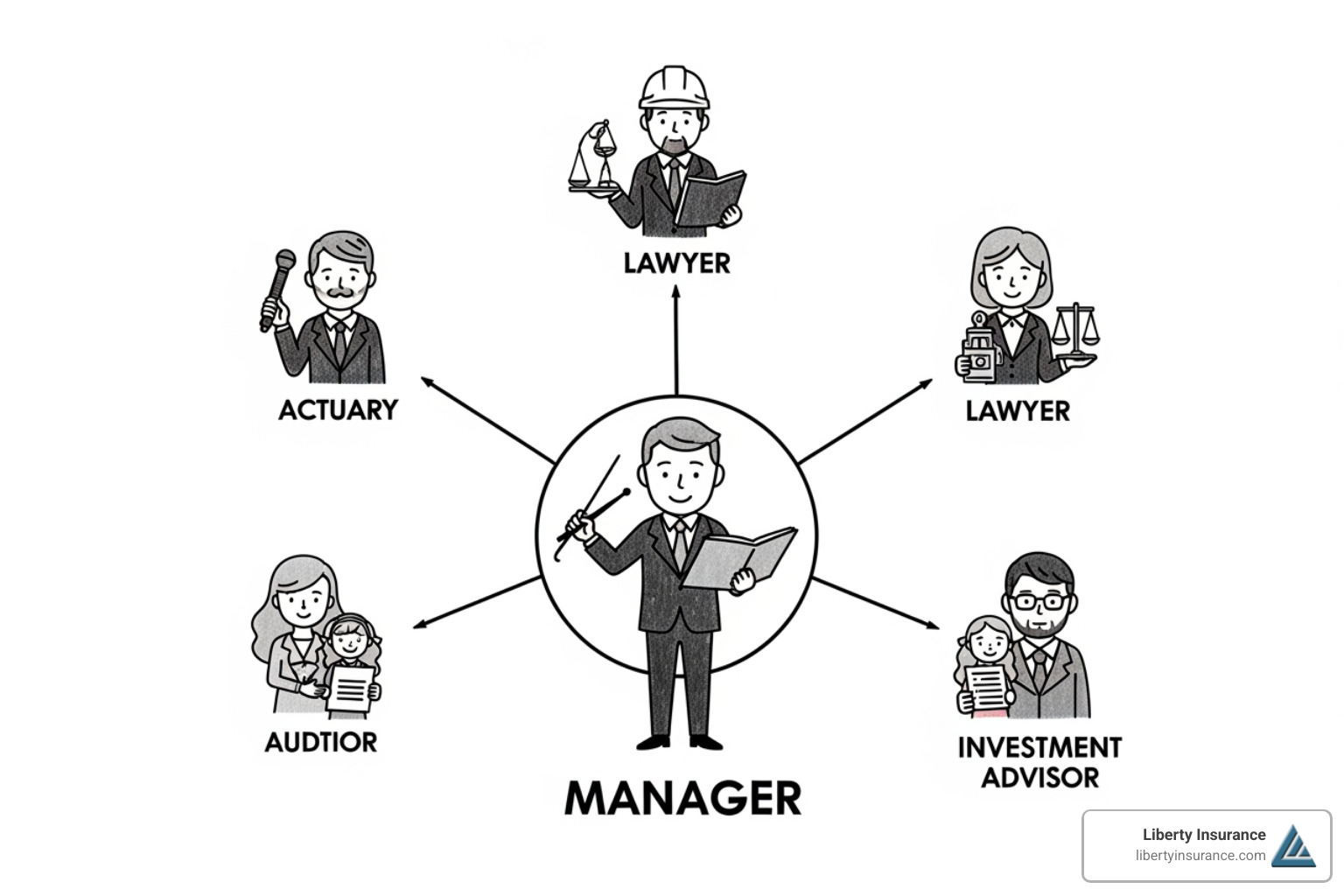
When you explore a captive, you’ll assemble a team: actuaries, lawyers, auditors, investment advisors, TPAs, fronting carriers, reinsurers, and the captive manager. The manager is your quarterback—coordinating the team, sequencing deliverables, and ensuring the captive’s day-to-day operations align with strategy and regulations.
At a glance:
- The Actuary vs. The Manager: The actuary develops rates and reserves; the manager translates those into billing, ledger entries, bordereaux, and regulatory reporting, while coordinating actuarial opinions and reserve reviews.
- Legal Counsel vs. The Manager: Counsel structures entities and contracts; the manager implements them, manages governance and documentation, and ensures ongoing compliance within that legal framework.
- The Auditor vs. The Manager: The auditor independently tests and opines; the manager prepares financials, supports walkthroughs, and maintains the control environment year-round.
- The Investment Advisor vs. The Manager: The advisor manages assets; the manager ensures investment policies align to liquidity and solvency, monitors compliance, and integrates results into financial and regulatory reporting.
- The TPA vs. The Manager: The TPA adjudicates claims; the manager sets claims governance, monitors SLAs, reconciles reserves and payments, and reports to the board and regulators.
- Fronting/Reinsurers vs. The Manager: Carriers provide paper and capacity; the manager negotiates and administers reinsurance and collateral arrangements, reconciles statements, and coordinates audits.
The real value of a skilled captive manager is orchestration. For example, if emerging claims trends indicate reserve strengthening, the manager coordinates the actuary’s analysis, ensures liquidity with the investment advisor, engages legal counsel for policy updates if needed, and prepares the auditor package—while keeping the board and regulators informed.
Bottom line: you benefit from one accountable partner aligning specialists, timelines, and outcomes into a cohesive, compliant, and effective operation.
Frequently Asked Questions about Captive Insurance Managers
Below are concise answers to the questions we hear most often.
What is the typical cost of a captive manager?
Fees vary by domicile, structure, premium volume, and scope. Expect a base annual management fee with pass-throughs for audit, actuarial, legal, and other third-party costs. Some programs include per-policy or per-claim administration fees. Evaluate cost together with capability, controls, technology, and service quality—an experienced manager can prevent errors that cost far more than the fee.
Can a company manage its own captive without a manager?
In many domiciles, captives must appoint a licensed captive manager. Even where optional, self-management is practical only for organizations with deep in-house insurance, accounting, and regulatory expertise, plus systems and controls. The risks of non-compliance and operational failure usually outweigh potential savings.
How do I find a list of approved captive managers?
Start with your chosen domicile’s insurance department. For New Jersey, see Registered Service Providers – Captive Managers: https://www.nj.gov/dobi/division_insurance/captive/captivemanagers.html. Similar lists are available in Vermont, Delaware, Bermuda, Cayman, and others. Use these as a baseline—then perform due diligence to assess fit and quality.
How long does it take to form a captive?
Typical timelines run 60–150 days from feasibility to license, depending on domicile, structure, and data readiness. Complex group or RRG structures, or programs requiring fronting and reinsurance, may take longer.
What data do we need for a feasibility study?
Loss runs (ideally 5–10 years), exposure data (payrolls, revenues, asset schedules, vehicle counts), current policies and retentions, claims handling practices, and information about planned changes to operations or risk profile. The manager will provide a detailed data request.
Which domicile is best?
“Best” depends on your needs. Consider regulatory quality, speed to market, capitalization, taxes, service ecosystem, time zone, and substance requirements. Managers provide comparative analyses and can arrange regulator introductions.
Can a captive insure third-party risks?
Yes, if permitted by the domicile and the captive’s business plan. Many organizations add third-party risks (e.g., customer warranties, vendor programs) to diversify and create new value streams. Managers ensure the business purpose, pricing, and controls remain sound.
What are common reasons captives underperform?
- Inadequate data or weak rate adequacy at launch
- Insufficient governance or documentation
- Poor claims oversight or lack of TPA SLAs
- Overly aggressive investment or insufficient liquidity
- Communication gaps between providers leading to errors or delays
A strong manager anticipates these issues and implements preventive controls.
How are investment policies handled?
The board adopts an investment policy statement (IPS) that reflects risk appetite, liquidity needs, and domicile rules. The manager ensures compliance, monitors performance, and integrates results into reporting, coordinating with the investment advisor.
Do captives need audits and actuarial opinions?
Most domiciles require annual audits and actuarial opinions on reserves. Your manager coordinates data, timing, and responses to auditor and actuary requests.
What about reinsurance, fronting, and collateral?
Managers help structure and administer reinsurance, negotiate collateral (LOCs or trusts) when using fronting carriers or reinsurers, and reconcile statements and bordereaux. They keep these complex flows accurate and timely.
How does technology improve captive results?
Modern managers leverage automation for data ingestion, reconciliations, and reporting, and use analytics for reserving, pricing insights, and trend detection. Technology reduces errors, speeds cycles, and surfaces actions to improve results.
What KPIs should boards monitor?
- Loss, expense, and combined ratios; trends vs pro formas
- Reserve adequacy and development
- Premium adequacy and reinsurance cost efficiency
- Liquidity and investment yield vs benchmarks
- Filing timeliness and audit status
How are dividends determined?
Dividends depend on performance, surplus levels, loss development, and regulatory approval. The manager models scenarios and advises on prudent distributions while maintaining solvency.
What are exit options if strategy changes?
Run-off to closure, commutation of reinsurance, novation of liabilities, or sale/dissolution where allowed. Your manager plans the path, secures approvals, and administers final distributions and filings.
Are cell captives right for small or mid-sized companies?
Often yes. Protected or segregated cells reduce entry capital and speed launch. Managers ensure proper segregation, governance, and reporting, and help you scale or transition to a standalone captive later if needed.
Conclusion
Captive insurance transforms risk financing from a market dependency into a strategic capability. Yet the promise of a captive is realized only with disciplined execution, strong governance, and consistent compliance. A qualified captive insurance manager brings the systems, controls, and expertise to make that happen—day in and day out.
They coordinate actuaries, auditors, legal, TPAs, fronting and reinsurers; guide regulatory interactions; monitor performance; and use analytics to improve outcomes. With the right manager, your captive becomes a reliable, high-performing asset that supports your broader business strategy.
Ready to take the next step? Explore our Captive Insurance Management solutions: https://libertyinsurance.com/captive-insurance-management/
Or browse our broader Business Insurance resources to see how captives integrate within a complete risk program: https://libertyinsurance.com/category/business-insurance/
If you’re evaluating whether a captive fits your organization, start with a focused feasibility conversation, gather your loss and exposure data, and define clear objectives. The right manager will meet you there—and help you build a captive that lasts.

