
Why Commercial Building Insurance is Essential for New Jersey Businesses
Commercial building insurance NJ is a critical safeguard for your business property against disasters like fire, theft, and severe weather. Whether you own or lease commercial space, this coverage protects your physical assets—the building, equipment, and inventory—and ensures business continuity when the unexpected happens.
New Jersey businesses face unique risks from coastal storms, urban crime, and aging infrastructure. With over 952,000 small businesses in the state, protecting these vital assets is crucial. The reality is that about 40% of small businesses will experience an insurance claim in the next decade, and a single inch of water damage can cost up to $25,000 to repair.
While not legally required by the state, commercial building insurance is often mandated by lenders and lease agreements. The average annual cost in New Jersey is $2,019, which covers the structure, contents, and often lost income. However, key perils like floods and earthquakes typically require separate coverage. For many small businesses, a Business Owner’s Policy (BOP) offers the best value by bundling property and liability insurance.
I’m Andrew Harris, a Certified Insurance Counselor (CIC) and Accredited Advisor in Insurance (AAI). As PIA National’s 2020 Agent of the Year, I specialize in helping New Jersey businesses secure comprehensive commercial building insurance NJ coverage, protecting their most valuable assets while managing costs effectively.
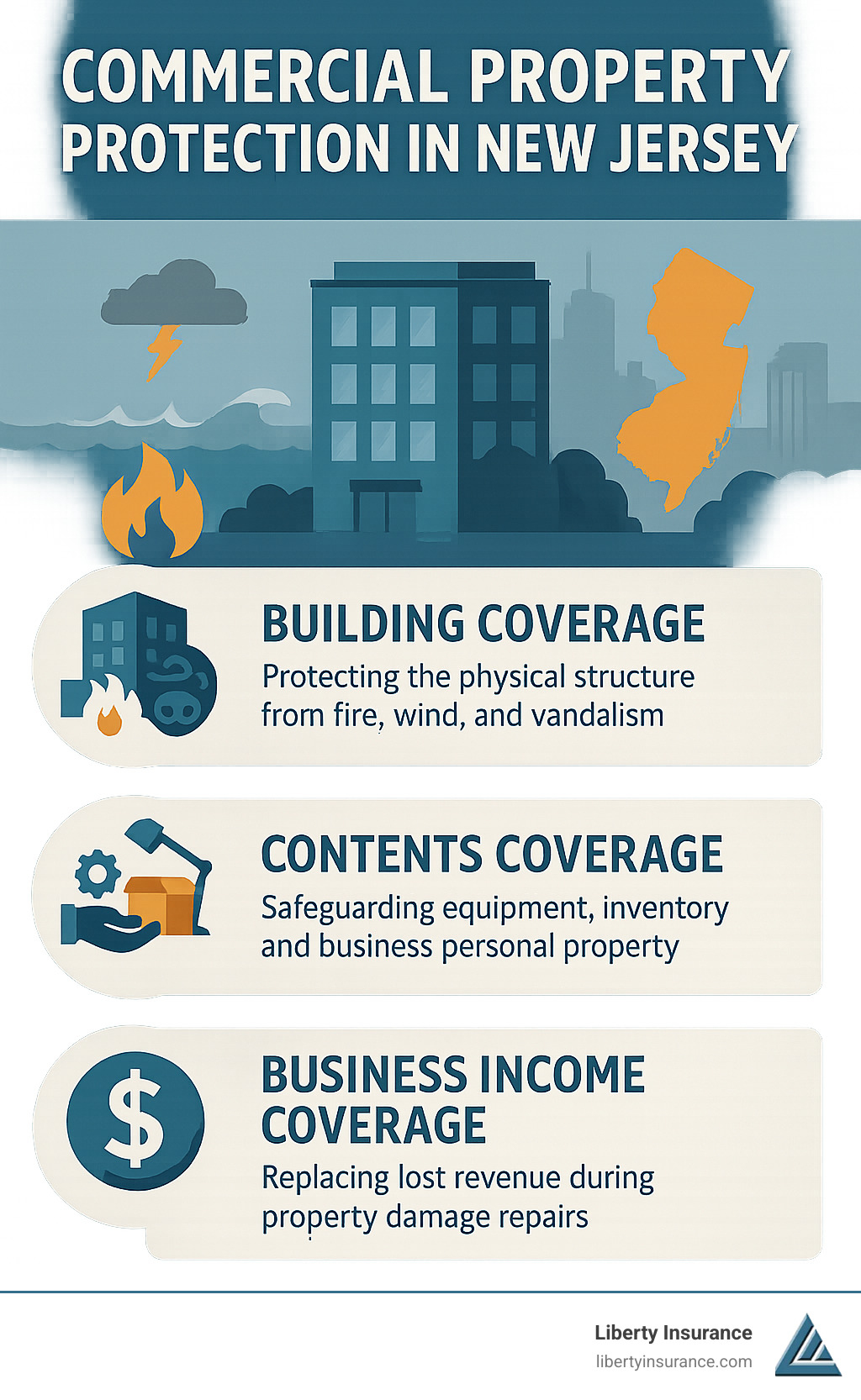
Commercial building insurance NJ vocab explained:
Understanding Commercial Building Insurance in New Jersey
Commercial building insurance NJ is a type of commercial property insurance designed to protect your physical business assets. It’s a safety net for the property you’ve worked hard to build.
This coverage primarily protects three key areas:
- The Building Structure: This includes the walls, roof, foundation, and permanently installed systems like plumbing and electrical. Whether you own the building or your lease makes you responsible, this coverage applies.
- Business Personal Property: This covers the contents inside your building, such as office furniture, computers, machinery, inventory, and supplies. Essentially, if you could move it, it’s likely covered here.
- Business Interruption Insurance: Often included in a property policy, this is a crucial component that helps replace lost income and cover ongoing expenses like rent and payroll if a covered disaster forces you to close temporarily.
It’s important to distinguish this from general liability insurance. Commercial property insurance protects your property, while general liability protects you if your business operations cause injury or property damage to someone else. For most small to medium-sized businesses, a Business Owner’s Policy (BOP) is the most efficient option, as it bundles property, liability, and business interruption coverage into one affordable policy.
| Policy Type | What it Covers | Who it’s For |
|---|---|---|
| Commercial Property | Your physical assets: building, equipment, inventory, furniture, fixtures. | Businesses that own or lease physical property. |
| General Liability | Third-party claims for bodily injury, property damage, personal and advertising injury. | All businesses, especially those interacting with the public or clients. |
| Business Owner’s Policy (BOP) | Bundles Commercial Property, General Liability, and often Business Interruption coverage into one policy. | Small to medium-sized businesses looking for comprehensive and cost-effective protection. |
What Perils Are Covered (and What’s Not)?
Commercial property policies come in two main forms:
- Named Perils: These policies only cover disasters specifically listed in the policy document. Common named perils include fire, lightning, windstorms, hail, theft, and vandalism. If a peril, such as weight of ice and snow, is not explicitly listed, any damage it causes is not covered. This type of policy is less expensive but carries the risk of significant coverage gaps.
- Open Perils (or Special Form): These policies cover everything except what is specifically excluded. They offer broader protection and are generally recommended. The list of exclusions is what’s most important here. While more expensive, the comprehensive nature of an open perils policy prevents unexpected coverage denials for unlisted, uncommon events.
Most commercial building insurance NJ policies cover common perils like fire, smoke damage, windstorms, hail, theft, vandalism, and water damage from burst pipes. However, every policy has exclusions. The most significant exclusions for New Jersey businesses are flood damage (including storm surge) and earthquake damage. Normal wear and tear, intentional damage by the owner, and pest infestations are also standard exclusions.
Common Policy Endorsements to Consider
To fill common coverage gaps, you can add endorsements (or riders) to your policy for an additional premium:
- Ordinance or Law Coverage: If your building is damaged and local building codes have changed since it was built, a standard policy only pays to repair it to its previous state. This endorsement covers the increased cost to rebuild to current, stricter codes.
- Equipment Breakdown Coverage: This protects against the sudden and accidental breakdown of essential equipment, such as HVAC systems, boilers, and electrical panels. It’s often excluded from standard property policies.
- Utility Services Interruption: If a covered loss at a local utility (like a power station) causes a power outage that shuts down your business, this endorsement can cover your lost income and extra expenses.
Reviewing your policy’s exclusions is critical. If your business is in a flood-prone area, you will need to purchase separate flood coverage. We can help you identify these gaps and find the right solutions for your specific risks.
Who Needs Commercial Building Insurance in NJ?
Nearly every New Jersey business with physical assets needs this coverage. This includes:
- Building Owners: To protect your direct property investment.
- Landlords: Lessor’s Risk Only (LRO) coverage protects the building structure and provides liability protection for common areas.
- Tenants: Most commercial leases require tenants to carry property insurance to cover their business personal property and any improvements they’ve made.
- Businesses with Significant Physical Assets: Manufacturers, retailers, restaurants, and warehouses with valuable equipment and inventory.
- Home-Based Businesses: A standard homeowner’s policy offers very limited coverage for business property and no business liability protection. A commercial policy is often necessary.
- Contractors: Specialized coverage may be needed for tools and equipment, especially when in transit or at a job site.
Key Factors Influencing Your Commercial Building Insurance NJ Premiums
While the average annual cost for commercial property insurance in New Jersey is $2,019, your actual premium will vary based on your property’s specific risk profile. Insurers use several key factors to determine your rate.
The insurance industry assesses risk using the acronym COPE:
- Construction: The materials used to build your property. Insurers use a classification system ranging from Frame (wood) and Joisted Masonry (brick walls with wood floors/roof) to Non-Combustible (metal) and Fire-Resistive (reinforced concrete). Fire-resistant structures like concrete and steel are significantly cheaper to insure than wood-frame buildings, which are more susceptible to fire.
- Occupancy: The type of business operating in the building and the risks associated with it. A quiet accounting office presents a low hazard, while a restaurant with deep-fat fryers or a woodworking shop with flammable dust presents a much higher risk. Insurers categorize occupancies based on their potential for fire and other hazards.
- Protection: The measures in place to prevent or mitigate losses. This includes internal protections like certified sprinkler systems (which can reduce premiums by 15-20% or more), monitored fire and burglar alarms, and fire extinguishers. It also includes external public protection, such as the building’s proximity to a highly-rated fire department and fire hydrants.
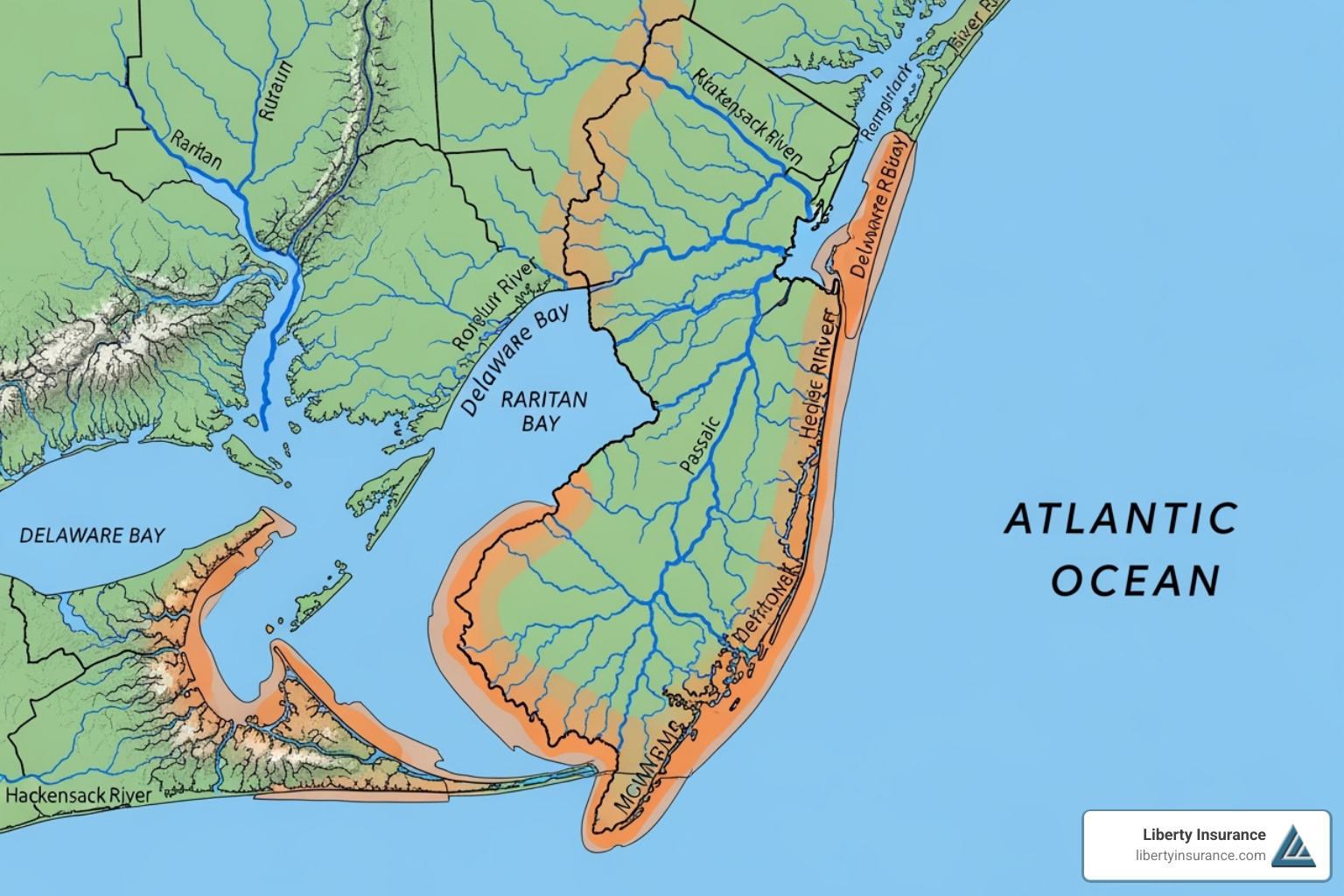
- Exposure: External risks beyond your control that stem from your surroundings. A building located next to a chemical plant or fireworks factory has a higher exposure risk than one in a quiet suburban office park. In New Jersey, exposure also relates to location—a property on the Jersey Shore has a high exposure to wind and storm surge, while a building in a dense urban area like Newark may have a higher exposure to fire spreading from adjacent properties.
Other major factors include your building’s age and condition. A well-maintained property with updated electrical, plumbing, and HVAC systems will earn better rates. Your location is also critical, as premiums reflect geographic risks like coastal storm exposure or urban crime rates. Businesses in high-risk areas will inevitably face higher insurance costs.
How Property Valuation Affects Your Coverage
How your property is valued directly impacts your premium and your payout after a loss. There are two primary valuation methods:
- Replacement Cost Value (RCV): This pays the full cost to replace damaged property with new items of similar quality, with no deduction for depreciation. If a storm destroys your roof, RCV pays for a new one. This is the recommended coverage.
- Actual Cash Value (ACV): This pays for the replacement cost minus depreciation. An ACV policy on an old roof might only pay a fraction of the cost of a new one. These policies are cheaper but can leave you with significant out-of-pocket expenses.
Be aware of coinsurance clauses, which require you to insure your property to a certain percentage (usually 80-90%) of its total value. If you are underinsured, the insurer will only pay a portion of your claim, leaving you to cover the rest. Accurate property valuation is essential to avoid this penalty.
For new projects, Builders Risk Insurance is necessary to protect the structure and materials during the construction phase, as standard property policies do not apply until the building is complete.
The Role of Occupancy and Safety Features
Your business type and safety measures significantly influence your commercial building insurance NJ premiums.
- Occupancy Risk: A restaurant’s fire and water damage risks are higher than a law office’s, leading to different premiums. Insurers classify businesses based on historical claim data.
- Fire Protection: Certified sprinkler systems, monitored smoke detectors, and fire alarms can lead to substantial premium discounts. Proximity to fire hydrants also helps.
- Security Systems: Burglar alarms, surveillance cameras, and secure entry points deter theft and vandalism, which can also lower your rates.
- Building Maintenance: Keeping detailed records of inspections and upgrades for electrical, plumbing, and HVAC systems demonstrates proactive risk management and can lead to better rates.
Navigating Legal Requirements and Policy Choices in New Jersey
While New Jersey law doesn’t mandate commercial property insurance, other entities often do. Understanding your policy choices, including deductibles and policy limits, is a critical financial decision. A deductible is the amount you pay out-of-pocket before coverage begins; a higher deductible can lower your premium, but ensure it’s an amount you can afford. Policy limits are the maximum your insurer will pay for a loss; setting them too low is a risky way to save money.
The New Jersey Department of Labor and Workforce Development outlines certain mandatory business insurance, such as Workers’ Compensation for any business with employees. You can find more information on their official website about employer requirements.

Is commercial building insurance NJ legally required?
No, the state of New Jersey does not legally require businesses to carry commercial building insurance NJ. However, it is almost always a practical necessity.
- Mortgage Lenders: If you have a loan on your property, your lender will require you to have adequate insurance to protect their investment.
- Lease Agreements: Landlords typically require tenants to carry property insurance to cover their own contents and protect the landlord’s interests.
- Asset Protection: Most importantly, this insurance protects your own investment. Without it, you would be personally responsible for the full cost of repairs or rebuilding after a disaster, which could be financially devastating.
How to Choose the Right Provider and Policy
Selecting the right commercial building insurance NJ policy involves more than just finding the lowest price. Follow these steps to make an informed choice:
- Assess Your Needs: Determine the replacement value of your building and its contents. Consider the specific risks associated with your industry and location.
- Compare Quotes: Look beyond the premium to compare coverage options, limits, and deductibles. A cheap policy may have significant gaps.
- Check Financial Strength: Ensure the insurer has a high rating (e.g., “A” or better from AM Best) to confirm they can pay claims.
- Read Customer Reviews: See what other business owners say about an insurer’s claims process and customer service.
- Work with an Experienced Partner: An agent who understands the New Jersey market can help you identify risks and create a custom protection plan.
At Liberty Insurance, we offer a full range of types of business insurance, including commercial building insurance NJ, general liability, and Business Owner’s Policies. We serve businesses across New Jersey, from Millstone Township to Princeton, providing customized solutions to protect what you’ve built.
How to Save on Your New Jersey Commercial Building Insurance
Every business owner wants to control costs, and it’s possible to reduce your commercial building insurance NJ premiums without sacrificing essential coverage. With about 40% of small businesses facing a claim in the next decade, the goal is to be smart about your insurance spending, not just cheap.
One of the most effective strategies is bundling your policies into a Business Owner’s Policy (BOP), which combines property, liability, and business interruption coverage at a discounted rate. Another simple method is to increase your deductible. By agreeing to cover a larger portion of a small loss yourself, you can significantly lower your annual premium. Just be sure the deductible is an amount your business can comfortably afford.
Proactive risk management is also key. Insurers reward businesses that actively work to prevent claims.
Strategic Ways to Lower Your Premiums
Show insurers you’re a low-risk client by taking these steps:
- Upgrade Building Systems: Modernizing old electrical, plumbing, and HVAC systems reduces the risk of fire and water damage.
- Install Alarms: Monitored fire and burglar alarm systems that alert authorities can lead to significant discounts.
- Maintain a Claims-Free Record: A history of no claims demonstrates that your business is a good risk.
- Implement Safety Protocols: Documented safety training for employees and regular property inspections show a commitment to prevention.
- Install Sprinkler Systems: For larger buildings, sprinklers can dramatically reduce fire damage and insurance premiums.
- Invest in Storm Resistance: In coastal areas, features like hurricane shutters or reinforced roofing can lower rates.
- Conduct Regular Policy Reviews: Meet with your agent annually to ensure your coverage reflects any changes in your business, which could lead to savings.
The Value of Bundling Your NJ Business Insurance
A Business Owner’s Policy (BOP) is one of the best ways to save on commercial building insurance NJ. It packages three essential coverages into one policy:
- Commercial Property Insurance
- General Liability Insurance
- Business Interruption Insurance
Bundling typically saves businesses 5-10% compared to buying separate policies. Beyond cost savings, a BOP simplifies your insurance management with one premium, one renewal date, and one point of contact for claims. This streamlined approach reduces administrative hassle and helps prevent dangerous gaps in your coverage.
Frequently Asked Questions about Commercial Building Insurance in NJ
Here are answers to some of the most common questions New Jersey business owners ask about commercial building insurance NJ.
What types of commercial buildings can be insured in New Jersey?
Virtually any building used for business can be insured. We provide commercial building insurance NJ for a wide range of properties, including:
- Office buildings
- Retail stores and shopping centers
- Restaurants and food service businesses
- Warehouses and storage facilities
- Mixed-use properties (commercial and residential)
- Apartment buildings and condo associations
- Industrial and manufacturing facilities
If your building generates income or houses business operations, we can help you find the right coverage.
Does commercial property insurance cover flood damage from a hurricane in NJ?
No. This is a critical point for any New Jersey business owner. Standard commercial building insurance NJ policies explicitly exclude damage from floods, including storm surges from hurricanes. Water damage from a burst pipe inside your building is typically covered, but water rising from the ground is not.
To protect your property from flood damage, you must purchase a separate flood insurance policy. Given New Jersey’s 130 miles of coastline and numerous flood-prone rivers, this coverage is essential for many businesses. We can help you secure a flood policy to fill this dangerous gap in your protection.
How much commercial building insurance do I need for my NJ property?
The right amount of coverage is based on your building’s replacement cost, not its market value or the price you paid for it. Replacement cost is the amount it would take to rebuild your property from the ground up with similar materials at today’s labor and material prices.
Underinsuring your property can be a costly mistake. Many policies contain a coinsurance clause that penalizes you for not insuring your building to a sufficient percentage of its value (usually 80% or more). If you are underinsured, your claim payout will be reduced proportionally. We strongly recommend a professional appraisal to determine your property’s true replacement cost and ensure your coverage limits are adequate to allow you to fully rebuild after a major disaster.
Conclusion
Your New Jersey business is a significant investment of time and money. Protecting your physical assets with the right commercial building insurance NJ is essential for your financial security and peace of mind.
We’ve covered the key aspects of this vital protection, from understanding what’s covered to the factors that influence your premiums. Remember these key takeaways:
- A Business Owner’s Policy (BOP) offers excellent value by bundling property and liability coverage.
- Flood insurance is not included in standard policies and must be purchased separately, a crucial consideration in our coastal state.
- Insuring your property for its full replacement cost is the only way to ensure you can fully rebuild after a disaster and avoid coinsurance penalties.
At Liberty Insurance, we specialize in the New Jersey market. We understand the unique risks our local businesses face, from coastal storms in Toms River to urban challenges in Jersey City. Our team is dedicated to helping you steer your options and build a policy that protects what you’ve worked so hard to create.
Don’t leave your business’s future to chance. Take the first step toward securing your investment today.

