
Why Your Business Can’t Survive Without Commercial Protection
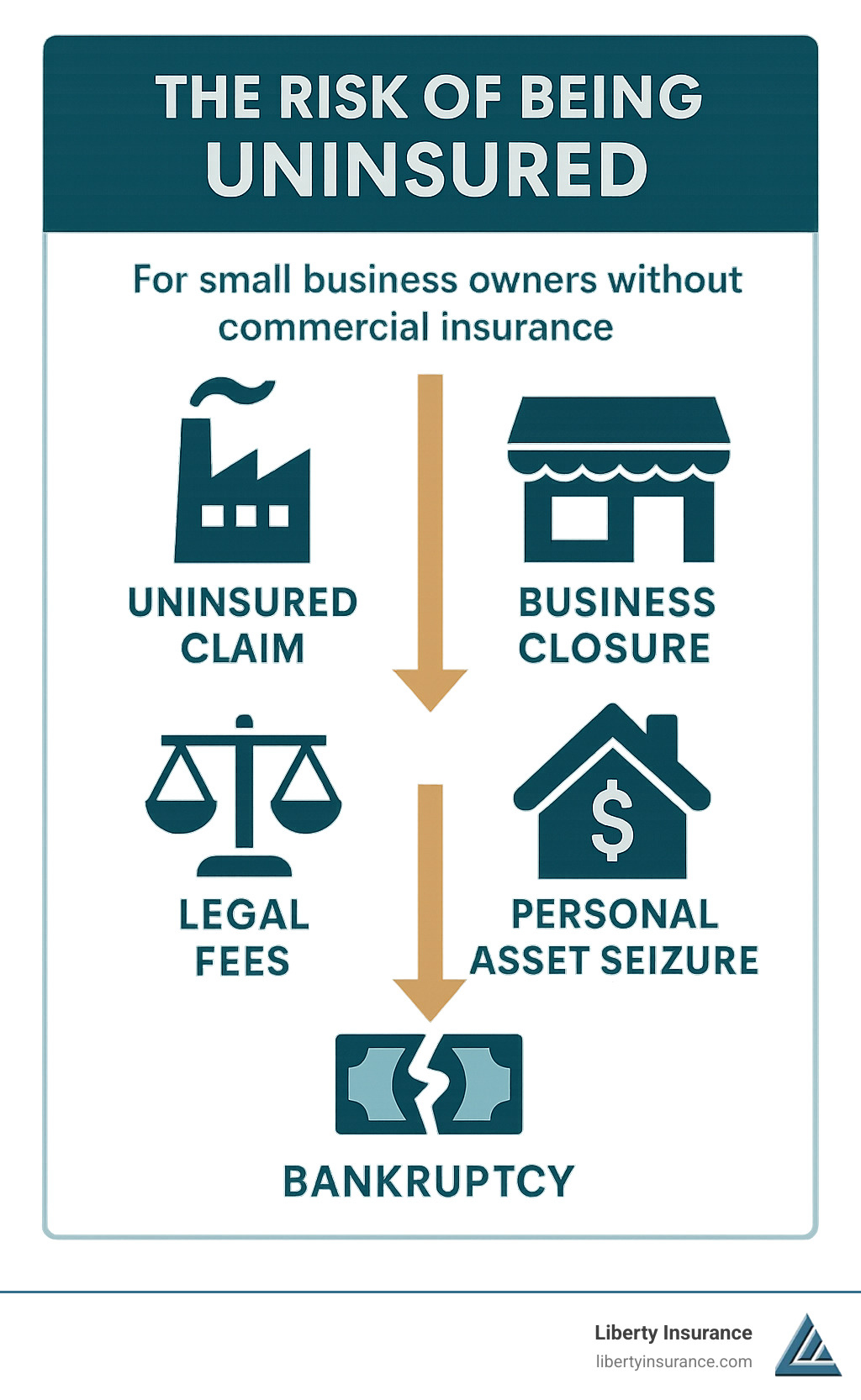
Commercial business insurance is essential protection that shields your business from financial disasters like lawsuits, property damage, theft, and employee injuries. Without it, a single claim could wipe out years of hard work and savings.
Essential Commercial Business Insurance Types:
- General Liability – Covers customer injuries and property damage claims
- Commercial Property – Protects buildings, equipment, and inventory from fire, theft, storms
- Workers’ Compensation – Required by law in most states for businesses with employees
- Professional Liability – Covers errors, omissions, and negligence claims
- Commercial Auto – Protects business vehicles and drivers
- Cyber Liability – Covers data breaches and cyberattacks
The average small business pays between $42-$80 per month for basic coverage, but the cost of going without protection is much higher. A single lawsuit can cost hundreds of thousands in legal fees alone.
I’m Andrew Harris, and I’ve spent over 15 years helping business owners steer commercial business insurance decisions as a Certified Insurance Counselor (CIC) and Accredited Advisor in Insurance (AAI).
Key terms for commercial business insurance:
– general liability insurance small business
– business personal property insurance
– types of business insurance
Quick-Glance: What Is Commercial Business Insurance?
Commercial business insurance is specialized coverage designed specifically for businesses, protecting both your property (buildings, equipment, inventory) and liability (when someone gets hurt or claims you’ve done something wrong).
Every state has its own rules about required coverage, and industries have special requirements. A construction company faces different risks than a hair salon, so their insurance needs are completely different.
Commercial insurance can be bundled together in an umbrella policy that covers multiple risks under one roof, like buying a toolkit instead of individual tools.
Why Every Company Needs It
One bad day can destroy years of hard work if you’re not protected. Commercial business insurance is the difference between surviving a crisis and closing your doors forever.
A customer trips and breaks their wrist – suddenly you’re facing medical bills, lost wages, and legal fees that can easily hit six figures. Or a fire destroys your business, and you’re not just paying to rebuild but also losing money every day you’re closed.
Insurance helps you respond quickly and professionally, showing customers you’re a business they can trust. The financial shield goes beyond paying claims – it gives you confidence to take smart risks and grow your business.
The Legal Must-Haves
Some types of commercial business insurance are required by law. Skip these, and you could face hefty fines or business shutdown.
Workers’ compensation is mandatory in most states if you have employees. It pays medical bills and lost wages when someone gets hurt on the job. Going without means massive fines and personal liability for workplace injuries.
Commercial auto insurance is required if your business uses vehicles, including company cars, delivery trucks, or personal vehicles used for business.
Different industries have special requirements. Contractors often need specific liability minimums and bonding. Professional service providers may need errors and omissions coverage to get licensed or win contracts.
Top Commercial Business Insurance Building Blocks
Think of commercial business insurance as a toolbox where each policy serves a specific purpose. You can buy individual policies or bundle them together for better coverage and cost savings.
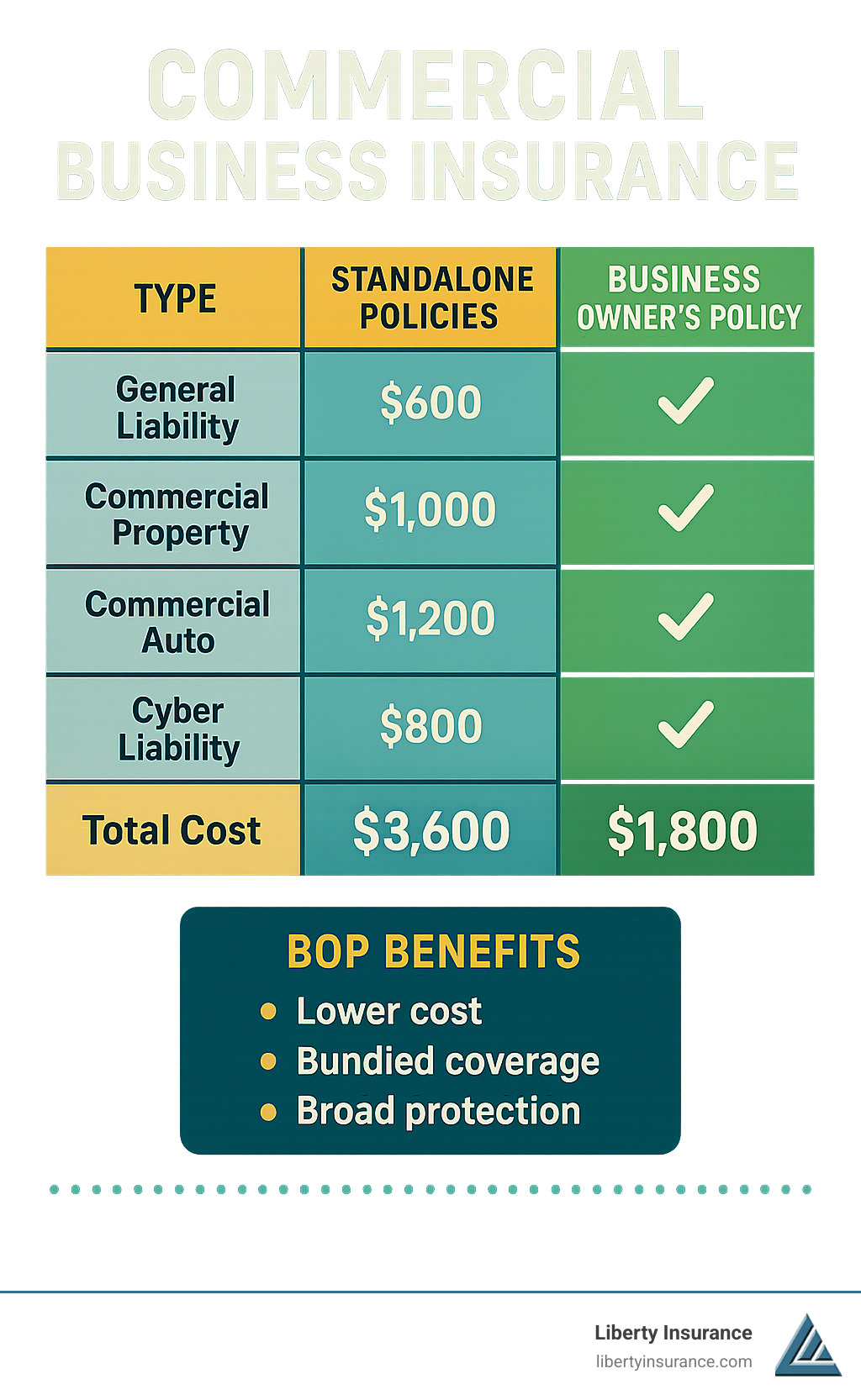
A Business Owner’s Policy (BOP) bundles general liability and commercial property into one package, often saving 10-15% compared to buying separately.
General Liability & Commercial Business Insurance Fundamentals
General Liability Insurance for Small Business is the foundation of any commercial business insurance program, protecting you when your business operations cause injury or damage to others.
What General Liability Covers:
– Bodily Injury: Customer slips or gets hurt using your product
– Property Damage: Accidentally damaging client property while working
– Personal and Advertising Injury: Claims of libel, slander, or copyright infringement
– Legal Defense Costs: Attorney fees, court costs, and settlement expenses
The average annual premium is $810, or $68 per month. For that investment, you get protection against claims that could easily reach six figures.
Coverage Limits: Most businesses carry $1 million per occurrence and $2 million aggregate limits. Higher-risk operations may need $2-5 million in coverage.
Professional Liability & Commercial Business Insurance for Service Pros
Professional liability insurance protects service-based businesses against claims of negligence, mistakes, or failure to deliver promised results. Essential for consultants, IT providers, real estate agents, accountants, architects, and marketing agencies.
The average annual premium is $744, or $62 per month.
What It Covers:
– Alleged errors in professional work
– Omissions or failure to perform promised services
– Negligent acts while providing professional services
– Legal defense costs and settlements
Safeguarding the Stuff: Commercial Property & Business Interruption
Commercial Property Insurance protects physical assets including buildings, equipment, inventory, and supplies.
What Commercial Property Covers:
– Buildings and lease improvements
– Business equipment and machinery
– Inventory and raw materials
– Loss of business income during repairs
Common Covered Perils: Fire, theft, vandalism, storms, water damage, equipment breakdown.
Business Interruption Insurance pays for lost income and ongoing expenses when your business must close temporarily due to covered damage.
People Power: Workers’ Compensation & EPLI
Workers’ Compensation Insurance is required by law in most states and covers medical expenses, lost wages (typically 2/3 of regular pay), and death benefits for work-related injuries.
The average annual premium is $1,032, or $86 per month, but rates vary significantly by industry.
Employment Practices Liability Insurance (EPLI) protects against employee lawsuits alleging wrongful termination, discrimination, harassment, and wage violations.
Employment-related lawsuits have increased 400% over the past 20 years, with legal defense costs averaging $75,000-$125,000.
Wheels & Wires: Commercial Auto and Cyber Coverage
Commercial Auto Insurance is required for any vehicle used in business operations, covering liability, physical damage, medical payments, and cargo.
Cyber Liability Insurance protects against data breach response costs, ransomware attacks, business interruption from cyber events, and regulatory fines.
How to Choose (and Afford) the Right Mix
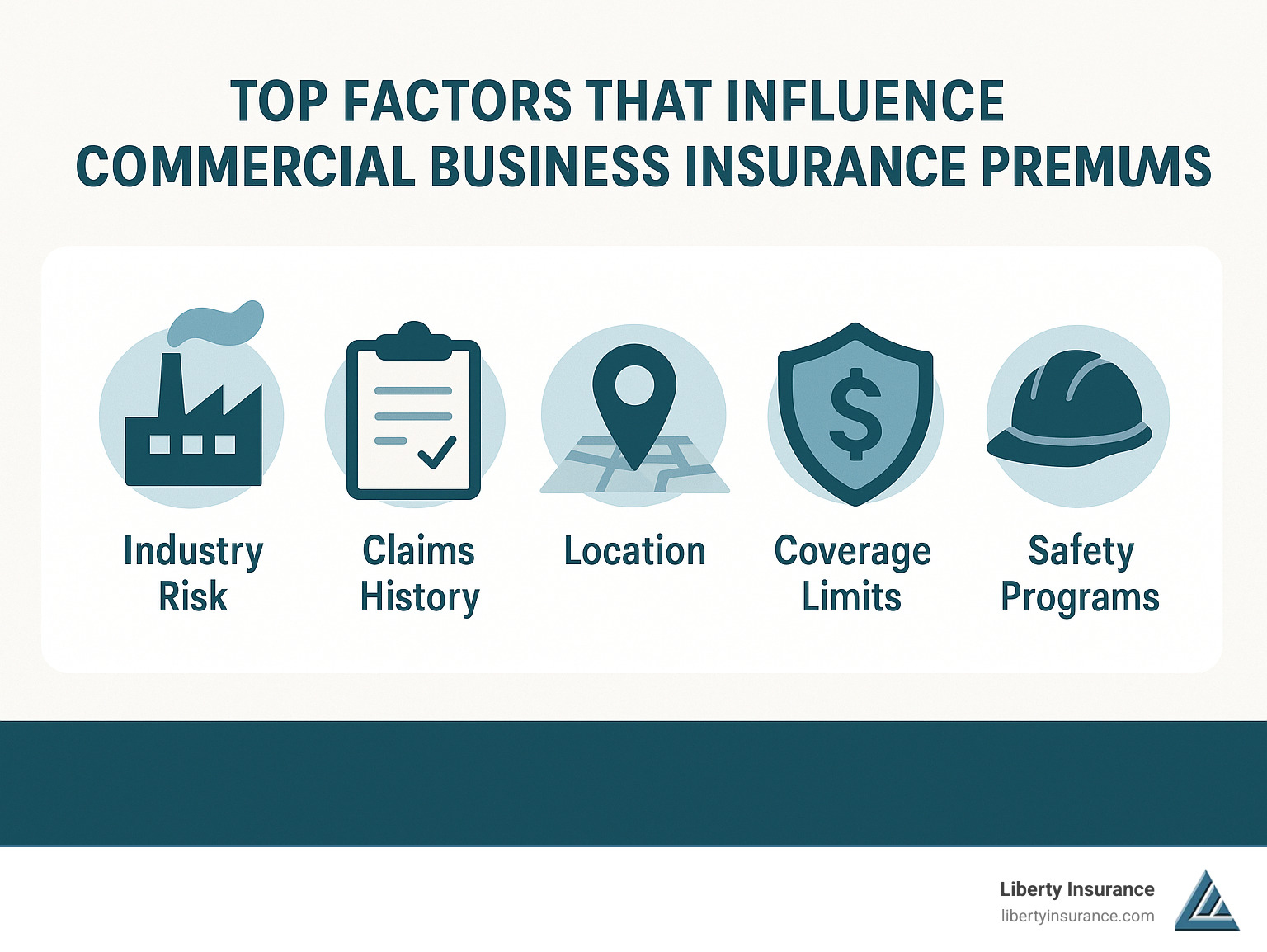
Selecting the right commercial business insurance mix requires examining five key factors:
- Industry Risk Profile: Construction vs. accounting firms face different risks
- Business Size: Revenue, payroll, and employees affect coverage needs
- Location: Natural disaster and crime rates impact premiums
- Claims History: Past losses influence future rates
- Financial Capacity: Your ability to absorb losses affects deductible choices
The most cost-effective approach for many small businesses is a Business Owners Insurance policy (BOP).
BOP vs. Standalone Policies:
| Coverage Type | Standalone Cost | BOP Cost | Savings |
|---|---|---|---|
| General Liability | $810 | Included | $810 |
| Commercial Property | $1,200 | Included | $1,200 |
| Business Interruption | $400 | Included | $400 |
| Total | $2,410 | $1,687 | $723 |
Crunching the Numbers
Scientific research on small-business insurance cost drivers shows these factors have the greatest impact:
Primary Premium Factors:
– Payroll and Employee Count
– Industry Classification
– Location
– Coverage Limits
– Claims History
– Credit Score
2024 National Median Costs:
– Professional Liability: $42 per month
– General Liability: $68 per month
– Workers’ Compensation: $80 per month
– Business Owner’s Policy: $141 per month
Smart Ways to Save Without Sacrificing Coverage
Proven strategies to reduce commercial business insurance costs:
Bundling Discounts: Combining policies typically saves 10-25%.
Safety Programs: Formal safety training and workplace hazard assessments can earn discounts of 5-15%.
Higher Deductibles: Increasing deductibles can reduce premiums by 20-30%.
Annual Policy Reviews: Remove coverage for discontinued operations, add protection for new risks, and adjust limits based on current values.
Claims Management: Proper claims procedures minimize losses and protect your claims history.
Real-World Claims Stories (Why Coverage Matters)

These real commercial business insurance claims show exactly why proper coverage makes all the difference.
Maria owned an Italian restaurant in New Brunswick when a grease fire erupted, spreading through the ventilation system. Smoke ruined everything – furniture, equipment, walls. The repair bill: $125,000, with three months closed.
Her commercial business insurance saved her business. Property coverage paid $85,000 for repairs and equipment. Business interruption covered $40,000 in lost income and ongoing expenses. She’d paid $8,500 in premiums over five years but got back $140,000 when disaster struck.
Tom’s roofing company was replacing shingles when materials slipped from the roof, striking a pedestrian and breaking her leg. She sued for $350,000. His general liability coverage paid a $275,000 settlement plus $85,000 in legal defense costs.
Sarah’s clothing boutique was hit by ransomware that locked up customer data and shut down her store for two weeks during peak season. Her cyber liability policy covered $25,000 for computer experts, $15,000 for customer notification, $30,000 for lost income, and $10,000 for PR help.
Our claims satisfaction rate of 92% shows that when you need help most, proper coverage delivers.
Lessons Learned From Each Scenario
Maria’s fire shows why business interruption coverage is as crucial as property protection. Tom’s incident proves legal defense costs can exceed what many small businesses earn annually. Sarah’s cyber attack reminds us no business is too small to be targeted.
The common thread: proper coverage limits. All three had adequate protection for their specific risks.
Avoid These Common Mistakes
Under-insuring your property is the biggest mistake we see. Many insure buildings for purchase price, not current replacement cost.
Thinking you’re too small for cyber criminals is dangerous. 43% of cyber attacks target small businesses, and 60% of hacked small businesses close within six months.
Letting your policy lapse might seem like a money-saver, but it’s the most expensive mistake possible.
Shopping only on price is like buying the cheapest parachute. Focus on getting right coverage first, then look for savings.
Never updating coverage as your business grows leaves you vulnerable with outdated limits.
Frequently Asked Questions about Commercial Business Insurance
Is business insurance required by law?
Workers’ Compensation is required if you have employees in almost every state. Texas is optional, but skipping it means unlimited liability for workplace injuries.
Commercial Auto Insurance is mandatory for any vehicle used for business, including company vehicles or personal cars used for business meetings.
Some professions need Professional Liability Insurance to maintain licenses. Contractors often need minimum liability coverage and bonds for permits and bidding.
How much does commercial business insurance cost?
Small businesses spend $42-$300 monthly depending on coverage. General Liability runs $42-68 monthly, while a Business Owner’s Policy averages $141 monthly.
Workers’ Compensation varies by industry – office workers might cost $45 monthly while roofers could run $200+. Commercial Auto typically costs $150-300 monthly per vehicle.
Costs depend on industry risk, business size, location, and claims history. You can reduce costs through bundling, safety programs, or higher deductibles.
Do home-based and sole-prop businesses really need coverage?
Operating as a sole proprietor increases personal risk because there’s no legal separation between business and personal assets. Creditors can pursue your house, car, savings, and retirement accounts.
Homeowner’s insurance won’t help – most policies exclude business activities. If a client gets hurt in your home office or you damage their property, you’re unprotected.
Even simple home businesses face real risks. Product-based businesses face product liability claims reaching six figures.
Commercial business insurance for home-based businesses typically costs $300-800 annually – less than $70 monthly to protect everything you’ve built.
Conclusion
Commercial business insurance isn’t just another expense – it’s your ticket to sleeping soundly at night. When you’re protected against the unexpected, you can focus energy on growing your business instead of worrying.
Every successful business treats insurance as an investment, not a cost. The average small business pays just $141 per month for comprehensive coverage, yet that investment can mean the difference between bouncing back from disaster and closing forever.
Businesses with proper commercial business insurance are five times more likely to survive major losses than those without coverage. With our 92% claims satisfaction rate, you can trust we’ll help you get back on your feet when trouble strikes.
At Liberty Insurance, we believe protection should be as unique as your business. Our customizable packages blend property protection, liability coverage, and income replacement into one comprehensive safety net that grows with your business.
Getting started is simple. A quick conversation helps us understand your risks and budget, then we craft a protection plan that fits perfectly. No pressure, no confusing jargon – just straightforward answers about protecting everything you’ve worked to build.
Ready to trade sleepless nights for peace of mind? Contact Business Insurance today for your personalized quote. The only thing worse than paying for insurance you don’t need is needing insurance you don’t have.
Your business works hard for you. Isn’t it time your insurance worked just as hard for your business?

