
Why Every Business Needs a Liability Shield
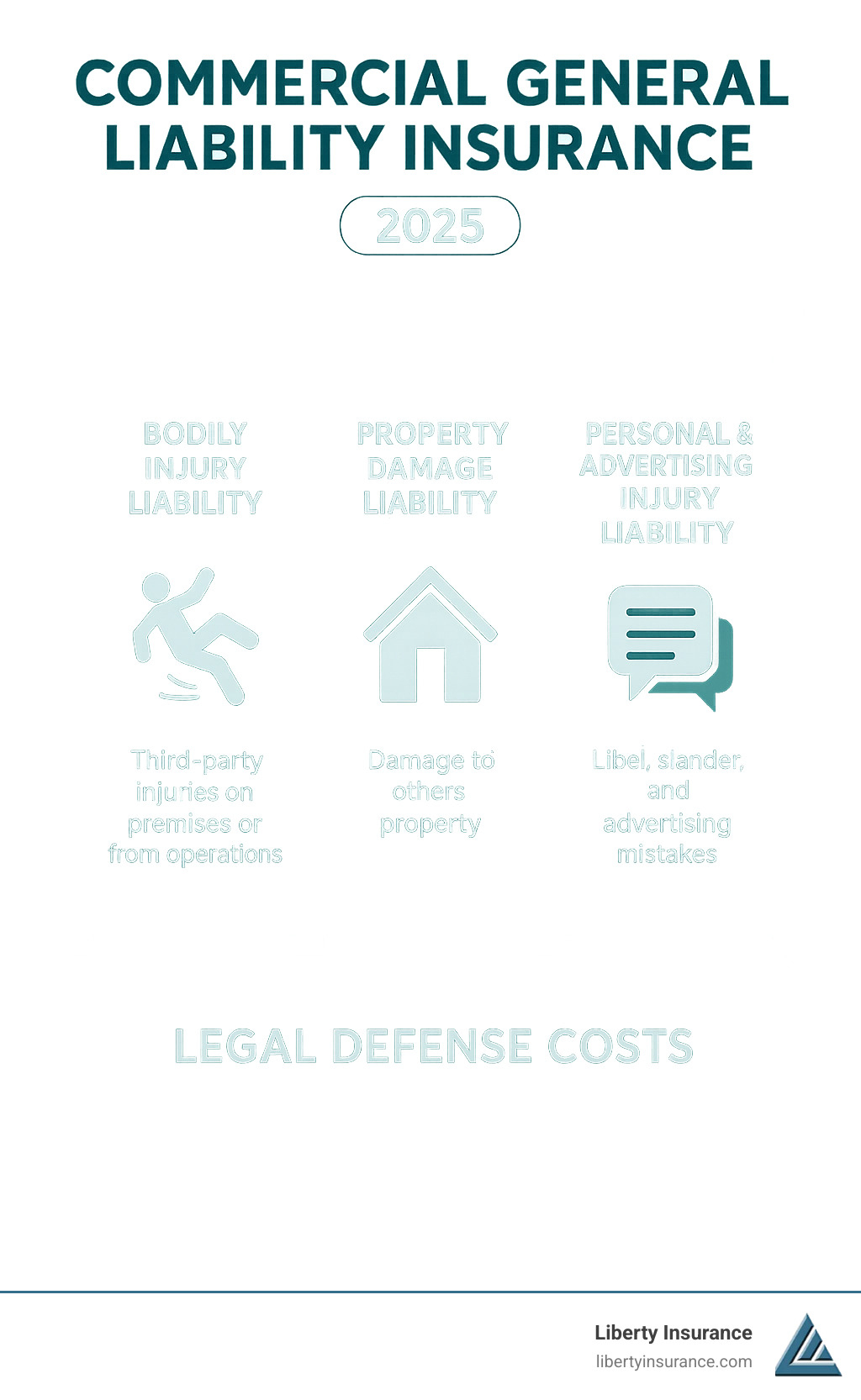
Commercial general insurance protects your company from third-party claims for bodily injury, property damage, and personal or advertising injury. One unexpected lawsuit can wipe out years of hard work, so CGL should sit near the top of every owner’s priority list.
What CGL Covers
- Bodily injury to customers or visitors
- Damage to someone else’s property
- Personal & advertising injury (libel, slander, copyright)
- Legal defense costs and court judgments
- Medical payments for minor injuries
Slip-and-falls are among the leading causes of injury hospitalizations in the United States. Even if you did nothing wrong, you could face tens of thousands of dollars in defense costs. CGL acts as the first layer of protection so these expenses don’t come out of your pocket.
Average Cost: About $450 a year for most small to mid-size businesses buying a $2 million limit.
I’m Andrew Harris, CIC, AAI—PIA National’s 2020 Agent of the Year. After helping hundreds of New Jersey companies secure the right protection, I can tell you this: CGL is the foundation of a healthy risk-management plan.
What is commercial general insurance?
A CGL policy pays when you’re found legally liable for bodily injury or property damage to a third party. It also covers legal fees—even frivolous suits need a lawyer.
Why is CGL considered essential?
- Financial protection: Shields cash flow from large judgments
- Contractual compliance: Required by many landlords, vendors, and event venues
- Reputation management: Quick claims handling keeps customers happy
- Peace of mind: Focus on growth, not potential lawsuits
Liberty Insurance offers flexible limits and deductibles through our Commercial General Liability Insurance program. For broader options, explore our full suite of Business Insurance.
A Deep Dive into CGL Coverage and Common Claims
Accidents happen—especially in busy New Jersey storefronts, offices, and job sites. Commercial general insurance creates a safety net so one mishap doesn’t turn into a company-ending crisis.
What does commercial general insurance cover?
- Bodily Injury Liability: Medical bills, lost wages, pain & suffering
- Property Damage Liability: Repair or replacement of damaged third-party property
- Products–Completed Operations: Injuries or damage that occur after you finish a job or sell a product
- Personal & Advertising Injury: Libel, slander, copyright infringement
- Tenant’s Legal Liability: Damage you cause to a space you rent
- Medical Payments: Goodwill payments for minor injuries without a lawsuit
Common real-world claim scenarios
- Customer slip-and-fall: Wet floor in a boutique results in $25,000 in medical and legal costs.
- Employee damages client property: Contractor scratches $10,000 worth of hardwood flooring during install.
- Product liability: Restaurant patron suffers food poisoning; multiple diners file a six-figure suit.
- Advertising misstep: Social media post is deemed defamatory; legal fees top $15,000.
Liberty Insurance’s General Liability Insurance for Small Business makes handling these risks straightforward so you can stay focused on running your company.
Decoding Your Policy: Claims-Made vs. Occurrence
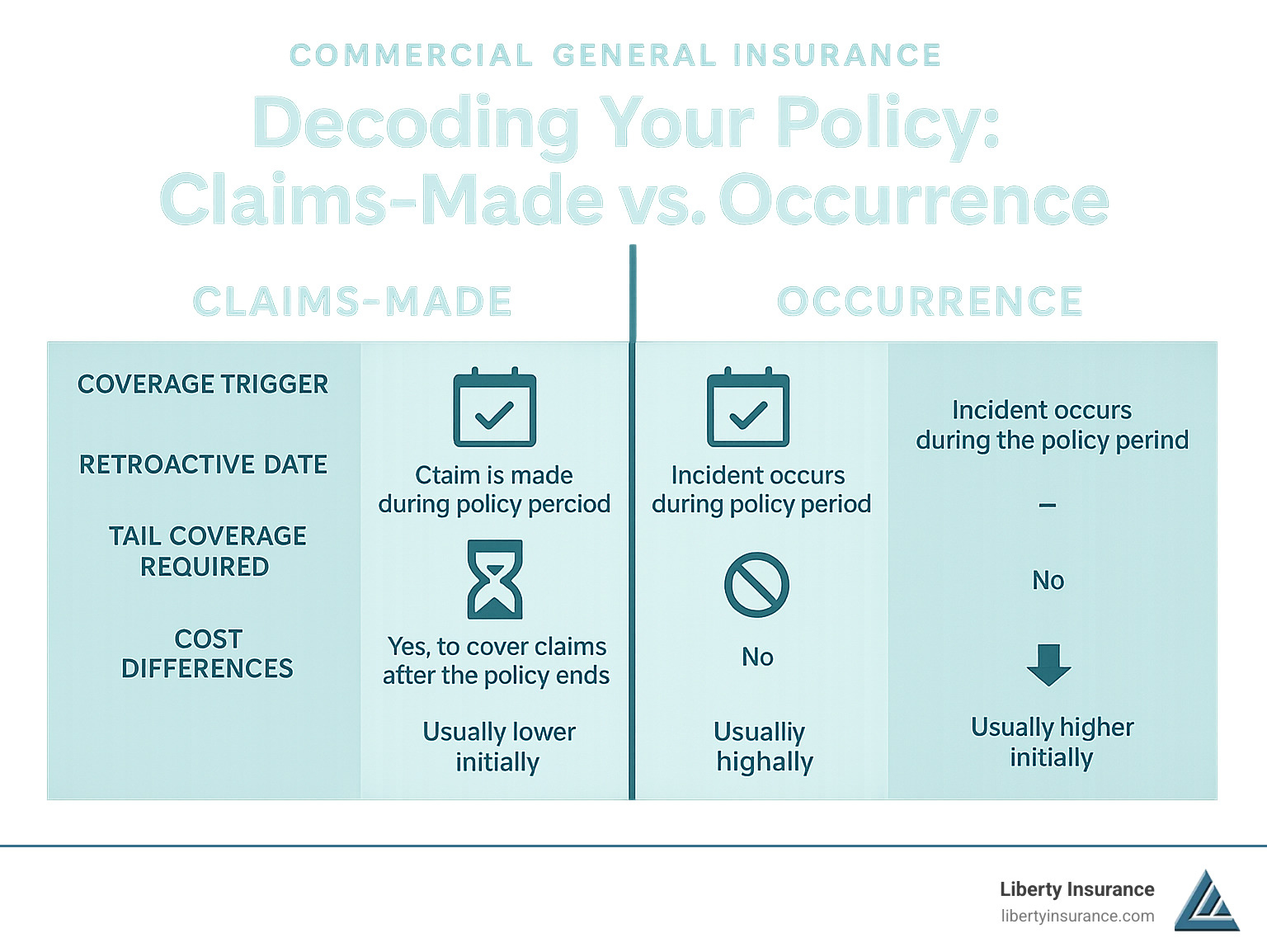
When you’re shopping for commercial general insurance, you’ll encounter two different policy structures that can significantly impact your coverage and costs. Understanding the difference between claims-made and occurrence policies is crucial for making the right choice for your business.
Think of it this way: claims-made policies care about when you report a problem, while occurrence policies care about when the problem actually happened. This difference might seem small, but it can have major implications for your protection and peace of mind.
Understanding a Claims-Made Policy
Claims-made policies work like a subscription service – you’re only covered for claims you report while your policy is active. The coverage trigger is the date you actually file the claim with your insurance company, not when the incident occurred.
Here’s where it gets tricky. Let’s say a customer slips and falls in your store in January, but they don’t decide to sue you until March. With a claims-made policy, you need coverage in place when they file that lawsuit in March, regardless of when the accident happened.
The retroactive date is your policy’s memory – it determines how far back in time your coverage reaches. Any incidents that happened before this date won’t be covered, even if you report them during your policy period. When switching insurers, you’ll want to maintain the same retroactive date to avoid gaps in your historical coverage.
Tail coverage becomes essential when you cancel a claims-made policy or switch to a different insurer. This extended reporting period lets you report claims after your policy expires for incidents that occurred while you were covered. The catch? Tail coverage can cost 200-300% of your annual premium – a significant expense that catches many business owners off guard.
Claims-made policies are more common in professional liability insurance, where problems from your work might not surface for years. They’re less typical for general liability coverage.
Understanding an Occurrence Policy
Occurrence policies are much more straightforward and forgiving. The coverage trigger is simply the date when an incident happens, regardless of when someone decides to file a claim about it.
This structure provides excellent long-term protection. If someone gets injured on your premises in January 2023, your 2023 policy covers that incident forever – even if the lawsuit doesn’t come until 2025 or you’ve switched insurance companies by then.
The simpler structure makes occurrence policies easier to understand and manage. You don’t need to worry about retroactive dates, expensive tail coverage, or maintaining continuous coverage with the same insurer to stay protected. Once something happens during your policy period, you’re covered for life regarding that specific incident.
Occurrence policies do come with a typically higher premium because they provide more comprehensive, long-term protection. However, this higher upfront cost often balances out when you consider the potential expense of tail coverage with claims-made policies.
For most businesses, occurrence-based commercial general insurance policies offer the best combination of simplicity and comprehensive protection. You can sleep better knowing that once you’re covered, you stay covered for incidents that happen during your policy period.
Liberty Insurance’s Claims-Made vs. Occurrence Policies guide can help you determine which structure makes the most sense for your specific business needs and risk profile.
Policy Limits, Exclusions, and Cost Factors
Every commercial general insurance policy has boundaries – and understanding these limits is crucial for protecting your business effectively. Think of your policy like a safety net: it’s incredibly strong, but it doesn’t catch everything.
The fine print matters more than you might think. While CGL coverage is comprehensive, knowing what’s excluded helps you avoid nasty surprises when you need protection most. Let’s explore what your policy won’t cover and how insurers determine what you’ll pay for the coverage you do get.
What does CGL typically NOT cover?
Your commercial general insurance policy is powerful, but it’s not a cure-all for every business risk. Here are the key areas where you’ll need additional protection:
Professional errors and omissions fall outside standard CGL coverage. If you’re a consultant who gives advice that costs a client money, or an accountant who makes a costly mistake on tax returns, your general liability policy won’t help. These professional mishaps require separate coverage designed specifically for service-based risks.
Employee injuries are handled by workers’ compensation insurance, not your CGL policy. When your staff member gets hurt on the job, workers’ comp steps in with medical coverage and wage replacement. Your general liability only protects against injuries to customers, vendors, and other third parties – not your own team.
Commercial auto accidents need their own insurance coverage. Whether it’s a company vehicle, an employee’s personal car used for business, or a rental truck, auto-related incidents require commercial auto insurance. Your CGL policy stays focused on premises and operations liability.
Intentional damage is never covered under any liability policy. If you or your employees deliberately cause harm or property damage, no insurance company will pay those claims. This includes criminal acts, assault, and any purposeful wrongdoing – insurance protects against accidents, not intentional acts.
Pollution liability typically requires specialized environmental coverage. Even accidental spills might not be covered without specific endorsements. Environmental contamination, gradual pollution, and cleanup costs are complex risks that need dedicated policies.
Contractual liability has limited coverage under standard policies. While some contractual obligations are automatically covered, others require specific endorsements. Always review contracts carefully and discuss coverage needs with your agent to avoid gaps.
For businesses providing professional services, Liberty Insurance offers comprehensive Professional Liability Insurance to bridge these critical coverage gaps.
How is the cost of CGL insurance determined?
The cost of your commercial general insurance isn’t pulled out of thin air – insurers use specific factors to calculate premiums that reflect your business’s unique risk profile.
Industry risk serves as the foundation for pricing. A construction company naturally faces higher liability risks than a consulting firm, so they’ll pay more for coverage. Insurance companies analyze years of historical loss data to determine base rates for each industry classification. It’s not personal – it’s just math based on what typically happens in your line of work.
Business size and revenue directly impact your premium costs. Larger businesses with higher revenues typically face more exposure and pay accordingly. Your annual revenue helps insurers estimate your activity level and corresponding risk. A busy restaurant serves more customers than a quiet one, creating more opportunities for incidents.
Location affects pricing because legal environments and claim frequencies vary dramatically. Businesses in major cities often pay more than rural operations due to higher lawsuit frequency and larger damage awards. Your zip code tells insurers a lot about your liability exposure.
Claims history significantly impacts your rates, sometimes for years. A clean record earns you discounts, while frequent claims result in higher premiums or coverage restrictions. Most insurers look back five years when evaluating your loss history, so that slip-and-fall claim from 2019 might still be affecting your rates.
Coverage limits and deductibles create a balancing act with your premiums. Higher limits increase costs because the insurer’s maximum payout increases. Higher deductibles reduce premiums because you’re taking on more of the initial risk. Most businesses carry $1-2 million in coverage, but high-risk operations often need much more.
Number of employees affects both exposure and premium calculations. More employees mean more potential for accidents and higher overall business activity. Some coverage calculations are directly tied to payroll figures.
According to industry statistics, the annual cost for a million dollars of commercial general insurance coverage ranges from $300 to $1,000. Most small to medium businesses pay around $450 annually for a basic $2 million policy. However, these costs can vary significantly based on your specific risk factors – a daycare center and a law firm might pay very different rates even with similar revenues.
How CGL Complements Your Business Insurance Portfolio
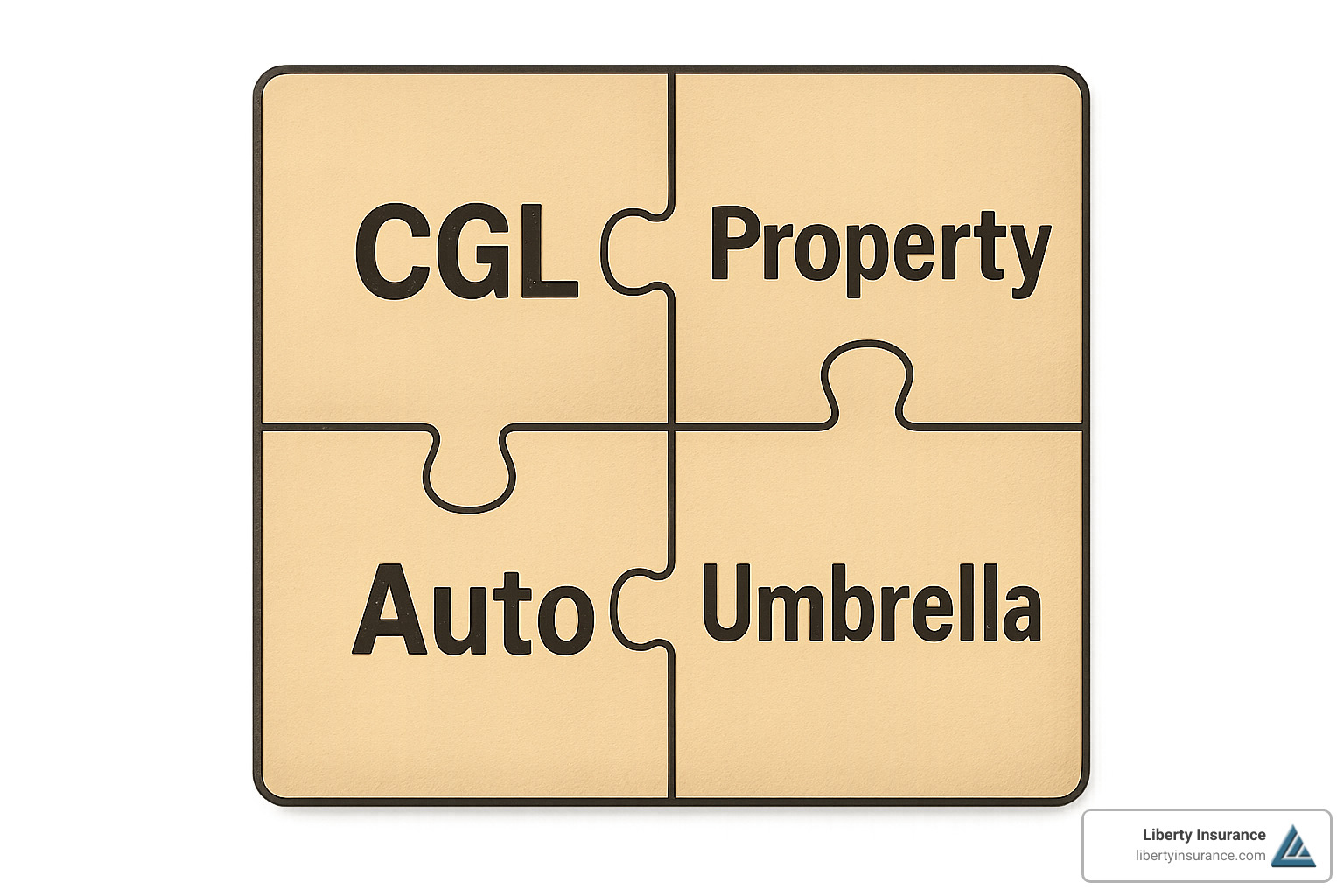
Think of commercial general insurance as the foundation—strong but incomplete by itself. Layering other coverages around it seals the gaps.
Essential policies that work with CGL
- Commercial Property Insurance: Repairs your building or equipment; CGL pays if the same fire spreads and damages the building next door. Explore options at Commercial Property Insurance.
- Commercial Auto Insurance: Covers accidents involving business vehicles—a clear exclusion under CGL. Details at Commercial Auto Insurance.
- Workers’ Compensation: Looks after employee injuries; CGL looks after everyone else.
- Cyber Liability Insurance: Handles data breaches and ransomware, exposures modern CGL policies don’t address.
Why add an umbrella policy?
A single severe injury claim can exceed $1 million. Umbrella liability sits on top of your CGL, auto, and employers’ liability limits—often adding $1–5 million of extra protection for a modest cost. Learn more at Umbrella Liability Insurance.
Frequently Asked Questions about Commercial General Insurance
Who needs commercial general insurance?
Almost every enterprise—freelancers, retailers, restaurants, manufacturers, and home-based businesses—faces third-party liability. If customers, vendors, or the public interact with your business in New Jersey, you need CGL.
General Liability vs. Professional Liability
- General Liability: Physical harm—injury or property damage
- Professional Liability (E&O): Financial harm from professional mistakes
Many service firms need both to stay fully protected.
How do I get a policy?
- Assess risks (operations, revenue, payroll, prior claims)
- Gather documents (loss runs, leases, contracts)
- Call a licensed agent who understands local NJ exposures
- Compare quotes & terms—not just price
- Review, buy, and revisit annually as your business grows
The Liberty team in Millstone Township, Trenton, Toms River, New Brunswick, and Princeton is ready to help tailor coverage that fits your budget and growth plans.
Conclusion: Secure Your Business’s Future Today
Running a business takes courage, dedication, and smart planning. Commercial general insurance isn’t just another item on your to-do list – it’s the safety net that lets you sleep soundly at night, knowing your hard work is protected.
Think about it this way: you wouldn’t drive without car insurance or own a home without homeowner’s coverage. Your business deserves the same level of protection. With slip-and-fall accidents being the leading cause of injury hospitalization and liability claims averaging thousands of dollars, operating without CGL coverage is like walking a tightrope without a net.
Your business represents more than just income – it’s your passion, your future, and often your family’s security. One unexpected liability claim shouldn’t be able to wipe out everything you’ve built. That’s exactly what commercial general insurance prevents.
We’ve seen how CGL coverage works as the foundation of smart business protection. It handles the everyday risks that come with serving customers, working with vendors, and simply having people on your premises. But it’s most powerful when combined with other essential coverages like property insurance, commercial auto, and workers’ compensation.
Growth becomes possible when you’re properly protected. Instead of worrying about potential lawsuits, you can focus on expanding your services, hiring new employees, or opening that second location. Confidence comes from knowing you’re covered against the unexpected.
At Liberty Insurance, we’ve helped countless businesses throughout New Jersey find the right protection for their unique needs. Whether you’re in Millstone Township, Trenton, Toms River, New Brunswick, or Princeton, we understand the local business environment and the risks you face.
Every day you operate without proper coverage is a day of unnecessary risk. The peace of mind that comes from comprehensive protection is worth far more than the modest cost of premiums.
Your Next Step to Comprehensive Protection
Don’t put this off any longer. Commercial general insurance is one of the smartest investments you can make in your business’s future. The cost is minimal compared to the potential financial devastation of facing a liability claim without coverage.
Start by taking an honest look at your current situation. Do you have CGL coverage? Is it adequate for your business size and industry? When did you last review your policy to make sure it still fits your needs?
Working with experienced professionals makes all the difference. You wouldn’t try to fix your own plumbing or electrical work – why handle your business insurance alone? Our team understands the complexities of commercial coverage and can guide you toward the right solution.
Your future self will thank you for taking action today. Every successful business owner we work with tells us the same thing – having proper insurance coverage gives them the confidence to pursue opportunities they might otherwise avoid.
Ready to protect what you’ve worked so hard to build? Liberty Insurance makes it easy to get the comprehensive coverage your business needs. Our expert team will assess your risks, explain your options, and help you build a protection plan that fits your budget.
Get a quote for your business property insurance needs today and take the first step toward complete business protection. Your business deserves the security that comes from proper coverage – and you deserve the peace of mind that follows.

