
Protecting Your Growing Investment: The Essentials of Plant Insurance
Commercial plant insurance is specialized business coverage that protects nurseries, greenhouses, and plant-related operations against financial losses from damage to plants, equipment, and structures.
Key Components of Commercial Plant Insurance:
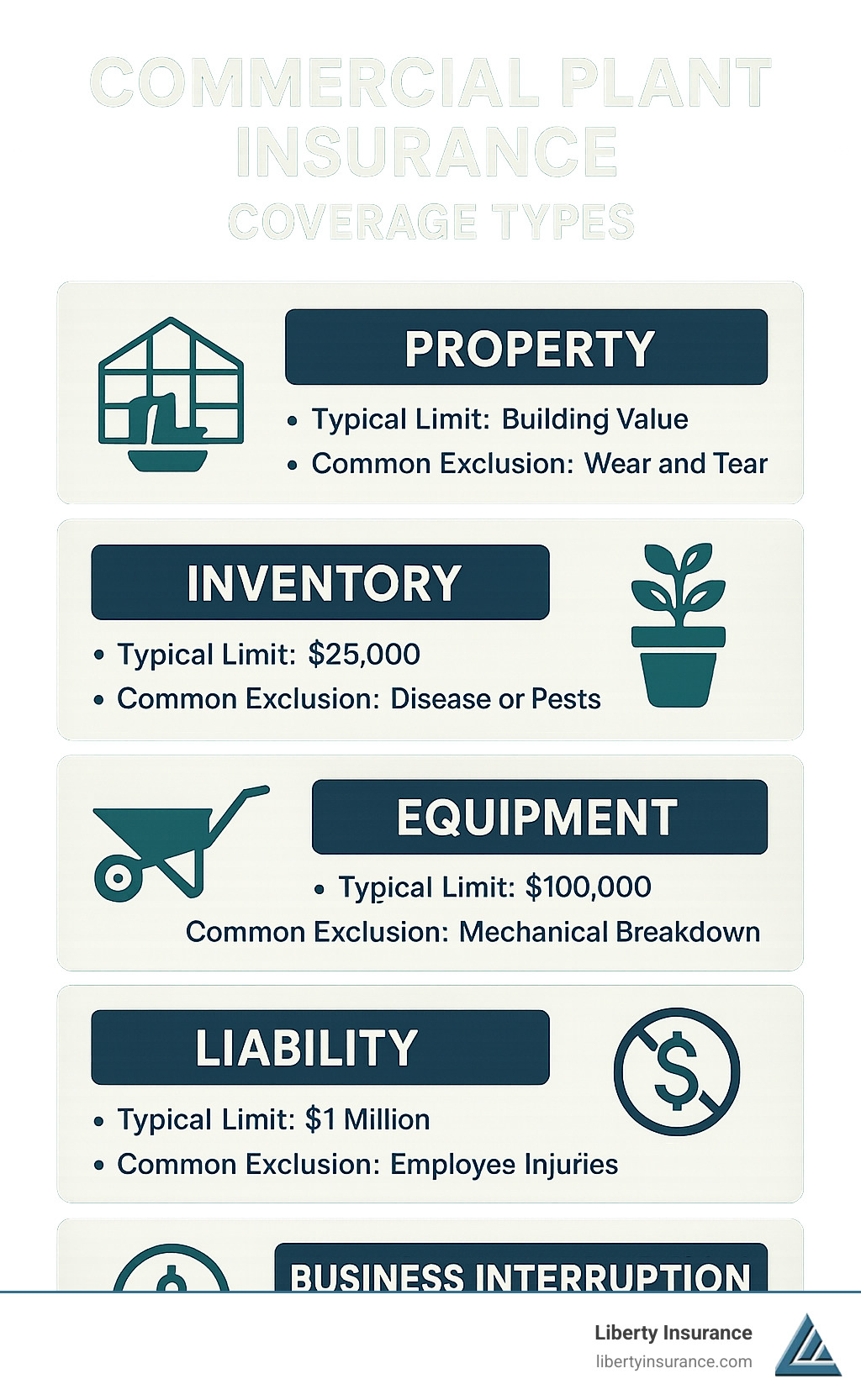
* Property Coverage – Protects structures, greenhouses, and buildings
* Inventory Protection – Covers plant stock, seedlings, and mature plants
* Equipment Insurance – Safeguards machinery, irrigation systems, and tools
* Liability Coverage – Protects against customer injuries and third-party claims
* Business Interruption – Provides income if operations are halted by covered perils
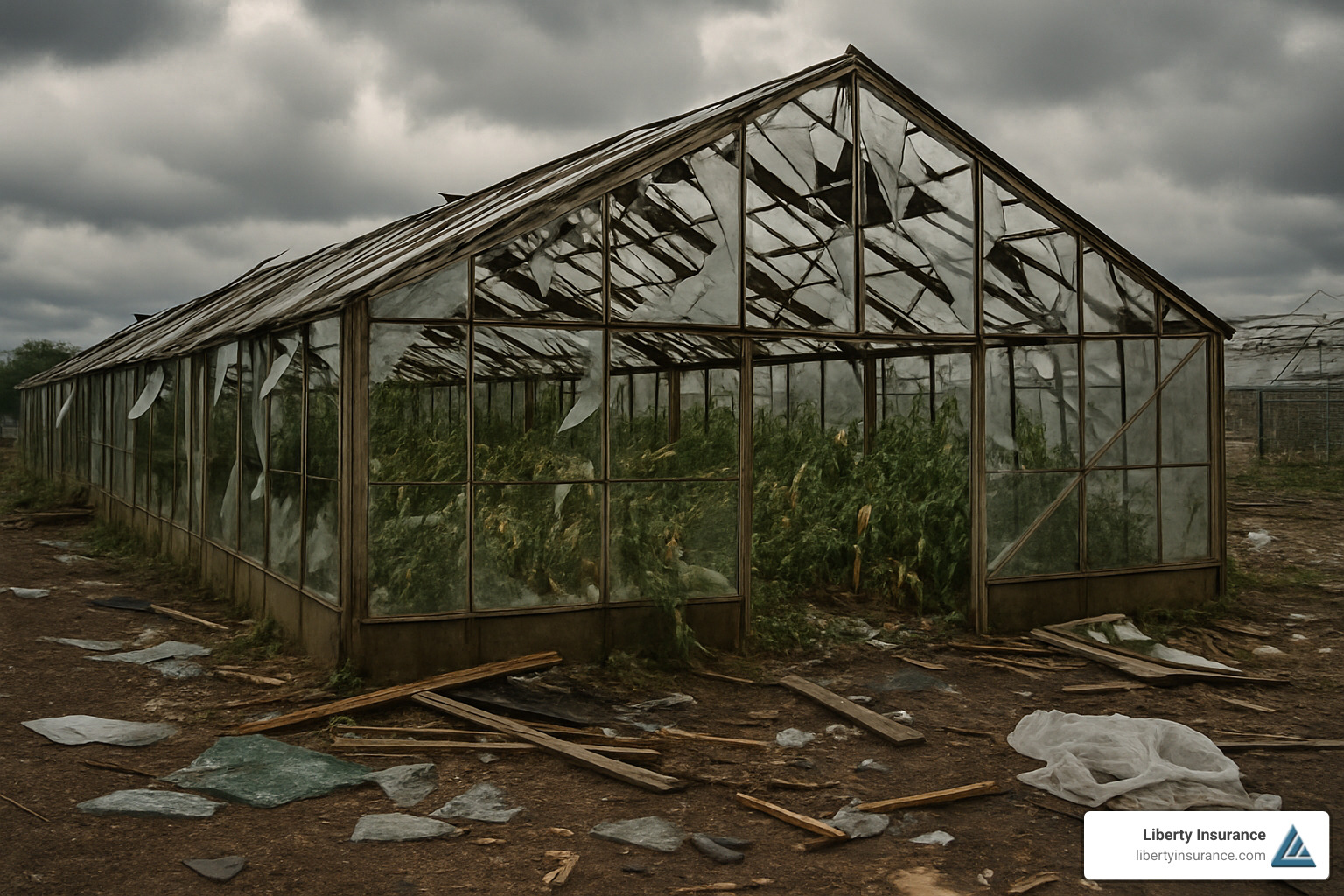
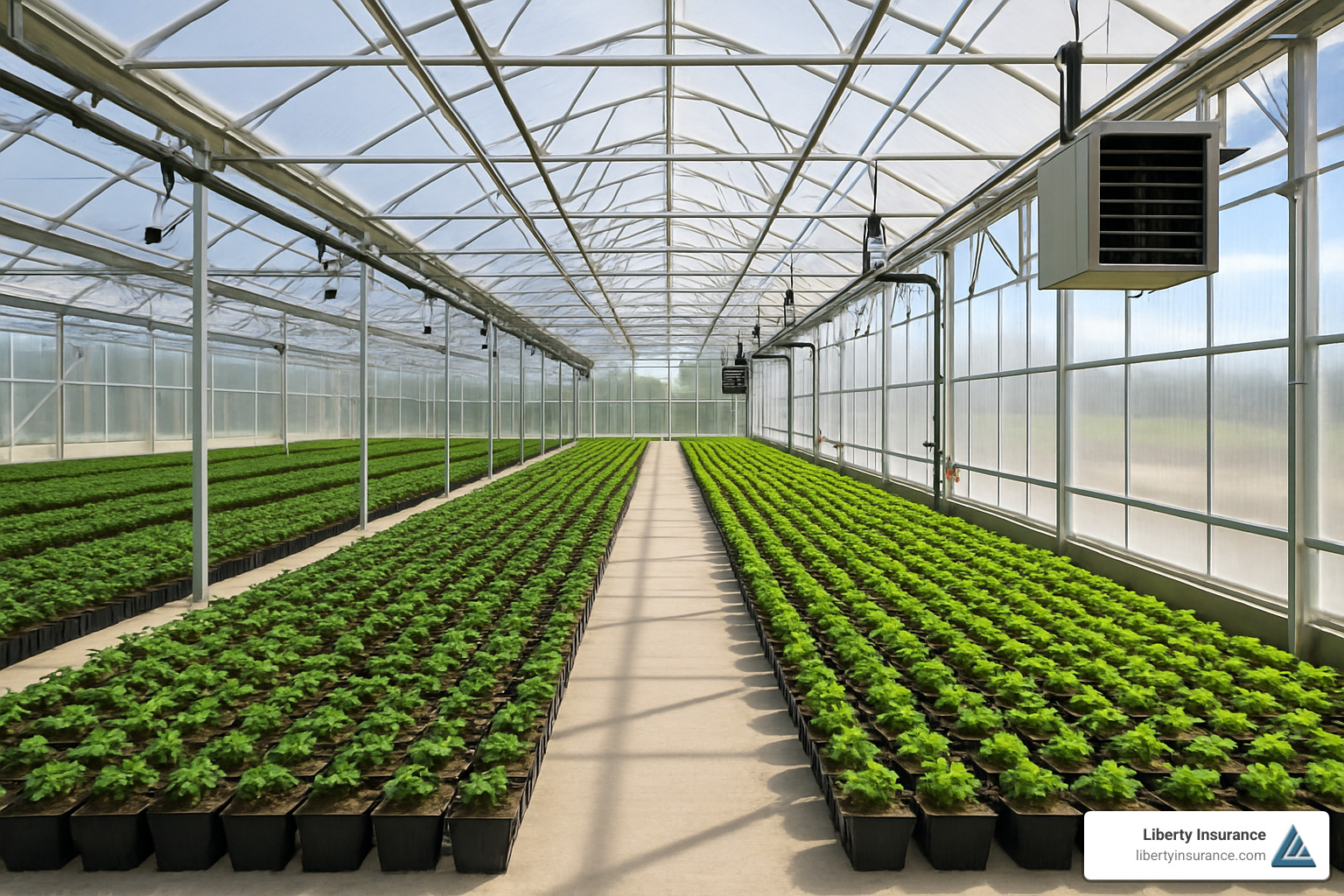
Structures like modern greenhouses are engineered to create optimal growing conditions but are also vulnerable to storms, fire, and equipment failures—events that can quickly become costly without the right insurance.
From beautiful flowers to the sweet, earthy smell of soil, there’s a lot to enjoy about running a plant-based business. But disasters like fire, hail, frost, or equipment failure can quickly threaten your livelihood.
The unique nature of plant businesses creates exposures not addressed by standard business policies. Your inventory is alive, vulnerable to temperature fluctuations, and often seasonal in value. Whether you operate a retail nursery, wholesale greenhouse, or provide plant equipment for construction sites, specialized coverage is essential.
“It’s easier to budget for monthly insurance premiums than to suddenly find enough money to repair or replace specialized growing equipment and living inventory.”
Plant businesses face distinctive challenges including:
- Perishable inventory that can be damaged by temperature changes
- Seasonal fluctuations in inventory value and exposure
- Weather-dependent operations vulnerable to storms and climate events
- Specialized equipment with high replacement costs
- Unique liability exposures from customer foot traffic and plant sales
I’m Andrew Harris, a Certified Insurance Counselor with extensive experience helping nurseries and plant-based businesses secure comprehensive commercial plant insurance that protects their growing investments while controlling costs.
Quick commercial plant insurance definitions:
– business asset protection insurance
– commercial fire damage insurance
– commercial risk insurance
What Is Commercial Plant Insurance & Who Needs It?
When you’re in the business of growing or working with plants, you face unique challenges that standard business insurance just doesn’t cover. That’s where commercial plant insurance comes in – specialized protection designed specifically for businesses whose inventory breathes and whose equipment is built for cultivation rather than manufacturing.
Think about it – your inventory is alive! It can die from temperature changes, pests, or disease. Your specialized equipment might sit outdoors year-round, exposed to the elements. These unique risks deserve unique coverage.
Commercial plant insurance provides custom protection for businesses that depend on plants or plant-related equipment for their livelihood. Whether you’re nurturing seedlings or renting out backhoes, the right coverage keeps your growing investment safe.
Who needs this specialized coverage? If you run any of these businesses, you’re a perfect candidate:
- Retail Nurseries where customers browse rows of potted perennials
- Wholesale Greenhouses supplying plants to landscapers and garden centers
- Plant Hire Companies renting out construction equipment
- Construction Firms using heavy machinery for building projects
- Vertical Farms growing produce in stacked systems
- Hydroponic Growers cultivating plants without soil
- Hemp Operations producing legal hemp crops
- Garden Centers selling plants alongside gardening supplies
Here at Liberty Insurance, we understand New Jersey plant businesses face distinct regional challenges – from coastal storms battering your greenhouses to dramatic seasonal temperature swings that can stress your inventory. Our local offices in Millstone Township, Trenton, Toms River, New Brunswick, and Princeton mean we’re familiar with the specific risks your nursery faces.
Types of Commercial Plant Insurance Coverage
A solid commercial plant insurance package typically bundles several key protections to keep your business blooming even when disaster strikes.
Property Insurance protects the physical structures where your business operates. For nurseries, this means specialized greenhouse coverage that understands the unique vulnerabilities of glass or polycarbonate structures.
Plant Stock/Inventory Coverage is perhaps the most critical protection for nurseries and growers. Your living inventory represents both current and future income. We can structure coverage to protect everything from tiny seedlings to mature specimen trees.
Equipment Coverage safeguards the machinery that keeps your operation running smoothly. Your irrigation systems, climate control equipment, tractors, potting machines, and sprayers represent a significant investment that deserves protection.
General Liability Insurance steps in when a customer trips over a hose in your nursery or claims a plant you sold damaged their property. This essential coverage protects against third-party claims for bodily injury or property damage.
Business Interruption Insurance provides income replacement when disaster strikes. If a fire damages your greenhouse in spring – your busiest season – this coverage helps cover ongoing expenses and lost profits while you rebuild.
Key Risks and Core Coverages for Plant-Based Businesses
If you run a plant-based business, you’re facing risks that standard business insurance just wasn’t designed to handle. After all, your inventory is alive and vulnerable in ways that most businesses never have to worry about.
Weather-Related Perils
Mother Nature can be particularly harsh on plant businesses. A single hailstorm can shatter greenhouse panels and shred delicate plants in minutes. High winds don’t just damage structures—they can topple entire sections of container plants, representing thousands in lost inventory.
When freezing temperatures strike, especially during unexpected cold snaps or heating system failures, sensitive plants can die overnight. And let’s not forget about heavy snow that can collapse greenhouse roofs, or flooding that damages roots and creates the perfect environment for disease.
Theft and Vandalism
Security is a major concern for both nurseries and plant hire companies. Did you know that millions of dollars of plant machinery is stolen from construction sites every year? High-value plants and trees are also attractive targets for thieves—especially specimen trees that can be worth thousands.
Fire Risk
Fire can be devastating to any business, but plant operations face unique challenges. Electrical fires from greenhouse wiring and climate control systems are common concerns. Rural locations often mean higher wildfire exposure, and heating system malfunctions during cold weather can quickly turn catastrophic.
Equipment Breakdown
The specialized equipment that keeps your plants thriving represents another significant risk. When climate control systems fail, you might have just hours before inventory losses begin. Irrigation system malfunctions can cause drought stress or overwatering, while boiler breakdowns during winter can be absolutely catastrophic for greenhouse operations.
Hired-In Plant Exposures
Construction companies and businesses that rent equipment face their own set of challenges. Most rental contracts make the hirer fully liable for any loss or damage—regardless of how it happens. With replacement costs for heavy machinery often running into hundreds of thousands of dollars, this is a serious exposure.
Seasonal Value Fluctuations
Many plant businesses experience dramatic seasonal swings in inventory value. Your spring inventory might be worth several times your annual average, creating a massive exposure during your busiest—and most profitable—time of year.
Commercial Plant Insurance Risk Matrix
Understanding your risk profile is essential for proper protection. Here’s how different exposures typically impact plant businesses:
| Risk Category | Exposure Level | Key Considerations |
|---|---|---|
| Inventory Fragility | High | Living plants vulnerable to temperature, water, pests |
| Temperature Control | Critical | HVAC/heating system reliability and backup systems |
| Transport Hazards | Moderate-High | Plants damaged in transit to customers |
| Customer Injury | Moderate | Slip and fall risks from water, uneven surfaces |
For more information about protecting your business, check out our comprehensive liability insurance options to round out your protection plan.
How Commercial Plant Insurance Policies Work: Valuation, Endorsements, Claims & Costs
Let’s talk about how commercial plant insurance actually works when the rubber meets the road. Understanding these details now can save you major headaches later when you’re facing a loss.
Valuation Methods
The way your plants and equipment are valued isn’t just fine print—it’s everything when disaster strikes.
Most nursery owners prefer replacement cost valuation, which pays to replace your damaged items with new ones without factoring in depreciation. This is particularly important for your living inventory where the “used plant” market isn’t exactly thriving!
Actual Cash Value (replacement cost minus depreciation) might be applied to your older structures or equipment. It’s like selling your five-year-old tractor—you’re not getting what you paid for it.
For those prize specimen plants or rare varieties, consider agreed value coverage. This establishes a predetermined value between you and your insurer, giving you certainty about what you’ll receive if that 30-year-old Japanese maple gets damaged.
Key Endorsements for Plant Businesses
Standard policies often need some special touches to properly protect plant businesses. Think of these endorsements as the custom fertilizer blend for your insurance policy:
Your spring inventory might be triple your winter stock, which is why a Peak Season Endorsement is brilliant—it temporarily boosts your coverage during high-inventory periods without charging you year-round for those higher limits.
If you’re moving plants outside temporarily, a Growing Stock Endorsement extends coverage for crops outside of structures, typically up to $250,000 within 1,000 feet of your main facility.
Plants are resilient, and sometimes damaged inventory can be saved. The Rehabilitation Endorsement covers the labor and materials needed to nurse damaged plants back to health—something standard policies typically ignore.

Premium Determination Factors
Why does your nursery friend in the next county pay less than you? Several factors influence your commercial plant insurance costs:
Your location matters tremendously—coastal nurseries face different risks than inland ones. Here in New Jersey, we understand the regional weather patterns that affect different parts of the state.
The value of your inventory and equipment directly impacts your premium—a $2 million operation will pay more than a $500,000 one. Similarly, your building construction (metal greenhouse vs. glass) affects your rates.
Your claims history tells insurers a story about your operation. Multiple claims suggest higher future risk, while a clean record can earn you preferred rates.
Commercial Plant Insurance Claims Process Explained
When disaster strikes, knowing the claims process helps ensure you recover quickly:
Contact your insurer within 72 hours of finding damage—this isn’t just good practice, it’s often required, particularly for USDA nursery crop insurance.
Document everything thoroughly. Take photos of damage from multiple angles, compile inventory lists with values, gather purchase records where available, and have equipment maintenance records ready.
An adjuster will be assigned to evaluate your loss. They may visit your property, request additional documentation, or consult specialists to properly value unique plants or equipment.
Want to learn more about protecting your business assets? Check out our guides on business personal property insurance and commercial risk insurance.
Buying Smarter: Regulations, Brokers & Best Practices
Navigating commercial plant insurance isn’t just about finding coverage—it’s about finding the right partner who understands the unique challenges of growing and nurturing living inventory. Let’s dig into how to make smarter insurance decisions for your plant business.
Regulatory Considerations
Your plant business needs to comply with various insurance regulations that can feel like navigating a maze. In New Jersey, where our Liberty Insurance offices serve communities from Millstone Township to Princeton, nursery businesses face specific state requirements.
Most plant businesses need to consider:
State licensing requirements often mandate specific insurance coverage levels before you can legally operate. Think of it as the cost of entry into the industry—something you simply can’t skip.
Workers’ compensation insurance isn’t optional in most states if you have employees. Even seasonal workers typically need coverage, which can be challenging for nurseries with fluctuating staffing needs.
Vehicle coverage requirements apply to your delivery trucks and service vehicles. Personal auto policies won’t cover business use, leaving you exposed without proper commercial auto insurance.
Selecting a Specialized Insurance Partner
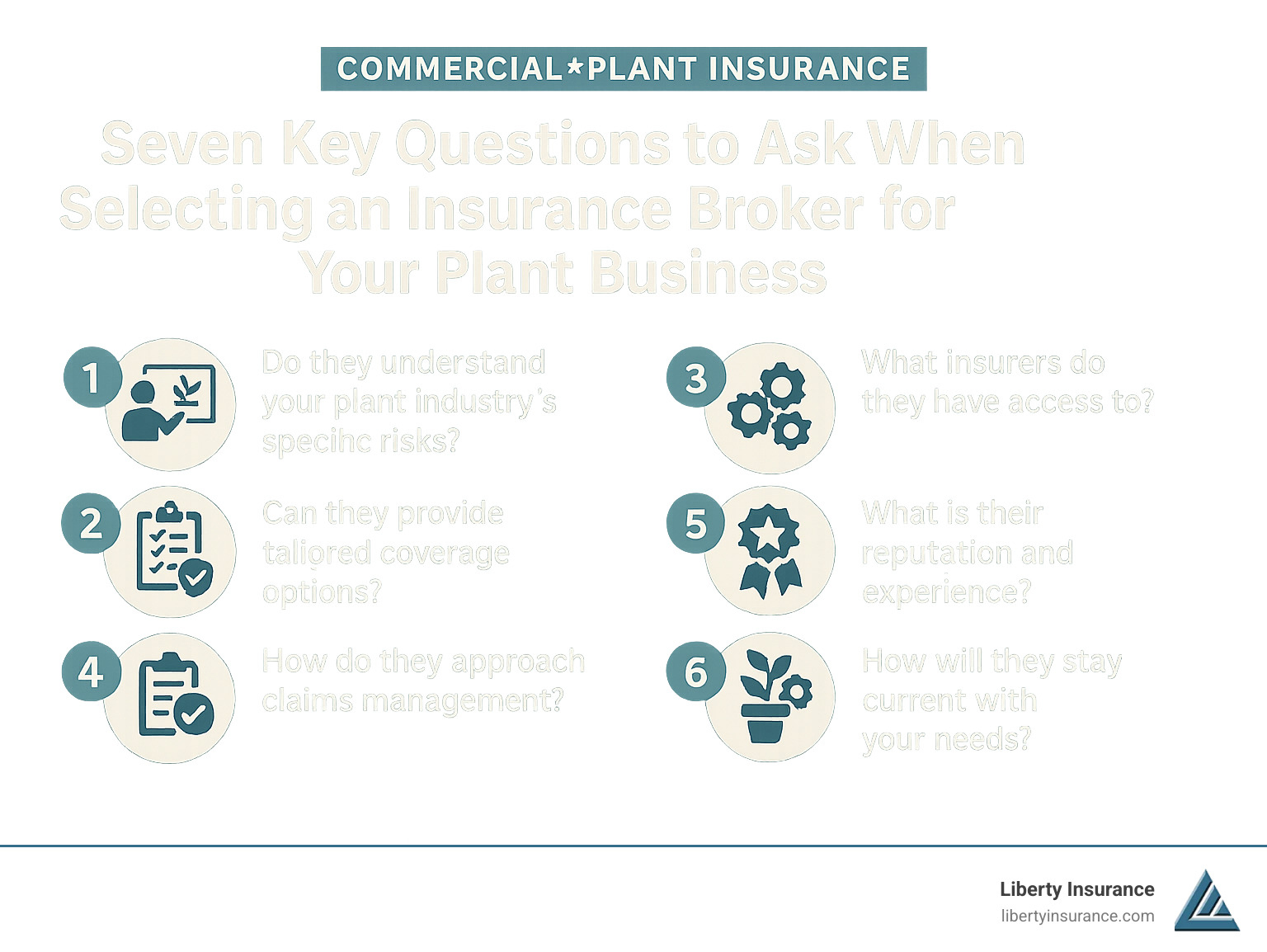
Finding the right insurance partner is like finding a good gardener—you want someone who really knows plants, not just someone who mows lawns. Not all insurance providers understand what makes plant businesses unique.
When we work with nursery and greenhouse owners at Liberty Insurance, we often hear how frustrated they were with previous agents who didn’t understand why peak season coverage matters or why temperature control failures are catastrophic, not just inconvenient.
Look for an insurance partner with industry expertise in plant businesses. They should speak your language, understanding terms like “hardening off” or “propagation materials” without needing a botany lesson.
The right partner will have strong carrier relationships with insurers offering specialized plant coverages. This means access to policies that understand living inventory isn’t the same as warehouse stock.
Best Practices for Insurance Management
Your insurance program should grow and evolve with your business. Here’s how to keep it healthy:
Conduct annual coverage reviews to ensure your protection keeps pace with your business. Did you add a new greenhouse? Expand into rare specimens? Start offering landscape design services? Your coverage needs to reflect these changes.
Maintain accurate inventory valuation records throughout the year. Nothing complicates a claim more than outdated inventory values, especially with living goods that fluctuate seasonally.
For more information about protecting your business assets, check out our business insurance options designed specifically for operations like yours.
Real-World Claims & Lessons Learned
When disaster strikes a plant business, the difference between survival and closure often comes down to having the right commercial plant insurance. Let’s look at some actual claims that show how these policies work in real life—and what we can learn from them.
Case Study 1: Greenhouse Freeze Loss
A wholesale nursery in northern New Jersey faced every grower’s winter nightmare. During a brutal January cold snap, their heating system failed completely. For six long hours, temperatures inside their main greenhouse plummeted below freezing before anyone noticed and fixed the problem.
The result was heartbreaking—about 60% of their tropical plant inventory died, representing $175,000 in lost plants. Fortunately, their commercial plant insurance included equipment breakdown coverage with consequential loss protection. This crucial coverage paid for both the heating system repair ($8,500) and replaced the damaged plants, after they met their $10,000 deductible.
Case Study 2: Hydroponic Water System Failure
Water is life for a hydroponic operation—which is why one lettuce grower was devastated when their piping system catastrophically failed, spilling all their nutrient-rich water. Most standard insurance policies specifically exclude water damage, but this forward-thinking grower had added a specialized hydroponic endorsement to their commercial plant insurance.
This decision proved invaluable. Their policy covered both the system repairs and their in-progress crop losses, allowing them to bounce back quickly. Without that specific endorsement, they would have faced the entire loss alone.
Case Study 3: Peak Season Nursery Fire
April means everything to a retail garden center—inventory is typically triple the annual average as they prepare for the spring rush. When an electrical fire broke out at one New Jersey garden center during this critical period, smoke damage affected nearly 40% of their plant stock.
Their salvation? A peak season endorsement that had temporarily increased their coverage limits during spring months. Without this foresight, they would have been dramatically underinsured precisely when they needed protection most.
Mitigation Tips From Real Claims
After helping countless plant businesses recover from losses, we’ve gathered some practical wisdom worth sharing:
Install backup systems for your critical operations. Redundant heating, cooling, and irrigation systems can prevent a single point of failure from destroying your inventory. Think of it as insurance for your insurance—you hope never to need it, but you’ll be grateful it’s there.
Remote monitoring technology has become both affordable and essential. Temperature, humidity, and security systems that send alerts to your smartphone can help you respond to problems before they become disasters.
Electrical issues remain one of the leading causes of greenhouse and nursery fires. Regular thermal imaging inspections can spot potential hazards before they ignite. This simple preventive measure costs far less than a deductible.
At Liberty Insurance, we don’t just pay claims—we help prevent them. Our experience with plant businesses throughout New Jersey has taught us that the best commercial plant insurance combines solid coverage with practical risk management strategies custom to your specific operation.
Frequently Asked Questions about Commercial Plant Insurance
What factors most affect commercial plant insurance premiums?
When nursery owners ask me about costs, I explain that commercial plant insurance premiums depend on several key factors that tell the whole story of your business’s risk profile.
Your location plays a huge role – a greenhouse in coastal New Jersey faces different weather threats than one tucked inland. Those beautiful ocean views come with higher storm exposure and potentially steeper premiums.
The value of what you’re protecting naturally impacts your costs too. Your inventory, structures, and specialized equipment all factor into your coverage limits. I always recommend taking time to accurately value your living inventory – being off by even 20% could leave you seriously underprotected when disaster strikes.
Your claims history speaks volumes to insurers. Think of it like your business’s insurance credit score – a clean record typically means better rates, while multiple claims in recent years might lead to higher premiums or even coverage restrictions.
How is plant inventory value established for insurance purposes?
Properly valuing your plants for commercial plant insurance can feel overwhelming, but it’s absolutely critical to get right. Too low, and you’ll be underinsured when disaster strikes; too high, and you’re paying unnecessary premiums.
For wholesale nurseries, I typically recommend one of three approaches. You might use your actual production costs, tracking all the expenses that went into growing each plant to its current state. Alternatively, you could use wholesale replacement cost – what you’d pay another grower for similar plants if yours were destroyed. Many of my clients prefer using their catalog prices, which provides clear documentation.
Retail garden centers face a slightly different challenge. You might insure based on what you paid your suppliers, or what it would cost to replace everything at current retail prices. Some insurers offer a “discounted retail” approach that acknowledges not everything sells at full price.
Are pests and diseases covered under commercial plant insurance?
When it comes to pests and diseases, commercial plant insurance has some important limitations you should understand. This is often a surprise to new nursery owners who assume their policy covers anything that might damage their plants.
Standard commercial policies typically exclude losses caused by insects, vermin, or disease. Think of it this way – insurance is designed for sudden, unexpected events, not gradual problems that develop over time. Your policy likely won’t cover spider mites slowly taking over your greenhouse or a fungal disease spreading through your inventory.
At Liberty Insurance, we help nursery owners understand these coverage limitations and develop comprehensive protection strategies that combine the right insurance with smart preventative practices. After all, in the plant business, an ounce of prevention truly is worth a pound of cure.
Conclusion
Growing a successful plant business takes years of dedication, expertise, and careful nurturing. But as any experienced grower knows, it only takes one unexpected disaster to threaten everything you’ve built. That’s why securing the right commercial plant insurance isn’t just a business expense—it’s an essential investment in your future.
Think about what makes your operation unique: living inventory that responds to temperature changes, seasonal value fluctuations, specialized equipment that keeps everything running, and structures designed specifically for plant cultivation. Standard business policies simply aren’t designed to address these specialized needs.
At Liberty Insurance, we’ve walked through countless New Jersey nurseries, greenhouses, and garden centers, seeing how local conditions affect operations. Whether you’re dealing with coastal storm exposure in Toms River, seasonal temperature fluctuations in Princeton, or urban risks in New Brunswick, our local offices provide expertise custom to your specific challenges.
Through our years of working with plant businesses, we’ve learned some valuable lessons:
First, how you value your plants matters enormously. When disaster strikes, the difference between replacement cost and actual cash value can mean the difference between fully rebuilding or struggling to recover.
Second, timing is everything in this industry. Having peak season endorsements ensures you’re not left underinsured precisely when your inventory value is at its highest.
Third, equipment protection deserves special attention. Whether it’s the climate control systems keeping your plants alive or the heavy machinery you’re renting for a construction project, equipment failures and losses can quickly escalate into major financial setbacks.
We’d love to help you review your current coverage and identify any gaps that could leave your growing investment vulnerable. Our team specializes in creating customized commercial plant insurance packages that protect what matters most while keeping costs manageable.
Don’t wait for disaster to strike before finding what your policy actually covers. Contact Liberty Insurance today, and let’s make sure your plant business has the protection it needs to thrive through whatever challenges come your way.

