
Why Commercial Property Insurance for Vacant Buildings is More Critical Than Ever
Commercial property insurance for vacant building protection is more critical than ever as vacancy rates have skyrocketed across the U.S. Before 2020, the quarterly vacancy rate was about 12 percent. By early 2024, the national office vacancy rate climbed to nearly 18 percent, with cities like Detroit and San Francisco reporting rates of 31.3% and 23.4% respectively.
Key facts about vacant building insurance:
- Standard policies stop covering key risks like water damage, theft, and vandalism after just 60 days of vacancy.
- Claims payments can be reduced by up to 15% if a loss occurs while your building is vacant.
- A building is considered vacant when less than 31% of its square footage is occupied.
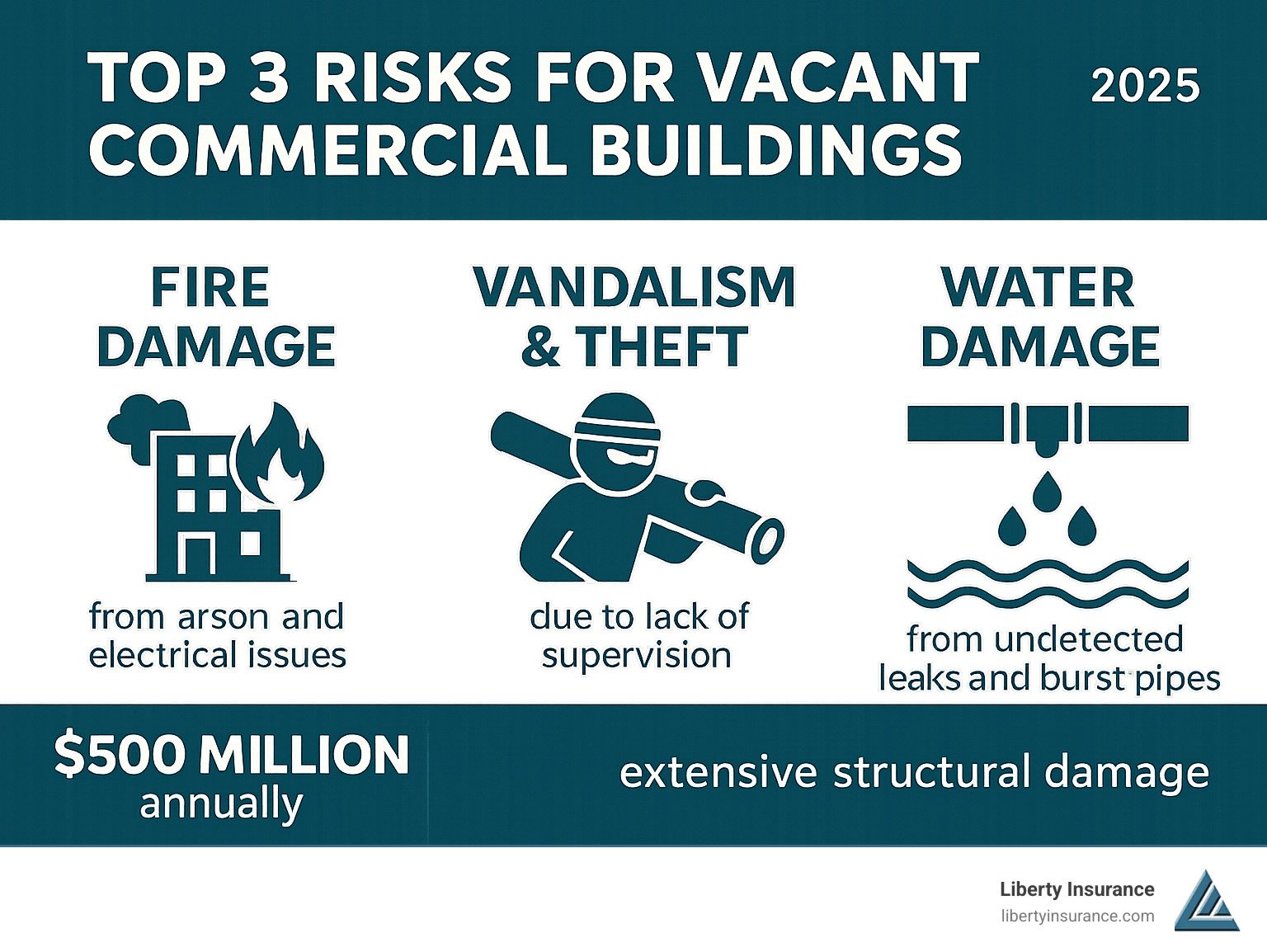
- Fires in vacant commercial buildings cause over $500 million in direct property damage annually.
The shift to remote work has left many property owners with empty buildings that standard insurance won’t adequately protect. Vacant buildings face increased risks from vandalism, theft, arson, and undetected damage like burst pipes.
Standard commercial property insurance isn’t designed for the unique hazards of vacant properties. When your building is empty, you need specialized coverage that addresses these liftd risks without the restrictive exclusions in typical policies.
I’m Andrew Harris, a Certified Insurance Counselor (CIC) with over a decade of experience. I’ve seen how inadequate insurance for vacant buildings can devastate unprepared property owners. Through my work at Liberty Insurance and with the Professional Insurance Agents of New Jersey, I’ve helped countless clients secure the right protection for their vacant commercial properties.
Relevant articles related to commercial property insurance for vacant building:
Vacant vs. Unoccupied: A Critical Distinction for Your Coverage
In the insurance world, “vacant” and “unoccupied” are entirely different risk categories. This distinction can make or break your coverage when you need it most. Many property owners learn this the hard way, finding their “temporarily empty” building is considered “vacant” by their insurer, leaving them with massive coverage gaps. Let’s explore why this matters for your commercial property insurance for vacant building needs.
What Defines a “Vacant” Property for Insurers?
For insurers, a “vacant” building is essentially offline: no tenants, no furnishings for its intended use, and no business operations. Vacancy suggests a more permanent state where the building has lost its functional identity.
Most insurers use a benchmark to determine vacancy, often 31% occupancy. If less than 31% of your building’s square footage is used for business, it’s likely considered vacant. If 70% or more of your square footage is unused, it’s also considered vacant, even if you’re marketing the space.
Time is also a factor. Standard policies often stop covering certain perils after just 60 days of vacancy. Once you cross that line, your coverage changes dramatically. Common examples include a retail space awaiting sale, a building scheduled for demolition, or an office complex with no immediate plan for re-occupancy.
How is “Unoccupied” Different?
An “unoccupied” property is temporarily empty but still maintains its identity and purpose. The key difference is a clear intent to return to normal operations, and the building typically still contains the furnishings or equipment that define its function.
Examples of unoccupied properties include:
- A restaurant closed for kitchen renovations.
- A seasonal business, like a beachside shop closed for the winter.
- A building undergoing repairs after damage, as long as work is progressing.
In simple terms: vacant properties have lost their purpose, while unoccupied properties have just paused theirs.
| Feature | Vacant Property | Unoccupied Property |
|---|---|---|
| Contents | No furnishings or business equipment | Furnishings and equipment remain |
| Future Plans | No clear timeline for re-occupancy | Definite plans to resume operations |
| Risk Level | Higher risk due to abandonment | Moderate risk, temporary situation |
| Insurance Impact | Requires specialized vacant building coverage | May still qualify for standard coverage |
This distinction is critical because standard policies treat them differently. Unoccupied properties may keep most of their coverage, while vacant ones often lose protection for water damage, theft, and vandalism—the biggest threats to empty buildings. Getting this classification wrong can be a financial disaster.
Why Standard Commercial Property Insurance Falls Short for Vacant Buildings
If you own a vacant commercial building, your standard property insurance policy likely won’t protect you. Assuming your existing coverage extends to an empty building is a common and potentially devastating mistake. Standard policies are designed for occupied buildings, assuming active use and monitoring. When a building is vacant, dangerous coverage gaps emerge.
The Unique Perils and Common Claims of Vacant Properties
An empty building is a magnet for serious problems. Without daily traffic from employees or customers, issues can go unnoticed and escalate.

- Vandalism: Without regular foot traffic, vandals can cause thousands of dollars in damage, from graffiti to smashed windows.
- Theft: Theft, especially of copper pipes, is a major concern. The resulting water damage often costs far more than the stolen metal.
- Arson: Arson is a terrifying risk. According to the National Fire Protection Association, fires in vacant buildings cause over $500 million in direct property damage annually. Alarmingly, half of these fires are intentional, compared to just 10% in occupied structures.
- Undetected Damage: A small roof leak can go undetected for weeks, leading to extensive water damage, mold, and structural problems.
- Liability: Liability risks persist. As the owner, you’re responsible for injuries to anyone on your property, including trespassers.
The “Vacancy Clause”: Your Standard Policy’s Biggest Weakness
Most standard commercial property policies include a “vacancy clause,” which limits what insurers pay when a building is empty.
After a building is vacant for 60 days, a standard policy often stops covering water damage, theft, vandalism, and sprinkler leakage. A burst pipe on day 65 could mean your standard Commercial Property Insurance policy pays nothing for the repairs.
Worse, for a covered loss like a fire, many policies reduce the claim payment by 15%, leaving you with a significant out-of-pocket expense.
This means your insurance is inadequate right when you need it most. The perils most likely to affect empty buildings—vandalism, theft, and water damage—are precisely what standard policies exclude. Relying on standard coverage for a vacant building means you’re self-insuring against the most common risks. Specialized vacant building insurance is essential to protect your investment.
A Closer Look at Commercial Property Insurance for Vacant Building
Once you see the gaps in standard policies, the next step is specialized commercial property insurance for vacant building coverage. It’s designed for the unique challenges of an empty property, covering your building and protecting you from lawsuits. Let’s break down the key components.
What Does a Vacant Commercial Property Insurance Policy Cover?
- Property Coverage: This is the foundation. You can choose named perils coverage, which lists specific risks (fire, wind, vandalism, etc.), or broader all-risk coverage, which covers everything unless it’s specifically excluded. All-risk often requires central station alarms for theft coverage but offers more comprehensive protection.
- Valuation: How your claim is paid is critical. Actual cash value (ACV) pays the depreciated value of damaged property. Replacement cost coverage (RCV) pays to rebuild with new materials, without deducting for depreciation. RCV is generally the better choice for restoring your property.
- Premises Liability: This is crucial. You’re still responsible if someone gets hurt on your property, even a trespasser. This coverage protects you from medical bills, settlements, and legal defense costs. Policies typically offer general liability limits up to $1 million.
Specialized vacant building coverage handles the specific risks of empty properties: fire, wind, water damage, vandalism, and theft—the very perils standard policies exclude after 60 days. This is vital Business Asset Protection Insurance for your empty building.
Eligible Properties and Common Policy Features
The flexibility of this coverage might surprise you. Policies are designed for real-world situations.
- Eligible Properties: Most commercial property types qualify, including retail, office, warehouse, and apartment buildings (with 4+ units). Mixed-use buildings and other structures like sheds and fences can also be included.
- Special Situations: Buildings undergoing light renovations, stalled construction projects, and new buildings awaiting their first tenants often qualify.
- Flexible Terms: Policy terms are flexible, with options for 1, 3, 6, 9, 12, or 24 months. This lets you align coverage with your expected timeline for re-occupancy or sale.
- Pro-Rata Cancellation: If the property becomes occupied or sells early, you can cancel and get a refund for the unused portion, avoiding paying for unneeded coverage.
- Contents Coverage: Some policies include coverage for remaining materials or equipment. This comprehensive approach to Commercial Real Estate Insurance Coverage recognizes that ‘vacant’ doesn’t always mean completely empty.
How to Manage Risks and Insurance Costs for Your Vacant Property
While premiums for vacant buildings are higher, you’re not powerless. Proactive steps can significantly reduce both your risks and insurance costs. The most effective way to lower insurance costs is to make your property less risky, as insurers often reward responsible owners with lower premiums.
Proactive Risk Mitigation Strategies
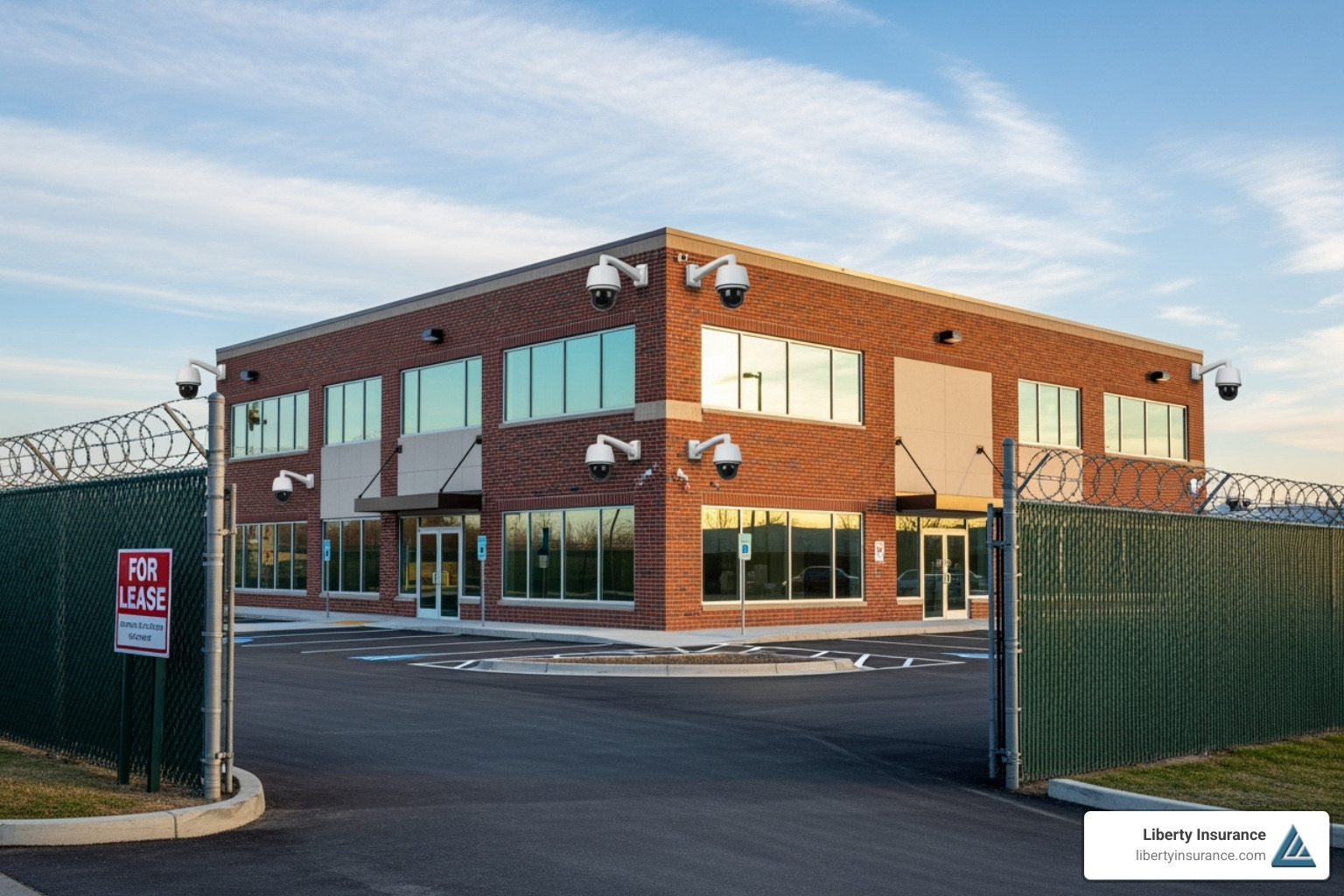
- Secure the Property: Your first line of defense is to make your building a less attractive target. Board up windows and vulnerable entry points to deter vandalism and unauthorized entry.
- Install Security and Lighting: Install security cameras, central station alarms, and adequate exterior lighting. These deter criminals and are often required by insurers for the best coverage.
- Conduct Regular Inspections: Schedule frequent, documented visits to check the interior and exterior. Pay close attention to water pipes for leaks or freezing damage, as small issues can become massive problems if undetected.
- Maintain the Building: Keep up with normal maintenance and don’t let the property fall into disrepair. Winterize the building in cold climates by draining pipes and ensuring heating systems are safe to prevent bursts.
- Keep Systems Functional: Ensure building systems like HVAC and sprinklers are functional. Non-functional safety systems can void certain coverages.
These strategies show insurers you’re a responsible owner, which can lead to premium savings via risk mitigation credits. For more, explore Commercial Risk Insurance options.
Tips for Managing Your Insurance Premiums
Even with higher risks, you have tools to optimize your commercial property insurance for vacant building costs.
- Leverage Risk Mitigation: Tell your insurer about all security measures you’ve taken, like alarms and cameras. Document them to ensure you get available discounts.
- Choose the Right Coverage: A named perils policy may be more budget-friendly than an all-risk policy. Higher deductibles can also lower your premiums.
- Use Flexible Policy Terms: If you only need coverage for a few months, don’t buy an annual policy. Pro-rata cancellation means you only pay for the protection you use.
- Work with an Expert Agent: An experienced broker understands vacant property coverage, can access specialized markets, and find cost-saving opportunities. They also ensure you avoid dangerous coverage gaps.
Understanding Commercial Property Insurance Cost factors helps us structure coverage that fits your risk profile and budget. The goal is to find the right protection at a fair price.
Frequently Asked Questions about Commercial Property Insurance for Vacant Buildings
Navigating commercial property insurance for vacant building options can be overwhelming. Here are straightforward answers to the most common questions we hear.
How much does vacant commercial property insurance cost?
There’s no standard price for vacant building coverage, as every property has a unique risk profile. These policies cost more than standard insurance because vacant buildings pose higher risks. A small issue like a water leak can go undetected for weeks, causing massive damage.
Premium factors include location, property value, security measures, building construction, expected length of vacancy, and claims history. Alarms, cameras, and proper boarding can lead to significant discounts. The best approach is to get a personalized quote.
Can I get coverage if my building is undergoing renovations?
Yes, this is a common scenario. The key is matching the policy to the scope of your project.
- For light renovations (paint, flooring, minor repairs), a standard vacant property policy usually suffices.
- For major construction or structural changes with significant materials on-site, a Builder’s Risk Insurance policy is the better choice. It’s crafted for active job sites, covering risks like damage to materials and theft of equipment.
Our team can review your renovation plans to help you find the best, most cost-effective protection.
What happens to my policy once I find a tenant?
Finding a tenant is great news. The transition from a vacant to an occupied policy is straightforward. Most vacant policies include pro-rata cancellation, so when your building becomes occupied, you can cancel the policy and get a refund for the unused portion.
Once tenants move in, you’ll switch to a standard commercial property policy designed for occupied buildings. You might also consider adding business income coverage to protect against lost rent. If you’re leasing the space, transitioning to a Landlord Insurance policy is a good idea, as it’s designed for the unique risks of being a landlord. Our team at Liberty Insurance will guide you through each step to ensure your property remains protected.
Conclusion: Secure Your Investment with the Right Protection
The commercial real estate world has changed. With national vacancy rates near 18%, owning an empty building presents unique challenges. Standard commercial property insurance is inadequate for these properties. Vacancy clauses can stop coverage for key risks like water damage, theft, and vandalism after just 60 days and reduce claim payments by 15%, leaving you exposed.
The good news is that proactive management is your best defense. Securing, inspecting, and maintaining your property shows insurers you’re a responsible owner, which can lead to better rates and risk mitigation credits that reduce your costs.
At Liberty Insurance, we help property owners steer these challenges. We’re passionate about ensuring you understand what coverage you need and why, so you aren’t blindsided by gaps you never knew existed.
Whether your property is in Millstone Township, Trenton, Toms River, New Brunswick, Princeton, or anywhere else in New Jersey, we’re here to help you find the right commercial property insurance for vacant building solution. We know the specialized markets and can help you balance comprehensive protection with manageable costs.
Your empty building doesn’t have to be a financial liability. With the right coverage and proactive management, it can remain a valuable asset.
Ready to protect your investment properly? To explore comprehensive coverage options for your commercial property, whether vacant or occupied, check out our Business Property Insurance solutions. Contact Liberty Insurance today, and let’s make sure your property is protected the right way – because your peace of mind is worth it.

