
Protecting Your Business Assets in New Jersey
Commercial property insurance NJ is essential coverage that protects your business’s physical assets from perils like fire, theft, vandalism, and certain natural disasters. If you’re seeking commercial property insurance in New Jersey, here’s what you need to know:
- Not legally required but often mandated by landlords and lenders
- Average cost: $1,605 per year (based on The Hartford customers)
- Covers: Buildings, equipment, inventory, furniture, fixtures, signage, and landscaping
- Does not typically cover: Floods, earthquakes (require separate policies)
- Best for: Any NJ business with physical assets, whether you own or lease your space
Over 952,000 small businesses operate in New Jersey, collectively employing nearly 49% of the state’s workforce. These businesses face unique risks including coastal storms, urban density challenges, and seasonal weather patterns that make comprehensive property coverage essential for financial security.
Commercial property insurance protects far more than just your building. It safeguards the vital equipment, inventory, and fixtures that keep your business operational. Without adequate coverage, a single fire, severe storm, or break-in could potentially wipe out years of investment and hard work.
“Whether your business relies on four walls or carefully crafted relationships, you need insurance coverage you can trust.”
I’m Andrew Harris, a Certified Insurance Counselor with extensive experience helping New Jersey businesses find the right commercial property insurance NJ solutions that protect their investments while keeping costs manageable. As Treasurer of the Professional Insurance Agents of New Jersey and recipient of PIA National’s Agent of the Year award, I understand the unique challenges facing Garden State businesses.
Commercial property insurance NJ terminology:
– New Jersey business insurance
– New Jersey liability insurance
– workers’ compensation insurance for independent contractors new jersey
Commercial Property Insurance NJ: What It Is & Why It Matters
When you’ve poured your heart into building a business, the last thing you want is to see it all washed away by a storm or consumed by fire. That’s where commercial property insurance NJ steps in – it’s not just another business expense, it’s your financial safety net.
At its heart, commercial property insurance NJ protects the physical assets your business relies on daily. Think of it as a shield against disasters like fires, theft, vandalism, and those notorious Jersey nor’easters that can leave destruction in their wake.
For business owners across the Garden State – from busy Newark to the coastal communities of Cape May – this coverage isn’t just nice to have, it’s essential. Without it, you’d be facing potentially devastating out-of-pocket costs to rebuild after a disaster. And let’s be honest, few businesses have the cash reserves to bounce back from major property damage without help.
You might also find your hand forced when it comes to getting coverage. If you’ve taken out a commercial mortgage or you’re leasing space, your lender or landlord will almost certainly require proof of insurance. They’re protecting their investment – just as you should be protecting yours.
Beyond just fixing broken windows or repairing storm damage, many property policies include business interruption coverage – a true lifesaver that helps replace lost income if disaster forces you to temporarily close your doors. After all, the bills keep coming even when your customers can’t.
Want to learn more about protecting your business? Check out our New Jersey business insurance guide for comprehensive information.
What Counts as Commercial Property in New Jersey?
New Jersey’s commercial landscape is as diverse as its population. When we talk about commercial property, we’re casting a wide net that includes:
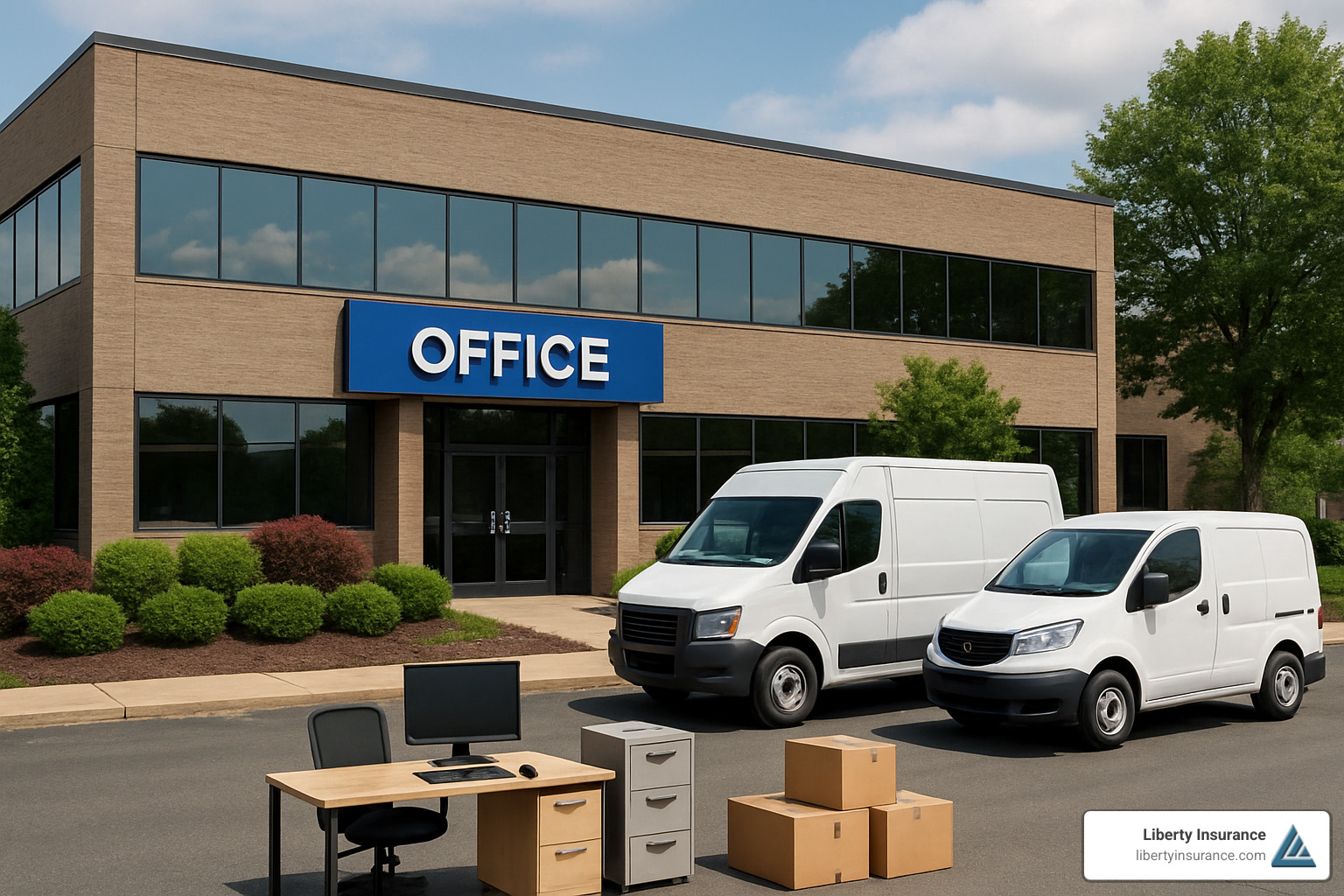
Office buildings range from glass-and-steel towers in Jersey City to converted Victorian homes housing law firms in Morristown. Retail stores dot our main streets and fill our malls, each with unique inventory and fixtures that need protection.
Warehouses and industrial buildings store everything from pharmaceuticals to furniture, often containing millions in inventory. Apartment complexes house hundreds of residents while generating income for their owners.
In our urban centers like Hoboken and New Brunswick, mixed-use buildings combine ground-floor retail with upper-level apartments, creating special insurance considerations. Restaurants, hotels, and medical facilities round out the commercial property landscape, each with specialized equipment and unique risks.
At Liberty Insurance, we’ve seen how each property type faces different challenges – the pizzeria in Asbury Park has different concerns than the medical office in Cherry Hill. That’s why cookie-cutter insurance solutions rarely work for New Jersey businesses.
Why New Jersey’s Risk Profile Demands Solid Coverage
Living in the Garden State comes with perks – and perils. Our unique geography and demographics create insurance challenges that demand robust commercial property insurance NJ solutions.
Our 130-mile Atlantic coastline makes coastal storms a major threat. If you own property in Ocean, Monmouth, Atlantic, or Cape May counties, you’re particularly vulnerable to hurricanes and those notorious nor’easters that can flood properties and tear off roofs.
When winter arrives, freezing temperatures bring their own hazards. Burst pipes can flood interiors, heavy snow can collapse roofs, and ice dams can cause insidious water damage that might not be immediately apparent.
Being the most densely populated state creates unique risks too. Closely packed buildings in places like Newark, Paterson, and Camden mean fire can spread quickly between properties. This density also correlates with higher rates of theft and vandalism in some areas.
Many of New Jersey’s commercial buildings have stood for decades, if not centuries. This aging infrastructure – charming as it may be – often comes with outdated electrical systems, plumbing, and HVAC equipment that’s more prone to causing property damage.
One of our Millstone Township clients learned the value of comprehensive coverage when a brutal winter storm collapsed part of their roof. Their commercial property insurance NJ policy not only covered the structural repairs but also protected them from the financial impact of water-damaged inventory and equipment.
From the Highlands to the Pine Barrens, from the Delaware River to the Atlantic Ocean, New Jersey businesses face diverse risks that require thoughtful insurance planning. At Liberty Insurance, we help you steer these challenges with customized protection that keeps your business safe in any weather.
Coverage Deep Dive: Properties, Perils, Exclusions & Add-Ons
Understanding what’s covered—and what’s not—under your commercial property insurance NJ policy isn’t just important—it’s essential for your business’s survival. Let’s break down what you’re actually getting when you purchase this coverage, and where you might need a little extra protection.
Commercial Property Insurance NJ: Standard Coverages
Think of standard commercial property coverage as your first line of defense. It typically protects the physical assets that keep your business running day to day.
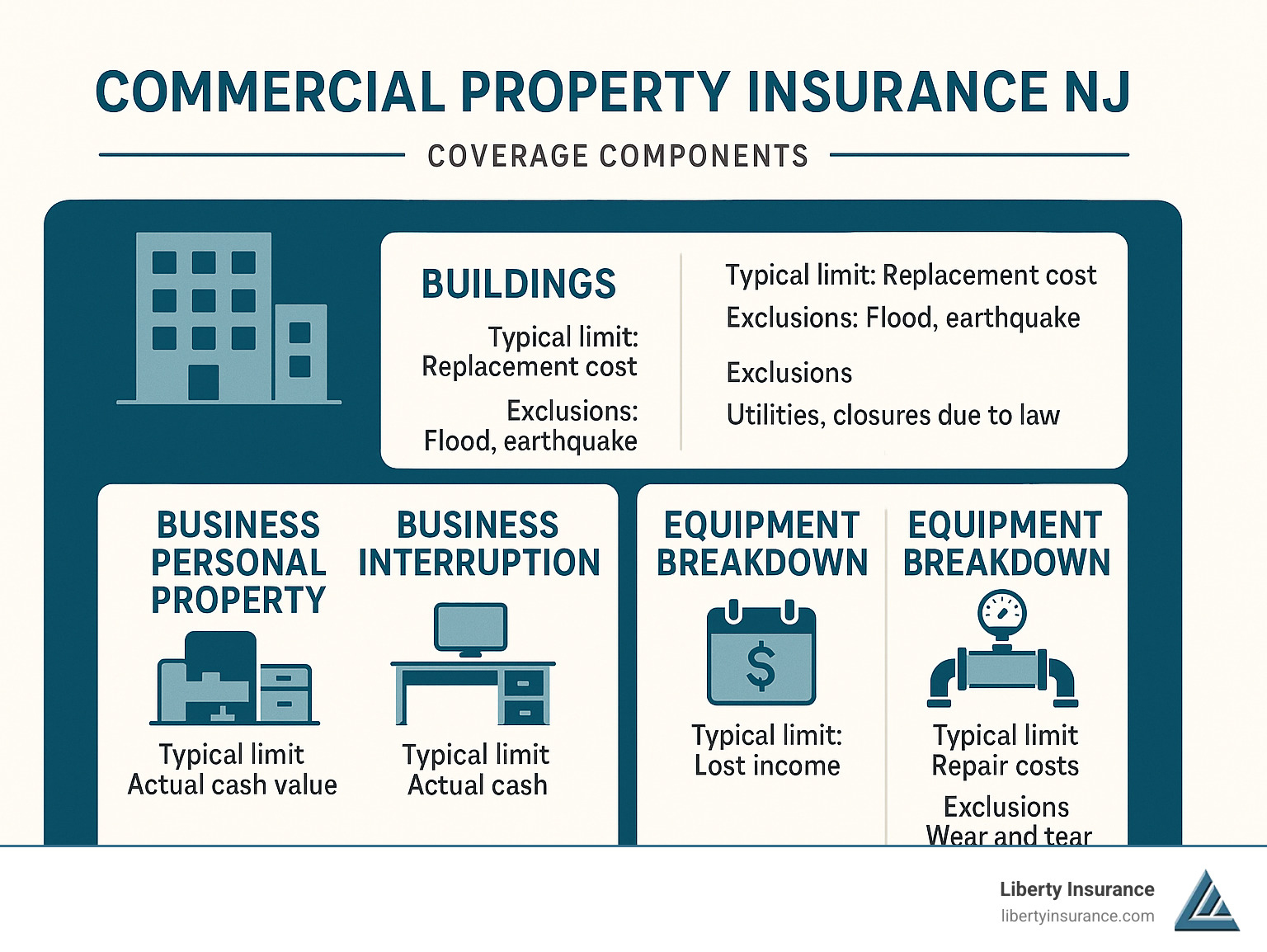
Your building itself is covered, of course—the actual structure where you conduct business, along with permanently installed fixtures and equipment. But your protection extends well beyond just the four walls.
Your inventory and stock—the lifeblood of many businesses—are protected too. The furniture that fills your office, the computers your team relies on, the specialized equipment that makes your products or delivers your services—all these business personal property items are typically covered under standard policies.
Don’t forget about those outdoor elements that represent your business to the world. Your signage—often the first thing customers see—usually has some coverage, along with fencing, landscaping, and outdoor furniture. Many New Jersey business owners don’t realize these external elements are protected until they need to file a claim.
When it comes to covered perils, standard commercial property insurance NJ policies typically protect against the most common threats: fire and smoke damage, lightning strikes, windstorms, hail, explosion, theft, vandalism, riots, and even damage from vehicles crashing into your building. Sprinkler leakage, a surprisingly common source of damage in commercial buildings, is usually covered too.
Beyond the Basics: Add-Ons Every Garden State Business Should Consider
While standard coverage is a good start, New Jersey businesses face unique challenges that often require additional protection. Think of these add-ons as filling the gaps in your armor.
Flood insurance is perhaps the most critical add-on for many Garden State businesses. Standard policies simply don’t cover flood damage—a harsh reality many business owners find too late. With 130 miles of coastline and numerous rivers and streams, New Jersey businesses face real flood risks. Whether through the National Flood Insurance Program or private insurers, this coverage is essential, not optional, for many locations.
Living in New Jersey, you might not think about earthquake coverage, but our state does experience occasional seismic activity. When the unexpected happens, this additional coverage can make all the difference.
I remember helping a small manufacturing client in Paterson after their critical production equipment failed unexpectedly. Their standard policy wouldn’t have helped, but because we’d added equipment breakdown coverage, they were back in business quickly with minimal financial impact. This coverage protects against internal failures, not just external damage—a distinction that can save your business.
Business interruption insurance is something I recommend to virtually every client. When disaster strikes and your doors must temporarily close, this coverage keeps you afloat by covering ongoing expenses and lost profits. I’ve seen this coverage literally save businesses that would otherwise have folded while waiting for repairs.
For older buildings—common throughout historic New Jersey towns—ordinance or law coverage is particularly important. If you need to rebuild, current building codes may require significant upgrades that standard policies won’t cover without this endorsement.
Other valuable add-ons include debris removal coverage (crucial after major damage), inland marine coverage for property that moves around (think contractors’ equipment), and increasingly important cyber insurance to protect your digital assets.
A restaurant owner I work with in New Brunswick learned the hard way about the value of equipment breakdown coverage. When their commercial refrigeration system failed during a brutal summer heat wave, they lost thousands in inventory. Thankfully, the equipment breakdown endorsement we’d recommended covered the loss—a protection their standard policy would have denied.
More info about Business Property Insurance
Dollars & Sense: Valuation Methods, Premium Factors & Savings
When it comes to protecting your business, understanding how insurers value your property isn’t just about paperwork—it’s about peace of mind. Let’s break down the dollars and cents of commercial property insurance NJ in a way that makes sense for your bottom line.
How Insurers Calculate Your Building’s Value
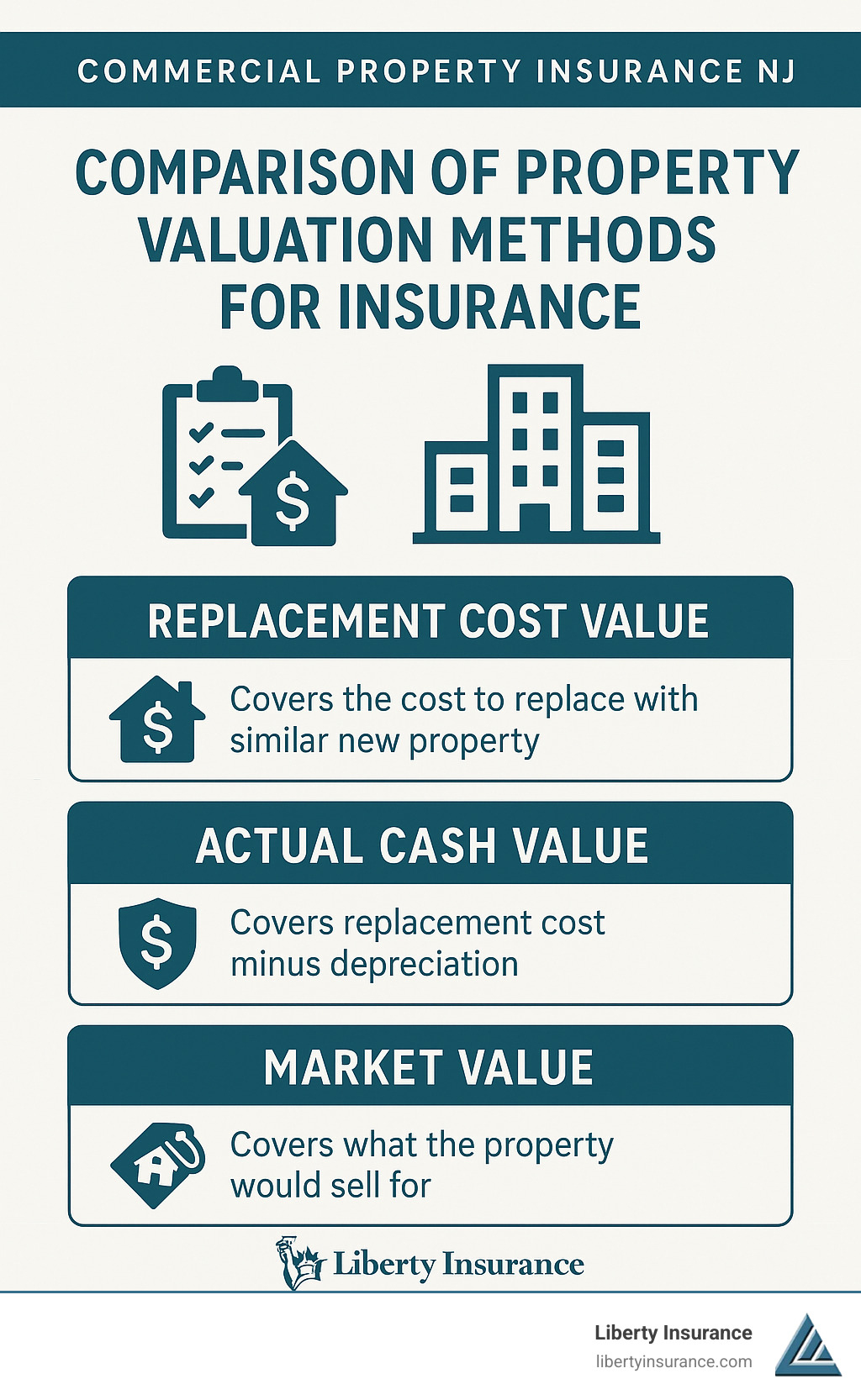
Think of property valuation like three different ways to measure the same building, each telling a different story:
Replacement Cost Value (RCV) is like buying a brand-new replacement when something breaks. If your 10-year-old roof gets damaged, you get funds for a new one—not a used one. This approach provides the most complete protection but comes with higher premiums. Most New Jersey business owners prefer this option despite the cost, because it truly makes you whole after a loss.
Actual Cash Value (ACV) factors in the wear and tear. That same 10-year-old roof? You’ll get what it’s worth today, not what a new one costs. Your premiums will be lower, but you’ll shoulder more of the replacement burden when filing a claim. For some budget-conscious businesses in places like Trenton or Camden, this might be the right balance.
Market Value simply reflects what your property would sell for in today’s real estate market. While this might matter for your business loan, insurers rarely use this method since Jersey Shore property values, for instance, don’t necessarily reflect rebuilding costs.
Insurance companies use something called “Insurance-to-Value” (ITV) to ensure you’re adequately covered. Most policies include a co-insurance clause requiring you to insure your property for at least 80% of its replacement value. Fall short of that, and you might face a painful penalty when filing a claim.
Many New Jersey policies include an “inflation guard” that automatically increases your coverage limits annually—particularly important in our state where construction costs often run higher than national averages. This feature saved one of our Princeton clients thousands after a claim, as building material costs had risen 12% since they purchased their policy.
Tips to Lower Your Commercial Property Premium in NJ
You don’t have to choose between quality coverage and affordability. Here’s how to keep your commercial property insurance NJ costs manageable without sacrificing protection:
Deductible decisions matter. Raising your deductible from $1,000 to $2,500 could lower your premium by 10-15%. Just make sure you have that cash available if disaster strikes. One of our Newark clients keeps a dedicated “deductible fund” in a business savings account—smart planning!
Invest in risk reduction. Modern sprinkler systems, updated electrical wiring, and security features not only protect your business but can significantly reduce premiums. A manufacturing client in Trenton saved nearly 15% after upgrading their sprinkler system and implementing a comprehensive equipment maintenance program. These improvements made their workplace safer while trimming insurance costs.
Bundle for better rates. Combining your property coverage with liability insurance or other business coverages through a Business Owner’s Policy (BOP) often results in substantial discounts. Most of our Hoboken retail clients save between 10-20% with bundling.
Location influences pricing. Properties in areas with professional fire departments (like Jersey City) typically have lower premiums than those in regions with volunteer departments. Similarly, buildings in flood-prone areas near the Raritan River will face different pricing than similar structures in the highlands.
Building materials make a difference. Fire-resistant construction materials can significantly lower premiums. One restaurant owner in Cherry Hill saved 18% on their commercial property insurance NJ by choosing fire-resistant materials during a renovation.
Regular coverage reviews are essential as your business grows. We’ve found many New Jersey businesses accidentally over-insure obsolete equipment while under-insuring new acquisitions. A quick annual review with your agent can prevent costly coverage gaps or unnecessary premium expenses.
More info about Commercial Property Insurance Cost
Getting Insured in New Jersey: Requirements, Bundling, Providers & Claims
Contrary to what many business owners believe, commercial property insurance NJ isn’t actually required by state law. However, that doesn’t mean you can simply skip it. If you have a mortgage on your building, your lender will almost certainly require coverage. Similarly, landlords typically mandate insurance for their commercial tenants to protect their investment.
The good news is you have options for how to structure your coverage. Many New Jersey businesses find that bundling their protection makes financial sense while providing more comprehensive security.
Commercial Property Insurance NJ: Step-by-Step Claims Process
Even with the best prevention measures, disasters happen. When they do, knowing exactly how to steer the claims process can mean the difference between a quick recovery and a prolonged nightmare.
First, report the loss immediately. At Liberty Insurance, we understand emergencies don’t wait for business hours, which is why we offer 24/7 claims reporting. The sooner you notify us, the faster we can help.
Next, take reasonable emergency measures to prevent further damage. This might mean covering broken windows after a storm or shutting off water to stop a leak. Just be sure to document these temporary fixes with photos.
Documentation is crucial. Before cleaning up, capture extensive photos and videos of all damage. Create a detailed inventory of affected items, and gather any receipts or documentation that might help establish value. This evidence will be invaluable when the claims adjuster visits.
When the adjuster inspects your property, they’ll review your documentation, assess the damage firsthand, and determine coverage based on your policy terms. After this visit, obtain repair estimates from licensed contractors to ensure the settlement offer will cover necessary repairs.
Once you’ve reviewed and accepted the settlement, you can proceed with repairs and restoration. Keep all receipts – you may need them later. Finally, if your policy includes business interruption coverage, document any operational losses during your downtime.
A restaurant owner in Cherry Hill experienced this process when a kitchen fire damaged their equipment and dining area. By following these steps and working closely with their Liberty Insurance agent, they received a fair settlement within 10 days and were able to reopen with minimal disruption.
Bundling Benefits: BOP vs. Stand-Alone Policy
For many small to medium-sized businesses across New Jersey, a Business Owner’s Policy (BOP) offers significant advantages over standalone coverage. A BOP neatly bundles property insurance, general liability protection, and business interruption coverage into one convenient package.
The benefits of bundling are compelling. You’ll typically enjoy lower premiums than if you purchased each policy separately. You’ll also get more comprehensive protection that addresses both property and liability risks. Plus, there’s the administrative simplicity of managing one policy with one renewal date and often one premium payment.
For larger businesses or those with specialized needs, a Commercial Package Policy (CPP) might be more appropriate. CPPs offer greater flexibility and customization than BOPs while still providing the cost benefits of bundling.
That said, standalone commercial property policies make sense in certain situations. If your business has complex property exposures, needs higher coverage limits than a standard BOP provides, or has specialized property requiring customized coverage, a dedicated policy might be the better choice.
We recently helped a small accounting firm in Montclair save nearly 25% on their insurance costs by transitioning from separate policies to a comprehensive BOP. Not only did they reduce their premium, but they also gained business interruption coverage they hadn’t previously carried – protection that proved invaluable when a water main break temporarily closed their office last winter.
Cyber liability and specialized coverage for unique risks often need to be added separately, regardless of whether you choose a bundled or standalone approach. At Liberty Insurance, we’ll help you understand the filing steps, adjuster timeline, and settlement process so there are no surprises if you ever need to file a claim.
More info about Business Owner’s Policy
For information about New Jersey’s workers’ compensation requirements, visit the New Jersey Department of Labor and Workforce Development.
Risk Reduction & Industry-Specific Improvements
Let’s face it – different businesses face different risks. A restaurant’s biggest property worry isn’t the same as a contractor’s or a landlord’s. That’s why at Liberty Insurance, we don’t believe in one-size-fits-all commercial property insurance NJ policies.
Industry-Specific Considerations
When you run a restaurant in New Jersey, your commercial kitchen equipment isn’t just expensive – it’s the heartbeat of your business. We offer improved coverage for those costly cooking systems, along with protection against food spoilage when power outages hit (and we know they do, especially during those coastal storms). Food contamination coverage is another must-have, protecting you if health department orders force a temporary closure.
For manufacturers, your production machinery represents a massive investment. Equipment breakdown coverage becomes essential, not optional. Our business income with extra expense protection helps you recover quickly after a loss, while stock throughput coverage protects your inventory throughout the entire production process – from raw materials to finished products.

Are you a contractor working throughout New Jersey? Your tools and equipment travel with you from job to job, creating unique exposure. We offer specialized builders risk coverage for projects under construction, installation floaters to protect materials before they’re installed, and comprehensive protection for your mobile equipment and portable tools.
Landlords and property managers face their own set of challenges. When a covered loss makes units uninhabitable, our loss of rents coverage replaces that missing income stream. For older buildings common in historic New Jersey towns, ordinance or law coverage is crucial – it covers the increased costs of bringing a damaged building up to current codes during repairs. We also offer tenant discrimination coverage and equipment breakdown protection for building systems like HVAC and elevators.
Practical Loss-Prevention Moves for NJ Businesses
Smart risk management doesn’t just lower your premiums – it protects your business from devastating losses in the first place. Here are practical steps every New Jersey business owner should consider:
Fire prevention starts with properly maintained sprinkler systems and regular electrical inspections. One restaurant client in Montclair implemented a “hot work permit” system for any welding or high-heat operations, dramatically reducing their fire risk. Simply keeping clear access to fire extinguishers and exits can make a critical difference when seconds count.
Water damage is one of the most common and costly commercial property claims we see. Installing water leak detection systems, especially in unoccupied areas, provides early warning before small leaks become major disasters. Don’t forget to insulate pipes in unheated areas – a particular concern during those harsh Jersey winters. Regular roof inspections and proper drainage around buildings complete your water damage defense strategy.
When it comes to storm preparation, coastal businesses should seriously consider hurricane shutters. For everyone else, trimming trees and securing outdoor equipment before storms hit can prevent significant damage. A comprehensive emergency response plan ensures everyone knows what to do when severe weather threatens. And in a state where power outages are common, backup power generation protects both property and profits.
Theft and vandalism prevention starts with good security fundamentals – camera systems, adequate lighting, and access controls. One retail client in Camden saw break-in attempts drop to zero after upgrading their exterior lighting and installing visible security cameras. Maintaining detailed inventory records with serial numbers for valuable equipment helps tremendously if you ever need to file a claim.
Regular equipment maintenance pays dividends in preventing losses before they happen. Follow manufacturer recommendations, train employees properly, document all maintenance, and replace aging equipment before failure occurs. A manufacturing client in Toms River installed water leak detection systems throughout their facility and caught two potential water issues before they caused significant damage – proving that proactive risk management isn’t just smart, it’s profitable.
Whether you run a restaurant in Princeton, a manufacturing plant in Trenton, or manage properties along the Jersey Shore, Liberty Insurance can help you identify and address your specific risk factors with customized commercial property insurance NJ solutions.
More info about Contractor Insurance
Frequently Asked Questions about Commercial Property Insurance NJ
Is commercial property insurance required by NJ law?
No, commercial property insurance NJ isn’t legally required by the state. But before you decide to skip this coverage, there’s more to the story.
While New Jersey doesn’t mandate it, many other entities effectively do. If you have a mortgage on your commercial property, your lender will almost certainly require it. It’s their way of protecting their investment in your business. Similarly, most commercial landlords require tenants to carry property insurance as part of the lease agreement.
I’ve seen many business owners surprised by insurance requirements in client contracts too, especially when working with government agencies or larger corporations. They often won’t do business with you unless you have adequate coverage.
Even without these external requirements, going without property insurance is like walking a financial tightrope without a safety net. One major fire or storm could potentially wipe out everything you’ve worked for.
How much does coverage typically cost for a small office or retail shop?
When business owners ask me about commercial property insurance NJ costs, I always say, “It depends” – but I know that’s not helpful! So here’s a clearer picture:
For a small office around 1,000 square feet, you might pay between $500-$1,500 annually. A retail shop of about 2,000 square feet might run $1,000-$3,000 per year. The Hartford’s data suggests an average annual premium of about $1,605 for New Jersey businesses.
Your actual costs will vary based on several factors. Location plays a huge role – a property in downtown Newark typically costs more to insure than one in suburban Millstone Township. Your building’s construction matters too; brick and concrete structures usually mean lower premiums than wood-frame buildings.
Other factors affecting your premium include your property’s protection class (how close you are to fire hydrants and stations), your coverage limits, deductible choices, and business type. Restaurants and manufacturers generally pay more than offices because of increased fire risks.
For a precise quote custom to your business, give us a call at Liberty Insurance. We can provide a personalized consultation that accounts for your specific situation.
Can tenants buy coverage if the landlord already insures the building?
Absolutely – and in most cases, you should! As a tenant, your insurance needs are different from your landlord’s, even though you share the same building.
Think of it this way: your landlord’s commercial property insurance NJ policy covers the building itself – the walls, roof, and permanent fixtures. But it typically stops there. Your business equipment, inventory, furniture, computers, and other contents? Those are your responsibility.
If you’ve made improvements to your space – maybe custom shelving, special lighting, or built-in cabinets – these “improvements and betterments” often fall into a gray area. Your landlord’s policy probably won’t cover them, so you need your own policy.
Perhaps most importantly, if building damage forces you to close temporarily, your landlord’s insurance won’t cover your lost income or ongoing expenses. Only your own business interruption coverage can do that.
I remember a retail client in Princeton who learned this lesson the hard way. When a pipe burst in an adjacent space, their inventory and fixtures got soaked. The landlord’s policy covered fixing the building, but without their own property policy, they would have been on the hook for thousands in damaged inventory.
Most commercial leases explicitly require tenants to maintain their own insurance anyway. I always recommend reviewing your lease with an insurance professional to identify any coverage gaps before a loss occurs.
Conclusion
Protecting your business with comprehensive commercial property insurance NJ is not just about meeting lender or landlord requirements—it’s about ensuring your business can survive and recover from unexpected disasters. From coastal storms along the Jersey Shore to urban fires in Newark, New Jersey businesses face diverse risks that require custom insurance solutions.
At Liberty Insurance, we understand that every business has unique needs. Whether you operate a small retail shop in New Brunswick, a manufacturing facility in Trenton, or manage commercial real estate in Princeton, we offer customizable coverage options to protect your investment.
Key takeaways from this guide:
Comprehensive Protection: Commercial property insurance covers far more than just your building—it protects equipment, inventory, fixtures, and can even replace lost income.
Customization is Crucial: Standard policies have significant exclusions. Work with an experienced agent to identify gaps and add necessary endorsements.
Valuation Matters: Understanding how your property is valued (replacement cost vs. actual cash value) significantly impacts your claim settlement.
Risk Management Pays Off: Implementing loss prevention measures not only reduces premium costs but also minimizes business disruption.
Industry-Specific Needs: Different businesses require specialized coverages—from food spoilage for restaurants to equipment breakdown for manufacturers.
The next step is to evaluate your current coverage or, if you’re just starting out, to establish appropriate protection. At Liberty Insurance, we offer complimentary coverage reviews to identify potential gaps and opportunities for premium savings.
With offices in Millstone Township, Trenton, Toms River, New Brunswick, and Princeton, we’re ready to serve businesses throughout New Jersey with personalized insurance solutions that provide peace of mind and financial security.
Contact Liberty Insurance today to discuss your commercial property insurance NJ needs and find how we can help protect your business’s future.

