
Why Your Business Needs Robust Commercial Property Insurance Plans
When you run a business, protecting your physical assets is key, and commercial property insurance plans are how you do it. These plans offer essential financial protection against unexpected events that can damage or destroy your property.
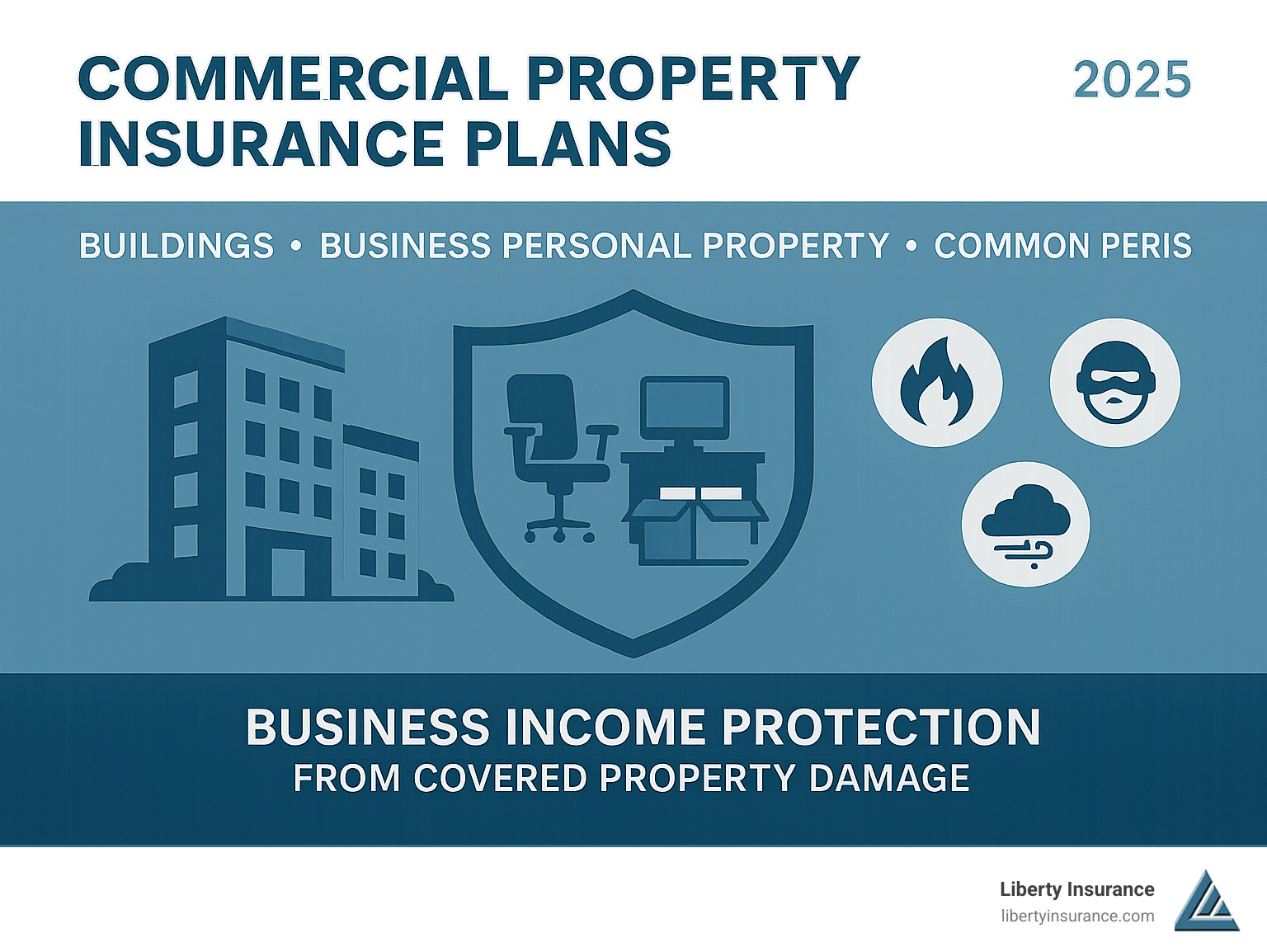
Here’s a quick look at what commercial property insurance plans generally cover:
- Buildings and Structures: Protection for the physical location of your business, whether owned or leased.
- Business Personal Property: This includes your equipment, furniture, fixtures, computers, and inventory.
- Common Perils: Coverage for events like fire, theft, vandalism, and storms.
- Business Income: Some plans can also help cover lost revenue and ongoing expenses if your operations are interrupted by a covered property loss.
This insurance helps your business recover quickly after a setback. It ensures you have the funds to repair or replace damaged property and get back to serving your customers. Without it, a single unexpected event could lead to significant financial strain or even force you to close your doors.
I’m Andrew Harris. With my background in obtaining designations like “Certified Insurance Counselor” (CIC) and serving on industry councils, I’ve spent years helping businesses find the right commercial property insurance plans. This guide will help you understand these vital protections.
Easy commercial property insurance plans word list:
- business personal property insurance
- commercial property insurance business interruption
- types of business insurance
Understanding the Fundamentals of Commercial Property Insurance
Picture this: You walk into your office on a Monday morning and find water everywhere. A pipe burst over the weekend, soaking your computers, inventory, and important documents. Without commercial property insurance plans, this scenario could spell disaster for your business. But with the right coverage, it’s just another bump in the road.
Here’s the thing about business risks – they’re not a matter of if, but when. Research from The Hartford shows that 40% of small businesses will experience a claim within the next decade. That’s nearly half of all businesses facing some kind of property loss. These aren’t just statistics – they represent real business owners dealing with real challenges.
Commercial property insurance plans work like a financial safety net for your physical assets. You pay regular premiums, and in return, your insurance company promises to help cover the costs when covered disasters strike. When something goes wrong, you file a claim, provide documentation of the damage, and if it’s covered under your policy, you receive payment to repair or replace what was lost.
The claims process is straightforward. After a loss, you contact your insurance company, document the damage with photos, and work with adjusters to assess the situation. Once approved, you receive funds to get your business back on track. It’s that simple – and that powerful.
So who exactly needs these vital protections? The answer might surprise you with how broad it is.
Business owners who own their buildings definitely need coverage. Your building represents a massive investment, and protecting it just makes sense. But coverage goes beyond just the structure – it includes everything inside that keeps your business running.
Renters often think they’re off the hook because their landlord has insurance. Here’s the reality: your landlord’s policy covers the building, not your stuff. Your inventory, equipment, computers, and any improvements you’ve made to the space? That’s all on you. Many lease agreements actually require tenants to carry their own commercial property coverage, making it both smart business and a legal necessity.
Home-based businesses face a particularly tricky situation. Your homeowners insurance might cover some business equipment, but it’s usually very limited. If you’re running a consulting business with expensive computers, or an online store with inventory in your garage, your personal policy likely won’t provide adequate protection. We’ll explore this gap in more detail later, but the key point is this: if your business relies on physical property, you need dedicated business coverage.
For a complete picture of how property insurance fits into your overall business protection strategy, take a look at our comprehensive Business Insurance options.
What’s Covered in a Standard Policy
When you invest in commercial property insurance plans, you’re protecting two main categories of assets: your building and everything inside it. Let’s break down what that actually means for your business.
Your building coverage is the foundation of your policy if you own your commercial space. Building Insurance protects the physical structure itself, including walls, roof, floors, and permanently attached fixtures. This means your HVAC system, built-in shelving, and even outdoor signs and fencing are typically covered. If a fire damages your storefront or a storm tears off part of your roof, this coverage steps in to handle repair or rebuilding costs.
Business Personal Property is where things get really interesting – and valuable. This coverage protects the movable assets that make your business run. Your inventory is covered, whether you’re a retailer with merchandise on shelves or a restaurant with food supplies in the kitchen. Your furniture – desks, chairs, filing cabinets, and that comfortable reception area seating – is protected too.
Computers and electronics get special attention in today’s digital world. Your laptops, servers, point-of-sale systems, and other technology are covered under most policies. For businesses that rely heavily on equipment, your tools and machinery are protected as well, from specialized manufacturing equipment to a contractor’s power tools.
Here’s something many business owners don’t realize: outdoor signs and fencing are often covered when damaged by covered perils. If you’ve invested in attractive signage to draw customers, that investment is protected.
For renters, tenant improvements and betterments coverage is crucial. If you’ve customized your leased space with new flooring, lighting, or built-in fixtures, this coverage protects that investment. Without it, you could lose thousands of dollars in improvements if the space is damaged.
Property belonging to others in your care is another important coverage area. If you’re a repair shop and a customer’s item is damaged while in your possession, this coverage can help. It’s a detail that shows how comprehensive these policies can be.
Debris removal might not sound exciting, but it’s incredibly practical. After a covered loss, you’re often left with a mess that needs to be cleaned up. This coverage helps pay for removing damaged property debris, which can be surprisingly expensive after a major loss.
For more detailed information about protecting your movable business assets, explore our Business Personal Property Insurance options.
Common Exclusions: What Isn’t Covered
Understanding what commercial property insurance plans don’t cover is just as important as knowing what they do protect. These exclusions aren’t meant to trick you – they exist because some risks require specialized coverage or are simply too unpredictable to include in standard policies.
Floods top the list of major exclusions. Whether it’s from overflowing rivers, heavy rainfall, or storm surge, flood damage is almost universally excluded from standard commercial property policies. This is especially important here in New Jersey, where many areas from coastal regions to inland river valleys face flood risks. You’ll need separate Flood Insurance, often through the National Flood Insurance Program.
Earthquakes are similarly excluded. While not as common in our area, earthquake damage requires specialized coverage that you can typically add as an endorsement to your policy.
Normal wear and tear isn’t covered, and that makes sense when you think about it. Insurance covers sudden, accidental losses, not gradual deterioration. Faded paint, worn-out carpets, or aging equipment that simply stops working due to age are part of normal business operations, not insurable events.
Intentional damage is excluded across the board. If you, an employee, or anyone acting on behalf of your business intentionally damages property, it won’t be covered. This includes situations where damage occurs during illegal activities.
Employee theft and dishonesty present an interesting distinction. While vandalism by outsiders is covered, theft or dishonest acts by your own employees typically require separate fidelity bonds or crime insurance. It’s a different type of risk that needs different protection.
Commercial vehicles aren’t covered under property insurance – they need their own commercial auto policies. This includes everything from delivery vans to company cars.
Customer property outside your direct care presents another boundary. While some policies may cover customer property in your care, custody, or control, general customer property (like a laptop a customer drops in your store) typically falls under general liability coverage or their own personal insurance.
War and nuclear hazards round out the standard exclusions. These catastrophic events are excluded from almost all insurance policies due to their widespread and unpredictable nature.
Knowing these exclusions helps us have honest conversations about your specific risks and whether you need additional coverages to fill any gaps in your protection.
Decoding the Different Types of Commercial Property Insurance Plans
Navigating commercial property insurance plans might feel a bit like trying to solve a puzzle, but don’t worry – it’s simpler than it seems once you understand the basic pieces. These plans aren’t one-size-fits-all. They vary significantly in terms of what “perils” (causes of loss) they cover and how much protection they offer. The good news is, you can pick a policy that’s as basic or as comprehensive as your business truly needs.
The insurance industry generally offers three core types of policies, each building on the previous one to give you broader coverage. Understanding these distinctions is key to choosing the right fit for your business. For a deeper dive into policy options, we’ve got more resources on Three different types of policies.
Basic, Broad, and Special Form Policies
Let’s break down the three main types of commercial property insurance plans so you can see which one aligns best with your comfort level and risk.
First, we have the Basic Form. This is the most fundamental type of commercial property policy. It covers only the specific perils that are explicitly named in the policy. Think of it like a very selective guest list – only invited perils get coverage. Common perils typically named in a Basic Form policy include fire, lightning, windstorm, hail, smoke, aircraft or vehicle damage, riot or civil commotion, vandalism, sprinkler leakage, and volcanic action. If your property is damaged by something not on this list, it’s generally not covered. For example, if a pipe bursts due to freezing and causes water damage, a Basic Form policy might not cover it unless “burst pipes” is specifically listed. For specific protection against one of the most common threats, explore our Commercial Fire Damage Insurance.
Next up is the Broad Form. As the name suggests, this policy broadens the coverage by adding more named perils to the Basic Form list. It’s a clear step up in protection. In addition to all the perils covered by the Basic Form, a Broad Form policy typically includes things like falling objects (like a tree limb falling on your roof), weight of snow, ice, or sleet, water damage (from burst pipes, accidental discharge of water, or steam), collapse (of a building or part of a building), and breakage of glass. This form offers more comprehensive protection for common incidents that can affect businesses, giving you a wider safety net than the Basic Form.
Finally, we have the Special Form. This is the most comprehensive type of commercial property insurance plans available. Instead of listing what is covered, it covers everything unless it’s specifically excluded. This means if a peril isn’t explicitly mentioned as an exclusion in the policy, it’s covered. It truly provides the broadest protection and is often the preferred choice for businesses seeking maximum security. While offering extensive coverage, Special Form policies still typically exclude common culprits like floods, earthquakes, and normal wear and tear, as we discussed earlier. Because of its broad nature, it generally comes with a slightly higher premium.
Choosing the right form depends on your business’s risk tolerance, budget, and how exposed you are to various perils. We can help you assess which policy form provides the optimal balance for your operations, whether you’re in Millstone Township, NJ, or Princeton, NJ.
Business Interruption Coverage
Imagine a fire forces your thriving business to close its doors for repairs. Your physical property might be covered, which is a huge relief. But what about the income you’re losing during that downtime? What about the rent you still have to pay, or the valuable employees you want to retain? This is precisely where Business Interruption Coverage, sometimes called Business Income insurance, steps in as a truly crucial add-on to your commercial property insurance plans.
This coverage is designed to help your business not just survive, but truly recover financially after a covered property loss disrupts your operations. It can be a real lifeline. It typically covers:
- Lost Income: This helps replace the profits you would have earned if the disaster hadn’t happened.
- Operating Expenses: It covers those ongoing fixed costs that don’t disappear just because your doors are closed, things like rent, utilities, and loan payments.
- Payroll: This is a big one! It helps you keep your key employees on staff during the recovery period, preventing them from needing to find work elsewhere.
- Temporary Relocation: If you need to move to a temporary location to keep things running, this can help cover those extra costs.
Business Interruption coverage can also include lost business income that results from physical property damage. It’s often the difference between a temporary setback and a permanent closure. Without it, even with your building and equipment replaced, the financial strain of lost revenue can be simply overwhelming. We strongly recommend considering this vital protection as part of your commercial property insurance plans.
For a deeper understanding of how this coverage can safeguard your revenue stream, explore our offerings for Business Interruption Insurance.
Customizing Your Commercial Property Insurance Plans with Endorsements
While Basic, Broad, and Special Form policies lay a strong foundation, the true power of commercial property insurance plans comes from their amazing flexibility through endorsements (sometimes called riders or add-ons). These allow us to really tailor your policy to address those specific risks that are unique to your business. Think of them as choosing extra, perfect toppings for your pizza – they make it exactly suited to your taste and needs!
Here are some common and incredibly valuable endorsements we can add to your policy:
- Equipment Breakdown Coverage: Standard property policies are great for covering equipment damage from big events like fire or wind. However, they typically don’t cover damage caused by mechanical or electrical breakdown, power surges, or boiler explosions. An Equipment Damage Insurance endorsement fills this crucial gap, covering the cost to repair or replace vital equipment like HVAC systems, refrigeration units, production machinery, or electrical panels when they fail due to internal causes.
- Spoilage Coverage: If your business absolutely relies on perishable goods (think a busy restaurant, a busy grocery store, or a vibrant florist), this endorsement is a must-have. It covers losses due to spoilage if your products are damaged by a covered peril, such as a prolonged power outage that causes your freezers to fail.
- Ordinance or Law Coverage: When an older building is damaged, local building codes may require repairs or rebuilding to meet current standards. This can be significantly more expensive than just replacing what was there before. This endorsement covers those additional costs needed to comply with updated building ordinances or laws, ensuring you’re not hit with unexpected expenses for code upgrades.
- Electronic Data Processing (EDP) Coverage: While your computers are covered as business personal property, standard policies can have limitations on covering data loss or damage from power surges and even some virus attacks. EDP coverage is specifically designed to protect computer-related equipment and the invaluable data stored on it, broadening the causes of loss for these very important assets.
- Utility Service Interruption: If an off-premises utility failure (like a power line being knocked out down the street) causes damage or business interruption at your location, this endorsement can provide vital coverage.
These are just a few examples of how we can fine-tune your policy. By strategically adding these endorsements, we can build commercial property insurance plans that truly offer comprehensive, customized protection for your unique operations, whether you’re a small business in New Brunswick, NJ, or a larger enterprise in Northern New Jersey.
How Commercial Property is Valued and Priced
Figuring out how much your commercial property insurance plans will cost can sometimes feel a bit like a mystery. But it doesn’t have to be! Understanding how your property is valued and what goes into calculating your insurance premium is key to making smart choices for your business. It’s not just about the monthly bill; it’s about getting the right protection at a fair price.
When we talk about pricing, you’ll hear terms like premiums (that’s the regular payment you make), deductibles (the amount you pay out of pocket before your insurance kicks in), and policy limits (the maximum amount your insurance will pay for a covered loss). Sometimes, there’s also a coinsurance clause, which encourages you to insure your property for a certain percentage of its value. Don’t worry, we’re here to explain it all simply.
For a general overview of what impacts your costs, you can check our resources on Commercial Property Insurance Cost.
Valuation Methods: Actual Cash Value vs. Replacement Cost
One of the biggest decisions you’ll make when setting up your commercial property insurance plans is how your property will be valued after a loss. This choice directly affects your premium and, more importantly, how much you’ll actually receive if you need to file a claim. You generally have two main options: Actual Cash Value (ACV) or Replacement Cost (RC).
Let’s break down the difference with a simple comparison:
| Feature | Actual Cash Value (ACV) training “`## How Commercial Property is Valued and Priced
Understanding how your commercial property is valued and how premiums are calculated is crucial for making informed decisions about your commercial property insurance plans. It’s not just about the sticker price; it’s about getting the right coverage at a fair cost. Key terms we’ll encounter here include premiums (what you pay), deductibles (what you pay before insurance kicks in), policy limits (the maximum payout), and the sometimes tricky coinsurance clause.
For a general overview of pricing, you can check our resources on Commercial Property Insurance Cost.
Valuation Methods: Actual Cash Value vs. Replacement Cost
One of the most critical decisions when setting up your commercial property insurance plans is choosing the valuation method: Actual Cash Value (ACV) or Replacement Cost (RC). This choice directly impacts your premium and, more importantly, how much you receive in a claim payout.
Think of it like this: if your old business laptop is stolen, do you want enough money to buy a brand-new, similar laptop, or just what your old one was worth after years of use? That’s the core difference!
| Feature | Actual Cash Value (ACV)

