
Protecting Your Business Assets: The Commercial Property Insurance Foundation
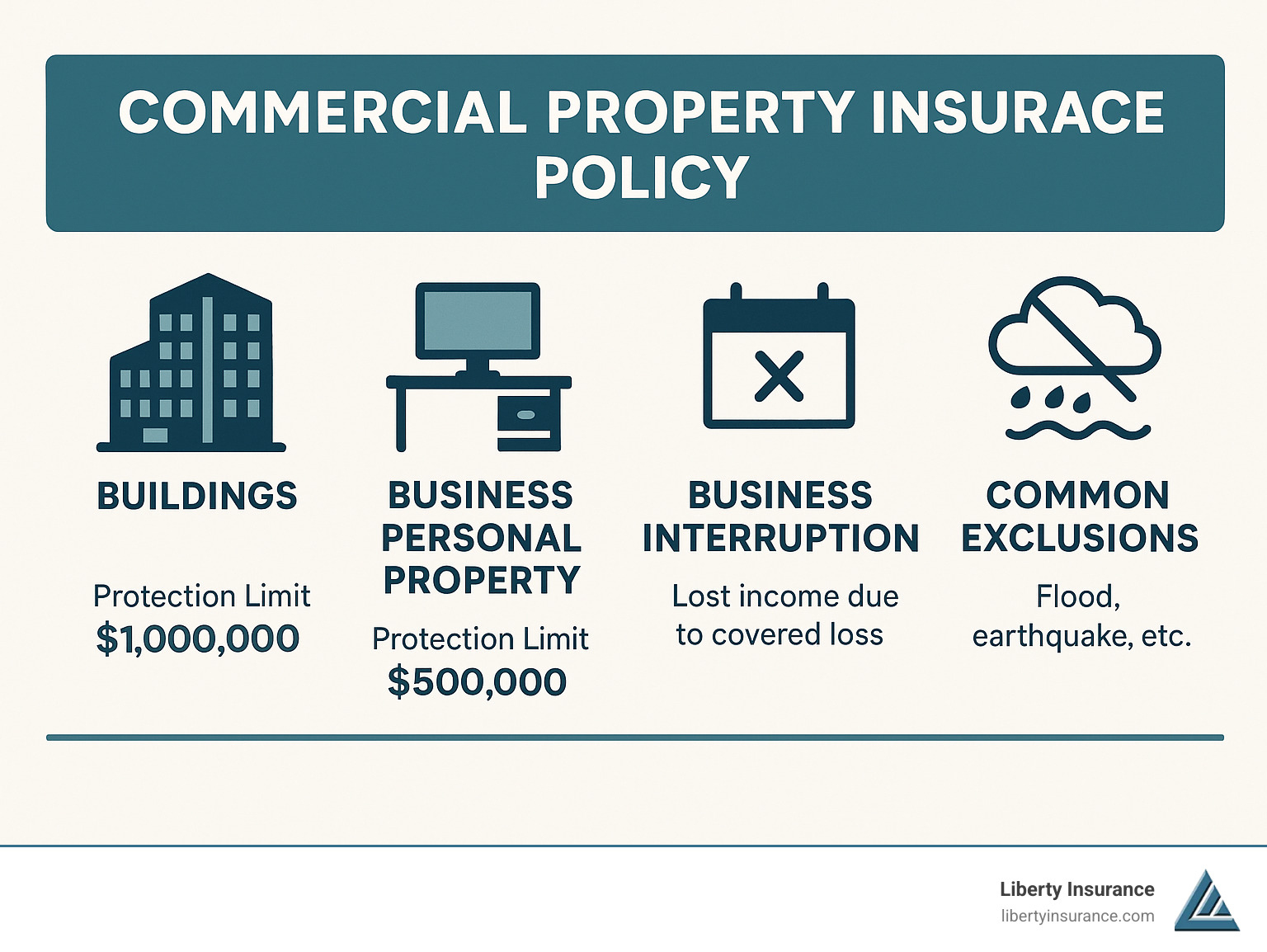
Commercial property insurance policy is a contract that protects your business’s physical assets—including buildings, equipment, inventory, and fixtures—against perils like fire, theft, vandalism, and certain natural disasters.
| What Is It? | What It Covers | What It Doesn’t Cover | Average Cost |
|---|---|---|---|
| Insurance that protects business property from covered perils | Buildings, equipment, inventory, furniture, outdoor fixtures | Typically excludes flood, earthquake, normal wear and tear | $1,605/year on average (small businesses) |
Every business with physical assets needs protection against unexpected disasters. A commercial property insurance policy forms the backbone of your business protection plan, whether you own your building or lease your space. This coverage helps rebuild, repair, or replace damaged property after covered events, preventing potentially devastating financial losses that could otherwise force your business to close permanently.
The policy can be purchased standalone or bundled with general liability coverage in a Business Owner’s Policy (BOP), which often provides cost savings for small to medium-sized businesses. Your premium will depend on factors including:
- Your business location and local disaster risks
- Building construction materials and age
- Occupancy type (restaurants typically cost more than offices)
- Fire and theft protection systems in place
- Total value of insured assets
I’m Andrew Harris, a Certified Insurance Counselor with over a decade of experience helping businesses select the right commercial property insurance policy options to protect their valuable assets while managing costs effectively.
Similar topics to commercial property insurance policy:
– business personal property insurance
– general liability insurance small business
– types of business insurance
Understanding the Commercial Property Insurance Policy Basics
When you’re running a business—whether it’s a cozy shop in Princeton or a busy restaurant in Trenton—understanding what makes up a commercial property insurance policy isn’t just smart business; it’s essential protection for everything you’ve built.
Think of your policy as a safety net with specific dimensions. A standard commercial property insurance policy (typically written on form CP 00 10) clearly spells out what’s protected, what dangers you’re insured against, your coverage limits, and what’s not included. It’s like a detailed map of your business protection plan.
Most business owners face a choice between two main types of coverage:
Named Perils Coverage works like a guest list at an exclusive event—only the risks specifically invited (listed) get in. If fire, lightning, or windstorm are on your policy’s list, you’re covered for those specific threats. Anything not named? You’re on your own.
Special Form Coverage flips this approach completely. It covers all risks of physical loss except those specifically excluded. As we often tell our clients at Liberty Insurance, “Named perils is a whitelist—only what’s listed gets covered. Special form is more like a blacklist—everything is covered except what we specifically exclude.” For most businesses, this broader protection makes more sense.
While New Jersey doesn’t legally require you to have a commercial property insurance policy, plenty of others might insist on it. Your mortgage lender, landlord, or even important clients and vendors often make this coverage a non-negotiable part of doing business with them.
Before shopping for coverage, take time to create a thorough inventory of everything your business owns—from your building (if you own it) to the furniture, equipment, inventory, computers, and even that eye-catching outdoor sign. This inventory becomes gold when you’re setting coverage limits or, heaven forbid, filing a claim after a loss.
Who Needs a Commercial Property Insurance Policy?
Almost every business with physical assets should have a commercial property insurance policy, but certain types of businesses have particularly compelling reasons:
Retailers face multiple property risks with valuable inventory, fixtures, and steady customer traffic. That boutique clothing store in Princeton needs protection for those designer clothes that could be ruined by a burst pipe or stolen after hours.
Restaurants combine high-value kitchen equipment, custom furnishings, perishable inventory, and fire risks in one location. A family-owned eatery in New Brunswick might have invested a quarter-million dollars in kitchen equipment alone—equipment they simply couldn’t afford to replace out-of-pocket after a disaster.
Contractors may be mobile, but their tools and equipment represent a significant investment. A Millstone Township contractor needs coverage that protects equipment whether it’s stored at their office or being used at various job sites.
Landlords who own commercial buildings in Trenton or Toms River need to protect their investment in the building structure itself, even if tenants are responsible for what’s inside their rented spaces.
Home-Based Businesses often find too late that their homeowner’s policy offers little to no coverage for business property. That consultant working from their Princeton home office needs separate coverage for their business equipment.
Startups may be focused on growth, but protection should start on day one. A tech startup in New Brunswick with $50,000 in computer equipment can’t afford to start over if disaster strikes.

Replacement Cost vs. Actual Cash Value
One of the most significant choices you’ll make when purchasing a commercial property insurance policy is how you want your property valued after a loss:
Replacement Cost (RC) coverage is like getting a new-for-old guarantee. If your property is damaged, the policy pays to replace it with new items of similar kind and quality—no depreciation deducted. It costs more upfront but eliminates unpleasant surprises when you file a claim.
Actual Cash Value (ACV) factors in depreciation, meaning you’ll receive the current value of the damaged item, not what it costs to replace it. It’s like the difference between selling your used equipment and buying new replacements—there’s usually a gap you’ll need to fill from your own pocket.
Here’s a real-world example: A five-year-old commercial HVAC system that would cost $25,000 to replace today originally cost $20,000. With Replacement Cost coverage, you’d receive $25,000 (minus your deductible) after a covered loss. With Actual Cash Value, if the system had depreciated 50%, you’d receive only $12,500 (minus your deductible)—leaving you to find the remaining $12,500 elsewhere.
| Coverage Type | Pros | Cons | Best For |
|---|---|---|---|
| Replacement Cost | Full replacement without depreciation | Higher premiums | Businesses that can’t afford to partially self-insure |
| Actual Cash Value | Lower premiums | Out-of-pocket costs for depreciation | Businesses with cash reserves that can supplement insurance payouts |
Most commercial property insurance policies also include “coinsurance” provisions—requirements that you insure your property to at least a specified percentage (typically 80-90%) of its full replacement value. Fall short of this requirement, and you might face a penalty when you file a claim.
As one business owner in Toms River shared with us after experiencing a partial loss: “I saved a few hundred dollars on my premium by choosing ACV coverage, but it cost me thousands when I had to replace my damaged equipment. The lesson was expensive.”
What a Commercial Property Insurance Policy Covers (and Doesn’t)
When you invest in a commercial property insurance policy, you’re buying peace of mind for your business’s physical assets. But what exactly does that protection include? Let’s walk through what’s typically covered—and just as importantly, what isn’t.
Your standard policy typically protects:
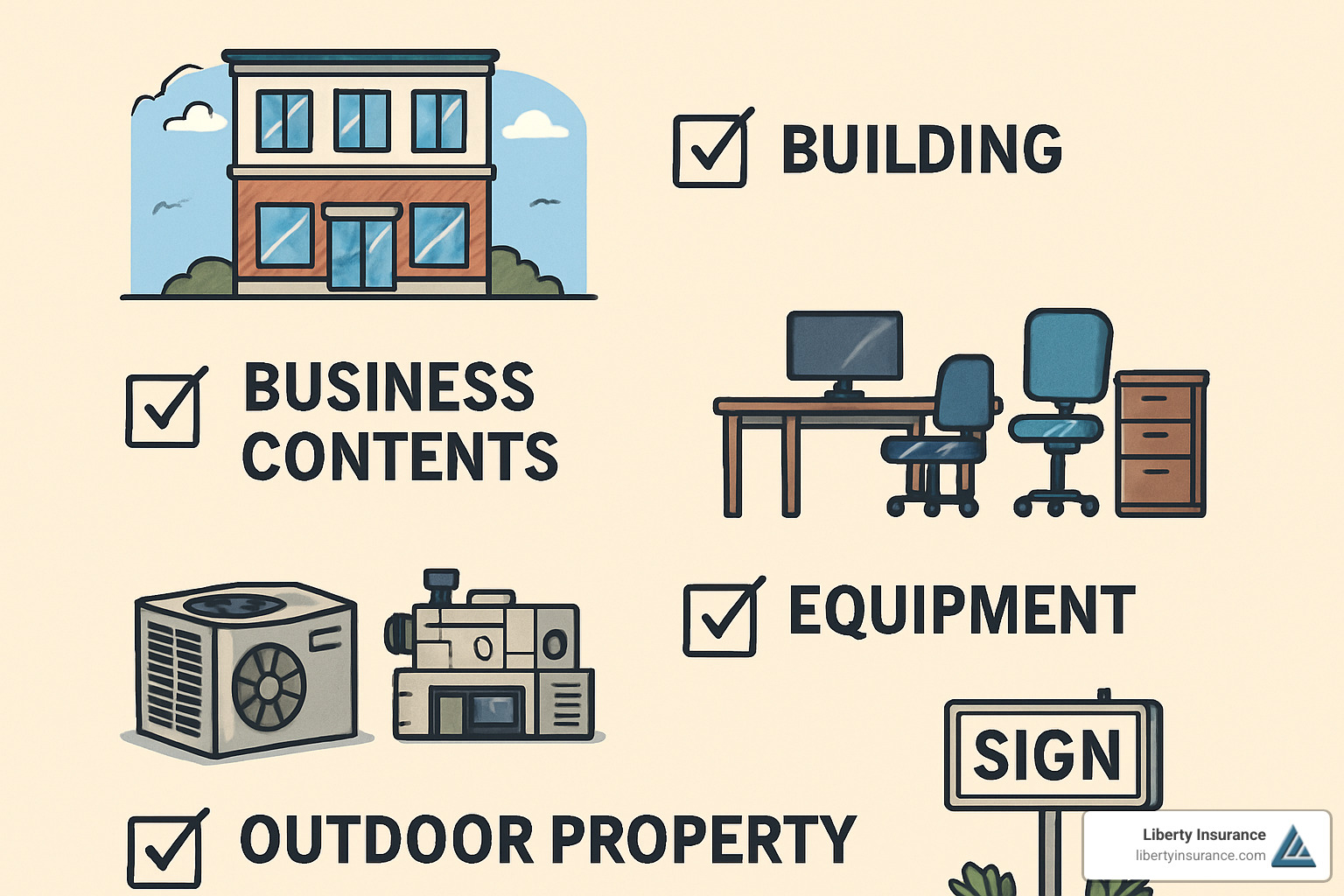
Buildings: This includes the actual structure you own, from foundation to roof, along with permanently installed fixtures and equipment. For a Princeton property owner, this means everything from your walls and built-in cabinets to permanently installed HVAC systems is protected.
Business Personal Property: Think of this as everything that would fall out if you turned your building upside down and shook it. This includes your furniture, inventory, computers, machinery, and even property you’ve leased that you’re responsible for maintaining.
Improvements & Betterments: If you’ve upgraded your leased space in Trenton with custom lighting or specialized flooring, these tenant improvements are covered under your policy.
Business Interruption: Perhaps one of the most valuable coverages—this helps replace lost income when a covered disaster forces you to temporarily close your doors. It can be the difference between reopening after a disaster or closing permanently.
Equipment Breakdown: When your essential machinery fails due to mechanical or electrical issues, this coverage (often added as an endorsement) helps get you back up and running.
Outdoor Signs: Those important brand identifiers that aren’t attached to your building typically need their own coverage limit or endorsement.
Now for the reality check—what your policy typically won’t cover:
- Flood damage: This requires separate coverage, usually through the National Flood Insurance Program or private insurers
- Earthquake damage: You’ll need a specific endorsement for this
- Normal wear and tear: Insurance covers sudden, accidental damage—not gradual deterioration
- Intentional damage: Self-inflicted problems aren’t covered (for obvious reasons)
- Certain water damage: Particularly slow leaks or maintenance issues
- Terrorism: Often available as optional coverage
- War and nuclear hazards: Standard exclusions in virtually all policies
Ordinance & Law Coverage is worth special mention. Standard policies typically provide limited protection when you’re forced to upgrade to current building codes after a loss. This endorsement covers the value of undamaged portions that must be demolished, demolition costs, and the increased expense of rebuilding to comply with current codes—critical for owners of older buildings.
Building & Contents Coverage Under a Commercial Property Insurance Policy
Let’s dig deeper into what your policy protects:
Building Coverage is the backbone of your commercial property insurance policy if you own your building. It protects not just walls and roof, but also permanently installed fixtures, outdoor attached lighting, awnings, fire protection equipment, and all your building systems.
I remember when one of our New Brunswick clients called after a severe storm tore through their roof last year. The damage totaled $75,000—a devastating amount to pay out-of-pocket. Their policy covered the repairs completely, allowing them to focus on running their business rather than worrying about how to fund major repairs.
Contents Coverage (often called Business Personal Property) protects everything else—your furniture, inventory, equipment, computers, and supplies. It’s the “stuff” that makes your business function day-to-day.
Your policy also includes Personal Property of Others coverage, protecting items belonging to others while in your care. For a repair shop in Toms River, this means customers’ equipment left for service is protected if a fire breaks out overnight.
For businesses whose property doesn’t stay put, Inland Marine Coverage extends protection to property in transit or at off-site locations. Our Princeton-based wedding photographer client relies on this coverage to protect $15,000 worth of camera equipment that travels to venues throughout New Jersey.
Business Interruption & Extra Expense
The building damage after a disaster is just the beginning—what about the income you lose while closed for repairs?
Business Interruption coverage (sometimes called Business Income) is the lifeline that keeps your business afloat when disaster strikes. It replaces lost profits, covers ongoing expenses like payroll and mortgage payments, and provides funds for temporary relocation.
A Trenton restaurant owner learned this lesson after a kitchen fire. While their commercial property insurance policy covered the $85,000 in physical damages, it was the Business Interruption coverage that truly saved their business during the two-month closure. It provided funds to:
- Pay their chef and key staff (preventing them from finding jobs elsewhere)
- Cover ongoing loan payments and utilities
- Replace the profits they would have earned during their busy season
Extra Expense coverage works alongside Business Interruption by covering additional costs you incur to minimize business disruption—like renting temporary space, paying overtime to employees, or expedited shipping for replacement equipment.
The coverage typically lasts from the date of loss until you’re operational again, usually with a maximum period of 12 months. Some policies offer extended periods to cover continued income losses even after reopening.
For businesses that rely on their physical location, Commercial Property Insurance Business Interruption coverage isn’t optional—it’s essential.
Key Exclusions & Limitations
Understanding what isn’t covered is just as crucial as knowing what is. Here are the gaps in your commercial property insurance policy you should know about:
Flood Damage is almost universally excluded from standard policies. For businesses near coastal areas like Toms River or along New Jersey’s many waterways, separate flood insurance is essential. Even businesses in seemingly low-risk areas should consider this coverage—about 25% of flood claims come from “low-risk” zones.
Earthquake and Earth Movement damage isn’t covered unless specifically added. While New Jersey isn’t California, minor earthquakes do occur, and other ground movement like sinkholes can happen anywhere.
Terrorism Coverage became a separate endorsement after 9/11. Businesses in high-profile areas or industries should consider this optional protection.
Cyber Incidents that cause physical damage are typically excluded. With ransomware attacks on the rise, separate cyber insurance has become essential for most businesses.
Utility Service Failure originating off your premises (like that regional power outage last summer) usually isn’t covered without a specific endorsement.
Be aware of Policy Sub-limits that cap recovery for certain property types. Items like money, valuable papers, electronic data, and outdoor property often have much lower limits than your overall policy.
According to a report on open hurricane claims, many business owners find these limitations only after suffering losses. After Hurricane Maria, approximately 279,000 claims were filed in Puerto Rico alone, with many businesses finding their coverage inadequate due to exclusions they weren’t aware of.
Vacant Building Limitations severely restrict coverage if your property sits empty for more than 60 consecutive days—a critical consideration for landlords between tenants.
At Liberty Insurance, we believe in transparency about these exclusions. We’ll help you understand your policy’s limitations and recommend appropriate supplements to fill coverage gaps. Our Princeton, New Brunswick, and New Jersey clients appreciate this straightforward approach—because the worst time to find a gap in coverage is after you’ve suffered a loss.
Pricing the Protection: Factors That Influence Premiums & Ways to Save
Ever wonder why your neighbor’s commercial property insurance policy costs less than yours? The price tag on your coverage isn’t random—it’s carefully calculated based on your unique risk profile. Let’s break down what drives these costs and how you can keep them manageable without sacrificing protection.
Your premium reflects your property’s specific risk level, starting with where you’re located. A building in flood-prone Toms River naturally faces different hazards than one in Princeton. Even within the same city, neighborhoods with higher crime rates or limited fire department access will see higher premiums. That’s just geography at work.
The bones of your building matter tremendously. That sturdy brick structure you invested in? It could save you 5-15% compared to a wooden building because it’s more fire-resistant. Insurance companies love concrete, steel, and masonry construction because these materials simply don’t burn as easily as wood.
What happens inside your building dramatically impacts your rates too. A quiet Princeton accounting office presents far fewer risks than a busy New Brunswick restaurant with sizzling grills and bubbling fryers. Your commercial property insurance policy rates reflect these occupancy risks—the more fire hazards, the higher the premium.
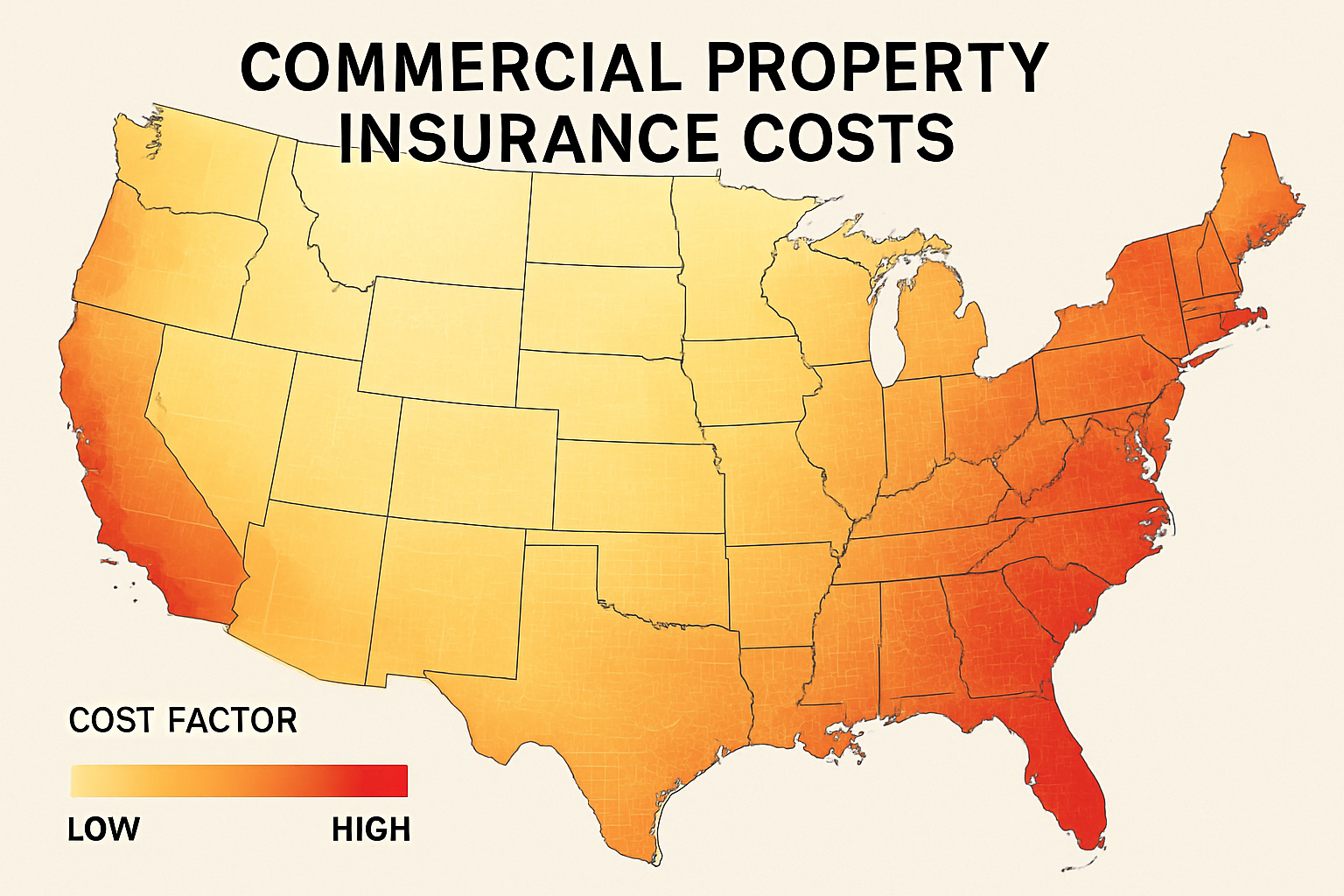
Those safety investments you’ve been considering? They really do pay off. Buildings equipped with sprinkler systems, fire alarms, security cameras, and nearby fire hydrants typically enjoy 5-10% lower premiums. Your insurance company rewards these protective measures because they reduce the likelihood and severity of claims.
Speaking of claims, your history speaks volumes. A clean record suggests you’re managing risks effectively, while multiple past claims raise red flags about future ones. Similarly, your deductible choice reflects how much financial risk you’re willing to shoulder yourself—higher deductibles mean lower premiums but more out-of-pocket costs when trouble strikes.
Smart business owners find ways to trim costs without cutting corners on protection. Bundling your property coverage with general liability in a Business Owner’s Policy (BOP) typically shaves off 10-15% from your premium. Annual payments instead of monthly installments often secure additional discounts.
“By implementing the safety improvements recommended by Liberty Insurance, we reduced our premium by 15% while actually improving our coverage,” shared one of our clients in Millstone Township. This illustrates a key point: sometimes spending money on prevention saves more in the long run.
Modernizing outdated building systems does more than increase efficiency—it reduces risks that drive up insurance costs. Replacing that ancient knob-and-tube wiring or upgrading leaky plumbing demonstrates to insurers that you’re serious about preventing losses before they happen.
Your business credit score might affect your rates too, as many insurers factor this into their calculations. Maintaining healthy business finances indirectly supports more affordable coverage.
Valuation Methods That Drive Cost in a Commercial Property Insurance Policy
The way your property gets valued fundamentally shapes both what you pay and what you receive after a loss. Insurance to Value (ITV) isn’t just insurance jargon—it’s the relationship between your coverage amount and your property’s actual worth. Most commercial property insurance policies include coinsurance clauses requiring you to insure at least 80-90% of your property’s replacement value to receive full payment on partial losses.
When we sit down with clients to discuss valuation, we typically cover four main approaches:
Replacement Cost Value (RCV) provides the most complete protection by paying to replace damaged items with new ones of similar kind and quality—with no deduction for depreciation. That five-year-old computer system? You’ll get enough to buy a new equivalent, not just its current market value. This premium protection comes with premium pricing.
Actual Cash Value (ACV) costs less up front but provides less when you need it most. By subtracting depreciation from replacement cost, this method might leave you with significant out-of-pocket expenses. That same five-year-old computer system might be valued at half its replacement cost, leaving you to cover the difference.
Functional Replacement Cost offers a practical middle ground for older properties with features that would be astronomically expensive to replicate exactly. This approach pays for modern, functionally equivalent replacements rather than historical reproductions—think replacing ornate plaster ceilings with standard modern materials that serve the same purpose.
Market Value simply reflects what a buyer would pay for your property today, which often differs from both replacement and actual cash value. This method typically appears in specialized circumstances rather than standard policies.
Property values and construction costs aren’t static—they evolve over time. We recommend reassessing your coverage amounts every 2-3 years, after significant renovations, or when construction costs shift dramatically in your area. This helps ensure you’re neither overpaying for excessive coverage nor underinsured and vulnerable to coinsurance penalties.
For deeper insights into how these factors might affect your specific situation, explore our detailed guide on Commercial Property Insurance Cost.
Risk-Mitigation Strategies to Lower Premiums
Smart risk management isn’t just about avoiding losses—it’s about saving money on your commercial property insurance policy while making your business safer. The right preventive measures create a win-win situation: reduced premiums and reduced risk of business disruption.
Fire prevention offers some of the most substantial premium savings. Installing automatic sprinkler systems can slash premiums by 5-15% while dramatically improving survival chances during a blaze. Regular electrical system inspections, proper storage of flammable materials, and staff training on fire safety protocols further reduce your risk profile. One Princeton retailer told us their sprinkler investment paid for itself in premium savings within just four years.
Security improvements signal to insurers that you’re serious about protection. Centrally monitored alarm systems that alert police to break-ins, strategically placed security cameras, proper lighting, and controlled access systems all help deter theft and vandalism. These measures often qualify for premium discounts while protecting your valuable inventory and equipment.
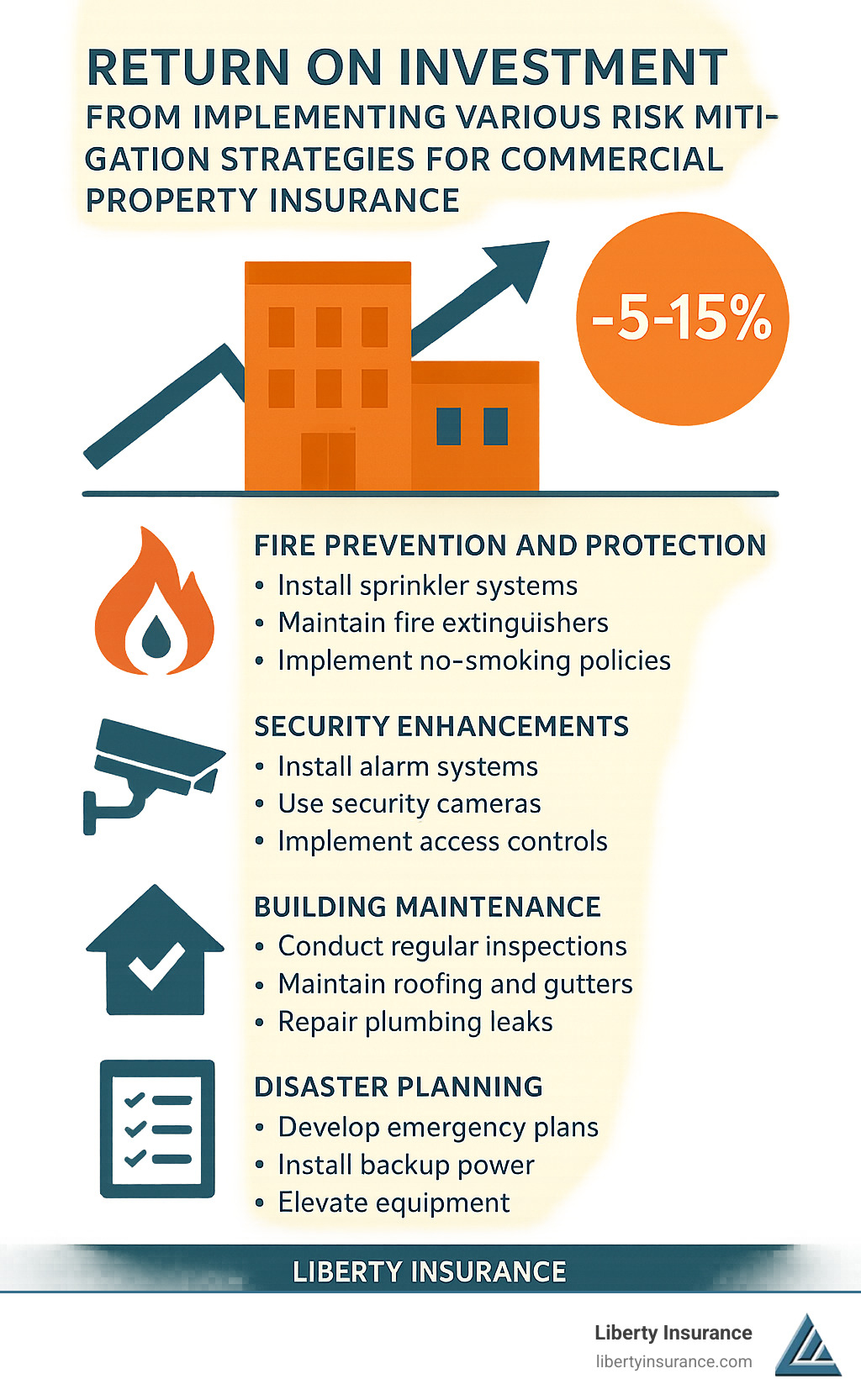
Consistent building maintenance prevents small problems from becoming big claims. Regular roof inspections catch minor leaks before they cause major water damage. Clean gutters prevent ice dams and water backup. Prompt plumbing repairs avoid mold and structural damage. These unglamorous tasks directly impact your risk profile and, consequently, your insurance costs.
Disaster planning demonstrates foresight that insurers appreciate. Having documented emergency procedures, business continuity plans, backup power systems, and flood mitigation strategies shows you’re prepared for the unexpected. A manufacturing client in Trenton invested $25,000 in comprehensive risk improvements—including sprinklers, security upgrades, and staff training—and now saves $8,500 annually on premiums. That’s a three-year payback plus significantly reduced risk of business interruption.
The most effective risk management approach addresses your specific exposures rather than applying generic solutions. At Liberty Insurance, we walk through your facility to identify your unique vulnerabilities and prioritize improvements that deliver the biggest bang for your buck. This personalized approach ensures you’re investing in changes that actually matter for your business.
For a broader view of protecting your business assets, check out our comprehensive guide to Types of Business Insurance.
From Damage to Dollars: The Commercial Property Insurance Policy Claims Process
When disaster strikes your business, knowing how to steer the claims process can mean the difference between a quick recovery and months of financial strain. Let’s walk through what happens after you’ve experienced damage covered by your commercial property insurance policy.
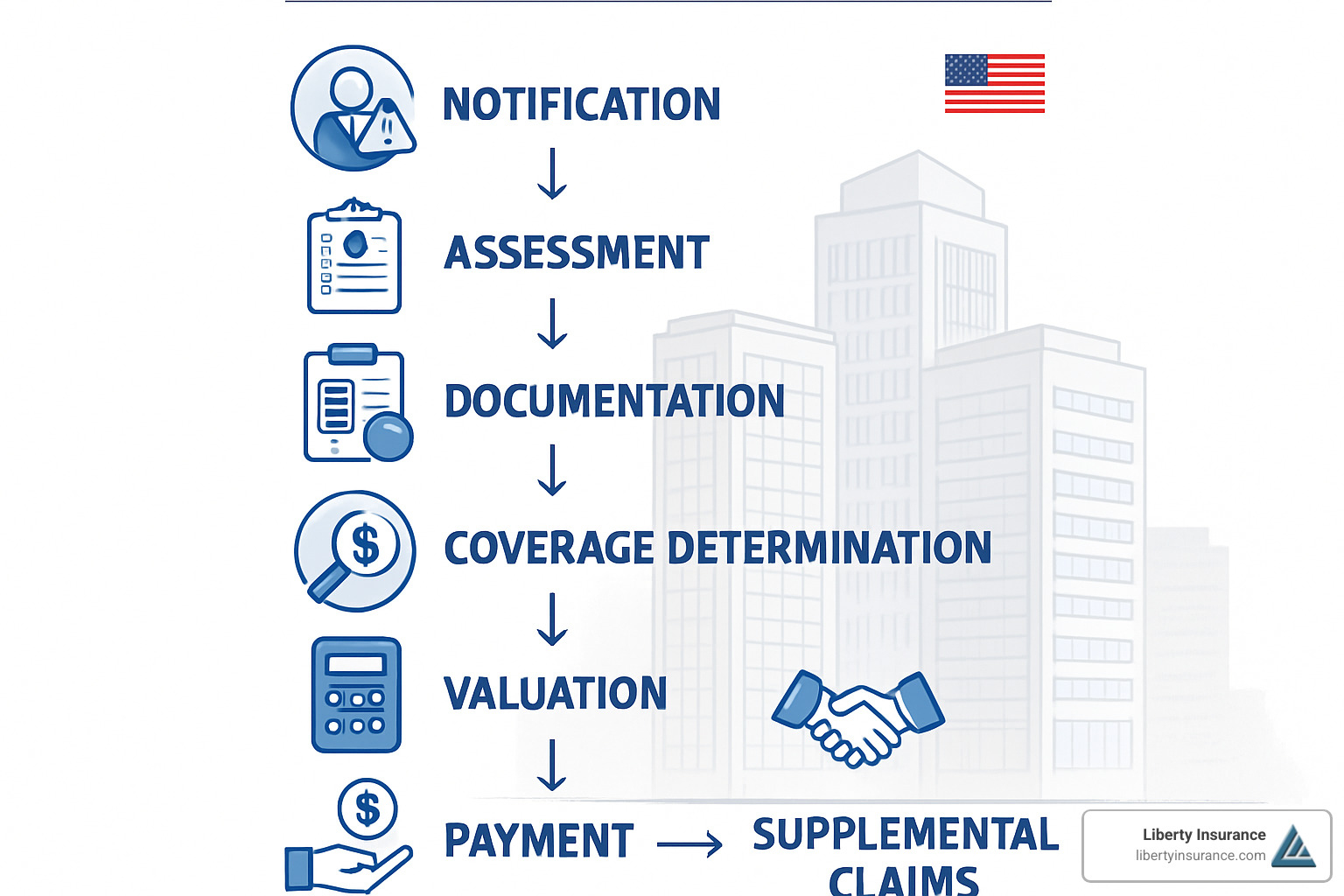
The path from damage to settlement typically follows a predictable journey:
First, you’ll need to notify your insurance company—ideally within 24-72 hours of finding the damage. The sooner you report it, the faster the recovery process can begin. Within a few days (usually 1-3 business days for significant losses), an insurance adjuster will visit your property to assess the damage firsthand.
Once on site, the adjuster will review your policy details, examine your documentation of damaged items, and evaluate the evidence of the loss. Think of them as a detective piecing together what happened and what it will take to make things right again.
Based on their findings, the insurance company determines which portions of your loss are covered under your commercial property insurance policy. They’ll then value those damaged items according to your policy terms—either replacement cost or actual cash value—before presenting you with a settlement offer.
After you accept the settlement, payment is issued minus your deductible. If additional damage is finded during repairs (which happens more often than you might think), you can submit these as supplemental claims.
How long will all this take? It varies widely. A straightforward claim might wrap up in a few weeks, while more complex situations can take months to resolve fully. Patience is key, but so is persistence.
One of our clients in New Brunswick shared their experience: “After a pipe burst flooded our warehouse, Liberty Insurance had an adjuster on-site within 24 hours. Their guidance through the claims process allowed us to focus on keeping our business running while repairs were made.”
Unfortunately, not all claims sail smoothly to approval. Denials typically happen for specific reasons: the loss may fall under policy exclusions, you might have failed to maintain required protective safeguards, reported the incident too late, provided insufficient documentation, or there may have been some misrepresentation on your original application.
At Liberty Insurance, we understand how stressful property damage can be for New Jersey business owners. That’s why we assign a dedicated claims advisor to each case—someone who knows the local landscape from Princeton to Toms River—to guide you through the process and advocate for a fair settlement. We believe the claims experience is where insurance companies truly prove their worth.
Step-by-Step Filing of a Commercial Property Insurance Policy Claim
When disaster strikes your business, taking the right steps in the right order can make your commercial property insurance policy claim process much smoother. Here’s your roadmap to recovery:
Safety comes first. Before anything else, ensure everyone is safe. Evacuate if necessary, shut off utilities if you can do so safely, and contact emergency services if needed. No property is worth risking anyone’s wellbeing.
Document everything. Before cleanup begins, take extensive photos and videos of all damaged areas. Capture the scene from multiple angles with good lighting. These images will be your evidence of what happened, so be thorough. Don’t dispose of damaged items until after the adjuster has seen them.
Stop the bleeding. Make temporary repairs to prevent additional damage—board up broken windows, place tarps over damaged roofs, or remove water to prevent mold. Keep all receipts for these emergency measures as they’re typically reimbursable. Just don’t start major repairs until after the adjuster’s assessment.
Make the call. Contact your insurance company’s claims department or your agent as soon as possible. Have your policy number handy and be prepared to provide basic information about what happened. Ask about next steps and expected timelines so you know what to anticipate.
Gather your evidence. While waiting for the adjuster, start collecting documentation that will support your claim: pre-loss inventory records, photos of items before they were damaged, receipts, invoices, and proofs of purchase. Create a detailed inventory of everything that was damaged.
Meet with the adjuster. Schedule the inspection for a time when you can be present. Show them all damaged areas and items, provide your documentation, and don’t be shy about asking questions regarding coverage and next steps. This meeting is crucial for establishing the scope of your loss.
Review the offer carefully. When you receive the settlement offer, compare it with your contractor estimates and make sure you understand what is covered and what isn’t. If the offer seems inadequate, don’t hesitate to negotiate—this is business, not personal.
Get paid and rebuild. Once you accept the settlement, you’ll receive payment (minus your deductible). If your policy provides replacement cost coverage, you might initially receive actual cash value payments, with the remainder paid after repairs are completed. Keep detailed records of all repair expenses.
A business owner in Princeton shared this wisdom after going through a major claim: “Document everything, even if it seems excessive. The photos I took immediately after the storm damage were invaluable when discussing the extent of repairs with my adjuster.”
Common Pitfalls & How to Avoid Them
Even the most prepared business owners can stumble during the commercial property insurance policy claims process. Here are the most common mistakes we see—and how you can avoid them:
Waiting too long to report. Your policy likely requires prompt notification, usually within 24-72 hours of finding damage. Even if you’re uncertain about coverage or don’t know the full extent of the damage yet, report it anyway. A simple call starts the clock on your claim and demonstrates your compliance with policy terms.
Skimping on documentation. After a loss, memories fade and details blur. Without proper evidence, it becomes your word against the adjuster’s assessment. Maintain updated inventory records with photos and receipts during normal operations. After a loss, document everything thoroughly before cleanup begins. Those pre-cleanup photos might be worth thousands in your settlement.
Finding you’re underinsured. Many business owners learn they don’t have enough coverage only after disaster strikes. Review your coverage limits annually, after major purchases, and whenever property values change significantly. Consider adding an inflation guard endorsement to automatically increase your coverage in line with rising costs.
Misunderstanding coinsurance clauses. Most commercial property insurance policies require you to maintain coverage for at least 80-90% of your property’s value. Falling short triggers a penalty formula that reduces your payout—even for partial losses. Make sure you understand your coinsurance requirements and maintain adequate coverage.
Jumping at the first offer. Initial settlement offers may not account for all damages, especially those not immediately visible. Get independent repair estimates and thoroughly inspect all potentially affected areas before accepting any settlement. Remember: once you accept a payment as final, reopening the claim becomes much more difficult.
Neglecting your duty to mitigate. Your policy requires you to take reasonable steps to prevent additional damage after the initial loss. Failure to do so could result in denial of coverage for subsequent damage. Make temporary repairs and take protective measures while waiting for the adjuster—just save those receipts!
Missing important deadlines. Policies contain strict deadlines for filing proof of loss and completing repairs. Note all deadlines in your policy and request extensions if needed. Calendar these dates and set reminders—missing a deadline can invalidate your claim entirely.
Making permanent repairs too soon. In your eagerness to get back to business, you might be tempted to start repairs immediately. Resist this urge. Making permanent repairs before the adjuster’s inspection can jeopardize your claim because the insurer can’t verify the damage. Limit pre-inspection work to temporary protective measures.
A business owner in Toms River learned this lesson the hard way: “After storm damage, we quickly replaced some damaged equipment before the adjuster arrived, thinking we were being efficient. The insurer denied that portion of our claim because they couldn’t verify the damage. Now we know to wait for inspection first.”
At Liberty Insurance, we guide our New Jersey clients through the claims process to help avoid these pitfalls, ensuring they receive the full benefits their commercial property insurance policy provides. We believe preparation and knowledge are your best tools for a successful claim experience.
Frequently Asked Questions About Commercial Property Insurance Policies
What additional coverages can I add to my commercial property insurance policy?
Your standard commercial property insurance policy gives you solid protection, but it might not cover everything your business needs. Think of it like the foundation of a house – essential, but you might want to add some extra features to really make it your own.
Many of our New Jersey business clients find these additional coverages particularly valuable:
Equipment Breakdown Coverage steps in when your vital machinery decides to quit unexpectedly. This isn’t about normal wear and tear – it’s for those sudden mechanical or electrical failures that standard policies don’t touch. I remember when a bakery in Princeton had their industrial oven break down right before a holiday weekend. Their equipment breakdown coverage saved them from losing thousands in orders.
Flood Insurance is something we strongly recommend, especially if you’re in low-lying areas like parts of Toms River. Standard policies simply don’t cover flood damage, so this separate coverage (available through the National Flood Insurance Program or private insurers) fills a crucial gap. After seeing businesses without flood coverage struggle to recover from Hurricane Sandy, we never let our clients overlook this protection.
Earthquake Coverage might seem unnecessary in New Jersey, but even minor earth movement can cause major damage – and it’s excluded from standard policies. Better safe than sorry!
Ordinance or Law Coverage is particularly important if you own an older building. When disaster strikes, rebuilding to current codes often costs significantly more than replacing what was there. One of our clients with a historic building in New Brunswick finded this coverage paid for nearly 30% of their reconstruction costs after a fire.
Other valuable additions include Business Income from Dependent Properties (protects you if a key supplier gets hit with disaster), Spoilage Coverage (crucial for restaurants and food businesses), and Utility Services Coverage (for when power outages or water main breaks disrupt your business).
We help businesses across New Jersey find the right mix of these coverages to address their specific risks without breaking the budget.
Is a commercial property insurance policy legally required?
No state trooper is going to write you a ticket for not having a commercial property insurance policy – it’s not legally mandated like auto insurance. But in practice? Many businesses find it’s effectively required anyway.
If you have a commercial mortgage, your lender absolutely requires property insurance. They’ve got a financial stake in your building and want it protected. As one client put it, “The bank made it clear – no insurance, no loan.”
Leasing space? Check your agreement. Almost every commercial lease in New Jersey – whether you’re in upscale Princeton or industrial Trenton – requires tenants to carry property insurance. Your landlord isn’t being difficult; they’re protecting their investment.
Many client contracts also demand proof of insurance before they’ll do business with you. I’ve seen contractors lose valuable opportunities because they couldn’t provide the required certificate of insurance.
If you’ve secured an SBA loan or bought into a franchise, insurance requirements are typically built right into your agreement. These aren’t suggestions – they’re obligations.
But even without these external requirements, going without property insurance is like walking a tightrope without a safety net. A restaurant owner in New Brunswick told me after a kitchen fire: “My insurance wasn’t just a piece of paper – it was what saved my dream from literally going up in smoke.”
How often should I review and update my commercial property insurance policy?
Your business isn’t static, and your commercial property insurance policy shouldn’t be either. Think of policy reviews like health check-ups – regular attention prevents bigger problems down the road.
At minimum, take a good look at your coverage during each annual renewal. This is your chance to make sure your protection has kept pace with your business reality. Are your property valuations still accurate? Have construction costs in your area increased? Did you add new equipment or inventory this year? Has your potential for business interruption changed?
But don’t just wait for renewal time. Certain business milestones should trigger an immediate review:
When you expand your facilities or renovate your space, your property values change. One retail client in Millstone Township expanded their storefront by 30% but forgot to update their policy – a mistake we caught during our quarterly check-in that could have left them seriously underinsured.
Purchasing new equipment or significantly increasing inventory levels are other perfect times to revisit your coverage. The manufacturing equipment that cost $50,000 last year might cost $65,000 to replace today.
Changes in the broader market matter too. Construction costs can fluctuate dramatically (as we all saw after the pandemic), and what was adequate coverage last year might leave you short today.
After experiencing a claim is perhaps the most valuable time to review your policy. There’s nothing like a real-life test to reveal any gaps in your protection. I’ve had clients find they needed higher limits or additional endorsements only after going through the claims process.
At Liberty Insurance, we build regular review schedules with our New Jersey clients. Some prefer quarterly check-ins that align with their business planning, while others set up automatic reviews after any significant business change. This proactive approach has saved countless businesses from finding coverage gaps the hard way – when they’re already facing a loss.
Conclusion
A well-structured commercial property insurance policy forms the foundation of your business protection strategy. Like a shield against the unexpected, these policies provide the financial safety net that can mean the difference between a temporary setback and a business-ending disaster.
Throughout our conversations with business owners across New Jersey, we’ve heard countless stories of relief from those who had proper coverage when disaster struck – and regret from those who didn’t. The restaurant owner in Princeton who could rebuild after a kitchen fire. The retail shop in Trenton that recovered after a pipe burst. The manufacturing facility in New Brunswick that weathered a prolonged power outage.
What these success stories share is preparation and understanding:
Understanding your coverage is essential. Know exactly what perils your policy protects against and what it doesn’t. Most businesses benefit from special form coverage, which protects against all risks except those specifically excluded.
Proper valuation makes all the difference. When that storm damages your roof or that fire destroys your equipment, replacement cost valuation ensures you can truly replace what was lost without the burden of depreciation eating into your recovery funds.
No single policy covers everything. Many of our clients complement their commercial property insurance policy with endorsements for flood protection, earthquake coverage, equipment breakdown, and robust business interruption insurance. These fill crucial gaps that could otherwise leave your business vulnerable.
Smart business owners know that prevention is always better than recovery. The security systems, sprinklers, and maintenance programs you implement don’t just protect your property – they often lower your premiums too. It’s a win-win that too many businesses overlook.
Documentation proves invaluable when disaster strikes. The clients who recover fastest are invariably those who maintained detailed inventory records with photos and receipts before anything happened. As one business owner in Toms River told us, “The hour I spent photographing my equipment saved me weeks of haggling during my claim.”
Your business evolves, and your insurance should too. The coverage that protected your startup perfectly might leave your growing business dangerously exposed. Regular reviews – at least annually and after any significant business change – ensure your protection grows with you.
At Liberty Insurance, we’ve walked alongside businesses throughout New Jersey for decades, helping them steer the complexities of commercial property protection. We don’t just sell policies – we build relationships and protection plans custom to each business’s unique needs and challenges.
Don’t wait for water pouring through your ceiling or smoke billowing from your storeroom to find gaps in your coverage. Contact Liberty Insurance today for a thorough review of your Business Property Insurance needs and a personalized quote.
The right commercial property insurance policy does more than just help you recover after a loss – it gives you the confidence to focus on growing your business, knowing that you’re prepared for whatever challenges tomorrow might bring. That peace of mind might be the most valuable protection of all.

