
Why Commercial Real Estate Insurance Coverage is Essential for Protecting Your Business
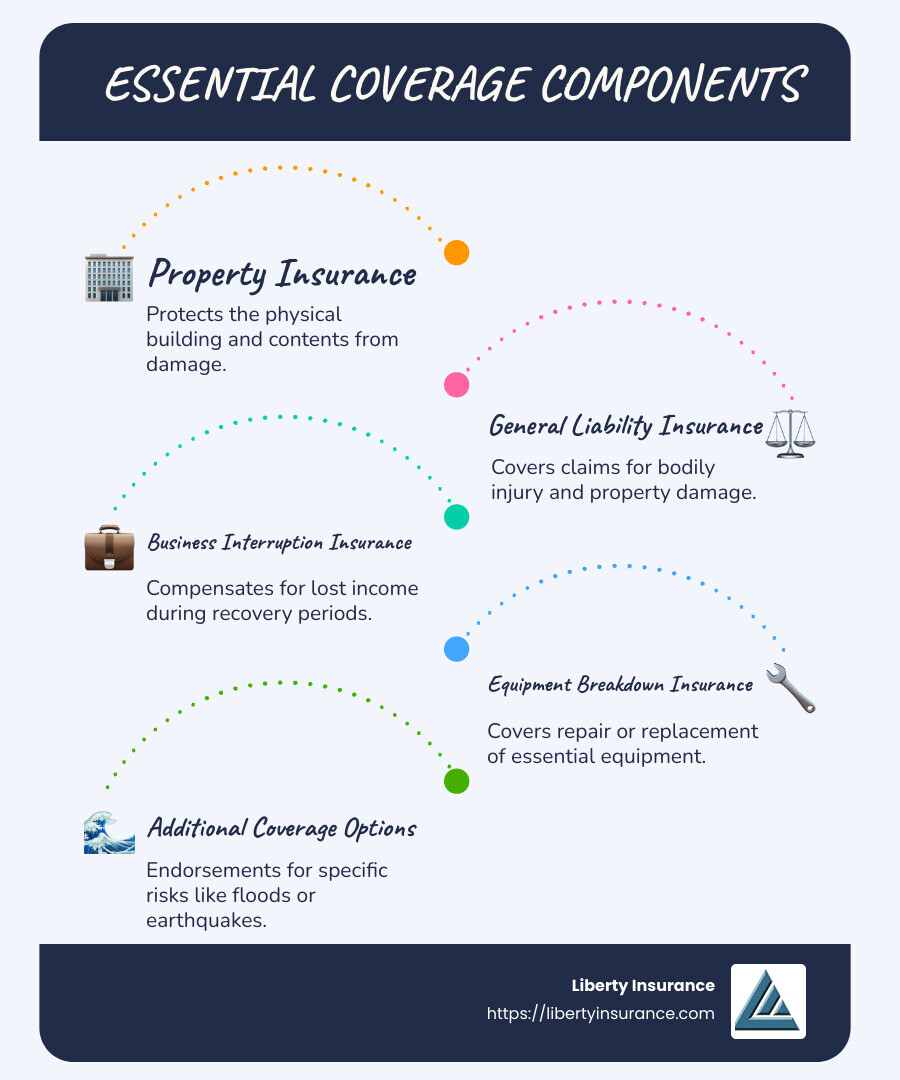
Commercial real estate insurance coverage is designed to protect your business’s physical assets—including leased or owned property, equipment, inventory, and exterior fixtures—from risks like fire, storms, theft, or vandalism.
Here’s a quick snapshot of what’s typically included:
- Building Coverage: Protection for structural damage to the property itself.
- Contents Coverage: Safeguards items like furniture, inventory, and office equipment.
- Business Interruption: Covers lost income and operating costs if your business is temporarily closed due to a covered event.
- Liability Protection: Defends against legal claims resulting from injuries or damages occurring on your premises.
Without proper coverage, even minor incidents—like a burst pipe or a break-in—can lead to major financial setbacks and disruptions.
I’m Andrew Harris, a Certified Insurance Counselor and Accredited Advisor in Insurance, with extensive experience providing commercial real estate insurance coverage solutions. Having served as PIA National’s Agent of the Year in 2020, I’m passionate about helping small business owners secure and protect their investments.
Now let’s dive deeper into exactly how this coverage works and what you need to know.
Commercial real estate insurance coverage terms simplified:
– business personal property insurance
– commercial property insurance business interruption
– types of business insurance
What is Commercial Rental Property Insurance?
When you own property that you rent to other businesses, you need more than just standard insurance. Commercial rental property insurance—sometimes called lessors risk or commercial landlord insurance—is specifically designed for people like you who lease commercial spaces to business tenants.
Think of it as a protective shield custom to the unique challenges you face as a commercial landlord. It’s not the same as the insurance you might have on your home or personal belongings—it’s more comprehensive because commercial properties face different risks and challenges.
Your commercial property isn’t just a building—it’s an income-generating asset and likely one of your biggest investments. And that investment has probably grown significantly in value, with commercial real estate values continuing to climb over the past two decades. That’s all the more reason to make sure it’s properly protected.
The Role of Commercial Real Estate Insurance Coverage
At its heart, commercial real estate insurance coverage is your financial safety net. It’s what stands between you and potential financial disaster when the unexpected happens—and in the property world, the unexpected does happen.
Consider this sobering fact: about 40% of small businesses will likely file an insurance claim in the next decade. Without proper coverage, just one incident—a fire, a major storm, or a liability lawsuit—could put your entire investment at risk.
But good commercial real estate insurance coverage does more than just protect the physical building. It takes a holistic approach to protecting your investment by:
- Covering the structure itself
- Protecting against liability claims
- Replacing lost rental income if your property becomes temporarily unusable
- Safeguarding exterior fixtures and other physical assets
Here at Liberty Insurance, we understand that New Jersey commercial properties face unique challenges—whether it’s coastal weather events affecting shore properties or urban risks in cities like Trenton, Princeton, and New Brunswick. That’s why we don’t believe in one-size-fits-all solutions. Our Business Insurance options are customizable to fit the specific needs of your commercial property, wherever it’s located.
We know your property is more than just bricks and mortar—it’s your livelihood. And we’re here to help make sure it stays protected, no matter what comes your way.
Key Coverage Components of Commercial Rental Property Insurance
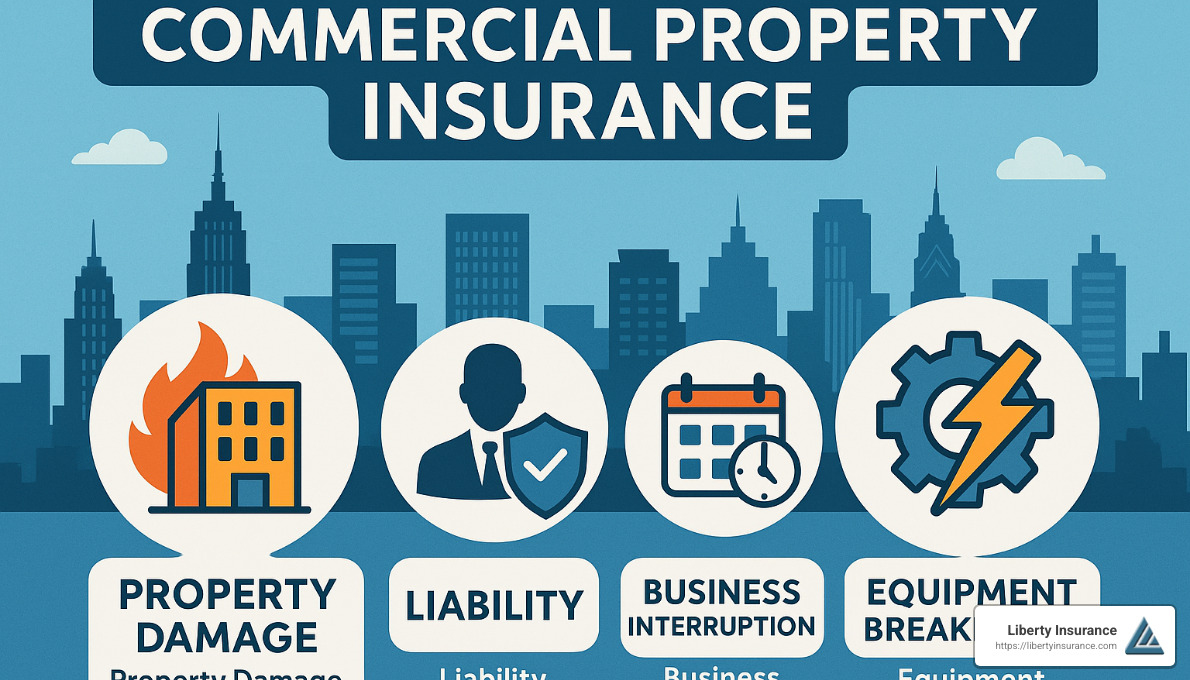
Commercial rental property insurance isn’t just one-size-fits-all. It’s made up of several important components designed to protect your investment and income stream. Understanding these essential coverage areas can help ensure your commercial property is fully shielded from unexpected setbacks. Let’s explore each one in a bit more detail.
Commercial Property Insurance Coverage
At the heart of your commercial real estate insurance coverage is property insurance. This provides protection for the actual physical property you own and rent out to tenants.
Building Coverage is the cornerstone here. Think of this as protection for the building itself—walls, roofs, floors, and essential systems like plumbing, electrical wiring, and HVAC. If a fire damages your building or a storm blows off part of your roof, building coverage steps in to help pay for repairs or rebuilding costs.
Then, there’s Contents Coverage, which protects items you, as the landlord, own inside the rental property. Tenants typically insure their own belongings and equipment, but landlords often have their own property on-site too. This might include furniture in common areas, maintenance equipment, or appliances provided to tenants. Contents coverage makes sure these items are protected if they’re damaged, stolen, or destroyed.
Don’t forget about your property’s exterior! Many landlords overlook valuable outdoor assets like signs, fences, landscaping, parking lots, or outdoor lighting. Fortunately, these are typically covered under your policy’s Exterior Fixtures protection.
A good rule of thumb to remember: if you flipped your property upside down and shook it (just imagine—don’t actually try this at home!), anything that falls out would generally fall under contents coverage, while the building itself and anything permanently attached would be under building coverage.
If you want to dive deeper into property protection, check out our Business Property Insurance page—we’ve got you covered.
General Liability Insurance for Landlords
General liability insurance is another critical piece of your commercial real estate insurance coverage. Imagine someone slips on an icy sidewalk outside your building or trips over a loose tile in the hallway. Liability insurance protects you in these scenarios, covering medical expenses, legal fees, and potential settlements if you’re held responsible.
It shields you against third-party claims for:
- Bodily Injury: If someone gets hurt in common areas you’re responsible for (think stairwells, lobbies, or parking lots), your insurance kicks in to handle medical costs and legal defense.
- Property Damage: Accidents happen—sometimes to someone else’s property. If you’re found at fault, your liability insurance can cover the damages.
- Legal Defense Costs: Even if a claim is baseless, going to court is expensive. Liability coverage ensures you can afford proper legal representation without draining your savings.
Tenants are typically responsible for their own premises, but landlords maintain responsibility for shared spaces. Still, injured parties often sue both landlord and tenant—so this coverage is absolutely vital.
Business Interruption Insurance
One of the most overlooked parts of commercial real estate insurance coverage is Business Interruption Insurance. Imagine a kitchen fire forces your tenants out temporarily, or storm damage makes part of your property unusable during repairs. While repairs are underway, you’re losing rental income—but your bills don’t take a break!
This coverage helps bridge that financial gap. If your property becomes unavailable due to a covered event, business interruption insurance steps in to replace lost rent. It can also help cover ongoing expenses like mortgage payments, property taxes, and utilities while you’re getting back on your feet.
Depending on your policy, coverage often lasts anywhere from 12 to 36 months, giving you plenty of breathing room to repair or rebuild. Without this coverage, even a minor disruption could cause serious financial headaches.
To learn more about how this crucial coverage works, visit our Business Interruption Insurance page.
By making sure your commercial rental insurance includes these three key areas—Property Coverage, General Liability, and Business Interruption—you can rest easy knowing your investment is protected, no matter what life throws your way.
Differences Between Commercial Rental Property Insurance and Other Property Insurance
Commercial rental property insurance and residential property insurance might seem similar at first glance, but they actually address very different risks and needs. Understanding these differences helps make sure you aren’t caught off guard when something unexpected happens.
First of all, commercial rental properties usually have higher property values, requiring specialized appraisals. Think about it—you’re not just insuring a cozy home, but an entire commercial building with multiple tenants and valuable equipment. By comparison, residential property values tend to be lower and typically follow more standardized valuation methods.
Another big difference is liability exposure. If you own a commercial property like a retail plaza or office building, you’ll naturally have more people coming and going. More foot traffic means increased liability risks—like slip-and-fall accidents or property damage involving visitors, customers, or multiple tenants. Residential properties usually have fewer visitors, resulting in lower liability risks.
Risk assessment for commercial properties is based on tenant business operations, occupancy types, and unique building features. For example, having a restaurant tenant can drive up your premiums due to higher risks of fire or water damage compared to an office tenant. Homeowners’ policies typically base risk assessment primarily on the building’s location, construction type, and age.
Commercial rental property insurance also covers a broader scope of risks. Beyond building and contents coverage, you often get specialized protection like business interruption coverage, which replaces lost rental income if tenants can’t occupy the building after damage from a covered event. There’s also equipment breakdown insurance covering things like HVAC systems or elevators, plus specialized endorsements to address unique needs. Residential policies, however, usually just focus on dwelling coverage and personal belongings.
As you’d probably guess by now, commercial policies often come with higher premiums because of these increased risks and broader coverage. Residential property insurance is generally more affordable, thanks to lower values and fewer complexities.
Even the claims process tends to differ. Commercial claims frequently involve verifying business income, assessing equipment damage, and handling multiple tenant issues, making the process a bit more complex. Residential claims, in contrast, usually involve simpler repair or replacement scenarios.
Here’s a handy table to quickly summarize some of these key differences:
| Feature | Commercial Rental Property Insurance | Residential Property Insurance |
|---|---|---|
| Property Valuation | Typically higher values, specialized appraisals | Lower values, standardized methods |
| Liability Exposure | Higher due to public access & multiple tenants | Limited mainly to visitors and occasional service providers |
| Risk Assessment | Based on business operations, occupancy types, building features | Primarily based on location and building characteristics |
| Coverage Scope | Includes business interruption, equipment breakdown, specialized endorsements | Dwelling coverage, personal belongings |
| Premium Costs | Higher due to increased risks and coverage limits | Generally more affordable |
| Claims Process | More complex, involving business valuation & income verification | Straightforward property replacement or repair |
Commercial properties also face unique considerations like occupancy-related risks. Different types of tenants can dramatically impact your coverage needs and premiums. A busy restaurant, for example, poses far different risks than a quiet accounting office. Additionally, commercial buildings must often meet stricter building code compliance requirements. If damage occurs, older buildings might need costly upgrades to meet current standards—which makes ordinance or law coverage particularly valuable.
Another factor unique to commercial properties is business liability exposure. With customers, vendors, and delivery personnel visiting regularly, liability coverage becomes especially important. And if you have multiple tenants, the complexities and potential risks multiply. Tenant disputes or differing business activities can significantly influence your level of risk.
At Liberty Insurance, we know the ins and outs of commercial real estate insurance coverage. We specialize in helping property owners across New Jersey steer these complexities, ensuring you get a policy custom specifically to your property’s unique needs and risks.
Factors Influencing the Cost of Commercial Real Estate Insurance Coverage
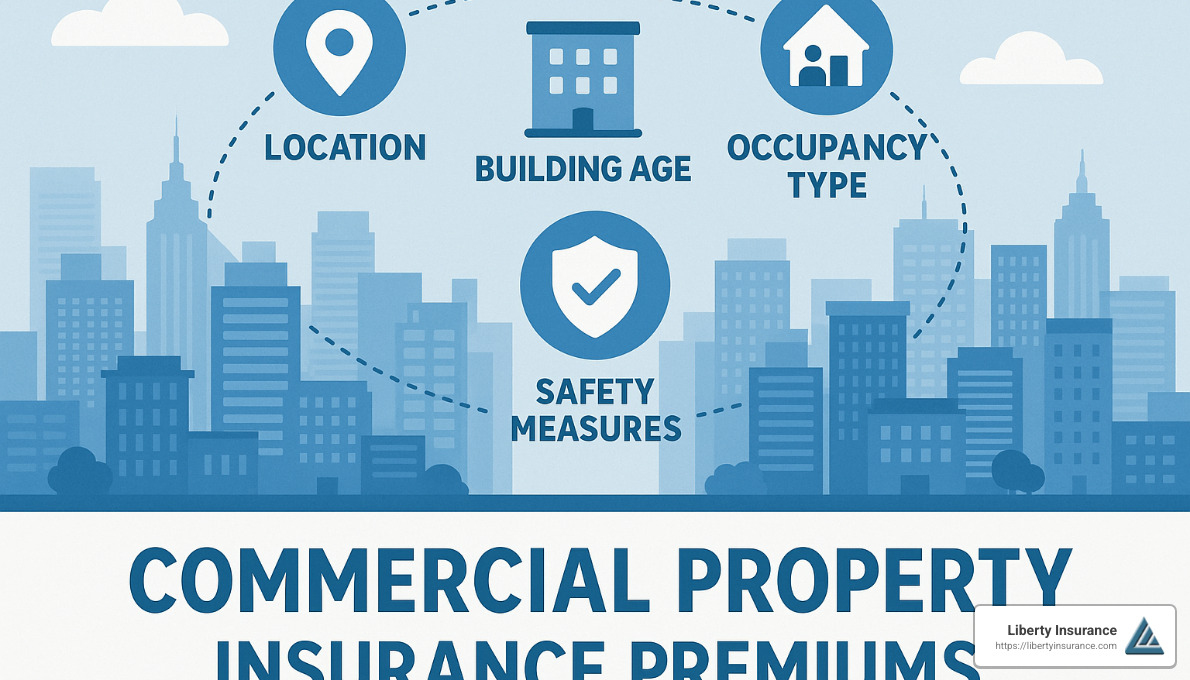
When it comes to commercial real estate insurance coverage, many property owners wonder why premiums can vary so widely. The truth is, insurance companies look at several factors to decide how much your policy will cost. Knowing what these factors are can help you better prepare and even find ways to lower your premiums without sacrificing essential protection.
Location Risks
Location, location, location! It’s not just important in real estate—it matters a lot to insurers too. If your property is located in an area with higher risks, like a coastline near Toms River prone to hurricanes, or flood-prone regions, your premiums will likely be higher. On the other hand, properties in places like Princeton or Millstone Township, which may face fewer natural disaster threats, typically enjoy lower premiums.
Crime rates in your area also matter. Properties in neighborhoods with higher theft, vandalism, or arson rates tend to cost more to insure. After all, insurers naturally assume a greater chance of claims happening there.
Building Age and Condition
Insurance companies also pay close attention to how old your building is and how well you’ve taken care of it. Older buildings often have outdated electrical systems or plumbing, and they may not meet current building codes. This makes them riskier—and more expensive—to insure.
On the flip side, if your property has undergone recent renovations, like updated roofing, electrical wiring, plumbing, or HVAC systems, insurers see it as safer. Keeping records of your upgrades and regular maintenance can often help lower your insurance costs. Showing your insurer you’re proactive about maintenance can even put some extra money back in your pocket!
Construction Materials and Building Codes
Did you know the type of materials used in your building’s construction affects insurance costs too? Buildings made of fire-resistant materials like concrete, brick, or steel are usually less expensive to insure because they’re less likely to suffer severe damage from certain risks like fire. Wooden structures, however charming they might look, often lead to higher premiums since they’re more vulnerable to hazards.
Building codes matter too. Older buildings may cost more to insure because they often require expensive upgrades to comply with modern codes after a claim. Consider adding ordinance or law coverage—an endorsement that can help cover those extra costs after damage occurs.
Occupancy Type
Who’s renting your property? Your tenants’ business types influence your insurance rates. For instance, a restaurant tenant poses higher risks of fires and water damage (think cooking equipment and kitchen plumbing!). That usually means higher premiums.
On the other hand, office tenants tend to be lower-risk, so renting to professional offices or similar businesses may help reduce your insurance bills. Be mindful of who moves in—it can make a surprising difference.
Safety and Security Features
Here’s some good news: insurance companies love property owners who take safety seriously. Adding features such as fire sprinklers, smoke detectors, burglar alarms, security cameras, or even storm shutters in hurricane-prone areas can get you some nice premium discounts.
These safety measures not only protect your property and tenants—they also signal to your insurer that you’re committed to reducing risks. It’s a win-win scenario!
Claims History
Finally, your claims history matters a great deal. If you’ve experienced multiple claims in recent years, insurers may see your property as higher risk, which usually means you’ll pay higher premiums. In some cases, a particularly rough claims history could even make it difficult to find coverage in the standard insurance market.
Keeping your property well-maintained, proactively addressing issues before they turn into claims, and adopting risk-mitigation strategies can help you maintain a favorable claims history—and a friendlier premium.
For more insights into what drives commercial property insurance costs, take a look at this helpful resource: 6 Forces Driving Commercial Property Insurance Costs.
By understanding what factors influence your commercial real estate insurance coverage costs, you can take proactive steps to safeguard your assets while keeping insurance affordable. At Liberty Insurance, we’re always ready to help you find the right balance of coverage and cost.
Common Exclusions and How to Address Them
Even the most comprehensive commercial real estate insurance coverage doesn’t cover everything—every policy has exclusions. Knowing what isn’t covered can help you close gaps and feel confident you’ve got the right protection in place.
Let’s explore some common exclusions and how you can address them effectively.
Natural Disasters Exclusions
Mother Nature is unpredictable—and expensive. Standard policies usually don’t cover major natural disasters, such as floods, earthquakes, or hurricanes.
Floods are one of the most common—and costly—exclusions. Commercial properties in New Jersey, especially those in coastal areas like Toms River, should seriously consider separate flood insurance. You can get flood coverage through the National Flood Insurance Program (NFIP) or private insurance providers.
Earthquakes might not spring to mind when thinking of New Jersey, but they’re still typically excluded from standard commercial property policies. If you’re in a region with even minimal seismic risk, adding earthquake coverage as an endorsement or standalone policy can be well worth it.
Wind and hurricane damage is another tricky exclusion, particularly near coastlines. In many cases, standard policies will either exclude windstorm coverage or impose a higher deductible. To fill this gap, consider adding a wind deductible buy-down policy to reduce your financial risk.
And don’t underestimate the risk—natural disasters lead to nearly $80 billion in insured losses each year! It’s always better to be safe than sorry, especially when protecting a significant investment like commercial real estate.
Wear and Tear
Insurance isn’t there to replace routine maintenance and upkeep—it’s meant for sudden, accidental damage. Gradual issues like wear and tear or maintenance-related damages aren’t covered. Your coverage won’t pay for problems caused by neglect or simple deterioration over time.
The solution here is straightforward: invest in regular maintenance, inspections, and upkeep of your property. Keep detailed records of repairs and improvements, demonstrating you’ve done everything you can to take good care of your property. Proactive maintenance saves you money in the long run (and keeps your insurance coverage happy).
Intentional Acts
This one’s pretty logical—insurance won’t cover damage you cause intentionally. Unfortunately, deliberate tenant vandalism or malicious property damage by others might also be excluded by certain policies. Review your policy closely to see what’s included, and speak with your insurance broker about adding protection specifically against tenant-related vandalism or deliberate damages if it’s a concern.
Endorsements and Additional Coverage Options
Thankfully, insurance isn’t a one-size-fits-all solution. You can typically add endorsements—extra coverages—to fill in protection gaps. Here are a couple of important ones to consider:
Equipment Breakdown Coverage: Often called boiler and machinery insurance, this protects you from sudden breakdown of critical systems like HVAC units, electrical components, elevators, boilers, and even computer systems. It’s especially valuable for older buildings or those with complex mechanical equipment. You can imagine how quickly costs add up when key equipment suddenly stops working—this coverage gives you peace of mind.
Ordinance or Law Coverage: Building codes change over time, and sometimes after a damaging event, you’re required to rebuild to meet current code, not just restore the building exactly as it was. Standard policies usually won’t cover the extra costs of these upgrades. Ordinance or law coverage fills this critical gap, helping pay for costs like demolishing undamaged parts of the building or constructing new features to comply with updated regulations.
If fire risks are a concern, you might also consider our specialized Commercial Fire Damage Insurance to protect your property further.
Taking the time to understand these common exclusions and proactively adding endorsements or additional policies is the smartest way to ensure your investment stays protected. After all, it’s better to plug these gaps now than find them after disaster strikes!
Determining the Right Level of Commercial Real Estate Insurance Coverage
Choosing the right amount of commercial real estate insurance coverage can feel a bit like Goldilocks and her porridge—it needs to be just right. Too little coverage leaves you open to serious financial headaches if something goes wrong. Too much coverage, and you’re throwing away money on premiums you don’t really need.
So, how do you find that sweet spot?
Property Valuation Methods
First, you need to know exactly how much your property is worth. Sounds simple, right? But there are actually a few different ways to value your property, and knowing the difference can save you big time.
The most common and recommended method is Replacement Cost Value (RCV). This means your insurance will cover the amount it costs to rebuild or repair your property using materials of similar kind and quality—at today’s prices. With RCV, depreciation doesn’t factor in, which usually means smoother sailing when you have a claim.
Then there’s Actual Cash Value (ACV), which factors in depreciation. It pays out based on what your property was worth right before the damage happened—not necessarily what it would cost to replace it new. While ACV policies usually have lower premiums, they can leave you digging deep into your pockets after a claim. As we like to say in the insurance world, choosing ACV is like buying a 20-year-old car: cheaper upfront, but potentially costlier down the road.
A third option, Functional Replacement Cost, is suited for older buildings that contain unique architectural elements that would cost a fortune to replace exactly. This coverage lets you use less expensive but functionally equivalent materials instead.
Which is best? Most experts strongly recommend Replacement Cost Value coverage. As one experienced broker once wisely said, “Always ask for full replacement cost. The slight premium increase is usually well worth the security.”
Coinsurance Clauses
Another important insurance term to understand is the coinsurance clause. It may sound intimidating, but don’t worry—we’ll simplify it.
Basically, your insurer wants you to insure your building at (usually) 80%, 90%, or sometimes even 100% of its actual replacement cost. If you don’t meet this requirement and end up filing a claim, you could face a pretty unpleasant surprise: you’ll only receive partial reimbursement.
Imagine your property has a replacement cost of $1,000,000, and there’s an 80% coinsurance clause. That means your coverage should be at least $800,000. But what if you only insured it for $400,000, half of the required amount? In the event of a $200,000 claim, the insurer would only pay you $100,000—exactly half. Ouch.
To avoid these nasty surprises down the line, always double-check that you’re meeting any coinsurance requirements. You can also look into endorsements like “Agreed Value,” which waive the coinsurance requirement altogether (a nice little safety net!).
Conducting Property Appraisals
The best way to get the right amount of coverage—and avoid nasty coinsurance penalties—is to have a professional appraisal. Getting an appraisal costs a bit upfront, but it’s well worth it when it comes to protecting your investment.
We typically recommend getting a fresh appraisal whenever you:
- First buy insurance for your property
- Perform major renovations or additions
- Notice construction costs rising sharply or changing significantly in your area (this can happen faster than you might think!)
- Or every 3 to 5 years, just to be safe
Think of appraisals as regular checkups for your building—they keep you informed of its true value and help ensure you’re always covered.
At Liberty Insurance, we’re here to make this whole process easy and stress-free. Whether your property is in Trenton, Princeton, New Brunswick, or anywhere else around New Jersey, our team will help you determine exactly how much commercial real estate insurance coverage you need. The goal is simple: protect your property (and your wallet!) without any guesswork.
Benefits of Working with an Experienced Insurance Broker
Navigating the ins and outs of commercial real estate insurance coverage isn’t exactly everyone’s idea of a fun afternoon (unless you’re an insurance broker, of course!). It can get complicated pretty quickly, with lots of fine print, policy jargon, and potential pitfalls. But here’s the good news: you don’t have to figure it all out on your own. Partnering with an experienced insurance broker can make your life a whole lot easier—and maybe even save you a few headaches along the way!
“An experienced broker can guide you through choosing the right coverage for your unique property risks. They not only help you find the right policy but also become a valuable partner in managing your overall risk strategy.” – Industry Insurance Expert
One of the greatest benefits of working with an experienced broker is their expertise in assessing risks. They’ve seen it all, from burst pipes and fire damage to tenant-related liability issues. A seasoned broker will take the time to thoroughly understand your property and pinpoint potential exposures you might not even realize exist. They’ll look closely at your property’s location, construction type, and tenant mix to determine exactly what coverage makes sense for you. Plus, they’ll walk you through policy language—so you’ll actually know what you’re signing up for.
Another advantage of working with a knowledgeable broker is their ability to come up with custom coverage solutions. No two commercial properties are exactly alike, and your coverage shouldn’t be, either. Rather than giving you a cookie-cutter policy, an experienced broker can tailor your coverage precisely to your needs. They’ll help you select the right endorsements to fill gaps in coverage, structure your policy to balance protection and premium costs, and bundle various coverages into one convenient, cost-effective package.
Beyond just selecting your policy, brokers are invaluable in helping you steer policy complexities. Did you know your policy might include something called a “coinsurance clause” that can impact how claims get paid? Or that some types of property damage—like floods or earthquakes—typically aren’t covered by a standard commercial policy? Your broker knows these ins and outs backward and forward. They’ll explain how these clauses work, point out potential exclusions, and recommend additional coverages or endorsements to make sure you’re adequately protected.
A great broker won’t just set you up with a policy and then disappear into thin air. They’ll provide ongoing support and advocacy, standing by your side through thick and thin (or claims and renewals, whichever comes first!). Regular policy reviews are part of their dedication to making sure your coverage stays current as your property evolves or construction costs change. And if you ever have a claim? Your broker will act as your advocate, helping you through the process and making sure you get fair treatment.
An experienced broker also keeps you in the loop about insurance market trends and emerging risks. Whether it’s rising premiums due to weather events (like those chronicled by NOAA’s Billion-Dollar Weather and Climate Disasters) or changes in local building codes, they’ll ensure you’re never caught by surprise. Better yet, they’ll help you implement smart risk management strategies—like installing security alarms or updating your property’s electrical systems—to potentially lower premiums.
At Liberty Insurance, our brokers are passionate about what they do. We proudly serve commercial property owners across New Jersey, from Millstone Township and Trenton to Toms River, New Brunswick, and Princeton. We believe in forming long-term relationships built on trust, personalized service, and a genuine desire to help protect your valuable investment.
Because let’s face it—there are plenty of things you’d rather be doing than reading insurance policies. Leave the complexities to us, so you can get back to running your business (or enjoying your afternoon).
Impact of Location and Environmental Risks on Commercial Real Estate Insurance Coverage
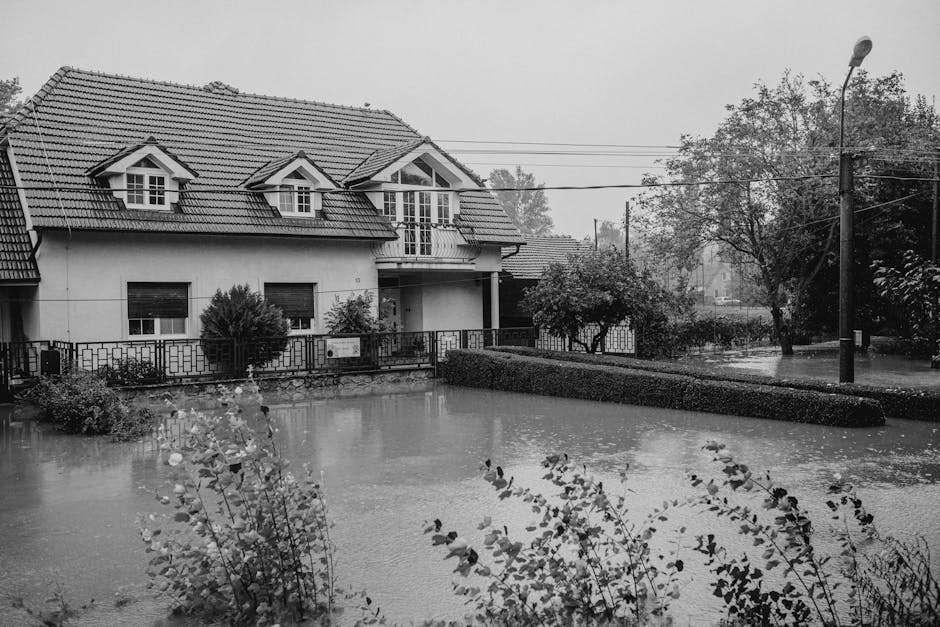
When it comes to commercial real estate insurance coverage, your property’s location plays a starring role. Just like in real estate, it’s all about location, location, location—but in insurance terms, location means managing the unique risks tied to your area, from Mother Nature’s curveballs to neighborhood safety concerns.
Natural Disaster-Prone Areas
If your commercial property is located near the lovely shores in spots like Toms River, NJ, you know all too well that ocean views come with extra precautions. Properties along the coast often face higher risks due to hurricanes, strong winds, and storm surges. Standard insurance policies typically exclude flood damage, so coastal property owners usually need separate flood insurance policies. Additionally, windstorm deductibles in these areas are often set higher, meaning you shoulder more of the initial costs before your insurance kicks in.
But it’s not just coastal properties. Inland flood zones can cause headaches too—even a single inch of water in your commercial property can cost up to $25,000 in damages. So if your property sits in a flood-prone area, separate flood coverage is essential.
And while earthquakes might not be very common around New Jersey (thankfully!), some areas do have slightly lifted risks. Standard commercial property policies exclude earthquake damage, which is why property owners in these pockets often opt for additional earthquake coverage.
In many recent years, billions of dollars in property damage from severe weather events have continued to set records. Curious about these trends? Check out NOAA’s Billion-Dollar Weather and Climate Disasters resource for eye-opening data.
Crime Rates and Security Concerns
Let’s face it, no neighborhood is perfect, but some locations do present higher crime risks. If your property is located in an area like the busy urban centers of Trenton or New Brunswick, crime rates—particularly theft, vandalism, and even arson—can lead to higher insurance costs.
But don’t worry! Taking proactive steps such as installing security cameras, alarm systems, and controlled access points can actually lower those premiums. Plus, it gives you peace of mind knowing your investment is safer.
Additionally, properties located closer to fire stations and fire hydrants typically enjoy lower premiums. That’s insurance speak for: quick access to emergency services is a very good thing.
Environmental Hazards
Beyond crime and natural disasters, consider environmental factors tied to your location. Properties near industrial sites could be at higher risk for pollution-related claims. Issues like soil contamination from prior businesses on your property’s land, or concerns about water quality and potential contamination, can also affect your insurance coverage.
These environmental hazards aren’t generally covered by standard commercial property policies, meaning you might need additional specialized coverage to safeguard your investment—especially if your neighboring businesses include factories or fuel storage facilities.
Influence on Premiums and Coverage Availability
These location-based factors don’t just impact your premiums but can also determine the availability and scope of your coverage. In high-risk areas, you might find fewer insurance carriers willing to take on your property. Or, you may encounter coverage exclusions, higher deductibles, and requirements to implement additional risk mitigation measures.
At Liberty Insurance, we know every property (and every location!) is unique. Whether you’re in Millstone Township, Princeton, or along the shore in Toms River, we understand the specific location-based risks that affect commercial real estate owners throughout New Jersey. Our team of experienced specialists is here to help you steer these complexities, ensuring your property receives exactly the right amount of commercial real estate insurance coverage to keep your investment safe and secure.
Best Practices for Maintaining and Updating Your Policy
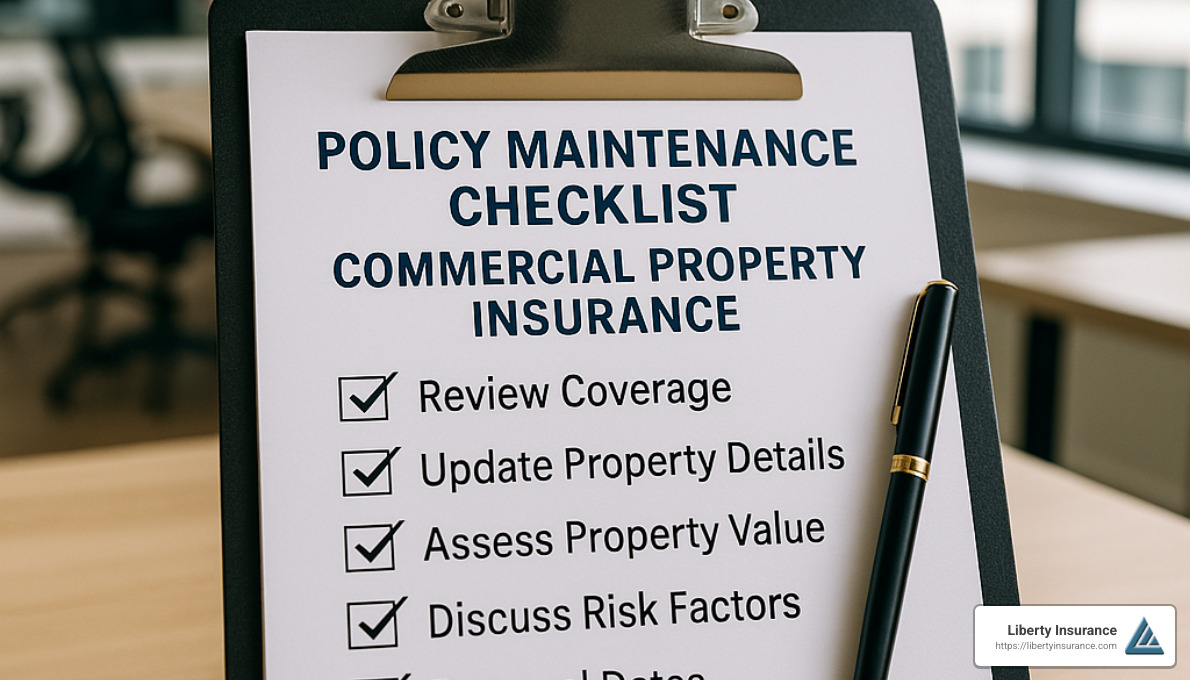
Keeping your commercial real estate insurance coverage updated and relevant isn’t just smart—it’s essential. Think of it like visiting your doctor for a yearly checkup. Nobody loves paperwork (or doctors, really), but a little attention now can save you from headaches later.
Here’s how to ensure your policy stays in tip-top shape as your business grows and evolves.
Regular Policy Reviews
You wouldn’t buy a car and never get it serviced, right? Your insurance policy deserves the same care. We recommend giving it a thorough review at least once a year—ideally as your renewal approaches.
But don’t stop there. If you’ve completed any substantial renovations, welcomed new tenants, changed how the building is used, expanded your property portfolio, or experienced any claims, it’s time for another look.
During these reviews, pay special attention to your coverage limits. With construction costs soaring nearly 45% in the past decade—plus recent supply chain hiccups driving up rebuilding expenses—it’s crucial to ensure your coverage keeps pace. Regular checks also help you catch potential gaps, reconsider deductibles, and confirm all endorsements are still relevant to your current situation.
Updating Coverage Limits
Imagine trying to rebuild your property after damage and realizing your coverage doesn’t match today’s costs. Not fun! Updating your coverage limits regularly prevents that stress.
To keep your coverage accurate, consider adding an inflation guard endorsement. This handy feature automatically bumps your limits up each year to match rising building costs. Professional appraisals every few years can also ensure your property’s valuation stays in line with market realities. Additionally, review your business interruption coverage regularly to match your current rental income and operating expenses.
Notifying Your Insurer of Property Changes
Insurance companies don’t like surprises—and honestly, neither do you when it comes to coverage. Anytime you make significant changes to your property, let your insurer know right away. This includes major renovations, newly installed systems like HVAC or security, shifts in tenant occupancy, or adding new exterior features like fences or signage.
Keeping your insurer in the loop not only prevents nasty coverage gaps, but it might even save you money. Many property improvements and safety upgrades can qualify for premium discounts, which means more money back in your wallet.
Documentation
Think of documentation as your insurance “receipt drawer.” You might never need those receipts—but if you do, you’ll be glad you saved them! Keep thorough records of all property improvements, including costs, receipts, and photos. Document landlord-owned items like maintenance equipment or furnishings, and keep track of your safety systems’ installation certificates.
Maintenance records are also invaluable—showing insurers you’ve proactively taken care of your building could lead to lower premiums. Plus, if you ever need to file a claim, these records can streamline the process, making recovery quicker and less stressful.
Regularly updating your commercial real estate insurance coverage may not be the most exciting task on your to-do list, but it’s definitely one of the most important. At Liberty Insurance, we’re here to make that process easy and stress-free for property owners across New Jersey—from Trenton and Princeton, to Toms River and beyond. Let us help you ensure your protection always matches your property’s changing needs.
Risk Mitigation Strategies to Lower Your Premiums
When it comes to commercial real estate insurance coverage, the old saying rings true: an ounce of prevention is worth a pound of cure. Proactively managing risks doesn’t just protect your property—it could also help you score significant savings on your insurance premiums. Insurance companies love property owners who stay ahead of potential problems, and they’re often willing to reward those efforts with lower rates and improved coverage terms.
Let’s look at some practical, effective risk mitigation strategies you can put into action to safeguard your investment—and your wallet.
Implementing Safety Measures
Prioritizing safety can yield real returns—not just lower premiums, but fewer headaches down the road. Start by investing in robust fire protection systems, such as automatic sprinklers, carefully placed and regularly checked fire extinguishers, and monitored fire alarms that alert emergency services automatically. Small upgrades like compartmentalizing areas to slow fire spread can make a huge difference if disaster strikes.
Don’t underestimate the havoc water damage can wreak (trust us—nobody enjoys a surprise indoor swimming pool). Consider adding water leak detectors, performing regular plumbing inspections, and ensuring proper drainage around your building. Also, keep that roof in tip-top shape—regular roof maintenance can prevent leaks and costly repairs.
Structural improvements matter too. Strengthening your roof to handle high winds, upgrading electrical systems, sealing building exteriors against harsh weather, and promptly addressing any overdue maintenance tasks keeps your property safer and insurers happier.
Installing Security Systems
Security isn’t just about deterring burglars—it’s about creating a safe environment for tenants and visitors. Installing a quality video surveillance system and secure access control can significantly reduce risks like theft, vandalism, or liability claims. Well-lit parking areas and entryways are simple yet impactful safety improvements. If your property is in a higher-risk area, adding security personnel or around-the-clock monitoring could pay off with reduced premiums and added peace of mind (plus tenants appreciate feeling safe!).
Risk Management Plans
Having a formal risk management plan shows insurers you’re serious about safety and preparedness. Develop clear emergency response plans, distribute evacuation procedures to tenants, and regularly run emergency drills (hey, practice makes perfect!). Clearly outlined communication protocols and designated emergency coordinators can ensure everyone knows exactly what to do if something unexpected happens.
Also, engaging your tenants in risk management makes a big difference. Educate them about proper use and maintenance of building systems, set clear guidelines for prohibited activities, and ask them to include you on their liability policies. After all, teamwork makes the dream work.
Regular property inspections—either conducted in-house or by third-party professionals—can identify small issues before they become expensive problems. Keep detailed maintenance records too, since insurers love documentation (seriously, they can’t resist a paper trail).
Disaster Preparedness
Preparing for worst-case scenarios isn’t fun—but it sure beats scrambling when trouble hits. Creating specific disaster response protocols custom to your property’s risks (floods, hurricanes, fires—oh my!) helps your entire property management team and tenants feel prepared. Stock emergency supplies onsite and establish relationships with local restoration contractors before you actually need them.
And don’t forget business continuity. A solid continuity plan keeps your business running as smoothly as possible after an incident. It also shows insurers you’re serious about minimizing downtime, which can lead to lower insurance costs.
At Liberty Insurance, we’re passionate about helping property owners across New Jersey—from Princeton and Toms River to Trenton, Millstone Township, and New Brunswick—develop custom risk mitigation strategies. Because when you take proactive steps to protect your property, you’re truly investing in your future.
Frequently Asked Questions about Commercial Real Estate Insurance Coverage
Is Commercial Property Insurance Legally Required?
Unlike auto insurance, you won’t find laws mandating commercial property insurance at the federal or state level. However, in practice, it often becomes a requirement through other channels.
If you have a mortgage on your commercial property, your lender will almost certainly require adequate insurance coverage as part of your loan agreement. They’re protecting their investment, and so should you.
Similarly, commercial lease agreements typically spell out insurance requirements for both tenants and landlords. As the property owner, you’ll usually be responsible for insuring the building structure itself.
Many business relationships also create de facto requirements. Contracts with vendors, clients, or business partners frequently include insurance clauses as a condition of doing business together.
Even without these external requirements, operating without commercial real estate insurance coverage puts your entire investment at risk. As one property investment expert puts it: “Commercial property insurance isn’t just checking a box for regulations—it’s a fundamental component of protecting your long-term investment strategy.”
How Can I Reduce My Risk Exposure to Lower Premiums?
Insurance premiums reflect your property’s risk profile, which means you have more control over your costs than you might think. Here are some effective strategies to potentially lower your premiums while maintaining solid protection:
Consider accepting higher deductibles. This simple change can significantly reduce your premium costs, sometimes by 15-25%. Just make sure you have the financial resources to cover that higher out-of-pocket amount if a claim occurs.
Bundling multiple policies with the same insurer often leads to substantial discounts. If you have general liability, commercial auto, or other business coverages, ask about multi-policy discounts—these typically range from 5-10% off your total premium costs.
Safety investments often pay for themselves through premium savings. Modern fire protection systems, security measures like monitored alarms, and weather-resistant building features not only protect your property but can qualify you for meaningful discounts.
Detailed documentation matters more than you might think. Keep organized records of all building improvements, safety feature installations, and regular maintenance activities. These records demonstrate your commitment to risk management and can support your case for lower premiums.
Tenant selection impacts your insurance costs too. Tenants with lower-risk operations (like professional offices) typically result in lower insurance rates than high-risk tenants (like restaurants or manufacturers).
Regular building updates to electrical, plumbing, roofing, and HVAC systems reduce claim likelihood and can translate to premium savings. Many insurers offer specific discounts for properties with recently updated systems.
As one of our risk management specialists often advises clients: “It’s smarter to increase your deductible than to underinsure your property.” This approach maintains comprehensive protection while potentially reducing your premium costs.
What Does Commercial Real Estate Insurance Cover?
At its core, commercial real estate insurance coverage protects your investment from a wide range of potential losses. Here’s what you can typically expect your policy to cover:
Your building’s physical structure receives primary protection—this includes walls, roof, foundation, and permanently installed fixtures and equipment. If a covered peril damages these elements, your policy helps pay for repairs or rebuilding.
Business personal property owned by you as the landlord is also protected. This includes maintenance equipment, furnishings in common areas, and other contents you use to service the building.
Liability protection is a crucial component that covers legal and medical expenses if someone is injured on your property. This coverage applies primarily to common areas you control as the landlord.
When disaster strikes and renders your property temporarily uninhabitable, loss of rental income coverage becomes invaluable. This protection replaces lost rent while your property is being repaired after a covered loss.
Additional structures on your property, like storage buildings, garages, or fencing, typically receive protection under the same policy.
Ordinance or law coverage addresses the increased costs of rebuilding to current code requirements after a covered loss—particularly important for older buildings that may need significant upgrades to meet modern building codes.
Standard policies typically protect against perils like fire, lightning, explosion, windstorm, hail, smoke, vandalism, and theft. However, they generally exclude floods, earthquakes, normal wear and tear, and intentional damage. For these excluded perils, you’ll need additional specialized coverage.
The specific protection provided depends on your policy form (basic, broad, or special/all-risk) and any additional endorsements added to customize your coverage.
At Liberty Insurance, we help commercial property owners throughout New Jersey understand their options and build protection packages that address their unique risks. We believe in creating coverage that fits your specific property rather than forcing your needs into one-size-fits-all solutions.
Conclusion
Securing the right commercial real estate insurance coverage isn’t just another box to check off your to-do list. It’s about protecting what might be one of the biggest investments you’ll ever make. Think about it – your commercial property represents not just a building, but a source of income, a business asset, and often, a significant portion of your financial future.
Throughout this guide, we’ve seen how commercial property owners face a unique set of challenges. Your building could be damaged by fire, your parking lot could be the site of a slip-and-fall accident, or a major storm could leave your property temporarily unusable. Each of these scenarios presents a financial risk that could seriously impact your bottom line.
The numbers tell a compelling story. Natural disasters now cause nearly $80 billion in insured losses each year. And industry data shows that about 40% of small businesses will likely file an insurance claim in the next decade. These aren’t just statistics – they represent real business owners facing real challenges.
When it comes to protecting your commercial real estate investment, remember these important points:
Your coverage should be as unique as your property. The insurance that works for an office building in Princeton might not be right for a retail space in Toms River. Commercial real estate insurance coverage needs to be custom to your specific location, building type, tenant mix, and risk tolerance. One-size-fits-all solutions simply don’t work in this space.
Your insurance needs will change over time. As your property appreciates in value, as building codes evolve, and as your tenant profile shifts, your coverage needs to keep pace. Making insurance reviews part of your annual business planning helps ensure you’re never caught underprotected when disaster strikes.
Being proactive about risk pays off in multiple ways. Those security cameras you installed? The updated sprinkler system? The new storm shutters? They’re not just protecting your property – they’re likely reducing your insurance premiums too. Smart risk management creates a virtuous cycle of better protection and lower costs.
Having an expert in your corner makes all the difference. The world of commercial property insurance can be complex, with specialized terminology and nuanced coverage options. Working with professionals who understand both insurance and real estate helps ensure you’re making informed decisions about your coverage.
At Liberty Insurance, we’ve been helping property owners throughout New Jersey protect their investments for years. From Millstone Township to Trenton, from Toms River to New Brunswick and Princeton, we understand the unique challenges facing commercial property owners in our communities.
We invite you to explore our Business Property Insurance options and reach out to our team. We’d love to help you develop an insurance strategy that not only protects your commercial real estate investment but gives you the peace of mind to focus on what matters most – growing your business and building your future.
After all, the right insurance coverage doesn’t just protect your property – it protects your dreams and ambitions too.

