
Why Your Business Equipment Needs Specialized Protection
Insurance for commercial equipment protects your business’s movable assets—from construction machinery to medical devices—against theft, damage, and loss both on-site and in transit. This specialized coverage fills critical gaps left by standard commercial property insurance, which typically only covers equipment at your primary business location.
When a cargo trailer storing thousands of dollars in contractor tools gets stolen overnight, or when a power surge damages your restaurant’s computer systems, the right coverage means the difference between a minor setback and a business-threatening crisis. Without it, you’re forced to fund replacements out-of-pocket, drain cash reserves, or take on unexpected debt, all while your operations are at a standstill.
Quick Overview: Insurance for Commercial Equipment
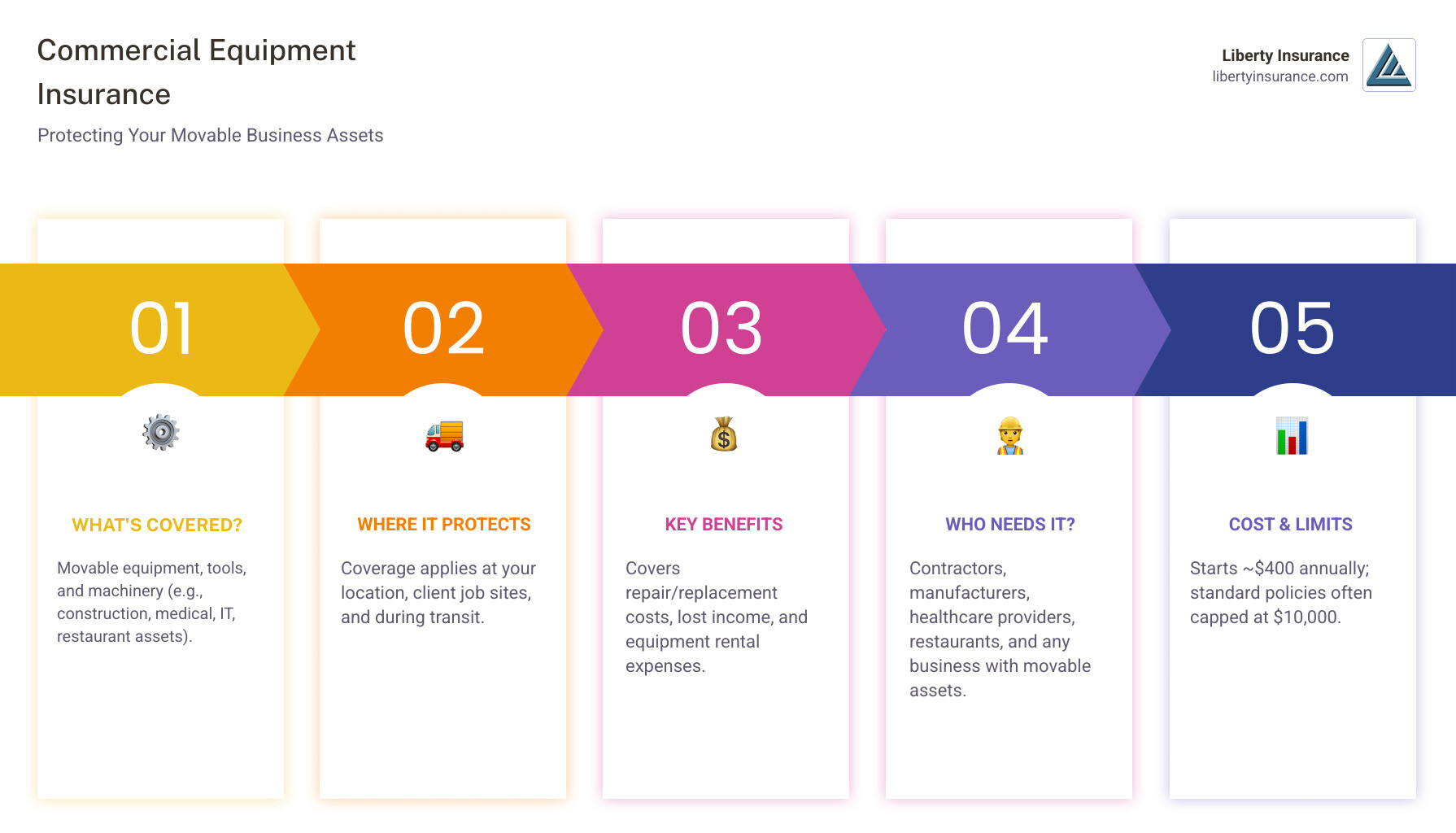
- What it covers: Movable business equipment, tools, and machinery
- Where it protects: At your location, job sites, and during transport
- Key benefits: Repair/replacement costs, lost income, rental expenses
- Who needs it: Contractors, manufacturers, healthcare providers, restaurants
- Cost: Starting around $400 annually for basic coverage
- Coverage limits: Often capped at $10,000 for standard policies
Recent research shows that 55% of companies experienced economic crime in a 24-month period, highlighting the growing risks to business assets. Whether you’re an electrician whose tools were stolen from a construction site, or a medical practice whose diagnostic equipment was damaged during transport, equipment insurance provides the financial safety net your business needs.
I’m Andrew Harris, a Certified Insurance Counselor (CIC) and Accredited Advisor in Insurance (AAI). With over a decade of experience, I’ve helped countless contractors, manufacturers, and service businesses protect their most valuable assets. My goal is to show you how the right insurance for commercial equipment can prevent equipment losses from becoming business disasters.
What Commercial Equipment Insurance Covers (and What It Doesn’t)
Insurance for commercial equipment is a specialized form of property coverage, often structured as inland marine insurance, designed to protect your movable business assets. Unlike standard property insurance tied to a specific address, this protection “floats” with your equipment wherever it goes—whether at your primary location, in transit, or at a client’s job site.
What Types of Equipment Are Typically Covered?
This insurance is versatile and can be customized to cover virtually any movable business asset essential to your operations. Examples include:
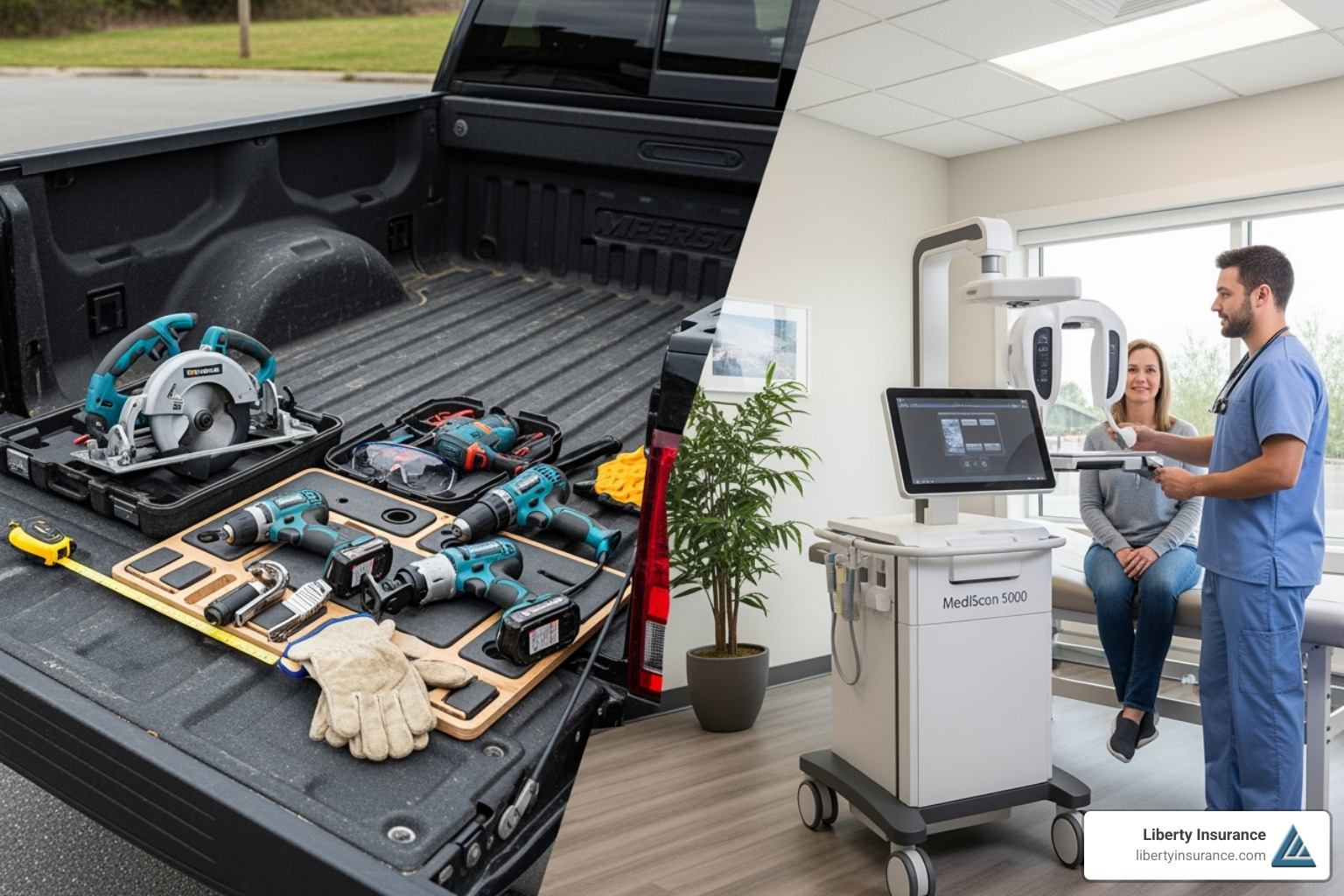
- Construction and contracting: Heavy machinery like backhoes, excavators, bulldozers, and cranes, as well as compressors, generators, and specialized drills.
- Manufacturing: CNC machines, 3D printers, lathes, and other production line machinery. When your business revolves around custom-built equipment, this protection is critical. More on Insurance for Manufacturing Equipment.
- Medical and dental: Expensive and sensitive equipment like diagnostic tools, X-ray machines, dental chairs, and mobile medical scanners.
- IT and office: High-end servers, computer networks, specialized printers, and other valuable electronics that employees may transport between locations.
- Restaurant and retail: Commercial ovens, refrigeration units, point-of-sale (POS) systems, and entire food trucks.
- Other industries: Landscaping equipment (chippers, stump grinders), broadcasting gear (cameras, sound equipment, lighting rigs), event production companies (staging, audio-visual gear), and specialized transportation trailers.
Key Perils and Protections
A comprehensive policy acts as a financial safety net, protecting your equipment from unexpected events. The goal is to get you back to work as quickly as possible.
- Theft and vandalism: Covers equipment stolen from job sites, trailers, or storage units.
- Fire, floods, and natural disasters: Protects against damage from external events like wildfires, floods, or windstorms.
- Accidental damage: Covers mishaps like equipment being dropped, sliding off a transport trailer, or falling from a height.
- Transit damage: Protects your equipment from damage that occurs while it’s being transported between locations.
- Financial reimbursement: Covers repair or replacement costs according to your policy’s valuation terms (ACV or RCV). Comprehensive policies may also include business continuity benefits, which help cover lost income and extra expenses (like renting temporary equipment) while your primary equipment is out of commission. Learn about Business Interruption Insurance.
Common Policy Exclusions to Be Aware Of
Understanding what’s not covered is just as important as knowing what is. These exclusions help keep premiums reasonable by omitting predictable issues.
- General wear and tear: Insurance protects against unexpected events, not the natural aging process. Rust, corrosion, and deterioration from lack of maintenance are considered normal business expenses.
- Internal malfunctions: A standard policy typically won’t cover a motor burning out, an electronic failure due to age, or damage from a power surge. These situations require separate Equipment Breakdown Insurance.
- Stationary equipment: Items permanently installed in your building, like HVAC systems or machinery bolted to the floor, usually fall under your commercial property policy.
- Licensed vehicles: The work truck itself needs its own Commercial Auto Insurance, though the tools inside it can be covered by an equipment policy.
- Data and software: The valuable information on your hard drives and the software that runs your business require specialized Cyber Risk Insurance.
- Intentional damage: Deliberate destruction or damage resulting from gross negligence is excluded.
Equipment Insurance vs. Other Business Policies
Navigating business insurance can be confusing, as some coverages seem to overlap. Understanding the distinct purpose of each policy is key to avoiding costly gaps in your protection. Many business owners mistakenly believe their Commercial Property Insurance covers all their equipment, but that’s rarely the case, especially for items that leave the main business premises.
Differentiating Key Coverages
Think of business insurance as a multi-layer protection system for your equipment. Each layer serves a specific purpose.
Commercial Property Insurance is your foundational layer. It protects your building and its stationary contents at a single, specified address from external threats like fire, theft, and windstorms. This includes equipment that’s permanently installed, but coverage generally only applies while the equipment is at that insured location.
Equipment Breakdown Insurance provides the second layer, protecting both stationary and mobile equipment from internal failures. This covers power surges, mechanical breakdowns, motor burnout, and operator errors—perils that are typically excluded from standard property policies. For example, it would cover a commercial oven’s internal components failing, but not fire damage to the oven. Find out more about what equipment breakdown covers.
Commercial Equipment Insurance (Inland Marine) completes your protection as the third layer. This specialized coverage protects your movable equipment from external perils like theft and accidental damage, especially when it’s off-site or in transit. Unlike property insurance, this coverage “floats” with your equipment.
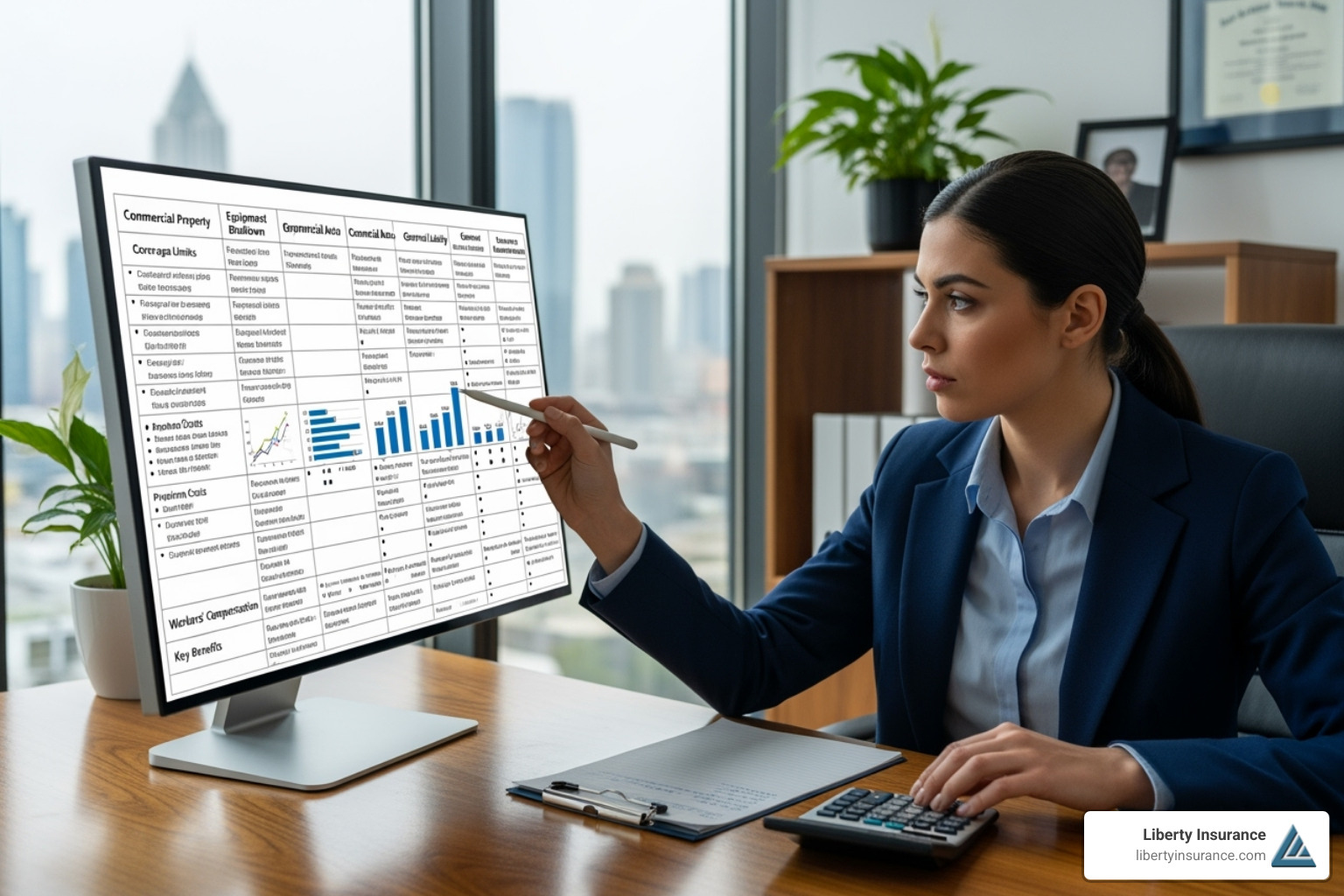
| Policy Type | What it Covers | What it Protects Against | Typical Location |
|---|---|---|---|
| Commercial Property Insurance | Your building and its stationary contents, including permanently installed equipment. | External perils like fire, theft, vandalism, wind, and hail. | Fixed location (your primary business premises). |
| Equipment Breakdown Insurance | Equipment (both stationary and mobile) from internal failures. | Internal forces like power surges, mechanical breakdowns, motor burnout, or operator error. | At your premises or specified locations. |
| Commercial Equipment Insurance (Inland Marine) | Movable equipment, tools, and machinery. | External perils like theft, accidental damage, natural disasters, and vandalism. | At your location, in transit, or at job sites. |
Standalone Policy vs. a Business Owner’s Policy (BOP) Rider
You have two main options for acquiring insurance for commercial equipment, and the right choice depends on your business’s needs.
A standalone policy is best for businesses with substantial investments in high-value, specialized equipment, like a construction company with a fleet of excavators and cranes or a medical imaging center with MRI machines. These policies offer higher coverage limits and more customized terms.
For smaller operations, a BOP rider is often more cost-effective. This endorsement is added to your Business Owner’s Policy (BOP), bundling equipment coverage with your general liability and property insurance. It’s a convenient option for a business with a smaller inventory of tools and machinery, such as a freelance photographer, a small catering business, or an IT consultant with portable servers.
Who Needs Insurance for Commercial Equipment and Why?
Could your business operate tomorrow if its most essential equipment disappeared tonight? For most, the answer is no. Insurance for commercial equipment isn’t just about replacing a stolen tool; it’s about protecting the foundation of your livelihood, your ability to serve customers, and your revenue stream.

Industries That Benefit Most
While nearly every business owns valuable equipment, certain industries face higher risks that make this coverage essential.
- Construction and Contractors: These businesses rely on expensive, mobile machinery and tools that are constantly exposed to theft and on-site accidents. See options for Contractors Insurance in New Jersey.
- Manufacturing: Production lines depend on complex machinery where a single failure can halt operations. Movable tools for repairs and quality control are also critical. Explore Manufacturing Insurance.
- Healthcare and Medical Services: This sector uses high-tech, sensitive, and expensive diagnostic and treatment equipment where replacement costs can be staggering.
- Restaurants and Hospitality: Operations depend on commercial kitchens, refrigeration, and POS systems. Food trucks are especially vulnerable since their entire business is mobile.
- Landscaping and Arborists: Heavy equipment like chippers, stump grinders, and excavators are constantly moving between job sites, making them prime targets for theft or vandalism.
- Field Service Businesses: Electricians, plumbers, and HVAC technicians transport their tools and diagnostic equipment daily, exposing them to theft and damage during transport.
The Risks of Inadequate or No Insurance for Commercial Equipment
Skipping this coverage can turn a manageable premium into a business-threatening crisis.
- Financial Devastation: The out-of-pocket cost to replace heavy machinery or specialized medical equipment can be tens or hundreds of thousands of dollars.
- Operational Paralysis: Without essential equipment, work grinds to a halt, deadlines are missed, and revenue stops while expenses continue.
- Reputation Damage: Failing to complete projects on time because of equipment issues can quickly damage client trust and your business’s reputation.
- Contractual Breaches and Lost Opportunities: Many commercial contracts and project bids require proof of adequate equipment insurance. Lacking this coverage can disqualify you from lucrative jobs and partnerships, limiting your business’s growth potential.
Real-World Claim Scenarios
These common scenarios illustrate why coverage is so crucial:
- Theft: A contractor’s trailer full of tools is stolen from a job site overnight.
- Transit Damage: A forklift slides off its transport trailer during a sharp turn, causing significant frame damage.
- Accidental Damage: A portable medical device worth $40,000 is dropped and damaged beyond repair.
- Vandalism: A bulldozer left at a job site over a weekend has its windows smashed and controls destroyed.
How to Choose and Customize Your Policy
Selecting the right insurance for commercial equipment requires a careful assessment of your assets and risks. A one-size-fits-all approach can leave you underinsured, so it’s crucial to tailor the policy to your specific needs.
Factors That Determine Your Premium Costs
Insurers calculate your premium based on your risk profile. Key factors include:
- Equipment Value and Type: A specialized CNC machine costs more to insure than a power drill due to its higher replacement cost and complexity.
- Industry and Usage: A construction company’s equipment faces higher risks from job site hazards and theft than an office-based business’s equipment.
- Location and Security: Storing equipment in a secured yard with fencing and alarms in a low-crime area will generally result in lower premiums.
- Claims History: A pattern of frequent claims signals higher risk and will lead to increased premiums.
- Deductible: Choosing a higher deductible (the amount you pay out-of-pocket on a claim) can significantly lower your annual premium.
- Cost: Basic coverage can start around $400 per year for small businesses, but costs vary widely based on the factors above.
Understanding Valuation: Actual Cash Value (ACV) vs. Replacement Cost Value (RCV)
This is a critical choice that determines how much you receive after a loss.
Actual Cash Value (ACV): Pays to replace your item minus depreciation. This option has lower premiums, but your payout may not be enough to buy a brand-new replacement. For example, if your five-year-old generator is stolen, ACV pays what a five-year-old model is worth today, not the cost of a new one.
Replacement Cost Value (RCV): Pays the full cost to replace your item with a new, comparable model. RCV coverage costs more upfront but provides more complete financial protection. Many policies only offer RCV for equipment that is less than five years old.
How to Ensure Adequate Insurance for Commercial Equipment
Getting the right coverage requires some homework, but the effort pays off at claim time.
- Create a Detailed Inventory: List every piece of equipment with its make, model, serial number, purchase date, and original cost. For accurate current values, keep purchase receipts. Take detailed photos and videos of your equipment from multiple angles, including close-ups of serial numbers, and store this documentation securely in the cloud, separate from your business premises.
- Get Accurate Valuations: Review your inventory and valuations at least annually. Equipment values change due to depreciation and market conditions.
- Understand Your Policy Limits: Be aware of per-item limits (e.g., $10,000 for any single item) and aggregate limits (the total payout for a single event). If you own equipment worth more than these limits, you may need to schedule it individually. Learn more about what equipment insurance covers.
Review Your Policy Annually
Your business is not static, and neither are your equipment needs. A policy that was perfect last year might be inadequate today. Set a calendar reminder to review your insurance for commercial equipment annually with your agent. During this review, update your equipment inventory, discuss any new types of jobs or locations you’re working in, and adjust your coverage limits to reflect new purchases or the sale of old assets. This proactive step ensures you are never caught underinsured.
- Consult with an Experienced Agent: An expert can help you identify risks, find the right balance between coverage and cost, and ensure your policy is adequate for your needs. We specialize in helping businesses throughout New Jersey, including Millstone Township, Trenton, and Toms River. Talk to a specialist to review your needs.
Frequently Asked Questions about Commercial Equipment Insurance

Can I get coverage for leased, rented, or borrowed equipment?
Yes. Most insurance for commercial equipment policies offer a “leased or rented equipment” endorsement. This is a vital add-on, as your standard policy only protects gear that you own. This endorsement covers your liability to the rental company or equipment owner if that borrowed equipment gets damaged or stolen while in your care. Without it, you could be personally responsible for the full replacement cost.
Is equipment insurance a legal requirement?
While not typically required by state or federal law, it is often a practical necessity. Many clients, especially on larger projects, will contractually require you to show proof of insurance for commercial equipment before work begins. Additionally, if you’ve financed your equipment, your lender will almost certainly require you to carry insurance to protect their financial stake in the asset.
What’s the difference between “tools” and “equipment” for insurance?
Insurers generally use a value threshold to distinguish between tools and equipment. The specific amount varies, but a common benchmark is around $2,500 per item.
Tools: Items valued below the threshold (e.g., hand tools, smaller power tools) are typically covered under a blanket limit. This means you have a total coverage amount, such as $15,000, for all your tools combined.
Equipment: Higher-value items that exceed the threshold (e.g., excavators, generators, medical devices) must be “scheduled” on your policy. This means each piece is listed individually with its specific make, model, serial number, and insured value. This ensures your most critical and expensive assets are adequately covered.
How does the claims process typically work?
While specifics vary by insurer, the process generally follows these steps: 1. Secure the Scene and Mitigate Further Damage: If possible, prevent additional loss (e.g., move undamaged equipment away from a fire). 2. Document the Loss: Take photos and videos of the damage and gather any relevant reports, such as a police report for theft. 3. Notify Your Insurer Promptly: Contact your insurance agent or carrier as soon as possible to report the claim. Provide your policy number and a detailed description of what happened. 4. Complete a Proof of Loss Form: Your insurer will provide a form where you list the damaged or stolen items and their value. Your detailed inventory will be invaluable here. 5. Cooperate with the Adjuster: An insurance adjuster will investigate the claim, review your documentation, and assess the damage to determine the settlement amount based on your policy’s terms (ACV or RCV) and deductible. 6. Receive Your Settlement: Once the claim is approved, you will receive payment for the repair or replacement of your equipment.
Conclusion: Secure Your Business’s Foundation
Your commercial equipment is the heart of your business operations. Protecting it isn’t just about insuring “stuff”—it’s about ensuring your ability to generate revenue, meet deadlines, and maintain your professional reputation.
Insurance for commercial equipment transforms potential business disasters like theft, vandalism, or accidental damage into manageable setbacks. It ensures that one bad day doesn’t threaten everything you’ve worked so hard to build.
At Liberty Insurance, we understand that every New Jersey business has unique needs. We don’t use cookie-cutter solutions. Our approach is to listen to your specific challenges, assess your risks, and build a comprehensive protection plan that fits your business and your budget. We believe insurance should be clear, accessible, and designed for your real-world needs.
The peace of mind that comes with proper coverage is invaluable. It’s the confidence to take on big projects and the security of knowing you can recover quickly from the unexpected.
Don’t wait for a loss to find gaps in your coverage. The time to protect your business’s foundation is now.
Ready to secure your business’s future? Protect your vital assets and ensure your company’s continued success by exploring your Business Insurance options today. Let’s work together to build the protection your business deserves.

