
Why Getting a Property Insurance Quote Online Matters for Your Business
A property insurance quote online is a digital estimate of the costs to protect your business assets, equipment, and inventory from risks like fire, theft, and natural disasters. In today’s fast-paced market, digital quoting has transformed how business owners manage risk, moving away from weeks of paperwork to minutes of data entry. This evolution in the insurance industry, often referred to as “Insurtech,” leverages advanced algorithms and public data to provide real-time pricing that was previously impossible.
For modern entrepreneurs, time is the most valuable currency. The ability to secure a comprehensive estimate without leaving your desk allows for better financial planning and immediate action. Whether you are a startup in a co-working space or an established manufacturer with a sprawling warehouse, understanding your insurance costs upfront is critical for maintaining a healthy bottom line.
Quick Facts About Online Property Insurance Quotes:
- Speed: Obtain estimates in as little as 5 minutes, allowing for rapid decision-making during property acquisitions or lease signings.
- Convenience: Compare multiple coverage options from your office or mobile device at any time of day, eliminating the need for traditional business-hour appointments.
- Accuracy: Receive pricing based on specific property data, including local crime rates, proximity to fire hydrants, and historical weather patterns.
- Savings: Bundling property and liability can lead to significant discounts, often ranging from 10% to 25% depending on the carrier.
- Requirements: Have your building age, roof condition, square footage, and security details ready to ensure the most accurate premium calculation.
Types of Property Insurance Available Online:
- Commercial Property Insurance: Protects business buildings, specialized equipment, and inventory against physical loss or damage.
- Homeowners Insurance: Covers primary residences, personal liability, and detached structures like garages or sheds.
- Condo Insurance: Specifically insures unit interiors, improvements, and personal belongings not covered by the HOA master policy.
- Renters Insurance: Protects personal property within leased spaces and provides essential liability coverage for tenants.
Digital platforms have made insurance more accessible than ever before. For small business owners in New Jersey, protecting leased office space and valuable inventory is a priority. A single incident, such as a burst pipe or a break-in, without coverage could be financially devastating, potentially leading to permanent closure. Modern quoting platforms streamline the process of finding comprehensive protection that fits your budget while ensuring you meet the requirements of landlords and lenders.
Understanding the factors behind your quote is essential for long-term risk management. Insurers evaluate building construction materials (such as masonry vs. frame), roof age, heating systems, and claims history. Being prepared with this information ensures a smoother experience and prevents surprises during the underwriting phase.
I’m Andrew Harris, a Certified Insurance Counselor at Liberty Insurance. With over a decade of experience in the New Jersey insurance market, I’ve helped hundreds of business owners steer property insurance quote online platforms to maximize protection while minimizing costs. My goal is to demystify the technical jargon and help you secure the coverage your hard work deserves.
Property insurance quote online glossary:
- commercial property insurance
- property insurance for business owners
- commercial property insurance policy
Understanding Property Insurance and What It Covers
Property insurance serves as a vital safety net for your most valuable assets, providing a financial buffer against the unpredictable. Whether it is a family home in Millstone Township, a rental in Trenton, or a storefront in Toms River, these policies protect against unexpected damage and financial loss that could otherwise take years to recover from.
At its core, home insurance covers the physical structure (dwelling) and personal belongings like electronics, furniture, and clothing. It also extends to permanent structures such as fences, detached garages, and even swimming pools. If a covered peril—such as a fire or severe windstorm—makes your property uninhabitable, policies often cover “Loss of Use” or additional living expenses. This ensures you can afford a hotel or rental home while your primary residence is being repaired.
Common Property Insurance Types and Policy Forms
Understanding the specific type of policy you need is the first step in getting an accurate property insurance quote online. Policies are often categorized by “forms” (e.g., HO-3, HO-5) which dictate the breadth of coverage.
- Homeowners Insurance (HO-3/HO-5): Designed for owner-occupied single-family homes. The HO-3 is the most common, covering the structure for all risks except those specifically excluded, while personal property is covered for named perils. The HO-5 offers even broader “open perils” coverage for both the structure and contents.
- Condo Insurance (HO-6): Often called “walls-in” coverage. It covers the interior of the unit, including flooring, cabinetry, and personal possessions. It works alongside the association’s master policy, which typically covers the building’s exterior and common areas.
- Renters Insurance (HO-4): Protects personal belongings and provides liability for tenants. Since the landlord is responsible for the building structure, renters insurance is highly affordable and essential for anyone leasing an apartment or home.
- Commercial Property Insurance: Essential for New Jersey businesses, this protects physical assets like machinery, specialized tools, and inventory from fire, theft, and vandalism. It can also include “Business Income” coverage, which replaces lost revenue if your business must close due to physical damage. Learn more in our Property Insurance for Business Owners guide.
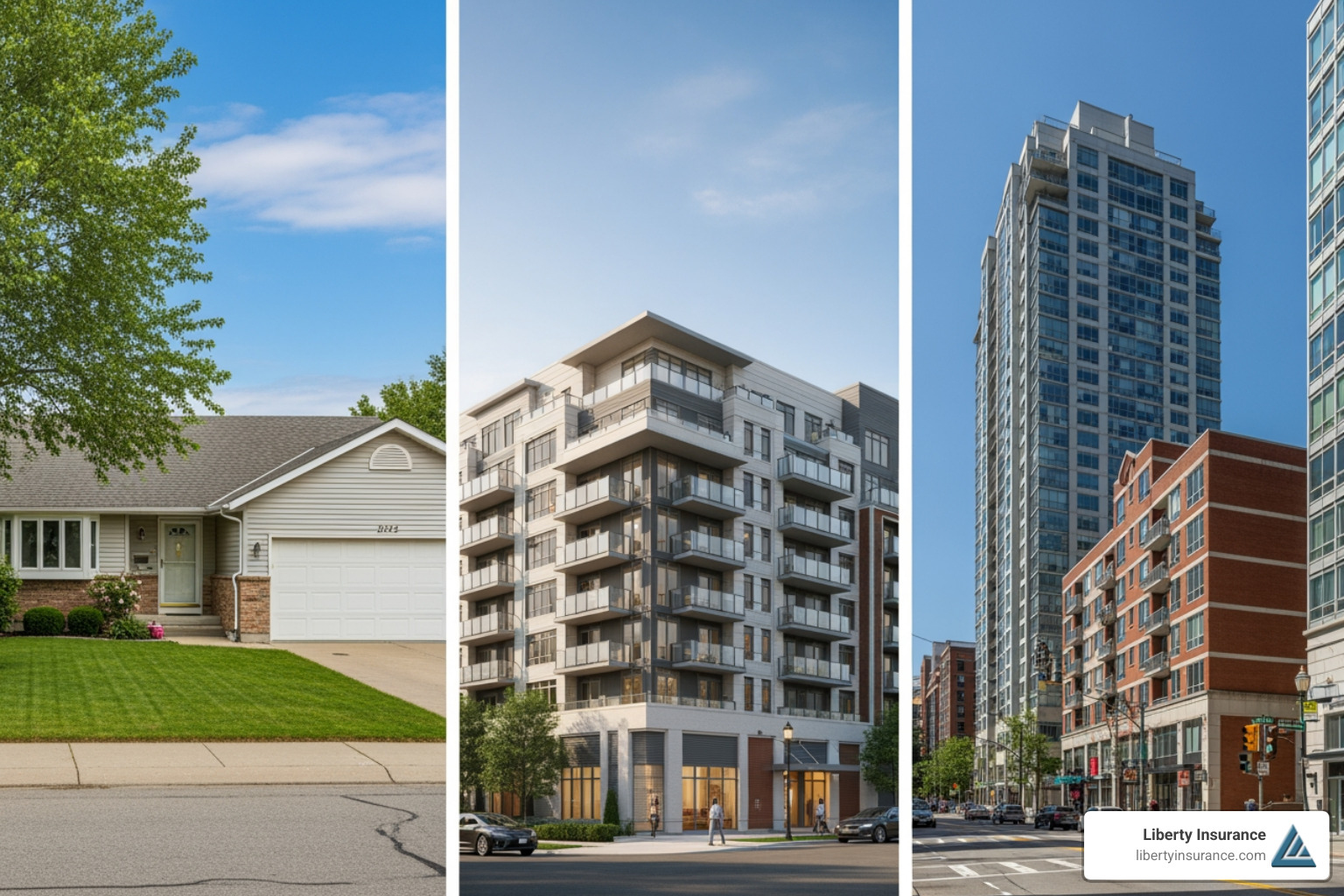
| Feature | Homeowners Insurance | Condo Insurance | Renters Insurance |
|---|---|---|---|
| Dwelling Coverage | Yes (entire structure) | Yes (interior structure/improvements) | No (landlord’s policy) |
| Personal Belongings | Yes | Yes | Yes |
| Other Structures | Yes (sheds, garages) | No | No |
| Liability Coverage | Yes | Yes | Yes |
| Loss of Use | Yes | Yes | Yes |
| Target Audience | Homeowners | Condo owners | Tenants |
The Role of Liability Coverage
Liability coverage is perhaps the most overlooked component of a property policy. It protects you against legal responsibility for injuries to others or damage to their property that occurs on your premises. For example, if a visitor slips on an icy walkway at your property in Princeton, NJ, comprehensive liability insurance helps cover legal defense costs, medical expenses for the injured party, and any court-ordered settlements. This protection is vital for shielding your personal savings or business assets from the high costs of litigation.
Specialized Coverage for Unique Situations
Standard policies are a great starting point, but many New Jersey residents require specialized endorsements to fill coverage gaps:
- Secondary Residence Insurance: Vacation homes along the New Jersey shore require specific coverage due to extended periods of vacancy and higher exposure to coastal storms.
- Mobile Home Coverage: Custom-built for the unique construction characteristics and transportability of mobile and manufactured homes.
- Short-term Rentals: If you use platforms like Airbnb or Vrbo, standard homeowners policies may exclude coverage for commercial activities. A specific landlord insurance policy or a short-term rental endorsement is necessary to protect your investment.
- Vacant Buildings: Properties undergoing renovation or waiting for a tenant face higher risks of vandalism and undetected water leaks. Our Commercial Property Insurance for Vacant Building provides targeted protection for these high-risk assets.
How to Get a Property Insurance Quote Online
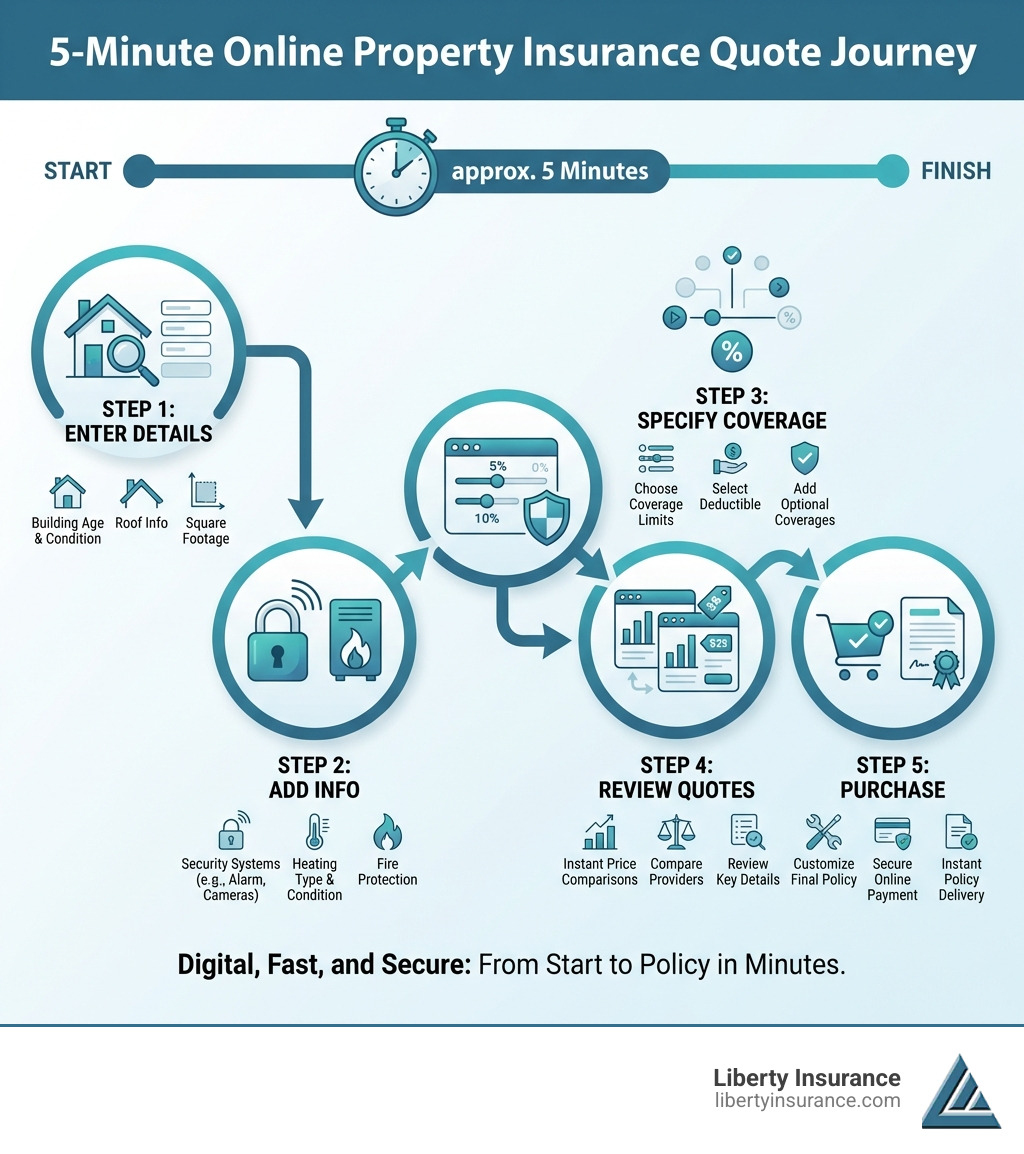
Getting a property insurance quote online has evolved from a tedious chore into a quick and efficient experience. Digital platforms allow you to compare multiple providers, adjust coverage limits in real-time, and customize deductibles from the comfort of your home or office. This transparency empowers consumers to make informed decisions without the pressure of a traditional sales environment.
The process typically involves four main stages:
- Property Details: Entering the exact address and identifying the primary use (residential, commercial, or mixed-use). The system uses the address to pull public records regarding the lot size and local zoning.
- Structural Info: Providing data on the building’s age, construction materials (e.g., brick, wood frame, or stucco), and the age of major systems like the roof, HVAC, and plumbing.
- Customization: Selecting your desired coverage limits for the dwelling, personal property, and liability. You will also choose your deductible—the amount you pay out-of-pocket before insurance coverage begins.
- Review and Compare: Comparing side-by-side estimates from different carriers to find the best balance of price and protection.
Accuracy is vital during this process. While it may be tempting to estimate numbers, precise information ensures that the insurance quote you receive reflects the actual cost of the policy. Inaccurate data can lead to “premium shock” later when the underwriter verifies the details and adjusts the price upward.
Information Needed for an Accurate Quote
To streamline your experience and ensure you get the most competitive rate, have the following details ready before you start:
- Construction and Roof: The year the building was constructed and the age/material of the roof. A roof older than 20 years may require a specialized inspection or result in higher premiums.
- System Updates: Details on heating systems (e.g., forced air, oil, or electric) and the dates of any major electrical or plumbing updates. Modernized systems significantly reduce the risk of fire and water damage.
- Security and Safety: Information on central station alarms, smoke detectors, fire sprinklers, and smart home systems. These features often trigger significant discounts.
- Claims History: A record of any previous insurance losses over the last five years. Even if a claim was denied, it may still be on your CLUE (Comprehensive Loss Underwriting Exchange) report.
- Commercial Specifics: For building insurance, you will need the estimated replacement value of business equipment, specialized machinery, and average inventory levels throughout the year.
Comparing Your Results Effectively
When reviewing your property insurance quote online results, look beyond the monthly premium. A low price might mean higher out-of-pocket costs later. Evaluate the deductible levels—can you afford a $2,500 deductible if a disaster strikes? Check the coverage limits for liability; in today’s litigious society, a minimum limit may not be enough. Many platforms allow you to save your quotes for up to 45 days, giving you time to review the insurance policy terms with a professional. You can also manage your insurance needs online to keep your documents organized and accessible.
Factors That Influence Your Property Insurance Quote Online
Insurers use complex actuarial data to weigh several factors that assess the likelihood of future claims. Understanding these variables can help you take proactive steps to manage your costs more effectively and potentially lower your premiums over time.
- Location and Geography: This is one of the most significant factors. Properties in New Jersey areas with higher crime rates or those located in “Tier 1” coastal zones (close to the ocean) will naturally see higher premiums due to the increased risk of theft or wind damage. Proximity to a fire department and the quality of the local fire hydrant system (known as a Public Protection Classification) also play a major role.
- Property Characteristics and Age: Older buildings with outdated knob-and-tube wiring or galvanized plumbing pose higher risks for fire and leaks. The type of heating equipment—such as an old oil tank versus a modern high-efficiency furnace—also influences fire risk assessments.
- Replacement Cost vs. Market Value: This is a common point of confusion. The replacement cost is the estimated amount required to rebuild your structure from scratch using current labor and material costs. This figure is often very different from the market value (what you could sell the property for), which includes the value of the land and local market demand.
- Claims History: Insurance companies look at both the property’s history and your personal history as a policyholder. A history of frequent, small claims can signal a higher risk, while a claims-free record for five or more years often earns substantial “loss-free” discounts.
For properties in high-risk areas, checking the FEMA Flood Map Service Center is essential. Flood risk is calculated separately from standard property risks. You can also visit the official FEMA website for broader disaster preparedness resources and to understand how local mitigation efforts might affect your rates.
Replacement Cost vs. Actual Cash Value: Why It Matters
When you receive a property insurance quote online, you will likely have to choose between these two valuation methods:
- Replacement Cost: This is the gold standard. It pays to repair or rebuild your property with new materials of similar quality, without deducting for depreciation. If your 10-year-old roof is destroyed by hail, replacement cost coverage pays for a brand-new roof. This is often a requirement for Fire Damage Coverage.
- Actual Cash Value (ACV): This pays for repairs minus depreciation based on age and wear. Using the same roof example, ACV would only pay for the remaining value of a 10-year-old roof, leaving you to cover the difference. While ACV premiums are lower, they can leave you with a significant financial gap during a total loss.
Protecting Against Specific Perils and Regional Risks
Standard policies cover many common risks, but New Jersey’s unique geography often requires specific endorsements to ensure full protection:
- Sewer Backup: This covers damage caused by water backing up through sewers or drains, or overflowing from a sump pump. This is rarely included in a base policy but is a highly recommended add-on.
- Overland Water: Protects against water entering your home from heavy rainfall, overflowing lakes, or melting snow. As weather patterns become more volatile, this coverage is increasingly important.
- Earthquake Coverage: While rare in the Northeast, tremors do occur. This add-on covers ground movement risks that are strictly excluded from standard homeowners and commercial policies.
- Sinkhole Coverage: Provides specific protection for geological risks where the ground collapses, a risk that can be prevalent in certain limestone-heavy areas of the region.
Maximizing Savings and Optional Coverages
Getting a property insurance quote online is not just about finding the first available price; it’s about identifying discounts and optimizing your policy for long-term affordability. By understanding how insurers reward lower risk, you can significantly reduce your annual premiums without sacrificing the quality of your protection.
The Strategic Benefits of Bundling Home and Auto
One of the most effective ways to lower your insurance costs is through “multi-policy” discounting, commonly known as bundling. Combining your home and auto insurance with a single provider can save you up to 20% on both premiums. Beyond the immediate cost savings, bundling offers several logistical advantages:
- Simplified Management: You only have one bill to track, one online portal to manage, and one point of contact for all your insurance needs.
- Single Deductible: Some advanced policies offer a “single deductible” feature. If a single event—like a severe hailstorm—damages both your home and your car parked in the driveway, you may only have to pay one deductible instead of two.
- Loyalty Rewards: Long-term multi-policy holders are often prioritized for better coverage options and are less likely to face non-renewal after a single claim.
To see the full impact of these savings, start by getting an auto insurance quote online and then pair it with your home protection insurance during the quoting process.
Essential Add-ons and Endorsements for Enhanced Security
Standard policies provide a foundation, but modern life often requires additional layers of protection. Consider these common endorsements when customizing your quote:
- Equipment Breakdown Insurance: Modern homes and businesses rely on complex systems. This covers the repair or replacement of essential systems like HVAC units, water heaters, and even smart home hubs due to mechanical or electrical failure. This is a cost-effective alternative to expensive individual home warranties and is similar to systems breakdown insurance.
- High Value Items Insurance: Standard policies have “sub-limits” for certain categories like jewelry, fine art, and collectibles (often capped at $1,500 – $2,500). If you have an engagement ring or a valuable art collection, you need to “schedule” these items to ensure they are covered for their full appraised value.
- Service Line Coverage: Most homeowners don’t realize they are responsible for the utility lines (water, sewer, power) running from the street to their house. If a tree root crushes your sewer line, repairs can cost thousands. This endorsement covers those excavation and repair costs.
- Guaranteed Replacement Cost: This is an essential buffer against inflation. If a widespread disaster spikes the cost of labor and lumber, this endorsement ensures your home can be rebuilt even if the cost exceeds your policy’s dwelling limit.
Navigating the Claims Process and Provider Selection
Understanding the claims process is just as important as getting the initial property insurance quote online. A policy is only as good as the company’s ability to pay out when you need it most. When damage occurs, having a clear understanding of the steps involved can help reduce stress and accelerate your recovery.
The Anatomy of a Property Insurance Claim
- Immediate Reporting: Contact your insurance provider as soon as it is safe to do so. Most modern carriers allow you to start a claim via a mobile app, which can speed up the process by allowing you to upload photos instantly.
- Damage Assessment: The insurer will assign an adjuster to review the damage. For smaller claims, this might be done virtually via video call. For larger losses, an adjuster will visit the property in person to estimate repair costs.
- Documentation and Proof of Loss: You will need to provide a detailed list of damaged items, including their age and estimated value. Keeping a digital home inventory (stored in the cloud) is one of the best ways to prepare for this step.
- Settlement and Repairs: Once the claim is approved, the insurer will issue a payment. In many cases, especially with mortgages, the check may be made out to both you and your lender to ensure the repairs are completed to a professional standard.
For major events, such as a fire that displaces your family or a storm that halts your business operations, disaster recovery insurance provides the comprehensive framework for rebuilding and recovering lost income.
Choosing the Right Provider: Beyond the Price Tag
When selecting an insurer from your online quote results, consider these three critical factors:
- Financial Stability: You want a company that will be there 20 years from now. Check the financial strength ratings from independent agencies like A.M. Best or S&P. Look for reputable commercial property insurance carriers with an “A” rating or better.
- Customer Service and Local Expertise: While digital tools are great, local expertise is invaluable when disaster strikes. A provider with a strong presence in New Jersey—from New Brunswick to the Jersey Shore—will understand local building codes and have a network of trusted local contractors.
- Online Management Tools: A robust digital portal is essential for modern policyholders. You should be able to make payments, update your coverage, and track the status of a claim 24/7 without having to wait on hold.
Understanding Your Deductible Strategy
Your deductible is the out-of-pocket amount you pay before insurance kicks in. It is a core component of any commercial property insurance policy and a primary lever for controlling your premium.
- Higher Deductible: Choosing a $2,500 or $5,000 deductible will result in lower monthly premiums. This is a good strategy if you have an emergency fund and want to save money over the long term.
- Lower Deductible: A $500 or $1,000 deductible increases your monthly premium but reduces your immediate financial burden after a loss. This is often preferred by those who want more predictable expenses.
- Shrinking Deductibles: Some innovative policies reward claim-free years by reducing your deductible by a set amount (e.g., $100) for every year you don’t file a claim, eventually reaching $0.
Frequently Asked Questions about Property Insurance
What is the difference between a quote and a policy?
A property insurance quote online is a non-binding estimate of your premium based on the data you provide. It is a “snapshot” of what your costs might be. A policy, however, is a legally binding contract that begins once you formally accept the quote, pass the underwriting review, and make your first payment. The policy outlines all specific terms, conditions, and exclusions.
How often should I review my property insurance coverage?
You should review your coverage at least once a year during your renewal period. Additionally, you should update your policy after major life events, such as home renovations (which increase the replacement cost), purchasing high-value items like jewelry or electronics, or starting a home-based business. Regular reviews ensure your limits keep pace with inflation and changes in local construction costs.
Does standard property insurance cover flood damage?
No, this is a common misconception. Standard homeowners and commercial property policies typically exclude damage caused by rising groundwater or flooding. You must purchase separate flood insurance, often through the National Flood Insurance Program or a private flood insurer. While sudden internal pipe bursts are usually covered, external flooding from storms or rising rivers requires dedicated protection.
What happens if I under-insure my property?
If you insure your property for less than 80% of its replacement value, you may be subject to a “co-insurance penalty.” This means the insurance company will only pay a percentage of your claim, even for partial losses. It is always better to insure for the full 100% replacement cost to avoid these penalties.
Can I get a quote for a property I don’t own yet?
Yes! In fact, getting a property insurance quote online is a standard part of the due diligence process when buying a home or commercial building. It helps you understand the total cost of ownership and ensures there are no “red flags” with the property that might make it difficult to insure.
Conclusion
Securing a property insurance quote online has revolutionized the way we protect our most significant investments. By moving the process into the digital age, homeowners and business owners gain unprecedented transparency, allowing them to compare options and customize coverage with ease. However, the true value of insurance isn’t just in the digital interface—it’s in the peace of mind that comes from knowing your assets are shielded by a policy that balances cost-efficiency with comprehensive protection.
As we’ve explored, understanding the nuances of replacement cost, the benefits of bundling, and the importance of specialized endorsements can save you thousands of dollars over the life of your policy. Whether you are navigating the complexities of commercial assets or protecting your family’s first home, being an informed consumer is your best defense against financial loss.
At Liberty Insurance, we are dedicated to helping New Jersey business owners and residents in Princeton, Millstone Township, and beyond navigate this digital landscape. We combine the speed of modern quoting tools with the deep, local expertise that only a seasoned agency can provide. Whether you need business property insurance or personal coverage for your home, our team is here to provide the customizable solutions you need for lasting peace of mind. Don’t wait for a disaster to find out if you’re covered—start your journey toward better protection today.

