
Why Understanding Excess Liability Insurance is Critical for Your Financial Security
Do i need excess liability insurance is a question that becomes increasingly important as your assets and exposure to financial risks grow. The answer depends on your specific situation, but here are the key factors to consider:
You likely need excess liability insurance if:
- Your net worth exceeds your current liability limits
- You own a home, multiple properties, or recreational vehicles
- You employ domestic staff or have high-risk activities (pools, trampolines)
- You have teenage drivers or frequently host gatherings
- You serve on boards or have significant future earning potential
In today’s litigious world, financial risks can escalate rapidly. A dog bite can result in a $7.7 million settlement, a car accident can lead to a $3.4 million verdict, and a contractor falling at your home can result in an $8.9 million claim. These real cases show how quickly costs can spiral beyond typical homeowners insurance limits of $100,000 to $500,000.
When a guest slips and falls on your property or a car accident occurs, the right coverage is essential. With collision frequency and severity up 42% and 43% year-over-year respectively, adequate liability protection is more crucial than ever.
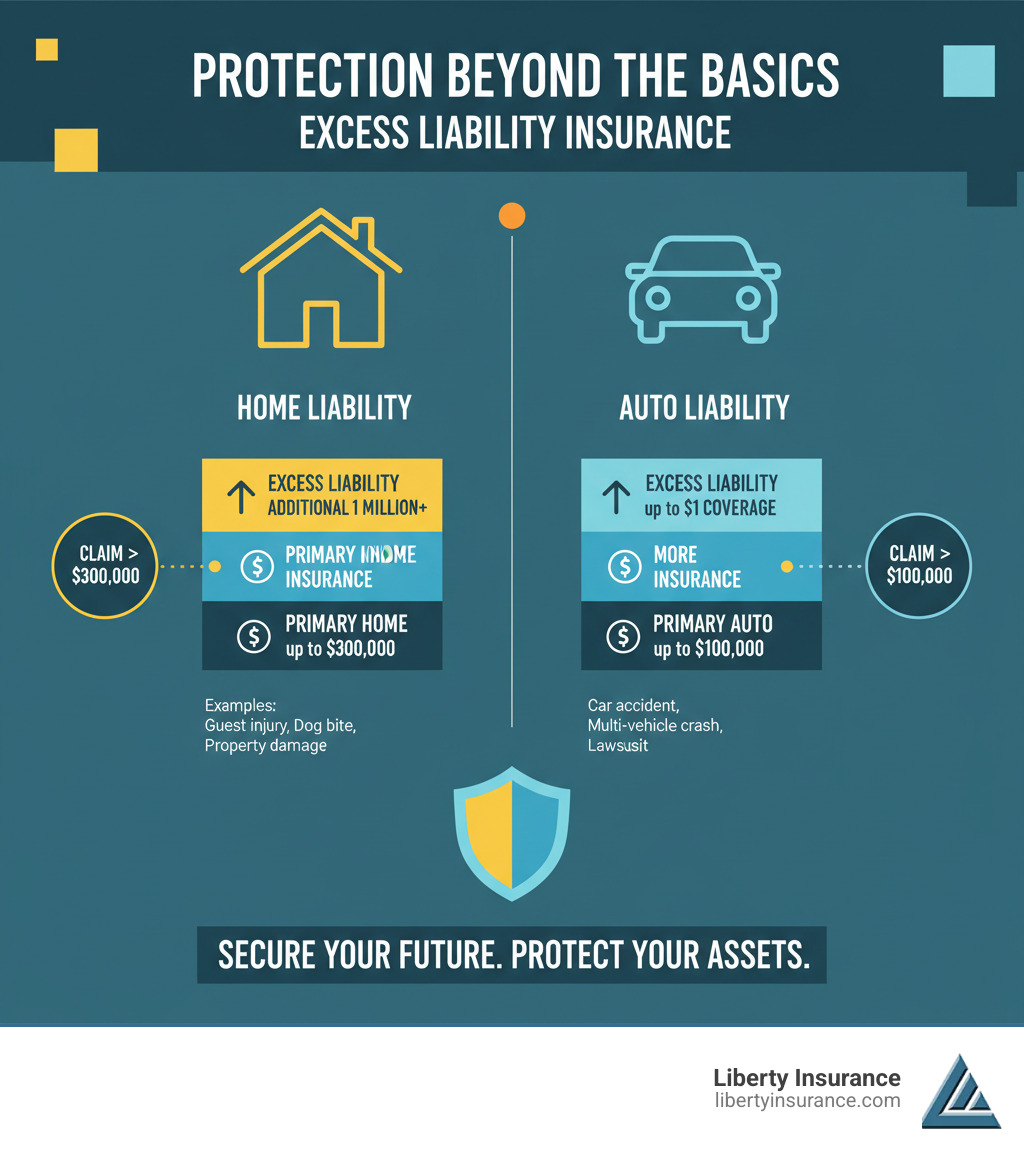
Standard homeowners policies typically provide only $100,000 to $500,000 in liability coverage. Auto policies in some states may have limits as low as $35,000 per person for bodily injury. When a single incident can easily exceed $1 million in damages, these limits create dangerous gaps in your financial protection. Proactive risk management through proper excess liability coverage can mean the difference between financial security and potential ruin.
Decoding Your Options: Excess Liability vs. Umbrella Insurance
When you’re asking yourself “do I need excess liability insurance?” you’ll find two main types of additional liability protection: excess liability and umbrella insurance. Both serve as crucial financial shields, but they work in different ways. Understanding these differences will help you make the right choice for your unique situation.
What is Excess Liability Insurance?
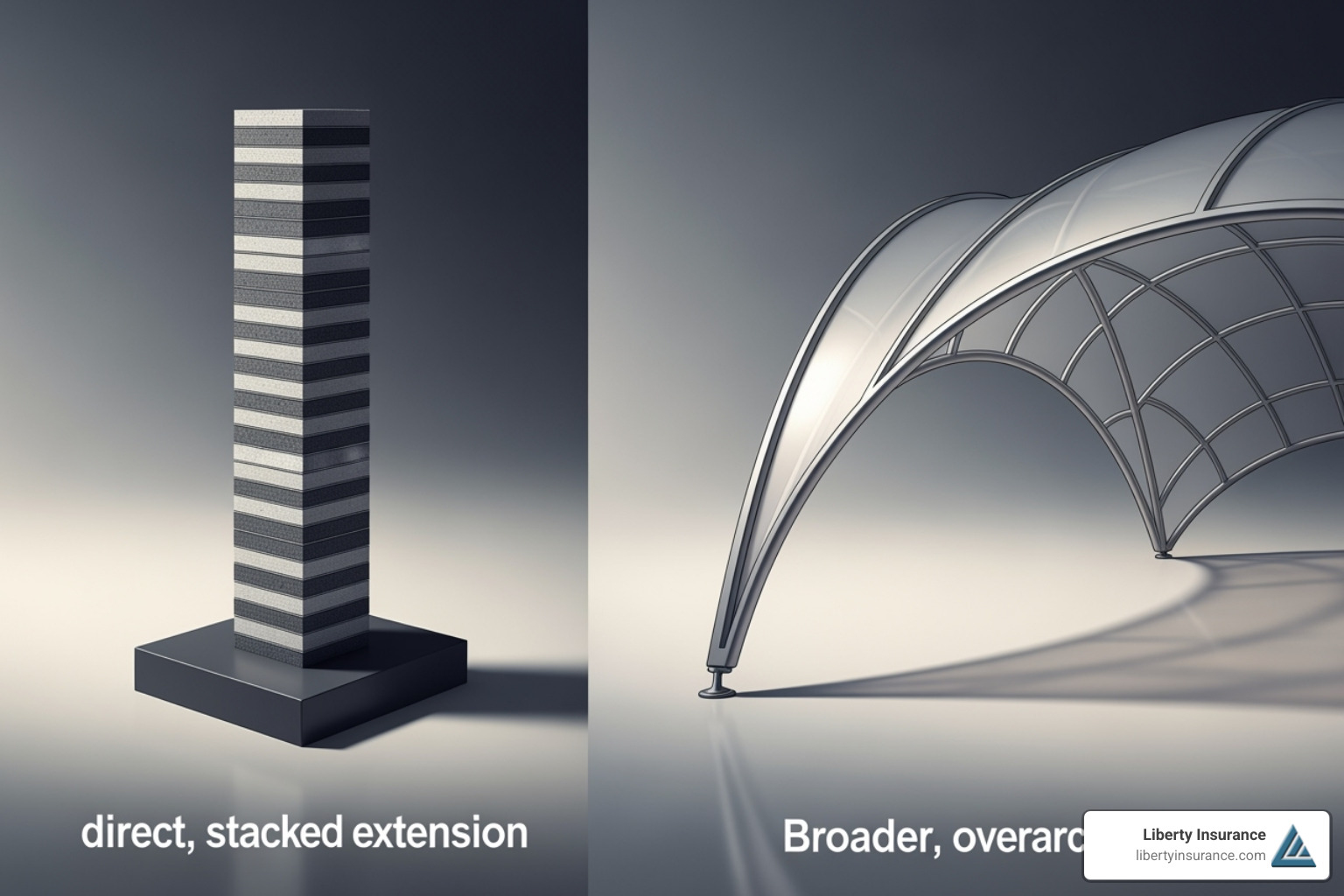
Excess liability insurance is a straightforward booster for a single, specific policy you already own. It acts as a safety net with higher limits that kicks in only when your primary policy reaches its maximum payout.
What makes excess liability unique is its “follow-form” coverage. It exactly mirrors the terms, conditions, and exclusions of your underlying policy. For example, if your auto insurance covers up to $500,000 in liability, an excess liability policy could add another $1 million on top of that specific auto policy. If you cause an accident resulting in $1.2 million in damages, your auto policy pays the first $500,000, and your excess policy covers the remaining $700,000. It doesn’t change what’s covered; it simply increases your financial protection for that one policy.
What is Umbrella Insurance?
Umbrella insurance offers broader protection that stretches across multiple areas of your life. It sits above several policies at once—typically your home, auto, and watercraft insurance. When any of these underlying policies are exhausted, your umbrella policy can step in to provide additional coverage. For a neutral overview of how umbrella policies work, see this guide to umbrella insurance.
More importantly, umbrella policies often cover claims that fall outside your primary policies entirely. For instance, if you’re sued for libel or slander over a social media post, your homeowners policy probably won’t help, but your umbrella policy might.
For these types of claims not covered by an underlying policy, most umbrella policies include a self-insured retention (SIR). This is a deductible, typically ranging from $250 to $10,000, that you pay before the umbrella coverage begins.
Key Differences at a Glance
The fundamental difference comes down to scope and flexibility. Excess liability provides a clean, simple boost to one specific policy’s limits. Umbrella insurance casts a wider net, covering multiple policies and potentially adding entirely new types of coverage.
- Coverage Scope: Excess liability is “follow-form,” sticking strictly to the original policy’s terms. Umbrella insurance offers broader protection that can extend beyond what your primary policies cover.
- Underlying Policies: Excess liability typically applies to a single policy. An umbrella policy provides one overarching layer above multiple policies simultaneously.
- Potential for New Coverage: Excess liability only increases existing limits. Umbrella policies can cover scenarios like personal injury (libel, slander), worldwide incidents, or liability from serving on a nonprofit board, even when these aren’t in your primary policies.
Understanding these differences helps answer that crucial question: do I need excess liability insurance or would umbrella coverage better serve my needs? The answer depends on whether you need higher limits on a specific policy or broader protection across multiple areas of potential liability.
Why Do I Need Excess Liability Insurance? A Risk Assessment Guide
The question “do I need excess liability insurance” becomes clear when you realize that a single lawsuit can threaten everything you’ve worked for. With dog bites costing millions and car accident verdicts soaring, understanding your risk exposure is essential for protecting your financial future.

Assessing Your Personal Lifestyle and Assets
The more you have, the bigger a target you can become in a lawsuit. Attorneys often look for defendants with assets worth pursuing. But it’s not just about what you own today—it’s also about your future earning potential, which courts can garnish for years to pay a judgment.
- High Net Worth & Future Earnings: Your savings, investments, and promising career make you an attractive target for litigants.
- Property Ownership: Owning multiple homes, rental properties, or vacation getaways multiplies your exposure to premises liability claims.
- Recreational Vehicles: Boats, ATVs, and snowmobiles add another layer of risk, as accidents can cause serious injuries.
- High-Risk Amenities: Swimming pools and trampolines are considered “attractive nuisances” that significantly increase your liability risk.
- Domestic Staff: Employing housekeepers, gardeners, or nannies means you’re taking on employer liability. If they are injured on the job, you could be held responsible for their medical bills and lost wages.
The general rule of thumb is to carry liability coverage that at least matches your net worth.
Common Liability Triggers You Can’t Ignore
Certain everyday situations can turn into major liability events. These common triggers can affect anyone, regardless of wealth or lifestyle.
- Dog Bites: These are a top source of personal liability claims. Even a friendly pet can have a bad day, and the owner is responsible for the consequences.
- Slip-and-Fall Accidents: A visitor slipping on an icy walkway or a contractor falling from a ladder can lead to a major lawsuit for medical costs, lost wages, and pain and suffering.
- Car Accidents: With collision frequency and severity on the rise, the financial stakes of an accident are higher than ever. A single accident can easily result in a verdict that far exceeds standard auto policy limits.
- Teen Drivers: Inexperience and risk-taking behavior make teen drivers a significant liability risk. Their accidents can lead to massive damage awards.
- Social Host Liability: If you host parties where alcohol is served, you could be held responsible if a guest causes an accident after leaving your home.
- Online Activities: In our digital age, social media posts or online reviews can lead to libel and slander lawsuits, which are often not covered by standard homeowners policies.
Special Considerations for Business Owners
For entrepreneurs, the question “do I need excess liability insurance” is more complex. Your business activities create additional exposures that personal policies typically won’t cover due to the “business pursuits exclusion.”
This exclusion, found in most homeowners policies, means your personal insurance will likely deny any claim deemed business-related. This creates significant gaps for those who work from home or have income-generating activities on their property.
- Rental Properties: Landlord policies may have their own exclusions. Short-term rentals on platforms like Airbnb are a business activity requiring specialized coverage.
- Serving on a Non-Profit Board: This volunteer activity can expose you to personal liability for the board’s decisions, leading to lawsuits that target individual members.
Protecting your assets requires a coordinated approach. Personal excess liability insurance works alongside your Business Insurance and Commercial General Insurance to create comprehensive protection. While commercial policies handle business-specific risks, personal excess coverage protects your individual assets when claims overlap or exceed business policy limits.
Calculating Your Shield: How to Determine the Right Coverage Amount
Once you know you need additional liability coverage, the next step is figuring out how much. There’s no magic number—the right amount depends on your personal financial picture and risk profile. Taking the time to get this right is one of the smartest financial moves you can make.
Step 1: Tally Your Assets
The foundation of your coverage decision is an honest look at what you stand to lose. This includes both your current wealth and your future earnings.
To calculate your net worth, you should add up the value of all your assets:
- Home equity and other real estate
- Savings and investment accounts (stocks, bonds, etc.)
- Retirement funds (401(k)s, IRAs)
- Valuable personal property (art, jewelry)
- Your future income potential over the next 10-20 years
The goal is simple: your liability coverage should match or exceed your total net worth. This ensures that everything you’ve worked for stays protected.
Step 2: Review Your Primary Policy Limits
Excess coverage only kicks in after your primary insurance is exhausted, so understanding your base limits is critical. Most people are surprised by how low their limits actually are.
- Homeowners liability limits typically range from $100,000 to $500,000. A multi-million dollar claim would leave you personally responsible for the difference.
- Auto liability limits can be even lower, with some state minimums offering dangerously inadequate protection in today’s world of rising medical costs.
- Watercraft policies have their own liability limits that need to be factored into your overall protection plan.
Most excess liability policies require you to maintain certain minimum limits on your underlying coverage. If you don’t meet these requirements, the excess policy might not respond as expected, leaving you with an expensive gap. Our team at Liberty Insurance can help you review your current coverage to ensure everything works together seamlessly.
Step 3: When do I need excess liability insurance?
After assessing your assets and primary limits, the answer to “do i need excess liability insurance” usually becomes clear. Excess coverage is essential, not optional, in these situations:
- Your assets exceed your primary limits. This is the most obvious sign you have a coverage gap that needs to be filled.
- You have a high-risk lifestyle. A pool, a dog, teen drivers, or frequent parties all increase your exposure and the need for more coverage.
- You have significant future earnings. A promising career is an asset worth protecting from wage garnishment that could last for decades.
- You want robust legal defense coverage. Good excess liability policies cover legal fees, which can be devastating even if you win a lawsuit.
- You want to protect your legacy. You’ve worked hard to build something for your family. Excess liability insurance ensures one unfortunate incident doesn’t destroy it.
Relying solely on primary policies is a gamble. When a claim exceeds your limits, every dollar above that comes directly from your pocket. The peace of mind that comes with proper excess liability coverage is invaluable, and the financial protection it provides is essential.
The Financial Impact: Real-World Claims and Protecting Your Future
The question do i need excess liability insurance becomes crystal clear when we examine actual cases where families faced financial devastation. These aren’t abstract scenarios; they’re real situations that happened to people who thought their basic coverage was enough.

The High Cost of an Unfortunate Event: Real-Life Examples
Consider these real-world verdicts and the financial devastation they could cause without proper coverage:
- A $7.7 million dog bite settlement. A standard $300,000 homeowners policy would leave the owner personally responsible for over $7 million.
- A $3.4 million car accident verdict. A 19-year-old suffered a back injury in a seemingly minor accident, resulting in a multi-million dollar judgment.
- An $8.9 million claim for a contractor’s fall. A glass installer fell and suffered spinal fractures, leading to a claim that would have bankrupted a family without excess liability coverage.
- A $26.2 million pedestrian accident claim. This massive claim was paid under the driver’s auto and excess liability policies, saving them from financial ruin.
These numbers are not outliers. With collision frequency and severity increasing by 42% and 43% year-over-year, the financial consequences of accidents are growing.
Key Benefits Beyond the Payout
While the financial payout is the most obvious benefit, excess liability insurance offers several other layers of security:
- Asset Protection: Your home, savings, investments, and other valuable possessions are shielded from being seized to satisfy a judgment.
- Future Earnings Protection: Courts can garnish wages for years to satisfy large judgments. This coverage protects your future income stream.
- Legal Defense Costs: Policies typically cover attorney fees, expert witnesses, and court costs, which can be financially crippling even if you win the case.
- Reputation Protection: Coverage for claims like libel or slander helps protect both your finances and your good name.
- Global Protection: Some policies offer coverage for certain claims, like auto accidents, that occur while traveling internationally.
What factors influence the cost and what are the consequences if I don’t have it?
The cost of excess liability insurance is remarkably affordable. A $1 million umbrella policy typically costs around $380 per year—about a dollar a day. Your specific premium depends on factors like the coverage amount, number of properties and vehicles, driving record, and lifestyle risks (pools, trampolines, etc.).
The consequences of not having this coverage can be life-altering:
- Forced Asset Liquidation: Selling your home, cars, and investments to pay a judgment.
- Wage Garnishment: Having a portion of every paycheck seized for years or even decades.
- Financial Ruin: Losing your life savings, retirement plans, and children’s college funds, potentially leading to bankruptcy.
The choice is simple: pay a small premium now or risk losing everything later. For most people with assets to protect, the answer is clear.
Frequently Asked Questions about Excess Liability Insurance
When it comes to protecting your financial future, we know you have questions. After helping countless clients who’ve asked “do i need excess liability insurance,” we’ve compiled the most common concerns.
How much does excess liability insurance typically cost?
Excess liability and umbrella policies deliver tremendous value for a surprisingly modest cost. A $1 million umbrella policy typically costs around $380 per year—roughly a dollar a day for million-dollar protection.
These policies are cost-effective because they only kick in after your primary insurance limits are exhausted, meaning they handle far fewer claims than your foundational auto and home policies. This allows insurers to offer substantial protection at affordable rates.
Your specific premium is influenced by:
- The coverage amount you choose ($1 million, $2 million, etc.)
- The number of properties and vehicles you own
- Your driving record and claims history
- Lifestyle risks like a swimming pool, trampoline, or certain dog breeds
Considering the potential for multi-million dollar lawsuits, this coverage represents an exceptional value for the peace of mind it delivers.
Does excess liability cover my business activities?
This is a critical distinction. Most personal excess liability and umbrella policies contain a “business pursuits exclusion,” meaning they will not cover claims arising from your business activities, profession, or occupation.
Your personal umbrella protects you as an individual, but your business needs its own dedicated shield. If a client visiting your home office slips and falls, your homeowners and personal umbrella policies would likely deny the claim because it’s business-related.
For business protection, you need specialized commercial policies. Commercial Auto Insurance covers vehicles used for business, and Professional Liability Insurance protects against claims of errors or negligence in your work. As a business owner, building a comprehensive commercial insurance portfolio is crucial to protect your company from its unique risks.
Are umbrella and excess liability insurance the same thing?
While people often use the terms interchangeably, there are important differences.
Excess liability insurance is “follow-form” coverage. It simply boosts the liability limits of one specific underlying policy (like auto or homeowners) without changing what’s covered.
Umbrella insurance casts a wider net. It increases liability limits across multiple policies (auto, home, watercraft) at once. More importantly, an umbrella policy can also provide coverage for situations your primary policies don’t, such as a lawsuit for libel or slander. For these unique claims, you would typically pay a self-insured retention (a form of deductible) before the umbrella coverage kicks in.
The key difference is scope. An excess policy is a simple limit increase for one policy, while an umbrella policy provides a broader, more comprehensive safety net. For most people asking “do i need excess liability insurance,” an umbrella policy offers the most complete protection.
Conclusion: Securing Your Financial Future
The question “do i need excess liability insurance?” comes down to a simple reality: in our modern world, the financial risks of everyday life are higher than ever. We’ve seen how real-world lawsuits, from dog bites to car accidents, can result in multi-million dollar judgments that would overwhelm standard insurance policies.
When your assets and future earnings exceed your primary policy limits, you are self-insuring the difference and gambling with your financial security. The solution is a second layer of protection. We’ve distinguished between excess liability, which boosts a single policy, and umbrella insurance, which casts a wider net of protection over multiple policies and can even cover claims like libel and slander.
Your personal risk profile—whether you own a pool, have a teen driver, or even post on social media—highlights the hidden liabilities in modern life. For business owners, the “business pursuits exclusion” in personal policies makes integrating personal excess liability with dedicated commercial coverage, like Commercial Property Insurance, an essential strategy.
Fortunately, this vital protection is affordable. For about a dollar a day, a $1 million umbrella policy can safeguard your life’s work from forced asset liquidation, wage garnishment, or bankruptcy. At Liberty Insurance, we’ve seen how this proactive step transforms anxiety into confidence. Our clients across Millstone Township NJ, Trenton NJ, Toms River NJ, New Brunswick NJ, Princeton NJ, and throughout New Jersey sleep better knowing their legacy is secure.
With lawsuit verdicts reaching new heights, adequate liability protection is no longer optional. Take the next step to secure your financial future.

