
Why HVAC Contractors Need More Than Just Skills to Succeed
As an HVAC professional, your skills are in high demand. However, technical expertise alone isn’t enough to guarantee success in a litigious society. Insurance for HVAC contractors is the essential safety net that protects your business from the unique risks of working with electrical systems, refrigerants, and heavy equipment on client properties.
A single mishap during an installation or repair can lead to a lawsuit that threatens your entire business. Your work involves inherent hazards—from electrical shock and refrigerant exposure to working at heights—that standard business policies may not cover. These risks create numerous opportunities for accidents that could result in costly claims.
Furthermore, most clients won’t hire contractors without proof of proper insurance. A Certificate of Insurance (COI) is often a requirement to secure contracts and even access job sites. It’s a sign of professionalism that builds trust and opens the door to more lucrative opportunities.
At Liberty Insurance, we specialize in helping contractors across New Jersey secure comprehensive insurance for HVAC contractors that protects their businesses while keeping costs manageable. Our deep understanding of the industry gives us unique insight into the specific coverage needs of HVAC professionals.
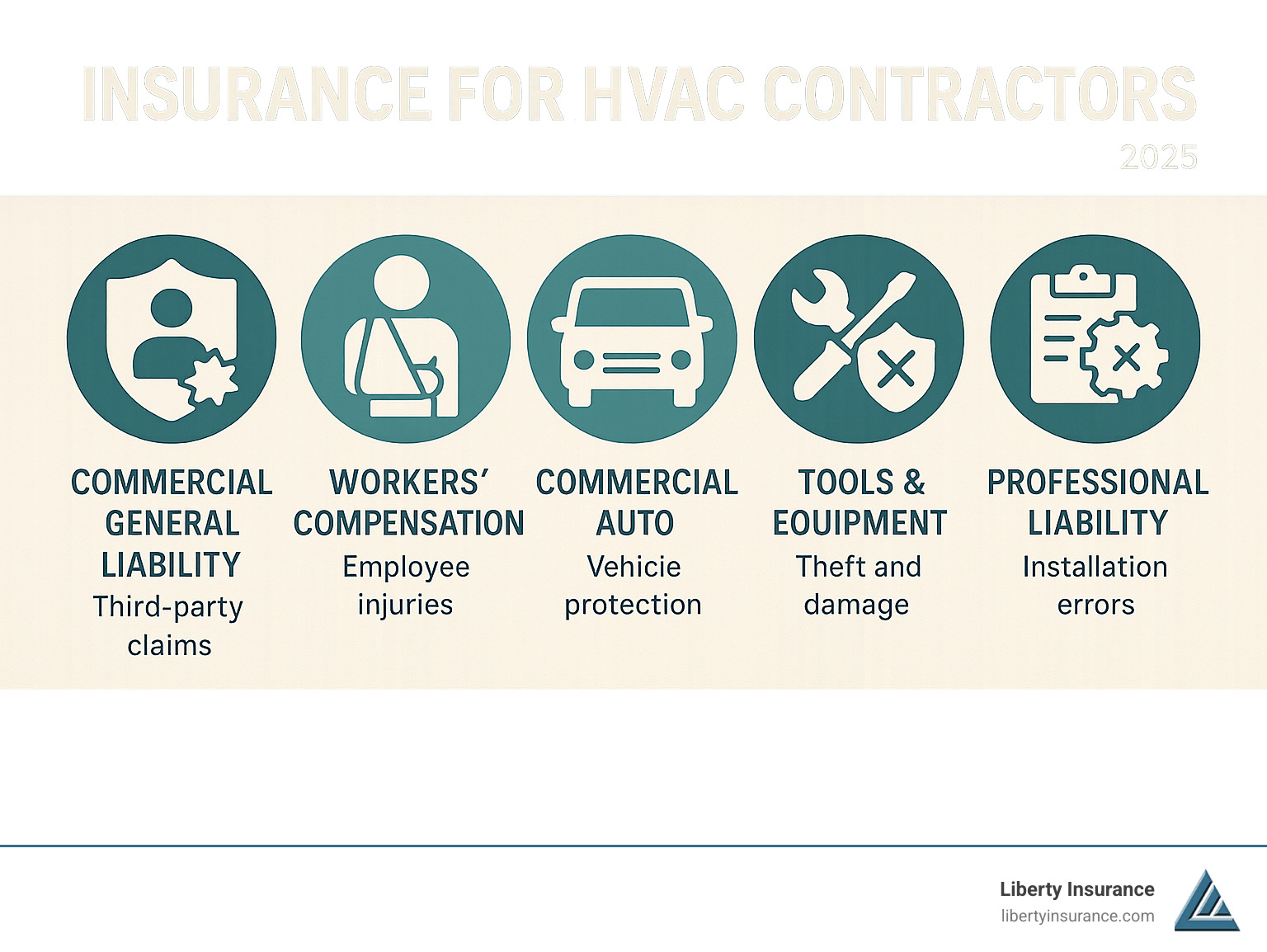
Essential HVAC contractor insurance includes:
- Commercial General Liability: Covers third-party injuries and property damage.
- Workers’ Compensation: Required by most states for employee injuries.
- Commercial Auto: Protects work vehicles and equipment transport.
- Tools & Equipment Coverage: Covers theft and damage to your valuable tools.
- Professional Liability: Protects against claims of faulty installation or advice.
Explore related topics:
Why Your HVAC Business Needs a Safety Net
Running an HVAC business means constantly navigating high-risk situations. The industry ranks among the most hazardous trades, with daily exposure to live electrical systems, regulated refrigerants, and dangerous heights. These risks could sink your business faster than a broken AC unit on the hottest day of summer. Insurance for HVAC contractors isn’t just about protecting your assets; it’s about ensuring business continuity when the unexpected strikes.
Proper insurance coverage also helps you win more contracts. Most commercial clients and general contractors require a Certificate of Insurance (COI) before considering your bid. This document proves you’re a professional who takes responsibility seriously, giving you a competitive edge. With over 13,500 HVAC businesses in Canada and thousands more in the US, demonstrating professionalism is key.
Who Needs HVAC Contractor Insurance?
Every professional in the HVAC trade needs coverage, regardless of size:
- Sole proprietors and independent contractors are highly vulnerable, as a single lawsuit could wipe out personal and business assets.
- Small HVAC businesses with employees are typically required by state law to carry workers’ compensation and are responsible for the actions of their entire team.
- Large HVAC companies handling major commercial contracts need high-limit policies to match the scale and financial risks of their projects.
Whether you’re a residential contractor or a subcontractor, you need your own policy. Don’t assume a general contractor’s insurance will cover you—it rarely does. A dedicated Insurance for Business Owners policy is crucial.
The High Cost of an Uninsured Accident
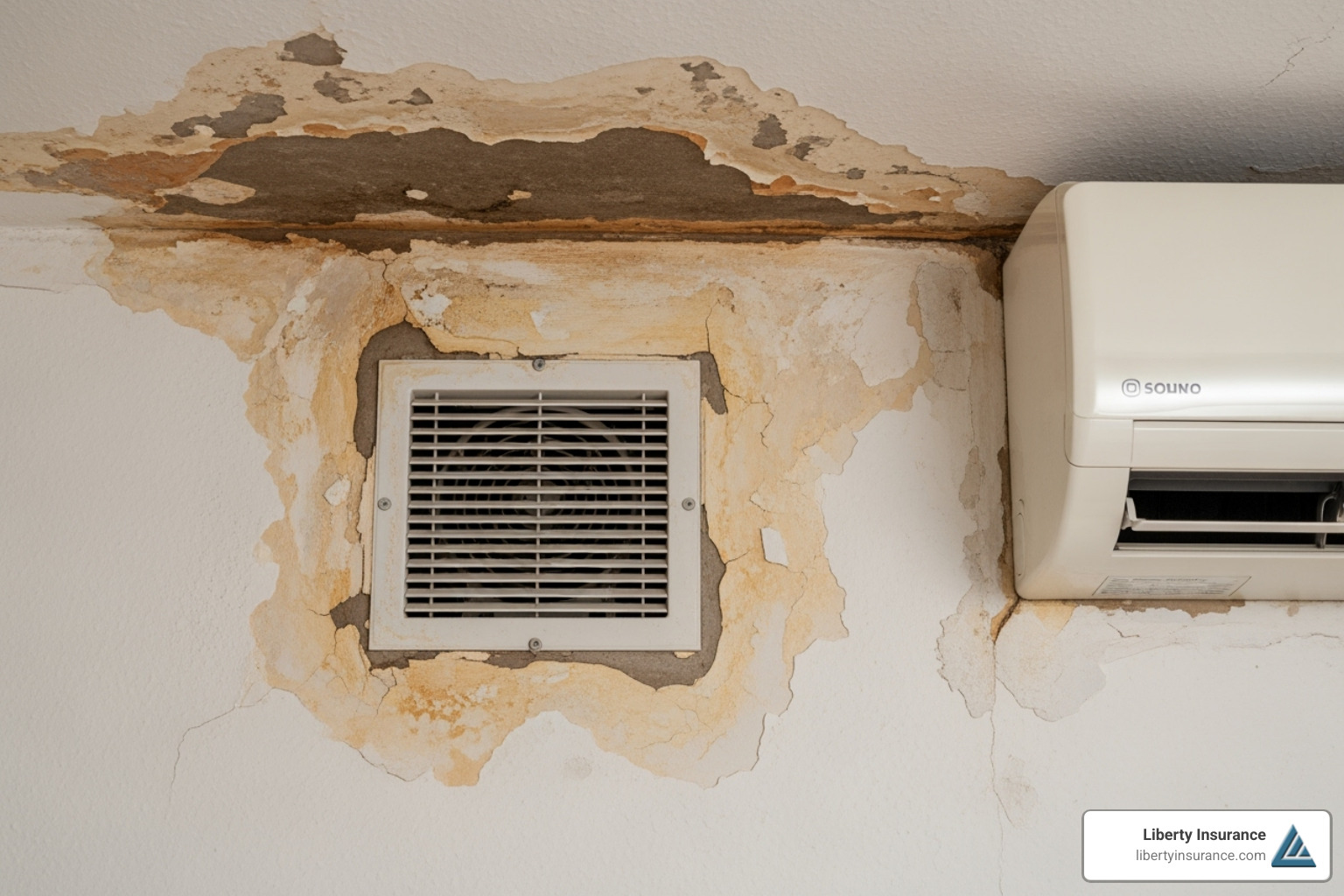
Imagine a small installation error leads to a slow water leak. The consequences can be devastating:
- Property Damage: Repairing water-damaged walls, ceilings, flooring, and electrical systems can easily exceed $50,000.
- Medical Expenses: If the leak causes mold growth, you could be liable for residents’ respiratory issues, with medical claims reaching six figures.
- Legal Fees: Defending a lawsuit can cost over $100,000, even if you’re not at fault.
- Reputational Damage: A single negative review online can deter countless future clients.
Without proper insurance for HVAC contractors, one accident can lead to business failure. The right coverage is smart business planning that prevents these nightmare scenarios.
Core Coverages: Building Your Essential HVAC Insurance Policy
Think of your insurance policy as the foundation of your business. A smart approach is to bundle core coverages into a Business Owner’s Policy (BOP), which often provides comprehensive protection at a lower cost. At Liberty Insurance, our Contractor Insurance solutions are custom to your specific needs. Your essential toolkit should include these four key policies.
Commercial General Liability (CGL) Insurance
CGL is the one policy every HVAC contractor must have. It protects your business if your work causes property damage or bodily injury to a third party (like a client or vendor). For example, CGL covers medical bills if a client trips over your tools or repair costs if you accidentally damage a customer’s hardwood floors. It also includes completed operations coverage, which protects you from claims arising long after a job is finished, such as a furnace malfunction causing water damage months later. For contractors in New Jersey, robust General Liability Insurance NJ is essential for securing work.
Workers’ Compensation Insurance
Lifting heavy equipment, working in cramped spaces, and handling electrical systems make HVAC a physically demanding job. If you have employees, most states legally require you to have workers’ compensation insurance. This policy covers medical expenses and lost wages for employees who get injured on the job. It also protects your business from employee lawsuits related to workplace injuries, providing a critical safety net for both your team and your company. We can help you steer state requirements, including options like Workers Compensation Insurance for Independent Contractors New Jersey.
Commercial Auto Insurance
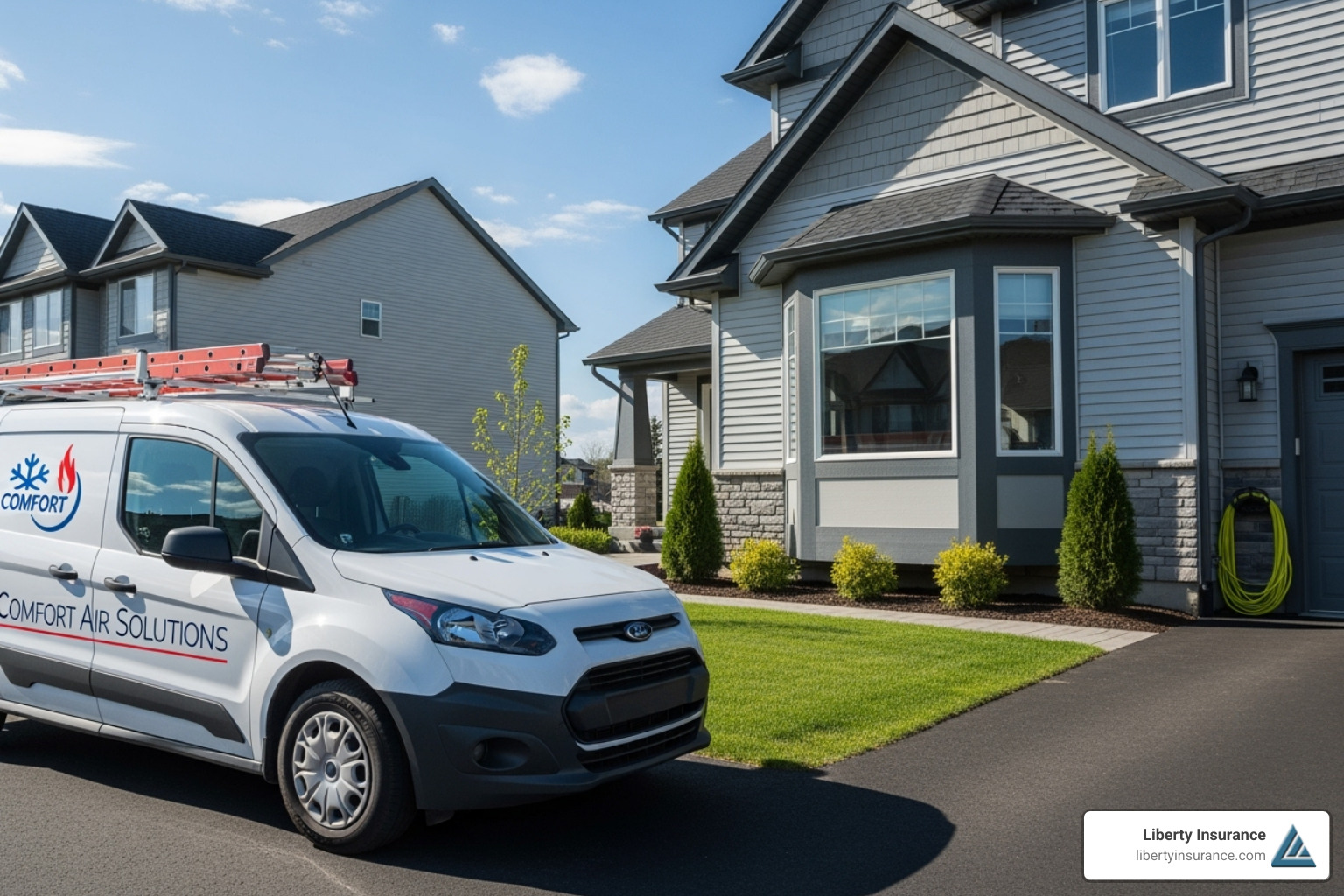
A personal auto policy will not cover accidents that happen while using your vehicle for work. A Commercial Auto Insurance policy is necessary to protect your business. It provides liability coverage if you or an employee cause an accident in a work vehicle, and it can also cover physical damage to your van or truck. This policy can be extended to include coverage for employees using their own vehicles for work errands (non-owned auto) or for vehicles you rent for a large job (hired auto). Our Commercial Auto Insurance keeps your mobile operations protected.
Inland Marine Insurance (Tools, Equipment, and Property in Transit)
Despite its name, Inland Marine insurance has nothing to do with water. This policy is designed for professionals who work at various job sites, protecting your valuable tools, equipment, and materials while they are in transit or at a client’s location. Standard property insurance only covers items at your fixed business address. Inland Marine insurance covers theft of tools from your van, damage to a new AC unit during installation, or loss of equipment at a job site. This coverage is vital for protecting the expensive assets that your business relies on every day. Learn more about how this policy complements standard Business Property Insurance by reviewing resources like the III’s guide to Understanding Inland Marine Insurance.
Specialized and Additional Coverages to Consider
While core coverages provide a solid foundation, the unique challenges of the HVAC industry may require specialized policies to fill potential gaps. Tailoring your policy ensures you have comprehensive protection against the specific risks you face. Our Small Business Insurance Options can help you explore all possibilities.
Professional Liability (Errors & Omissions)
Clients rely on your professional judgment for system design, equipment selection, and energy efficiency advice. If a client claims your faulty advice or a design error caused them financial harm—even without physical damage—Professional Liability insurance (also known as E&O) protects you. This policy covers claims of negligence, failure to perform, or design flaws, shielding your business from lawsuits related to the intellectual side of your work. As HVAC contractors are increasingly seen as indoor air quality experts, this protection, like our NJ Professional Liability Insurance, is more important than ever.
Pollution Liability Insurance
Standard CGL policies typically exclude pollution-related incidents, creating a significant coverage gap for HVAC contractors. Every time you handle refrigerants, oils, or chemicals, you face environmental liability risks. Pollution Liability insurance is designed to cover these exposures. It protects you from costs associated with refrigerant leaks, mold and bacteria growth from a faulty installation, hazardous substance spills, and regulatory fines. Without this coverage, you could be solely responsible for expensive cleanup costs and legal claims.
Commercial Property and Business Interruption Insurance
Even if you work at client sites, you likely have a home base—an office, workshop, or storage unit. Commercial Property insurance protects your physical location and the assets stored there, such as inventory, computers, and equipment, from perils like fire, theft, and vandalism. But what happens to your income if a fire destroys your workshop? Business Interruption Insurance is the crucial addition that covers lost income and ongoing expenses (like rent and payroll) while your business recovers from a covered disaster. Combining Commercial Property Insurance NJ with Business Interruption Insurance ensures both your physical assets and your revenue stream are protected.
Umbrella and Excess Liability Insurance
Larger commercial jobs and contracts with general contractors often require higher liability limits than what your primary policies provide. Umbrella or Excess Liability insurance sits on top of your General Liability, Commercial Auto, and Employers Liability (part of Workers’ Compensation) to add an extra layer of protection when a catastrophic claim exceeds your underlying limits. For example, if a rooftop incident results in multiple injuries and extensive property damage, defense and settlement costs can quickly surpass a primary $1 million limit. An umbrella policy can extend that protection to $2 million, $5 million, or more at a comparatively low cost per additional million.
Key advantages include:
- Contract compliance when projects specify higher per-occurrence or aggregate limits.
- Broader peace of mind for exposures with severe injury potential (falls from heights, electrical burns, or multi-vehicle auto accidents).
- Cost-efficient limit increases relative to raising each underlying policy separately.
If your firm handles multi-story work, heavy commercial equipment, or large mechanical retrofits, an umbrella policy is a smart way to safeguard your balance sheet.
Cyber Liability Insurance
Modern HVAC businesses rely on software for dispatching, invoicing, and even remote monitoring of building systems and smart thermostats. That digital footprint creates cyber exposures—from phishing and ransomware to theft of customer data. Cyber Liability insurance can cover first-party expenses (data restoration, business interruption, ransomware negotiations) and third-party claims (privacy liability, regulatory defense and fines where insurable) stemming from a breach. Even small firms can be targeted. If you store customer payment details, maintain maintenance records, or connect to building automation systems, adding cyber coverage helps you recover quickly and maintain client trust after an incident.
Decoding the Cost of Insurance for HVAC Contractors
“How much does insurance for HVAC contractors cost?” is a common question, but the answer is unique to each business. Like a custom HVAC installation, premiums depend on many factors. Our goal is to customize your coverage for maximum value without overpaying. We can provide a detailed Get Business Insurance Quote custom to your specific operations.

Key Factors That Influence Your Premiums
Insurers assess several factors to determine your premium:
- Business Location: Operating in a dense urban area in New Jersey may carry different risks than a suburban location.
- Operation Size: Your annual revenue and number of employees directly impact risk exposure.
- Experience & Claims History: A long, clean track record can lead to lower rates, while a history of claims may increase them.
- Services Offered: Commercial installations, refrigeration work, and gas line services present different risks than residential repairs.
- Coverage Limits & Deductibles: Higher limits increase premiums, while higher deductibles can lower them.
What You Can Expect to Pay
While costs are highly individualized, here are some typical starting points based on industry data:
- General Liability Insurance: Often starts around $78 per month for a small operation.
- Business Owner’s Policy (BOP): Averages around $124 per month, bundling liability and property coverage for better value.
- Workers’ Compensation Insurance: Averages approximately $223 per month, varying significantly with payroll size.
Small HVAC businesses with minimal risk factors might find basic coverage starting around $650 per year. However, most established contractors will need more comprehensive protection, with annual costs typically ranging from $3,000 to $10,000. The key is finding the right balance between adequate protection and affordability.
Ways to Reduce Insurance Costs
You can actively manage premiums without sacrificing critical protection by tightening operations and transferring risk where appropriate:
- Formal safety program: Document procedures for lockout/tagout, ladder use, fall protection, confined spaces, and electrical work. Regular toolbox talks and OSHA 10/30 training reduce injury frequency and severity.
- Fleet safety measures: Pull MVRs on all drivers, establish clear driving policies, and consider telematics/dash cams to encourage safe behavior and defend against disputed claims.
- Protect tools and inventory: Keep a serialized inventory, use lockable gang boxes and van partitions, park in well-lit areas, and install GPS tracking on high-value equipment to deter theft.
- Subcontractor risk transfer: Require COIs from subs, verify limits and effective dates, and obtain additional insured, primary/non-contributory, and waiver of subrogation endorsements per contract requirements.
- Smart deductible and limit choices: Increase deductibles where you can absorb small losses, and reserve higher limits for exposures with severe loss potential.
- Workers’ comp strategies: Implement a return-to-work program, confirm correct class codes and payroll allocation, and prepare for audits to avoid surprise premium adjustments.
- Bundle and pay efficiently: Use a BOP where available, place multiple policies with one carrier for potential credits, and consider EFT or pay-in-full options to reduce fees.
These steps can lower the total cost of risk, improve your loss profile over time, and position your business for better pricing at renewal.
Navigating Legal, Licensing, and Contractual Requirements
Running a successful HVAC business requires more than just technical skill; it demands compliance with legal, licensing, and contractual obligations. The right insurance for HVAC contractors is crucial for meeting these requirements and proving you run a legitimate, professional operation.
Licensing, Bonds, and Certifications
The HVAC industry is strictly regulated to ensure safety and environmental protection. Key requirements include:
- State Licensing: Rules vary by location. For example, the Texas Department of Licensing & Regulation has different requirements than New Jersey. Always research and comply with your local laws.
- EPA Certification: This federal requirement is non-negotiable for any technician who handles refrigerants. It demonstrates safe handling practices and helps you avoid costly fines.
- Surety Bonds: Often required for licensing or for specific projects, a surety bond is a financial guarantee that you will complete your work as promised. It shows clients and regulators that you are financially responsible.
The Certificate of Insurance (COI)
A Certificate of Insurance (COI) is your insurance report card. This one-page document, issued by your provider, summarizes your coverage types, policy limits, and effective dates. It has become an essential business tool:
- Client & Landlord Requirements: Most commercial clients and landlords will not allow you on their property without seeing a COI. It protects them from liability if an accident occurs during your work.
- Accessing Job Sites: Major construction and industrial sites have strict insurance requirements, and a COI is your ticket through the gate.
Being able to quickly provide a COI demonstrates professionalism and preparedness. It shows potential clients you are organized, trustworthy, and ready to work, giving you a significant advantage in a competitive market.
Frequently Asked Questions about HVAC Insurance
Understanding the nuances of your coverage can save your business from costly surprises. Here are answers to the most common questions we hear about insurance for HVAC contractors.
What happens if a subcontractor I hire causes damage?
Your primary insurance policy typically only covers your direct employees, not subcontractors. If a sub you hire causes damage, your policy may not respond. The best practice is to transfer that risk. Always require subcontractors to provide their own Certificate of Insurance (COI) proving they have adequate general liability coverage. For added protection, you can also require them to name your business as an additional insured on their policy. This ensures you are protected from their potential mistakes.
Does my personal auto policy cover my work truck?
No. This is a dangerous and common misconception. Personal auto policies explicitly exclude commercial use. If you are in an accident while driving to a job site, transporting tools, or running a work-related errand, your personal insurer will likely deny the claim, leaving you personally liable for all damages. A dedicated commercial auto policy is essential to cover any vehicle used for business purposes.
Are my expensive tools covered if they are stolen from a job site?
General liability insurance does not cover your own property, including tools and equipment. CGL is designed to cover damage you cause to others’ property. To protect your valuable mobile assets, you need Inland Marine insurance, often called a tools and equipment policy. This coverage protects your gear from theft, damage, or loss, whether it’s in your vehicle, in transit, or at a job site. Be sure to maintain a detailed inventory of your tools to ensure your policy limits are adequate to cover a total loss.
How do I file a claim after an incident?
Filing a claim promptly and correctly is crucial for a smooth process. Follow these general steps:
- Ensure Safety First: Address any immediate hazards to prevent further injury or damage.
- Document Everything: Take photos and videos of the damage from multiple angles. Collect contact information from any witnesses. Write down a detailed account of what happened as soon as possible.
- Notify Your Insurer: Contact your insurance agent or carrier immediately. They will guide you through the specific steps, provide the necessary forms, and assign a claims adjuster to your case.
- Cooperate with the Adjuster: Provide all the documentation and information the adjuster requests. Be honest and thorough. Keeping detailed records of your jobs, employees, and equipment will be invaluable during this process.
Acting quickly and keeping organized records can significantly speed up your claim and lead to a better outcome.
What about lawsuits from my own employees?
General Liability and Workers’ Compensation do not cover lawsuits from employees regarding their employment rights. For this, you need Employment Practices Liability Insurance (EPLI). This specialized policy protects your business against claims of:
- Wrongful termination
- Discrimination
- Harassment
- Retaliation
- Other employment-related issues
As your business grows and you hire more employees, the risk of an employment-related lawsuit increases. EPLI is a critical coverage for protecting your business from these potentially costly and time-consuming claims.
Conclusion: Secure Your Business and Focus on Growth
Running an HVAC business involves daily risks, from handling refrigerants to working on commercial rooftops. With the right insurance for HVAC contractors, you can manage these risks effectively and focus on what you do best.
Comprehensive coverage—including General Liability, Workers’ Comp, Commercial Auto, and Inland Marine—forms an essential safety net. Specialized policies like Professional and Pollution Liability protect you from the unique exposures of your trade. This investment not only provides financial protection but also builds client trust, helps you win bigger contracts, and gives you the peace of mind to grow your business.
At Liberty Insurance, we help contractors across New Jersey, from Toms River to New Brunswick, steer their complex insurance needs. We take the time to understand your specific risks and growth plans to build a policy that fits.
Don’t let coverage gaps put your hard work at risk. Your clients depend on you to keep them comfortable—let us help you stay protected.
Ready to secure your business’s future? Contact Us today to discuss your needs, or get a customized Contractors Insurance quote. Let us handle your insurance so you can focus on keeping things running smoothly.

