
Why Your Jewelry Needs More Protection Than Standard Insurance Offers
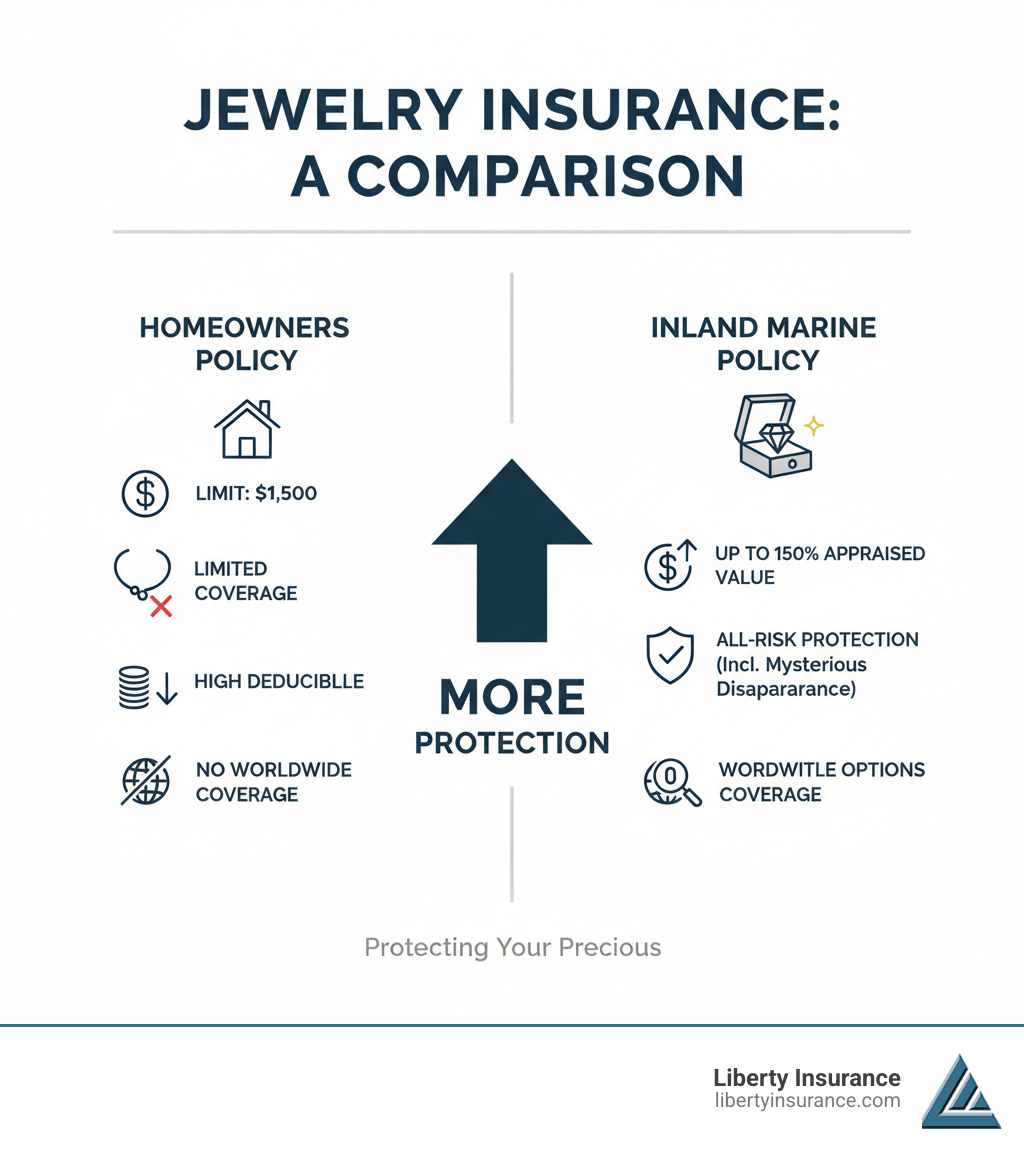
When a diamond engagement ring or family heirloom represents thousands of dollars in value, the limitations of standard homeowners insurance become painfully clear. A basic policy may limit jewelry coverage to as little as $1,500, leaving you dramatically underinsured. This is where inland marine insurance jewelry coverage provides a critical solution.
This specialized insurance offers comprehensive protection that standard policies can’t match:
- Full Value Coverage: Covers the full appraised value, not a low sub-limit.
- All-Risk Protection: Protects against theft, damage, and even mysterious disappearance.
- Zero Deductible Option: Many policies have no deductible, unlike standard home insurance.
- Worldwide Coverage: Your jewelry is protected anywhere in the world.
The term “marine” often confuses new policyholders, but it simply refers to a type of insurance designed for movable property. Inland marine insurance fills the protection gap by offering “all-risk” coverage that protects against theft, accidental damage, and even mysterious disappearance. This comprehensive approach ensures your valuables are protected in virtually any situation.
I’m Andrew Harris, a Certified Insurance Counselor (CIC) with Liberty Insurance. I’ve helped countless clients understand why inland marine insurance jewelry coverage is essential for protecting their most precious possessions. This specialized coverage provides the peace of mind that standard policies simply cannot deliver.
What is Inland Marine Insurance? Unpacking the Odd Name
The term “inland marine insurance” often causes confusion. Why “marine” for items that never go near the water? The name is a holdover from the earliest days of insurance, which covered goods transported by sea.

Centuries ago, ocean marine insurance was created to protect valuable cargo from pirates and storms. As commerce moved inland via railroads and trucks, the insurance industry adapted. They created “inland marine insurance” by applying the same principles to property transported over land. The core concept was protecting movable property—items not fixed to one location. These policies became known as “floaters” because the coverage “floats” with the property wherever it goes.
Today, inland marine insurance covers a wide range of movable assets, from construction equipment to fine art. Most importantly for our discussion, it provides superior protection for high-value personal items like jewelry. For businesses, our Marine Cargo Insurance resources offer more detail.
Why is it Called ‘Marine’ Insurance?
The name “marine” stuck because the fundamental principle—protecting valuable property that moves—remained the same. Instead of covering ocean perils, inland marine insurance guards against modern risks like theft, accidental damage, and mysterious disappearance.
This broad definition is what makes inland marine insurance jewelry coverage so powerful. Your engagement ring travels with you to the office, on vacation, and out to dinner. Traditional property insurance is designed for things that stay put, but inland marine policies are built for property that lives life alongside you. This flexibility offers protection whether an item is off-premises, in transit, or in someone else’s care. The Insurance Information Institute offers more detail on this evolution.
Personal vs. Commercial Inland Marine Coverage
Inland marine insurance is available for both personal and commercial needs, each custom to different risks.
Personal inland marine coverage, often called a “personal articles floater,” protects treasured possessions like jewelry, fine art, collectibles, and musical instruments. It’s specifically designed to cover the value gaps left by standard homeowners policies for items that are often irreplaceable.
Commercial inland marine insurance protects business assets that are on the move or face unique risks. This includes contractor’s equipment moving between job sites, goods in transit, and specialized policies like Jewelers Block insurance. This policy is custom-built for the jewelry industry, covering a jeweler’s entire inventory, customer property, and items at trade shows. Our Business Asset Protection Ultimate Guide explores how businesses can use this coverage.
The Shortcomings of Standard Homeowners Insurance for Jewelry
Many people assume their homeowners policy fully protects their valuables. Consider Sarah from Toms River, who thought her $8,000 engagement ring was covered. After a theft, she was shocked to learn her policy would only pay $1,500, leaving a painful $6,500 gap.

Standard homeowners policies were not designed for high-value, portable items like jewelry. They have several key weaknesses:
- Limited Coverage: Most policies have a low “sub-limit” for jewelry, often just $1,000 to $2,000 per loss, regardless of the item’s true value.
- High Deductibles: You must pay your standard homeowners deductible (often $500-$2,500) before the insurance pays anything. For a smaller jewelry loss, this could mean you get little to no reimbursement.
- Claim Impact: Filing a jewelry claim can increase your homeowners insurance premiums or even lead to non-renewal, penalizing you for using your coverage.
- Limited Perils: Coverage is typically restricted to “named perils” like fire and theft, excluding common issues like accidental loss or damage.
Understanding Coverage Sub-Limits
A homeowners policy might have a $300,000 personal property limit, but the fine print reveals much lower sub-limits for specific categories like jewelry. This typical limit of $1,500 has not kept pace with rising jewelry values, leaving owners with inadequate reimbursement after a loss. This gap is precisely why specialized inland marine insurance jewelry coverage exists. Our High Value Items Insurance guide explains how to get the protection you need.
Named Perils vs. Accidental Loss
Standard policies cover “named perils,” meaning only losses from specific events listed in the policy (like theft or fire) are covered. But what if a ring slips off your finger and is lost forever? Or a stone falls out of its setting? This “mysterious disappearance” is a common scenario that homeowners insurance typically won’t cover because you can’t prove a named peril occurred.
Inland marine insurance jewelry policies provide “all-risk” coverage, which protects against any loss unless it’s specifically excluded. This broader protection covers scenarios that standard policies miss.
| Feature | Homeowners Policy | Inland Marine Policy (for Jewelry) |
|---|---|---|
| Coverage Limit | Typically $1,000 – $2,000 sub-limit for jewelry | Full appraised value (often up to 150%) |
| Covered Perils | Named perils (e.g., fire, theft) | All-risk (all perils except exclusions) |
| Deductible | Standard policy deductible applies | Often zero deductible, or flexible options |
| Worldwide Coverage | Often limited to on-premises or specific locations | Typically worldwide coverage |
| Claim Impact | Can impact homeowners premium/renewability | Standalone, generally no impact on homeowners |
The comparison makes it clear why specialized protection is necessary. Inland marine insurance jewelry coverage fills the critical gaps that standard policies leave open.
Your Comprehensive Guide to Inland Marine Insurance for Jewelry
For any jewelry collection with significant value—from an engagement ring to a family heirloom—inland marine insurance jewelry coverage is essential. It provides “all-risk” protection that follows your precious pieces wherever they go and recognizes their true worth, unlike a standard homeowners policy.
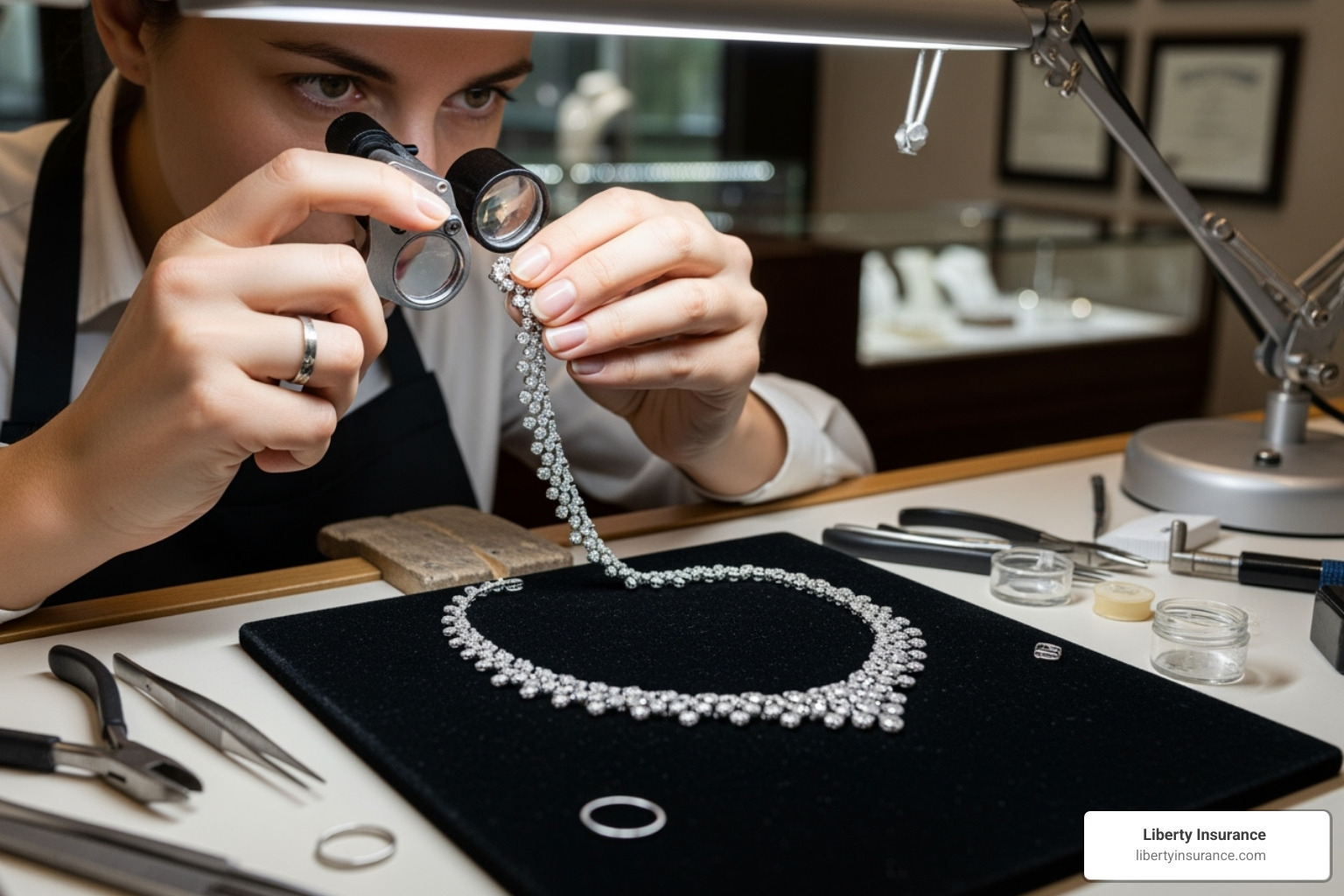
A key feature is the flexibility in replacement options. Many policies offer agreed value settlement, where the value of each item is agreed upon upfront. If a loss occurs, you receive the full agreed amount without arguments over depreciation or market fluctuations.
What Does Inland Marine Insurance for Jewelry Cover?
“All-risk” means a policy covers every type of loss except for those specifically excluded. This provides a protective bubble around your valuables. Key coverages include:
- Theft: Protection extends beyond home burglary to include scenarios like pickpocketing, theft from a hotel room, or even a necklace snatched during vacation.
- Accidental Damage: This covers those heart-stopping moments, like a diamond falling out of its setting, a ring being crushed in a car door, or a pearl necklace breaking.
- Mysterious Disappearance: This crucial coverage applies when jewelry vanishes without explanation. It recognizes that sometimes valuable items just disappear, a situation not typically covered by standard policies.
- Worldwide Travel Protection: Your jewelry is protected whether you are at home in Princeton, on a business trip, or honeymooning in Italy.
Common Exclusions to Be Aware Of
While coverage is broad, some logical exclusions apply to keep premiums reasonable. Always review your specific policy, but common ones include:
- Normal wear and tear: The natural aging of jewelry over time, like minor scratches.
- Intentional damage: Deliberate acts to damage property.
- War or conflict: Catastrophic events outside the scope of normal insurance.
- Pre-existing damage: Damage that existed before the policy was active.
- Manufacturing defects: Flaws that are the manufacturer’s responsibility.
Personal vs. Commercial: Understanding Jewelers Block Insurance
While this article focuses on personal jewelry, it’s useful to know about the commercial equivalent: Jewelers Block insurance. This is a highly specialized inland marine policy for jewelry retailers, wholesalers, and manufacturers. It provides comprehensive coverage for a business’s entire inventory, customer property left for repair (bailee coverage), and items in transit between shows or stores. This type of policy is essential for protecting the unique, high-value assets of a jewelry business. For more on protecting business inventory, see our Inventory Loss Insurance guide.
Getting the Right Coverage: A Step-by-Step Guide
Securing the right inland marine insurance jewelry coverage is a straightforward process. By gathering the correct information and understanding your options, you can build a safety net that matches the true value of your treasured possessions.
The Importance of Appraisals and Documentation
Proper documentation is the foundation of your policy. Without it, you cannot get the protection you need.
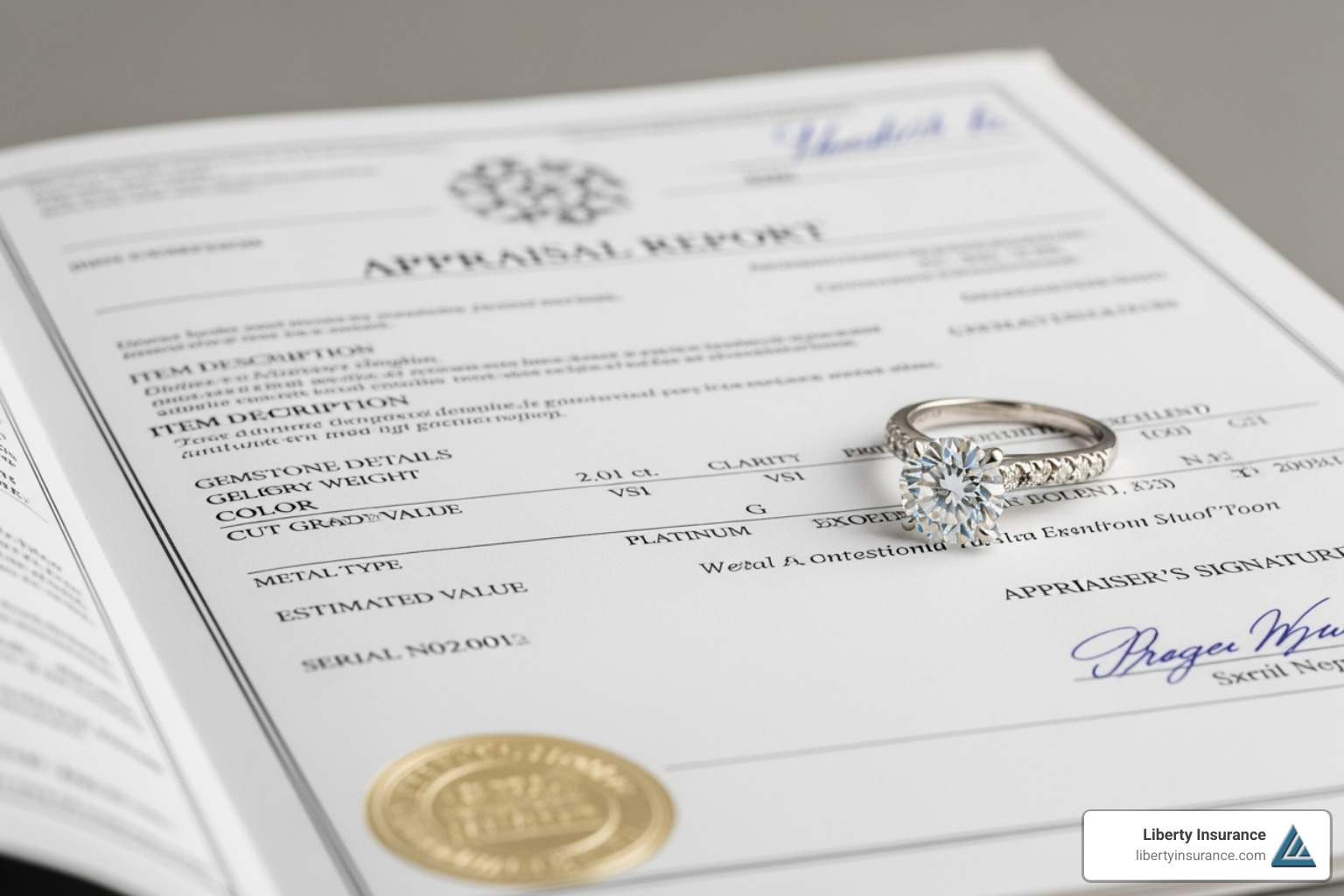
- Get a Certified Appraisal: A professional appraiser provides an official valuation that insurers trust. This document details the quality, materials, and craftsmanship of your piece. Because market values for metals and gems fluctuate, you should update appraisals every three to five years to ensure your coverage remains adequate.
- Keep Detailed Records: Take clear, detailed photographs of your jewelry from multiple angles. Keep original purchase receipts to establish ownership and value. For significant stones, certificates of authenticity from reputable grading labs add another layer of verification.
Factors That Influence Your Premium
Several factors determine your premium for inland marine insurance jewelry, many of which you can control:
- Appraised Value: The total value of your insured jewelry is the primary factor.
- Deductible: Choosing a higher deductible can lower your premium, though zero-deductible options are common and popular for their convenience.
- Location and Security: Your geographic location in New Jersey matters, but you can often earn better rates by using a home safe, alarm system, or bank safety deposit box for storage.
- Claims History: A clean claims history across your insurance policies can result in lower premiums.
Floater/Endorsement vs. Standalone Policy
You have two main options for insuring your jewelry:
A Homeowners Endorsement (Floater): This adds coverage to your existing homeowners policy. It’s simple and consolidates your bills, but has a major drawback: a jewelry claim can negatively impact your entire homeowners policy, potentially raising rates or affecting renewal. This option can work for a few items of moderate value where simplicity is key.
A Standalone Inland Marine Policy: This policy is separate from your home insurance. A jewelry claim will not affect your homeowners policy. Standalone policies often provide broader “all-risk” coverage, zero-deductible options, and worldwide protection. Some even cover up to 150% of the appraised value to account for appreciation. This is the superior choice for significant collections or frequent travelers.
For those with extensive valuable collections, standalone coverage provides the best protection and peace of mind. Our Luxury Asset Insurance guide offers more insights.
Frequently Asked Questions about Inland Marine Jewelry Insurance
After years of helping clients across New Jersey understand inland marine insurance jewelry coverage, I’ve noticed the same thoughtful questions come up time and again. Here are answers to the most common concerns.
How is “mysterious disappearance” handled by insurance?
Mysterious disappearance is when an item vanishes without a clear explanation of what happened. You know you had your wedding ring yesterday, but today it’s nowhere to be found. Standard homeowners policies typically won’t cover this because you can’t point to a “named peril” like theft. However, a key benefit of an “all-risk” inland marine policy is that it often covers mysterious disappearance. It provides reimbursement even when the mystery remains unsolved, offering incredible peace of mind for anyone who wears their jewelry regularly.
Does inland marine insurance for jewelry have a deductible?
This is a key area where these policies offer great flexibility. Many specialized inland marine insurance jewelry policies are offered with a zero deductible. This means if your $10,000 ring is stolen, the insurer pays the full $10,000 without you paying anything out-of-pocket. However, you can also choose a policy with a deductible (e.g., $250 or $500) to help lower your annual premium. This allows you to select the option that best fits your budget and risk tolerance.
How much does jewelry insurance typically cost?
This comprehensive coverage is surprisingly affordable. The annual cost is generally calculated as a small percentage of your jewelry’s total appraised value, typically ranging from 1% to 2% of the item’s worth. For example, a $10,000 engagement ring would likely cost between $100 and $200 per year to insure. For less than $20 a month, you can get full replacement value coverage, often with no deductible and worldwide protection. When you consider the potential for a devastating financial loss, it’s a remarkably cost-effective investment.
Conclusion
When it comes to protecting your most precious jewelry, standard homeowners insurance simply doesn’t cut it. With low coverage limits and restrictive terms, it can leave you exposed to significant financial loss. That’s where inland marine insurance jewelry coverage becomes essential.
This specialized protection offers what standard policies cannot: comprehensive “all-risk” coverage for theft, accidental damage, and mysterious disappearance. With benefits like worldwide protection, full-value reimbursement, and zero-deductible options, it provides true security. Most importantly, a standalone policy ensures that a jewelry claim won’t negatively impact your homeowners insurance rates or renewability.
At Liberty Insurance, we understand that jewelry represents stories, promises, and irreplaceable memories. The right coverage provides not just financial security, but the peace of mind to wear and enjoy your most treasured possessions without the constant worry of “what if.”
Ready to give your valuable jewelry the protection it deserves? Secure your valuable assets with Inland Cargo Insurance and find out how Liberty Insurance can help safeguard what matters most to you.

