
Why Flooring Contractor Insurance is Non-Negotiable
If you’re a professional laying down everything from hardwood to tile, understanding insurance for flooring contractors is crucial for protecting your business and ensuring peace of mind. Without the right coverage, one unexpected accident could put your entire operation at risk.
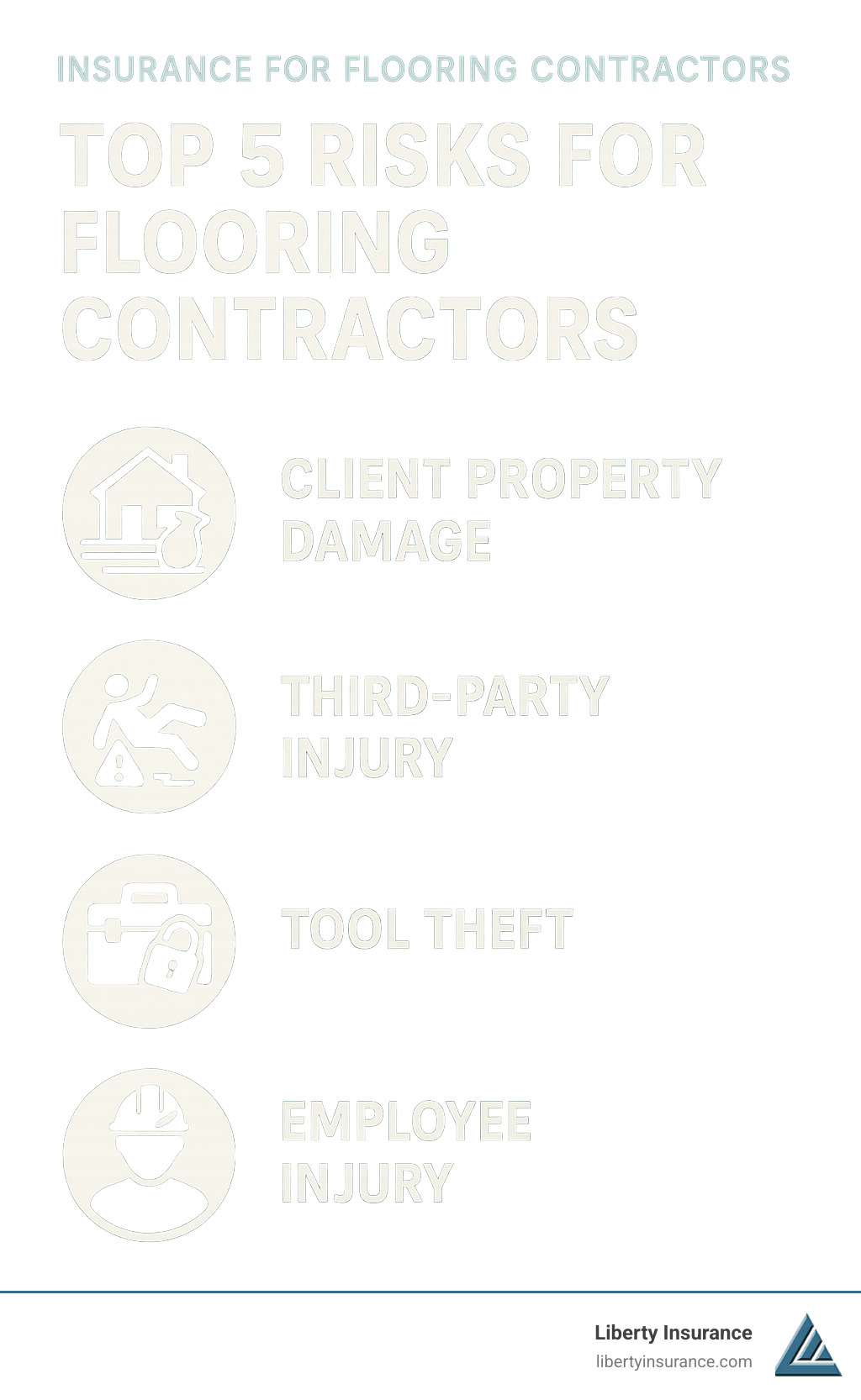
For quick reference, here are the core types of insurance flooring contractors should consider:
- General Liability Insurance: Protects against claims of bodily injury or property damage to third parties. Think of it as your safeguard if a client trips over your equipment or you accidentally damage their baseboards.
- Workers’ Compensation Insurance: Essential if you have employees. It covers medical expenses and lost wages for work-related injuries or illnesses.
- Commercial Auto Insurance: Covers your business vehicles, whether it’s for transporting materials, tools, or employees to job sites.
- Tools & Equipment Insurance (Inland Marine): Protects your valuable gear from theft, damage, or loss while at job sites or in transit.
- Completed Operations Coverage: Crucial for claims that arise after your work is finished, such as issues from a faulty installation.
Having these policies in place isn’t just about protection; it’s often a requirement from clients and a sign of a professional, responsible business. It helps you comply with regulations and ensures you can continue to operate even when unforeseen events occur.
I’m Andrew Harris. With hundreds of hours of study as a Certified Insurance Counselor (CIC) and Accredited Advisor in Insurance (AAI), I bring a comprehensive understanding of core insurance concepts essential for insurance for flooring contractors. My goal is to simplify these complex topics, so you can focus on laying down perfect floors.
Insurance for flooring contractors terms at a glance:
- Contractors Insurance New Jersey
- New Jersey liability insurance
- home improvement contractor insurance nj
The Essential Shield: Core Insurance Coverages for Flooring Contractors
When we talk about protecting your flooring business, we’re really talking about building a robust shield around your operations. Just like you carefully select the right underlayment for a perfect floor, we need to choose the foundational insurance policies that will support your business through thick and thin. These core coverages are designed to address the most common and potentially devastating risks a flooring contractor faces, from third-party claims to employee safety and asset protection.
General Liability Insurance: Your First Line of Defense
This is the cornerstone of your protection. General Liability insurance covers claims of bodily injury or property damage that you or your employees may cause to third parties. For example, if a client trips over your tools and gets injured, or if you accidentally scratch a custom-built cabinet while installing flooring, this policy would cover the associated costs, including legal defense. It also includes coverage for “completed operations,” which protects you from claims that arise after a job is finished, such as a floorboard coming loose and causing an injury. Another key component is “advertising injury,” which can cover issues like copyright infringement in your marketing materials.
Workers’ Compensation: Protecting Your Most Valuable Asset
If you have employees, Workers’ Compensation insurance is not just a good idea—it’s required by law in most states, including Pennsylvania. This policy covers medical expenses and a portion of lost wages for employees who are injured or become ill on the job. For instance, if a worker strains their back while lifting heavy materials or suffers a cut from a tool, Workers’ Comp provides the necessary benefits. This protects your employees’ well-being and shields your business from potentially crippling lawsuits related to workplace injuries.
Commercial Auto Insurance: Coverage on the Go

Your personal auto policy won’t cover vehicles used for business purposes. Commercial Auto insurance is essential for any vans, trucks, or cars used to transport tools, materials, and crew to job sites. It provides liability and physical damage coverage, protecting you from the high costs associated with accidents. This includes coverage for vehicles you own, as well as “hired and non-owned” auto coverage for vehicles you rent or for employees using their personal cars for business errands. Given the high costs associated with vehicle accidents, this coverage is a must-have for any contractor on the move.
Tools & Equipment Insurance (Inland Marine)
Your tools and equipment are the lifeblood of your business. Standard property insurance often doesn’t cover them once they leave your primary business location. That’s where Tools & Equipment insurance, also known as an “inland marine” policy, comes in. It protects your valuable gear—from sanders and saws to moisture meters—from theft, damage, or loss, whether they are in transit, at a job site, or stored temporarily off-site. This also includes an “installation floater,” which covers your materials (like hardwood or tile) while they are being transported or are awaiting installation at a client’s property. This is critical for protecting your investment before the job is even complete.
Understanding the Cost of Insurance for Flooring Contractors

“How much will this actually cost me?” It’s a critical question for any business owner. The cost of your insurance for flooring contractors isn’t a one-size-fits-all price. Instead, it’s a customized premium based on your specific business operations and risk profile. Factors influencing your premium include the size of your business, your location, claims history, and the coverage limits and deductibles you select. At Liberty Insurance, we work with you to find comprehensive coverage that fits your budget and provides excellent value.
How Premiums Are Calculated
Insurance underwriters assess several key details to calculate your premium. This process helps them understand your unique risks and tailor a policy that’s right for you:
- Payroll and Revenue: Your total payroll and annual revenue are strong indicators of your business’s size and operational scale, which directly correlates with your potential liability exposure.
- Types of Projects: The nature of your work matters. Large-scale commercial installations may carry different risks compared to smaller residential jobs.
- Use of Subcontractors: If you hire subcontractors, their insurance status can affect your own. We’ll help you understand how to manage this risk, often through requirements for them to carry their own insurance.
- Safety Record and Experience: A clean claims history and a documented safety program demonstrate a commitment to risk management, which can lead to lower premiums. Similarly, a business with many years of experience is often viewed as a lower risk.
Average Costs and How to Save Money
While every policy is unique, it’s helpful to have a general idea of what other flooring contractors might pay. These are average annual figures, and your quote may vary:
- General Liability Insurance: Often around $1,819 per year.
- Workers’ Compensation Insurance: Averages approximately $2,824 annually.
- Business Owner’s Policy (BOP): Averages about $2,867 a year. A BOP is a smart way to bundle General Liability and Commercial Property insurance, often at a lower cost than buying them separately.
Looking for ways to manage your insurance costs? Here are some effective strategies:
- Bundle Your Policies: Combining coverages into a Business Owner’s Policy (BOP) is one of the easiest ways to save.
- Choose Higher Deductibles: A higher deductible means you pay more out-of-pocket in the event of a claim, but it will lower your regular premium payments. We can help you find a balance that works for your cash flow.
- Implement a Strong Safety Program: Proactively managing risk with safety training and proper equipment use can significantly reduce accidents and, in turn, your insurance costs.
- Review Your Policy Annually: Your business isn’t static, and neither are your insurance needs. An annual review ensures your coverage is still appropriate and you’re getting the best rates.
Ready to see what your custom policy would cost? We make it easy to Get a Business Insurance Quote and explore your options.
Navigating Legal Waters: Pennsylvania Insurance Regulations
Operating a flooring business in Pennsylvania means complying with specific state rules and regulations. Understanding these mandates for insurance for flooring contractors is essential for protecting your business, ensuring legal compliance, and demonstrating your professionalism to clients. Proper insurance can help you avoid penalties and qualify for more projects, as many clients require proof of coverage before work begins. For the most current and detailed information, it’s always best to consult official Pennsylvania state government resources.
Mandatory Insurance for Flooring Contractors in PA
In Pennsylvania, several types of insurance for flooring contractors are required by law or by contract:
Workers’ Compensation: If you have any employees—even just one—Pennsylvania law requires you to carry Workers’ Compensation insurance. This vital coverage provides for medical expenses and lost wages if an employee is injured on the job. It protects your team and shields your business from costly lawsuits.
Commercial Auto Insurance: If your business owns or uses vehicles to transport materials, tools, or crew, you must have a Commercial Auto policy. A personal auto policy will not cover accidents that occur during business operations. Pennsylvania requires all vehicles to meet minimum liability standards, and your work vehicles are no exception.
Home Improvement Contractor Registration Act (HICRA): While not an insurance policy itself, HICRA requires residential contractors doing more than $5,000 of work per year to register with the state. A key part of this registration involves demonstrating financial responsibility, which often includes having adequate general liability insurance. We can provide you with Certificates of Insurance (COIs) quickly—often on the same day—to help you meet HICRA requirements and secure contracts.
Penalties for Non-Compliance
Ignoring insurance requirements is a risky gamble that can have severe consequences for your business. The potential penalties for non-compliance in Pennsylvania are significant and can include:
- Steep Fines: State regulatory bodies can levy heavy fines for operating without the required insurance.
- Stop-Work Orders: Authorities can shut down your job sites, leading to project delays, lost revenue, and a damaged reputation.
- License Suspension or Revocation: Your contractor’s license could be at risk, potentially ending your ability to operate legally.
- Full Financial Liability: Without insurance, you are personally responsible for covering all costs related to property damage or injuries, including medical bills and legal judgments. This can put your business and personal assets, like your home, at risk.
- Inability to Secure Projects: Most reputable general contractors and homeowners will not hire a flooring installer who cannot provide proof of insurance.
At Liberty Insurance, we believe that proper coverage is about more than just meeting legal minimums; it’s about safeguarding the livelihood and future you’ve worked so hard to build.
Beyond the Basics: Advanced Coverage and Policy Selection
Once you’ve established your foundational insurance for flooring contractors, it’s wise to consider extra layers of protection. As your business grows, you may face more complex risks that standard policies don’t fully address. Advanced coverages can provide a crucial safety net against specialized risks, professional errors, or catastrophic events. Understanding these options and knowing how to choose the right policy is key to comprehensive protection.
Additional Coverages to Consider
Beyond the core policies, these specialized coverages can offer significant peace of mind:
Contractors Errors & Omissions (E&O): Also known as Professional Liability insurance, this is a game-changer. It protects you from claims arising from your professional advice or mistakes in your work. For example, if you recommend a specific flooring material that fails to perform as expected, leading to a financial loss for your client, E&O insurance can cover the resulting legal fees and damages. It’s protection against claims of negligence or unsatisfactory work.
Cyber Liability Insurance: You might not think of your flooring business as a tech company, but if you store any client information digitally—such as names, addresses, or payment details—you are a target for cybercriminals. A data breach can be incredibly costly. Cyber Liability insurance helps cover expenses like notifying affected clients, credit monitoring services, legal defense, and recovering from business interruptions caused by a cyber-attack.
Commercial Umbrella Insurance: Think of this as an extra-large safety net. It provides additional liability coverage that extends above and beyond the limits of your primary policies, like General Liability and Commercial Auto. If your business faces a lawsuit with damages that exceed your standard policy limits, your umbrella policy kicks in to cover the difference. This is an affordable way to protect your business from a potentially devastating, high-cost claim.
How to Choose the Right Policy and Provider
Choosing the best insurance for flooring contractors involves more than just finding the lowest price. It’s about partnering with a provider who understands your unique needs. Here’s what to look for:
- Assess Your Specific Risks: Take a close look at your operations. Do you work with hazardous materials? Do you take on large commercial projects? Do you store sensitive client data? A clear understanding of your risks is the first step to getting the right coverage.
- Compare Quotes and Coverage: Don’t just look at the price tag. Compare what each policy actually covers to ensure you’re getting the best value and protection.
- Understand Deductibles & Limits: Your deductible is what you pay out-of-pocket on a claim, while your limit is the maximum the policy will pay. We can help you find the right balance between your premium cost and your potential exposure.
- Work with a Specialist Agent: You’re a flooring expert; you deserve an insurance expert. An agent who specializes in the construction industry, like the team at Liberty Insurance, can provide invaluable guidance and ensure you don’t have any critical gaps in your coverage.
Understanding Key Terms in Your Insurance for Flooring Contractors Policy
Insurance documents can be filled with jargon. Here’s a quick guide to some common terms:
- Premium: The amount you pay for your insurance policy, typically on a monthly or annual basis.
- Deductible: The amount you are responsible for paying on a covered claim before your insurance policy begins to pay.
- Limit of Liability: The maximum amount an insurer will pay for a single claim (per-occurrence limit) or over the entire policy period (aggregate limit).
- Certificate of Insurance (COI): A document that serves as proof of your insurance coverage. You’ll often need to provide this to clients and general contractors.
- Additional Insured: A person or entity, such as a property owner or general contractor, who is added to your policy for a specific project, granting them coverage under your policy for work you do for them.
- Exclusions: Specific risks, perils, or types of damage that are not covered by your policy. It’s vital to review these carefully.
- Endorsements: Amendments or additions to your policy that change, add, or remove coverage.
Frequently Asked Questions about Flooring Contractor Insurance
We know you’ve got questions, and we’re here to provide clear answers. Here are some of the most common inquiries we receive about insurance for flooring contractors.
Do I need insurance if I’m a sole proprietor with no employees?
Yes, absolutely! Even as a one-person operation, you face significant risks. If you accidentally damage a client’s property (like scratching a wall or breaking a fixture) or if a visitor trips over your tools and gets injured, you could be held personally liable for the costs. General Liability insurance is crucial for protecting you from these third-party claims. Additionally, if you use a vehicle for work, your personal auto policy likely won’t cover it, making Commercial Auto insurance a necessity. Many clients and general contractors also require proof of insurance before they will hire you, so it’s a key part of being a professional.
What is an “installation floater” and do I need one?
An “installation floater” is a vital type of coverage for flooring professionals. It’s a form of inland marine insurance that protects your materials and supplies while they are in transit to a job site or being stored on-site before they are installed. Imagine a pallet of expensive hardwood is stolen from a job site overnight or damaged in a vehicle accident on the way to a client’s home. A standard property policy wouldn’t cover this loss, but an installation floater would. Given the high value of flooring materials, this coverage is a smart investment to protect your assets and your bottom line.
How do I file a claim and what is the process like?
We strive to make the claims process as smooth and straightforward as possible. If an incident occurs, here are the typical steps:
- Report the Claim Promptly: Contact your Liberty Insurance agent or use our online portal to report the incident as soon as possible. The sooner we know, the sooner we can help.
- Provide Documentation: Gather all relevant information, including the date, time, and location of the incident, a detailed description of what happened, and contact information for any witnesses. Photos and videos of the damage are extremely helpful.
- Claim Investigation: An experienced adjuster will be assigned to your case. They will review the details of the incident, assess the damages, and determine the coverage available under your policy.
- Resolution: We will keep you informed throughout the process and work toward a fair and timely resolution. This could involve payment for repairs, medical bills, or legal defense costs, all according to the terms of your insurance for flooring contractors policy. Our goal is to handle the claim efficiently so you can get back to business.
Laying the Foundation for a Secure Business
You pour your heart and skill into every floor, creating spaces that are both beautiful and lasting. We get it – your passion is in the craft, not in sifting through complex insurance documents. That’s exactly where Liberty Insurance steps in.
Think of us as your silent partner, handling the behind-the-scenes protection so you can focus on what you do best. When you choose Liberty Insurance for your insurance for flooring contractors needs, you’re not just getting a piece of paper. You’re investing in proactive protection that safeguards your hard work and future.
This means your business can grow with confidence, enjoying true financial stability, and building undeniable client trust because they see you’re fully covered. We’re here to simplify the complex, offering the expertise and support you deserve.
Don’t let an unexpected bump in the road pull the rug out from under your thriving business. Let us help you lay the strongest possible foundation for a truly secure future. Ready to build that secure foundation? We make it easy.

