
Why Manufacturing Equipment Insurance Is Essential for Your Business
Insurance for manufacturing equipment protects your critical machinery, tools, and production systems from unexpected breakdowns, accidents, and disasters that could shut down your operations. Here’s what you need to know:
Key Coverage Areas:
– Equipment breakdown – Motors, compressors, electrical systems, boilers
– Property damage – Fire, theft, vandalism, storm damage to machinery
– Business interruption – Lost income during equipment downtime
– Expediting expenses – Rush repairs and temporary equipment rental
– Spoilage coverage – Products damaged when refrigeration fails
Common Equipment Protected:
– CNC machines and lathes
– Assembly line conveyors
– 3D printers and robotics
– Forklifts and material handling
– HVAC and electrical systems
Manufacturing operations face unique risks that general business insurance doesn’t fully address. Your expensive production machinery represents a massive investment – and when it breaks down, you’re not just facing repair costs. You’re looking at lost production, missed deadlines, and potentially losing customers to competitors who can still deliver.
The research shows that equipment breakdowns, property damage, and business interruptions are among the most common types of claims in manufacturing insurance. A single motor burnout or power surge can cascade into weeks of downtime and thousands in lost revenue.
Manufacturing in Canada accounts for more than 10% of the country’s GDP, generating nearly two million jobs and pumping over $170 billion into the economy – yet many manufacturers still operate without adequate equipment protection.
I’m Andrew Harris, and I’ve spent over a decade helping manufacturers protect their most valuable assets through specialized insurance for manufacturing equipment. As a Certified Insurance Counselor (CIC) and PIA National’s 2020 Agent of Year, I understand how the right coverage keeps production lines moving when the unexpected happens.
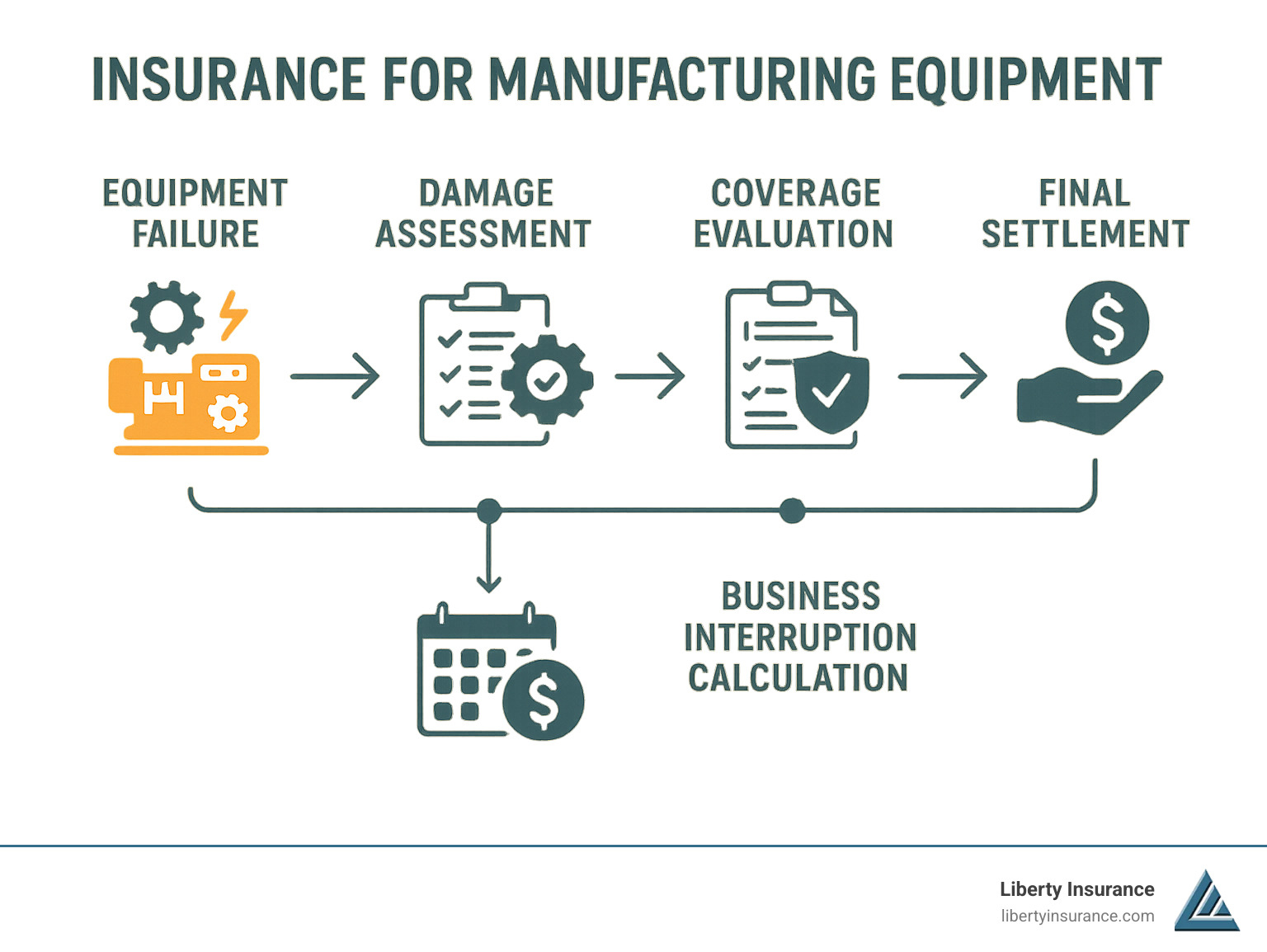
Basic insurance for manufacturing equipment terms:
– equipment damage insurance
– commercial plant insurance
– commercial fire damage insurance
What Is Manufacturing Equipment Insurance?
Insurance for manufacturing equipment is specialized protection for your most valuable business assets. While regular business insurance covers everything from office chairs to company cars, this coverage focuses on the machinery that keeps your production line running.
Your $300,000 CNC machine faces completely different risks than your $300 office desk. When that machine goes down, you’re not just looking at repair costs – you’re facing production delays, missed deadlines, and potentially losing customers who can’t wait for you to get back online.
This specialized coverage protects heavy-duty stamping presses, injection molding machines, cutting-edge 3D printers, robotic assembly systems, and computerized manufacturing equipment. Modern manufacturing equipment combines mechanical parts, electrical systems, computer controls, and specialized software working together. A breakdown in any component can halt the entire operation.
Our Equipment Damage Insurance and Commercial Property Insurance policies are customized specifically for manufacturing needs.
How insurance for manufacturing equipment differs from general manufacturing insurance
The difference is focus and asset valuation. General manufacturing insurance covers your building, inventory, liability, workers’ comp, and equipment. Insurance for manufacturing equipment focuses specifically on your machinery, recognizing that a single machine could represent 20-30% of your entire business value.
While general insurance might lump equipment with other business property, equipment-specific insurance uses specialized valuation methods. That five-year-old injection molding machine might actually be worth more today than when you bought it, especially if replacement costs have increased or you’ve made improvements.
We handle limits differently too. Instead of blanket coverage over all business property, equipment insurance lets you schedule specific machines with individual limits, ensuring your most valuable equipment gets adequate protection.
Insurable manufacturing equipment categories
Robotics and automated systems include industrial robots, automated guided vehicles, and integrated manufacturing systems that blend mechanical, electrical, and software components.
Assembly line equipment covers conveyor systems, sorting equipment, packaging machinery, and quality control systems. Since assembly lines are interconnected, when one piece fails, the whole line often stops.
Traditional heavy machinery includes boilers, pressure vessels, and HVAC systems – far more complex in manufacturing facilities than typical office air conditioning.
Electrical systems are particularly vulnerable yet essential – power distribution, motor control centers, variable frequency drives, and backup power systems all need specific coverage.
Specialty equipment makes your operation unique – precision measuring tools, testing machinery, custom tooling, and mobile equipment like forklifts and overhead cranes.

Covered Perils & Common Exclusions
Insurance for manufacturing equipment protects against the problems that actually happen in manufacturing facilities.
Mechanical breakdown is covered by specialized equipment insurance but excluded from basic business insurance. Motor burnouts, bearing failures, gear breakage – all internal mechanical problems are typically covered.
Electrical surges have become critical as equipment gets more computerized. One lightning strike can destroy control systems across your entire facility, damaging variable frequency drives, programmable logic controllers, and computerized monitoring systems simultaneously.
Traditional property perils are covered – fire, theft, vandalism, and storm damage. Equipment insurance often includes coverage for upgrading to current codes during replacement.
Operator error coverage varies between policies. Some cover damage from employee mistakes, others don’t – make sure you know which type you have.
The distinction between internal forces versus external forces determines coverage response. Internal failures trigger equipment breakdown coverage, while external damage falls under property coverage.
Exclusions to understand:
– Wear and tear – insurance covers sudden breakdowns, not gradual deterioration
– Obsolete parts – problems arise when older equipment needs unavailable components
– Cyber events – most equipment policies exclude cyber-related losses
– Coinsurance penalties – underinsuring equipment means you share in every loss
Our Systems Breakdown Insurance addresses internal mechanical and electrical failures excluded from standard property policies. For insights on expediting expenses, check the latest research on expediting expenses.
Real-world claim snapshots
A motor burnout at a food processing plant cost $75,000 total: $15,000 for motor replacement, $25,000 for expedited shipping and installation, plus $35,000 in business interruption for three days of lost production.
Power surge damage from lightning hit an electronics manufacturer, damaging six machines. Total claim exceeded $200,000, including control system replacement, reprogramming, and two weeks of business interruption.
Conveyor fires from bearing failures can spread quickly. One recent loss hit $500,000 including equipment replacement, debris removal, expedited delivery, and substantial business interruption.
Expedited repairs often cost more than the actual fix. Emergency service, overnight shipping, and weekend labor regularly double or triple basic repair costs.
Business interruption can exceed equipment costs. A hydraulic press failure requiring six weeks for replacement resulted in $300,000 business interruption versus $150,000 for the new press.
Core Coverages, Add-Ons & How They Work
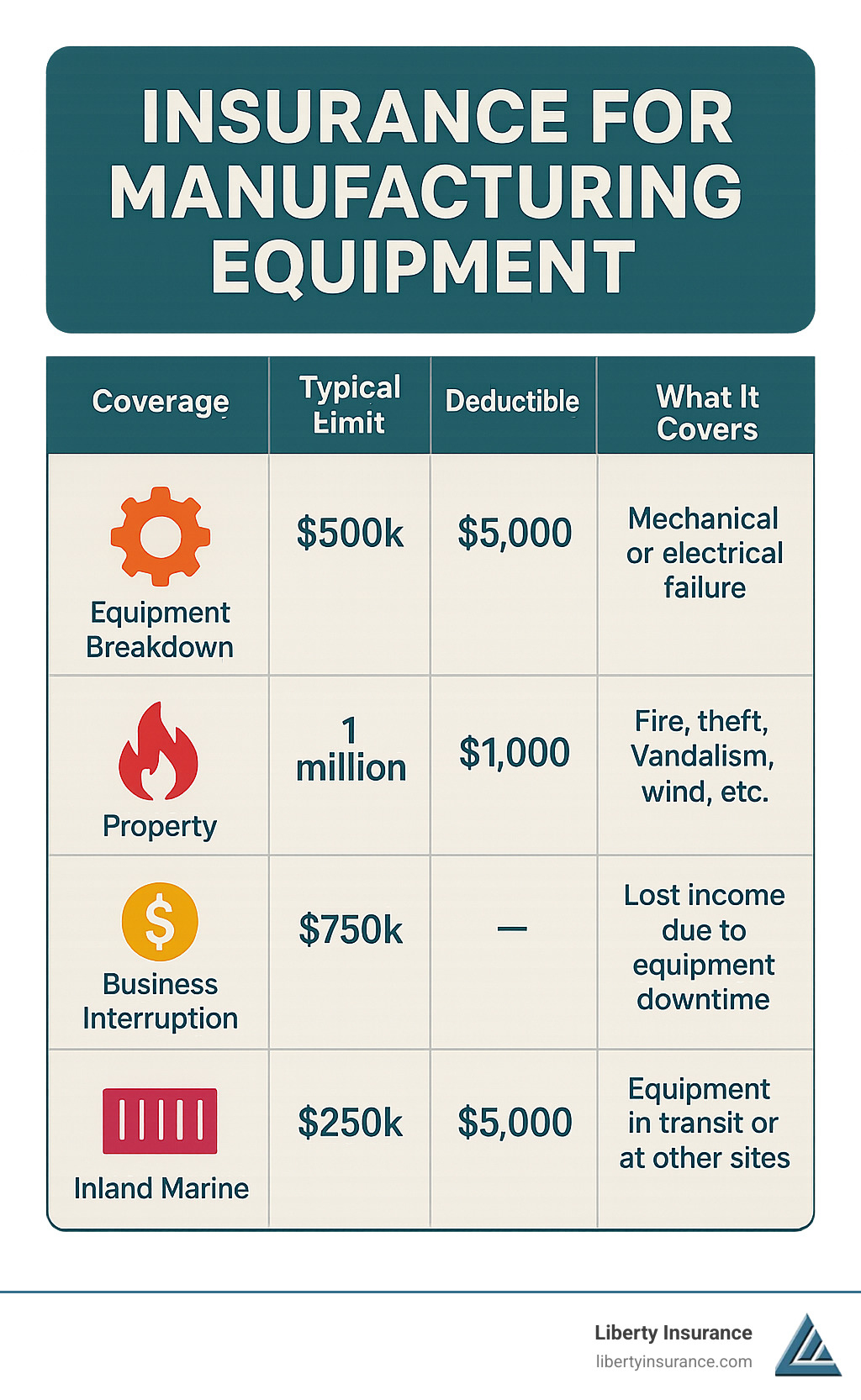
The best insurance for manufacturing equipment combines several coverage types working together.
Equipment breakdown coverage handles sudden failures – motor burnouts, bearing seizures, electrical component failures that basic property insurance excludes.
Property coverage protects against external threats – fire, theft, vandalism, storms. Combined with equipment breakdown, you’re protected against both internal failures and external damage.
Business interruption coverage pays for lost income and fixed expenses when production stops. This often becomes the most valuable coverage when disaster strikes.
Inland marine coverage protects equipment away from your facility – during repairs or at different job sites.
For broader protection, our Manufacturing Liability Insurance and Business Asset Protection Insurance work alongside equipment coverage.
Additional coverages:
– Product recall – helps pay recall costs when faulty equipment produces defective products
– Cyber liability – addresses digital threats to computerized equipment
– Spoilage – covers products damaged by equipment failures
– Errors and omissions – protects when equipment problems affect customers
Insurance and warranty/maintenance overlap
OEM warranties cover defects but have gaps – they don’t cover power surges, operator errors, or business interruption during warranty repairs.
Service contracts handle preventive maintenance and routine repairs but aren’t designed for catastrophic failures or external damage.
Insurance covers what warranties miss – expedited shipping, installation labor, and lost production during repairs. Preventive maintenance programs often reduce insurance costs through premium discounts.
Optional extensions manufacturers should consider
Cyber breach coverage has become essential as equipment becomes more connected and vulnerable to cyber attacks.
Transit coverage protects equipment during transportation for repairs or between facilities.
Trade credit coverage helps when equipment problems affect customer payment collection.
Pollution liability covers environmental contamination from equipment failures.
Intellectual property defense helps with legal costs from patent disputes related to equipment problems.
Cost Drivers, Risk-Reduction & the Claims Process
Understanding what drives insurance for manufacturing equipment costs helps you make smarter coverage decisions.
Equipment values are the biggest factor – more expensive equipment costs more to insure, but it’s not always proportional due to complexity and breakdown risk differences.
Industry classification significantly affects pricing. Food processing, electronics assembly, chemical manufacturing, and automotive parts production each face different risk profiles based on historical loss data.
Location matters more than expected. Hurricane zones, earthquake areas, flood plains, urban theft risks, and rural response times all influence premiums.
Loss history heavily impacts pricing. Frequent claims signal higher risk, while clean records often qualify for substantial discounts.
Risk management practices can dramatically reduce premiums. Documented maintenance programs, employee training, safety protocols, and loss prevention measures often qualify for 10-20% discounts or more.
Predictive maintenance programs using IoT sensors and data analytics are the future. These systems spot problems before catastrophic failures, and forward-thinking insurers offer discounts for these technologies.
Manufacturing represents more than 10% of Canada’s GDP – nearly two million jobs and over $170 billion in economic activity. With stakes this high, proper equipment protection isn’t optional.
Our Types of Insurance for Manufacturing Companies guide covers additional protection options.
Steps to lower insurance costs
Professional risk assessments by qualified engineers uncover potential problems before expensive claims. Many insurers offer premium discounts for acting on recommendations.
Regular engineer inspections demonstrate proper maintenance commitment. Some insurers require these for high-risk equipment, others offer voluntary programs with discounts.
Keep equipment inventories current – avoid paying premiums on sold equipment or being underinsured on new additions.
Bundle policies when appropriate for package discounts and simplified administration.
Install surge protection and maintain proper electrical grounding as equipment becomes more computerized.
Invest in staff certifications – certified operators make fewer mistakes, earning premium discounts.
Documentation needed for quotes
Asset schedules need manufacturer, model, serial number, age, and current value for each covered piece.
Serial numbers are crucial for identifying equipment and verifying coverage during claims.
Maintenance logs show proper equipment care and support coverage for sudden versus gradual failures.
Valuation methods must be specified – replacement cost versus actual cash value significantly affects both premiums and claim payments.
Prior loss information from the past five years helps insurers assess risk profiles.
Revenue information helps calculate appropriate business interruption limits, including seasonal variations.
Business continuity plans demonstrate emergency preparedness and can reduce premiums.

Who Needs Insurance for Manufacturing Equipment & How to Buy It
Insurance for manufacturing equipment is essential for businesses depending on machinery for production, though specific needs vary by operation type.
High-volume production plants face the greatest exposure when single equipment failures shut down entire lines. These facilities need comprehensive coverage with high limits and minimal deductibles.
Food processors face unique risks – temperature control, sanitation, product spoilage, and potential recalls. Specialized coverage for refrigeration, spoilage, and recall expenses is often essential.
Metal fabricators have high-value equipment subject to significant mechanical stresses. Stamping presses, welding equipment, and cutting machines face regular breakdown risks.
Technology manufacturers deal with clean room environments, precision equipment, and rapidly changing technology requiring specialized, expensive-to-replace equipment.
Small job shops often can’t absorb significant losses. While individual equipment might be less expensive, losing key machinery can devastate small operations.
Contract manufacturers face additional liability if equipment problems affect customer products, making errors and omissions coverage particularly important.
Automotive suppliers face stringent quality requirements and just-in-time schedules where equipment failures can result in significant penalties.
Our Commercial Manufacturing Insurance provides comprehensive options for all manufacturing operations.
Selecting the right insurer & policy
Financial strength should be your first consideration. Equipment claims can be large and complex, requiring insurers with sufficient resources for major losses.
Industry expertise makes a significant difference. Insurers specializing in manufacturing understand unique risks and offer appropriate coverage options with efficient claims handling.
Loss control services help prevent losses and reduce premiums through risk assessments, inspection programs, and safety training.
Claim responsiveness becomes crucial when failures shut down production. Look for 24/7 reporting, experienced adjusters, and established repair contractor relationships.
Scalable coverage limits allow insurance to grow with your business as you add equipment or expand operations.
Getting from quote to coverage
Online applications have simplified initial quotes, though complex operations may require detailed underwriting and site inspections.
Broker versus direct purchase depends on your needs. Brokers provide guidance and represent your interests; direct purchase might work for simple operations.
Site visits are often required for high-value or complex equipment. Be prepared to provide equipment access and documentation.
Binding coverage ensures protection while final documents are prepared. Most insurers provide quick binding once underwriting is complete.
Annual reviews ensure coverage remains adequate as operations change. Equipment values, revenue, and exposures can change significantly over time.
Frequently Asked Questions about Manufacturing Equipment Insurance
What risks does insurance for manufacturing equipment NOT cover?
The biggest exclusion is normal wear and tear. Insurance protects against sudden accidents, not gradual aging. If your conveyor belt slowly wears down over months, that’s maintenance. If it suddenly snaps due to bearing failure, that’s typically covered.
Intentional damage is excluded – deliberate sabotage or fraudulent claims won’t be covered.
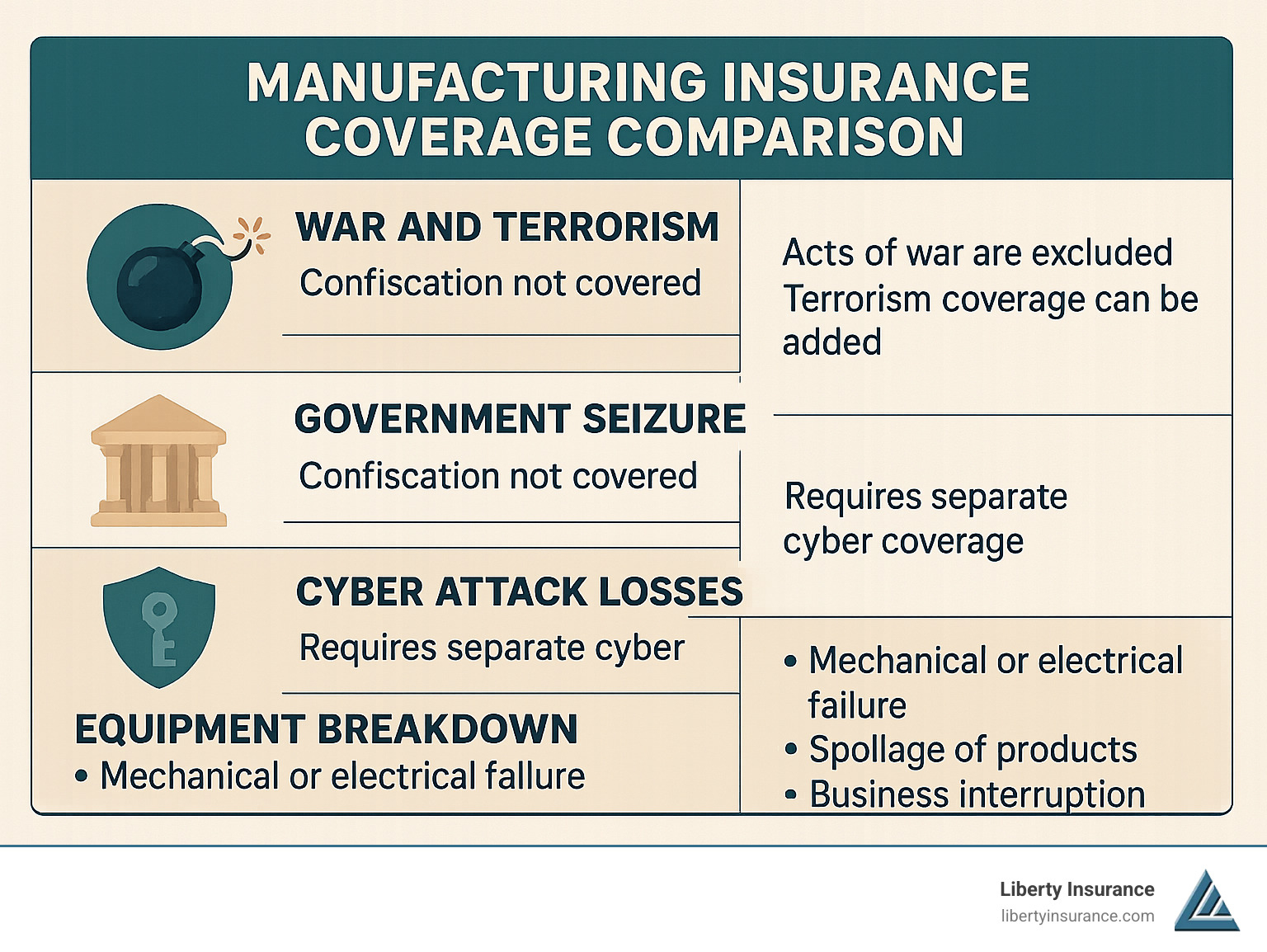
Nuclear risks, war, terrorism, and government seizure require specialized coverage not included in standard policies.
Cyber-related equipment damage is increasingly excluded from traditional policies. If hackers disable computerized equipment, you’ll likely need separate cyber insurance.
How does equipment breakdown insurance differ from standard property policies?
Standard property policies cover external threats – fire, theft, storms. Equipment breakdown insurance covers internal mechanical and electrical failures during normal operation.
A motor burning out during production would be excluded from standard property coverage but covered under equipment breakdown insurance.
Equipment breakdown includes specialized features like expedited shipping, spoilage coverage, and equipment-specific business interruption coverage.
What factors most affect premium calculations?
Equipment values have the biggest impact, though it’s not always proportional due to complexity differences.
Industry classification plays a huge role – different industries face different risk profiles based on historical loss data.
Location affects premiums through natural disaster exposure, crime rates, and emergency response access.
Loss history significantly impacts pricing – frequent claims increase rates while clean records often qualify for substantial discounts.
Risk management practices like documented maintenance, training programs, and safety protocols can reduce premiums by 10-20% or more.
Deductible selection gives you control over the premium versus out-of-pocket balance.
Conclusion
Your manufacturing equipment isn’t just machinery – it’s the beating heart of your business. When critical equipment breaks down, you’re facing lost production, missed deadlines, and potentially watching customers turn to competitors who can still deliver.
Insurance for manufacturing equipment bridges the gap between basic property coverage and the specialized protection your operation needs. While standard business insurance covers office furniture and vehicles, it wasn’t designed for the unique risks facing expensive manufacturing machinery.
The manufacturers we work with consistently tell us they wish they’d understood coverage gaps before filing claims. A motor burnout becomes a six-figure loss when factoring in expedited repairs, business interruption, and customer penalties. Power surges can shut down production for weeks.
At Liberty Insurance, we understand that every component in your facility serves a specific purpose. Our customizable coverage solutions protect your physical assets and safeguard your ability to keep customer promises, meet payroll, and grow your business.
From our locations throughout New Jersey – including Millstone Township, Trenton, Toms River, New Brunswick, and Princeton – we’ve seen how proper coverage keeps manufacturers running when others shut down. Whether you operate a small job shop or manage high-volume production, downtime isn’t just inconvenient – it’s potentially devastating.
The math is straightforward: annual equipment insurance costs typically equal just a few days of lost production. Yet many manufacturers operate without adequate protection, gambling their entire operation on equipment facing daily stresses.
Your equipment built your business. Now protect what you’ve built. Contact us today to discuss how insurance for manufacturing equipment can keep your production moving when the unexpected happens.
For comprehensive manufacturing coverage options, visit our Business Asset Protection Insurance page to learn how we customize protection for your operation’s specific needs.

