
Why Every Business Owner Needs to Understand Inventory Loss Insurance
Inventory loss insurance protects your business from financial ruin when your products, raw materials, or finished goods are damaged, stolen, or destroyed. As a key part of commercial property insurance, it reimburses you for the value of lost inventory from covered events like fires, theft, or natural disasters.
Quick Answer for Business Owners:
- What it covers: Your business inventory against fire, theft, vandalism, water damage, and other covered perils.
- Who needs it: Any business with physical products, including retailers, manufacturers, restaurants, and e-commerce companies.
- How it works: Reimburses you for the replacement cost or selling price of damaged or stolen inventory.
- Why it matters: Protects your cash flow and helps you stay in business after a major loss.
Imagine losing your entire stock in a fire or break-in. Your inventory is more than just products on shelves; it’s your revenue potential and a significant business investment. Fires, theft, burst pipes, and natural disasters are real threats that can destroy a business without the right protection.
Without proper inventory loss insurance, a single event could force you to close your doors permanently. This guide will walk you through how to protect your most valuable assets and ensure your business can weather any storm.

Understanding Inventory Loss Insurance: The First Line of Defense
Your inventory is the lifeblood of your operation, representing every item you’ve invested in to turn a profit. For insurance purposes, it’s broken down into three main categories:
- Raw Materials: These are your building blocks, like lumber for a furniture maker or ingredients for a restaurant. They are a significant investment before any production begins.
- Work-in-Progress: These are items in the middle of production—partially assembled products or goods undergoing customization. Their value is higher than raw materials but they are not yet ready for sale.
- Finished Goods: This is your completed investment—products ready to ship or be displayed on shelves. This category often represents your largest financial exposure, as it includes all labor and overhead costs.
Losing inventory at any stage means more than just replacement costs; it means lost sales and recovery time. This is where inventory loss insurance becomes your financial lifeline. It’s typically included in a Commercial Property Insurance policy or a Business Owners Policy (BOP), working alongside other coverages to protect your business from financial ruin.
What is Inventory Loss Insurance?
Inventory loss insurance reimburses you when your business stock is damaged, destroyed, or stolen due to a covered event. Its purpose is simple: to provide the funds to replace what you’ve lost. This coverage is a component of your property insurance that protects one of your most vulnerable assets.
When a fire, theft, or storm damages your inventory, this insurance provides the financial resources to restock quickly and continue serving your customers. Covered losses typically include fire, theft, vandalism, water damage from burst pipes, and storm damage. This protection can be the difference between a temporary setback and a business-ending catastrophe. For more complete protection, it often works with Business Asset Protection Insurance.
Who Needs This Coverage?
If your business invests in products you plan to sell, you need inventory loss insurance. This applies to businesses of all sizes and industries:
- Retail stores: Your shelves hold thousands of dollars in inventory vulnerable to theft or damage.
- E-commerce brands: Even if you don’t have a storefront, your products are stored in a physical location—a garage, warehouse, or fulfillment center—that needs protection.
- Restaurants: Perishable inventory is highly vulnerable to spoilage from power outages or equipment failure.
- Wholesalers and distributors: You carry enormous inventory values, making even a partial loss a significant financial threat.
- Manufacturers: You have inventory in all three stages—raw materials, work-in-progress, and finished goods—all of which require protection.
- Service-based businesses: You may have more inventory than you realize, including spare parts, promotional materials, and supplies.
The common thread is tied-up capital in physical goods. Inventory loss insurance protects that investment when the unexpected happens.
Decoding Your Policy: What’s Covered and What’s Not
Understanding your inventory loss insurance policy is crucial to avoid surprises during a claim. Commercial property policies typically come in two forms:
- Named Perils: These policies only cover losses from events specifically listed in the policy. If it’s not on the list, it’s not covered.
- All-Risk (Open Perils): These policies cover all losses except for those specifically excluded. This offers broader protection but is usually more expensive.
With a named perils policy, you must prove the loss was caused by a covered event. With an all-risk policy, the insurer must prove the loss falls under an exclusion. Reading the fine print in your Commercial Property Insurance Policy is essential to know your specific terms and limitations.
Common Covered Events
Most inventory loss insurance policies protect against common disasters that can impact your stock. These covered “perils” include:

- Fire: A single fire can destroy an entire inventory. Commercial Fire Damage Insurance provides the funds to rebuild your stock.
- Theft: This covers everything from shoplifting to large-scale break-ins, reimbursing you for the replacement cost of stolen goods.
- Vandalism: Protects against malicious damage or intentional destruction of your merchandise.
- Water Damage: Covers damage from burst pipes, leaking roofs, or malfunctioning sprinkler systems.
- Storm Damage: Protects against inventory damage from wind, hail, or lightning.
- Natural Disasters: Coverage varies. While events like tornadoes may be standard, others might require separate policies.
Typical Policy Exclusions
It’s just as important to know what your policy won’t cover. Exclusions separate insurable accidents from predictable or preventable losses.
- Intentional Damage & Employee Dishonesty: Your policy won’t cover inventory that you or your employees deliberately damage or steal. For losses caused by employees, a separate crime insurance or fidelity bond policy is necessary.
- Negligence: If a loss results from a failure to take reasonable care, your claim could be denied. Examples include leaving doors open uped, failing to repair a known roof leak that leads to water damage, or improperly storing flammable materials in violation of safety codes. Insurers expect you to act prudently to protect your property.
- Spoilage: Standard policies often don’t cover spoilage from equipment failure or a power outage. You need a specific spoilage endorsement for this protection, which is vital for restaurants, grocers, and florists.
- Earthquakes and Floods: These catastrophic events are almost always excluded from standard property policies and require separate, specialized insurance policies.
- Wear and Tear: Insurance doesn’t cover inventory that deteriorates naturally over time, becomes obsolete due to market changes, or is damaged by pests or vermin.
- Inventory Shortage Exclusion: This is a critical exclusion to understand. It applies to losses detected during an inventory count where there is no physical evidence of a specific event, like a break-in. This is often called “mysterious disappearance.” For a theft claim to be paid, you typically need to provide proof of forced entry or other evidence that a theft occurred, not just that the numbers don’t add up. Understanding how your policy defines and proves theft is critical.
The Heart of the Claim: Valuing Your Inventory and Proving Your Loss
After a disaster, the insurance claim process is where your preparation pays off. Without proper documentation, proving your loss and receiving fair compensation is a major challenge. A 2023 Triple-I/Munich Re Consumer Survey found that only 53% of homeowners have an inventory of their possessions, and businesses often fare no better. This documentation is your lifeline for rebuilding.
How Inventory Value is Determined for Insurance
The valuation method used by your insurer dramatically impacts your payout. Your inventory loss insurance will typically use one of these three methods:
- Replacement Cost (RC): This is the gold standard for most businesses. It covers the full cost to replace your lost inventory with new, identical items at today’s prices, with no deduction for depreciation. If an item you bought for $50 now costs $55 to replace, you get $55.
- Actual Cash Value (ACV): This method pays what your inventory was worth at the time of the loss, factoring in depreciation. It’s the replacement cost minus depreciation due to age and wear. That $50 item might only be valued at $40.
- Net Selling Price (NSP): This is valuable for finished goods. It reimburses you for the revenue you would have earned by selling the items, minus any expenses you didn’t incur (like shipping or sales commissions). The insurer essentially “buys” the lost product from you.
| Valuation Method | Definition | When It’s Used |
|---|---|---|
| Replacement Cost (RC) | The cost to replace damaged inventory with new, identical items at current market prices, without deduction for depreciation. | Primarily for new goods, finished products, and raw materials where replacement is the main concern. |
| Actual Cash Value (ACV) | The replacement cost minus depreciation, reflecting what the item was actually worth at the time of loss. | Often used for older inventory or items where depreciation significantly affects value. |
| Net Selling Price (NSP) | The selling price of finished goods, minus any expenses not incurred due to the loss (discounts, shipping, commissions). | Typically used for finished goods ready for sale, putting you in the same financial position as if the sale had occurred. |
Understanding which method applies to your inventory helps you select the right coverage and set expectations for a claim.
The Critical Role of a Property Inventory
A detailed property inventory is your most valuable tool when filing a claim. It serves as undeniable proof of what you owned and what it was worth.

Your inventory documentation should include:
- Detailed descriptions and serial numbers for equipment.
- Purchase information, including dates, prices, invoices, and receipts.
- Visual documentation like photos and videos to provide powerful evidence.
- Location tracking to note where items were stored.
Whether you use a simple spreadsheet or dedicated inventory management software, the key is to keep it updated regularly. Store your inventory records securely off-site or in the cloud, so they don’t get destroyed in the same disaster as your goods. The time spent maintaining these records can save you months of headaches during a claim.
Strategic Protection: How to Manage Risks and Your Inventory Loss Insurance Costs
Smart business owners know that insurance is just one part of a larger risk management strategy. Proactively managing risks not only protects your business but can also lower your Commercial Property Insurance Cost. A key challenge is avoiding underinsurance risk, especially with fluctuating inventory levels. Your coverage must adapt to your business needs.
Factors That Influence Your Premiums
Insurance premiums are based on risk. Understanding these factors allows you to influence your costs:
- Inventory Value: Higher value means higher premiums. Accurate reporting is crucial to avoid being underinsured during a claim.
- Business Type: A jewelry store has a different risk profile than a lumber yard. Your industry’s inherent risks affect your rate.
- Location: Factors like local crime rates and proximity to the coast (for hurricane risk) play a role. A business in downtown Trenton faces different risks than one in suburban Princeton, which is why local expertise for New Jersey Business Insurance is vital.
- Security Systems: Alarms, surveillance cameras, and access control systems can lead to significant discounts.
- Fire Suppression: Sprinklers, smoke detectors, and extinguishers are highly valued by insurers and can lower your premiums.
- Claims History: A clean history signals lower risk and can lead to better rates.
- Deductible Amount: A higher deductible lowers your premium, but ensure you can afford the out-of-pocket cost.
Key Considerations When Purchasing Inventory Loss Insurance
Your business is dynamic, and your insurance should be too. Consider the following:
- Assess Coverage Limits: Calculate your maximum inventory value, including seasonal spikes, to ensure you’re not underinsured.
- Account for Seasonal Fluctuations: Use a seasonal adjustment endorsement to automatically increase coverage during your busy periods.
- Add Policy Endorsements: Customize your policy with add-ons like spoilage coverage for restaurants or transit insurance for shipping.
- Review Exclusions: Understand what your policy doesn’t cover so you can fill the gaps with other coverages or risk management strategies.
- Work with an Experienced Agent: A good agent is a partner who helps you steer options and find the right balance between cost and protection.
Risk Mitigation Beyond Insurance
The best claim is one you never file. Proactive risk management can prevent losses from happening.
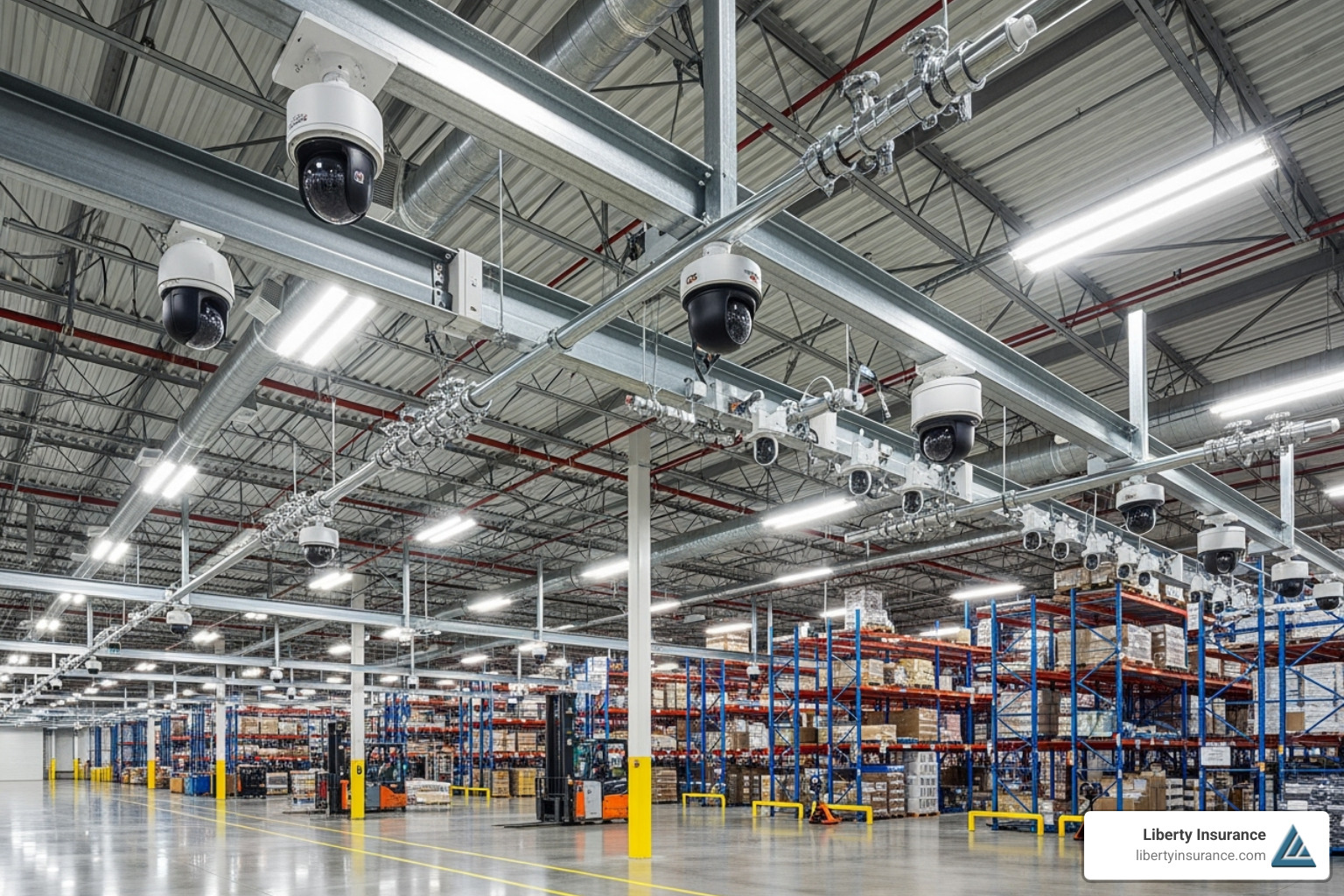
- Install Security Systems: Use cameras, alarms, and access control to deter theft.
- Conduct Regular Inventory Audits: Catch theft or discrepancies early and keep your records accurate.
- Focus on Fire Prevention: Maintain clean storage areas and properly serviced electrical systems.
- Build Strong Supplier Relationships: Clarify who is responsible for goods in transit.
- Implement Smart Inventory Control: Use a FIFO (First-In, First-Out) system for perishables and avoid overstocking to reduce exposure.
Combining comprehensive insurance with proactive risk management creates a robust shield for your business.
Building a Complete Safety Net: Related Insurance Coverages
Inventory loss insurance is the foundation, but a complete safety net requires other coverages to protect your entire operation. Losing your goods is often just the first of many challenges after a disaster. Understanding how different policies work together is key to creating layered security.
Business Interruption vs. Inventory Loss
These two coverages work in tandem, but they have distinct roles.
- Inventory Loss Insurance replaces your physical goods. It gets your products back on the shelves.
- Business Interruption Insurance is your financial lifeline during the downtime. It covers lost income and ongoing operating expenses (like rent and payroll) while your business is closed for repairs. The time it takes to get back to normal is called the period of restoration.
For example, if a pipe bursts and floods your restaurant, inventory loss insurance pays to replace the spoiled food. Business interruption insurance covers the revenue you lost during the two weeks you were closed for repairs, plus your rent and staff wages. The relationship between inventory spoilage and business interruption claims is especially important for food businesses to understand.
General Liability vs. Property Insurance for Inventory
This is another common point of confusion. These policies protect against different types of risk.
- General Liability Insurance Small Business protects you from third-party claims. It covers bodily injury to a customer or damage to customer property that your business causes.
- Property Insurance (which includes inventory loss coverage) protects your own property—your building, equipment, and inventory—from perils like fire and theft.
Essentially, general liability protects others from you, while property insurance protects you from the world. If you hold customer property, you are considered a “bailee.” This means you need special bailee’s coverage, an endorsement that protects customer goods in your care, custody, or control. This is essential for businesses like dry cleaners, repair shops, consignment stores, and storage facilities.
Why You Need More Than Just Basic Inventory Loss Insurance
Depending on your operations, you may need specialized coverages to fill gaps in a basic policy.
- Goods in Transit: Your standard property policy often doesn’t cover goods once they leave your premises. Inland Marine Insurance protects products while they are being shipped over land, whether by your own vehicles or a common carrier.
- Third-Party Logistics (3PL) Storage: Your 3PL’s insurance (Warehouse Legal Liability) typically only covers losses from their proven negligence. You need your own policy that lists the 3PL’s warehouse as a covered location to be protected from events like fires or natural disasters. Always review your 3PL contract to understand their liability limits and insurance requirements, as they often mandate that you carry your own first-party coverage.
- Spoilage Coverage: This is a critical endorsement for restaurants and food businesses, covering losses from power outages or equipment failure.
- Product Liability: This protects you from lawsuits if a product you sell causes injury or damage to a consumer. It is often included with a General Liability policy but limits should be reviewed carefully.
Layering these coverages ensures your business is protected from every angle.
Frequently Asked Questions about Inventory Loss Insurance
Business owners often have similar questions about inventory loss insurance. Here are clear answers to some of the most common ones.
How is ‘stock’ defined in a business insurance policy?
In an insurance policy, stock refers to all goods, merchandise, and materials your business holds to sell or use in production. This includes:
- Raw materials (e.g., flour in a bakery).
- Work-in-progress (e.g., partially assembled furniture).
- Finished goods ready for sale.
- Items sold but not yet delivered.
It specifically covers the items that generate revenue, not general business assets like office equipment or company vehicles.
What is the difference between replacement cost and net selling price for inventory valuation?
These are two different ways your insurer can calculate your payout, and the difference can be significant.
- Replacement Cost pays you the amount needed to buy new, similar items at today’s prices. It focuses on replacing your lost inventory.
- Net Selling Price reimburses you for the revenue you would have earned from selling the lost items, minus any costs you avoided (like shipping or credit card fees). This method is often used for finished goods and puts you in the financial position you would have been in if the sale had occurred.
It’s crucial to know which valuation method your policy uses for different types of inventory.
How does insurance work for my inventory stored at a third-party logistics (3PL) provider?
Relying on your 3PL’s insurance is a common mistake. Their Warehouse Legal Liability policy typically only covers losses caused by their direct negligence (e.g., a forklift accident). It will not cover your goods if they are destroyed in a fire, flood, or tornado where the 3PL is not at fault.
To be fully protected, you need your own inventory loss insurance that specifically lists the 3PL’s warehouse as a covered location. This ensures your goods are protected regardless of what caused the loss or who was at fault. Many 3PLs require their clients to carry this coverage.
Conclusion
Your inventory is the heartbeat of your business—an investment of time, money, and your promise to customers. Protecting it with comprehensive inventory loss insurance is not just a line item in a budget; it is a fundamental strategy for ensuring your company’s resilience and long-term survival.
We’ve covered the essentials: how this insurance acts as a financial safety net, what events are covered (and excluded), and the critical importance of proper documentation for a smooth claims process. Understanding valuation methods like replacement cost and net selling price ensures you know what to expect when you need your policy the most.
Beyond insurance, proactive risk management—from modern security systems to rigorous fire prevention protocols—reduces your chances of a catastrophic loss. When you layer inventory loss insurance with other key coverages like business interruption and inland marine, you create a complete shield for your operation, protecting both your assets and your revenue stream.
The peace of mind that comes from knowing your most valuable assets are protected is invaluable. It allows you to focus on innovation, customer service, and growth. At Liberty Insurance, we understand that every New Jersey business has unique risks. An experienced agent is a vital partner who can help you steer your options and tailor a policy to your specific needs.
Don’t wait for a disaster to expose gaps in your coverage. Protect what you’ve worked so hard to build. Get a Business Insurance Quote in New Jersey today, and let’s secure your inventory and your future.

