
Why Understanding Inland Marine vs. Cargo Insurance Matters for Your Business
Is inland marine the same as cargo insurance? No, they are not the same, though they are related. Here’s the quick answer:
Inland Marine Insurance:
- Broad coverage for various types of movable business property
- Protects your company’s own equipment, tools, and materials
- Covers property in transit over land, temporarily stored off-site, or at job sites
- Examples: contractor’s tools, medical equipment, fine art, trade show booths
Cargo Insurance:
- Specific type of inland marine insurance
- Focuses on the value of goods being transported
- Typically covers retail goods from manufacturer to retailer
- Often purchased by those temporarily responsible for cargo (like independent truckers)
The Key Relationship: Cargo insurance is a subset of inland marine insurance, much like how a square is a type of rectangle.
The term “inland marine” can be confusing. It originated from ocean shipping insurance but has evolved to cover property transported over land. Despite its name, this insurance is critical for any business that moves valuable equipment or materials.
The confusion between these two insurance types can lead to serious gaps in coverage. A contractor might wrongly assume their cargo policy covers stolen tools, or a trucking company might think their inland marine policy protects a client’s goods. Getting this wrong means risking significant financial losses.
I’m Andrew Harris, an insurance professional with CIC and AAI designations. I’ve helped countless New Jersey business owners steer these complex decisions, preventing costly coverage gaps. This guide will break down what each policy covers, who needs it, and how they work together to protect your business assets, whether you’re a contractor, trucker, or manufacturer.
What is Inland Marine Insurance? A Broad Shield for Movable Property
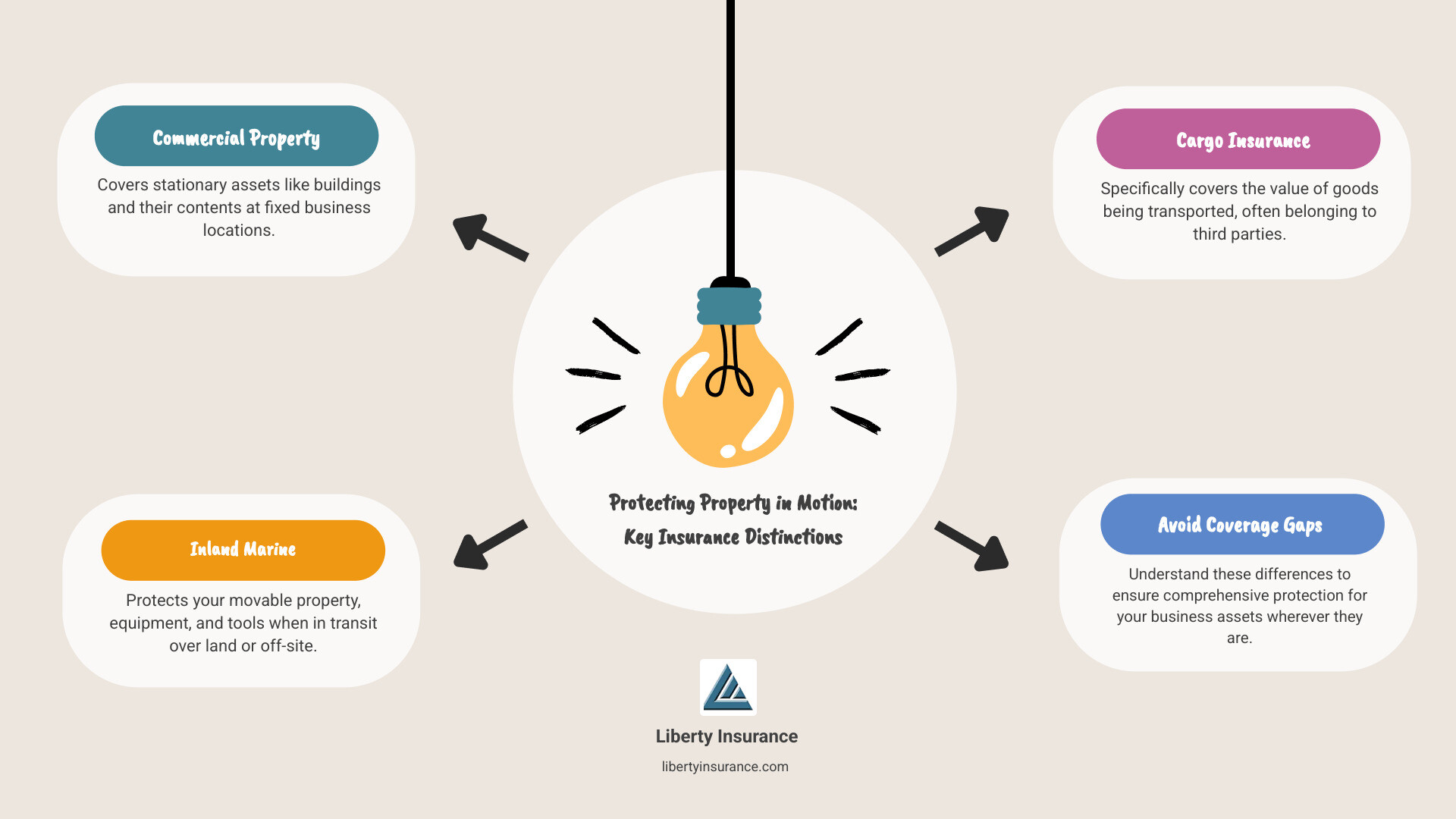
Don’t let the name fool you—inland marine insurance has little to do with boats. The name is a historical quirk from when goods traveled by sea and then needed protection for the final leg of their journey over land. Today, this coverage primarily protects property moving by truck or train, or that is temporarily stored away from your main business location.
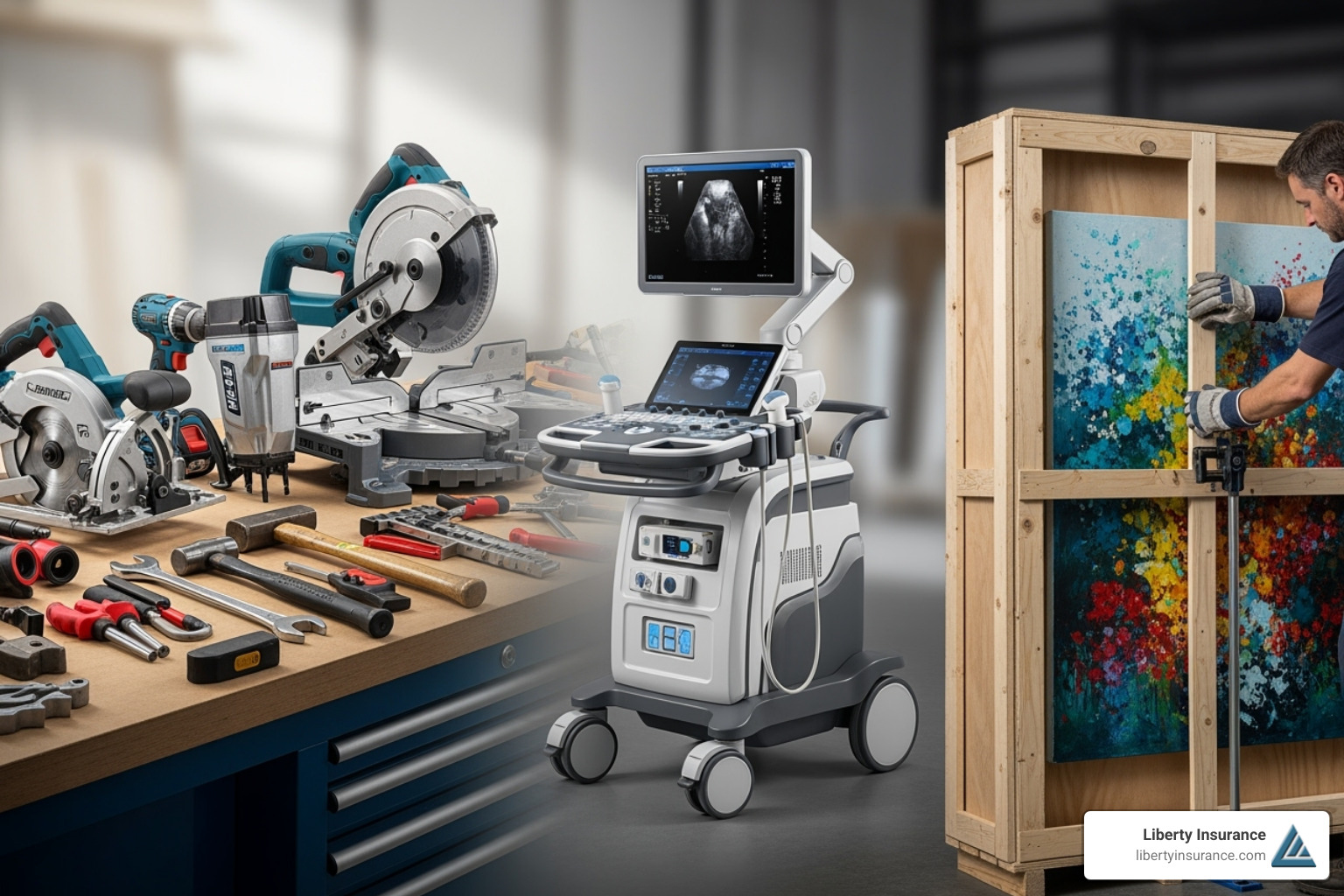
Inland marine insurance is a “floating” policy. Unlike Commercial Property Insurance, which covers assets at a specific address, inland marine coverage travels with your property. Think of it as a personal bodyguard that follows your property, protecting it whether it’s in transit, temporarily stored at a client’s location, or sitting at a job site.
This coverage can also extend to property owned by others that’s temporarily in your care, known as bailee’s coverage. If a customer drops off equipment for repair, inland marine insurance can protect it while it’s under your watch.
Types of Property Covered
Inland marine insurance is versatile, filling gaps that standard property policies can’t. It’s essential if your business involves moving valuable items. Common examples include:
- Contractor’s tools and equipment: From hand drills to excavators, this protects tools and machinery from theft or damage when they leave your shop for a job site.
- Medical and scientific equipment: Mobile imaging units or diagnostic equipment that technicians transport to different facilities require coverage that moves with them.
- Computer equipment and data: This protects servers, networking hardware, and other IT assets during transport and while temporarily at another location.
- Trade show exhibits and booths: Your displays, promotional materials, and product samples are protected during transport, setup, and throughout an event.
- Fine art and collectibles: Galleries, museums, and artists need specialized coverage to protect irreplaceable items while in transit or on display elsewhere.
For more details on the breadth of coverage, you can explore this comprehensive guide on inland marine coverage.
Common Inland Marine Policies
Inland marine insurance comes in several specialized forms to protect your Business Assets beyond what standard policies provide.
- Bailee’s Customer Coverage: Protects your clients’ property while it’s in your possession (e.g., repair shops, dry cleaners).
- Builder’s Risk: Essential for construction, this protects the structure and materials from the start of a project until completion. It covers the building itself, as well as materials, supplies, and equipment on the job site, in temporary storage, or in transit to the site. It’s comprehensive coverage from ground-breaking to ribbon-cutting.
- Exhibition and Fine Art Coverage: Provides specialized protection for high-value items like artwork and antiques while on display, in transit, or on loan.
- Installation Floater: Covers valuable materials and equipment from the moment they leave your warehouse until they are fully installed and accepted by the client. This is crucial for businesses installing high-value items like commercial HVAC systems, custom cabinetry, or specialized machinery, protecting against damage during transit, unloading, and the installation process itself.
- Motor Truck Cargo Coverage: This is where inland marine and cargo insurance intersect. It protects for-hire truckers against liability for goods they transport for others, which we’ll explore next.
What is Cargo Insurance? A Focused Guard for Goods in Transit
If inland marine insurance is the broad umbrella, cargo insurance is one of its most important components. Cargo insurance is a specific type of Inland Marine Insurance that zeroes in exclusively on the goods or merchandise being transported. While inland marine might cover your own tools or equipment, cargo insurance is typically about the “stuff” you’re hauling for someone else or the products you’re shipping to customers.
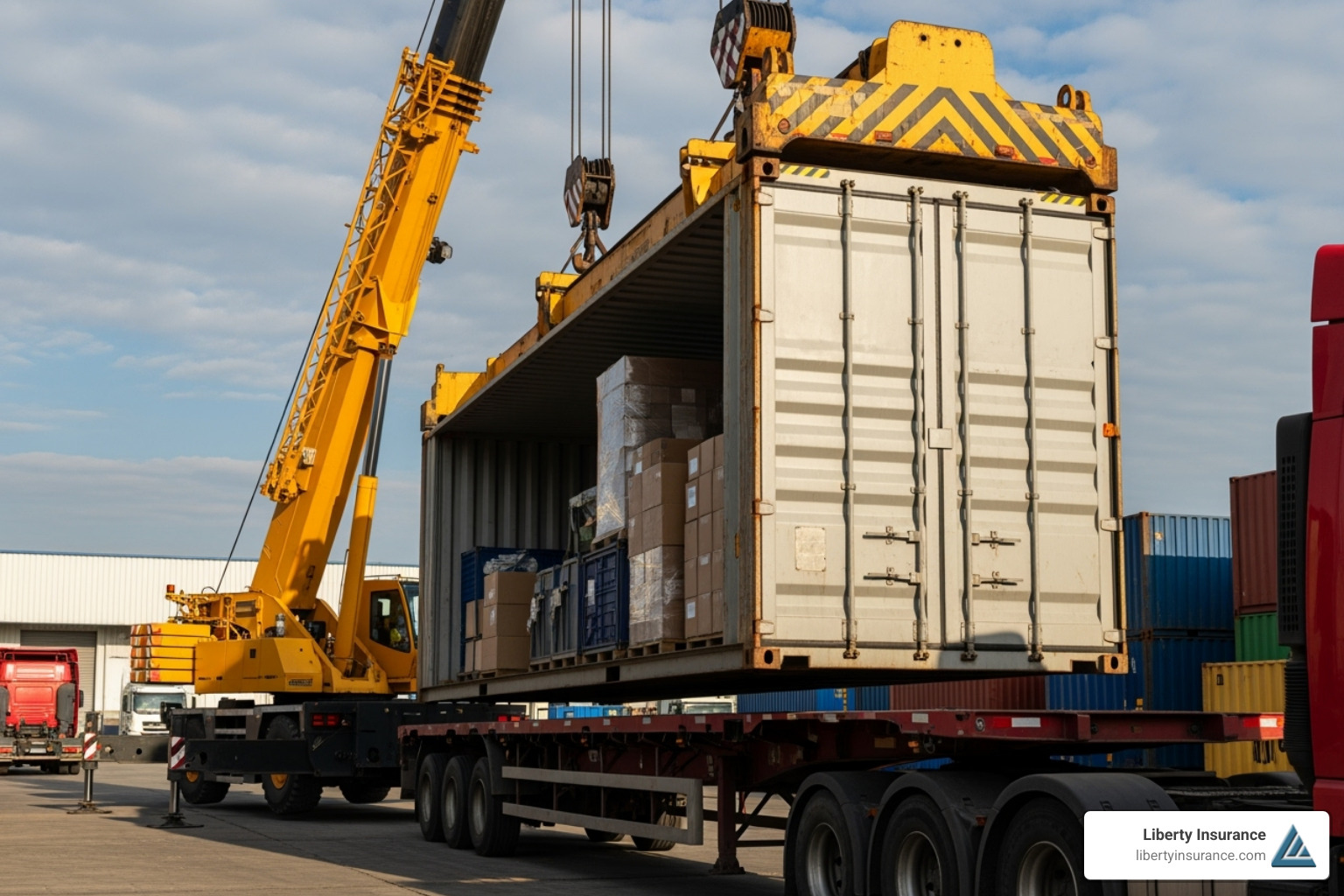
This policy exists to protect against the loss or damage of physical goods during their journey. Buyers of cargo insurance are usually either shippers (owners of the goods) protecting their investment or carriers (like trucking companies) covering their liability for the goods they transport. When you are responsible for transporting someone else’s property, cargo insurance is your safety net.
Risks Covered by Cargo Insurance
Goods on the move face many potential hazards. Cargo insurance stands guard against these risks, ensuring you’re not left with a devastating financial loss. It protects against:
- Theft and Vandalism: Covers losses if a shipment is stolen from a truck stop or warehouse, or if the goods are deliberately damaged. With organized cargo theft rings targeting high-value goods, this protection is more critical than ever, safeguarding against everything from a simple break-in to a full trailer being stolen.
- Damage from Collision or Mishandling: When a truck is in a crash, the cargo often suffers. This covers the resulting damage to the goods. It can also cover damage from other events, like a trailer turnover or even spoilage if a refrigerated unit (“reefer”) fails, which is critical for transporting food, pharmaceuticals, or other temperature-sensitive products.
- Natural Disasters: Perils like fire or severe weather can destroy a shipment and are typically covered under a comprehensive cargo policy.
- Lost Cargo: Whether it’s a misplaced pallet or a container that never arrives, this coverage helps you recover from the loss.
Beyond protecting your bottom line, cargo insurance often fulfills contractual requirements. Many shippers won’t work with a carrier who cannot provide proof of adequate cargo insurance. It’s often the price of admission to the industry.
Motor Truck Cargo: A Key Policy for Truckers
For for-hire truckers who haul goods for other companies, Motor Truck Cargo Coverage is an essential form of cargo insurance. It protects you from legal liability for the loss or damage to the cargo you’re transporting. From the moment you load a client’s goods until you deliver them, this policy has your back.
Here’s a critical distinction: Motor Truck Cargo Coverage protects the client’s goods, not your truck, trailer, or your own equipment like tarps and chains. Those assets need different coverage, typically a combination of inland marine insurance for your equipment and Commercial Auto Insurance for your vehicles.
While motor truck cargo is technically a type of inland marine coverage, it serves a very specific purpose. Your cargo policy protects the value of what you’re hauling for others, while other inland marine policies cover your own business equipment. For trucking companies, Motor Truck Cargo Coverage is a cornerstone of a comprehensive Business Insurance portfolio.
So, Is Inland Marine the Same as Cargo Insurance? A Head-to-Head Comparison
Let’s get to the heart of the matter: Is inland marine the same as cargo insurance? The answer is no, but they are family. Cargo insurance is a specific type of inland marine insurance, much like a square is a type of rectangle.
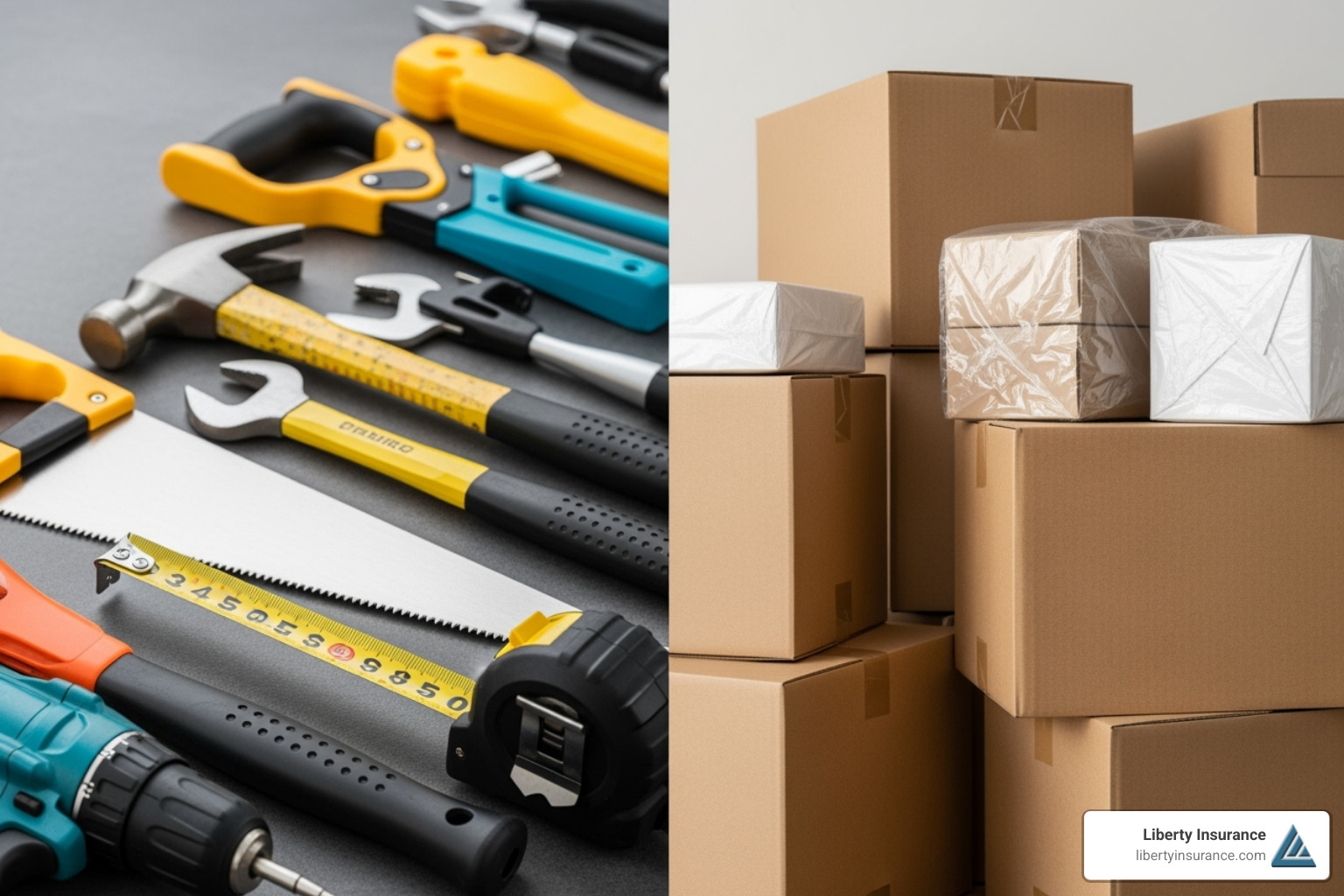
Understanding this relationship is essential for protecting your business. While both policies cover property that moves over land, they serve different purposes. Inland marine casts a wide net over your movable business property, while cargo insurance focuses specifically on goods being transported, particularly when they belong to someone else.
Scope of Coverage: Broad vs. Specific
The most fundamental difference is what each policy protects.
Inland marine insurance has a broad mandate to protect a company’s own movable property and equipment. Your contractor’s tools traveling between job sites, your medical equipment stored at a client’s facility, or your trade show booth are all examples. This coverage follows your assets when they are away from your fixed business location.
Cargo insurance has a much more specific focus. It concentrates exclusively on the value of goods being transported. Crucially, these goods typically belong to a third party. When a trucking company hauls a shipment for a retailer, cargo insurance protects against loss or damage to those specific goods during transit.
Who Needs Which Policy?
Figuring out which policy your business needs becomes much clearer once you understand the scope.
- Inland marine insurance is for businesses that own and move valuable equipment. This includes contractors, tech companies, medical professionals with mobile equipment, artists, and photographers.
- Cargo insurance is for businesses responsible for other people’s property during transit. This includes trucking companies, freight forwarders, logistics providers, and shippers who want to protect their goods while in a carrier’s hands.
Answering “Is inland marine the same as cargo insurance?”: The Relationship Explained
Think of it this way: Inland marine insurance is a complete toolbox with tools for many jobs. Cargo insurance is a specific wrench in that box, designed for one task. Both are valuable, but they aren’t interchangeable.
Inland marine is the category; cargo insurance is a type within that category. This explains why cargo insurance falls under the inland marine umbrella but doesn’t cover everything inland marine does. For more background on how these policies evolved, see this resource on inland and ocean marine insurance.
Comparing Inland Marine vs. Cargo Insurance
To make the distinction crystal clear, here’s a side-by-side comparison:
| Feature | Inland Marine Insurance | Cargo Insurance (e.g., Motor Truck Cargo) |
|---|---|---|
| Coverage Focus | Broad protection for movable property, tools, equipment, materials | Specific protection for the goods/merchandise being transported |
| Primary Insured | Owner of the movable property (e.g., contractor, retailer) | Carrier (for their liability) or owner of the goods (shipper) |
| Example Property | Contractor’s tools, medical equipment, trade show booths, mobile data servers | Retail goods, raw materials, finished products, client’s freight |
| Main Purpose | Covers your property when it’s away from fixed premises or in transit | Covers the goods being moved, often belonging to a third party |
Why Your Business Might Need Both (or One Over the Other)
Now that you understand the difference, you’re likely wondering which policy your business needs. It’s not always an either-or answer. For many businesses in transportation, construction, or manufacturing, you might need both policies for a complete safety net.

Relying on just one type of coverage when you need both is like locking your front door but leaving the back door open. These coverage gaps can lead to preventable financial losses. Furthermore, many legal and contractual obligations require specific coverage. For example, many shippers won’t work with carriers who don’t have robust cargo insurance. The key is to understand what moves in your business, who owns it, and what could go wrong.
Scenarios for Trucking and Logistics
For trucking companies and logistics providers, the question is inland marine the same as cargo insurance is part of daily operations. You move two categories of property: goods belonging to your clients and equipment belonging to you.
- For client goods: You need Marine Cargo Insurance to cover your legal liability if a client’s shipment is damaged, stolen, or lost. Most shippers require proof of this coverage.
- For your equipment: Cargo insurance doesn’t cover your trailers, tarps, chains, or pallet jacks. These business assets need their own protection through a separate inland marine policy.
Neither of these policies covers the truck itself. That’s what your Commercial Auto Insurance is for. Think of it as a three-legged stool: cargo insurance for client goods, inland marine for your equipment, and commercial auto for your vehicles.
Scenarios for Construction and Trades
For contractors and tradespeople, your insurance needs look quite different. Inland marine insurance is the workhorse policy you’ll rely on daily. Your tools and equipment are constantly moving between your shop, truck, and job sites. A standard commercial property policy only covers assets at your fixed location; once they leave, they are unprotected without inland marine coverage. This is especially true for high-value equipment left at unsecured job sites overnight or over a weekend, which are prime targets for theft.
Equipment floaters are designed for this scenario, covering everything from hand tools to heavy machinery like excavators and cranes. The loss of such equipment isn’t just about the replacement cost; it can cause significant project delays and financial penalties. For larger projects, a Builder’s Risk policy (a type of inland marine insurance) is essential to protect the structure and materials on-site. Unless you also transport goods for other companies, you probably don’t need a separate cargo insurance policy. Understanding this distinction can save you from paying for coverage you don’t need.
Is inland marine the same as cargo insurance? A Manufacturer’s Perspective
Manufacturers often need to think about protection from multiple angles. When finished products head to customers, cargo insurance is critical to protect that investment during transit. However, manufacturers also have internal logistics. If you use company trucks to move raw materials between facilities or have mobile demonstration equipment that travels to trade shows, that’s where inland marine coverage steps in. These are your business assets, not goods being sold, and they need their own protection.
Frequently Asked Questions about Transit Insurance
Insurance jargon can be overwhelming. Let’s walk through the most common questions about inland marine and cargo insurance.
How does inland marine differ from standard commercial property insurance?
Commercial Property Insurance is fantastic, but it has clear boundaries. It covers your business assets at a fixed, specified location, like your office in Toms River, NJ. The moment those assets leave, your standard policy typically stops covering them.
That’s where inland marine insurance comes in. It’s designed specifically for property that moves. Whether your equipment is in transit, at a temporary job site, or in storage, inland marine coverage “floats” with it. It fills a critical gap for any business with mobile property.
What are some common exclusions in an inland marine policy?
While broad, inland marine insurance isn’t a magic wand. Knowing what’s not covered can prevent surprises. Policies typically exclude:
- Stationary property at your main business location (covered by commercial property insurance).
- The vehicle itself (covered by Commercial Auto Insurance).
- Intentional damage or neglect.
- Damage from earthquakes and floods, which often require separate coverage.
- Property transported by sea or air, as inland marine is for land-based transit.
- Pre-existing damage that was present before transit began.
For a more detailed breakdown, review your specific policy forms and endorsements or speak with your Liberty Insurance advisor to understand how exclusions apply to your operations.
Can cargo insurance be considered a standalone policy?
Yes, absolutely. While it falls under the inland marine umbrella, cargo insurance is often purchased as a standalone policy.
- For shippers or business owners, you can purchase a “trip transit” policy for a single valuable shipment. This is ideal if you don’t ship frequently enough to need an annual policy.
- For trucking companies and carriers, an annual Motor Truck Cargo policy is standard. This standalone policy covers their legal liability for all client goods they transport throughout the year, up to a specified limit. It’s a fundamental part of their insurance portfolio.
What is the difference between inland marine and ocean marine insurance?
This is a common point of confusion, stemming from their shared history. Ocean marine insurance is the original form, covering goods transported over water (and sometimes by air) on international voyages. It addresses global risks like piracy, long-haul transit perils, and customs issues. Inland marine insurance, on the other hand, evolved to cover the “inland” portion of the journey. Today, it primarily covers domestic, land-based transit (by truck or rail) and other movable property that doesn’t cross oceans. Think of ocean marine for international shipping and inland marine for domestic transit and mobile equipment.
Conclusion
If you came here wondering “is inland marine the same as cargo insurance?” you now know the answer: they’re not the same, but they are related. Inland marine insurance is the broad protective umbrella for your own movable business property—your tools, equipment, and materials. Cargo insurance is a specialized subset focused on the goods being transported, especially when they belong to someone else.
Understanding this difference is vital for proper risk management. A mistake can lead to a devastating and preventable financial loss. To figure out what your New Jersey business needs, ask yourself:
- What property do I move?
- Who owns it?
- What are my contractual obligations?
At Liberty Insurance, we’ve helped countless businesses across the Garden State answer these exact questions. Our goal is to ensure your assets are protected whether they’re on the road, at a job site, or in temporary storage, with coverage that fits how your business operates.
Don’t let confusing terminology leave your valuable property exposed. When you’re ready for protection that moves with your business, explore your options for Inland Marine and Cargo Insurance with us. We’ll help you build a policy that provides the comprehensive protection you need to operate with confidence, no matter what the road ahead brings.

