
Why Caterers Serving Alcohol Face Serious Financial Risks
Liquor liability insurance for caterers protects your business from costly lawsuits when guests you serve alcohol cause accidents or injuries. If you’re searching for coverage, here’s what you need to know:
Essential Coverage for Caterers:
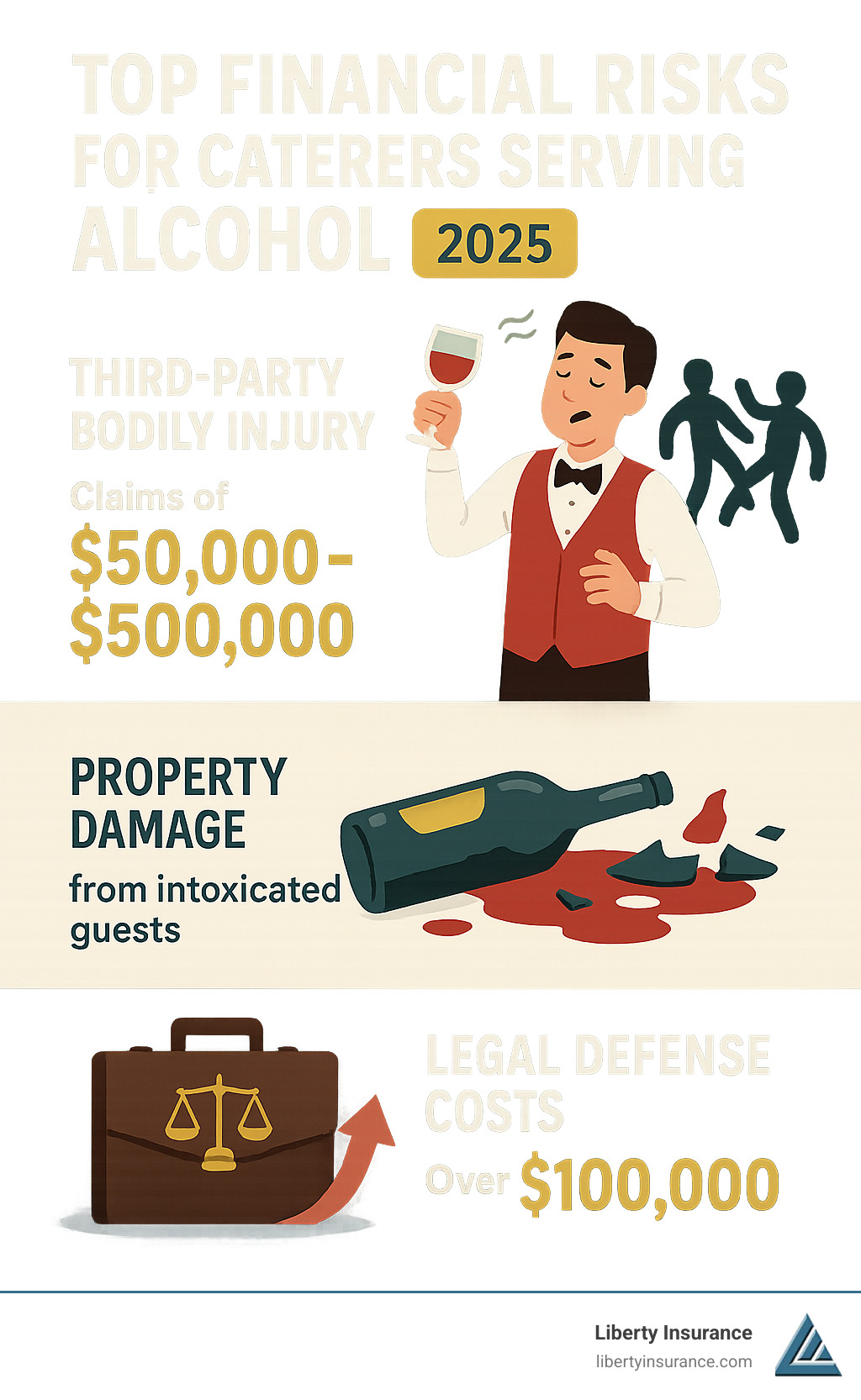
- Third-party bodily injury – When intoxicated guests hurt others
- Property damage – When drunk guests damage venue property
- Legal defense costs – Attorney fees and court expenses
- Medical bills – Guest injuries related to alcohol service
Why You Need It:
- Required by 42 of the 50 states under dram shop laws
- Most venues demand proof of insurance before hiring caterers
- Claims can cost hundreds of thousands of dollars
- General liability insurance doesn’t cover alcohol-related incidents
Cost Range:
- Annual policies: Starting at $200-$550 per year
- Event-based coverage: $105-$275 per event
- Bundled with general liability: $429+ annually
Picture this: A guest at your catered wedding reception has one too many champagne toasts, drives home, and causes a serious accident. Under dram shop laws, your catering business could be held liable for medical bills, property damage, and legal fees – potentially costing your business everything you’ve worked to build.
As Andrew Harris, a Certified Insurance Counselor and PIA National’s 2020 Agent of the Year, I’ve helped countless catering businesses understand their liquor liability insurance for caterers needs and protect their operations from devastating financial losses. My experience with Liberty Insurance has shown me how the right coverage can mean the difference between a manageable claim and business bankruptcy.
Easy liquor liability insurance for caterers glossary:
- event liquor liability insurance
- what is host liquor liability insurance
- how much is liquor liability insurance for a wedding
What is Liquor Liability Insurance and Why is it Essential for Your Catering Business?
Think of liquor liability insurance for caterers as your business’s safety net when serving alcohol goes wrong. This specialized coverage protects your catering business from lawsuits when someone you serve alcohol causes injury or property damage to others. It’s completely different from your general liability insurance, which covers everyday mishaps like a guest slipping on a wet floor or getting food poisoning.
Here’s the sobering reality: catering businesses can be held liable for an intoxicated customer’s actions in 42 of the 50 states. These “dram shop laws” can turn a fun wedding reception into a financial nightmare for your business.
The question isn’t whether you might face an alcohol-related claim – it’s when. And without proper coverage, that single incident could wipe out everything you’ve built.
Understanding Your Legal Responsibility
Dram shop laws create a legal web that can catch unprepared caterers off guard. These laws vary from state to state, but they all share a common thread: you can be held responsible when someone you serve alcohol later causes harm.
The most common scenarios that trigger liability include serving alcohol to visibly intoxicated guests, serving minors, and continuing to serve someone who later causes an accident. What makes this particularly challenging is that “visibly intoxicated” can be subjective – what looks like someone having a good time might legally qualify as intoxication.
Let me paint you a picture: You’re catering a corporate holiday party. A guest has several drinks at your bar, seems fine when he leaves, but then rear-ends another car on his way home. Under dram shop laws, your catering business could face a lawsuit for the victim’s medical bills, lost wages, and pain and suffering. These costs routinely reach six figures.
The legal responsibility doesn’t end when your event does. Third-party liability means you’re potentially on the hook for whatever happens after your guests leave – whether that’s a car accident, a fight, or property damage at their next stop.
Meeting Venue and Client Requirements
Beyond legal compliance, liquor liability insurance for caterers has become the price of admission to quality venues and discerning clients. Most venues won’t let you serve alcohol without proof of insurance, and sophisticated clients expect to see it in your contract proposals.
When venues request a Certificate of Insurance (COI), they’re looking for peace of mind. They want to know that if something goes wrong with your alcohol service, your insurance will handle the fallout. Many venues will also ask you to add them as an additional insured on your policy, which extends your coverage to protect them from liability related to your service.
This isn’t just paperwork – it’s about professionalism and gaining client trust. When you can confidently provide insurance documentation, you’re demonstrating that you’re a serious business owner who thinks ahead and protects everyone involved.
Without this coverage, you’ll find yourself shut out of the most lucrative contracts. High-end venues, corporate clients, and wedding planners all expect their caterers to carry proper insurance. It’s become as essential as having a food handler’s license.
Do Caterers Need Liquor Liability Insurance? The answer is crystal clear: if you want to serve alcohol and stay in business, you absolutely need this protection.
What Does Liquor Liability Insurance for Caterers Cover?

When you’re serving cocktails at a beautiful wedding reception, the last thing on your mind should be worrying about what happens if something goes wrong. That’s exactly what liquor liability insurance for caterers is designed to handle – giving you peace of mind while you focus on creating memorable experiences for your clients.
What Does Liquor Liability Insurance Cover? Your policy acts like a financial safety net, stepping in when alcohol-related incidents threaten your business. The coverage includes third-party bodily injury protection when intoxicated guests hurt others, property damage coverage when drunk guests break venue items, legal defense costs for attorney fees and court expenses, and settlements and judgments up to your policy limits.
Think of it this way: your policy has your back from the moment you serve that first drink until long after the last guest leaves your event.
Key Risks Covered by Liquor Liability Insurance for Caterers
Over the years, we’ve seen how quickly a perfect evening can turn into a nightmare without proper coverage. Intoxicated guest accidents are surprisingly common – someone has too much wine and stumbles into another guest, causing serious injuries. We’ve handled claims where fights and brawls break out between guests who’ve had too much to drink, resulting in expensive medical bills and legal fees.
Damage to venue property is another frequent issue. Picture an intoxicated guest accidentally knocking over a priceless vase at an upscale venue, or stumbling into expensive audio equipment. These incidents can cost thousands of dollars in repairs or replacements.
Perhaps most concerning are post-event incidents like DUIs. When a guest leaves your event intoxicated and causes a car accident, your catering business could face liability under dram shop laws. The resulting legal fees and medical expense coverage can easily reach six figures.
One case that stands out involved a corporate holiday party where an over-served guest caused a three-car accident on the way home. The medical bills alone exceeded $200,000, but our client’s liquor liability policy covered the full amount plus legal defense costs.
The Difference Between Liquor Liability and General Liability
Here’s where many caterers get confused – and it’s a costly mistake. Your general liability insurance is fantastic for everyday business risks, but it won’t help you when alcohol enters the picture. General liability specifically excludes alcohol-related claims, leaving you vulnerable to devastating financial losses.
| General Liability | Liquor Liability |
|---|---|
| Guest slips on spilled water | Intoxicated guest slips and injures another person |
| Food poisoning from catered meal | Accident caused by over-served guest |
| Equipment damages venue property | Drunk guest damages venue property |
| Burns from hot serving dish | Injuries from alcohol-related altercation |
| Allergic reaction to unlabeled food | DUI accident after your event |
The distinction is crucial: general liability covers accidents from your catering operations, while liquor liability covers incidents specifically related to alcohol service. Without both types of coverage, you’re essentially gambling with your business’s future every time you serve alcohol at an event.
Navigating Policies and Costs
Finding the right liquor liability insurance for caterers doesn’t have to be overwhelming. Think of it like choosing the perfect menu for your clients – you need something that fits your needs and budget while providing the protection you deserve.
How Much Does Liquor Liability Insurance Cost? The answer depends on your specific situation, but we can help you understand what to expect so you can budget accordingly.
How Much Does Liquor Liability Insurance for Caterers Cost?
Let’s talk numbers. Most caterers are pleasantly surprised to learn that liquor liability insurance for caterers is quite affordable, especially considering the financial protection it provides.
Annual coverage typically runs between $200-$550 per year for standalone liquor liability. If you bundle it with general liability coverage, expect to pay $429-$800 annually. Many of our clients appreciate the monthly payment option, which breaks this down to just $35-$67 per month – less than most people spend on their morning coffee.
Event-based policies offer flexibility for occasional caterers. A single event lasting 1-3 days usually costs $105-$275, while combining general liability with liquor liability for one event runs $134-$300.
Your premium depends on several key factors. Your state location plays a big role – New Jersey has different risk factors than other states. Your annual revenue matters too, since higher sales typically mean more exposure. The coverage limits you choose directly impact cost, but higher limits provide better protection when you need it most.
Your claims history affects pricing, just like with car insurance. If you’ve had previous claims, expect to pay more. Finally, the types of events you cater influence your rates – wedding receptions with open bars carry different risks than corporate lunch meetings.
For a small catering business in New Jersey with $100,000 in annual revenue, you’d typically pay around $400-$600 annually for combined general and liquor liability coverage with $1 million occurrence limits. That’s solid protection for less than $2 per day.
Choosing Your Policy: Annual vs. Per-Event Coverage
The beauty of insurance is that it can adapt to your business model. Are you catering weddings every weekend, or do you only serve alcohol at special occasions? Your answer determines which coverage type makes the most sense.
Annual policies work brilliantly if you cater multiple events per month, serve alcohol regularly, or want consistent coverage without worrying about gaps. There’s something reassuring about knowing you’re protected year-round, and the predictable costs make budgeting easier.
Per-event policies shine when you only cater occasional events with alcohol, primarily handle alcohol-free catering, or want to test the market before committing to annual coverage. They’re also perfect for those specific high-risk events that need extra attention.
Event Liquor Liability Insurance gives you the flexibility to purchase coverage for specific occasions like weddings, corporate parties, birthday celebrations, or holiday gatherings. You’re not paying for coverage you don’t need, but you’re fully protected when you do.
For bartenders or caterers who occasionally need short-term coverage, 1 Day Bartender Insurance offers targeted protection for single events. It’s like having a safety net that appears exactly when and where you need it.
The key is matching your coverage to your business rhythm. Whether you’re serving champagne at weekend weddings or cocktails at quarterly corporate events, there’s a policy structure that fits your needs perfectly.
Licensing, Certifications, and Risk Management
Getting the right permits and training your staff properly isn’t just about following the law – it’s about protecting your business and keeping your liquor liability insurance for caterers valid. Insurance companies pay close attention to whether you have proper certifications, and many offer discounts when you demonstrate responsible alcohol service practices.
Think of licensing and training as your first line of defense against costly claims. When you can show that your business follows all regulations and your staff knows how to serve alcohol responsibly, you’re building a strong foundation that both protects your customers and reduces your insurance risk.
Required Permits and Staff Certifications
Before you serve your first glass of wine at a catered event, you’ll need to steer permits and certifications. The requirements vary by state, but there are some common essentials you’ll encounter almost everywhere.
Alcoholic Beverage Control (ABC) permits are typically required in most states for any business serving alcohol. These permits ensure you understand local laws and regulations around alcohol service. Catering liquor licenses are often separate from restaurant licenses because you’re serving alcohol at different locations rather than a fixed establishment.
Don’t forget about local permits – municipalities often have their own requirements that go beyond state regulations. What’s acceptable in one town might require additional permits in the next town over. Food handler certificates are usually required for all food service staff, and these often include basic alcohol service guidelines.
For staff training, TIPS (Training for Intervention Procedures) is the gold standard that most insurance companies recognize. This nationally recognized program teaches your staff how to identify intoxicated guests and handle difficult situations. ServSafe Alcohol is another excellent option that combines food safety with alcohol service training.
In New Jersey, where Liberty Insurance operates from locations in Millstone Township, Trenton, Toms River, New Brunswick, and Princeton, caterers must obtain proper permits from the Division of Alcoholic Beverage Control before serving alcohol at events. Your insurance policy may require proof of these permits to ensure coverage validity.
Best Practices to Reduce Your Liability
Smart risk management goes beyond just having insurance – it’s about preventing incidents before they happen. When you implement strong safety practices, you’re not only protecting your business but potentially reducing your insurance premiums too.
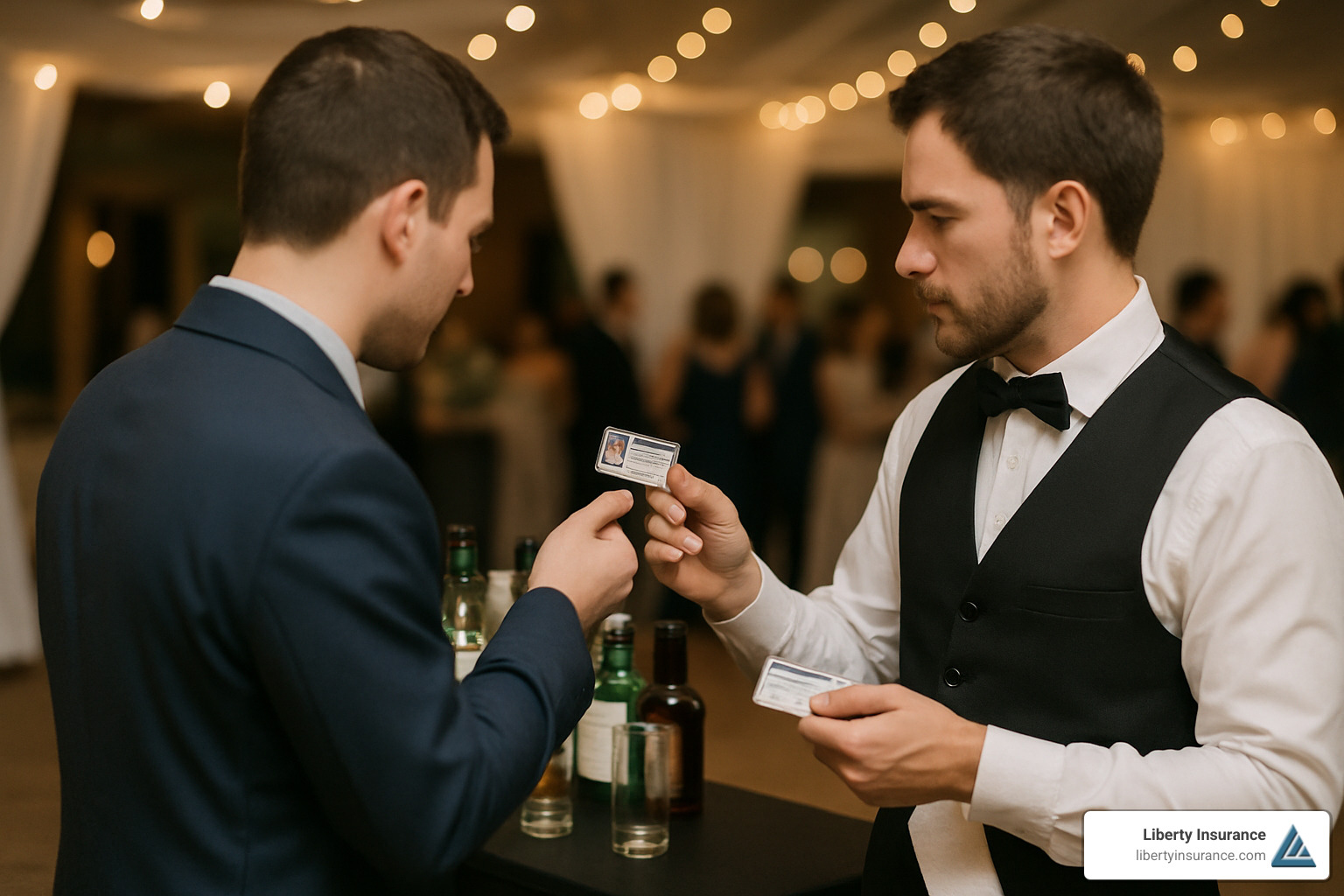
The foundation of responsible alcohol service starts with always checking government-issued IDs to verify age. This seems obvious, but it’s amazing how many claims arise from serving minors. Train your staff to recognize signs of intoxication and refuse service when necessary – this is where programs like TIPS really pay off.
Offering non-alcoholic beverages and food to slow alcohol consumption is both good hospitality and smart risk management. Guests who are eating and drinking water between alcoholic beverages are less likely to become dangerously intoxicated. Never serve a guest who is visibly intoxicated – this is both a legal requirement and common sense.
Having clear policies for handling difficult situations means your staff knows exactly what to do when someone becomes belligerent or refuses to stop drinking. We recommend creating written policies for your staff and conducting regular training sessions. Document all training to demonstrate your commitment to responsible service – this documentation can be valuable if you ever face a claim.
Consider maintaining detailed records of alcohol service, establishing maximum drink limits per person, and providing alternative transportation information to guests. Having a designated staff member oversee alcohol service ensures someone is always monitoring guest behavior throughout the event.
These practices aren’t just about avoiding claims – they’re about running a professional operation that venues and clients will want to work with again and again.
Frequently Asked Questions about Catering Liquor Insurance
Do I need liquor liability insurance if the event host or venue already has it?
This question comes up constantly, and I understand why it’s confusing. The short answer is yes, you absolutely need your own coverage – even when the host or venue has their own policy.
Here’s why this matters for your catering business: Host liquor liability insurance protects the people throwing the party (like a bride and groom or corporate event planner) when they provide alcohol to their guests. But this coverage has a big gap – it doesn’t protect commercial businesses like yours.
Commercial liquor liability insurance is specifically designed for businesses that serve alcohol for profit. Your liability as a professional caterer is legally separate from the host’s liability. When you’re paid to serve alcohol, you’re operating under different rules and face different risks.
Most venues understand this distinction and will require you to carry your own liquor liability insurance for caterers. They’ll often ask you to add them as an additional insured on your policy, which protects both of you and ensures there’s no dangerous gap in coverage.
Think of it this way: if something goes wrong, you don’t want to find that the host’s policy excludes your commercial activities. Having your own coverage means you’re protected no matter what.
What happens if a claim is made against my catering business?
Nobody wants to think about facing a lawsuit, but knowing what to expect can help you feel more confident about your coverage. When someone files a claim against your catering business, your insurance company becomes your advocate and guide through the process.
Your first step is crucial: contact your insurance company immediately when you learn about a potential claim. Don’t wait, even if you think the claim might be frivolous. Early notification helps your insurer investigate while memories are fresh and evidence is available.
Once you’ve reported the claim, your insurer will conduct a thorough investigation. They’ll gather witness statements, review contracts, and examine all the details surrounding the incident. This investigation helps determine whether your policy covers the claim and what your potential liability might be.
Here’s what gives many caterers peace of mind: your policy covers legal defense costs even if the lawsuit is ultimately unsuccessful. Legal fees can easily exceed $100,000, so this protection is invaluable. Your insurer will provide experienced attorneys who specialize in liquor liability cases.
If the investigation shows you’re liable for damages, your insurance company will work to negotiate a fair settlement. If the case goes to court, your policy will pay any judgment up to your coverage limits. Throughout this process, you’ll have professional support to help protect your business and reputation.
Can I add a venue as an “additional insured” to my policy?
Absolutely, and this is often a requirement before venues will let you serve alcohol on their property. Adding a venue as an additional insured is actually simpler than most caterers expect, and it’s usually included in your policy at no extra cost.
Adding additional insured status extends your liquor liability coverage to protect the venue from claims related to your alcohol service. This gives venue owners confidence that they’re protected if something goes wrong during your event.
The process is straightforward: you’ll need to request an additional insured endorsement from your insurer, providing the venue’s complete legal name and address. Your insurance company will then issue a Certificate of Insurance (COI) that shows the venue as an additional insured party.
Most modern liquor liability insurance for caterers policies include unlimited additional insured endorsements, which means you can add as many venues as needed without paying extra fees. This flexibility is essential for caterers who work at multiple locations.
Make sure to request this endorsement before your event – most venues won’t let you set up without proof of this coverage. The certificate serves as official documentation that protects both your business and the venue, making it a win-win arrangement that helps you secure more contracts.
Conclusion
Running a successful catering business means protecting it from every angle – and liquor liability insurance for caterers is one of the most crucial shields you can have. Think of it this way: you wouldn’t drive without car insurance or operate without a business license, so why would you serve alcohol without proper coverage?
The numbers tell the story clearly. With potential claims reaching hundreds of thousands of dollars and dram shop laws holding you liable in 42 states, going without coverage is like playing financial Russian roulette with your business. Every wedding toast, corporate celebration, and birthday party where you serve alcohol creates potential exposure that could wipe out years of hard work.
But here’s the good news: protection doesn’t have to break the bank. Starting at just $200 annually for standalone coverage or $105 per event, liquor liability insurance for caterers costs less than most professional kitchen appliances. When you consider that a single uninsured claim could force you to close your doors permanently, this small investment becomes a no-brainer.
At Liberty Insurance, we’ve seen too many talented caterers struggle with the aftermath of alcohol-related incidents. That’s why we’ve designed our coverage to be both comprehensive and affordable. Whether you’re serving champagne at an neat Princeton wedding or cocktails at a corporate event in New Brunswick, we understand the unique risks you face every day.
Your reputation and financial security are too important to leave to chance. Most venues won’t even let you through the door without proof of insurance, and savvy clients expect you to carry proper coverage. It’s become as essential to your business toolkit as your chef’s knives and serving platters.
The choice is simple: invest in protection now, or risk losing everything later. To safeguard your catering business from alcohol-related risks, it’s crucial to have the right protection in place. Secure your comprehensive alcohol liability insurance policy today and focus on what you do best – creating unforgettable experiences for your clients.

