
Why Manufacturers Auto Insurance is Critical for Your Business Operations
Manufacturers auto insurance is specialized commercial coverage designed to protect businesses in the manufacturing sector from risks associated with their vehicle fleets. Unlike standard auto policies, it addresses the unique exposures manufacturers face when transporting raw materials, finished goods, and personnel, covering liability, physical damage, cargo loss, and more.
Quick Answer: Key Components of Manufacturers Auto Insurance
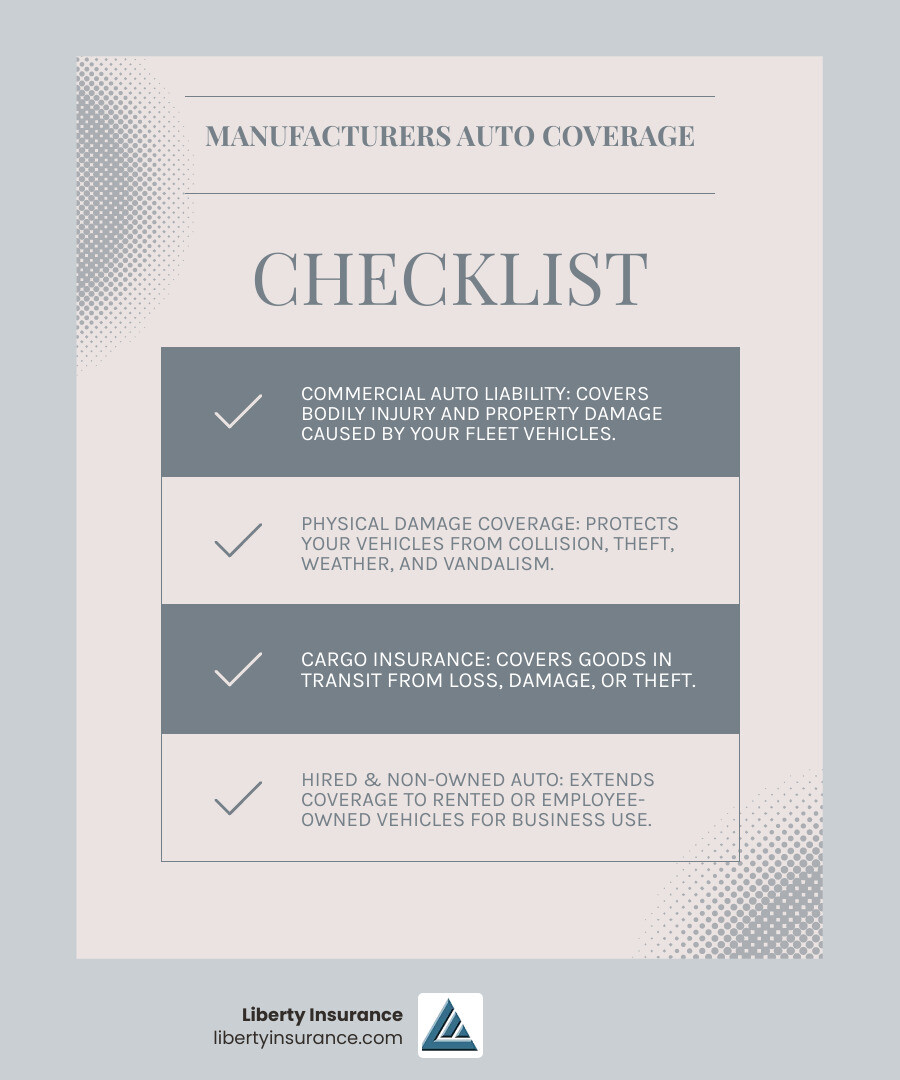
- Commercial Auto Liability: Covers bodily injury and property damage caused by your fleet vehicles.
- Physical Damage Coverage: Protects your vehicles from collision, theft, and other damage.
- Cargo Insurance: Covers goods in transit from loss, damage, or theft.
- Hired and Non-Owned Auto: Extends coverage to rented or employee-owned vehicles used for business.
- Specialized Endorsements: Adds protection for unique risks like pollution liability or equipment breakdown.
Your vehicle fleet is the lifeblood of your supply chain, connecting suppliers to production facilities and finished goods to customers. However, this vital role introduces complex risks, from on-road accidents to cargo theft and environmental exposures. Many manufacturers remain underinsured, relying on standard policies that fail to address their specific operational needs.
As a Certified Insurance Counselor (CIC) and Accredited Advisor in Insurance (AAI), I have spent years helping manufacturers secure comprehensive auto insurance. My expertise lies in crafting manufacturers auto insurance solutions that protect fleets and bottom lines by addressing the unique challenges of the manufacturing sector.
Learn more about manufacturers auto insurance:
Understanding the Unique Auto Risks in Manufacturing
For manufacturing businesses in New Jersey, the vehicle fleet is the heartbeat of operations. From moving raw materials from the port of Newark to a facility in Millstone Township to delivering finished products near Trenton, constant movement is vital. However, this activity brings a unique set of auto-related risks that demand specialized insurance protection.

A manufacturer’s vehicle risks are deeply tied to the entire supply chain. A delay in raw material transport can cause costly disruptions, while issues with finished goods delivery can damage your reputation. The use of company-owned or personal vehicles for business tasks adds further exposure, from on-site accidents to third-party liability claims.
Why Your Manufacturing Business Needs Specialized Auto Insurance
A generic commercial auto policy is often insufficient for manufacturers. Our industry operates with specific risks that require a custom approach, making specialized manufacturers auto insurance a core part of protecting your business.
This coverage is essential for protecting assets, including your significant investment in vehicles and the valuable cargo they transport. It also ensures legal compliance and meets contractual obligations with suppliers and customers who mandate specific insurance for goods in transit. In a litigious state like New Jersey, strong liability coverage is crucial. Specialized insurance provides peace of mind, allowing you to focus on production. To learn more, see our Commercial Insurance Ultimate Guide.
Specific Risks Your Fleet Faces Daily
Your manufacturing fleet is constantly exposed to numerous challenges:
- Vehicle accidents: Collisions and rollovers can cause vehicle damage, driver injuries, and significant third-party liability.
- Cargo theft or damage: Goods in transit are at risk of being stolen, spoiled, or damaged in an accident.
- Driver error: Mistakes like distracted driving or fatigue can lead to serious accidents and higher insurance premiums.
- Vehicle breakdown: An unexpected mechanical failure can disrupt production schedules and cause missed delivery deadlines.
- Loading and unloading injuries: Accidents in busy loading zones involving forklifts and heavy equipment can cause injuries.
- Pollution liability from spills: An accident involving hazardous or even non-hazardous materials can lead to massive cleanup costs and environmental fines.
These risks highlight why specialized protection is necessary to safeguard not just the vehicle, but everything it represents for your business. Protecting your fixed assets is just as critical; learn more in our guide on Insurance for Manufacturing Equipment.
Core Coverages for Manufacturers Auto Insurance Policies
Your vehicles are the moving parts of your operation, which is why manufacturers auto insurance is built differently than a standard policy. It’s a comprehensive package designed for the complex risks you face daily.
A robust policy layers protection, starting with essential liability and physical damage coverage, then adding specialized endorsements to address your unique cargo, environmental risks, and operational needs.
Essential Coverages for Your Manufacturers Auto Insurance
These foundational coverages protect you from the most common and financially devastating losses.
- Bodily Injury Liability: This is your first line of defense when one of your vehicles causes an at-fault accident that injures someone. It covers their medical bills, lost wages, pain and suffering, and your legal defense costs, which can be substantial even if the claim is ultimately dismissed. For a manufacturer with heavy trucks, a single serious accident can lead to multi-million dollar claims, making high liability limits essential.
- Property Damage Liability: This pays to repair or replace other people’s property—such as vehicles, buildings, or critical infrastructure like guardrails or utility poles—that your vehicle damages in an accident. A collision involving a heavy truck can easily damage multiple vehicles or cause structural damage to a building, quickly exceeding the limits of a standard policy.
- Collision Coverage: This pays to repair or replace your own vehicles after an accident, regardless of who is at fault. For a manufacturer, this coverage is critical for business continuity. It minimizes downtime by ensuring you can get a damaged truck back on the road quickly, preventing costly supply chain disruptions.
- Comprehensive Coverage: This protects your vehicles from non-collision incidents. This includes theft, vandalism, fire, falling objects, and weather-related damage like hail or flooding. In a state like New Jersey with both dense urban areas and exposure to coastal storms, this coverage is vital for protecting your fleet assets whether they are on the road or parked at your facility.
These four coverages form the foundation of your policy. For more details, visit our Commercial Auto Insurance page.
Specialized Endorsements and Programs
Specialized endorsements fill the gaps left by standard policies and customize your coverage to match your operations.
- Inland Marine or Cargo Coverage: This is arguably the most critical endorsement for a manufacturer. Standard auto policies cover the vehicle, but not the valuable cargo inside. This coverage, often called Motor Truck Cargo, protects your raw materials and finished products from risks like theft, damage in a collision, or spoilage due to equipment failure (e.g., a refrigeration unit breakdown). Policies can be written on an “all-risk” or “named perils” basis, so it’s crucial to ensure your coverage matches the specific risks your cargo faces.
- Pollution Liability Endorsement: If your trucks transport any materials that could be considered pollutants (including fuels, chemicals, or even certain food products), this coverage is non-negotiable. A standard auto policy typically excludes pollution cleanup. This endorsement covers the immense costs of cleanup, regulatory fines from agencies like the EPA or NJDEP, and third-party claims for bodily injury or property damage caused by a spill. Given New Jersey’s strict environmental laws, a single incident without this coverage could be financially catastrophic.
- Trailer Interchange Coverage: If you use trailers you don’t own under a written agreement, this covers physical damage to that trailer while it’s in your care.
- Equipment Breakdown Coverage: This protects specialized equipment mounted on your vehicles, such as refrigeration units or hydraulic lifts, from failure that could lead to cargo loss or expensive repairs.
These additions transform a basic policy into true manufacturers auto insurance. To explore complementary coverages, see our guide on Types of Business Insurance.
How Manufacturers Auto Insurance Differs from Standard Policies
Assuming any commercial auto policy will suffice is a common but costly mistake for manufacturing businesses. Manufacturers auto insurance is fundamentally different, designed to mirror the complexities of your operations, unlike a general-purpose policy.
The differences lie in the depth of coverage, the types of risks acknowledged, and the scale of protection offered. Here’s a quick comparison:
| Factor | Standard Commercial Auto Insurance | Manufacturers Auto Insurance |
|---|---|---|
| Covered Risks | General road hazards, basic liability. | Comprehensive risks including supply chain disruption, environmental spills, and cargo damage. |
| Vehicle Types | General-purpose vans, trucks, sedans. | Heavy-duty trucks, specialized transport, and vehicles with mounted equipment. |
| Policy Limits | Lower, designed for smaller businesses. | Significantly higher liability limits (often $1M+) to cover large-scale incidents. |
| Endorsements | Basic options like Hired/Non-Owned Auto. | Extensive options including Cargo, Pollution Liability, and Trailer Interchange. |
| Focus | Protection of individual vehicles. | Holistic risk management for the entire fleet and its role in the supply chain. |
Why Standard Policies Fall Short for Your Manufacturers Auto Insurance Needs
Relying on a standard commercial auto policy leaves your manufacturing business exposed. These policies are not designed for our industry’s unique operational realities.
Key shortcomings include:
- Inadequate Liability Limits: Standard limits can be quickly exhausted by a major accident involving heavy vehicles, exposing your company to devastating financial judgments.
- Unacceptable Exclusions: Policies may exclude coverage for specialized activities common in manufacturing, such as transporting certain types of cargo.
- Lack of Cargo Coverage: The biggest oversight is often the lack of coverage for the valuable raw materials or finished goods being transported.
- No Coverage for Specialized Vehicles: Unique vehicles or mounted equipment, like refrigeration units, are typically not covered by a general policy.
These gaps are precisely what manufacturers auto insurance is built to address. Learn more about how a comprehensive policy protects your operations with our overview of Business Auto Insurance.
Key Distinctions in Coverage and Limits
The distinctions between specialized and generic policies are stark, particularly in coverage scope and limits.
- Higher Liability Limits: Specialized policies offer limits reaching into the millions, providing adequate protection against catastrophic claims.
- Fleet-Wide Coverage: This holistic approach protects the entire group of vehicles as an interconnected part of your supply chain, which can streamline management.
- Coverage for Goods in Transit: A cornerstone difference, this integrates Inland Marine or Motor Truck Cargo coverage to protect the value of the goods themselves.
- Non-Owned Vehicle Liability: This extends liability coverage to rented vehicles or employee-owned cars used for business, closing a critical gap.
- Radius of Operation: Coverage is custom to your specific operational radius, whether local in New Jersey or long-distance across state lines.
These distinctions ensure your policy provides robust, relevant protection. For more insights, explore our guide on Insurance for Companies.
Key Factors Influencing Your Insurance Premiums
The cost of your manufacturers auto insurance is calculated based on a blend of factors unique to your business. Understanding these elements can help you identify opportunities to manage costs. Your premium reflects the level of risk your fleet presents to an insurer.
Key factors include:
- Fleet Size and Value: The larger your fleet and the higher the stated value of each vehicle, the higher your premium will be. This is a direct reflection of the insurer’s potential payout for physical damage claims.
- Vehicle Types: The type of vehicle is a major rating factor. Heavy-duty trucks, tractor-trailers, and vehicles with specialized mounted equipment (like cranes or refrigeration units) cost more to insure than light-duty vans. This is because they have a higher potential to cause significant damage in an accident and are more expensive to repair or replace. Gross Vehicle Weight (GVW) is a key metric insurers use to assess this risk.
- Radius of Operation: Where your vehicles travel matters. Insurers classify operations by radius: local (under 50 miles), intermediate (50-200 miles), and long-distance (over 200 miles). Long-distance routes that cross state lines generally carry higher premiums due to increased time on the road, exposure to varied weather and traffic conditions, and navigating different legal jurisdictions.
- Cargo Type: What you haul is as important as the vehicle itself. Transporting high-value goods like electronics or pharmaceuticals increases the risk of theft and requires higher cargo limits. Hauling hazardous materials (hazmat) significantly increases premiums due to the potential for catastrophic environmental liability in the event of a spill.
- Driver Records and Experience: The quality of your drivers is one of the most significant factors. Insurers will scrutinize the Motor Vehicle Records (MVRs) of all drivers. A team with clean driving histories, extensive commercial driving experience, and proper licensing (like a CDL) will result in lower premiums. Conversely, drivers with accidents, speeding tickets, or other violations will drive up your costs.
- Claims History: Frequent or severe past claims signal higher risk to insurers.
- Safety Programs: Proactive safety measures can lead to discounts.
- Deductible Levels: A higher deductible can lower your premium but increases your out-of-pocket cost per claim.
Factors You Can Control
You can actively influence many factors that determine your premiums. A proactive approach to risk can significantly lower your insurance costs.
Focus on driver hiring and training by establishing strict criteria, running MVR checks annually, and providing ongoing education on topics like defensive driving and cargo securement. Implement a strict, documented vehicle maintenance schedule that adheres to DOT regulations to prevent accidents caused by mechanical failure. Leverage safety technology like telematics and dash cams to monitor driver behavior, correct risky habits like speeding or hard braking, and provide irrefutable evidence in an accident. This technology often qualifies for significant premium discounts. Finally, develop a well-documented claims management process that ensures accidents are reported immediately and accurately. This helps your insurer manage the claim efficiently and can minimize costs. By demonstrating a commitment to safety in these areas, you present a much more attractive risk profile to underwriters. Ready to see how your efforts can pay off? Get a Business Insurance Quote today.
Market and Environmental Factors
Broader market and environmental factors also shape your premiums, though they are often outside your direct control.
For New Jersey manufacturers, these include:
- Geographic Location: Your base of operations matters. Premiums are often higher in densely populated urban areas with heavy traffic, like northern New Jersey, compared to rural locations. Regions with high rates of vehicle theft or vandalism also see higher comprehensive coverage costs.
- Litigious Jurisdictions: States where lawsuits are common can drive up the potential cost of claims.
- CAT-Exposed Property: Storing vehicles in areas prone to natural disasters like hurricanes can increase risk.
- Regulatory Changes: New state or federal safety mandates can impact pricing.
- Economic Inflation: Rising costs for vehicle parts, repairs, and labor increase the expense of settling claims.
Understanding these influences helps you prepare for premium fluctuations. To learn more about protecting your operations, explore our Commercial Manufacturing Insurance options.
Strategic Risk Management to Lower Your Premiums
Proactive risk management is a powerful tool for controlling your manufacturers auto insurance premiums. A strong safety culture and smart risk controls are essential for boosting your bottom line.
At Liberty Insurance, we champion a holistic approach to managing your “Total Cost of Risk.” This concept extends beyond the insurance premium to include uninsured losses (like deductibles and downtime), administrative costs associated with claims, and damage to your company’s reputation. Our proprietary CORE360 approach integrates proactive loss control strategies and aggressive claims advocacy to reduce both the frequency and severity of accidents, making your business a more attractive, lower-risk partner for insurers.
Implementing a Robust Driver Safety Program
Your drivers’ safety directly impacts your insurance costs. A strong driver safety program is one of the best ways to manage risk and can lead to lower manufacturers auto insurance premiums.
Key components include:
- Driver Screening and Qualification: Establish a formal, written hiring standard. This must include running Motor Vehicle Record (MVR) checks before hiring and at least annually thereafter. Disqualify candidates with major violations like DUIs, reckless driving, or a history of at-fault accidents.
- Ongoing Training and Education: Safety is not a one-time event. Provide regular, documented training sessions on defensive driving, hazard recognition, hours-of-service compliance, and proper procedures for safe loading and unloading. Use a mix of classroom, online, and hands-on training to keep the material engaging.
- Distracted Driving Policies: Enforce strict, zero-tolerance rules against cell phone use while driving.
- Accident Response Protocols: Ensure drivers have a clear, step-by-step protocol to follow after an incident to ensure safety, gather necessary information, and report the claim accurately and immediately.
- Performance Incentives: Reward safe driving with bonuses or recognition to motivate your team and reinforce your commitment to a safety-first culture.
Leveraging Technology and Best Practices
Modern technology and industry best practices are game-changers for managing fleet risk and lowering manufacturers auto insurance costs.
Consider these smart solutions:
- Telematics and GPS Tracking: This technology is a cornerstone of modern fleet management. Telematics systems monitor driver behaviors like speeding, hard braking, and rapid acceleration. This data is invaluable for targeted driver coaching and can be used to create incentive programs. It also helps optimize routes for fuel efficiency and provides location tracking for theft recovery. Most insurers offer significant discounts for fleets that properly implement a telematics program.
- Dash Cams (Forward- and Driver-Facing): Dash cams provide indisputable video evidence in the event of an accident. They are your best defense against fraudulent claims and incorrect fault determinations, which can save you from paying a deductible and prevent a premium increase. Driver-facing cameras, combined with AI, can also detect and alert for distracted or drowsy driving in real-time, preventing accidents before they happen.
- Regular Vehicle Maintenance: A consistent, documented schedule for checking tires, brakes, fluids, and lights ensures vehicles are safe, compliant with regulations, and less prone to breakdowns that can cause accidents or delivery delays.
- Secure Loading, Unloading, and Cargo Securement: Accidents don’t just happen on the road. Your loading docks are high-risk areas. Implement and enforce strict procedures for loading and unloading to prevent injuries to personnel and damage to cargo. Furthermore, ensure all drivers are thoroughly trained on proper cargo securement techniques as required by the FMCSA. Improperly secured cargo can shift or fall, causing catastrophic accidents.
Weaving these strategies into your operations builds a strong defense against auto-related risks. As another best practice, consider financial fraud prevention to maintain your business’s stability; you can find Helpful tips from FDIC Consumer News on protecting yourself from check scams.
Choosing the Right Provider and Navigating Regulations
Finding the right partner for your manufacturers auto insurance is about more than just comparing quotes. It requires finding a provider who understands the manufacturing landscape while also navigating the complex regulatory requirements for commercial fleets.
What to Look for in an Insurance Partner
When evaluating providers, look for a true business partner who brings expertise, flexibility, and support.
- Industry Experience: Choose a provider who understands the nuances of manufacturing supply chains, specialized equipment, and your specific exposures.
- Customizable Coverage: Your insurance shouldn’t be cookie-cutter. Look for flexible policies with a menu of endorsements to fit your fleet and cargo.
- Strong Financial Stability: You need confidence that your insurer can pay out large claims. Check ratings from agencies like A.M. Best (an A+ rating signals superior strength).
- Responsive Claims Handling: When an accident occurs, you need swift, efficient service to minimize downtime. A reputation for fair claims handling is invaluable.
- Proactive Risk Control Services: The best partners help you develop safety programs and implement technology to reduce your risk profile and lower premiums over time.
Choosing a provider with deep expertise in Manufacturing Insurance ensures you’re working with someone who understands your business.
Understanding Legal and Regulatory Requirements
Operating a commercial fleet in New Jersey means navigating a complex regulatory landscape. Compliance is essential for keeping your operations legal, safe, and fully protected.
- State Minimum Liability Limits: New Jersey mandates minimum insurance for commercial vehicles, but most manufacturers need substantially higher limits to be adequately protected.
- FMCSA Requirements: If your fleet crosses state lines, you must comply with Federal Motor Carrier Safety Administration (FMCSA) regulations covering insurance, driver qualifications, and vehicle maintenance.
- Intrastate vs. Interstate Commerce: This classification determines which regulatory framework applies to your fleet and impacts your licensing and insurance filing requirements.
- Proof of Insurance: Your drivers must always carry proper documentation, including insurance cards and any required regulatory filings.
Compliance is the foundation of a well-protected operation. For general information, explore our Auto Insurance and Quotes page.
Frequently Asked Questions about Manufacturers Auto Insurance
What is the difference between garage liability and manufacturers auto insurance?
Garage liability insurance is for businesses that sell, service, or store vehicles for others (e.g., repair shops, dealerships). It covers risks related to their premises and handling customers’ cars. Manufacturers auto insurance is for businesses that use their own fleet to transport goods, materials, and personnel as part of the manufacturing process. It covers the risks associated with the manufacturer’s own vehicles and cargo.
Does this insurance cover personal use of a company vehicle?
It depends on the policy. Standard policies cover business use only. However, a “Drive Other Car” (DOC) endorsement can be added to extend liability coverage for designated employees using a company vehicle for personal reasons. It’s crucial to discuss this with your provider to avoid coverage gaps.
How much does manufacturers auto insurance cost?
The cost varies widely based on many factors. There is no single average price. Key influencers include your fleet’s size and value, vehicle types, operational radius, cargo type, driver records, and claims history. Businesses with strong safety programs and clean records typically pay less. The best way to determine your cost is to get a customized quote from a provider specializing in the manufacturing sector.
Conclusion
As we’ve explored, manufacturers auto insurance is more than just a policy—it’s a critical safety net for your business. It provides a protective shield around your vehicles, your cargo, and your entire supply chain, from raw material transport to final delivery.
A generic policy often leaves dangerous gaps, but specialized coverage addresses the unique risks of manufacturing, such as cargo loss and environmental spills. By implementing proactive risk management—from driver training to using telematics—you not only improve safety but can also lower your insurance premiums.
At Liberty Insurance, we have spent years working with manufacturing businesses across New Jersey. We understand the pressures you face and specialize in crafting insurance strategies that address the unique challenges of your sector. Your business deserves coverage that’s as precise as your operations.
Don’t leave your fleet’s protection to chance. Take a proactive step today to ensure your vehicles, cargo, and reputation are fully safeguarded. Our experts are ready to help you build a comprehensive insurance strategy that protects both your fleet and your bottom line.

