
Understanding Manufacturers Mutual Insurance: A Different Approach to Business Protection
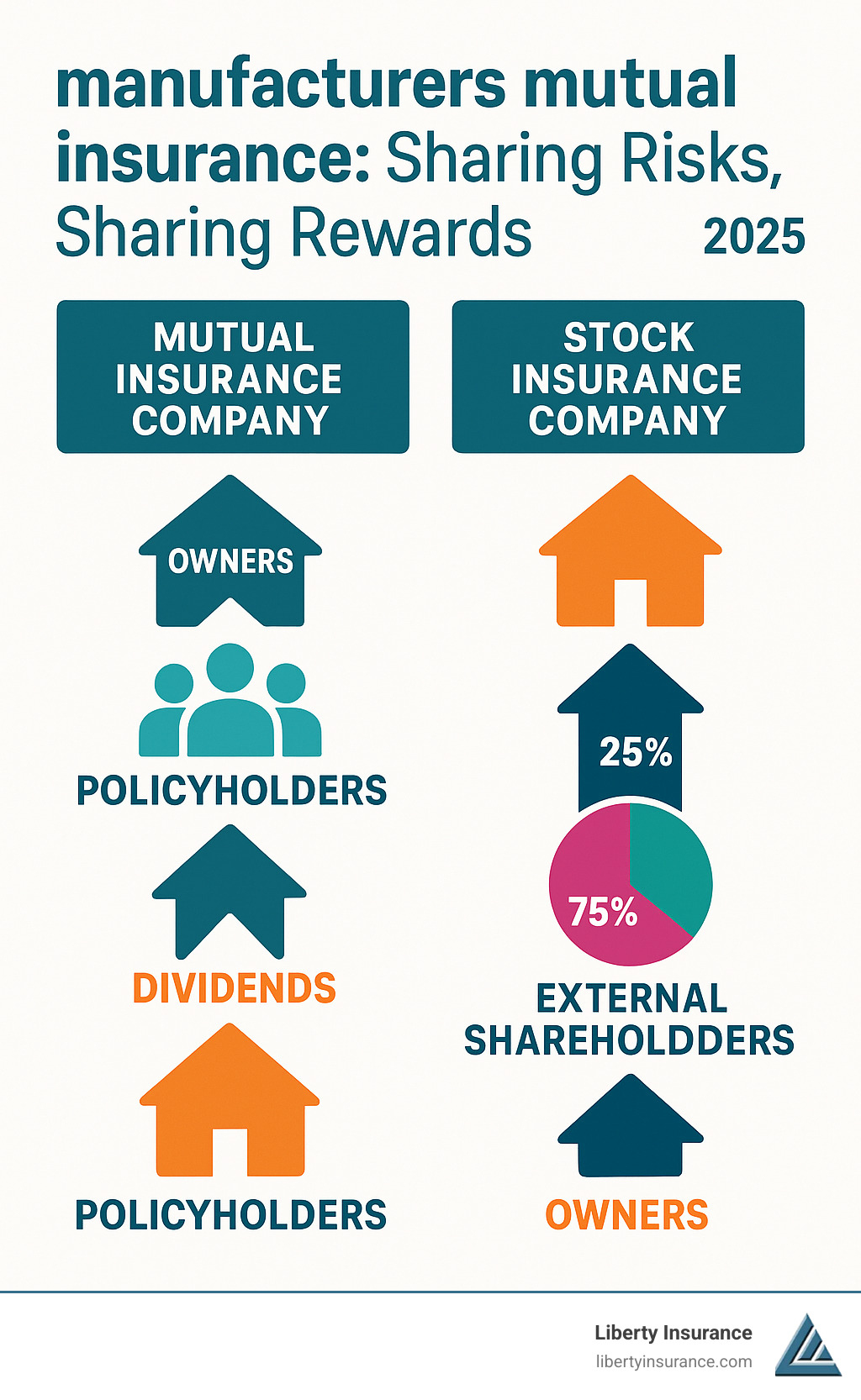
Manufacturers mutual insurance represents a unique ownership model where policyholders become part-owners of the insurance company itself. Unlike traditional stock insurance companies that serve shareholders, mutual insurers exist solely to serve their policyholders’ interests.
Key Features of Manufacturers Mutual Insurance:
- Policyholder Ownership: You own a share of the company when you buy a policy
- Dividend Potential: Profits may be returned to policyholders as dividends
- Long-term Focus: No pressure to maximize short-term shareholder profits
- Risk Sharing: All policyholders share in both risks and rewards
- Manufacturing Specialization: Custom coverage for industrial risks and operations
This model emerged in the early 20th century when manufacturers sought more control over their insurance costs and coverage. Many companies operated under this structure for decades, though some have since changed ownership models or faced liquidation.
The mutual approach can offer manufacturers lower net insurance costs through dividend returns and more specialized risk management services. However, it’s important to understand that not all companies with “mutual” in their name still operate as true mutual insurers today.
I’m Andrew Harris, and with my CIC and AAI designations, I’ve helped many manufacturing businesses steer the complexities of manufacturers mutual insurance. My experience includes guiding companies through the transition from mutual to stock insurers and explaining how these changes impact policyholder benefits.
Manufacturers mutual insurance terms made easy:
- manufacturing insurance
- manufacturing liability insurance
- types of insurance for manufacturing companies
Understanding the Mutual Insurance Model for Manufacturers
With manufacturers mutual insurance, you’re not just buying a policy—you’re becoming a part-owner of the insurance company. It’s a cooperative model where everyone pools their resources to share in both the risks and the rewards.
This approach differs from stock insurance companies, where external shareholders call the shots and pocket the profits. With mutual insurers, policyholders are the owners, meaning the company’s interests are aligned with yours. There’s no pressure to generate profits for distant investors who have never set foot in a manufacturing facility.
For manufacturers, this distinction is significant. Mutual companies naturally focus on long-term value and stability rather than quarterly earnings reports. They are invested in your long-term success, which often means a better risk control focus and more resources dedicated to helping you prevent losses.
When a mutual insurance company has a profitable year, those surplus funds don’t go to shareholders. Instead, they can be returned to you as dividend distributions, effectively lowering your net insurance costs. It’s a win-win situation where everyone benefits from good risk management.
| Feature | Mutual Insurance Company | Stock Insurance Company |
|---|---|---|
| Ownership | Policyholders | External Shareholders |
| Primary Goal | Provide insurance at the lowest possible cost to policyholders; long-term policyholder value | Maximize profits for shareholders |
| Profit Distribution | Returned to policyholders as dividends or reduced premiums | Returned to shareholders as dividends or increased stock value |
| Accountability | To policyholders | To shareholders |
| Focus | Long-term stability, policyholder service, risk management | Short-term financial performance, shareholder returns |
| Capital Generation | Retained earnings, surplus, policyholder contributions | Stock sales, retained earnings |
The Core Principle: Sharing Risks and Rewards
The mutual model is built on the idea that policyholders as owners means everyone has skin in the game. When you buy a policy from a mutual insurer, you’re joining a community of business owners who understand that collective strength leads to better outcomes.
This non-profit motive is unique. After covering claims and operating expenses, any leftover money, or surplus funds, gets reinvested into the company or returned to policyholders through dividend distribution. Over time, this can result in significantly lower net premiums.
The community focus of this model has deep roots. In the mid-1800s, business owners banded together to create insurance companies that truly served their interests. This historical context shows the mutual model is a proven approach that has helped businesses thrive for over 150 years.
Benefits for the Manufacturing Sector
Manufacturing comes with unique challenges, and mutual insurers understand that. Without the pressure of satisfying external shareholders, these companies can offer long-term stability in pricing and coverage. They focus on building a sustainable relationship that works for decades.
The emphasis on loss prevention is where mutual insurers often excel. Since your success directly impacts their financial health, they are incentivized to help you avoid claims. This translates into customized risk management programs designed for manufacturing operations, whether you work with heavy machinery, hazardous materials, or complex supply chains.
This proactive approach often leads to potential for lower overall insurance costs. While initial premiums might be comparable, the combination of dividend returns and reduced claims from better risk management can significantly lower your total insurance expenses over time.
For manufacturers, this model makes sense. You understand long-term thinking and the value of partnerships built on mutual benefit. To explore how this applies to your operation, check out our guide on Types Of Insurance For Manufacturing Companies and learn more about Manufacturing Insurance Cost factors.
The History of Manufacturers Mutual Insurance: Key Case Studies
The story of manufacturers mutual insurance is one of innovation and adaptation. These companies grew from a real need in the manufacturing world, as traditional insurers often didn’t understand the unique risks these businesses faced. In response, manufacturers decided to take matters into their own hands.
The Evolution of Manufacturers Mutual Insurance Companies
In the early 1900s, manufacturers grew tired of paying high premiums for insurance that didn’t fit their needs. They banded together to create their own solution, and manufacturers mutual insurance companies were born from this spirit of cooperation.
For example, some mutuals received authorization to operate over a century ago. These early companies were like exclusive clubs where manufacturers could pool their resources and share their risks.
However, the business world never stands still, and many of these pioneering companies had to evolve. Some adapted, expanding their services and growing with the times. Others changed their entire structure, switching from policyholder ownership to shareholder ownership in a process called demutualization.
The story of one prominent international mutual shows how dramatic these changes can be. Founded early in the 20th century, it grew for decades as a true mutual company. Then, in the 1990s, it went public on a stock exchange, converting from a mutual to a stock company. Just a few years later, a global insurance giant acquired it, and the original mutual company ceased to exist—a reminder that even successful companies can change.
Legal and Regulatory Milestones
The legal landscape has shaped how manufacturers mutual insurance companies operate. Court cases and regulatory changes have real impacts on how these companies serve manufacturers.
One significant case involving a large mutual insurer made its way to the U.S. Supreme Court in 1999. The case centered on whether a private insurer’s decision to delay payment for disputed workers’ compensation claims could be considered a government action. The Court ruled that heavy government regulation does not make a private company part of the government, clarifying the rules for policyholder challenges. For manufacturers dealing with workers’ compensation claims, this ruling clarified the rules of the game.
Unfortunately, not every story in this industry has a happy ending. Some historical mutual insurers have faced serious financial troubles, entering rehabilitation and eventually liquidation. When this happens, state regulators like the New York Liquidation Bureau and the Illinois Department of Insurance step in to manage the complex process.
These events highlight both the risks and the protections built into our insurance system. When a mutual company fails, processes are in place to protect policyholders. It’s not a perfect system, but it shows that it has learned from past experiences and continues to evolve.
Core Insurance Coverages for the Manufacturing Sector
Whether you choose a manufacturers mutual insurance company or a traditional stock insurer, comprehensive coverage is essential. A manufacturing operation is a complex system, and one unexpected event can ripple through your entire business. Insurance is the safety net that protects you at every step, from raw materials arriving at your dock to finished products leaving your facility.
For a complete overview of your options, explore our guide on Commercial Manufacturing Insurance.
Protecting Physical Assets
Your building, equipment, and inventory represent a significant investment. Protecting these physical assets starts with understanding what could go wrong and ensuring you’re covered.
Commercial Property Insurance is the foundation of your protection. This coverage safeguards your buildings and their contents against fire, theft, vandalism, and many natural disasters.
Standard property insurance might not be enough for your specialized machinery. Insurance For Manufacturing Equipment provides targeted protection for the equipment that keeps your operation running. This coverage helps you avoid staggering out-of-pocket costs for repair or replacement.
Your inventory and raw materials also need protection. Property insurance extends to cover these items, whether they’re in storage or on your production line.
Systems Breakdown Insurance is crucial for manufacturers. When your HVAC or electrical system fails, production can grind to a halt. This coverage protects against sudden equipment failures that can shut down your operation.
A Manufacturer’s Output Policy (MOP) can bundle your property coverages into one comprehensive package. MOPs offer broad “all-risk” protection and can include valuable features like dependent property coverage (protection when a key supplier has a fire) and brands and labels coverage (essential if your product’s value depends on its branding).
Essential Insurance Policies for Manufacturers:
- Commercial Property Insurance
- Manufacturing Equipment Coverage
- Systems Breakdown Protection
- Business Interruption Insurance
- Workers’ Compensation
- Commercial Auto Insurance
- Product Liability Coverage
Covering Liability and Operations
Beyond your physical assets, you need coverage for liability risks and potential disruptions to your operations.
Manufacturing Liability Insurance protects you when things go wrong. Product liability coverage applies when someone is harmed by your product, while product recall coverage handles the costs of pulling a defective product from the market.
Business Interruption Insurance is vital. When a covered event stops production, this insurance replaces lost income and covers ongoing expenses like payroll. It’s what keeps your business alive while you rebuild.
Workers’ Compensation is mandatory in most states. It provides medical benefits and wage replacement for employees injured on the job in a no-fault system.
Don’t forget your vehicles. Commercial Auto Insurance covers everything from delivery trucks to forklifts. If you transport goods, Inland Cargo Insurance provides additional protection for products in transit.
The right combination of coverages creates a comprehensive safety net for your manufacturing business, ensuring you can weather any storm.
Navigating Claims and Insolvency in Manufacturers Mutual Insurance
No one wants to think about their insurance company failing, but it’s a reality to prepare for. Even manufacturers mutual insurance companies, despite their focus on long-term stability, are not immune to financial troubles. When this happens, understanding the process can make all the difference in protecting your business.
The good news is that systems are in place to help policyholders. State regulators monitor insurance companies, and safety nets are designed to protect you. But knowledge is your best defense.
What to Do When Your Insurer is Liquidated
When a court orders an insurer into liquidation, it means the company cannot pay its bills and must be wound down. A court-appointed liquidator takes charge of the process.
State guaranty associations are your first line of protection. These associations are funded by healthy insurance companies and exist to pay covered claims when an insurer fails. However, there are limits to what they cover and caps on payouts.
The most critical step is to pay attention to official notices from the liquidator. These contain vital information about the liquidation date, filing deadlines, and instructions.
For example, when one large mutual insurer was liquidated, policyholders were given a deadline of about 18 months to file their initial Proof of Claim. Those with contingent claims (like pending lawsuits) were given a longer deadline. Missing these deadlines can mean losing your right to recover anything.
To stay informed about any insurer’s status, use the NAIC Global Receivership Information Database (“GRID”). This database tracks companies in financial distress.

Filing a Claim with a Liquidated Manufacturers Mutual Insurance Company
Filing a claim with a liquidated manufacturers mutual insurance company requires patience and detail. You must submit a Proof of Claim form that clearly explains your loss and the amount you believe you’re owed. The more documentation you provide, the better.
The process differs depending on your claim type. Contingent claims are trickier because they involve potential future losses. If you’re facing a lawsuit that could result in a covered claim, you must document this possibility.
Once filed, the liquidator’s office investigates your claim, which can take years. Claims are then categorized based on state law priorities. The percentage you receive depends on the available funds.
The process can be long, but there is hope for recovery. In one real-world case, policyholders began receiving partial dividend payments on their approved claims more than a decade after the company’s liquidation. While not the full amount, it shows the process can eventually provide some recovery.
Finding the right contacts is crucial. Check your state’s department of insurance website for dedicated pages about companies in liquidation. The New York Liquidation Bureau and the Office of the Special Deputy Receiver (OSD) in Illinois are examples of agencies that manage insolvent insurer liquidations and provide detailed information online. Having these resources bookmarked can save you valuable time.
The key to navigating this process is staying organized, meeting deadlines, and maintaining contact with the liquidation office. Understanding these procedures helps protect your business interests when your insurer can’t.
Frequently Asked Questions about Manufacturers Mutual Insurance
Through my years helping manufacturers with insurance, I’ve noticed the same questions come up time and again about manufacturers mutual insurance. Let me share the answers that have helped my clients make informed decisions.
What is the main difference between mutual and stock insurance for a manufacturer?
The core difference is ownership. With a mutual insurance company, you become a part-owner when you buy a policy. This means company profits can be returned to you as dividends, potentially lowering your insurance costs over time.
Stock insurance companies are owned by external shareholders who expect financial returns. While they want to keep customers happy, their primary financial obligation is to shareholders.
This ownership structure shapes each company’s focus. Manufacturers mutual insurance companies often prioritize long-term stability and risk management because what’s good for policyholders is good for the company. They aren’t pressured to hit quarterly profit targets for outside investors and can instead focus on risk prevention and steady pricing.
Are all companies with “Manufacturers Mutual” in their name still mutual companies?
This is a common misconception. The answer is no. Many companies that started as mutuals have changed their ownership structure while keeping their familiar names.
Think of it as a family business that’s sold to a corporation but keeps the original name. The name is the same, but the ownership has changed. For example, some companies that operated as true mutuals for decades were eventually acquired by larger corporations. Others have faced complete liquidation.
Always verify a company’s current corporate structure instead of assuming based on its name. A quick check of their official filings will tell you whether you’re dealing with a true mutual where you’ll be an owner, or a stock company where you’re just a customer.
What happens if a manufacturers mutual insurance company is liquidated?
While it’s rare, manufacturers mutual insurance companies can face financial troubles. If a court determines an insurer can’t meet its obligations, it orders the company into liquidation.
A court-appointed liquidator from the state’s Department of Insurance takes control. Their job is to collect assets, review policyholder claims, and distribute available funds according to legal priorities.
You must file a “Proof of Claim” by specific deadlines set by the liquidator. Missing these deadlines can mean losing your right to recovery. State guaranty associations often provide a safety net, paying covered claims up to certain limits, but they don’t cover every type of claim.
The process can take several years. For instance, when one large mutual insurer was liquidated, policyholders were still receiving dividend payments more than a decade later. It requires patience and careful attention to deadlines, but understanding the process helps protect your interests.
Conclusion
The story of manufacturers mutual insurance is really the story of cooperation in action. These companies emerged from a simple but powerful idea: when manufacturers pool their resources and share both risks and rewards, everyone benefits. While the landscape has changed dramatically over the decades, with many original mutual companies evolving into different structures or facing liquidation, the core principles remain as relevant as ever.
Policyholder value isn’t just a buzzword—it’s the foundation of the mutual model. When your insurance company’s success is directly tied to your success, the relationship changes. There’s no pressure to satisfy external shareholders with quarterly profits. Instead, the focus shifts to long-term stability, comprehensive risk management, and genuinely understanding the unique challenges manufacturers face.
But here’s the reality: whether you’re working with a mutual company or a stock insurer, what matters most is finding the right partner for your specific needs. The insurance world can be complex, especially when dealing with the intricate risks of manufacturing operations. You need someone who gets it—who understands that a small equipment breakdown can ripple through your entire production schedule, or that a product recall can impact not just your bottom line but your reputation.
Due diligence becomes your best friend in this process. Don’t just look at the name on the letterhead. Dig deeper. Understand the company’s current structure, financial stability, and track record. Ask about their experience with businesses like yours. Most importantly, make sure they’re committed to protecting what you’ve worked so hard to build.
At Liberty Insurance, we’ve seen how the right coverage can make the difference between a minor setback and a business-threatening crisis. Whether it’s protecting your specialized equipment, safeguarding your inventory, or ensuring you can keep operating when the unexpected happens, comprehensive coverage isn’t a luxury—it’s essential.
We understand that every manufacturing operation is unique. That’s why we focus on creating insurance solutions that actually fit your business, not forcing you into a one-size-fits-all box. From our work with businesses throughout New Jersey, we know that protecting your assets means protecting your future.
The world of manufacturing will keep evolving, and so will the risks you face. Having the right insurance partner—one who’s committed to your long-term success—makes all the difference.

