
Manufacturing insurance cost is a critical consideration for businesses aiming for financial stability. Companies must steer various insurance challenges, including notable risk factors such as location, industry-specific hazards, and the company’s history of claims. To offer a quick overview:
- Risk Factors: Key elements influencing insurance costs include business size, location, and industry-specific risks.
- Financial Stability: A strong insurance portfolio shields a business from unforeseen disruptions.
- Cost Variation: Manufacturing insurance costs vary significantly; working with an insurance expert can optimize protection and cost-effectiveness.
My name is Andrew Harris, and I have experience in understanding and managing manufacturing insurance cost. As a “Certified Insurance Counselor” (CIC), my knowledge aids manufacturers in structuring insurance policies that maintain financial stability against industry risks.
Find more about manufacturing insurance cost:
– manufacturing insurance
– manufacturing liability insurance
Factors Influencing Manufacturing Insurance Costs
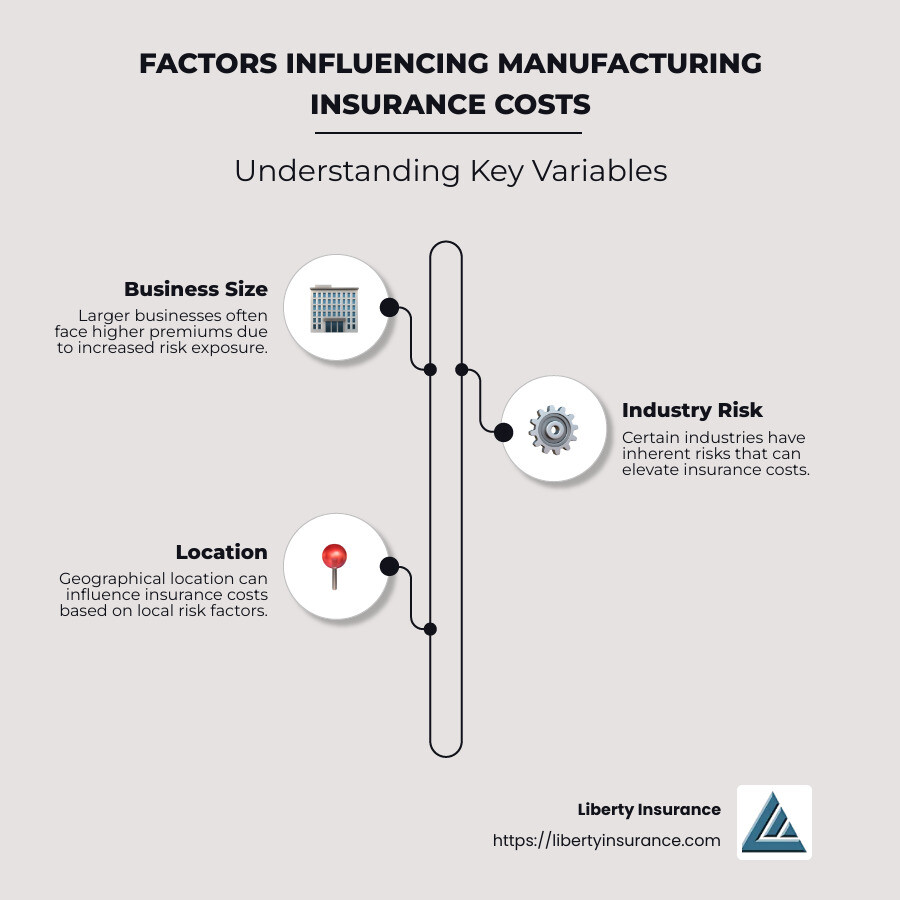
Understanding the manufacturing insurance cost is crucial for maintaining financial stability in your business. Several factors play a significant role in determining these costs. Let’s explore the key elements that influence what you pay.
Business Size
The size of your business greatly affects your insurance premiums. Larger companies with higher revenues often face higher premiums due to the increased scale of operations. For instance, a business with $100 million in revenue could pay $50,000-$100,000 annually for general liability insurance, compared to $5,000-$10,000 for a company with $10 million in revenue.
Industry Risk
Different industries come with varying levels of risk, which directly impacts insurance costs. For example, chemical manufacturers often face premiums 50-100% higher than non-hazardous product manufacturers due to increased risks. Similarly, food manufacturers might pay 15-25% more for liability insurance compared to textile manufacturers because of contamination and recall risks.
Location
Where your manufacturing facility is located can significantly influence insurance costs. Facilities in high-risk areas, like coastal Florida, may pay up to 40% more for property insurance compared to similar facilities in inland Ohio. In flood-prone areas, premiums can be 3-5 times higher than in low-risk zones.
Claims History
Your company’s claims history is another critical factor. Businesses with no claims in the past 3-5 years can enjoy premiums up to 25% lower than those with multiple claims. A clean record suggests lower risk, which insurers reward with reduced rates.
Policy Limits
The coverage limits you choose also affect your costs. Higher coverage limits increase premiums, while higher deductibles can lower them. For example, increasing a deductible from $1,000 to $10,000 on a property insurance policy could potentially reduce premiums by 10-20%.
By understanding these factors, manufacturers can work closely with insurance providers to tailor policies that offer comprehensive protection while managing costs effectively. This strategic approach ensures financial stability and shields businesses from unforeseen disruptions.
Types of Manufacturing Insurance
Navigating manufacturing insurance can be daunting, but understanding the key types of coverage is essential for protecting your business. Let’s break down the essential insurance types every manufacturer should consider.
General Liability Insurance
General Liability Insurance is a must-have for any manufacturer. It protects against third-party claims of bodily injury and property damage. Imagine a visitor slipping in your factory and getting injured. This insurance covers the medical expenses and any potential lawsuits.
- Coverage: Typically ranges from $1 million to $2 million per occurrence.
- Example: A visitor slips and falls, incurring medical costs.
Business Owner’s Policy (BOP)
A Business Owner’s Policy combines several types of coverage into one package, often at a lower cost. It typically includes general liability, property insurance, and business interruption insurance. This is ideal for small to medium-sized manufacturers looking for comprehensive coverage.
- Benefits: Simplifies insurance management and can be cost-effective.
- Example: A fire damages your equipment; BOP covers repairs and lost income.
Workers’ Compensation Insurance
Workers’ Compensation Insurance is mandatory in most states and covers employees’ medical expenses and lost wages if they are injured on the job. For instance, if an employee injures their back while operating machinery, this insurance kicks in to cover their medical bills.
- Requirement: Mandatory in most states.
- Example: An employee injures their back while working.
Commercial Umbrella Insurance
Commercial Umbrella Insurance provides an extra layer of protection by extending the limits of your existing liability policies. If a claim exceeds your general liability coverage, this policy helps cover the additional costs.
- Purpose: Offers additional coverage beyond primary insurance limits.
- Example: A large lawsuit exceeds your general liability limit.
Product Recall Insurance
Product Recall Insurance covers the costs associated with recalling a faulty product. This is crucial for manufacturers, as product recalls can be costly and damaging to a company’s reputation.
- Coverage: Includes costs for removing products from the market and managing PR.
- Example: A contaminated batch of products needs to be recalled.
Errors and Omissions (E&O) Insurance
Errors and Omissions Insurance is essential for manufacturers that provide design services or custom solutions. It covers claims of negligence or failure to perform that result in financial losses for a client.
- Coverage: Protects against claims not covered by general liability insurance.
- Example: Faulty design specifications lead to product failure.
Understanding these types of insurance can help manufacturers build a robust safety net that protects against a wide range of risks. By selecting the right coverage, businesses can focus on growth, knowing they are well-protected.
Manufacturing Insurance Cost Breakdown
When it comes to understanding manufacturing insurance cost, it’s important to recognize that premiums can vary widely. Let’s explore the key elements that influence these costs and what manufacturers can expect to pay.
Median Premiums
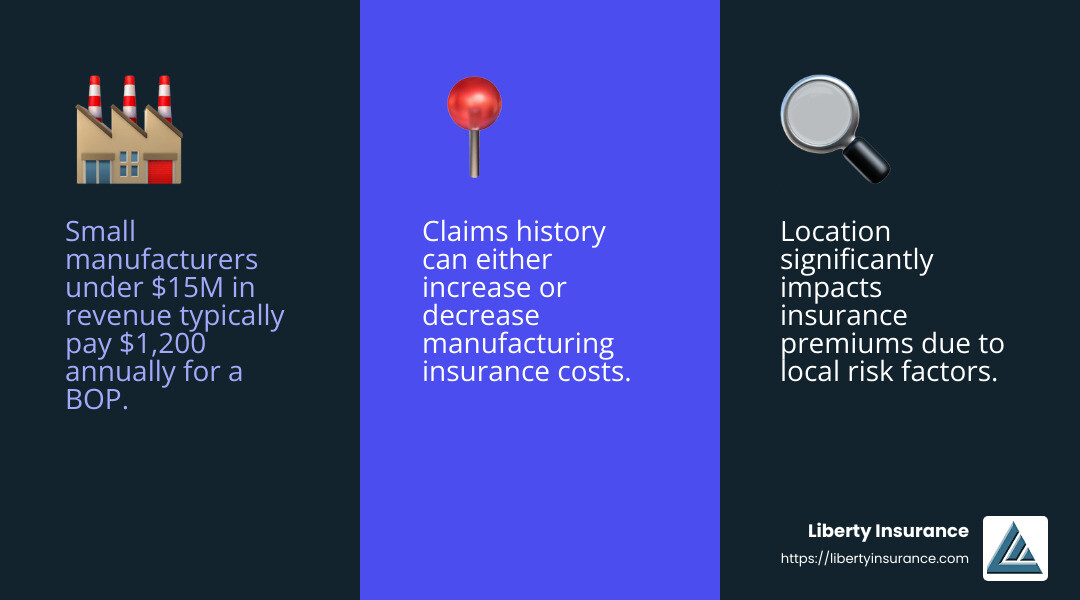
For small manufacturers, typical median premiums can be relatively modest. For example, a Business Owner’s Policy (BOP) might cost a smaller manufacturer under $15 million in revenue around $1,200 annually. This package often includes property and general liability coverage.
Cost Variations
The cost of manufacturing insurance isn’t one-size-fits-all. Factors such as location, type of products manufactured, and claims history significantly impact premiums. For instance, manufacturers in flood-prone areas might pay up to 3-5 times more in premiums than those in safer zones.
Industry-Specific Costs
Different industries face unique risks, affecting their insurance costs. For example, chemical manufacturers often pay 50-100% higher premiums due to the hazardous nature of their products. Conversely, a furniture manufacturer might see lower premiums due to fewer inherent risks.
- Example: A pharmaceutical manufacturer might pay 2-3 times more for product liability insurance than a furniture manufacturer of similar size.
Annual Expenses
Annual insurance expenses can vary based on the size of the business. A company with $10 million in revenue might spend around $5,000-$10,000 annually on general liability insurance. In contrast, a larger company with $100 million in revenue could see costs soar to $50,000-$100,000 or more.
Real-World Example
Consider a Michigan-based auto parts manufacturer that paid $22,000 annually in premiums. They relied on their equipment breakdown coverage 12 times in one year, with repair costs averaging $7,500 each time. This example highlights how insurance can be a valuable investment, not just a cost.
Understanding these cost components helps manufacturers tailor their insurance policies effectively, ensuring comprehensive protection while managing expenses.
Strategies to Manage and Reduce Insurance Costs
Manufacturers are always on the lookout for ways to reduce their manufacturing insurance cost. Here are some effective strategies that can help:
Risk Control Programs
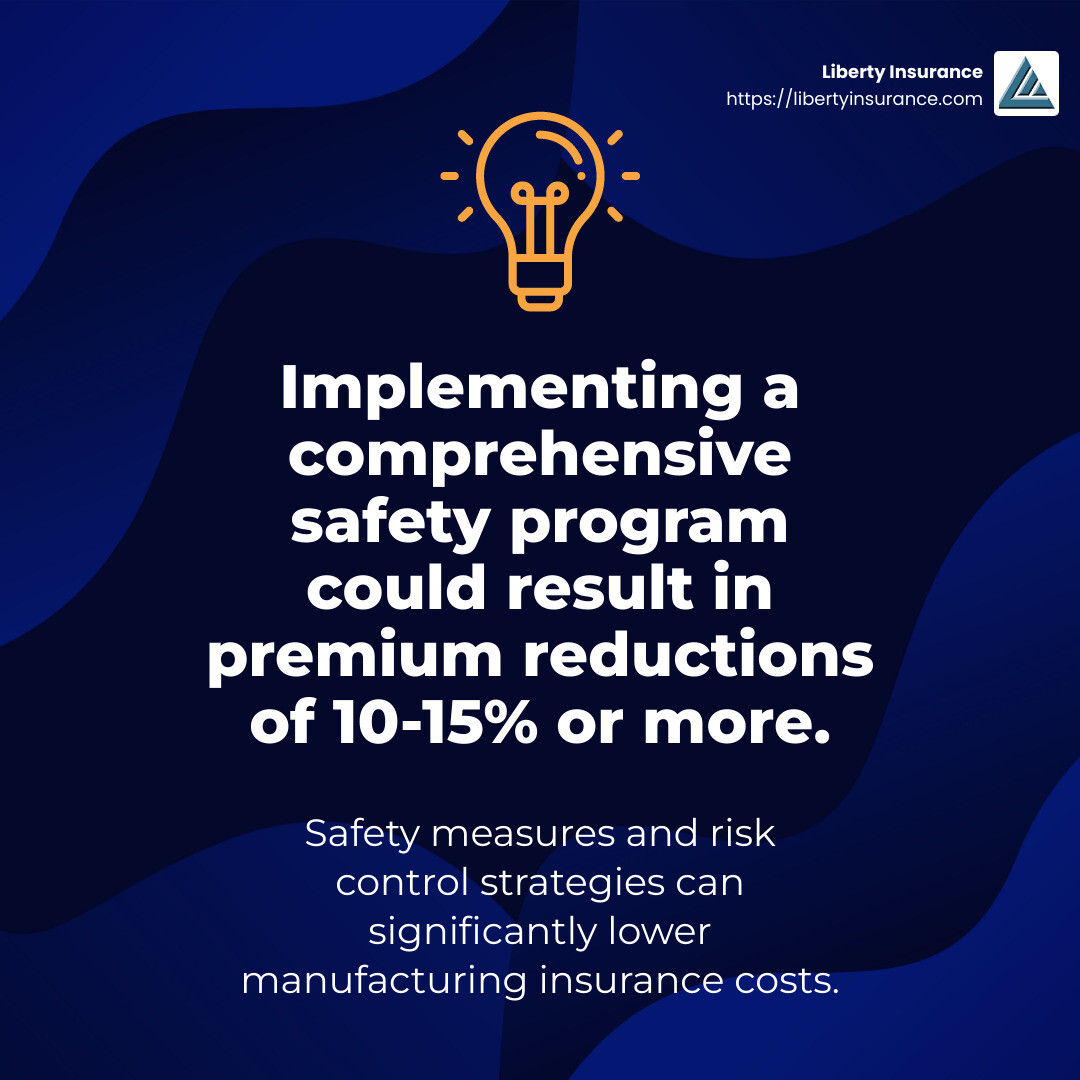
Implementing a robust risk control program is a great way to lower insurance costs. By identifying potential hazards and implementing measures to reduce them, manufacturers can decrease the likelihood of accidents and claims. A strong risk control program often leads to lower premiums since insurers view the company as less risky.
Safety Culture
Building a strong safety culture is not just about compliance; it’s about creating an environment where safety is a top priority. Training employees on safety protocols and regularly updating these protocols can significantly reduce the risk of workplace accidents. This, in turn, lowers the company’s risk profile and can lead to reduced insurance premiums.
Policy Bundling
Bundling policies can be a smart move for manufacturers looking to cut costs. By combining multiple insurance policies, such as general liability and property insurance, with one provider, manufacturers can often secure discounts. This approach not only simplifies management but can also lead to significant savings on premiums.
Coverage Customization
Tailoring insurance coverage to fit the specific needs of a manufacturing business is crucial. Every manufacturer has unique risks, and customizing coverage ensures that you’re not paying for unnecessary protections. For instance, a company that doesn’t deal with hazardous materials might opt out of certain coverages that are essential for a chemical manufacturer.
By taking these steps, manufacturers can effectively manage and reduce their manufacturing insurance cost. These strategies not only lead to financial savings but also contribute to a safer and more efficient workplace.
Up next, we’ll tackle some of the most frequently asked questions about manufacturing insurance costs, including how much you can expect to pay and what factors most influence these costs.
Frequently Asked Questions about Manufacturing Insurance Cost
How much does manufacturing insurance cost?
The cost of manufacturing insurance can vary widely based on several factors, but understanding the general landscape can help set expectations. The median premium for manufacturing insurance is often difficult to pinpoint due to the diversity in manufacturing operations. However, some estimates suggest that smaller manufacturers might pay around $1,000 to $2,000 annually for basic coverage, while larger operations can see costs skyrocketing to tens of thousands of dollars.
A useful way to gauge insurance costs is by considering them as a percentage of annual revenue. Typically, manufacturing insurance costs can range from 0.5% to 1.5% of a company’s annual revenue. For example, a company with $10 million in revenue might spend between $50,000 and $150,000 on insurance annually.
What factors affect the cost of manufacturing insurance?
Several key factors influence the manufacturing insurance cost. Understanding these can help manufacturers anticipate expenses and explore cost management strategies:
Business Size: Larger businesses with more assets and employees often face higher premiums due to increased liability and risk exposure.
Industry Risk: Different manufacturing sectors carry different levels of risk. For example, chemical manufacturers often pay higher premiums due to the hazardous nature of their operations, while textile manufacturers might face lower costs.
Claims History: A history of frequent or severe claims can significantly impact insurance costs. Companies with a clean claims record (no claims in the past 3-5 years) can enjoy premiums up to 25% lower than those with multiple claims.
Location: Facilities in high-risk areas, such as flood-prone zones, often face higher premiums due to the increased risk of damage or loss.
What types of insurance should manufacturers consider?
Manufacturers need a variety of insurance types to fully protect their operations, assets, and employees. Key types include:
General Liability Insurance: This covers third-party claims of bodily injury, property damage, and advertising injury. It’s a fundamental policy for any manufacturer.
Product Recall Insurance: This is crucial for manufacturers who want to protect against the financial impact of recalling defective products. For instance, a medium-sized electronics manufacturer faced a $5 million recall in 2022, which was covered by their product liability insurance.
Workers’ Compensation Insurance: Required in most states, this insurance covers medical expenses and lost wages for employees injured on the job.
By understanding these elements, manufacturers can better steer the complexities of insurance costs and select the appropriate coverage for their unique needs.
Next, we’ll dig into the conclusion, exploring how Liberty Insurance can provide customizable coverage to protect against disasters and safeguard your manufacturing business.
Conclusion
When it comes to safeguarding your manufacturing business, Liberty Insurance stands out with its customizable coverage options. We understand that every manufacturing operation is unique, with its own set of risks and challenges. That’s why we offer custom insurance solutions that cater specifically to your needs.
Protection Against Disasters
Manufacturing businesses face a variety of risks, from equipment failures to natural disasters. With Liberty Insurance, you can rest assured that your business is protected against these unforeseen events. Our commercial property insurance, for instance, covers physical assets like equipment and inventory, shielding your business from potential losses due to fire, theft, or other disasters.
Customizable Coverage
One size doesn’t fit all, especially in the manufacturing sector. We provide flexible coverage options that allow you to choose the level of protection that best suits your business. Whether you need comprehensive coverage for a large-scale operation or more focused protection for a smaller business, our policies can be adjusted to meet your specific requirements.
By partnering with Liberty Insurance, you gain more than just a policy; you gain a partner committed to helping you steer the complexities of manufacturing insurance. Our goal is to provide peace of mind, knowing that your business is protected against the unexpected.
Explore how Liberty Insurance can help protect your manufacturing business by visiting our business insurance page. Let us help you find the right coverage to secure your operations and future success.

