
Protect Your Manufacturing Business with the Right Insurance
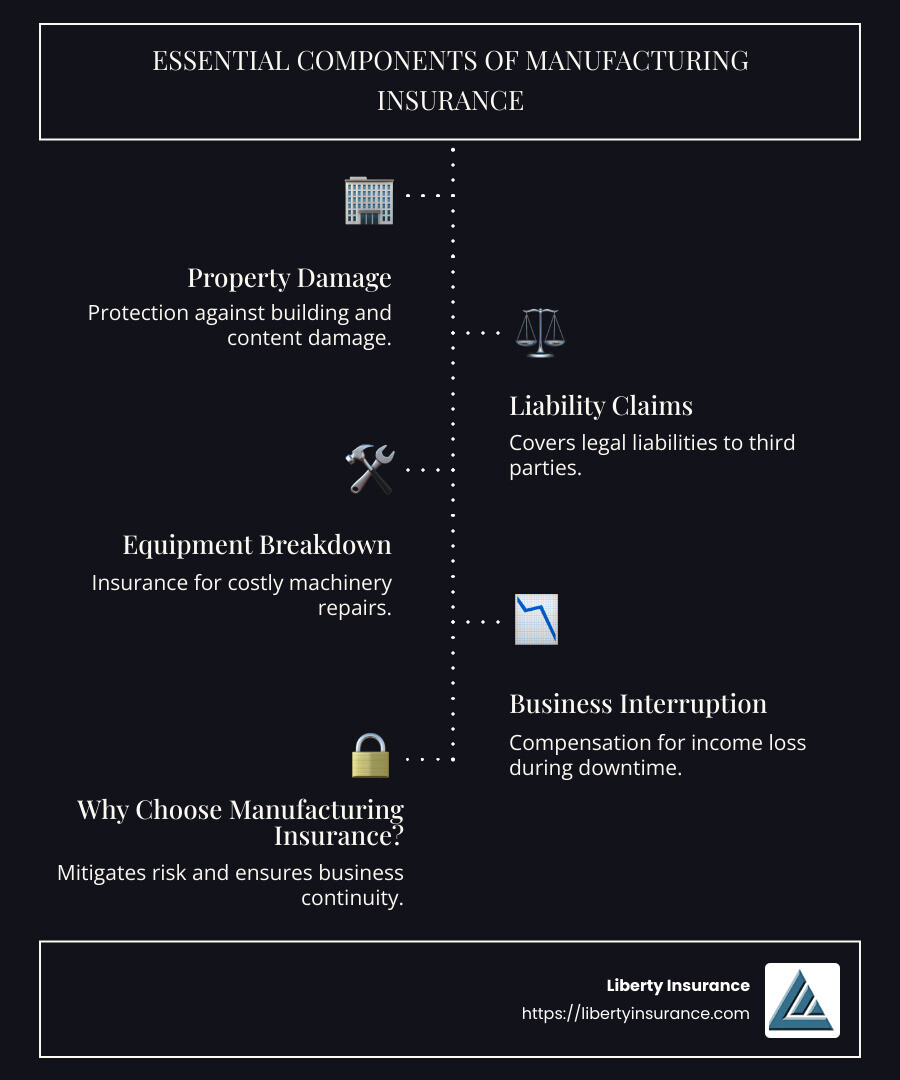
Manufacturing insurance is essential for safeguarding your business assets against unexpected events. It’s designed to protect manufacturers from a slew of potential risks including equipment breakdowns, property damage, and liability claims.
- What: Insurance to protect manufacturing operations.
- Why: Mitigates risk and ensures business continuity.
- Coverage Includes:
- Property damage: Protects against damage to buildings or contents.
- Liability claims: Covers legal liabilities to third parties.
- Equipment breakdown: Insurance for costly machinery repairs.
- Business interruption: Compensates for lost income during downtime.
Whether you manufacture clothing, machinery, or beverages, having a robust insurance plan is critical for risk management and ensuring the smooth operation of your business.
I’m Andrew Harris, a Certified Insurance Counselor and Accredited Advisor in Insurance with experience in manufacturing insurance. With over a decade of experience helping businesses protect their operations, I am passionate about guiding you through understanding and securing your manufacturing assets.
Understanding Manufacturing Insurance
In manufacturing, unexpected events can throw a wrench in your well-oiled machine. Manufacturing insurance is a specialized form of commercial insurance that protects your business from these unforeseen disruptions.
Why Manufacturing Insurance Matters
Manufacturing operations are more complex than ever. From dealing with supply chain hiccups to integrating cutting-edge technology, manufacturers face unique risks. A single power surge or storm can halt production, leading to significant financial losses. That’s where manufacturing insurance steps in.
What Does Manufacturing Insurance Cover?
Manufacturing insurance is designed to cover a range of potential risks:
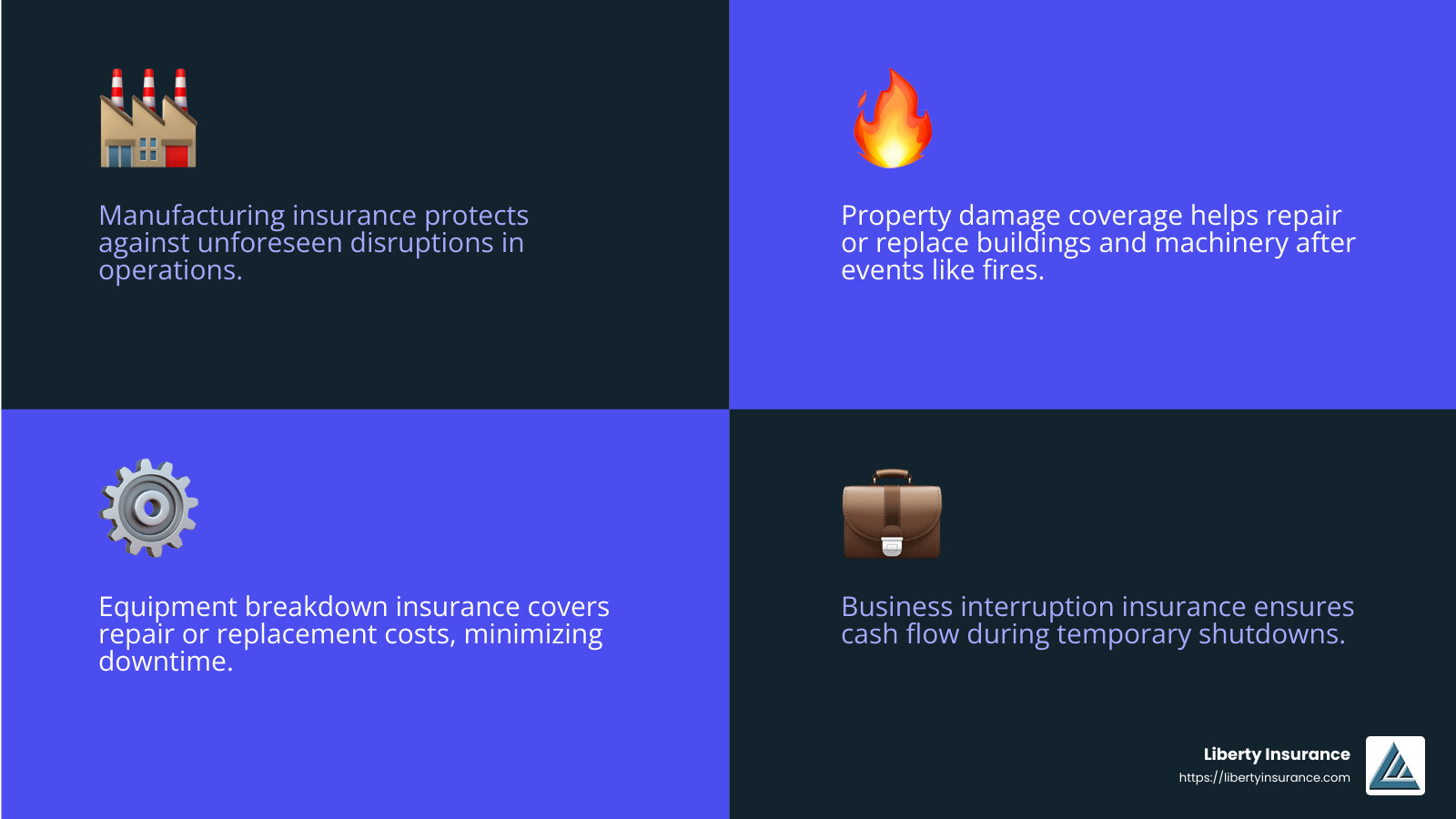
Property Damage: This covers damage to your buildings, machinery, and inventory. Imagine a fire breaking out in your facility—without insurance, the cost of repairs and replacements could be crippling.
Equipment Breakdown: Manufacturing relies heavily on specialized machinery. If a critical piece of equipment fails, insurance can cover the cost of repairs or replacements, minimizing downtime.
Business Interruption: If an unexpected event forces a temporary shutdown, business interruption insurance compensates for lost income during this period, helping you maintain cash flow.
Liability Claims: Protects against legal liabilities if someone is injured or property is damaged due to your products or operations.
Real-World Example
Consider a food and beverage manufacturer that experiences a severe storm, damaging its production line. With manufacturing insurance, they can cover repair costs and continue operations with minimal disruption. Without it, the financial burden could be overwhelming.
Tailoring Your Coverage
Every manufacturing business is unique, and so are its risks. That’s why it’s crucial to customize your insurance policy. Work with an experienced insurance advisor to assess your specific needs and choose the right coverage limits. This ensures you’re not overpaying for unnecessary coverage or leaving gaps that could expose your business to risk.
By understanding the essentials of manufacturing insurance, you can safeguard your business against unexpected events and keep your operations running smoothly.
Key Components of Manufacturing Insurance
Manufacturing businesses face a variety of risks, and having the right insurance coverage is crucial. Here are the key components of manufacturing insurance that every business should consider:
General Liability
General liability insurance is essential for any manufacturing business. It covers legal liabilities if someone is injured or property is damaged due to your products or operations. For example, if a customer gets injured by a faulty product, general liability insurance can help cover legal fees and settlements.
Equipment Breakdown
Manufacturing relies heavily on machinery. If a critical piece of equipment breaks down, it can disrupt your entire operation. Equipment breakdown insurance covers the cost of repairs or replacements, ensuring minimal downtime. This is crucial for maintaining productivity and avoiding financial losses.
Property Damage
Property damage insurance protects your business’s physical assets, like buildings, machinery, and inventory. Imagine a fire or natural disaster damaging your facility. Property damage insurance helps cover the repair and replacement costs, allowing you to get back to business quickly.
Business Interruption
Unexpected events, such as a storm or power outage, can force a temporary shutdown. Business interruption insurance compensates for lost income during these periods. It helps you maintain cash flow and continue paying expenses like salaries and rent, even when operations are halted.
Workers’ Compensation
Workers’ compensation insurance is often required by law. It covers medical expenses and lost wages for employees injured on the job. This coverage protects both your employees and your business from financial strain due to workplace accidents.
These components of manufacturing insurance provide a comprehensive safety net for your business. By understanding and securing these coverages, you can protect your company from unforeseen events and ensure its long-term success.
Customizing Your Manufacturing Insurance Policy
Every manufacturing business is unique, and so are its insurance needs. Customizing your manufacturing insurance policy ensures you have the right protection for your specific risks. Here’s how you can tailor your coverage:
Custom Solutions for Unique Risks
Manufacturers face diverse risks, from supply chain disruptions to advanced technology failures. For instance, if you’re shifting to cutting-edge manufacturing technologies, you need coverage that addresses potential cyber threats or equipment failures. At Liberty Insurance, we work closely with you to understand your operations and identify unique risks. This approach allows us to craft a policy that fits like a glove.
Policy Limits
Choosing the right policy limits is crucial. The limit is the maximum amount your insurance will pay for a covered loss. Most manufacturers opt for a business owner’s policy with a $1 million per-occurrence limit and a $2 million aggregate limit. This provides ample protection for common claims. However, if your business deals with high-value products or operates in a high-risk area, you might need higher limits. We can help you assess your needs and adjust limits accordingly.
Coverage Options
Manufacturing insurance isn’t one-size-fits-all. Here are some coverage options you might consider:
- Cyber Liability Insurance: Protects against data breaches and cyberattacks, crucial if you handle sensitive customer data.
- Product Liability Insurance: Covers claims related to injuries or damages caused by your products.
- Environmental Insurance: Essential if your operations involve chemicals or pollutants, as it covers cleanup costs and related liabilities.
- Umbrella Insurance: Provides extra liability coverage for the most expensive lawsuits, boosting your general liability protection.
Flexible Program Options
We offer flexible program structures like guaranteed cost, large deductible, and retrospective plans. These options allow you to balance upfront costs with long-term savings. For instance, a large deductible plan might reduce your premium, but you’ll pay more out-of-pocket for claims. Our experts can guide you in choosing the best structure for your financial goals.
By customizing your manufacturing insurance policy, you create a robust safety net that addresses your business’s specific challenges. This custom approach not only safeguards your assets but also supports your growth by minimizing financial surprises.
Next, we’ll explore the cost of manufacturing insurance and how it aligns with your business size and industry risk.
Cost of Manufacturing Insurance
Understanding the cost of manufacturing insurance is crucial for managing your business budget effectively. Let’s break down the factors that influence these costs.
Median Premium
On average, manufacturers pay a median premium of about $75 per month, or $910 per year, for commercial umbrella insurance. This coverage provides an extra layer of protection, enhancing your general liability, commercial auto, or employer’s liability insurance once the underlying limit is reached.
Policy Cost
The overall cost of a manufacturing insurance policy varies based on several factors. The primary elements include:
- Type of Coverage: Different coverages, like equipment breakdown or cyber liability, will impact the total cost.
- Coverage Limits: Higher limits generally mean higher premiums. Most manufacturers choose a business owner’s policy with a $1 million per-occurrence limit and a $2 million aggregate limit.
- Deductibles: Opting for a higher deductible can lower your premium but means you pay more out-of-pocket during a claim.
Industry Risk
The level of risk associated with your specific manufacturing sector also plays a role in determining insurance costs. For example, businesses dealing with hazardous materials or complex machinery might face higher premiums due to increased risk factors.
Business Size
The size of your business, including the number of employees and annual revenue, can significantly affect your insurance costs. Larger businesses with more employees and higher revenue typically face higher premiums due to the greater potential for claims.
To get the best value, balance the cost with the right amount of coverage, considering your business’s unique needs and risks. Liberty Insurance can assist in evaluating your situation to find a policy that aligns with your budget while ensuring comprehensive protection.
Next, we’ll address some frequently asked questions about manufacturing insurance to help clarify common concerns and misconceptions.
Frequently Asked Questions about Manufacturing Insurance
What is manufacturing insurance?
Manufacturing insurance is a custom protection plan designed for businesses in the manufacturing sector. It covers various risks that these businesses face, such as property damage, equipment breakdown, and liability issues. Manufacturing operations can be complex, with many moving parts and potential mishaps. This type of insurance helps protect your business from unexpected events that could disrupt operations and affect your bottom line.
Imagine a scenario where a critical piece of machinery fails. Without proper insurance, the cost of repairs and the downtime could severely impact your business. Manufacturing insurance steps in to cover these costs, allowing you to get back to work with minimal financial strain.
How much does manufacturing insurance cost?
The cost of manufacturing insurance depends on several factors, including the industry risk and the size of your business. On average, manufacturers might see a median premium of approximately $75 per month or $910 annually for basic coverage. However, this can vary widely depending on the specifics of your operation.
Factors influencing the policy cost include:
- Type of Coverage: Different types of coverage, like equipment breakdown or property damage, can affect the total cost.
- Coverage Limits: Higher coverage limits typically mean higher premiums. Most businesses opt for a policy with a $1 million per-occurrence limit and a $2 million aggregate limit.
- Industry Risk: Higher-risk industries, such as those dealing with hazardous materials, may face increased premiums.
The size of your business also affects the cost. Larger operations with more employees and higher revenue might pay more due to the increased risk of claims.
What does manufacturing insurance cover?
Manufacturing insurance covers a range of potential risks and liabilities. Here’s what it typically includes:
- Property Damage: Protects against damage to your business property, whether from natural disasters, theft, or accidents.
- Equipment Breakdown: Covers the repair or replacement costs of essential machinery that breaks down unexpectedly, ensuring minimal downtime.
- Liability: Addresses claims of bodily injury or property damage caused by your products or operations. This is crucial for safeguarding your business against potential lawsuits.
By having comprehensive coverage, you ensure that your business can withstand unexpected challenges and continue operations smoothly. Liberty Insurance offers customizable options to fit your specific needs, ensuring you have the right protection in place.
Next, we’ll dig into the conclusion, highlighting how Liberty Insurance can provide customizable coverage to protect your business assets.
Conclusion
In manufacturing, risks are inevitable. However, with the right insurance, these risks become manageable. At Liberty Insurance, we understand that every manufacturing business is unique. That’s why we offer customizable coverage options custom to your specific needs.
Our manufacturing insurance is designed to protect your business assets, from your equipment and inventory to your facilities and employees. Whether it’s safeguarding against property damage, equipment breakdown, or liability claims, our policies provide a robust safety net to keep your operations running smoothly.
We know that peace of mind is invaluable. That’s why our coverage plans are not only comprehensive but also flexible. You can adjust your policy limits and choose the coverage options that best fit your business. This ensures that you’re protected against both common and complex risks, without paying for coverage you don’t need.
With Liberty Insurance, you’re not just buying a policy; you’re partnering with a team that is committed to helping you steer the challenges of the manufacturing industry. Our expertise, financial strength, and dedication to customer service mean you can focus on what you do best—growing your business.
To learn more about how Liberty Insurance can help protect your manufacturing business, explore our business insurance offerings. Let us help you safeguard your assets and secure your future.

