
Why Marine Transit Insurance is Essential for Your Business
Marine transit insurance is specialized coverage that protects businesses from financial losses when goods are damaged, lost, or stolen during transportation by sea, air, or land. It provides comprehensive protection from the moment cargo leaves its origin until it reaches its final destination, often called “warehouse-to-warehouse” coverage.
This insurance is fundamentally different from the limited liability that shipping carriers provide. For example, when a pharmaceutical shipment valued at $1.39 million was lost, the carrier was only liable for $60,000 due to international conventions. With proper marine cargo insurance, the owner would have recovered the full value.
Key benefits include:
- Comprehensive Protection: Covers physical loss or damage to goods during transit by sea, air, rail, or truck.
- Financial Security: Protects the full value of your cargo, freight costs, and related expenses.
- Superior to Carrier Liability: Offers significantly higher coverage limits than standard carrier responsibility.
- Peace of Mind: Eliminates the burden of proving carrier negligence to recover losses.
The shipping industry faces evolving risks, from extreme weather events to a dramatic increase in cargo theft. These threats endanger not just individual shipments but entire business operations. Whether you’re an importer, manufacturer, or e-commerce business, marine transit insurance is a critical safeguard for your financial interests, protecting goods moving across land, through the air, and during temporary storage.
I’m Andrew Harris, a Certified Insurance Counselor with over a decade of experience helping businesses steer the complexities of marine transit insurance. My work with organizations like the Professional Insurance Agents of New Jersey has provided deep insight into protecting valuable cargo and ensuring supply chain resilience.
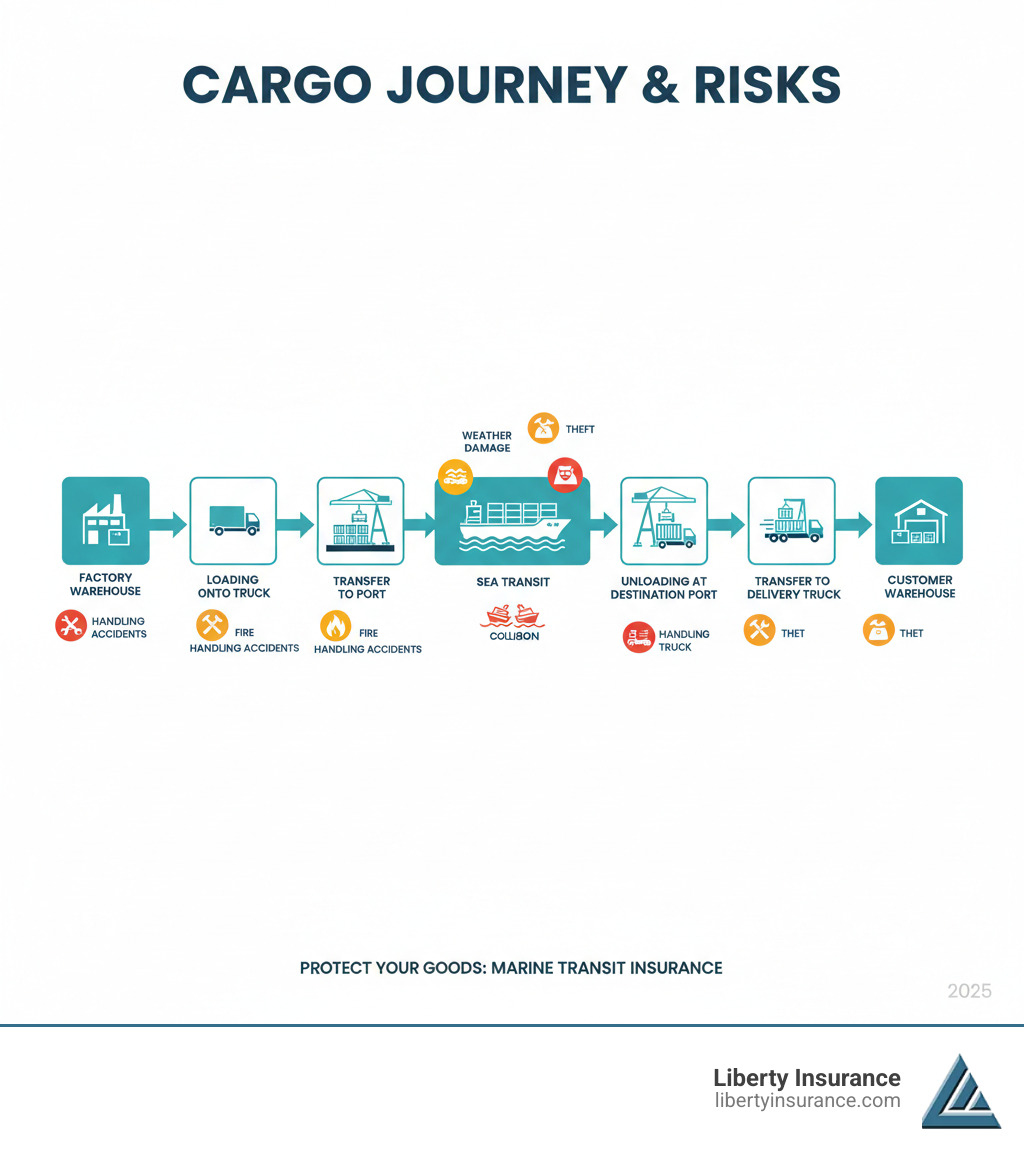
What is Marine Transit Insurance and What Does It Cover?
Marine transit insurance is a protective shield for your goods, safeguarding them from the moment they leave the warehouse until they reach their destination. Unlike the limited protection from shipping carriers, this specialized coverage protects your business from devastating financial losses during transport.
Its comprehensive “warehouse-to-warehouse” approach means your cargo is protected throughout its entire journey, whether by sea, air, or land. This seamless coverage is vital during critical transition points when goods move between different carriers or modes of transport. The policy protects against physical loss or damage to your goods, following them from a truck in Newark to a cargo plane at JFK and a delivery van in Los Angeles.
The level of protection is defined by the internationally recognized Institute Cargo Clauses:
- All-Risk Coverage (Clause A): The broadest protection, covering any external cause of loss or damage not specifically excluded. It’s the standard for high-value or sensitive shipments.
- Named Perils Coverage (Clause B and C): These policies protect against specific risks listed in the policy, such as fire, explosion, vessel stranding, or collision. Clause B covers more perils than the more basic Clause C.
For a deeper dive into protecting your goods during transit, our comprehensive Marine Cargo Insurance guide offers valuable insights.
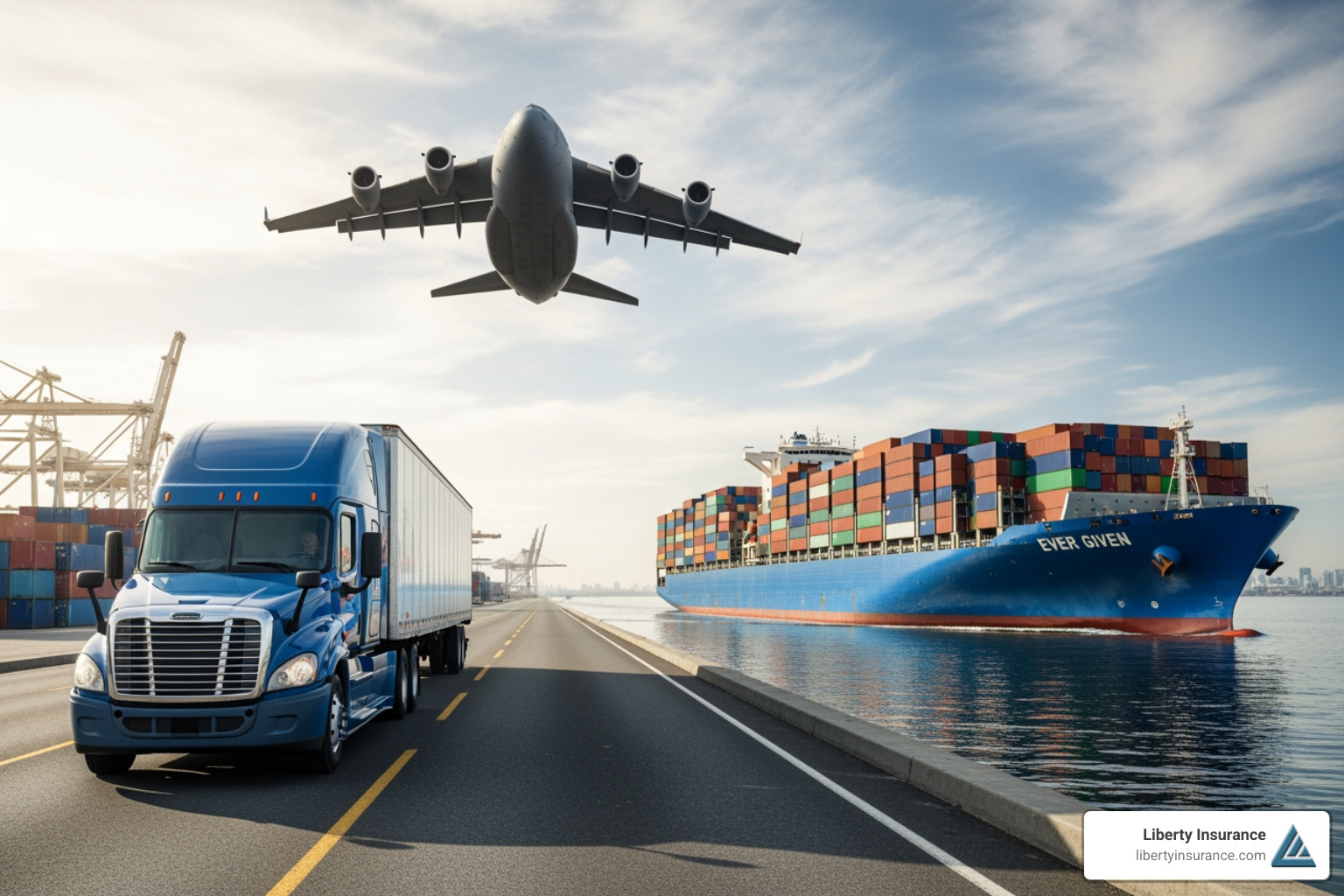
Who Needs This Essential Coverage?
If your business depends on moving goods, marine transit insurance is a critical consideration. A single unprotected loss can threaten your entire operation. This coverage is essential for a wide range of businesses:
- Importers and Exporters: The most obvious candidates, who regularly move goods across international borders.
- Manufacturers: A manufacturer in New Jersey might import raw materials from Germany and export finished products to Canada. Both inbound and outbound shipments are exposed.
- Wholesalers and Distributors: A food distributor might import specialty products and face risks of spoilage during transit delays, while a parts wholesaler needs to protect inventory moving from a central warehouse to regional clients.
- Freight Forwarders and Logistics Providers: While they don’t own the cargo, they often assume liability or offer insurance to their clients, making it a crucial part of their service offering.
- E-commerce Businesses: An online retailer sourcing products from overseas and shipping directly to customers relies on a seamless supply chain. A lost container can mean thousands of unfulfilled orders and significant reputational damage.
Essentially, if your business ships goods using any method—your own vehicles, commercial carriers, rail, or air—you face potential losses that this insurance can protect against.
Key Coverage Details
Understanding your policy’s core components is crucial. Transit coverage protects goods while actively moving by sea, air, or land. The protection also extends to:
- Storage Coverage: Protects cargo during temporary storage at ports, terminals, or warehouses between transit legs.
- Loading and Unloading: Covers damage that occurs during these high-risk handling operations.
- General Average: A maritime principle where all cargo owners contribute to a loss deliberately caused to save the entire voyage (e.g., jettisoning cargo in a storm). Your policy covers your share of this cost, preventing unexpected, substantial bills.
These elements create a comprehensive safety net for your business. To learn more about protecting all your business assets beyond cargo, explore our Business Asset Protection Ultimate Guide.
The Critical Difference: Marine Insurance vs. Carrier Liability
Many business owners are surprised to learn that shipping carriers are not automatically responsible for the full value of cargo if it’s lost or damaged. Their financial responsibility is legally and often shockingly limited.
Consider the pharmaceutical shipment valued at $1.39 million that was a total loss. Due to carrier liability limits under international law, the owner recovered only $60,000. For example, the Hague-Visby Rules for ocean freight can limit a carrier’s liability to a set amount per package or per kilogram—a figure that bears no resemblance to the cargo’s actual value. Similarly, the Montreal Convention for air freight sets limits based on weight. This is why the owner of the pharmaceutical shipment recovered only $60,000, leaving a staggering $1.33 million shortfall that highlights a dangerous gap for unprepared businesses.
Marine transit insurance closes this gap. The differences are stark:
- Burden of Proof: With carrier liability, you must prove the carrier was negligent, which can require lengthy and expensive legal action. With marine insurance, you simply prove a covered loss occurred. Your insurer then pays your claim for the full insured value and takes over the right to recover costs from the at-fault carrier. This legal process, known as subrogation, means their experts handle the complex and often international legal battle to recoup what they can from the carrier, freeing you from the burden and expense.
- Scope of Protection: Carrier liability typically covers only losses from their direct negligence, excluding “Acts of God” (like hurricanes), civil unrest, or inherent vice. A comprehensive marine insurance policy, especially “all-risk” coverage, protects against these scenarios, offering much broader protection.
This comparison illustrates the critical differences:
| Feature | Marine Transit Insurance | Carrier Liability |
|---|---|---|
| Coverage Scope | Broad protection covering named perils or all risks (subject to policy exclusions) | Limited to carrier’s direct negligence, often excludes Acts of God, war, strikes, and inherent vice |
| Payout Value | Full insurable value of goods, including freight costs, duties, and anticipated profit | Capped by weight or package count, typically far below actual value |
| Burden of Proof | On the insurer to prove an exclusion applies | On the cargo owner to prove carrier negligence |
| Claim Process | Generally faster and more straightforward with your insurance partner | Can be lengthy, complex, and may require legal action |
The financial stakes are too high to rely on carrier liability alone. With risks like cargo theft and severe weather on the rise in areas like New Jersey, the question isn’t whether you can afford marine transit insurance, but whether you can afford not to have it.
Protecting your business from these financial exposures is part of a broader risk management strategy. To learn more about comprehensive commercial protection, explore our guide on Commercial Risk Insurance.
Types of Marine Insurance Policies for Comprehensive Protection
Marine insurance is a comprehensive ecosystem of coverage designed to safeguard every aspect of maritime operations. For businesses in New Jersey engaged in shipping, understanding the different policy types is key to building a robust risk management strategy. Just as a trucking company insures its vehicles and liability, marine operations require coverage for the vessel, its cargo, and third-party liabilities.
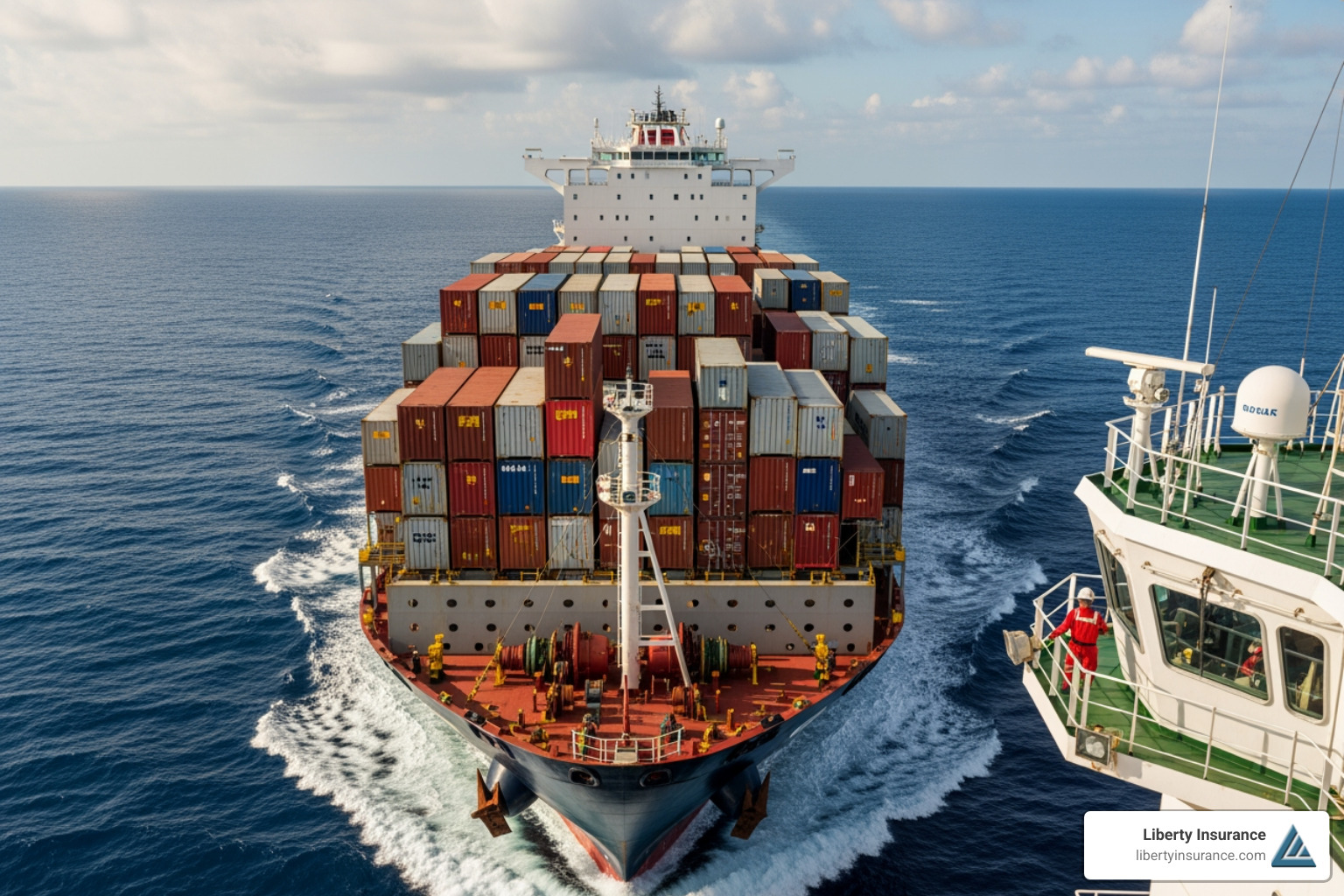
Marine Cargo Insurance
This is what most people mean by marine transit insurance. It directly protects your physical goods during transport, whether they’re crossing the Atlantic or moving from Newark to Philadelphia. Its flexibility is a key advantage:
- Single Voyage Policy: Ideal for infrequent shippers, this covers a specific journey from start to finish.
- Open Cover Policy: Invaluable for businesses with regular shipments, like those moving through Port Newark. It automatically protects all shipments that fall within agreed-upon terms, eliminating the need to arrange insurance for each consignment.
- Annual Policy: Provides blanket protection for all shipments over a twelve-month period, simplifying budgeting and ensuring consistent coverage.
For businesses primarily moving goods domestically, our guide to Inland Cargo Insurance provides additional insights.
Hull & Machinery (H&M) Insurance
While cargo insurance protects what’s inside the vessel, H&M insurance protects the vessel itself. Essential for owners and operators of commercial marine vessels, it safeguards against physical damage to the ship’s hull, machinery, and equipment from perils like collision. This is fundamental protection for a multi-million dollar asset. To explore protection for your fleet, visit our Marine Vessel Insurance page.
Protection & Indemnity (P&I) Insurance
P&I is the general liability coverage of the maritime world, covering your legal liabilities to third parties. This is crucial in busy waterways like those around New Jersey’s ports. P&I covers liabilities arising from crew member injuries, pollution (like an oil spill), damage to docks or other vessels, and even the cost of wreck removal. For businesses with significant maritime exposure, a Bumbershoot policy can provide excess liability protection over existing policies. To understand how excess liability can protect your business, explore our guide to Commercial Excess Liability Coverage.
Navigating the Risks: Common Perils and Emerging Threats in Marine Transit
Every shipment faces a gauntlet of hazards. For businesses shipping goods through New Jersey, understanding both timeless perils and new challenges is essential for protecting your bottom line. The modern supply chain is vulnerable to disruption, making comprehensive marine transit insurance a vital tool for survival in today’s economy.
Traditional Perils Covered by Marine Transit Insurance
Despite modern technology, classic maritime hazards remain significant threats. Your policy is designed to protect against:
- Natural Disasters: Hurricanes, severe storms, and flooding pose direct threats to ports, warehouses, and transport routes. The U.S. has seen a rise in billion-dollar weather events, according to record-breaking weather events data.
- Stranding or Sinking: A vessel running aground or succumbing to rough seas can result in a total cargo loss.
- Fire and Explosion: These can devastate cargo in seconds on a vessel, in a terminal, or on a truck.
- Collision: Risks exist everywhere cargo travels, from ships at sea to trucks on highways.
- Jettison: The deliberate throwing of cargo overboard to save a vessel in peril. Your insurance covers your share of this intentional loss under General Average.
- Piracy: Modern pirates continue to threaten key international shipping lanes.
- Cargo Theft: A growing epidemic, this is often the work of sophisticated, organized criminal rings that target high-value goods like electronics and pharmaceuticals at every vulnerable point, from unsecured port facilities to truck stops and warehouses.
Emerging Challenges in the Marine Transit Insurance Market
Today’s interconnected world introduces new categories of risk that can impact your supply chain:
- Geopolitical Instability: Conflicts and trade disputes can close shipping lanes (like the Suez or Panama Canals), cause cargo seizures by customs authorities, or force costly and lengthy rerouting, affecting businesses in New Jersey awaiting time-sensitive shipments.
- Port Congestion: Chronic delays at major ports, a persistent issue post-pandemic, leave cargo sitting for weeks, exposed to theft, damage, or deterioration. This can also lead to substantial, unexpected costs like demurrage and detention fees, which are not always covered by standard policies.
- Cybersecurity Threats: As logistics go digital, the risk of cyber-attacks grows. Hackers can use phishing schemes to acquire release documents to steal cargo, deploy ransomware on terminal operating systems to halt port operations entirely, or manipulate shipping data to misdirect goods.
- Climate Change Impact: Rising sea levels, changing weather patterns, and warming temperatures are altering the risk landscape for coastal states like New Jersey.
- Supply Chain Disruption: Systemic events like pandemics can cause massive delays and interruptions. While insurance can’t prevent these, it provides financial protection for covered losses that occur during the chaos.
When your supply chain faces interruptions that halt operations, the financial impact extends beyond just damaged cargo. Our guide on Business Interruption Insurance explores coverage for when operations must temporarily cease.
Understanding Your Policy: Premiums, Claims, and Risk Mitigation
Getting the most out of your marine transit insurance involves understanding how premiums are set, what to do when filing a claim, and how to prevent losses. For businesses in New Jersey, these insights can turn a potential disaster into a manageable event.
For more detailed information, explore our guide on Insurance for Business Owners.
What Factors Influence Your Premium?
Insurers evaluate multiple factors to assess risk and determine your premium:
- Value and Nature of Goods: High-value, fragile, or hazardous goods carry more risk and higher premiums than durable, low-value items.
- Voyage Route: A short trip from Newark to Philadelphia is less risky than a journey through piracy-prone waters or hurricane zones.
- Packing Standards: Proper, industry-standard packing reduces the likelihood of damage and can lower your premium.
- Type of Conveyance: Modern, well-maintained vessels and reputable carriers present lower risks.
- Claims History: A clean record can lead to more favorable premiums, much like a good driving record.
- Coverage Level: All-risk coverage (Clause A) costs more than basic named perils coverage (Clause C).
The Claims Process: What to Expect
When a loss occurs, a systematic claims process helps ensure a smooth resolution:
- Immediate Notification: Contact your insurer as soon as you find loss or damage. Delays can jeopardize your claim.
- Damage Survey: For substantial losses, an independent surveyor will inspect the goods to assess the cause and extent of the damage.
- Gather Documentation: Be prepared to provide your insurance policy, Bill of Lading, commercial invoice, packing list, and any damage reports or photos.
- Claim Submission and Review: Your insurer will review all documentation to validate the claim.
- Settlement: Once the claim is approved, you will be compensated for the loss. Some insurers offer advance payments to help maintain cash flow.
How to Mitigate Risks in Marine Transit
Preventing losses is always the best strategy. Proactive risk mitigation protects your bottom line and your reputation.
- Quality Packing: This is your first line of defense. Invest in appropriate packaging with proper internal cushioning and bracing (dunnage), waterproofing or moisture protection like desiccants for sensitive goods, and tamper-evident seals or tape. All packages should have clear, standardized labeling.
- Choose Reliable Carriers: Don’t just choose the lowest bid. Research a carrier’s safety record, financial stability, and reputation for handling claims. A reliable partner is less likely to have losses in the first place.
- Strategic Route Planning: Work with logistics partners to avoid known high-risk areas (e.g., piracy hotspots, conflict zones) or seasons (e.g., hurricane season in the Atlantic) where practical. Understand the security measures at transshipment ports.
- Use Technology and Tracking: GPS and IoT sensors are more accessible than ever. They allow for real-time monitoring of your cargo’s location and condition, including temperature for cold chain goods and shock sensors for fragile items. This data improves security and can be crucial for claim documentation.
- Engage in Risk Consulting: Many insurers offer risk consulting services. Experts can help you conduct a supply chain vulnerability assessment, map your key routes and identify choke points, and recommend customized security and packing solutions.
For more insights on protecting your commercial property, visit our Commercial Property Insurance Risk guide.
Frequently Asked Questions about Marine Transit Insurance
Navigating marine transit insurance can bring up questions. Here are answers to some of the most common concerns for businesses in New Jersey.
Is inland marine the same as cargo insurance?
No, they serve different purposes despite the similar names. Inland marine insurance protects movable property and equipment traveling primarily over land or stored at temporary locations, such as a contractor’s tools moving between job sites in Toms River and Trenton. It’s for domestic transit.
Marine cargo insurance specifically covers goods transported internationally, usually by ocean vessel, but including the air and land portions of the journey. It provides “warehouse-to-warehouse” protection for your international supply chain, like a shipment from Shanghai to your warehouse in Newark.
For a more detailed exploration, check out our article: Is Inland Marine the Same as Cargo Insurance?.
What is “General Average”?
“General Average” is an ancient maritime law principle still in use today. It dictates that if cargo is deliberately sacrificed to save the entire voyage from a common peril (e.g., jettisoning containers in a storm), all parties whose property was saved must share the loss proportionally.
This means that even if your cargo arrives safely, you could receive a substantial bill to help cover another party’s loss. Your marine transit insurance policy covers this contribution, protecting you from this unexpected and potentially significant expense.
What are Institute Cargo Clauses?
Institute Cargo Clauses (ICC) are standardized terms used globally to define the level of coverage in a marine cargo policy. They provide a common language for what is and isn’t covered. There are three main types:
- Institute Cargo Clauses (A): The broadest, “all-risk” coverage. It covers all risks of physical loss or damage from any external cause, unless specifically excluded (e.g., willful misconduct, inherent vice). This is best for high-value or sensitive goods.
- Institute Cargo Clauses (B): Intermediate, “named perils” coverage. It protects against a specific list of risks like fire, explosion, vessel stranding, sinking, collision, and water entry. It offers a balance of protection and cost.
- Institute Cargo Clauses (C): The most basic and affordable coverage. It covers a limited list of major casualties, such as fire, stranding, sinking, and collision, leaving you exposed to more common risks.
Choosing the right clause depends on your cargo’s value, the route, and your risk tolerance.
What is ‘Inherent Vice’ and is it covered?
‘Inherent vice’ is a key exclusion in most cargo policies, including ‘all-risk’ coverage. It refers to a loss or damage that arises from the natural properties or a defect of the goods themselves, without any external cause. For example, if a shipment of fruit rots because it was too ripe when packed, or if unprotected steel parts rust due to normal atmospheric moisture, the loss is due to inherent vice. Because the damage is inevitable due to the nature of the product, insurance does not cover it. Proper packing and quality control before shipment are the best ways to mitigate this risk.
Conclusion: Securing Your Supply Chain for a Resilient Future
In today’s global economy, the journey your goods take is filled with uncertainty. From timeless perils like storms at sea to modern threats like cyber-attacks and geopolitical disruptions, the risks are more complex and interconnected than ever. As we’ve explored, relying on the shockingly limited liability of shipping carriers is a gamble most businesses cannot afford to take.
Marine transit insurance is not just another expense; it’s a strategic investment in your company’s financial stability and operational resilience. It closes the dangerous gap left by carrier liability, protects your full financial interest in your cargo, and provides a clear path to recovery when a loss occurs. Understanding your options, from comprehensive all-risk policies to specific named perils coverage, and actively mitigating risks through smart packing and logistics, empowers you to make informed decisions that align with your risk tolerance.
A single uninsured loss can disrupt operations, damage your bottom line, and harm your reputation. With the right protection, you can navigate the complexities of global trade with confidence. At Liberty Insurance, we understand the challenges facing New Jersey businesses that rely on moving goods. We are committed to helping you build a risk management strategy that secures your assets and supports your growth.
To protect your valuable cargo and ensure your business operations remain resilient against the perils of transit, explore our comprehensive Marine Cargo Insurance solutions. Let’s work together to secure your supply chain for a prosperous future.

