
Why Temporary Coverage Matters When Borrowing an RV
The dream of the open road has never been more appealing. With the rise of ‘staycations’ and the increasing popularity of flexible travel, motorhomes and campervans represent the ultimate freedom. This has also fueled a vibrant sharing culture, where friends and family lend their RVs for weekend trips or holidays. However, this generosity comes with a critical question: how do you insure a vehicle you don’t own for a short period? The answer lies in a specialized and highly convenient product.
Motorhome temporary insurance is a short-term, comprehensive policy that covers you to drive a borrowed or rented motorhome for a specific period, typically from one hour up to 30 days. Here’s a quick overview:
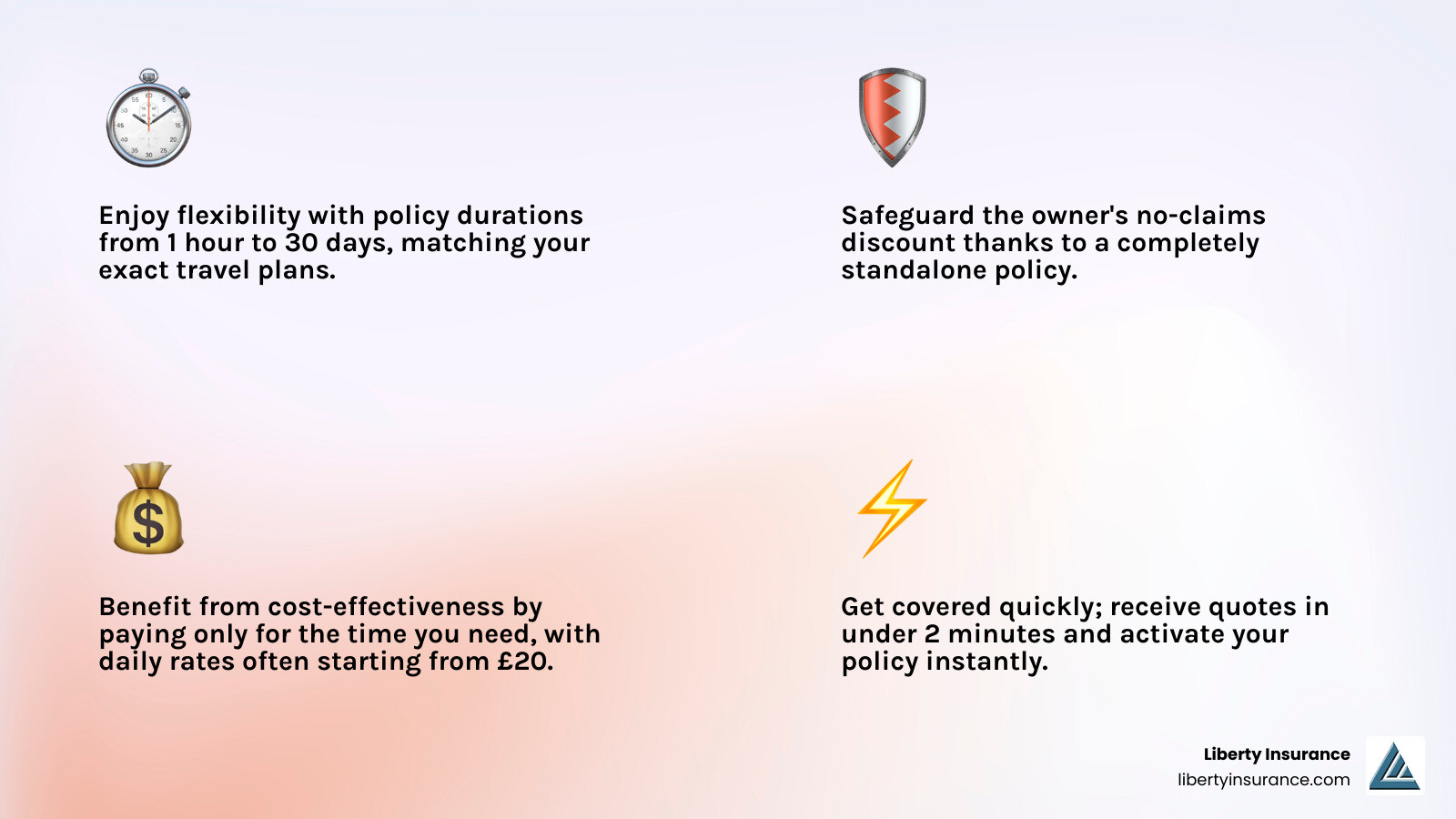
- Duration: Flexible coverage from 1 hour to 30 days.
- Coverage: Fully comprehensive, including accidental damage, fire, theft, and third-party liability.
- Who it’s for: Anyone borrowing a friend’s motorhome, renting from a private owner, or test-driving before purchase.
- Key benefit: It’s a standalone policy that protects the owner’s no-claims discount.
- Speed: Get a quote online in minutes with rapid activation.
The freedom of RV travel is magical, but when a friend offers you their motorhome for a weekend, the question of insurance immediately comes up. Many assume the owner’s permission is enough, but that’s a risky misconception. Adding a temporary driver to an annual policy can be complex and may jeopardize the owner’s no-claims bonus if an accident occurs.
This is where motorhome temporary insurance provides a simple solution. It’s a standalone policy designed for short-term use, giving you comprehensive coverage for the exact time you need without affecting the owner’s existing policy. Whether you’re borrowing a campervan for a festival or driving a newly bought RV home, temporary insurance ensures you’re properly covered.
This guide explains everything you need to know about temporary motorhome insurance, so you can hit the road with complete peace of mind.
What is Short-Term Motorhome Insurance and How Does It Work?
Motorhome temporary insurance is a flexible policy designed to cover motorhomes and campervans for short periods. It’s an ideal solution for spontaneous trips, borrowing from a friend, or driving a new purchase home. This insurance operates as a standalone policy, entirely separate from the motorhome owner’s annual insurance. As the temporary driver, you purchase your own dedicated policy, which protects the owner’s coverage and no-claims discount if you need to make a claim.
This standalone nature is its most significant advantage over the traditional method of adding a temporary driver to the owner’s annual policy. While seemingly straightforward, becoming a ‘named driver’ can be fraught with complications. The owner’s insurer may charge an administration fee, and some may refuse short-term additions altogether. More importantly, if you have an accident, the claim is made against the owner’s policy, potentially leading to the loss of their no-claims discount and a substantial increase in their premiums for years to come. Temporary insurance neatly sidesteps all these issues.
This “pay-as-you-go” model is a cost-effective choice for short-term use. The process is typically quick and straightforward, allowing you to get a quote and activate coverage online in minutes so you can hit the road without delay.
Understanding Policy Duration
One of the biggest advantages of motorhome temporary insurance is its flexible duration. Unlike annual policies, temporary options cater to your exact needs. You can select coverage for as little as one hour or up to 28 to 30 days. Whether you need a motorhome for a quick trip, a weekend getaway, or a multi-week vacation, you can tailor your insurance to match. This pay-as-you-go model is perfect for occasional users or those borrowing a vehicle for a set period. Some providers may even allow you to extend your policy online if your plans change, adding to the convenience.
The Process: From Quote to Coverage
Getting temporary motorhome insurance is designed to be seamless. The entire process can often be completed online in just a few minutes. You’ll need to provide basic information about the motorhome (make, model, registration number) and yourself (age, license details, driving history). This allows providers to assess eligibility and calculate your premium.
Once you review the quote and accept the terms, you can purchase the policy instantly. You’ll receive a digital insurance certificate as proof of coverage, usually via email. It’s wise to keep a copy of this certificate with you, either printed or saved on your phone, as proof that you are legally entitled to drive the vehicle. The quick turnaround means you can get covered and start your journey almost immediately.
Who is Temporary RV Insurance For? Key Scenarios
Motorhome temporary insurance is a versatile product for anyone needing short-term coverage for a motorhome or campervan.

Here are some key scenarios where this insurance is ideal:
- Borrowing from Friends or Family: The most common use. If you borrow an RV for a trip to the Jersey Shore, temporary insurance lets you drive it legally without affecting the owner’s policy or no-claims discount.
- Renting from a Private Owner: With the growth of peer-to-peer RV rental platforms, this is an increasingly common scenario. Temporary insurance provides the necessary coverage for the renter, offering peace of mind for both parties and ensuring compliance with the platform’s insurance requirements.
- Test Driving Before Purchase: If you’re considering an RV from a private seller in Millstone Township or Princeton, this insurance covers you for the test drive.
- Driving a New RV Home: Covers the journey home from the dealership, especially if your annual policy isn’t active yet.
- Occasional Use for Owners: Owners can use it for specific short-term needs, like driving to a service appointment or adding comprehensive coverage for a special trip.
- Short Holidays or Festivals: Perfect for ensuring you’re fully protected on a quick getaway or weekend festival trip.
- Shared Ownership Arrangements: In cases where a motorhome is co-owned by multiple people who are not on the same annual policy, temporary insurance can be a perfect solution. Each owner can take out a policy for their specific period of use, keeping insurance costs and responsibilities clear and separate.
Insuring a Motorhome You Are Borrowing
Borrowing an RV is a great way to enjoy the lifestyle without the commitment of ownership, but insurance is crucial. Relying on the owner’s policy is risky; an accident could harm their no-claims discount and raise their future premiums. By taking out your own standalone motorhome temporary insurance policy, you get comprehensive coverage for the time you’re using the vehicle. If an incident occurs, the claim is against your temporary policy, leaving the owner’s policy and no-claims bonus unaffected. This provides peace of mind for both you and the owner. Always get the owner’s permission before arranging cover.
Using Temporary Insurance for Your Own Motorhome
While mainly for borrowing, owners can also use motorhome temporary insurance in specific situations. It’s a flexible tool, not a replacement for an annual policy. For example, you could use it to drive your motorhome to a service appointment if your annual policy has lapsed or if you only have storage coverage. It can also be used to upgrade from basic to comprehensive protection for a specific trip. In New Jersey, a vehicle must have continuous insurance unless it’s registered as off-road. Temporary insurance is for active, short-term driving needs and complements the requirement for continuous coverage.
Your Guide to Motorhome Temporary Insurance Coverage
Understanding what’s covered by motorhome temporary insurance is key. These policies typically provide fully comprehensive cover as standard, offering robust protection for peace of mind on your short-term adventures. The main benefits are flexibility, cost-effectiveness, and the protection of the motorhome owner’s no-claims discount (NCD).
What’s Typically Included?
While specifics vary by provider, motorhome temporary insurance generally offers a strong foundation of coverage. Standard inclusions often are:
- Accidental Damage: Covers repair or replacement costs if the motorhome is damaged in an accident.
- Fire and Theft: Protects against loss or damage from fire, theft, or attempted theft.
- Vandalism: Covers malicious damage to the motorhome.
- Third-Party Liability: A crucial component covering costs if you injure someone or damage their property while driving.
- Legal Expenses: Some policies include cover for legal costs related to motoring incidents.
- Windscreen Cover: Often included to cover the repair or replacement of a damaged windscreen.
- Breakdown Assistance: Many policies include breakdown cover for roadside assistance and recovery.
This comprehensive protection mirrors many aspects of an annual policy but is custom for short-term use.
What Are the Limitations and Exclusions?
It’s equally important to know the limitations of motorhome temporary insurance to avoid surprises. Policies are for specific uses, and going outside these can void your coverage. Common exclusions include:
- Commercial or Business Use: Policies are for private, recreational use. Using the motorhome for business, like deliveries or as a mobile office, is typically excluded.
- Hire and Reward: This refers to using the motorhome for paid transport. Your temporary policy covers you when you rent, but the owner needs separate insurance to be able to rent it out.
- Unauthorized Drivers: Only drivers named on the policy are covered.
- Wear and Tear: Insurance covers unexpected damage, not gradual deterioration or mechanical failures from normal use.
- Mechanical or Electrical Breakdown: While roadside assistance is often included, the cost of repairing the underlying fault is not, unless it’s a direct result of a covered accident.
- Personal Belongings: Your personal items inside the motorhome are usually not covered by the vehicle policy. You may need separate travel or home insurance for this.
- Vehicle Restrictions: Policies may have limits on the motorhome’s age, value, weight, or engine size and may exclude heavily modified vehicles.
- Geographical Limits: Coverage is often restricted to a specific territory (e.g., the United States). If you plan to drive the motorhome into Canada or Mexico, you must verify if your policy allows this or if you need to purchase a specific extension. Cross-border travel without explicit coverage can leave you uninsured.
- Towing: Policies may have specific restrictions or exclusions related to towing trailers or other vehicles. If you plan to tow, you must confirm this is permitted under your temporary policy.
- Use for Rallies, Racing or Track Days: Any form of competitive driving, racing, or use on a track is universally excluded from standard motorhome insurance policies.
Always read your policy documents carefully to understand the full scope of your coverage and any specific exclusions. If unsure, clarify with your insurance provider.
This site is protected by reCAPTCHA and the Google Privacy Policy and Terms of Service apply.
Getting Your Policy: Eligibility, Costs, and Process
Securing motorhome temporary insurance requires meeting certain criteria for both the driver and the vehicle. Understanding these eligibility requirements and the factors that influence cost will help you steer the process smoothly.
Eligibility Requirements
To qualify for motorhome temporary insurance, both the driver and the vehicle must meet specific criteria, which can vary by provider. Here’s a general overview:
- Driver Criteria: Insurers typically look at your age (e.g., 25-75), how long you’ve held a full, valid driving license (e.g., minimum 12 months), and your driving history. A clean record with no recent convictions or claims improves eligibility and can lower rates.
- Vehicle Criteria: The motorhome must also meet certain conditions, which often include limits on its market value, age, gross vehicle weight (GVW), and engine size. The vehicle must also be properly registered.
Always check the specific requirements with your chosen provider to ensure you and the motorhome qualify.
How Much Does Motorhome Temporary Insurance Cost?
The cost of motorhome temporary insurance is not a flat rate; it’s based on the insurer’s assessed risk. While specific pricing for New Jersey varies, the key factors that determine your premium include:
- Vehicle Details: The make, model, value, and power of the motorhome impact the cost. More expensive or powerful vehicles usually have higher premiums.
- Driver’s Profile: Your age, driving experience, and history are significant factors. Younger, less experienced drivers may face higher costs.
- Policy Duration: The length of your coverage directly affects the price. The total premium increases with the duration.
- Deductible Amount: The deductible is what you pay out-of-pocket on a claim. Choosing a higher deductible can lower your premium.
While it’s impossible to give a single price, a short-term policy for a standard motorhome for a weekend might range from under one hundred to several hundred dollars, depending on the specific risk factors. The only way to know for sure is to get a personalized quote.
How to Save on Your Premium
While temporary policies are already cost-effective, you can still find ways to save. Here are some strategies to potentially reduce your premium:
| Cost-Saving Method | Description |
|---|---|
| Compare Quotes | Don’t assume all temporary insurance providers offer the same rates. Taking a few extra minutes to compare quotes from different specialist insurers can often lead to significant savings for identical coverage. |
| Bundling Policies | If you have other policies (e.g., auto, home) with Liberty Insurance, ask about multi-policy discounts. Combining policies can often lead to overall savings. |
| Maintaining a Clean Driving Record | A history free of accidents and violations shows you’re a low-risk driver, which insurers reward with better premiums. |
| Increasing Your Deductible | Opting for a higher deductible can lower your premium. Just ensure you can comfortably afford this amount if you need to make a claim. |
| Taking an RV Driver Safety Course | Completing an approved RV driver safety course demonstrates your commitment to safety and may earn you a discount. Check with your provider to see if they recognize such courses. |
| Choosing a Less Expensive Motorhome Model | If you have a choice, opting for a motorhome with a lower market value or smaller engine can result in a lower insurance premium. |
Being mindful of these factors can help you get the best possible rate for your motorhome temporary insurance.
Navigating Claims and Policy Details
Even with careful planning, incidents can happen. Knowing the claims process and how motorhome temporary insurance affects no-claims discounts and vehicle registration is essential for both borrowers and owners.
How to Make a Claim on Your Motorhome Temporary Insurance
If you need to make a claim, it’s important to act calmly and follow a clear process. Here are the immediate steps to take after an incident:
- Ensure Safety: Make sure everyone involved is safe. Call emergency services if there are injuries.
- Secure the Scene: If it’s safe, stop your vehicle and turn on your hazard lights.
- Gather Information: Collect names, contact information, vehicle registration numbers, and insurance details from all parties. Take photos of the scene and vehicle damage. Note the date, time, and location. It is critical that you do not admit fault at the scene of the incident, as this can complicate the claims process.
- Contact Your Insurer: As soon as practical, contact your temporary insurance provider. They will guide you through their specific claims process, which may involve a dedicated claims hotline or an online portal.
- Provide Information: Be ready to provide your policy number and the details you gathered. The insurer will explain the next steps, such as damage assessment and repairs. Additionally, do not authorize any repairs to the vehicle without first speaking to your insurer and getting their approval.
Following these steps will help ensure a smoother claims process.
Does Motorhome Temporary Insurance Affect a No-Claims Discount?
A major advantage of motorhome temporary insurance is that it protects the owner’s no-claims discount (NCD). Because it’s a standalone policy, any claim you make is processed independently and will not affect the NCD on the motorhome owner’s annual policy. This gives owners peace of mind when lending their RVs.
However, you will not build up your own NCD on a short-term policy. When you make a claim on a temporary policy, it becomes part of your personal claims history. Insurers share this information, so you must declare it when applying for any type of vehicle insurance in the future. Failing to do so can be considered non-disclosure and could invalidate a future policy. While it won’t affect the motorhome owner, it can influence the premiums you are offered for your own policies down the line.
Regarding legal requirements, a vehicle in New Jersey must be properly registered and insured to be driven on public roads. Your temporary insurance documentation will serve as proof of coverage, allowing you to complete any necessary vehicle registration processes at a local motor vehicle agency.
Conclusion
The allure of the open road in a motorhome is undeniable, offering unparalleled freedom and adventure. For those moments when you need to drive a motorhome on a short-term basis—whether borrowing from a friend, test-driving a new purchase, or simply needing flexible coverage for a brief trip—motorhome temporary insurance emerges as the smart, practical, and highly beneficial solution.
We’ve explored how this specialized insurance works, acting as a standalone policy that protects both the temporary driver and the owner’s valuable no-claims discount. We’ve seen who it’s for, from friends starting on a weekend getaway to individuals driving a newly acquired RV home. Furthermore, we’ve digd into the comprehensive coverage typically provided, ensuring you’re protected against common risks like accidental damage, fire, theft, and third-party liability, while also highlighting important limitations to be aware of.
Understanding the eligibility criteria, the factors influencing cost, and the straightforward claims process empowers you to make informed decisions. By choosing motorhome temporary insurance, you’re not just buying a policy; you’re investing in flexibility, peace of mind, and the freedom to accept the motorhome lifestyle without unnecessary burdens.
Before you start on your next adventure or take the wheel of that borrowed RV, take a moment to secure the right coverage. A quick quote can provide the clarity and confidence you need to hit the road with joy and security. At Liberty Insurance, we are committed to providing customizable coverage solutions that safeguard your assets and give you the confidence to explore.

