
Why New Jersey Construction Projects Need Builders Risk Insurance
Quick Answer for NJ Builders Risk Insurance:
- Coverage: Building, materials, equipment, and soft costs during construction
- Who needs it: Owners, contractors, developers, lenders
- Cost: 1 – 4 % of construction value (NJ minimum $375)
- Duration: From groundbreaking until completion/occupancy
- Top benefits: Protection against fire, theft, wind, vandalism, and most weather events
New Jersey’s mix of coastal towns, dense cities, and rolling farmland creates exciting building opportunities—but also exposes job sites to hurricanes, nor’easters, and heavy snow. A single storm, theft, or fire can turn months of work into a major loss. Builders risk insurance bridges that vulnerable gap between “under construction” and “move-in ready,” giving everyone with money in the project a safety net.
I’m Andrew Harris, CIC, AAI, and part of Liberty Insurance’s New Jersey team. After more than a decade helping Garden State builders insure projects of all sizes, I can tell you: builders risk is one of the smallest line items in a budget, yet often the first thing owners thank us for when something goes wrong.
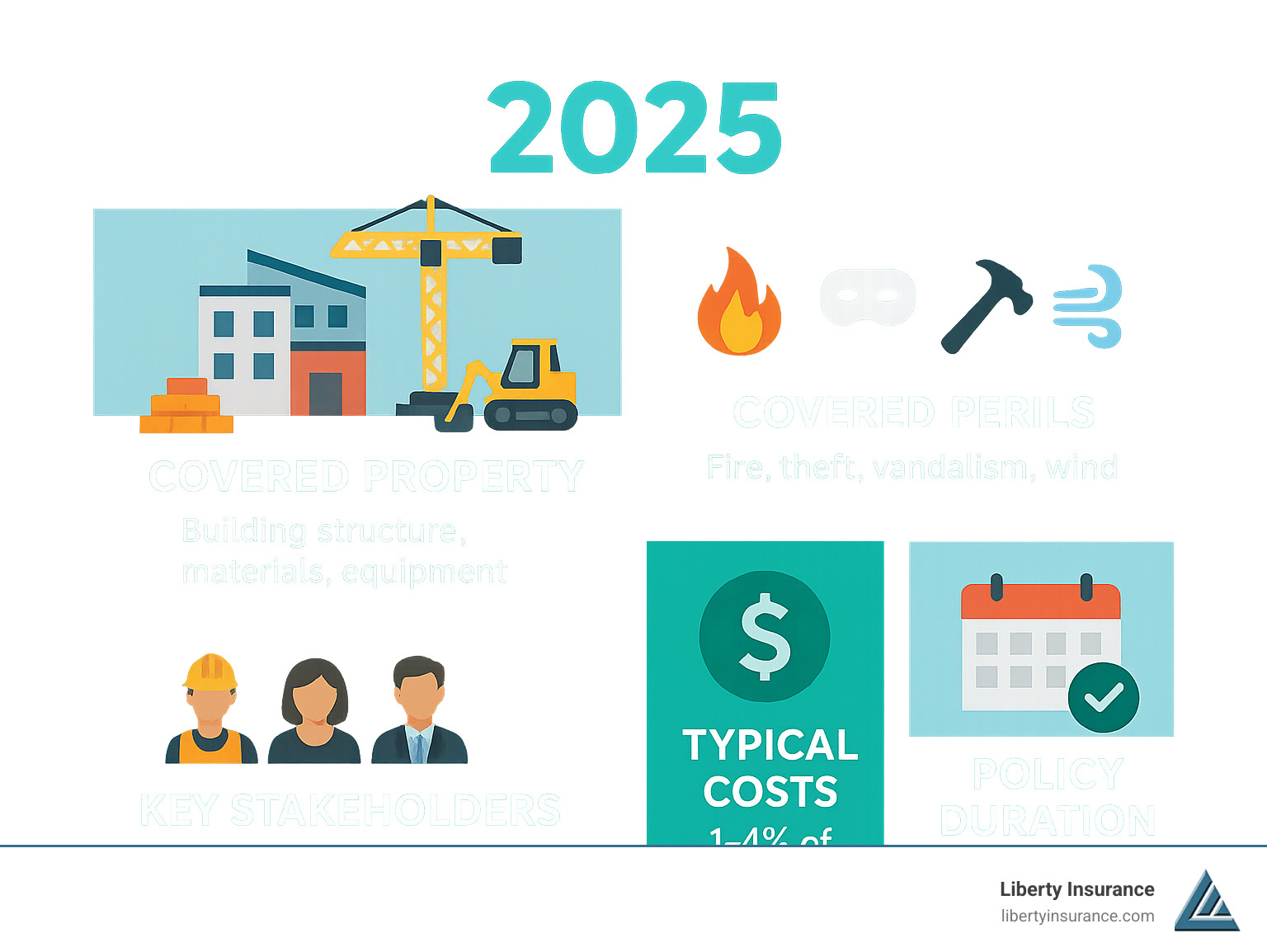
Basic NJ builders risk insurance terms:
What Builders Risk Insurance Covers in New Jersey
Think of NJ builders risk insurance as project-specific property coverage. It pays for direct physical loss or damage while a structure is being built or renovated—a critical period when standard property policies won’t provide protection. This coverage is often written on an “all-risk” basis, meaning if a peril isn’t specifically excluded, it’s generally covered.
What Does a NJ Builders Risk Insurance Policy Cover?
- Building structure and foundations: This includes everything from the initial excavation and foundation pour to the framing, roofing, drywall, flooring, and permanently installed fixtures like HVAC systems and cabinetry.
- Materials and supplies: Coverage extends to materials that will become a permanent part of the project, whether they are stored on-site, at a temporary off-site location, or even in transit to the job site. This protects your investment in lumber, wiring, plumbing, and other key components before they are even installed.
- Temporary structures: Essential on-site structures like scaffolding, construction forms, fencing, and job site trailers are also protected.
- Extra expenses (Soft Costs): Beyond the physical materials, coverage can include the significant soft costs incurred after a loss. This includes labor to redo work, debris removal, architect and engineering fees to redraw plans, permit fees, and even interest on construction loans that accrues during a delay.
- Optional rental income protection: For income-producing properties like apartment buildings or commercial spaces, you can add an endorsement to cover the loss of rental income if a covered peril delays the project’s completion and your ability to lease the property.
Common Perils and NJ-Specific Risks
Standard policies cover a wide range of perils, including fire, lightning, theft of materials, vandalism, wind, hail, explosion, and impact from vehicles or aircraft.
However, New Jersey’s geography presents unique challenges:
- Hurricanes and coastal windstorms: The Jersey Shore is particularly vulnerable. A policy with a robust windstorm provision is non-negotiable for any coastal project.
- Nor’easters: These powerful storms can bring not only high winds but also heavy, wet snow. The weight of accumulated snow or ice can cause catastrophic collapses of partially framed structures.
- Flooding: Proximity to the Atlantic, Delaware Bay, or low-lying rivers like the Passaic and Raritan makes a separate flood endorsement or policy a critical consideration. Standard builders risk policies exclude flood damage.
- Summer thunderstorms: Severe thunderstorms can spawn damaging hail and straight-line winds that can peel off roofing materials or topple unsecured structures.
Construction Risk Insurance can layer with builders risk for even broader protection against complex project risks.
Who Needs Builders Risk Insurance and Why?
Anyone with a financial stake in a construction project—what’s known as “insurable interest”—should be protected by NJ builders risk insurance. If a fire, storm, or theft could cause you a financial loss, you need to be named on the policy.
Key Parties Requiring Coverage
- General contractors: Protects their investment in labor, materials, and equipment on-site before they have been fully paid. It’s a crucial backstop against losing months of work and investment.
- Property owners & developers: Safeguards the primary capital investment in the project. For a developer, a total loss without insurance could be a business-ending event.
- Homeowners doing major renovations: A standard homeowner’s policy may not cover a structure during extensive renovation or additions. Builders risk fills this critical gap.
- Real-estate investors/house flippers: Protects the investment from the moment of purchase through the renovation until the property is sold.
- Lenders and banks: Financial institutions will almost always require builders risk as a condition of a construction loan to protect their collateral—the building itself.
- Municipalities on public projects: Ensures that taxpayer-funded projects like new schools or community centers are protected from loss during construction.
Common Exclusions and Policy Limitations
Understanding what is not covered is as important as knowing what is. Typical builders risk policies will exclude:
- Faulty design, planning, workmanship, or materials: This is a critical distinction. The policy will not pay to fix the faulty work itself (e.g., replacing a poorly welded beam). However, if that faulty work leads to a covered loss (e.g., the poorly welded beam fails and causes a roof collapse), the policy may cover the “ensuing damage” to the rest of the structure.
- Normal wear & tear: Gradual deterioration is not covered.
- Employee dishonesty: Theft of materials by your own employees is typically excluded and should be covered by a separate crime policy.
- Mechanical breakdown: The failure of equipment like a generator is not covered, though damage caused by a subsequent fire might be.
- Earthquake or flood: These perils almost always require a specific endorsement or a separate policy.
- Mold, fungus, and bacteria: Damage from these sources is often excluded unless a specific, limited coverage is added by endorsement.
Knowing these gaps lets you work with your insurance advisor to add endorsements—or secure separate policies—before you break ground.
How Much Does NJ Builders Risk Insurance Cost?
Premiums usually fall between 1 – 4 % of total construction costs with a minimum NJ premium of $375.
Key Pricing Factors
- Project value (materials + labor + soft costs)
- Type of construction (wood, steel, concrete, green)
- Location (coastal vs. inland, fire-protection class, theft rates)
- Policy term (3, 6, 12, or 24 months)
- Optional endorsements (soft costs, equipment breakdown, flood)
- Contractor track record and job-site security
Typical Premium Ranges
- $300 K residential build: $2 K – $4 K
- $1 M multi-family: $7 K – $12 K
- $5 M commercial office: $15 K – $25 K
- $1.5 M coastal property: $10 K – $18 K (wind & flood risk)
Projects under $5 M can usually be quoted online in minutes.
Policy Details: Duration, Termination, and Comparisons
How Long Does Coverage Last?
Coverage is designed to be temporary, aligning precisely with the construction phase. It typically starts when the first materials arrive at the job site or when work begins, whichever is earlier. The policy then terminates at the earliest of the following events:
- The scheduled policy expiration date.
- The project is accepted by the purchaser.
- The property is sold.
- The building becomes occupied or is put to its intended use. This is a critical trigger; even moving in furniture or allowing a tenant to occupy a single unit in a multi-family building can terminate coverage for the entire structure.
- The project is abandoned for a set period (often 60-90 days).
If your project is running behind schedule, it is vital to request a policy extension before the original end date. Most carriers can extend coverage for an additional premium, preventing a dangerous gap in protection.
Builders Risk vs. Other Construction Insurance
Builders risk is just one piece of a comprehensive risk management program. Here’s how it fits with other essential policies:
| Coverage Type | What It Protects | When It Applies |
|---|---|---|
| Builders Risk | The building & materials being installed | During the course of construction |
| General Liability | Bodily injury or property damage to third parties | Any time your operations cause harm |
| Workers’ Compensation | Employee injuries on the job | When an employee gets hurt at work |
| Inland Marine | Your mobile tools & equipment | On-site, in storage, or in transit |
| Commercial Property | The finished, completed building | After construction ends & occupancy begins |
These policies are designed to complement—rather than replace—each other. A seamless transition from a builders risk policy to a permanent commercial property insurance NJ policy is essential. Liberty Insurance can package these coverages to ensure there are no gaps between the final construction phase and full occupancy.
How to Get a Quote and Steer Regulations in New Jersey

Fast Quote Checklist
- Project address & description
- Total completed value (materials, labor, soft costs)
- Start & expected completion dates
- Construction type (wood, steel, etc.)
- General contractor info & safety record
Gather these, then use our application checklist or call a Liberty Insurance advisor. Compare limits, deductibles, and exclusions—not just price.
Regulatory & Contract Realities
- NJ law doesn’t mandate builders risk, but lenders almost always do.
- Some municipalities require proof before issuing permits for large jobs.
- Contractors must keep state licensing and workers’ comp current. The NJ Department of Labor outlines requirements.
- Certain public or bonded jobs may also need New Jersey Contractor Bonds.
In short: if money is borrowed or a contract is signed, builders risk is rarely optional.
Frequently Asked Questions about Builders Risk Insurance in NJ
Does builders risk cover theft of materials?
Yes, in most cases. Materials and fixtures that are intended to become a permanent part of the finished structure are generally covered against theft. However, insurers will expect you to take reasonable security measures, such as perimeter fencing, adequate lighting, and locking up valuable items. Theft by your own employees is typically excluded.
What if my project takes longer than expected?
This is a common scenario. You must notify your insurance provider before the policy’s expiration date to request an extension. Most insurers will grant an extension for an additional, often prorated, premium. Allowing the policy to lapse before the project is complete creates a significant and unnecessary risk.
Are my tools and equipment covered?
Generally, no. A builders risk policy is designed to cover the structure and materials that become part of it. Your mobile tools and equipment (e.g., saws, drills, excavators, bobcats) require a separate Inland Marine policy, often called a Contractor’s Equipment Floater, for protection against theft or damage.
Are hurricanes covered in New Jersey?
Damage from wind is a standard covered peril, so wind damage from a hurricane is typically covered. However, damage from flood or storm surge associated with the hurricane is not covered unless you have purchased a specific flood endorsement or a separate flood insurance policy. For any project near the coast or in a flood zone, this is essential.
How does this work with my homeowner’s policy during a renovation?
For a major renovation, the two policies work in tandem. The builders risk policy covers the new construction (the addition, the renovated kitchen) and the materials for it. Your existing homeowner’s policy continues to cover the original, untouched parts of the house and your personal liability. It’s crucial to coordinate with both insurance agents. Once the project is finished, you’ll cancel the builders risk and increase your homeowner’s policy limits to reflect the new value of your home.
Can I buy coverage after work has started?
It is sometimes possible, but not recommended. Insurers are much more cautious about insuring a project already in progress. They will require a detailed inspection, and the underwriting process will be stricter. You will almost certainly pay a higher premium than if you had secured the policy before breaking ground.
Conclusion
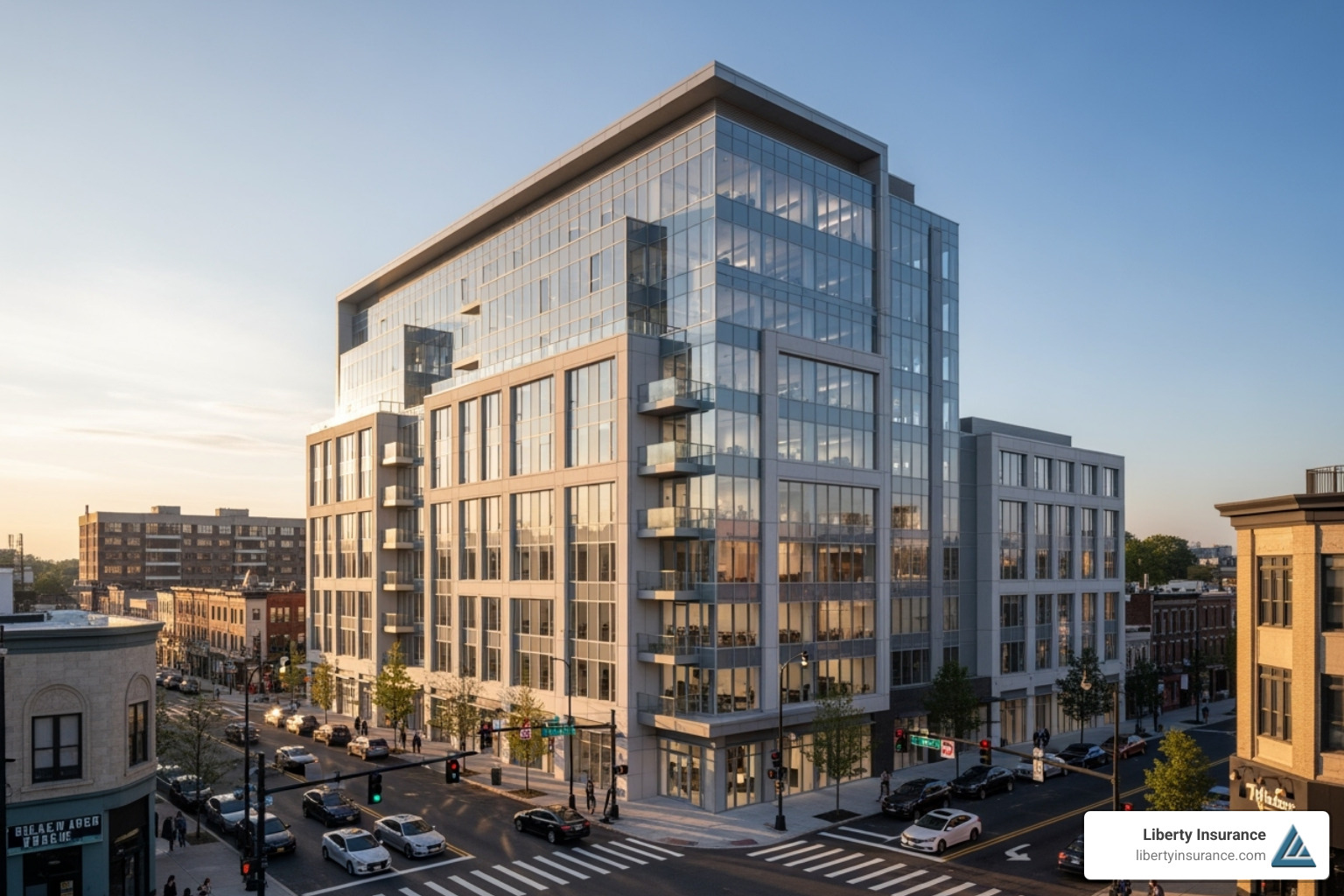
A construction site is vulnerable from the first delivery until the final walk-through. For 1 – 4 % of your budget—sometimes less than a single change order—NJ builders risk insurance shields that investment against theft, fire, wind, and most other perils unique to the Garden State.
Whether you’re renovating a bungalow in Millstone Township or raising a glass tower in Jersey City, Liberty Insurance can customize coverage to fit your timeline, location, and budget. Protect your next project with comprehensive contractor insurance and build with confidence.

