
Why Every Business Owner Needs Property Insurance Protection
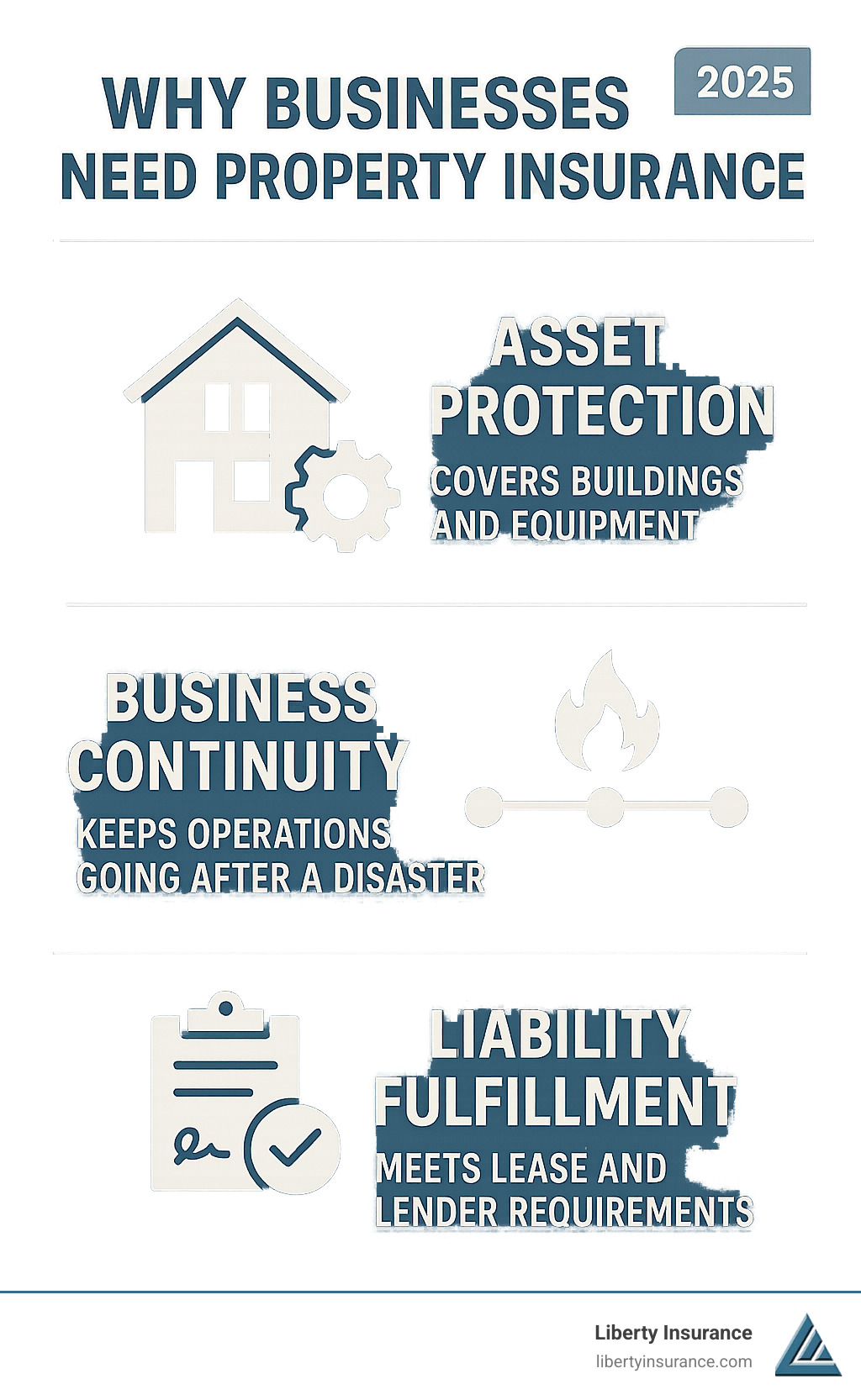
Property insurance for business owners is essential protection that covers your company’s physical assets—from buildings and equipment to inventory and furniture—against disasters like fires, theft, and severe weather.
Quick Answer for Business Owners:
- What it covers: Buildings, equipment, inventory, furniture, computers, and outdoor fixtures
- Common risks protected: Fire, theft, vandalism, windstorms, water damage, lightning strikes
- Who needs it: Any business with physical assets, especially those required by leases or lenders
- Average cost: $63/month for basic coverage or $1,605/year on average
- Key benefit: Keeps your business running after unexpected property damage or loss
Whether you own your building or lease office space, your business depends on physical assets. A single fire, break-in, or storm could shut down operations for months, potentially forcing permanent closure without proper insurance. The reality is stark: most small businesses that experience a major property loss without adequate insurance never reopen.
This guide will walk you through everything you need to know about commercial property insurance. I’m Andrew Harris, a Certified Insurance Counselor (CIC) and Accredited Advisor in Insurance (AAI). With over a decade of experience and as PIA National’s 2020 Agent of the Year, I’ve seen how the right property insurance strategy can mean the difference between a temporary setback and permanent business closure.
Property insurance for business owners terminology:
- types of business insurance
- business personal property insurance
- commercial property insurance business interruption
Understanding Commercial Property Insurance: Your Business’s First Line of Defense
Imagine arriving at your office to find broken windows and ruined equipment. Without commercial property insurance, this scenario could be disastrous. That’s why property insurance for business owners serves as your company’s first line of defense against the unexpected.
This coverage is a cornerstone of business continuity, providing the financial support to repair or replace damaged assets so you can get back on your feet quickly. It safeguards everything that makes your business physically possible, from your building to the inventory you sell. For comprehensive protection, our Business Asset Protection Insurance offers custom solutions.
While not always required by law, commercial property insurance is rarely optional. Most commercial lease agreements mandate it, and lenders almost always require it if you have a mortgage on your business property.
What Assets Are Protected?
Commercial property insurance covers a wide range of your business’s physical assets, including the building itself and everything inside it.
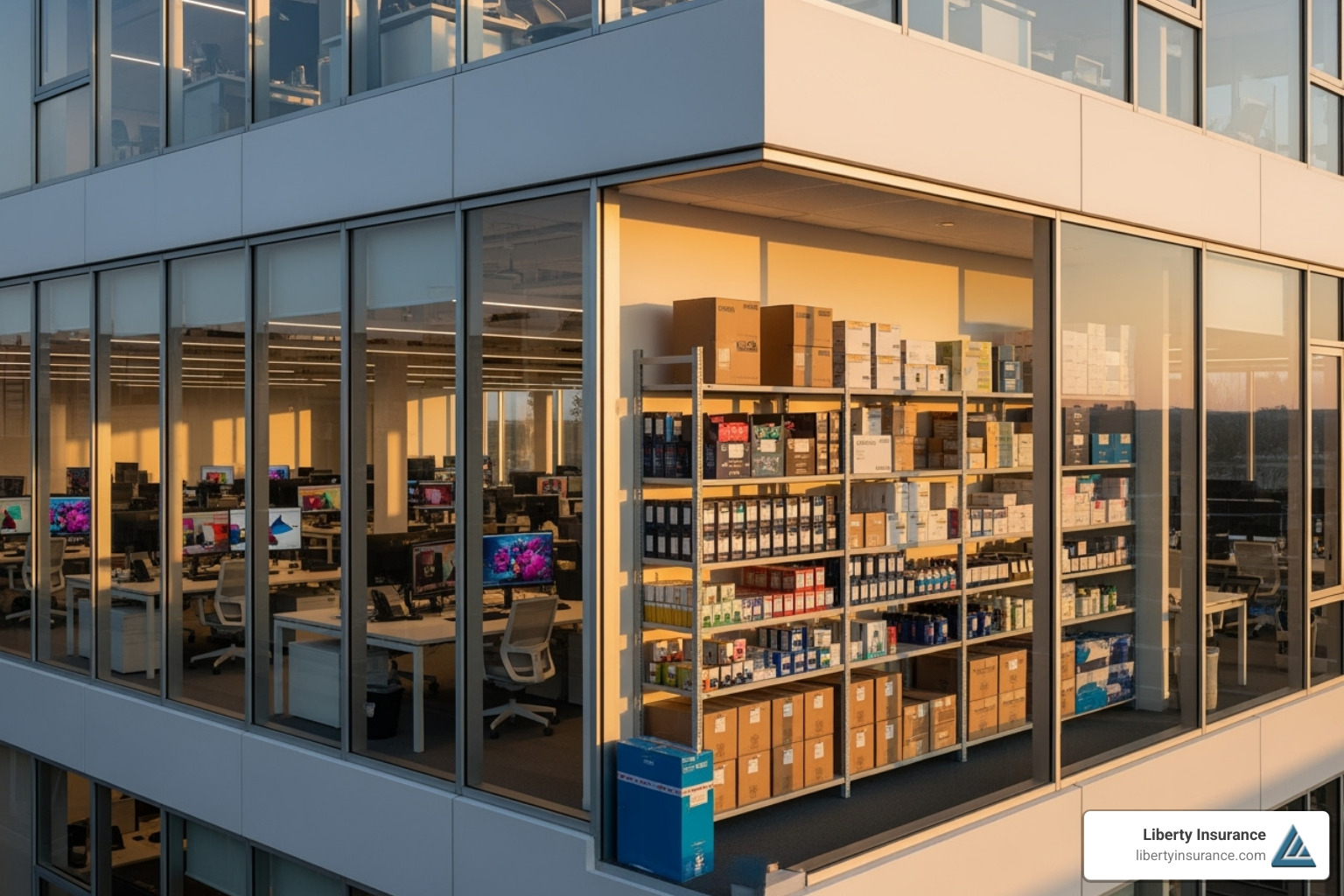
- Building Coverage: If you own your commercial property, this protects the structure, from the foundation and walls to the roof and permanently attached fixtures. Our Business Building Insurance provides specialized protection for your physical structure.
- Business Personal Property (BPP): This covers all movable property your business owns. This includes your inventory (stock, raw materials), furniture and fixtures (desks, shelving, display cases), and computers and electronics (servers, laptops, specialized equipment).
- Outdoor Signs and Fences: Your policy can also cover exterior assets like signage and fencing that are crucial for attracting customers and securing your property.
Covered Perils: From Fire to Vandalism
Your policy protects against various “perils,” or causes of loss. Common covered events include:
- Fire: Covers damage from flames, smoke, and soot. We offer specialized Commercial Fire Damage Insurance for these catastrophic events.
- Theft: Helps replace stolen equipment, inventory, or other business property.
- Vandalism: Covers malicious damage like graffiti or broken windows.
- Windstorms: Includes damage from hurricanes, tornadoes, and severe wind.
- Lightning Strikes: Protects electrical systems, computers, and building structures.
- Water Damage: Typically covers internal damage from burst pipes or leaking sprinklers, but not external flooding.
Do I Need Insurance If I Rent My Business Space?
Yes, you absolutely need property insurance for business owners even when renting. Your landlord’s insurance won’t cover your assets.
- Lease Agreements: Most commercial landlords require tenants to carry property insurance to protect the contents of their leased space.
- Protecting Your Contents: Your business equipment, inventory, furniture, and computers belong to you. You are responsible for replacing them after a fire, theft, or other disaster.
- Improvements and Betterments: If you’ve invested in upgrading your leased space (e.g., new flooring, custom fixtures), this coverage protects that investment.
- Liability for Damage: Your lease may hold you financially responsible for building damage that originates from your operations, such as a fire caused by faulty equipment.
For property owners who lease commercial spaces, our Landlord Insurance and Lessor’s Risk Only (LRO) insurance offer essential protection.
Decoding Your Policy: Coverage, Valuations, and Exclusions
Understanding your commercial property insurance policy is critical to ensuring you’re properly protected. Think of this as your translation guide for property insurance for business owners. The key is to understand three areas: how your property is valued, your level of coverage, and what’s excluded. For a detailed breakdown, see our Commercial Property Insurance Policy information or this external resource about Property Insurance.
Valuing Your Property: Actual Cash Value vs. Replacement Cost
The way your property is valued directly affects your payout after a claim. You have two main options: Actual Cash Value (ACV) and Replacement Cost (RC).
| Feature | Actual Cash Value (ACV) | Replacement Cost (RC) |
|---|---|---|
| Definition | Cost to replace property minus depreciation. | Cost to repair, replace, or rebuild property with comparable materials and quality. |
| Depreciation | Deducted from the replacement cost. | Not deducted; covers the full cost of new equivalent property. |
| Premium Cost | Typically lower, as the payout limit is lower. | Higher, as it covers the full cost of new items without considering age or wear. |
| Payout Example | Old computer (worth $500 new) after 3 years might pay $200. | Old computer (worth $500 new) after 3 years would pay $500 for a new equivalent. |
| Benefit | Cheaper premiums, suitable for older or less critical assets. | Full recovery, ensures business continuity with new assets, ideal for critical equipment. |
Actual Cash Value (ACV) pays for the depreciated value of your property. It results in lower premiums but means you’ll likely have out-of-pocket expenses to buy a new replacement.
Replacement Cost (RC) is the gold standard. It pays what it costs to replace your damaged property with a new, equivalent item. While premiums are higher, RC coverage is worth it for most businesses, as it allows for a complete recovery.
Levels of Coverage: Basic, Broad, and Special Forms
Commercial property policies come in different forms that determine how broadly you’re protected. The main difference is named perils (only covers listed risks) versus open perils (covers everything unless specifically excluded).
- Basic Form: The most limited option, covering common risks like fire, lightning, windstorm, and vandalism.
- Broad Form: Builds on the Basic Form, adding coverage for perils like falling objects and water damage from burst pipes.
- Special Form: The most comprehensive option, operating on an open perils or “all-risk” basis. It covers everything except for listed exclusions, providing the greatest peace of mind. I recommend this for most businesses. Explore options in our Commercial Property Insurance Plans.
Common Exclusions: What Isn’t Covered?
Every policy has exclusions. Knowing them upfront prevents surprises.
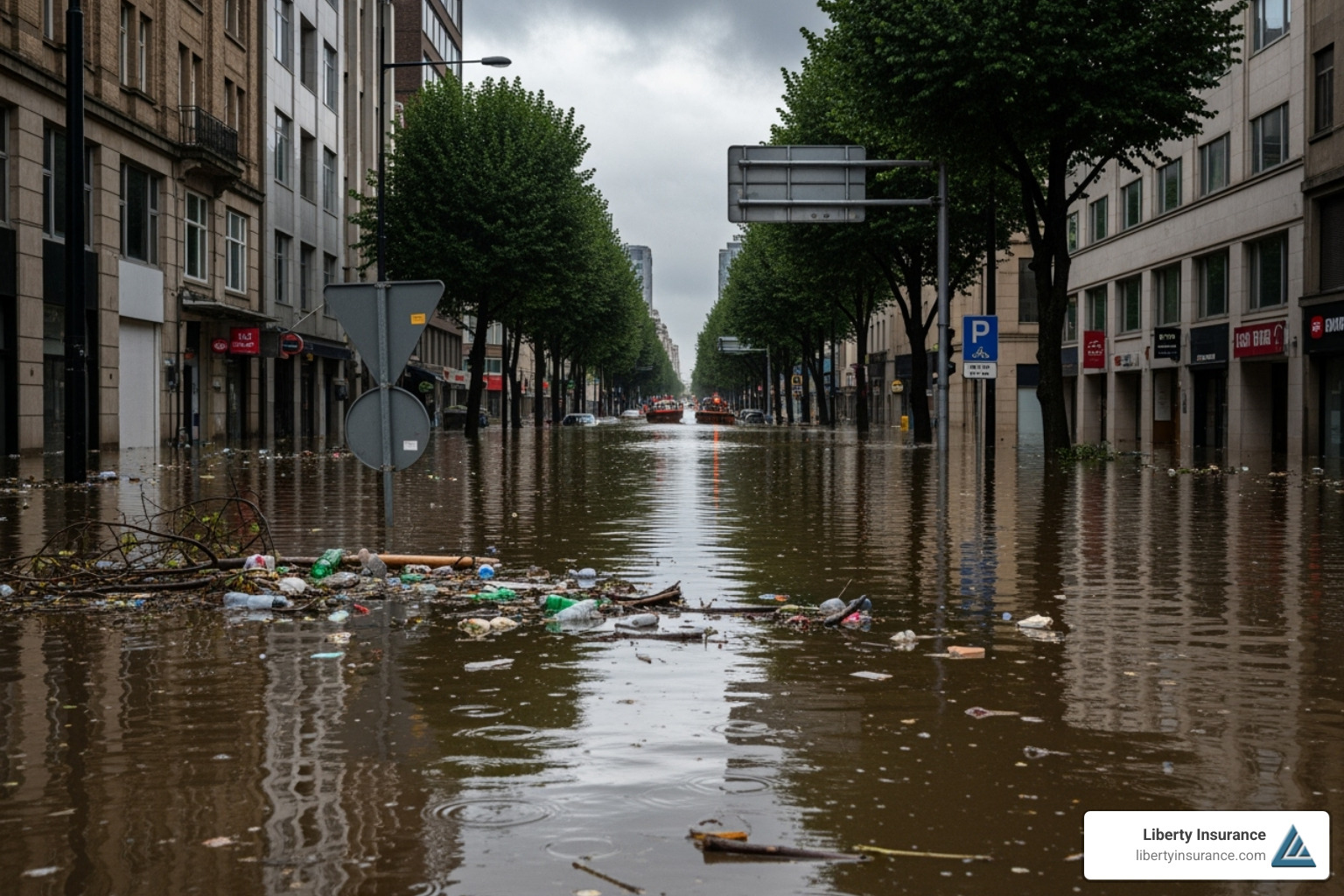
Standard policies typically do not cover:
- Flood Damage: Requires separate Flood Protection coverage.
- Earthquake Damage: Requires a separate earthquake policy.
- Employee Theft: Requires an Employee Dishonesty bond.
- Commercial Vehicles: Need a separate commercial auto policy.
- Wear and Tear: Insurance covers sudden, accidental losses, not gradual deterioration.
- Intentional Acts, Pollution, War, and Nuclear Hazards.
Commercial Property vs. Homeowners Insurance for Business Use
Many home-based business owners mistakenly assume their homeowners insurance covers their business assets. This is a costly error. A homeowners policy is for your personal life, not your professional one.
Most homeowners policies cap business equipment coverage at just $2,500 and offer limited liability protection for business activities. If a fire destroys $15,000 of inventory in your garage, you’d face a devastating financial gap. Commercial property insurance is designed to protect your business’s future and ability to earn a living, making it essential even for home-based operations.
The Cost of Protection: A Guide to Property Insurance for Business Owners
Understanding the cost of property insurance for business owners helps you budget effectively. Industry data shows businesses typically pay around $63 per month for a basic policy, with the average annual cost hovering around $1,605 per year. These are baseline figures; your actual premium will depend on your specific business.
Think of insurance as an investment in your company’s future. While nobody likes paying premiums, facing a major loss without coverage could be the end of your business. To see what your specific business needs and how much it will cost, get a Commercial Property Insurance Quote. For more details on what drives these costs, visit our page on Commercial Property Insurance Cost.
Key Factors That Influence Your Premium
Your premium is calculated based on several risk factors. Understanding them shows where you might have control over your costs.

- Location: A business in an area prone to hurricanes, high crime, or far from a fire department will likely pay more.
- Construction: Fire-resistant buildings made of concrete or steel are cheaper to insure than wood-frame structures.
- Occupancy: Your industry matters. A restaurant with a kitchen carries more risk than a quiet office.
- Safety Systems: Monitored security alarms and modern fire suppression systems can dramatically reduce premiums.
- Claims History: A track record of frequent or large claims signals higher risk and leads to higher rates.
Strategies to Lower Your Insurance Costs
You can reduce your costs without compromising protection. The most effective way is to make your business genuinely safer.
- Invest in Security: Monitored alarms, security cameras, and quality locks can qualify you for discounts.
- Upgrade Fire Safety: Modern sprinkler systems and early-detection smoke alarms significantly reduce your fire risk premium.
- Maintain Your Property: A well-maintained roof, updated electrical systems, and sound plumbing prevent claims and lower your risk profile.
- Adjust Your Deductible: Raising your deductible (e.g., from $500 to $1,000) can lower your premium, but ensure you can afford the higher out-of-pocket cost.
- Bundle Policies: Combining property insurance with general liability or other coverages often results in significant savings.
How to Prepare for Your Insurance Purchase
A little preparation ensures you get accurate quotes and the right coverage.
- Create an Asset Inventory: Document everything your business owns, including purchase dates and values. This is the foundation for determining your coverage needs.
- Choose Your Valuation Method: Decide between Actual Cash Value and Replacement Cost. For most businesses, RC is the better choice.
- Review Your Lease: If you rent, understand your landlord’s insurance requirements before you shop for a policy.
- Assess Your Risks: Honestly evaluate your location’s hazards, from weather to crime, to design appropriate coverage.
- Work with an Experienced Agent: Our Commercial Property Insurance Agents can guide you through the complexities, assess your risks, and explain your options in plain English.
Beyond the Basics: Bundling and Customizing Your Coverage
Basic property insurance for business owners is the foundation, but your coverage often benefits from thoughtful additions. Cookie-cutter approaches rarely work, as every business has unique risks. Customizing your policy ensures you are fully protected. For businesses with unique exposures, explore our Specialized Business Insurance options.
The Business Owner’s Policy (BOP) Advantage
For many small to medium-sized businesses, a Business Owner’s Policy (BOP) is the smartest choice. A BOP is a cost-effective package that combines three critical coverages into a single policy:
- Commercial Property Insurance: Protects your physical assets.
- General Liability Insurance: Covers you if your business causes bodily injury or property damage to others.
- Business Interruption Coverage: This vital component replaces lost income and covers ongoing expenses (like rent and payroll) if a covered peril forces you to close temporarily. Learn more about protecting your income with Business Interruption Insurance.
Bundling these coverages in a BOP typically costs less than buying them separately. It’s an exceptional value, ideal for retail stores, restaurants, offices, and service businesses. Find out more with our Business Insurance: Business Owners Insurance.
Common Endorsements to Improve Your Property Insurance for Business Owners
Endorsements are add-ons that address specific vulnerabilities, creating truly customized coverage.
- Equipment Breakdown Coverage: Standard policies cover equipment damage from external events like fire, but not from internal mechanical or electrical failure. This endorsement fills that critical gap. Consider our Systems Breakdown Insurance.
- Spoilage Coverage: Essential for restaurants or grocers, this covers inventory loss due to a power outage or mechanical failure of refrigeration units.
- Electronic Data Processing (EDP) Coverage: Protects your valuable data. It can cover data restoration costs after a virus or power surge destroys digital records.
- Inland Marine Insurance: Protects business property while it’s in transit or off-site, crucial for contractors or photographers.
- Cyber Risk Insurance: Addresses threats to your digital assets, like data breaches and ransomware attacks. Safeguard your operations with Cyber Risk Insurance.
When to Consider Additional Types of Business Insurance
A strong BOP is a great start, but comprehensive protection may require other specialized policies.
- Workers’ Compensation: Legally required in most states (including New Jersey) if you have employees. It covers work-related injuries and protects you from lawsuits.
- Commercial General Insurance: Larger businesses may need a standalone Commercial General Insurance policy for higher liability limits.
- Professional Liability: Crucial for businesses that provide advice or services (e.g., consultants, accountants), covering claims of errors or negligence.
- Commercial Auto Insurance: Essential if your business uses vehicles, as personal auto policies won’t cover business use.
- Umbrella Liability Insurance: Provides an extra layer of liability protection above your primary policies.
Frequently Asked Questions about Property Insurance for Business Owners
We’ve compiled answers to the questions we hear most often from business owners about property insurance for business owners.
What is the difference between commercial property insurance and general liability insurance?
Think of it this way: commercial property insurance protects your stuff, while general liability insurance protects you from claims that your business harmed others.
- Commercial Property Insurance covers your physical assets: your building, equipment, inventory, and furniture. If a fire damages your store or thieves steal your computers, this policy pays to repair or replace them.
- General Liability Insurance covers claims of bodily injury or property damage you cause to third parties. If a customer slips and falls in your store, or your employee damages a client’s property, this policy handles the legal fees and settlements.
A Business Owner’s Policy (BOP) conveniently bundles both coverages into one package.
Is commercial property insurance legally required?
No, it is not typically required by state or federal law. However, it is almost always required by other parties:
- Landlords: If you rent your business space, your lease agreement will almost certainly require you to carry property insurance to cover the contents of your unit.
- Lenders: If you have a mortgage on your commercial building, your bank will mandate property insurance to protect its financial interest in the property.
So, while not legally mandated, it’s a practical necessity for leasing space or securing a loan. More importantly, it’s a smart business practice to protect your assets.
How much commercial property insurance do I need?
Your coverage limit should be high enough to completely rebuild your structure and replace all of your business property after a total loss. This means calculating the current cost to replace everything with new, equivalent items.
- For your building: You need enough coverage to rebuild from the ground up at today’s construction costs, not what you originally paid for it.
- For your business personal property: Create a detailed inventory of all equipment, furniture, computers, and stock. Your coverage should be sufficient to replace everything at once.
Be sure to account for seasonal fluctuations in inventory. Underinsuring your property to save on premiums can lead to devastating out-of-pocket costs after a claim. Our agents work with New Jersey businesses to ensure their coverage limits truly reflect their needs.
Conclusion
This guide has explored the essential world of property insurance for business owners. We’ve seen that this coverage is more than just a policy; it’s the foundation for your business’s security and future. It is your first line of defense against unexpected events that could otherwise derail years of hard work.
Key takeaways include understanding the difference between Actual Cash Value and Replacement Cost, knowing what your policy excludes, and recognizing the value of a Business Owner’s Policy (BOP) for bundling property, liability, and business interruption coverage. Proactive risk management—like investing in security and fire safety—combined with the right insurance strategy creates a powerful shield around your business.
Here at Liberty Insurance, we help business owners across New Jersey, from New Brunswick to Millstone Township, steer these complex decisions. Our expertise lies in understanding your unique challenges and building a policy that protects what you’ve built.
Your business is your vision made real. Don’t leave its future to chance. The peace of mind that comes from knowing you’re adequately protected is invaluable. Secure your business’s future today with a comprehensive Business Property Insurance plan designed for your unique situation.

