
Why Restaurant Property Insurance Is Your Business’s Best Recipe for Protection
Running a restaurant is a high-stakes venture where a single disaster—a kitchen fire, a burst pipe, or major theft—can lead to financial ruin. Restaurant property insurance is a critical safeguard, protecting your establishment’s physical assets against perils like fire, theft, vandalism, and storms. This coverage is designed for the unique risks of the food service industry, from expensive kitchen equipment and perishable inventory to the furniture and fixtures that define your customer experience.
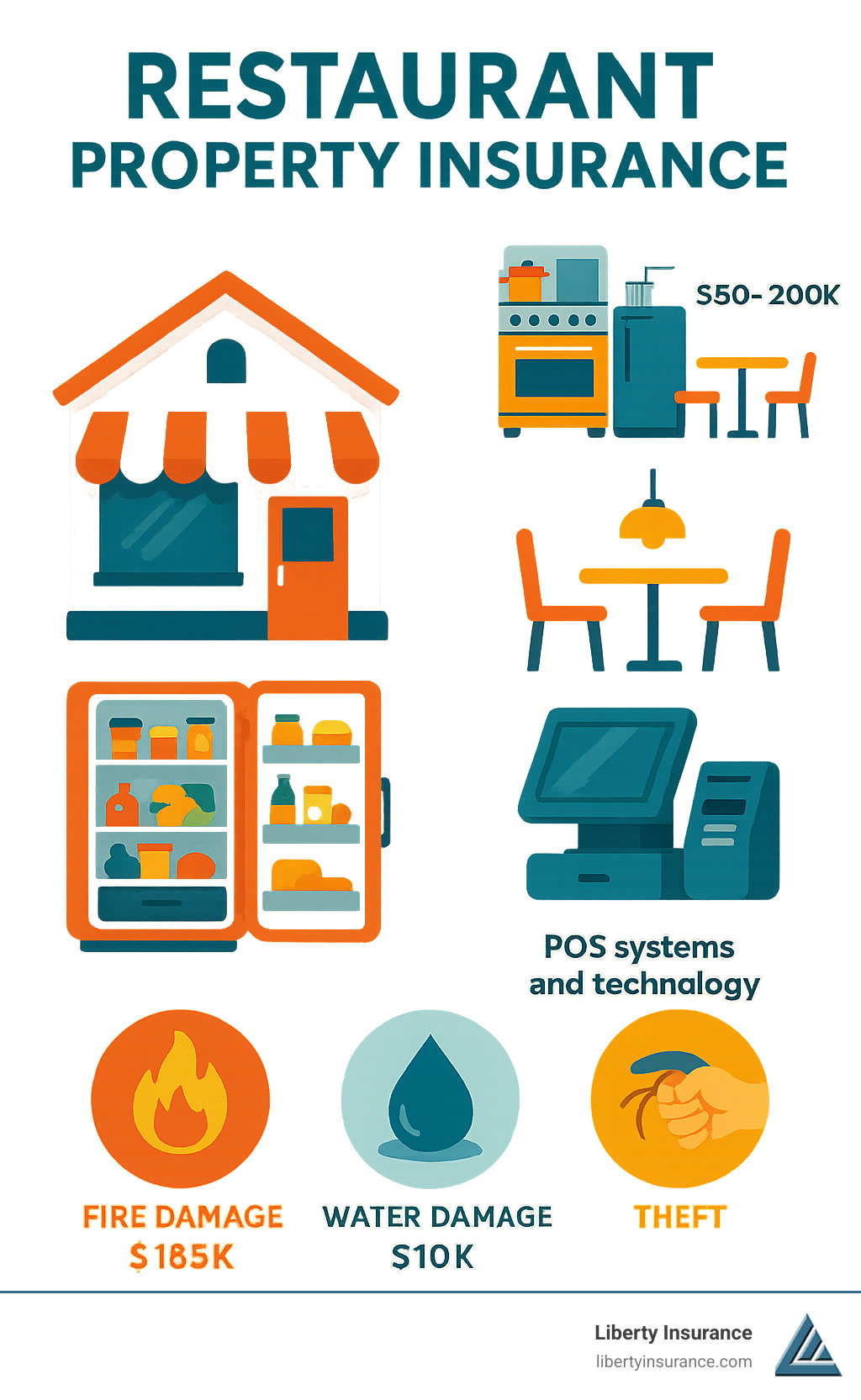
A policy can cover your building structure, kitchen equipment, furniture, inventory, and technology like POS systems. Without it, you face significant risk; the average restaurant fire alone causes $165,000 in damage. The right policy ensures you can recover from an unexpected loss and continue serving your customers.
As a Certified Insurance Counselor (CIC) and Accredited Advisor in Insurance (AAI), I’m Andrew Harris. I’ve helped countless restaurant owners steer restaurant property insurance to protect their investments. My experience has shown that a well-structured policy is the key to business survival and long-term success.
What is Restaurant Property Insurance and Why Is It Essential?
Restaurant property insurance is a specialized form of commercial property coverage that acts as a financial safety net for your business. It protects the physical assets that are essential to your operation, from the building itself to the commercial oven you rely on daily. More than just a requirement for landlords or lenders, this insurance provides for business continuity, ensuring that a disaster like a fire or flood is a temporary setback, not a permanent closure.
Proper coverage, like that offered through Business Asset Protection Insurance, allows you to focus on serving great food and creating memorable experiences, knowing your investment is secure.
What Specific Property is Covered?
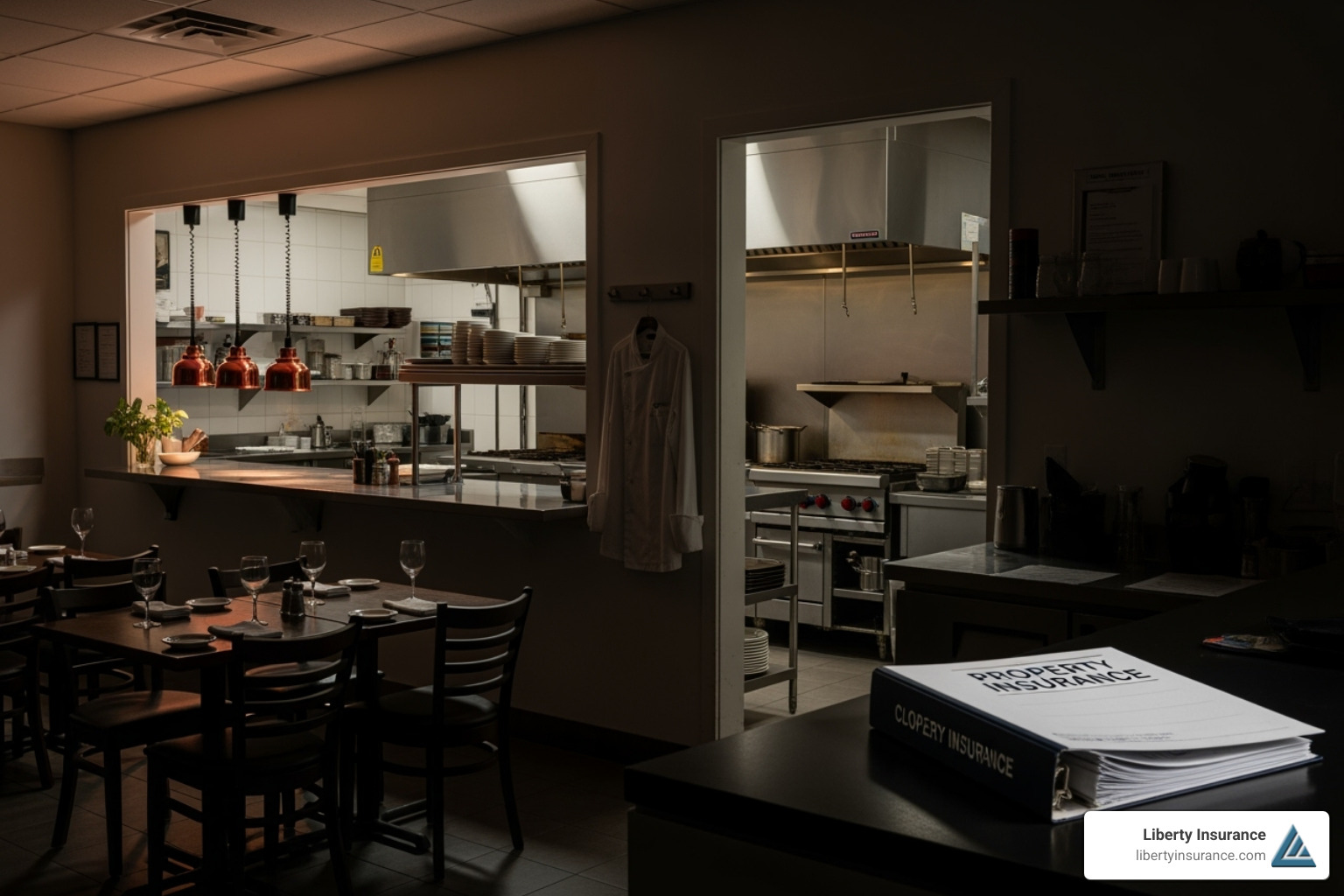
Restaurant property insurance protects the tangible assets that make up your business. Key covered items include:
- Building Structure: If you own the property, this covers the foundation, walls, roof, and permanent systems like plumbing and electrical.
- Kitchen Equipment: Protects your significant investment in commercial-grade ovens, walk-in freezers, fryers, and dishwashers.
- Furniture and Fixtures: Covers the items that create your restaurant’s ambiance, such as tables, chairs, booths, bar fixtures, and lighting.
- Inventory: Includes all your food and beverage stock, protecting you from loss.
- Improvements and Betterments: If you lease, this covers the permanent upgrades you’ve made to the space, like custom bars or upgraded flooring.
- Business Personal Property: This includes essential operational items like POS systems, computers, and smallwares. Our Business-Personal Property Insurance is ideal for protecting these contents, especially in a leased space.
Covered Perils: What Your Policy Protects Against
Your policy shields you from specific events, or “perils,” that could damage your property. Common covered perils for restaurants include:
- Fire: A primary concern in any kitchen. Our Commercial Fire Damage Insurance is a crucial component, covering damage from grease or electrical fires.
- Theft: Protects against break-ins and the loss of equipment, inventory, or cash.
- Vandalism: Covers intentional damage to your property, such as broken windows or graffiti.
- Storms: Includes damage from wind, hail, lightning, or heavy snow that can affect your roof, signage, or building structure.
- Water Damage: Covers losses from burst pipes, overflowing plumbing, or faulty sprinkler systems (but not typically natural floods).
Common Exclusions to Be Aware Of
While comprehensive, property insurance has standard exclusions. Understanding these helps you identify where you might need additional coverage:
- Floods & Earthquakes: Damage from natural floods and earthquakes requires separate, specialized insurance policies.
- Wear and Tear: Gradual deterioration of equipment or property is considered a maintenance issue, not a sudden and accidental loss.
- Employee Theft: Theft by your own staff is typically excluded and requires a separate Business Crime Insurance policy.
- Pest Infestations: Damage from rodents or insects is considered preventable and is not covered.
- Off-Premises Power Failure: Spoilage due to a utility power outage often requires a specific policy endorsement to be covered.
Understanding Your Restaurant Property Insurance Policy
Navigating your restaurant property insurance policy is key to ensuring your business is properly protected. Understanding terms like coverage limits, deductibles, and valuation methods will determine how your policy responds in a claim. At Liberty Insurance, we design our Commercial Property Insurance Policy and Commercial Property Insurance Plans for clarity, so you can feel confident in your coverage.
Actual Cash Value (ACV) vs. Replacement Cost (RC)
One of the most critical policy decisions is choosing between Actual Cash Value (ACV) and Replacement Cost (RC) coverage. This choice dictates the amount of your claim payout.
| Feature | Actual Cash Value (ACV) | Replacement Cost (RC) |
|---|---|---|
| Definition | Cost to replace damaged property minus depreciation. | Cost to replace damaged property with new property. |
| Payout | You receive the depreciated value. | You receive the full cost of new replacement. |
| Depreciation | Applied (e.g., a 5-year-old oven is worth less than new). | Not applied (you get enough to buy a new oven). |
| Premium | Generally lower. | Generally higher. |
| Benefit | Lower upfront cost. | Full recovery, no out-of-pocket for depreciation. |
| Risk | May not be enough to fully replace damaged items. | Ensures business continuity with new equipment/property. |
While ACV has lower premiums, it can leave you with significant out-of-pocket expenses to replace damaged items. For example, the ACV payout for a 10-year-old refrigerator would be far less than the cost of a new one. For this reason, we almost always recommend RC coverage for a restaurant’s critical assets, as it provides a stronger financial safety net to get you back in business quickly.
Ensuring Adequate Coverage for Your Equipment
Your kitchen equipment is a major investment and the heart of your operation. To ensure it’s adequately covered, you should:
- Maintain a detailed inventory of all major appliances, including HVAC and POS systems, noting their current replacement cost.
- Get professional appraisals for highly specialized or expensive equipment. These items may need to be “scheduled,” or listed individually on your policy, for dedicated coverage.
- Consider Equipment Breakdown coverage. Your standard property policy covers external damage (like from a fire), but for internal mechanical or electrical failure, you need a specific add-on like Equipment Damage Insurance. This is vital for refrigerators, HVAC systems, and ovens.
Leased vs. Owned Spaces: What’s the Difference for Insurance?
Your insurance needs differ depending on whether you own or lease your restaurant space.
- If you own the building, your policy must cover the entire structure (walls, roof, foundation) in addition to everything inside. This requires comprehensive Building Insurance.
- If you lease the space, your landlord insures the building, but you are responsible for insuring your own property. Your lease will require you to carry coverage for your contents (equipment, furniture, inventory) and any improvements and betterments you’ve made (custom counters, special plumbing). Your policy should also include coverage for “Damage to Premises Rented to You” in case your operations (like a kitchen fire) damage the landlord’s building.
Always review your lease agreement carefully to understand your specific insurance obligations.
Beyond the Building: Essential Coverages That Complement Property Insurance
While restaurant property insurance protects your physical assets, a truly resilient business needs a holistic insurance strategy. Several other coverages work alongside your property policy to protect against different risks. Many of these can be bundled into a cost-effective Business Owner’s Policy (BOP), which often combines property, liability, and business interruption insurance. Our Types of Business Insurance page details how we can create a custom package for you.
Business Interruption Insurance: Covering Lost Income
If a covered property loss forces your restaurant to close temporarily, property insurance will pay to repair the damage, but what about the income you lose while you’re shut down? Business Interruption Insurance is designed to cover this gap. It can help replace:
- Lost net income
- Ongoing operating expenses like rent and utilities
- Employee payroll, helping you retain your valuable team
- Costs of relocating to a temporary location
This coverage is triggered by a covered property claim and is essential for surviving a prolonged closure. Learn more about our Commercial Property Insurance Business Interruption options.
Equipment Breakdown Insurance: A Critical Add-On
Standard property insurance covers equipment damaged by external events like fire or theft. But what if your walk-in freezer’s compressor fails or an oven shorts out? Equipment Breakdown Insurance covers the cost to repair or replace equipment due to internal mechanical or electrical failure. It often includes spoilage coverage for food lost as a result of the breakdown. This inexpensive add-on, like our Systems Breakdown Insurance, is critical for any restaurant.
Cyber and Liquor Liability: Protecting Against Unique Restaurant Risks
Restaurants face unique risks that require specialized protection beyond property coverage.
Cyber Liability Insurance: In an age of digital transactions, restaurants handle vast amounts of sensitive data via POS systems and reservation platforms. A data breach can be financially devastating. Cyber Risk Insurance covers costs associated with a breach, such as customer notification, credit monitoring, and legal fees, protecting your digital assets and reputation.
Liquor Liability Insurance: If you serve alcohol, this coverage is essential and often legally required. It protects your business if an intoxicated patron causes injury or property damage to a third party. Standard property and liability policies do not cover this risk, making dedicated Liquor Liability Insurance a must-have to protect against claims arising from alcohol service.
Decoding the Cost and Claims Process
Understanding how your restaurant property insurance premium is calculated and what to do when filing a claim are key to managing your coverage effectively. Our Commercial Property Insurance Cost resources can help you plan your budget.
Key Factors Influencing Your Restaurant Property Insurance Premium
The cost of your policy is not one-size-fits-all. Insurers assess several factors to determine your premium:
- Location: Premiums are higher in areas prone to natural disasters (like storms) or with higher crime rates.
- Building Construction: Fire-resistant materials like brick or concrete typically result in lower premiums than wood-frame construction.
- Fire Protection: The presence of sprinklers, smoke detectors, and certified kitchen fire-suppression systems can significantly reduce your cost.
- Asset Value: The higher the value of your building, equipment, and inventory, the higher the premium will be to cover potential losses.
- Claims History: A history of frequent claims may lead to higher premiums.
- Coverage Limits & Deductibles: Higher coverage limits increase the premium, while a higher deductible (your out-of-pocket share of a claim) can lower it.
A small restaurant might pay $1,000-$2,500 annually, while a larger establishment could pay $6,000 or more.
Steps to Take When Filing a Restaurant Property Insurance Claim
Knowing the right steps to take after an incident can ensure a smoother claims process:
- Ensure Safety: Your first priority is the safety of employees and customers. Address any immediate hazards.
- Prevent Further Loss: Take reasonable steps to mitigate further damage, such as covering a damaged roof with a tarp. Keep receipts for any emergency repairs.
- Document Everything: Take extensive photos and videos of the damage from multiple angles. Create a detailed list of all damaged or lost items. Do not discard damaged property until the adjuster has inspected it.
- Contact Your Agent Immediately: Report the incident as soon as possible. Your agent will guide you through the process and help you start the claim.
- Cooperate with the Adjuster: An adjuster will be assigned to evaluate the loss. Provide all requested documentation and answer their questions honestly.
For more information on providers, you can Check provider ratings with the NAIC.
Common Restaurant Property Claim Scenarios
Certain types of claims are particularly common in the restaurant industry. These are situations where restaurant property insurance is invaluable:
- Kitchen Fires: A grease fire can quickly spread, causing extensive damage to equipment and the building.
- Water Damage: Burst pipes or faulty appliance lines can flood your space, damaging floors, furniture, and electrical systems.
- Theft: Break-ins can result in the loss of valuable kitchen equipment, POS systems, or copper from HVAC units.
- Vandalism: Malicious acts like broken windows or graffiti can disrupt business and require costly repairs.
- Storm Damage: High winds and hail can damage your roof, outdoor signage, and building structure.
Frequently Asked Questions about Restaurant Property Insurance
We’ve gathered answers to some of the most common questions we receive about restaurant property insurance to provide you with greater clarity.
How much property insurance does my restaurant need?
There is no single answer, as the right amount of coverage depends on your specific business. To determine your needs, you should work with an agent to:
- Calculate the total replacement cost of your assets, including your building (if you own it), all kitchen equipment, furniture, fixtures, and inventory. We generally recommend Replacement Cost (RC) coverage over Actual Cash Value (ACV) to ensure you can replace old items with new ones without major out-of-pocket costs.
- Review your lease agreement. If you rent, your lease will specify the minimum insurance you must carry for your contents and any improvements you’ve made.
- Meet lender requirements. If you have a business loan, your lender will have its own insurance requirements.
Our Commercial Property Insurance Agents are experts in serving restaurants across New Jersey, including Millstone Township NJ, Trenton NJ, and Princeton NJ, and can help you calculate the precise coverage your investment requires.
Does property insurance cover food spoilage from a power outage?
Generally, a standard restaurant property insurance policy does not cover food spoilage from an off-site power failure, such as a utility grid outage. However, you can add endorsements to your policy for this specific risk:
- Spoilage Coverage: This endorsement specifically covers perishable goods lost due to a change in temperature from either an on-site equipment breakdown or an off-site power failure.
- Equipment Breakdown Coverage: If spoilage occurs because your refrigerator or freezer malfunctions, this coverage would respond to the loss of both the equipment and the food.
Discussing these endorsements with your agent is vital to ensure you are protected from this common and costly risk. Our Business Interruption Insurance can also play a role in covering losses from forced closures.
Are outdoor patios and furniture covered?
Yes, outdoor patios and furniture can be covered, but you need to ensure your policy is structured correctly. Coverage is typically provided through extensions for “other structures” or “business personal property in the open.” It’s important to confirm that your patio area is included within the “insured premises” as defined in your policy. With outdoor dining being a key revenue source for many, verifying this coverage is essential for protection against theft, vandalism, or storm damage. We can help ensure your Commercial Real Estate Insurance Coverage extends to all parts of your operation.
Conclusion
We’ve covered the essentials of restaurant property insurance, from protecting your kitchen equipment and dining room to understanding key policy details and complementary coverages like business interruption and equipment breakdown.
Running a restaurant is your passion and a significant investment. Protecting it from unexpected events like a fire or major theft isn’t just about meeting requirements—it’s about ensuring business survival. Proactive risk management with a comprehensive insurance policy provides the peace of mind and financial backing to rebuild, reopen, and continue serving your community after a disaster.
At Liberty Insurance, we understand the unique challenges restaurateurs face. We are dedicated to providing customizable solutions that safeguard your physical assets and your livelihood. Don’t let uncertainty be an ingredient in your business plan.
Ready to secure your investment and protect your passion? Get the right insurance for your business today.

