
Protecting Your Business: Why Insurance for Siding Contractors Matters
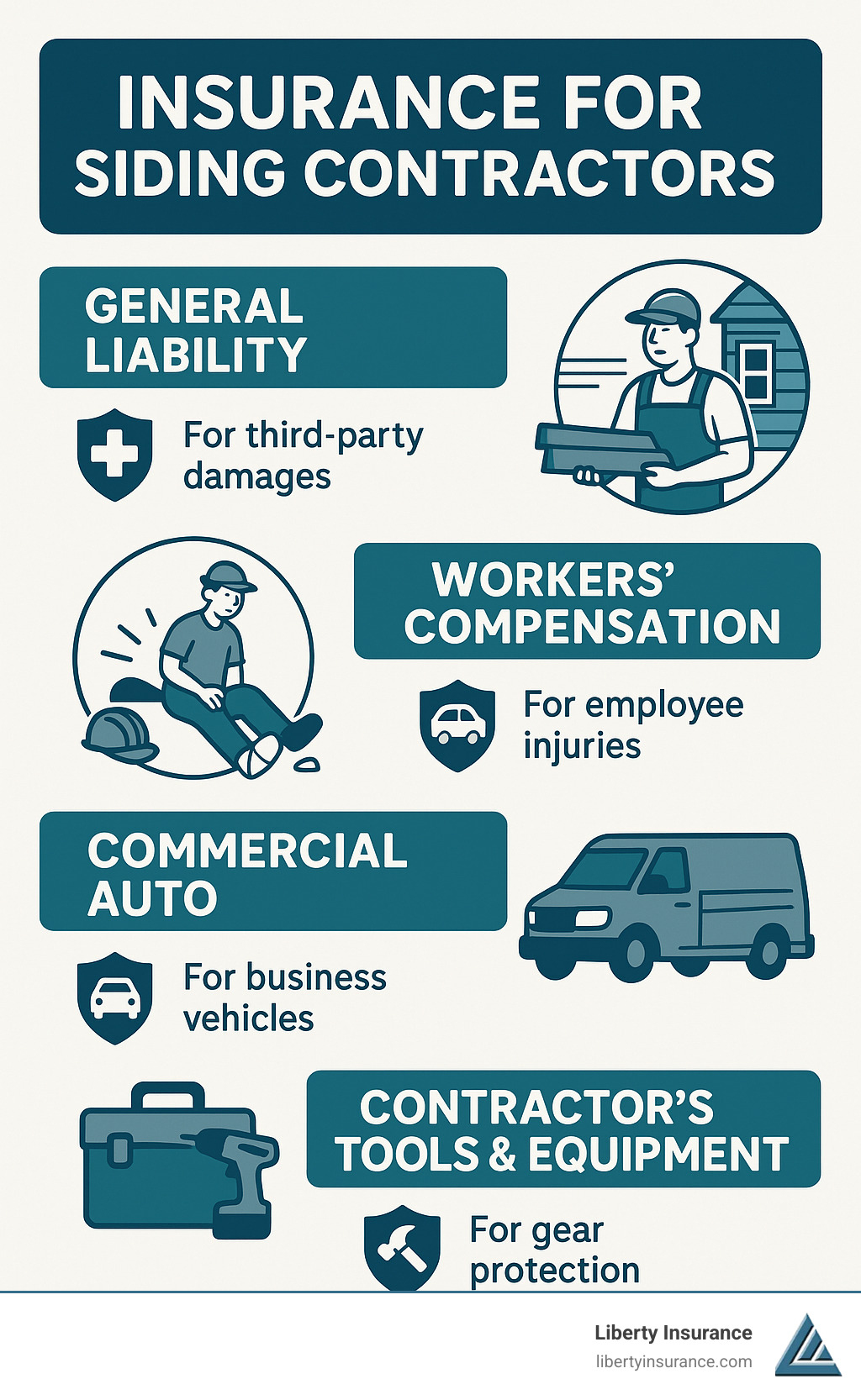
Operating a siding business involves precision, hard work, and unique risks. That’s why having the right insurance for siding contractors isn’t just smart; it’s vital for protecting your livelihood. For quick reference, here are the essential types of insurance siding contractors often need:
- General Liability Insurance: Protects against claims of bodily injury or property damage to third parties.
- Workers’ Compensation Insurance: Covers medical expenses and lost wages for employees injured on the job.
- Commercial Auto Insurance: Provides coverage for vehicles used for business purposes.
- Contractor’s Tools and Equipment Insurance: Safeguards your valuable tools and machinery from theft or damage.
Siding work is physically demanding and comes with inherent dangers, from working at heights to handling heavy materials and power tools. Accidents can happen, leading to costly damages, injuries, or even lawsuits. Without proper coverage, a single incident could threaten your entire business. This guide will walk you through the types of insurance designed specifically for siding professionals, helping you understand how to safeguard your business, your team, and your future.
As a Certified Insurance Counselor and Accredited Advisor in Insurance, Andrew Harris brings extensive expertise to the table, having been recognized as PIA National’s Agent of the Year. He specializes in helping businesses like yours secure comprehensive insurance for siding contractors, ensuring you’re fully protected.
Insurance for siding contractors further reading:
- NJ builders risk insurance
- New Jersey contractor bonds
- workers’ compensation insurance for independent contractors new jersey
Why Your Siding Business is at Risk Without Proper Coverage
Every day, siding contractors face a unique blend of risks that most other businesses never encounter. When you’re installing vinyl siding on a two-story home or replacing damaged cedar shakes after a storm, you’re operating in an environment where even the smallest mistake can have massive consequences.
Working at heights is perhaps the most obvious danger we face. Whether you’re on a ladder adjusting the final row of siding or working from scaffolding to reach those tricky gable areas, gravity doesn’t forgive. A momentary loss of balance, a defective ladder rung, or even a sudden gust of wind can send you or a team member tumbling down. These falls don’t just result in bruises – they often mean broken bones, head injuries, or worse.
But the risks don’t stop there. Picture this: you’re carefully maneuvering a heavy piece of fiber cement siding around the corner of a house when it slips from your grip. Instead of just hitting the ground, it crashes into the homeowner’s brand-new SUV parked in the driveway, leaving a significant dent and scratched paint. Suddenly, what started as a routine installation job becomes a property damage liability situation that could cost thousands to resolve.
Employee injuries happen more often than we’d like to admit in our industry. Power tools can kick back unexpectedly, causing cuts or puncture wounds. Heavy materials can strain backs or crush fingers. Even something as simple as stepping on a nail or tripping over equipment can sideline a worker for weeks. When these accidents occur, you’re not just dealing with the immediate medical needs – you’re also responsible for lost wages and potentially long-term rehabilitation costs.
Then there’s the constant threat of tool theft. Your expensive nail guns, circular saws, and specialty equipment make tempting targets for thieves, especially when left on job sites overnight. Losing thousands of dollars worth of tools doesn’t just hurt your wallet – it can delay projects and damage your reputation with clients who are counting on you to finish on schedule.
Vehicular accidents present another layer of risk. Your work trucks are loaded with heavy materials and tools, making them more difficult to maneuver and stop quickly. Plus, you’re often driving to unfamiliar neighborhoods and job sites where parking can be challenging. An accident involving a third party can quickly escalate into a complex legal situation, especially if injuries are involved.
All of these scenarios can lead to lawsuits that threaten the very existence of your business. Even if you’ve done nothing wrong, defending yourself in court is expensive and time-consuming. This is exactly why having comprehensive Home Improvement Contractor Insurance NJ isn’t just recommended – it’s essential for protecting your livelihood and peace of mind.
The High Cost of an Accident
When an accident happens on your job site, the financial impact can be devastating without proper insurance for siding contractors. Legal fees alone can quickly drain your business savings, often reaching $50,000 or more even for straightforward cases. If the situation is complex or goes to trial, you could be looking at legal costs that exceed $100,000.
Medical bills for serious injuries can be astronomical. A worker who falls from a ladder and suffers a traumatic brain injury could require hundreds of thousands of dollars in immediate medical care, followed by years of rehabilitation and ongoing treatment. If a third party is injured on your job site, you could be responsible for their medical expenses, which can easily reach six or seven figures for severe injuries.
The reputational damage from a major accident can be just as costly as the immediate financial impact. Word travels fast in the construction industry, and homeowners do their research before hiring contractors. A single high-profile incident can make it much harder to win new contracts, especially if it generates negative online reviews or local news coverage.
Business interruption is another hidden cost that many contractors don’t consider. If a serious accident forces you to shut down operations while dealing with investigations, legal proceedings, or license issues, you’ll still have ongoing expenses like equipment payments, insurance premiums, and office rent – but no income to cover them. Business Interruption Insurance can help bridge this gap, but only if you have it in place before disaster strikes.
The ripple effects can continue for years. Higher insurance premiums, difficulty bonding for larger projects, and the stress of financial uncertainty can fundamentally change how you operate your business. Many contractors who experience a major uninsured loss never fully recover.
Penalties for Operating Without Insurance
Operating without proper insurance for siding contractors isn’t just risky – in many cases, it’s illegal. State regulations typically require specific types of coverage, particularly workers’ compensation if you have employees and commercial auto insurance for business vehicles.
The fines for non-compliance can be substantial. Many states impose penalties of thousands of dollars for operating without required workers’ compensation coverage. These aren’t one-time costs either – the fines often continue to accrue daily until you come into compliance.
License suspension is perhaps even more damaging than the financial penalties. Without a valid contractor’s license, you can’t legally perform work, which means no income while you resolve the insurance issues. The process of reinstating a suspended license can take weeks or months, during which your business is effectively shut down.
Some states impose even harsher penalties for non-compliance. You might face criminal charges, stop-work orders that halt all your projects immediately, and civil penalties that can reach $100,000 or more. The reputational harm from these actions can follow you for years, making it difficult to rebuild your business even after you’ve addressed the insurance requirements.
Perhaps most frustrating of all, many contractors find their inability to bid on jobs only when they’re trying to grow their business. Larger projects and commercial clients typically require proof of insurance before they’ll even consider your proposal. Without proper coverage, you’re automatically disqualified from the most profitable opportunities in your market.
The bottom line is simple: trying to save money by skipping essential insurance is a false economy that puts everything you’ve worked to build at risk.
Essential Insurance for Siding Contractors: A Comprehensive Breakdown
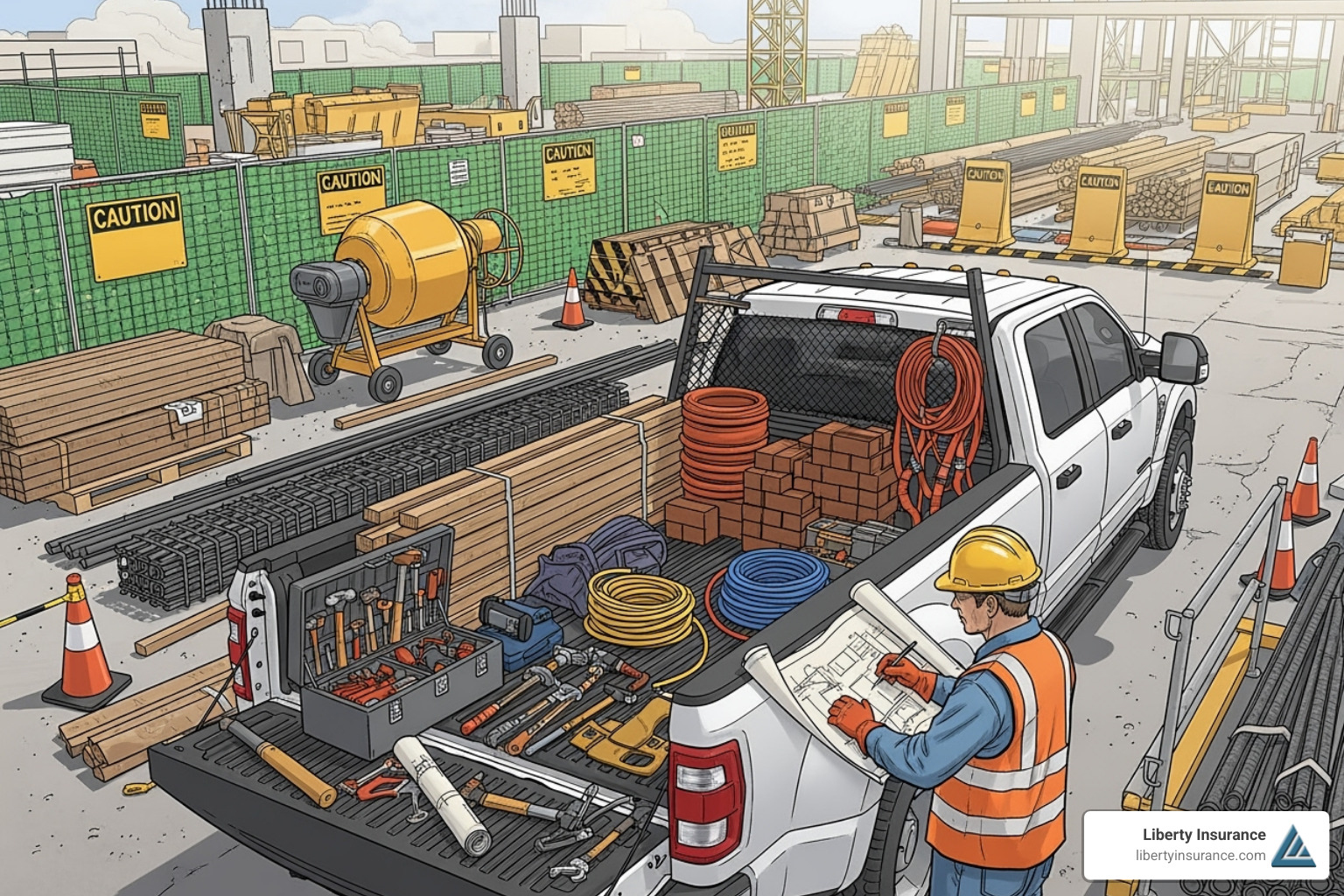
When it comes to insurance for siding contractors, understanding your options isn’t just about checking boxes – it’s about building a fortress around your business. Think of insurance as your safety net, ready to catch you when life throws those unexpected curveballs that can happen on any job site.
What is siding installation contractor insurance?
Insurance for siding contractors isn’t a single magic bullet policy. Instead, it’s more like a well-stocked toolbox – each policy serves a specific purpose, and together they create comprehensive protection for your business. These policies are specially designed to address the unique challenges we face when installing, repairing, or replacing exterior siding on homes and commercial buildings.
Just like you wouldn’t use a hammer for every job, you can’t rely on one type of insurance to cover all your risks. That’s why siding contractor insurance typically combines several different coverage types to shield your business from accidents, property damage, injuries, and lawsuits that can arise during daily operations.
Why do siding installers need insurance?
Let’s be honest – our work involves plenty of risks that can turn a profitable job into a financial nightmare. We’re constantly working at heights, handling power tools that could cause serious injuries, and operating around expensive property that we could accidentally damage. Without proper coverage, a single incident could wipe out years of hard work and savings.
Insurance for siding contractors acts as your financial bodyguard, stepping in to cover legal bills, medical payments, and costly repairs when things go wrong. It’s not just about protecting your business assets – it’s about protecting your family’s future and your ability to keep doing the work you love.
What types of insurance are essential for siding contractors?
The foundation of solid insurance for siding contractors typically includes General Liability to cover third-party injuries and property damage, Workers’ Compensation if you have employees, Commercial Auto for your work vehicles, and Contractor’s Tools and Equipment insurance to protect your valuable gear.
Depending on your specific business needs and size, you might also want to consider a Business Owner’s Policy (BOP), Commercial Umbrella coverage for extra protection, or even Cyber Insurance if you handle customer data electronically.
General Liability Insurance
Think of General Liability insurance as the cornerstone of your insurance for siding contractors portfolio. This policy is your first line of defense against claims from customers, visitors, or anyone else who might get hurt or have their property damaged because of your work.
Third-party bodily injury coverage kicks in when someone gets hurt on your job site – maybe a homeowner trips over your equipment or a curious neighbor slips on debris you left behind. This policy covers their medical expenses and protects you from costly lawsuits.
Third-party property damage protection is equally important. Picture this: your ladder tips over and dents the customer’s brand-new car, or you accidentally break a window while maneuvering a large piece of siding. Without this coverage, you’d be paying for repairs out of your own pocket.
Advertising injury protection might seem less relevant for contractors, but it covers claims related to libel, slander, or copyright issues that could arise from your marketing efforts. Completed operations coverage is crucial for siding work because it protects you from claims that arise after you’ve finished the job and left the site – like if improper installation leads to water damage months later.
For more details on this essential coverage, check out our General Liability Insurance Small Business page.
Here’s what General Liability covers: a client’s car damaged by falling equipment, a visitor slipping on wet surfaces where you’re working, damage to neighboring property caused by your tools, and legal defense costs when you’re sued for covered incidents.
What it typically excludes: injuries to your own employees (that’s Workers’ Compensation territory), damage to your own tools or equipment, damage to your business property, professional errors or faulty workmanship, and vehicle-related accidents.
What does general liability insurance cover for siding contractors?
General Liability insurance for siding contractors primarily protects you when your work causes bodily injury or property damage to third parties. This means if a customer gets hurt because they tripped over your equipment, or if you accidentally damage part of their home that’s not related to the siding work – like breaking a window or damaging landscaping – this policy has your back.
The coverage also includes legal defense costs, which can be substantial even if you win the case. Settlements and court judgments are covered too, up to your policy limits.
What is not covered by general liability insurance for siding contractors?
General Liability has some important gaps that you need to understand. Employee injuries fall under Workers’ Compensation, not General Liability. Damage to your own property – including tools, equipment, or business premises – isn’t covered either.
Faulty workmanship is typically excluded, meaning if you install siding incorrectly and it needs to be redone, General Liability won’t pay for that. Auto accidents involving your business vehicles need Commercial Auto coverage, and intentional acts by you or your employees are never covered.
Why is workers’ compensation insurance crucial for siding installation businesses?
If you have even one employee, Workers’ Compensation insurance isn’t just important – it’s usually required by law. This policy creates a safety net for both your team members and your business when workplace injuries occur.
Employee medical expenses are covered when someone on your crew gets hurt – whether they fall off a ladder, strain their back lifting heavy materials, or cut themselves with a power saw. The policy covers emergency care, surgeries, and rehabilitation without you having to pay out of pocket.
Lost wages are partially replaced while your injured employee recovers and can’t work. Rehabilitation costs help more seriously injured workers get back on their feet through physical therapy or job retraining. In the tragic event of a work-related death, death benefits provide financial support to the employee’s family.
Employer’s liability protection shields your business if an injured employee decides to sue you, even while receiving Workers’ Compensation benefits.
Most states mandate Workers’ Compensation for businesses with employees, and the penalties for non-compliance can be severe – including fines and license suspension. Even sole proprietors should consider coverage, since personal health insurance often excludes work-related injuries. This is especially important for businesses operating in New Jersey communities like New Brunswick and Princeton. Get a quote at our Workers’ CompensationGet a Quote page, and learn more about Small Business Insurance NJ.
What are the common hazards faced by siding installers that insurance can cover?
Siding installers face several everyday hazards that various insurance policies can address. Falls from heights are unfortunately common and covered by Workers’ Compensation for employees, while General Liability covers third-party injuries from falling debris.
Heavy lifting injuries like back strains affect many contractors and are covered by Workers’ Compensation. Tool-related accidents from saws, nail guns, or other equipment are also Workers’ Compensation issues for employees.
Property damage from accidentally hitting the client’s home, landscaping, or vehicles falls under General Liability coverage. Vehicle accidents need Commercial Auto insurance, while tool theft or damage requires specialized Contractor’s Tools and Equipment coverage.
How does commercial auto insurance protect siding businesses?
Your work vehicles are mobile command centers carrying thousands of dollars worth of tools, materials, and equipment. Commercial Auto insurance protects these critical business assets and shields you from the financial impact of vehicle-related incidents.
Liability coverage is the foundation, covering bodily injury and property damage you might cause to others in an accident. Most states require this coverage for business vehicles. Collision coverage pays for damage to your own vehicle when it hits another car or object, regardless of who’s at fault.
Comprehensive coverage protects against non-collision events like theft, vandalism, fire, or hail damage. Uninsured motorist coverage becomes crucial when you’re hit by someone without adequate insurance.
Hired and non-owned auto (HNOA) coverage is particularly important for contractors. It extends liability protection to rental vehicles you use for business and personal vehicles your employees use for work tasks like picking up supplies.
A single vehicle accident can result in massive costs, and Commercial Auto insurance ensures you’re not stuck with the entire bill. Learn more about protecting your fleet with Commercial Auto Insurance.
What is contractor’s tools and equipment insurance and why is it important?
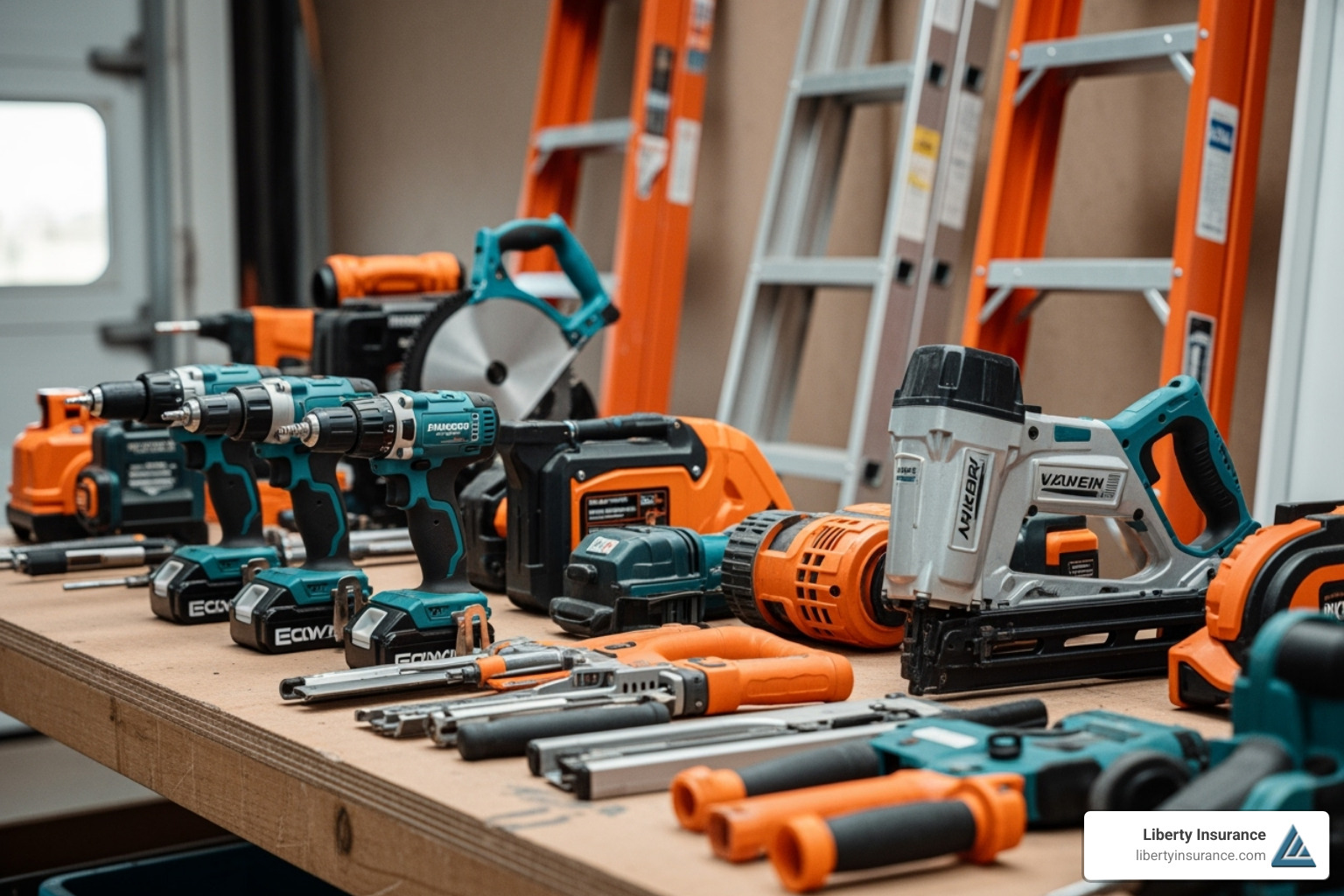
Your tools and equipment represent a significant investment and are absolutely essential to your livelihood. Contractor’s Tools and Equipment insurance, also known as Inland Marine insurance, specifically protects these valuable business assets wherever they go.
Theft is unfortunately common in our industry, with tools disappearing from job sites, work vehicles, and storage areas. This coverage helps replace stolen items so you can get back to work quickly. Damage protection covers your equipment whether it’s dropped, damaged by fire or water, or affected by other covered perils – even while in transit between jobs.
Loss in transit coverage is particularly valuable since we’re constantly moving equipment from site to site. Leased equipment protection covers your financial responsibility if specialized rental equipment gets damaged or stolen while in your care.
Without this coverage, losing a critical piece of equipment could shut down a project and force you to spend thousands on emergency replacements. It’s an affordable way to keep your operations running smoothly when the unexpected happens. Get a quote for Tools & EquipmentGet a Quote and see how it fits into your overall Business Asset Protection Insurance strategy.
Bundled and Advanced Coverage Options
Smart contractors often look beyond individual policies to bundled options that offer broader protection and potential cost savings. These packages can simplify your insurance management while ensuring you don’t have dangerous coverage gaps.
| Policy Type | Key Coverages Included | Ideal For |
|---|---|---|
| Business Owner’s Policy (BOP) | General Liability, Commercial Property, Business Interruption | Small to medium contractors with business premises who want simplified, cost-effective coverage |
| Commercial Package Policy (CPP) | Customizable combination of General Liability, Commercial Property, Commercial Auto, Umbrella, and specialty coverages | Larger contractors with complex needs requiring custom protection |
A Business Owner’s Policy (BOP) combines General Liability with Commercial Property insurance and often includes Business Interruption coverage. This package is perfect for contractors who own or lease business premises and want streamlined coverage at a lower cost than buying policies separately.
Commercial Property Insurance protects your business building, equipment, and inventory from fire, theft, vandalism, and other covered perils. Learn more at our Commercial Property Insurance page.
Commercial Umbrella Insurance provides extra liability protection above your primary policies, offering additional peace of mind for larger contractors or those working on high-value projects. Check out our Umbrella Liability Insurance for details.
Surety Bonds aren’t insurance but are often required for larger projects, guaranteeing that you’ll complete work according to contract terms. Learn about these at Business Insurance: Surety Bonds.
The key is matching your coverage to your specific business needs, risk tolerance, and budget. A good insurance agent can help you steer these options and build the perfect protection package for your siding business.
Installation Floater (Builders Risk) Insurance
While Contractor’s Tools and Equipment insurance protects your gear, what protects the materials you’re about to install? That’s where an Installation Floater, a form of Builders Risk insurance, comes in. This vital coverage protects your building materials (like siding, trim, and house wrap) from the moment they are delivered to a job site until they are fully installed and the job is complete. Imagine a pallet of expensive fiber cement siding is stolen from a job site overnight, or a sudden hailstorm damages a stack of vinyl siding before you can install it. Your General Liability won’t cover this loss, but an Installation Floater will, paying to replace the lost or damaged materials so your project isn’t derailed.
Cyber Liability Insurance
Even siding contractors face cyber risks. If you store customer information (names, addresses, emails), use scheduling software, or process payments electronically, you are a target for cybercriminals. Cyber Liability Insurance is designed to protect your business from the fallout of a data breach or ransomware attack. It can cover costs associated with notifying affected customers, providing credit monitoring services, recovering data, and defending your business against lawsuits related to the breach. Without it, a single cyber incident could be financially devastating and severely damage your reputation with clients who trusted you with their information.
How Much Does Insurance for Siding Contractors Cost?
One of the first questions every contractor asks is, “How much will this cost?” There’s no one-size-fits-all answer, as the cost of insurance for siding contractors depends on several unique factors about your business. Insurers will assess your specific risk profile to determine your premiums. Key factors include:
- Business Location: Insurance rates vary significantly by state and even by region due to local laws, weather risks, and litigation trends.
- Services Offered: The type of work you do matters. Insuring a contractor who only works on single-story residential homes will cost less than insuring one who also handles multi-story commercial buildings or works with specialized materials like EIFS (Exterior Insulation and Finish Systems).
- Number of Employees and Payroll: This is the primary driver for workers’ compensation premiums. The larger your payroll, the higher your cost.
- Claims History: A track record of safety and few claims will result in significantly lower premiums than a history of frequent accidents.
- Coverage Limits and Deductibles: Choosing higher liability limits will increase your premium, while opting for a higher deductible can help lower it.
How to Choose the Right Insurance and Lower Your Premiums
Securing the right coverage at the best price requires a proactive approach. It’s not just about buying a policy; it’s about managing your risk effectively. Here are some strategies to get the best value:
- Work with a Specialist: Don’t just go to any agent. Partner with an independent insurance agent who specializes in construction and contractor insurance. They understand your unique risks, have access to multiple insurance carriers that cater to contractors, and can tailor a package to your specific needs.
- Implement a Strong Safety Program: Insurers reward businesses that prioritize safety. A documented safety program, regular toolbox talks, proper equipment maintenance, and a commitment to a drug-free workplace can lead to substantial discounts on your premiums, especially for workers’ compensation.
- Review Your Coverage Annually: Your business is not static. As you hire more employees, buy new vehicles, or expand your services, your insurance needs will change. Conduct an annual review with your agent to ensure you are adequately covered and not paying for insurance you no longer need.

