
Why Special Event Insurance Matters for Every Event Host
Special Event Insurance is a short-term liability policy that protects hosts from financial losses due to accidents, injuries, or property damage during their event. Whether you’re planning a wedding, corporate gathering, or community fundraiser, this coverage is essential when venues require it, guests could be injured, or unforeseen circumstances threaten your investment.
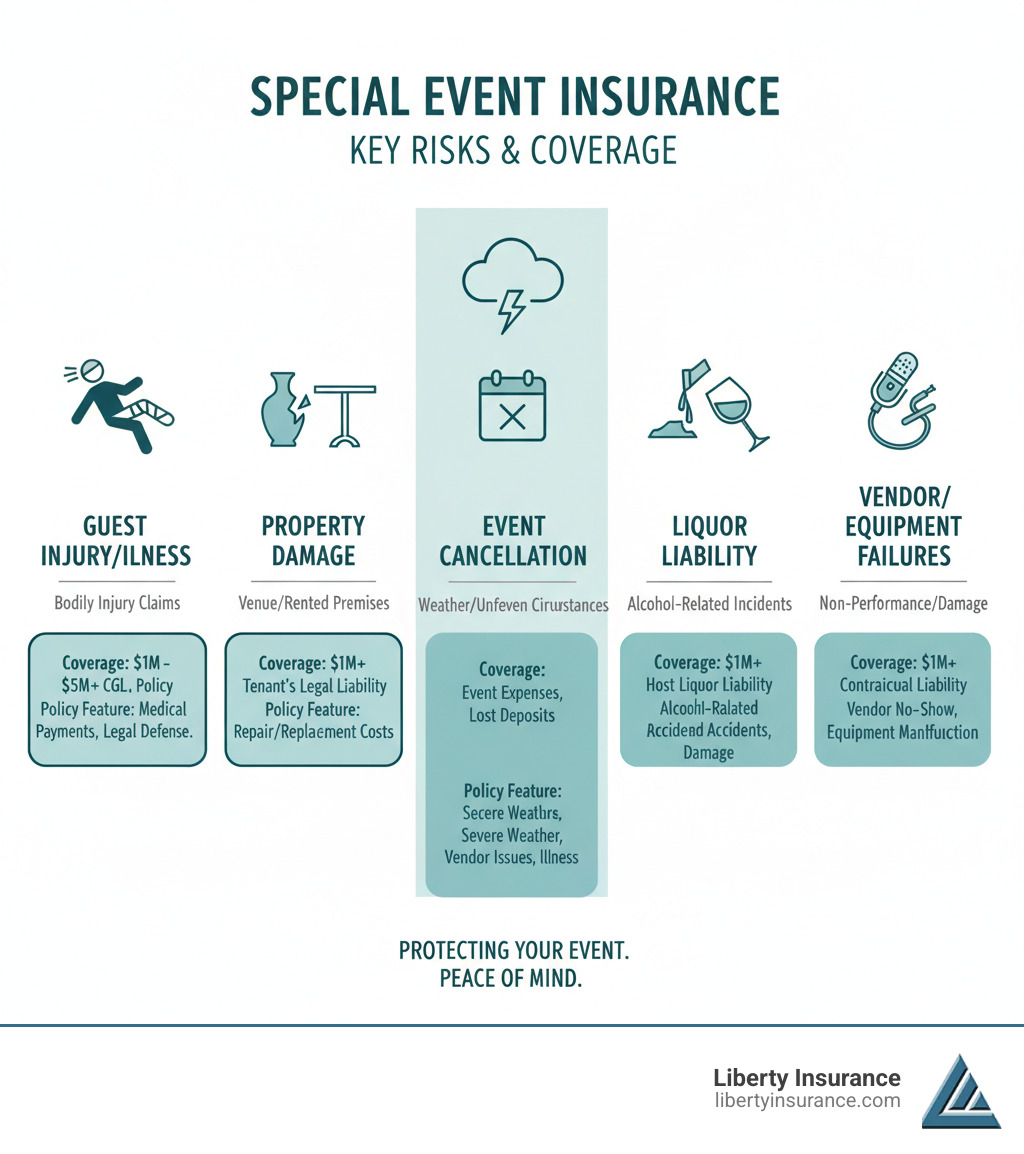
Special events expose hosts to significant risk. A guest could slip and sue for medical bills, or someone might damage the venue, leaving you liable for repairs. Without proper coverage, a single incident could have devastating financial consequences. Most venues now require proof of insurance with liability limits starting at $1 million, and many policies offer up to $5 million in protection.
I’m Andrew Harris, a Certified Insurance Counselor. I’ve spent years helping event hosts and business owners secure the right protection, including custom Special Event Insurance solutions. Understanding your coverage options is the key to hosting a successful, worry-free event.
Quick Answer: What You Need to Know
- What it covers: Bodily injury, property damage, tenant’s legal liability, and optional add-ons like host liquor liability and event cancellation.
- Who needs it: Anyone renting a venue or hosting guests, including individuals, businesses, and non-profits.
- Cost: Policies often start at $65-$125, depending on event size and risk.
- Coverage limits: Typically range from $1 million to $5 million in liability protection.
- How fast: Purchase coverage online in minutes and receive your Certificate of Insurance immediately.
Why It Matters in Real Life
- Slip-and-fall at a banquet hall: A guest trips on a power cord and fractures a wrist. Liability coverage pays for medical bills and defense costs.
- Damage to a rented venue: A kitchen fire during a catered event scorches cabinetry and flooring. Tenant’s legal liability responds to the landlord’s claim.
- Alcohol-related incident: An intoxicated attendee drives off and injures a pedestrian. With host liquor liability, you have critical protection where a standard policy may exclude alcohol-related claims.
What Venues Typically Require
Beyond liability limits, venues increasingly ask for:
- Additional Insured status: Extends your liability protection to the venue for your event.
- Primary and non-contributory wording: Ensures your policy responds first if there’s a covered claim.
- Waiver of subrogation: Prevents your insurer from seeking recovery against the venue after paying a claim.
Obtaining these endorsements is usually straightforward during the quoting or certificate issuance process.
Bottom Line
Insurance isn’t just a venue checkbox—it’s a safety net for your budget, reputation, and peace of mind. With a tailored policy, you can focus on your guests and goals, not worst-case scenarios.
Understanding the Fundamentals of Special Event Insurance
Planning an event should be exciting, not stressful. While you focus on decorations, food, and entertainment, it’s crucial to protect yourself from the financial risks that come with hosting. That’s where Special Event Insurance becomes your safety net.

This coverage protects you from the financial fallout when unexpected incidents happen, like a guest tripping and falling or someone damaging the venue’s property. Without it, you could be personally responsible for medical bills, repairs, and legal fees. That’s why most venues require proof of insurance. For a comprehensive look at how this protection works, visit our page on Event Coverage Insurance.
What Is Special Event Insurance and Why Is It Important?
Special Event Insurance is a short-term policy providing financial protection against event-related risks. It’s typically written on an occurrence-based general liability form for the dates of your event and can be customized with optional coverages.
It’s vital because:
- Negligence claims: If a guest is injured and claims you were negligent (e.g., tripping over a cord), the policy can cover their medical expenses and your legal defense.
- Contractual obligations: Most venues—from New Brunswick to Toms River—require proof of liability insurance and specific endorsements before you can book their space.
- Risk management: Even flawless planning can’t eliminate risk. Optional add-ons can address exposures like alcohol service, cancellations, or equipment damage.
- Personal asset protection: For private hosts, this coverage creates a buffer between a lawsuit and your savings or home.
How It Works in Practice
- Policy term: Generally covers setup and breakdown within specified dates and times you list on the application.
- Insured parties: You (the host/organizer) are the Named Insured; the venue is often added as an Additional Insured.
- Limits and aggregates: Liability limits are typically shown per occurrence with an aggregate for the event; some policies apply a separate aggregate by event or location.
- Occurrence vs. Claims-Made: Most special event policies are occurrence-based, which is highly favorable for event hosts. This means the policy that is in effect on the date the incident occurs is the one that responds to the claim, regardless of when the claim is filed. For example, if a guest is injured at your December event but doesn’t file a lawsuit until February, your occurrence policy for the event will still cover it. This is superior to a claims-made policy, which would require you to have continuous coverage in place when the claim is reported, a structure that doesn’t work for short-term events.
How It Relates to Other Policies
- Homeowners insurance: May offer limited coverage at your residence, but generally does not extend to rented venues or business-related events. It usually excludes liquor liability and many event hazards.
- Business general liability: If your business is hosting an event, your existing policy may not cover certain event-specific risks or venues, especially if the event is outside your normal operations.
Special Event Insurance lets you focus on your guests instead of worst-case scenarios. It’s an affordable investment—often starting around $65 to $125—that protects you from devastating losses. For more details, check out Special event insurance | Liberty Insurance.
A Deep Dive into Special Event Insurance Coverages
Now that we know the “what” and “who,” let’s explore what Special Event Insurance actually covers. A policy is like a custom-built shield, starting with essential protections and allowing you to add specialized layers based on your event’s needs.

Every policy includes key elements like coverage limits (the max your insurer pays), deductibles (your out-of-pocket cost), and a Certificate of Insurance (proof of coverage for your venue). Understanding these basics is key to choosing the right protection.
Key Coverages in a Standard Policy
These foundational coverages form the backbone of most Special Event Insurance policies and protect you from the most common event-related risks.
- Commercial General Liability (CGL): The core of your policy, covering bodily injury and property damage arising from your event operations. It can handle medical expenses, legal defense costs, and settlements/judgments up to the policy limits. Learn more about the broader framework of Commercial General Insurance.
- Bodily Injury and Property Damage Liability: Pays for a guest’s medical costs or repairs to a venue’s property when you’re legally liable. Limits typically range from $1 million to $5 million per occurrence with an aggregate limit.
- Medical Payments: Offers a smaller no-fault limit (often $5,000–$10,000) to promptly address minor injuries and avoid larger disputes. It doesn’t require proving negligence.
- Personal and Advertising Injury: Protects against non-physical injury claims. For example, if a promotional flyer for your event mistakenly uses a copyrighted image or makes a defamatory statement about a competitor, this coverage can defend you against lawsuits for libel, slander, or copyright infringement.
- Tenant’s Legal Liability: Essential when you rent a venue. Covers accidental damage to rented premises (e.g., fire, smoke, water damage). Sublimits often start at $500,000 and can go up to $5 million.
These core coverages create the safety net most venues in Trenton, Millstone Township, and throughout New Jersey require.
Important Endorsements and Certificate Wording
Many venues require specific endorsements and wording:
- Additional Insured: Extends your liability protection to the venue for claims arising out of your event.
- Primary and Non-Contributory: Ensures your policy responds before the venue’s insurance.
- Waiver of Subrogation: Prevents your insurer from pursuing the venue for reimbursement after paying a claim.
These requirements are common and typically easy to add at quoting or certificate issuance.
Popular Optional Coverages to Consider
Not every event is the same. Optional coverages allow customization to fit your risk profile:
- Event Cancellation/Postponement: Reimburses non-refundable deposits and expenses if you must cancel or postpone due to covered causes such as severe weather, venue shutdown, utility failure, or illness/accident of a key person. Note that named storms, pandemics, or civil authority actions may have specific limitations or exclusions depending on the carrier. Learn more about Event Cancellation Insurance.
- Host Liquor Liability: Critical if alcohol is served but not sold by you. It addresses injuries or damages arising from alcohol-related incidents. Some venues and municipalities mandate this coverage. See What Is Host Liquor Liability Insurance.
- Liquor Liability (for sale of alcohol): If you sell alcohol or require a permit, you may need full Liquor Liability instead of Host Liquor. This is especially relevant for ticketed events, festivals, or cash bars.
- Rented Equipment Coverage: Protects equipment you rent—like A/V gear, tents, staging, or lighting—against theft or accidental damage. Be mindful of valuation (replacement cost vs. actual cash value) and any deductibles.
- Hired/Non-Owned Auto Liability: Provides liability protection if you ask a staff member or volunteer to use their personal car for an event-related errand, like picking up supplies, and they cause an accident that injures someone else. This coverage steps in to protect the event organizer from being sued, but it does not cover physical damage to the volunteer’s car.
- Prize Indemnity (e.g., Hole-in-One): Covers large prizes for promotions and contests, letting you offer attention-grabbing incentives without risking your budget.
- Participant Liability (for sports/active events): Important for tournaments, races, or fitness competitions where attendees are active participants rather than spectators. Spectator-only policies may exclude participant injuries.
- Third-Party Property in Your Care, Custody, or Control: Fills a common gap if you temporarily hold others’ property (e.g., art displays) and it’s damaged.
- Terrorism Coverage (TRIA): For large-scale public events, especially in major metropolitan areas, terrorism is a potential risk. This optional coverage can be added to respond to losses arising from a certified act of terrorism. It is often required for events held at prominent public venues or stadiums.
Common Exclusions and How to Address Them
While policies are comprehensive, they aren’t all-risk. Common exclusions include:
- Intentional harm or criminal acts
- Communicable diseases (including COVID-19) and pandemics
- Professional services (e.g., photography errors and omissions)
- Workers’ compensation or employer’s liability for staff
- High-hazard activities (e.g., fireworks, aerial acts, amusement rides) without special underwriting/endorsements
- Damage to your own property unless specifically scheduled
If your event includes higher-risk elements, discuss them in advance. Insurers can often accommodate with endorsements, safety requirements, or specialized policies.
How Limits and Deductibles Work
- Per Occurrence vs. Aggregate: Per occurrence is the maximum per claim; aggregate is the total payable for all claims during the event.
- Per Event or Per Location Aggregates: Some policies apply separate aggregates by event or location, which can be beneficial for multi-venue festivals.
- Deductibles: Liability sections often have no deductible for third-party injury claims, while property-type coverages (equipment, cancellation) typically do.
Choosing appropriate limits balances venue requirements, your budget, and your risk tolerance.
What Types of Events Can Be Insured?
One of the best features of Special Event Insurance is its flexibility. Whether you’re planning an intimate backyard party or a massive public festival, there’s a policy designed to protect you and your gathering.

The key is understanding which events are commonly covered and how specialized policies, like wedding insurance, differ from general event coverage.
Common Events Covered by Special Event Insurance
If you’re bringing people together, chances are you can insure the event. Common examples include:
- Private Parties: Anniversaries, milestone birthdays, graduations, family reunions, retirement celebrations
- Corporate and Business Events: Holiday parties, product launches, conferences, seminars, team-building retreats
- Community and Public Events: Concerts, festivals, parades, car shows, street fairs, marathons, 5Ks
- Non-Profit and Charity Functions: Fundraisers, benefit galas, auctions, walks/runs, golf outings
- Cultural and Religious Celebrations: Baptisms, Bar/Bat Mitzvahs, quinceañeras, holiday observances held in rented venues
- Arts and Entertainment: Art shows, gallery openings, book signings, film screenings, fashion shows, theater nights
Even seemingly low-risk events like lectures or chess tournaments carry risks such as slip-and-fall accidents or property damage. And for larger gatherings, venue requirements make insurance a must.
Events That May Need Special Underwriting or Be Excluded
Some activities require additional review or may not be eligible without special endorsements:
- Fireworks, pyrotechnics, or open flames beyond standard catering use
- Amusement rides, inflatables, mechanical bulls
- Airshows, aerial acrobatics, or drone swarms
- High-contact or extreme sports tournaments
- Events with anticipated attendance far beyond venue capacity
If your event falls into these categories, share full details early. Risk controls (barriers, licensed operators, permits) can help secure coverage.
Insuring Virtual and Hybrid Events
The rise of virtual and hybrid events introduces a new set of risks that Special Event Insurance can address. While slip-and-fall claims are less of a concern, other liabilities emerge:
- Virtual Event Liability: This can cover issues like libel or slander in a live chat, copyright infringement from using unlicensed music or video, and other personal and advertising injury claims arising from the online broadcast.
- Event Cancellation for Hybrid Events: If the in-person component of your hybrid event is canceled due to a covered peril (like a venue fire), cancellation coverage can reimburse lost ticket revenue and expenses for both the physical and virtual portions, depending on the policy wording.
- Technical Failure: Some specialized policies may offer coverage for technical failures of the streaming platform, but this is not standard. It’s crucial to review your vendor contracts and see what guarantees the platform provider offers.
When insuring a virtual or hybrid event, be clear with your insurance provider about the format, platforms used, and how attendees will interact to ensure you have the appropriate coverage.
Special Event Insurance vs. Wedding Insurance
While wedding insurance is a type of Special Event Insurance, it’s tailored for wedding-specific exposures.
- General Special Event Insurance: Focuses on liability—protecting you if a guest is injured or you damage the venue. It’s the core protection most venues require.
- Wedding Insurance: Adds optional first-party protections important to weddings, such as:
- Cancellation/Postponement: Reimburses deposits if you must reschedule due to covered causes (e.g., severe weather, sudden illness of key participants)
- Vendor Failure: Responds if a caterer or photographer goes out of business or doesn’t show
- Special Attire and Rings: Covers loss or damage to dresses, tuxedos, and rings
- Gifts: Covers theft of wedding gifts from the reception area
- Photos/Videos: Helps with costs to re-stage or recover if images are lost or corrupted
Destination weddings, multi-venue celebrations, and multi-day cultural events may require extended dates and specialized scheduling. For most other functions, standard Special Event Insurance provides the liability protection you need. To learn more, visit our page on Wedding Insurance.
The Process: From Quoting to Claiming Your Policy
Securing Special Event Insurance is easier than you might think. With modern online platforms, it’s often one of the simplest items on your event planning checklist. We’re here to make the process straightforward, whether you’re in Princeton, NJ, or New Brunswick, NJ.
How Is the Cost of Special Event Insurance Determined?
Your premium is calculated based on your event’s specific risk profile. Key factors include:
- Number of Attendees: More guests increase the odds of incidents.
- Event Duration: A three-hour party usually costs less than a three-day festival.
- Venue Type and Location: Commercial banquet halls, outdoor parks, and private homes present different risk levels.
- Alcohol Service: Serving or selling alcohol increases risk and may require Host or Liquor Liability.
- Activities: Higher-risk elements (e.g., sports competitions, live pyrotechnics) drive higher premiums.
- Coverage Limits and Options: Higher limits and optional coverages (cancellation, equipment) increase cost.
Policies remain affordable for most events, with many starting as low as $65 to $125. A quick quote is the fastest way to see your exact price.
How to Purchase a Policy
Buying Special Event Insurance can take just a few minutes online:
- Gather Event Details: Event type, dates/times (including setup/teardown), venue address, attendees, alcohol service, vendors.
- Get an Online Quote: Complete a short questionnaire for instant pricing.
- Review and Purchase: Compare options and select appropriate limits and add-ons.
- Receive Your Certificate of Insurance (COI): Usually delivered in minutes via email.
- Add Additional Insureds: Name the venue and any other required parties. Many policies include this at no extra cost.
Pro tip: Share the venue’s insurance requirements upfront so endorsements (primary/non-contributory, waiver of subrogation) are included from the start.
Making Changes After You Buy
Plans evolve. You can typically amend:
- Dates/times (e.g., extended reception hours)
- Venue address or room/ballroom changes
- Headcount and alcohol service details
- Additional Insureds and wording on the COI
Update your policy as soon as details change to ensure proper coverage and venue compliance.
Understanding Exclusions
Knowing what your policy doesn’t cover is as important as knowing what it does. Common exclusions include:
- Intentional acts or illegal activities
- Communicable diseases and pandemics
- High-risk activities without specific endorsements
- Professional liability (e.g., a photographer’s missed shots)
- Damage to your own property unless scheduled
- Employee injuries (handled by workers’ compensation)
Review your policy forms and endorsements carefully. The Insurance Information Institute provides helpful general background on event insurance.
How to File a Claim
If an incident occurs at your event, a calm and methodical response is crucial. Follow these steps to navigate the claims process effectively:
- Ensure Safety First: Your immediate priority is the well-being of your guests. Seek professional medical help for anyone injured and contact police or fire departments if necessary. Do not delay medical care.
- Document Everything: Use your phone to take clear photos and videos of the scene, any injuries, and any property damage from multiple angles. Collect names and contact information from any witnesses. Write down a detailed account of what happened, including the exact time, location, and sequence of events.
- Notify Your Insurer Promptly: Contact your insurance provider as soon as possible using the claims hotline or online portal listed on your policy documents. Provide your policy number and a clear, factual summary of the incident. Prompt notification is a policy condition and vital for a smooth process.
- Cooperate with the Adjuster: The insurer will assign a claims adjuster to investigate. The adjuster’s role is to determine the facts of the loss and whether it is covered by your policy. Provide them with all the documentation you gathered, including vendor contracts, venue agreements, incident reports, and receipts. Answer their questions honestly and thoroughly.
- Do Not Admit Fault: It is critical that you do not admit liability, fault, or promise to pay for damages, either verbally or in writing. Let your insurance company investigate and determine legal liability. Admitting fault can jeopardize your coverage.
- Maintain Records: Keep a dedicated file for all claim-related communications, including emails, letters, and notes from phone calls. Good documentation is your best asset and helps ensure the claim is resolved fairly and efficiently.
Frequently Asked Questions about Special Event Insurance
We’ve helped countless event hosts across New Jersey, and a few questions always come up. Here are clear, straightforward answers to common inquiries about Special Event Insurance.
Does special event insurance cover incidents caused by alcohol?
It depends. A standard general liability policy often excludes alcohol-related incidents. If a guest becomes intoxicated at your event and causes injury or damage, you could be held liable. To be protected, you must add Host Liquor Liability Insurance to your policy. If you are selling alcohol, you may need a separate Liquor Liability policy.
What happens if my venue requires proof of insurance?
This is standard. Once you purchase your policy, you’ll receive a Certificate of Insurance (COI). Most venues also ask to be named as an Additional Insured, and may require primary/non-contributory wording and a waiver of subrogation. We can include these on your COI.
Can I get a policy for a single-day event?
Yes. Special Event Insurance is designed for single- or multi-day events. You can also include setup and teardown time within your policy dates.
Is my homeowner’s insurance enough if I host at home?
Usually not. Homeowner’s policies often limit or exclude event-related liabilities, liquor liability, or business-related activities. A special event policy closes those gaps—especially if you hire vendors or rent equipment.
Are volunteers and staff covered?
Volunteers are generally covered as part of your insured operations for liability, but they are not covered for their own injuries as employees would be. If you have paid staff, you may need workers’ compensation in addition to your event policy.
Do vendors need their own insurance?
Yes. Require each vendor (caterer, DJ, rental company) to carry liability insurance and provide a COI naming you and the venue as Additional Insureds. Your event policy is not a substitute for vendor coverage.
Does the policy cover weather-related cancellations?
Not automatically. You need Event Cancellation coverage for financial losses from postponement/cancellation due to covered causes, which may include severe weather. Named storms, pandemics, or government shutdowns are often excluded or limited.
What’s the difference between Host Liquor and Liquor Liability?
- Host Liquor: For events where alcohol is served but not sold by you (e.g., open bar at a wedding).
- Liquor Liability: For events where you sell or distribute alcohol for profit or require permits (e.g., festivals with cash bars).
Can I add the venue as Additional Insured at no cost?
Often yes. Many policies include Additional Insured endorsements at no charge, though complex wording or multiple parties may incur a small fee.
How far in advance should I buy the policy?
You can often purchase coverage right up to the event date, but we recommend buying as soon as you sign your venue contract. This ensures you meet deadlines and can add endorsements calmly—without last-minute rushes.
Are there deductibles?
Liability claims typically have no deductible. Property-type coverages (rented equipment, cancellation) usually carry deductibles—check your declarations page for specifics.
Does the policy cover damage to rented equipment?
Only if you add Rented Equipment coverage. Otherwise, damage to rented items may be excluded under standard liability.
What about sports and athletic events?
If attendees are active participants, add Participant Liability. Standard spectator-only policies may exclude injuries to participants.
Are fireworks or inflatables covered?
Usually excluded unless disclosed and specifically endorsed. You’ll also need to comply with local permits and safety guidelines.
Can I insure multiple event dates on one policy?
Yes, if they are part of the same event series and within a defined period. For longer series, a separate annual or series policy may be more appropriate.
Does the policy cover foodborne illness claims?
Potentially, under bodily injury liability, if negligence is alleged. Ensure your caterer carries their own liability and follows health codes.
Will a claim affect my ability to book future venues?
Venues mainly care about you meeting their insurance requirements. A claim doesn’t automatically harm your booking prospects, but it may affect pricing or underwriting for future policies.
Can I get a refund if my event is canceled and I don’t have cancellation insurance?
Event policy premiums are generally fully earned at inception, meaning refunds are limited. If you need financial protection for a cancellation, purchase Event Cancellation coverage up front.
Does the policy work outside New Jersey?
Many policies cover events held anywhere in the United States, subject to underwriting. Always confirm the coverage territory before purchasing.
Is cannabis-related service covered?
Alcohol and cannabis are regulated differently. Most standard event policies exclude cannabis liability. If cannabis will be present or sold, discuss specialized coverage with us early.
Conclusion
Planning a special event is an investment of your time, money, and heart. Whether it’s a wedding, a community festival, a corporate conference, or an intimate family gathering, these moments deserve to be protected. Special Event Insurance is the essential tool that provides that protection, acting as a robust safety net so you can focus on what truly matters: creating unforgettable memories for your guests.
Throughout this guide, we’ve explored the critical role of this coverage. We’ve seen how core liability protection shields you from potentially devastating third-party injury and property damage claims. We’ve detailed how a policy can be customized with vital endorsements like Additional Insured status for your venue and optional coverages for risks like liquor liability, event cancellation, and rented equipment. From understanding how premiums are calculated to knowing the exact steps to take when filing a claim, you are now equipped with the knowledge to make an informed decision.
With liability limits typically ranging from $1 million to $5 million, a policy is more than just a contractual requirement—it’s a strategic defense for your personal or business assets. At Liberty Insurance, we specialize in safeguarding special occasions across New Jersey—from Millstone Township to Princeton—by helping our neighbors host successful, worry-free events. Don’t leave your financial well-being to chance. We make securing comprehensive protection simple, fast, and affordable. Get your customized event insurance policy today! Your peace of mind is just a few clicks away.

