
Why Understanding HVAC System Failures Matters for Your Business
An HVAC system breakdown can strike at the most inopportune time, such as during a record-breaking heatwave or a polar vortex, leaving your business operations completely vulnerable. For commercial properties, where heating, ventilation, and air conditioning can account for over 50% of total energy consumption, a system failure signifies far more than mere discomfort. It’s a direct threat to your bottom line. Imagine a restaurant kitchen overheating on a busy Saturday night, a data center’s servers failing due to inadequate cooling, or a retail store’s inventory being damaged by extreme temperatures and humidity. These scenarios lead to lost productivity, spoiled goods, unhappy customers, and significant safety hazards.
Understanding the common causes and preventative measures for these failures is not just good practice; it’s a critical component of risk management for any modern business. The financial implications of an unexpected breakdown can be staggering, encompassing not only emergency repair costs but also lost revenue and potential damage to your reputation.
Common Causes of an HVAC System Breakdown:
- Lack of regular, preventative maintenance
- Dirty or clogged filters, coils, and drain lines
- Refrigerant leaks and low levels
- Electrical component failure (capacitors, motors, wiring)
- Thermostat malfunctions and calibration issues
- Improper installation or system sizing
This comprehensive guide will walk you through everything you need to know. We’ll cover how to spot the subtle warning signs of impending failure, delve into the most common root causes, outline a robust preventative maintenance plan, help you navigate the critical repair vs. replacement decision, highlight potential safety hazards, and explain how specialized insurance can be your financial safety net.
I’m Andrew Harris with Liberty Insurance. Through my extensive work with the Professional Insurance Agents of New Jersey, I’ve guided countless business owners through the complexities of HVAC system breakdown claims. Protecting your property from equipment failure is fundamentally about safeguarding your investment and ensuring unwavering business continuity.
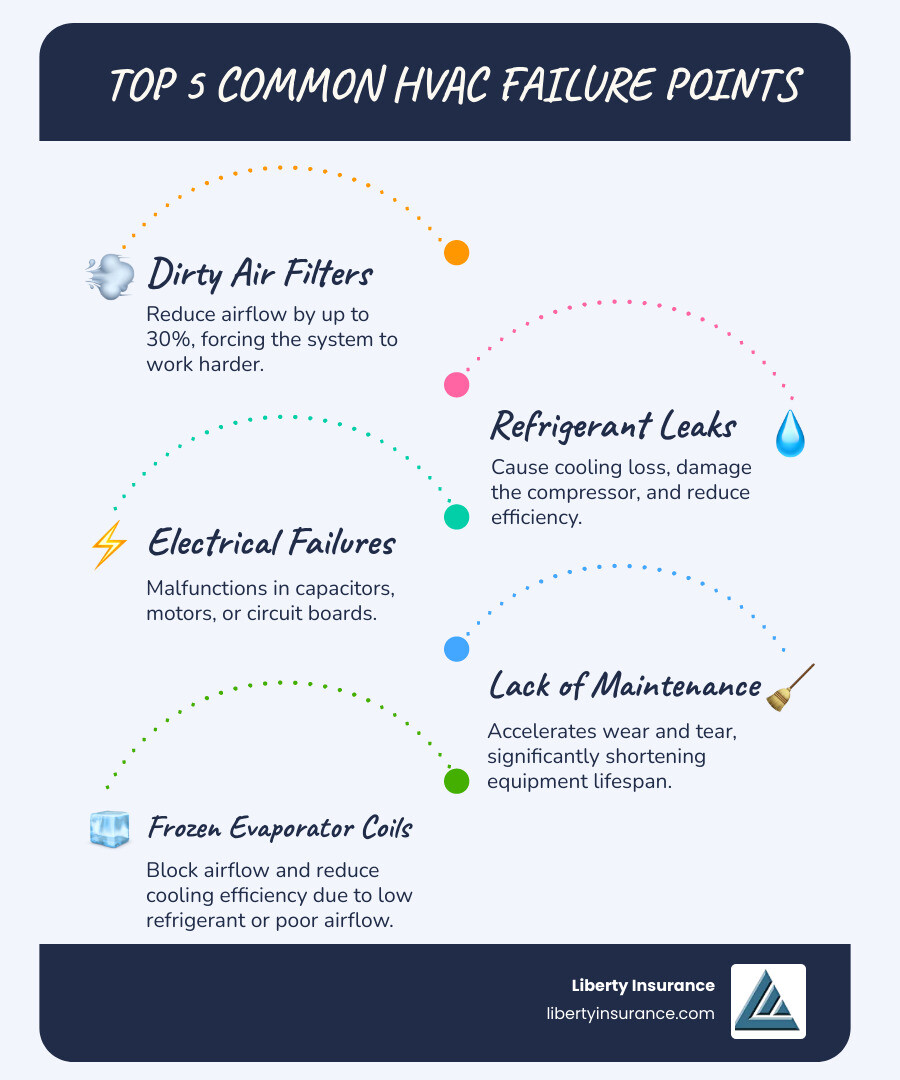
Key terms for HVAC system breakdown:
The Telltale Signs: Is Your HVAC System Crying for Help?
Your HVAC system rarely fails without warning. It has a language of its own, sending out distress signals long before a complete HVAC system breakdown occurs. Learning to interpret these early signs can be the difference between a minor adjustment and a catastrophic, business-halting repair bill.

Here are the key warning signs to watch and listen for:
- Unusual noises: Your HVAC system should operate with a consistent, low hum. Any deviation is a red flag. Grinding or scraping often points to worn-out motor bearings. Squealing can indicate a problem with a belt or motor. Loud banging or clanking, especially on startup or shutdown, could signal a loose or broken part, such as a connecting rod or piston pin in the compressor.
- Strange odors: Your building’s air should be neutral. A burning smell is a serious warning of an electrical problem, like an overheating motor or frayed wiring, and requires immediate shutdown of the system. A musty or dirty sock odor suggests mold or mildew growth in the ductwork or on the evaporator coil, posing a health risk to occupants. A rotten egg smell near a gas furnace indicates a potential gas leak, which is an emergency requiring immediate evacuation and a call to your gas company.
- Weak or no airflow: If the air trickling from your vents feels weak or non-existent, it’s a clear sign of a problem. This is often caused by severely clogged air filters, but it can also point to blocked ducts, a failing blower motor, or a frozen evaporator coil. Poor ventilation is a top cause of HVAC airflow problems.
- Inconsistent temperatures or poor performance: Does the system run constantly but fail to reach the thermostat’s set temperature? Are there noticeable hot and cold spots throughout your building? This indicates a loss of efficiency, which could stem from low refrigerant, dirty coils, or an improperly sized system.
- Increased energy bills: A sudden, unexplained spike in your utility costs is often the first financial symptom of an ailing HVAC system. It means the unit is working harder and running longer to achieve the same results, a clear sign of an underlying issue that is wasting energy and money.
- System short-cycling: This is when the unit turns on and off in rapid, frequent bursts without completing a full heating or cooling cycle. Short-cycling is incredibly damaging, as it puts immense stress on the compressor and other major components, leading to premature failure.
- Visible leaks or frost: Water pooling around the indoor unit (the air handler) is a classic sign of a clogged condensate drain line. If you see frost or a layer of ice forming on the refrigerant lines or the evaporator coil, it points to a critical issue with either airflow (clogged filter) or low refrigerant levels.
- Thermostat issues: An unresponsive, inaccurate, or frequently malfunctioning thermostat can prevent your system from operating correctly, leading to discomfort and inefficiency. Sometimes the fix is simple, but it can also indicate a wiring problem.
- System won’t turn on: While this could be a simple tripped breaker or a dead thermostat battery, it can also signal a complete failure of a critical component like the transformer or compressor.
Differentiating Between Minor Glitches and Major Alarms
Knowing when to handle an issue yourself versus when to call a professional is key to safety and cost-effectiveness.
- Minor (DIY): Replacing a dead thermostat battery is an easy fix. Changing a clogged air filter is essential basic maintenance. Resetting a tripped circuit breaker (only once) might resolve a temporary overload. If it trips again, there’s a deeper problem.
- Major (Call a Pro): A failing compressor is a complex and expensive repair requiring specialized tools. A refrigerant leak is an environmental hazard that requires EPA-certified technicians. A breaker that keeps tripping, any burning smells, or the smell of gas are serious safety hazards that demand immediate professional attention. When in doubt, especially with gas, electrical issues, or major mechanical noises, always err on the side of caution and call a professional.
The Culprits Revealed: Common Causes of an HVAC System Breakdown
Now that we know the warning signs to look for, let’s pull back the curtain and reveal the most common culprits behind an HVAC system breakdown. From simple, preventable neglect to complex mechanical failures, understanding these root causes is your most powerful tool for prevention and proactive management.
1. Lack of Maintenance: The Silent System Killer
By far the most common and preventable cause of an HVAC system breakdown is simple neglect. Skipping regular maintenance is like driving a car for years without an oil change; it’s not a matter of if it will fail, but when. This neglect silently accelerates wear and tear, reduces efficiency, and dramatically shortens the unit’s operational lifespan.
Dirty air filters: Clogged filters are the number one enemy of your HVAC system. They severely restrict airflow, forcing the blower motor to work harder, which wastes electricity and can cause the motor to overheat and fail. Reduced airflow over the evaporator coil can cause it to freeze into a block of ice, completely stopping the cooling process. We recommend inspecting filters monthly and replacing them at least every 1-3 months, or more frequently in high-dust environments. When choosing filters, consider their MERV (Minimum Efficiency Reporting Value) rating; higher MERV ratings capture more particles but can also restrict airflow more, so it’s crucial to use a filter compatible with your system’s design.
Clogged condensate drain lines: During the cooling process, your system removes humidity from the air, which collects in a drain pan and exits through a condensate line. Over time, this line can become clogged with slime, algae, and debris. When it clogs, the water backs up, potentially overflowing the drain pan and causing significant water damage to ceilings, walls, and floors. This standing water also creates a prime breeding ground for mold and bacteria.
Dirty evaporator and condenser coils: Your HVAC system has two sets of coils that are critical for heat exchange. The indoor evaporator coil absorbs heat from your air, while the outdoor condenser coil releases that heat outside. When either set of coils becomes caked with dirt, dust, and grime, they become insulated. This severely hampers their ability to transfer heat, forcing the system to run longer and harder to cool your space. This not only spikes energy bills but also puts immense strain on the compressor, the most expensive component in the system.
Low refrigerant levels: Refrigerant is the lifeblood of your air conditioning system. It’s a common misconception that refrigerant is ‘used up’ like gasoline. It’s not. If your system is low on refrigerant, it means there is a leak somewhere. Operating a system with low refrigerant reduces its cooling capacity and can cause catastrophic damage to the compressor, which relies on the returning refrigerant for cooling.
Neglected professional tune-ups: Skipping annual professional service is a costly mistake. During a tune-up, a qualified technician does far more than a simple filter change. They perform a comprehensive check that includes:
- Cleaning and inspecting internal components like coils and blower wheels.
- Lubricating all moving parts to reduce friction and wear.
- Checking and tightening all electrical connections to prevent shorts and fire hazards.
- Measuring refrigerant levels and checking for leaks.
- Testing thermostat calibration and system controls.
- Inspecting condensate drains and clearing any blockages.
- Measuring motor voltage and amperage draw to ensure proper operation.
This professional oversight catches small issues before they escalate into major, expensive repairs. Regular Maintaining Your Air Conditioner is the single most effective strategy for ensuring reliability and longevity.
2. Critical Component Failures Explained
Even with diligent maintenance, mechanical and electrical parts have a finite lifespan and will eventually wear out. Understanding these key components can help you diagnose a problem when it occurs. Here are the parts whose failure can trigger a full HVAC system breakdown.
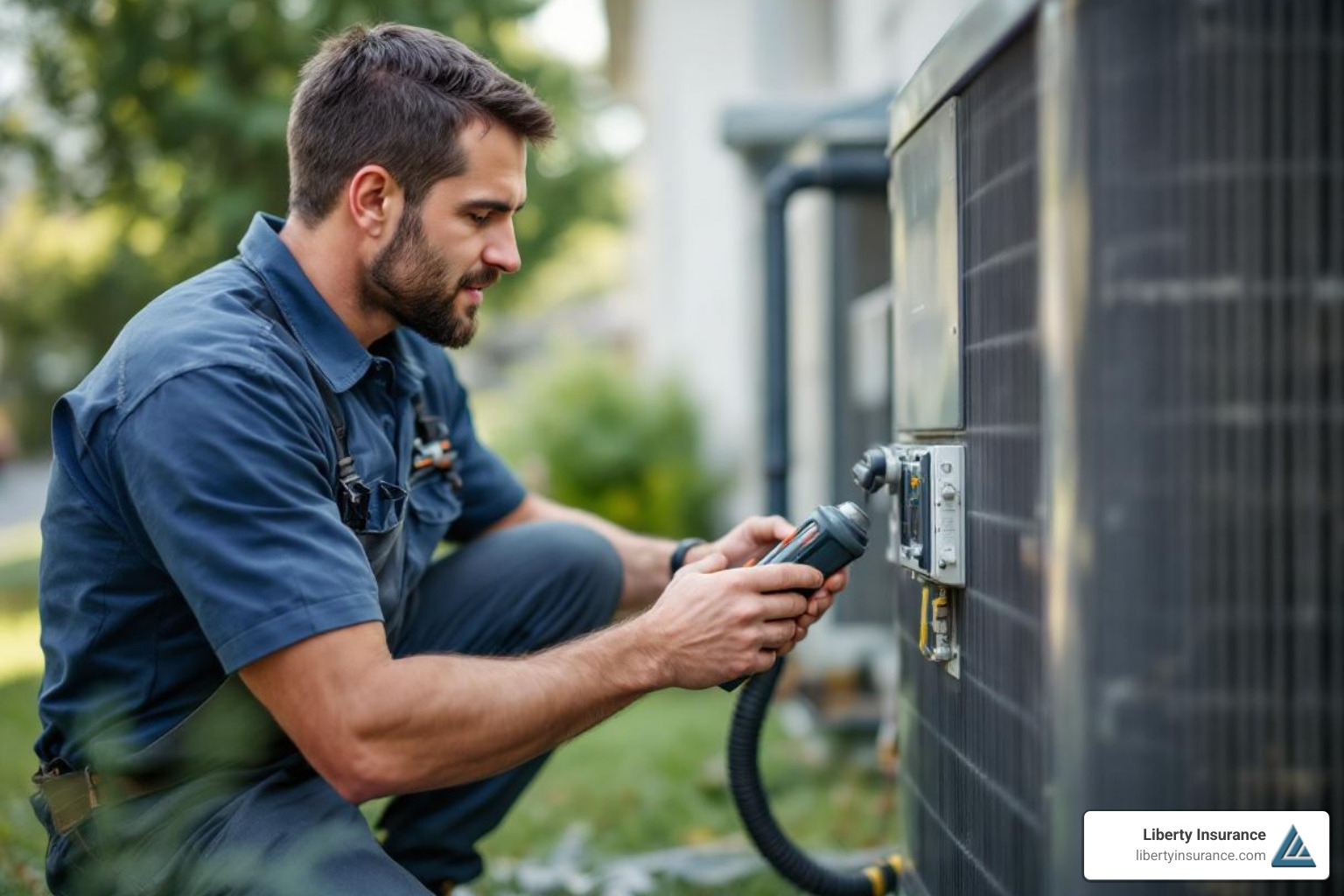
Blower motor failure: The blower motor powers the fan that circulates conditioned air through your ductwork. If this motor fails, you’ll experience weak or no airflow from your vents, even if the heating or cooling part of the system is working. Modern systems may use high-efficiency ECM (Electronically Commutated Motor) blowers, which are more complex and expensive to replace than older PSC (Permanent Split Capacitor) motors.
Compressor issues: The compressor is the heart of your air conditioning system. It’s a powerful motor that pressurizes the refrigerant, enabling it to absorb and release heat. A failing compressor is one of the most serious and expensive HVAC repairs. Causes of failure include electrical problems, low refrigerant, or simply old age. Without a functioning compressor, The air conditioning unit cannot produce any cool air.
Capacitor burnout: Capacitors are small, cylindrical components that act like temporary batteries, providing a powerful jolt of electricity to start the system’s motors (the compressor, blower motor, and outdoor fan motor). There are two types: start capacitors and run capacitors. When one of these burns out, the corresponding motor may hum but will fail to start, or it may not run at all. This is a very common failure point, but thankfully, it’s a relatively inexpensive repair.
Heat exchanger cracks: This is a critical failure specific to gas furnaces. The heat exchanger is a metal chamber where fuel is burned to heat the air. Over time, repeated expansion and contraction can cause cracks to form. A cracked heat exchanger is a major safety hazard because it can allow deadly, odorless carbon monoxide (CO) to leak from the combustion chamber into your building’s air supply. If this is suspected, the furnace must be shut down immediately.
Evaporator and Condenser Coils: These coils can fail in several ways. Leaks in the indoor evaporator coil, often caused by formicary corrosion from volatile organic compounds (VOCs) in the air, lead to refrigerant loss. The outdoor condenser coil is exposed to the elements and can be damaged by debris, hail, or corrosion, especially from salt air in coastal NJ towns. Damaged coils cannot transfer heat effectively, causing the system to work harder and eventually fail.
Thermostat malfunction: As the brain of the system, a faulty thermostat can cause a host of problems. It might fail to sense the correct temperature, leading to a system that runs constantly or not at all. It can cause short cycling or lose its programming. While sometimes the fix is as simple as new batteries, it can also be due to faulty wiring or a failed internal sensor.
Electrical Elements: Beyond capacitors, a range of other electrical parts can fail. This includes contactors (relays that switch high-voltage components on and off), transformers that power the low-voltage controls, and the main circuit board itself. A failure in any of these can cause a partial or complete Electrical System Failure within the unit.
3. Heating vs. Cooling: Different Systems, Different Problems
While we often group them together, heating and cooling systems are distinct and fail in different ways, each capable of causing a complete HVAC system breakdown. Understanding these differences is key to quick diagnosis, especially when the weather is at its most extreme.
Heating Breakdown Causes
In the depths of a New Jersey winter, a failure in your Central heating system is a genuine emergency, posing a risk to pipes, equipment, and employee safety. Common causes for furnace failures include:
- Ignition failure: Modern furnaces use either a hot surface igniter or an intermittent pilot light to ignite the gas burners. If this component fails, the furnace will not be able to produce heat. You might hear the system try to start, click, and then shut down.
- Cracked heat exchanger: As mentioned earlier, this is the most critical safety failure in a furnace. The risk of carbon monoxide poisoning is severe. Any suspicion of a crack requires immediate shutdown and professional inspection.
- General furnace issues: A dirty or faulty flame sensor can cause the system to shut off the gas burners as a safety precaution, even if they are lit. Problems with the blower motor, control board, or thermostat can also prevent the furnace from distributing heat properly.
Cooling Breakdown Causes
During a sweltering summer in Millstone Township or Trenton, an AC failure can bring business to a grinding halt, creating unsafe working conditions. Watch for these common cooling-specific issues:
- Refrigerant leaks: This is the primary cause of most AC failures. A lack of refrigerant not only prevents the system from cooling effectively but also risks starving the compressor of the lubricating oil that circulates with the refrigerant, leading to a terminal failure.
- Frozen evaporator coils: This is a symptom, not a root cause, but it’s a common sight in a failing AC. It’s almost always caused by one of two things: restricted airflow (e.g., a dirty filter) or low refrigerant levels. The ice block prevents air from passing through, stopping the cooling process entirely.
- Condenser unit obstruction: The outdoor unit (the condenser) is responsible for releasing heat from your building. If it becomes clogged with leaves, dirt, cottonwood seeds, or other debris, or if it’s blocked by overgrown landscaping, it cannot release heat effectively. The system will overheat, become highly inefficient, and eventually shut down or suffer compressor damage.
Heat Pump Specific Failures
Heat pumps are unique because they provide both heating and cooling. This versatility introduces specific failure points:
- Reversing valve failure: This is the component that switches the flow of refrigerant to change the system from cooling mode to heating mode. If the reversing valve gets stuck or fails, your heat pump will be locked into one mode, unable to provide heat in the winter or cooling in the summer.
- Defrost cycle problems: In heating mode during cold, damp weather, the outdoor coil can frost over. The heat pump is designed to periodically run a defrost cycle to melt this ice. If the defrost control board or sensor fails, a thick layer of ice can encase the outdoor unit, preventing it from absorbing heat from the outside air and rendering it useless for heating.
4. External Factors and Installation Flaws
Sometimes, the cause of an HVAC system breakdown isn’t a failing part but a flaw in the system’s design, installation, or its surrounding environment. These issues can plague a system from day one, leading to inefficiency and a shortened lifespan.
Improper system sizing: This is a surprisingly common and critical error. A system that is too large for the space (oversized) will cool the area too quickly to properly dehumidify it, leaving the air feeling cold and clammy. It will also short-cycle, turning on and off rapidly, which causes extreme wear on the compressor. A system that is too small (undersized) will run constantly, struggling to ever reach the desired temperature. This leads to high energy bills and premature failure from overuse. Proper sizing requires a detailed load calculation (like a Manual J) that considers insulation, window types, building orientation, and heat-generating equipment.
Poor ventilation and ductwork: The ductwork is the circulatory system for your HVAC. If it’s poorly designed, leaky, or improperly sealed, a significant portion of your conditioned air can be lost into ceilings, crawlspaces, or walls. Leaky ducts also create pressure imbalances, potentially pulling dirty, unconditioned air into your building. This wastes enormous amounts of energy, creates hot and cold spots, and is a leading cause of HVAC airflow problems.
Environmental debris: The outdoor condenser unit is constantly exposed to the elements. An accumulation of leaves, dirt, grass clippings, and twigs can clog the fins and choke the unit, preventing it from releasing heat. This forces the compressor to work under extreme pressure and temperature, leading to overheating and failure.
Power surges and electrical issues: The sensitive electronic components in modern HVAC systems, like circuit boards and variable-speed motors, are highly vulnerable to electrical disturbances. A direct lightning strike is catastrophic, but even common power surges from the utility grid can degrade and destroy these components over time. Brownouts (dips in voltage) can also cause motors to overheat.
Coastal salt air corrosion: For businesses located near the New Jersey coast, from Toms River to Cape May, salt-laden air is a relentless enemy. The salt accelerates galvanic corrosion on the outdoor unit’s aluminum and copper coils, causing them to pit, leak refrigerant, and fail prematurely. Special corrosion-resistant coatings and strategic placement can help mitigate this, but it remains a significant factor in the lifespan of coastal HVAC systems.
Prevention and First Aid: Your Guide to a Healthy HVAC System
Proactive, preventative maintenance is the single most effective strategy to avoid a sudden HVAC system breakdown. A well-maintained system not only runs more reliably but also operates more efficiently, lasts longer, and provides better indoor air quality. Think of it as an investment, not an expense.
Your Basic HVAC Checklist
These simple DIY checks, performed regularly, can catch many problems early and keep your system running smoothly between professional service calls:
- Change air filters regularly: This is the most critical task. Check filters monthly and replace them every 1-3 months. A clogged filter is the root of many evils, including poor airflow, frozen coils, and motor strain.
- Clear the outdoor unit: Ensure at least two feet of clearance around your outdoor condenser unit. Regularly trim back shrubs and remove any leaves, grass clippings, or other debris that has collected on the unit’s fins. A gentle spray with a garden hose (from the inside out, if possible) can help keep it clean.
- Check the thermostat: At the start of each season, test your thermostat. Ensure the settings are correct, the time is accurate, and if it’s a battery-powered model, replace the batteries annually to prevent an unexpected shutdown.
- Keep vents clear: Walk through your facility and ensure that supply and return air vents are not blocked by furniture, boxes, or other inventory. Blocked vents disrupt airflow and create pressure imbalances in the system.
- Test before peak season: Don’t wait for the first 90-degree day to discover your AC is broken. Run your air conditioning for a cycle on a mild day in the spring. Do the same for your heating system in the fall. This allows you to identify and fix problems before they become emergencies.
- Inspect the condensate drain: Periodically check the area around your indoor unit’s drain line for any signs of standing water or clogs. If your system has a drain pan float switch, it will shut down the AC to prevent water damage if a clog is detected.
The Importance of a Maintenance Log
For a business, keeping a detailed HVAC maintenance log is invaluable. This log should track:
- Dates of all filter changes.
- Dates of professional service calls.
- Details of any repairs performed, including parts replaced.
- Notes on system performance (e.g., “unit seemed noisy in July”).
This log provides a clear history of the unit’s health, helps identify recurring problems, and is essential information for a technician diagnosing a new issue.
How Regular Professional Maintenance Prevents Breakdowns
While DIY tasks are helpful, they are no substitute for professional service. An experienced technician has the tools and expertise to perform a deep inspection and cleaning that is crucial for long-term reliability. A comprehensive tune-up is the best defense against an HVAC system breakdown. This expert oversight not only ensures your system runs efficiently and reliably but also provides a valuable paper trail for warranty claims. Many businesses find that an Equipment Protection Plan is a cost-effective way to budget for and manage these vital services.
The Aftermath: Navigating Repairs, Replacements, and Safety
Despite the best preventative efforts, an HVAC system breakdown can still happen. When it does, knowing the right steps to take is crucial for minimizing downtime, controlling costs, and ensuring the safety of your employees and property.
When to Call a Professional vs. DIY Fixes
It’s vital to know your limits to ensure personal safety and avoid causing more expensive damage to the system.
DIY-safe tasks:
- Changing air filters.
- Replacing thermostat batteries.
- Clearing debris from the exterior of the outdoor unit.
- Resetting a tripped circuit breaker (but only once; if it trips again, call a pro).
Call for help immediately for:
- Refrigerant issues: Handling refrigerant is regulated by the EPA, requires certification, and can be hazardous. This is never a DIY job.
- Electrical problems: Beyond a single tripped breaker, any burning smells, buzzing sounds, or persistently tripping breakers indicate a serious electrical fault that requires a licensed professional. For your own protection, ensure your technician carries adequate HVAC Contractor Insurance Guide.
- Major mechanical failures: Any issues involving the compressor, blower motor, or heat exchanger require expert diagnosis and specialized tools.
- Gas or fuel problems: If you smell gas, do not touch any electrical switches. Evacuate the building immediately, call your gas company from a safe distance, and then call an HVAC professional.
The Cost of an HVAC System Breakdown: Repair vs. Replacement
This is often the most difficult decision a business owner faces. Do you invest in a costly repair for an aging system, or do you bite the bullet and pay for a full replacement? The answer depends on a careful analysis of age, repair cost, and efficiency.
| Repair Type | Average Cost (Estimate) | Notes |
|---|---|---|
| Capacitor Replacement | $100 – $400 | A common and relatively inexpensive fix. |
| Thermostat Replacement | $150 – $500 | Cost varies by model complexity (e.g., programmable vs. smart thermostat). |
| Blower Motor Replacement | $400 – $1,500 | A significant repair that can often extend a furnace’s life if the rest of the system is in good shape. |
| Refrigerant Leak Repair & Recharge | $200 – $1,500 | Cost depends heavily on the leak’s location and the type of refrigerant. R-22 refrigerant is being phased out and is extremely expensive. |
| Evaporator Coil Replacement | $600 – $2,000 | A major, labor-intensive repair often involving refrigerant handling. |
| Compressor Replacement | $1,000 – $3,000+ | Very expensive. This repair often approaches 50% of the cost of a new unit, making system replacement a more logical option, especially on older systems. |
| Heat Exchanger Replacement | $1,500 – $4,000+ | Due to the high cost and critical safety implications, a cracked heat exchanger on an older furnace almost always means it’s time for a full furnace replacement. |
| Full AC System Replacement | $3,811 to $7,476 | For central air, You can expect to pay $3,811 to $7,476. For commercial rooftop units, costs can be significantly higher. This is a major investment where the long-term savings from a new, high-efficiency unit can provide a strong return. – Factors influencing the decision: |
– System age: Most commercial HVAC systems have a lifespan of 10-15 years. Investing in a major repair on a system older than 10 years is often not cost-effective.
– Repair frequency and cost: Use the 50% rule. If the cost of a repair is over 50% of the cost of a new system, replacement is almost always the better long-term financial choice.
– Energy efficiency (SEER/EER rating): A new, high-efficiency unit can dramatically lower utility bills. For example, upgrading from an old 10 SEER unit to a new 16 SEER unit can reduce cooling costs by over 35%. For a business with high cooling loads, the monthly savings can be substantial, leading to a quick return on investment.
– Refrigerant type: If your system uses the older R-22 refrigerant (Freon), it’s living on borrowed time. R-22 is phased out and extremely expensive to source for repairs, making replacement with a modern R-410A system a much smarter choice.
For businesses, Equipment Breakdown Insurance can be a lifesaver in these situations, covering the cost of sudden and accidental failures and taking the financial sting out of the repair vs. replacement decision.
Unseen Dangers: Potential Safety Hazards of a Failed System
A failed HVAC system is not just an operational headache; it can pose serious, unseen safety risks to your property and personnel:
- Electrical hazards: Frayed wiring, failing motors, and malfunctioning electrical components can create a significant fire risk. An overworked system can overheat, potentially igniting nearby combustible materials.
- Carbon monoxide poisoning: This is the most acute danger associated with furnaces. A cracked heat exchanger can leak this colorless, odorless, and deadly gas into your workspace. The Characteristic of unintentional carbon monoxide poisoning shows it is a silent and serious health threat that can cause illness and death.
- Refrigerant leaks: While modern refrigerants are safer than older ones, large leaks in enclosed spaces can displace oxygen. Furthermore, refrigerant is harmful to the environment, and leaks should be repaired by a certified professional.
- Mold growth and poor air quality: Water leaks from clogged drain lines or frozen coils create the perfect damp environment for mold and mildew to flourish. Mold spores can circulate through your ductwork, causing allergic reactions, asthma attacks, and other respiratory issues for employees and customers.
Frequently Asked Questions about HVAC System Breakdowns
Here are answers to some of the most common and critical questions we receive from business owners about managing their HVAC systems.
How often should an HVAC system be serviced to prevent breakdowns?
For a commercial property, we strongly recommend professional servicing twice a year. This should be scheduled once in the spring to prepare your air conditioning system for the summer heat, and once in the fall to prepare your heating system for the winter cold. This bi-annual schedule allows technicians to catch small issues before they become major breakdowns, clean critical components for efficiency, and ensure the system is ready for the demands of the peak season. In addition to professional service, you should be inspecting and/or changing your air filters every 1-3 months, depending on your business environment.
Can a power surge damage my HVAC system?
Absolutely. Power surges, even small ones from the electrical grid, can inflict serious damage on the sensitive electronic components in modern HVAC systems. The main control board, variable-speed motor modules, and capacitors are all highly susceptible. A major surge from a nearby lightning strike can instantly destroy the entire system. Investing in a robust, multi-layered Electrical Surge Protection strategy—including a whole-building surge protector at the main panel and a secondary protector at the HVAC unit itself—is a wise and relatively low-cost investment to prevent thousands of dollars in potential damage.
What is a SEER rating and why does it matter for my business?
SEER stands for Seasonal Energy Efficiency Ratio. It’s a measure of how much cooling output an air conditioner provides for each unit of energy it consumes. The higher the SEER rating, the more efficient the unit is. For a business, this is critically important. While a higher SEER unit may have a higher upfront cost, its lower energy consumption can lead to significant savings on monthly utility bills. Upgrading from an old 10 SEER unit to a modern 16 SEER unit can cut your cooling costs by 30-40%. For a business with high cooling demands, the payback period on the investment can be surprisingly short.
How long should a commercial HVAC system last?
The average lifespan for a commercial HVAC system, such as a rooftop unit, is typically 10 to 15 years. However, this can vary widely based on several factors: the quality of the initial installation, the harshness of the local climate (e.g., coastal salt air), the intensity of use, and, most importantly, the consistency of professional maintenance. A well-maintained unit may last closer to 20 years, while a neglected unit might fail in under 10.
Does homeowners or business insurance cover an HVAC breakdown?
This is a critical distinction that many business owners misunderstand. A standard Commercial Property Insurance policy typically excludes coverage for equipment breakdowns that result from mechanical failure, electrical shorts, or normal wear and tear. To be protected from these common events, you need a specific endorsement or a separate policy called equipment breakdown coverage. This specialized add-on is designed to cover the costs of repairing or replacing your HVAC system due to a sudden and accidental breakdown. We advise all New Jersey business owners to review their policies and consider this vital coverage to protect their assets.
Conclusion
The great HVAC mystery isn’t so mysterious after all. We’ve solved the common signs of trouble, exposed the primary culprits behind an HVAC system breakdown, and armed you with a comprehensive strategy to prevent costly failures. The key takeaways are clear: prevention through proactive maintenance is the most effective strategy, recognizing subtle warning signs early can save you thousands, and understanding the financial tipping point between repair and replacement is crucial for smart asset management.
For any business, an HVAC failure is far more than a simple inconvenience—it’s a direct risk to your operations, the safety and comfort of your employees, and the integrity of your valuable assets. Protecting your commercial property and its most critical systems is a fundamental pillar of business continuity and long-term peace of mind. At Liberty Insurance, we understand these unique commercial challenges. That’s why we offer specialized coverage specifically designed to safeguard your business against the financial shock of unexpected equipment failures. Don’t let an HVAC breakdown leave your business frozen in winter or melting in summer. Learn more about Systems Breakdown Insurance and discover how we can help you protect your investment and secure your operations.

