
Understanding the High-Stakes World of Trustee Liability
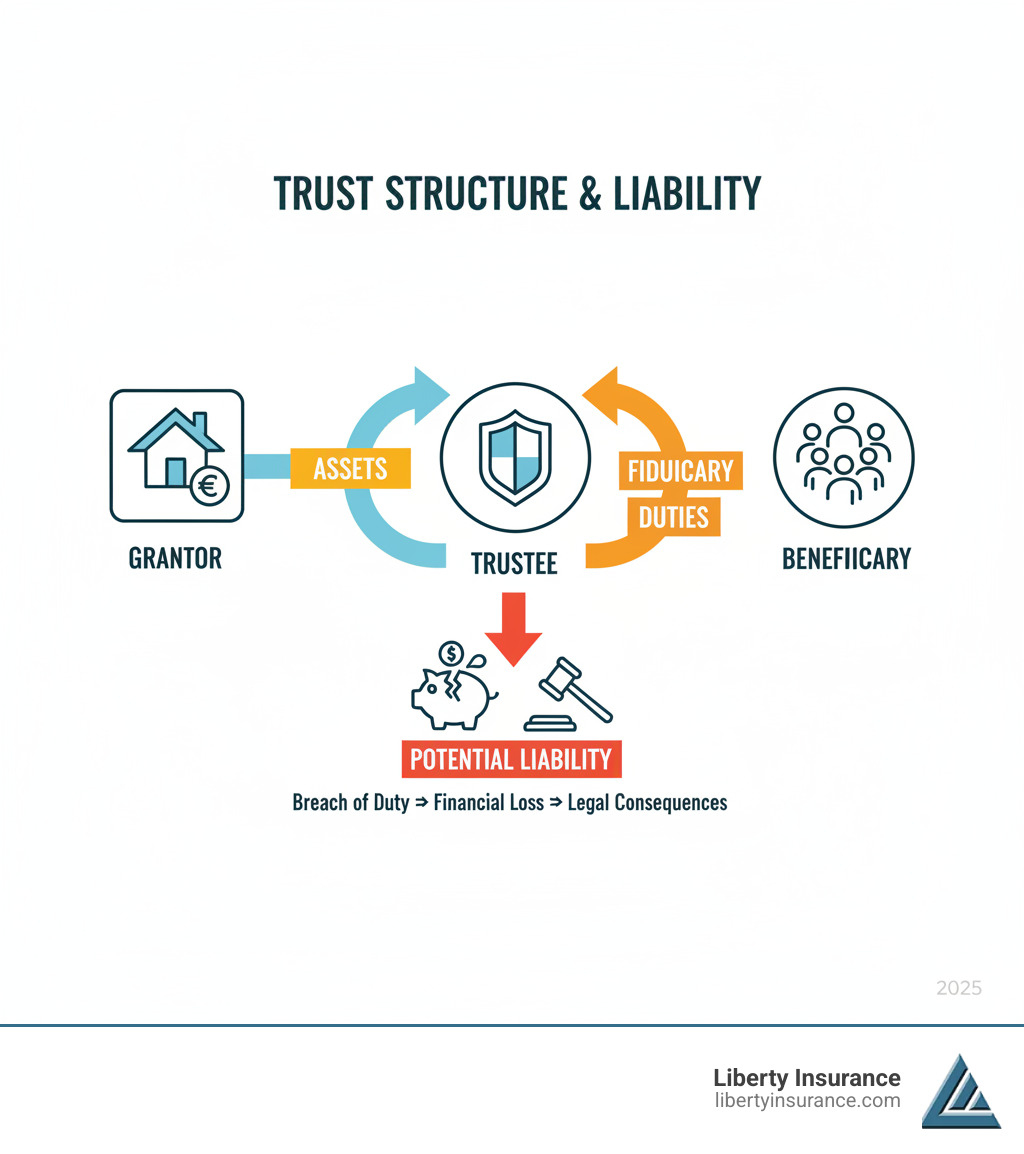
Trustee liability refers to the legal and financial responsibility trustees assume when they manage trust assets and make decisions for the benefit of others. Accepting the role of trustee places you in a fiduciary relationship—one of the highest duties recognized in law—where courts expect diligence, loyalty, prudence, and transparency at all times.
What makes trustee liability so consequential is the potential for personal exposure. If you breach your duties—even without bad intentions—you may be held personally responsible for losses. Courts routinely stress that trustees must take an active, engaged role, keep meticulous records, and seek professional advice when needed. Exculpatory clauses in the trust instrument offer only limited protection and rarely protect against gross negligence, willful misconduct, or bad faith.
Consider a cautionary example from a recent Ontario Court of Appeal decision: a trustee who took a largely passive role and failed to properly oversee trust investments was found jointly and severally liable for $453,048 plus interest. There was no fraud. The court’s message was simple: the role demands prudence and participation, not rubber-stamping.
Trusts arise in many contexts—from family estate plans to charitable endowments and corporate benefit plans. Whether you are:
- A family member managing a parent’s living trust;
- A professional or corporate trustee administering multiple, complex trusts;
- A volunteer trustee on a nonprofit or pension board;
- A co-trustee working alongside siblings or advisors;
the same fiduciary themes repeat: loyalty, care, impartiality, fidelity to the trust instrument, and accountability. The law expects trustees to develop and follow processes—reading the trust document closely, documenting decisions, implementing appropriate investment strategies, and communicating regularly with beneficiaries.
This article provides a comprehensive guide to understanding and managing trustee liability. We’ll cover core fiduciary duties, common pitfalls and breach scenarios, the risks and remedies involved, the legal landscape including exculpatory clauses and statutory relief, and practical ways to protect yourself—through strong administration, prudent delegation, court direction where appropriate, and specialized insurance.
I’m Andrew Harris. Through my work with insurance solutions and as a member of the Board of Trustees for IEP Youth Services, I’ve seen how trustee liability can create unexpected, sometimes devastating personal exposure. Sound administration and appropriate insurance can make the difference between a well-run trust and a costly dispute.
Before we dive in, a quick note: while this guide is comprehensive, it is not legal advice. Trust law varies by jurisdiction (for example, the U.S. Uniform Trust Code and Uniform Prudent Investor Act, Canada’s various Trustee Acts, and the UK’s Trustee Act 2000), and specific facts matter greatly. Always consult qualified counsel for advice on your situation.
The Core of the Trustee Role: Understanding Your Fiduciary Duties
When you become a trustee, you become a fiduciary—legally obligated to act with utmost loyalty and care for the beneficiaries. Most jurisdictions accept a “prudent person” or “prudent investor” standard, requiring you to exercise the care, skill, and judgment a prudent person would apply when managing another’s property.
Your central guide is the trust instrument. It defines your powers, limitations, and the trust’s objectives. Keeping a current, annotated copy of the trust document and any amendments is foundational to your role.
The Duty of Loyalty
The duty of loyalty demands you act solely in the beneficiaries’ interests. Core implications include:
- Avoiding self-dealing, such as purchasing trust property for yourself
- Steering clear of conflicts of interest, including related-party transactions
- Ensuring no personal profit beyond authorized trustee compensation
- Disclosing any potential conflict promptly and obtaining consent or court approval
Courts view loyalty breaches as particularly serious and often order disgorgement of gains even where beneficiaries cannot show a direct loss.
The Duty of Care (and the Prudent Investor Rule)
The duty of care requires active, prudent management. Under the Prudent Investor Rule, trustees must:
- Consider risk and return objectives appropriate to the trust’s purposes
- Diversify investments unless special circumstances justify otherwise
- Evaluate total portfolio strategy rather than individual investments in isolation
- Monitor investments and rebalance as needed
- Consider tax consequences, liquidity needs, and costs
- Document an investment policy and review it periodically
- Seek professional advice when appropriate
A crucial takeaway: “set and forget” investing is rarely acceptable. Even conservative allocations require monitoring. For more, see: Assessing Trustee Liability.
The Duty of Impartiality
Trustees must treat beneficiaries fairly in accordance with the trust’s terms. That often means balancing the interests of current income beneficiaries against those of long-term remainder beneficiaries. This is often called the “even-hand rule.” Fairness does not mean equality; it means thoughtful decisions aligned with the settlor’s intent, documented to show how competing interests were considered.
The Duty to Follow the Trust Terms
The trust instrument is not a suggestion—it is binding. When in doubt:
- Seek clarification from counsel
- Consider petitioning the court for instructions if the language is ambiguous
- Avoid unilateral interpretations that materially alter beneficiaries’ rights
Duties to Inform, Account, and Keep Records
Transparency is a cornerstone of the fiduciary relationship. Trustees must:
- Provide timely, accurate information reasonably requested by beneficiaries.
- Deliver periodic accountings showing all trust activity. A formal accounting typically includes: a statement of assets on hand at the beginning of the period; a detailed list of all receipts (e.g., income, capital gains); a detailed list of all disbursements (e.g., expenses, distributions); gains or losses realized during the period; and a list of assets on hand at the end of the period with their current values.
- Maintain meticulous records: meeting notes, rationales for decisions, advisor reports, correspondence, and all supporting financial documents. Good records are both a compliance tool and your best defense if challenged.
Duty to Segregate and Safeguard Assets
- Keep trust assets separate from personal or other fiduciary accounts to prevent commingling.
- Maintain appropriate titling and custody arrangements (e.g., “John Smith, Trustee of the Smith Family Trust”).
- Insure property where prudent; secure valuables and sensitive documents.
Duty to Enforce and Defend Claims
Trustees have an affirmative duty to act to protect the trust’s value. This includes:
- Taking reasonable steps to enforce claims held by the trust, such as pursuing debts owed to the trust or taking legal action to recover trust property.
- Defending the trust against claims from third parties in a prudent manner.
Failure to act in either capacity can be a breach of duty leading to personal liability for the resulting loss.
Duty to Prudently Delegate and Supervise
You may delegate investment or administrative functions to qualified professionals if allowed, but you must:
- Select competent advisors with due care
- Set clear scopes of work in engagement letters
- Monitor performance and replace as needed
- Retain ultimate decision-making responsibility
Special Assets and Heightened Care
Certain assets demand extra attention and specialized expertise:
- Closely held business interests: governance issues, buy-sell agreements, liquidity constraints
- Real estate: environmental risks, maintenance, leasing, and insurance
- Concentrated positions: documented rationale if not diversifying
- Collectibles, IP, and digital assets: custody, licensing, valuation, and security
By internalizing these duties and building disciplined processes around them, you reduce the risk of missteps that can translate into trustee liability.
When Things Go Wrong: Scenarios Leading to Personal Liability
Even diligent trustees can face disputes. The legal system distinguishes between expenses incurred while properly doing the job and losses caused by a breach. Understanding this difference—and the common traps—helps you avoid personal exposure.

Trustee Liability vs. Personal Liability
- Trustee liability: Proper expenses (e.g., taxes, reasonable professional fees, necessary repairs) are typically payable from trust assets via the trustee’s right to indemnification.
- Personal liability: If you commit a breach of trust (e.g., disloyalty, imprudence, violation of the trust terms), courts can hold you personally responsible. Your own assets—bank accounts, investments, even your home—may be at risk to make the trust whole.
Intent is relevant but not decisive. Negligence, imprudence, or failure to act may be enough to trigger personal liability, even in the absence of dishonesty.
Common Breaches That Trigger Personal Liability
- Mismanaging investments: lack of diversification, failure to monitor, speculative bets inconsistent with the trust’s risk profile, or ignoring tax consequences.
- Failing to distribute correctly: misreading the trust’s distribution standards or delaying distributions without justification.
- Commingling funds: mixing trust assets with personal funds or other trusts’ assets.
- Poor recordkeeping: inadequate documentation, informal cash handling, or missing receipts/accountings.
- Failure to insure or secure property: lapses that lead to avoidable losses.
- Negligent delegation: hiring unqualified advisors, failing to supervise, or ignoring red flags.
- Self-dealing and conflicts: undisclosed transactions that benefit the trustee directly or indirectly.
- Tax noncompliance: missed filings or elections, late returns, or penalties arising from inaction.
- Environmental and premises exposures: owning real estate without appropriate due diligence and risk control.
- Cyber and digital asset lapses: failing to safeguard credentials, wallets, or data tied to trust value.
Passive Trusteeship Is Risky
A passive trustee who simply signs documents or defers entirely to others may still be liable. In the oft-cited case of Penman v. Penman, a trustee who failed to exercise meaningful oversight was held personally liable for hundreds of thousands of dollars. The lesson: accepting the title means accepting the workload—reviewing statements, asking questions, documenting decisions, and intervening when something seems wrong.
Co-Trustees and Joint Exposure
When multiple trustees serve, the law often treats them as jointly and severally liable. One trustee’s breach can create exposure for all. If your co-trustee mismanages the portfolio, beneficiaries can collect the entire judgment from you if you are perceived as the deeper pocket. Courts expect co-trustees to monitor each other, speak up, and seek court intervention if necessary.
Red Flags That Call for Immediate Action
- Large, unexplained transfers or withdrawals;
- Persistent underperformance relative to a prudent benchmark without a documented rationale;
- Refusals to share information or provide accountings;
- Pressure from beneficiaries to take actions that conflict with the trust terms;
- Advisor conflicts or undisclosed compensation;
- Impending litigation, tax penalties, or regulatory inquiries.
When red flags appear, pause, document, consult counsel, and consider petitions for instructions if the path is unclear. Acting promptly and transparently can reduce the risk of an adverse finding later.
The High Stakes of Being a Trustee: Risks, Consequences, and Remedies
Trusteeship carries real risks to your finances, reputation, and relationships. When a breach is alleged, the outcome can affect your personal assets and public record.
Potential Consequences for the Trustee
- Personal repayment (surcharge): Courts may order you to restore losses, pay interest, and cover consequential damages from your own assets.
- Fee forfeiture or reduction: Trustees who breach duties may lose compensation otherwise earned.
- Adverse fee-shifting: Depending on the jurisdiction and outcome, you may be ordered to pay beneficiaries’ attorneys’ fees and costs.
- Removal or suspension: Courts may remove a trustee or suspend powers during litigation—an outcome that can harm reputation and professional relationships.
- Equitable remedies: Disgorgement of profits, rescission of improper transactions, constructive trusts, tracing of misapplied assets, and injunctions to prevent further harm.
- Credit and insurance impacts: Judgments can affect creditworthiness; some insurers may scrutinize fiduciary histories in underwriting.
Collateral Consequences and Practical Harm
- Family stress and fractured relationships in intra-family trusts.
- Distrust from beneficiaries or co-trustees that complicates administration.
- Opportunity costs from time spent on disputes and litigation.
- Reputational damage in professional and community settings.
Remedies Available to Beneficiaries
Beneficiaries have powerful tools when they suspect a breach:
- Lawsuits for breach of fiduciary duty;
- Motions to compel accountings or information;
- Petitions to remove or suspend the trustee;
- Court-ordered distributions or specific performance;
- Surcharge judgments with pre- and post-judgment interest;
- Disgorgement of improper profits and equitable tracing of assets;
- Appointment of a special fiduciary or corporate trustee to stabilize administration.
Managing Risk Before It Escalates
- Communicate early and often with beneficiaries; clarify expectations and document your rationale.
- Use independent valuations for illiquid or conflicted transactions.
- Seek court instructions in the face of ambiguity or conflict.
- Explore early dispute resolution, including mediation, to control costs and preserve relationships.
Trustees who build disciplined processes, invite transparency, and address conflicts head-on tend to avoid the worst outcomes—or at least create a strong record that supports statutory relief and limits personal exposure.
Navigating the Legal Landscape of Trustee Liability
The legal framework for trustee liability varies by jurisdiction but reveals common themes: trustees bear the burden of demonstrating prudence, loyalty, and reasonableness; exculpatory clauses have limits; and courts weigh process and documentation heavily.

How Courts Evaluate Trustee Conduct
Courts typically examine:
- Intent and good faith: Honesty helps, but it does not excuse objectively unreasonable conduct.
- Compliance with the trust document: Deviations require compelling justification or court approval.
- Process and documentation: Investment policy statements, meeting notes, advisor memos, and periodic reviews carry significant weight.
- Trustee’s skill and experience: Professionals may be held to higher standards; specialized assets may require specialized oversight.
- Impact on beneficiaries: Material losses, avoidable tax costs, and delayed distributions influence remedies.
Exculpatory Clauses and Their Limits
Exculpatory clauses can narrow liability for mere negligence if permitted by law and not unconscionable, but they typically do not protect against gross negligence, willful misconduct, or bad faith. Courts scrutinize such clauses for fairness—especially if drafted by the trustee or included without meaningful disclosure. For pensions and other specialized trusts, see this pension trustee liability guide for additional context.
Statutory Relief and Common Defenses
Many statutes allow courts to excuse a trustee from personal liability if they acted “honestly and reasonably” and “ought fairly to be excused.” Other defenses may include:
- Beneficiary consent or ratification after full, fair disclosure;
Limitations periods or laches (delay) barring stale claims;
Reliance on expert advice (not a complete defense, but supportive when reasoned and documented);
- Estoppel where beneficiaries accepted benefits of the challenged conduct.
Note: Beneficiary releases should be carefully drafted and supported by adequate disclosure to be effective. Formal court approval of an accounting can also create finality.
Jurisdictional Nuances
- United States: The Uniform Trust Code (UTC) and Uniform Prudent Investor Act (UPIA) provide a framework adopted by a majority of states, establishing default rules for trustee duties and powers. However, state law is paramount. For example, states like Delaware, South Dakota, and Nevada have pioneered concepts like directed trusts, where a trustee’s liability for investment decisions can be limited when a separate investment advisor is appointed. The Employee Retirement Income Security Act (ERISA) imposes a stricter “prudent expert” standard on fiduciaries of most private-sector retirement plans. ERISA fiduciaries are overseen by the Department of Labor (DOL) and are subject to stringent prohibited transaction rules that forbid nearly all forms of self-dealing.
- Canada: Trustee duties are governed by provincial Trustee Acts (e.g., Ontario’s Trustee Act, British Columbia’s Trustee Act) and a deep body of common law. The “even-hand rule”—the duty to act impartially between income and capital beneficiaries—is a central tenet. Courts place a heavy emphasis on the trustee’s active participation and prudent process. Case law, particularly from the Ontario Court of Appeal, has been influential in establishing that passive trusteeship is not a defense and that co-trustees are jointly and severally liable for breaches.
- United Kingdom: The Trustee Act 2000 codified a statutory duty of care, requiring a trustee to exercise such care and skill as is reasonable in the circumstances, taking into account any special knowledge or experience they have or claim to have. This modernized the old “prudent man of business” test. For pension trustees, the regulatory environment is particularly demanding. The Pensions Regulator (TPR) has extensive powers to investigate, issue significant fines, and even pursue criminal sanctions against trustees who recklessly endanger a pension scheme’s assets.
Always verify the rules applicable in your jurisdiction and the governing law clause in the trust.
Active vs. Passive Roles and Co‑Trustee Dynamics
Co-trustees owe duties to beneficiaries and to each other. You must:
- Participate meaningfully in decisions;
- Monitor co-trustees’ conduct and challenge questionable actions;
- Seek court direction if a co-trustee impedes prudent administration.
Because liability is often joint and several, one co-trustee may be responsible for the entirety of a loss, with rights of contribution against others. Passive inaction is not a defense.
Indemnification and Insurance Are Not Panaceas
- Indemnification: Trustees generally have a right to be indemnified from trust assets for proper expenses. But indemnity does not apply to breaches and may be limited by insolvency of the trust or court orders.
- Insurance: Fiduciary liability insurance can cover defense costs and certain settlements/judgments, subject to policy terms. Coverage is claims-made and comes with exclusions; it is a risk-transfer tool, not a substitute for prudence.
Proactive Protection: How to Mitigate the Risk of Personal Liability
The best defense against trustee liability is a proactive, process-driven approach to trust administration. Build structure around your duties so that prudence is evident in both outcomes and records.

Best Practices for Trust Administration
- Read, annotate, and periodically re‑review the trust. Maintain a working summary of key terms.
- Create an administration calendar: tax deadlines, accounting cycles, beneficiary meetings, property inspections, and investment reviews.
- Prepare or adopt an Investment Policy Statement (IPS) tailored to the trust’s objectives, liquidity needs, risk tolerance, and time horizon.
- Document everything: meeting notes, rationales for asset allocation, advisor recommendations, quotes for major expenses, and distribution analyses.
- Keep assets properly titled; segregate accounts; reconcile statements monthly.
- Use checklists for new assets, beneficiary onboarding, and distribution requests.
- Implement cybersecurity hygiene: MFA on financial accounts, secure password vaults, procedures for digital assets, and incident response plans.
- Maintain adequate insurance on real property and special assets; calendar renewals and coverage reviews.
Transparent Communication
- Provide regular, understandable updates to beneficiaries—at least annually, more often if circumstances change.
- Set expectations early on timing, documentation needed for distributions, and how decisions will be made.
- Invite questions and address concerns in writing. Follow up with clarifications to create a clear paper trail.
Thoughtful Use of Professionals
Prudence often includes knowing when to seek help:
- Legal counsel for interpreting the trust, navigating conflicts, seeking court instructions, or documenting releases.
- Investment advisors operating under a fiduciary standard; define scope, benchmarks, and reporting cadence in engagement letters.
- Accountants for complex tax matters (elections, basis tracking, K‑1/T3 reporting, cross‑border issues).
- Appraisers for closely held businesses, real estate, or unique assets.
If you delegate, continue to supervise. Review performance reports, ask questions, and document oversight.
Court Direction and Dispute Prevention
When ambiguity or disagreement arises, consider petitioning the court for instructions or approval of a proposed course of action. Early, neutral guidance can:
- Prevent unilateral decisions that later invite challenge;
- Create finality around contested distributions or valuation methods;
- Support statutory relief if later questioned.
Protecting Your Personal Assets with Insurance
Personal homeowners or umbrella policies typically exclude fiduciary claims. This leaves a gap that specialized coverage can fill.
- Fiduciary Liability Insurance: Designed to cover defense costs, judgments, and settlements in claims alleging breach of fiduciary duty, subject to policy terms and exclusions.
- Claims‑made nature: Coverage depends on when a claim is made, not when the act occurred; retroactive dates and tail coverage matter.
- Key terms to evaluate: limits, retentions, insured capacity (individual vs. entity), insureds (co‑trustees, volunteers, committee members), and exclusions (personal profit, fraud, prior knowledge).
- ERISA bond vs. fiduciary liability: A bond protects the plan from theft/misappropriation; fiduciary liability insurance protects the fiduciaries from breach claims—both may be needed.
To learn more about this essential protection, explore Fiduciary Liability Insurance. The right policy, paired with disciplined administration, provides a resilient safety net.
Exit Planning: Resignation and Succession
- Review the trust’s resignation provisions and required notices.
- Prepare a thorough final accounting and transfer file for the successor trustee.
- Seek beneficiary releases or court approval where appropriate to create closure.
Ending your service with clean records and formal approvals helps prevent future surprises.
Frequently Asked Questions about Trustee Liability
Trustees and beneficiaries often confront similar concerns. Clear answers—and good documentation—reduce disputes and surprises.
What happens to trustee liability after the trustee’s death?
A trustee’s potential liability can extend to their estate. If a breach occurred during the trustee’s lifetime, beneficiaries may assert claims against the estate. Practical tips:
- Maintain organized, comprehensive records to help your executor respond to inquiries.
- Consider beneficiary releases or court‑approved accountings at key milestones.
- Ensure fiduciary insurance policies and engagement letters are preserved with your records.
Can a trustee be held liable for the actions of a co-trustee?
Often yes. Under joint and several liability, beneficiaries may collect the entire loss from any co‑trustee. Simply claiming you “didn’t know” is not a defense. Co‑trustees must monitor each other, ask questions, and, if necessary, seek court intervention to stop improper actions.
What is the first step a beneficiary should take if they suspect a breach of duty?
Request a formal accounting of trust assets and transactions. This is a legal right in many jurisdictions. Then consult independent counsel to evaluate the information. Keep a written record of all communications.
Can a trustee be compensated—and does pay change the liability standard?
Trustees are often entitled to reasonable compensation per the trust or statute. Compensation does not reduce fiduciary standards; if anything, paid trustees—especially professionals—may be held to higher expectations. Fee schedules should be disclosed, and conflicts in fee arrangements should be managed transparently.
How long must a trustee keep records?
Maintain records at least through the applicable statutes of limitation following a final accounting or termination of the trust. Because limitations periods vary and may be tolled by concealment or lack of disclosure, many trustees retain key documents for several years beyond termination. Court‑approved accountings and comprehensive beneficiary releases help establish finality.
What if beneficiaries sign a release—does that eliminate liability?
Releases can be powerful if they are informed, voluntary, and supported by adequate disclosure. They may not bar claims for fraud, willful misconduct, or matters not disclosed. Court approval of an accounting often provides stronger protection than private releases alone.
Can a trustee delegate investment management?
Yes, if allowed by law and the trust. Delegation should be prudent: select qualified advisors, set clear mandates, require periodic reporting, and continue oversight. Delegation reduces, but does not eliminate, your responsibilities—you must monitor and, if necessary, replace advisors.
When should a trustee seek court approval or instructions?
Consider court guidance when:
- The trust language is ambiguous on a material point;
- Co‑trustees or beneficiaries disagree on a significant decision;
- A proposed transaction involves conflicts of interest or related parties;
- A distribution standard is difficult to apply or exposes the trustee to allegations of favoritism;
- You seek approval of an accounting or resignation/succession plan.
Are no‑contest (in terrorem) clauses enforceable against beneficiaries who question the trustee?
It depends on jurisdiction and the nature of the challenge. Many jurisdictions limit enforcement to will or trust contests and do not apply them to good‑faith requests for information or accountings. Beneficiaries should obtain legal advice before taking steps that might trigger a clause.
What tax mistakes most often lead to disputes?
- Late or missed filings (income, estate, or informational returns);
- Poor basis tracking on distributed assets;
- Failure to consider DNI (distributable net income) and timing of distributions;
- Overlooking elections or cross‑border reporting for foreign assets or beneficiaries.
Engage tax professionals, calendar deadlines, and keep robust workpapers.
What if the trust holds a family business or concentrated stock?
Special assets warrant a written plan: governance, liquidity, diversification strategy (or rationale for retaining concentration), successor management, and valuation. Document the tradeoffs—concentration risk versus the settlor’s intent and potential tax or control benefits—and revisit the plan regularly.
Can a trustee resign to avoid growing liability?
Trustees can usually resign pursuant to the trust terms or statute, but you remain responsible for conduct while in office. Provide a comprehensive accounting, cooperate in transition, and consider court approval and beneficiary releases to close out your tenure.
Does fiduciary insurance replace careful administration?
No. Insurance is a backstop, not a substitute for prudence. Policies have exclusions, retentions, and limits. Strong administration—paired with suitable coverage—provides the best risk posture.
Conclusion
Serving as a trustee is both an honor and a high‑stakes responsibility. The same powers that enable you to protect and grow assets for beneficiaries also expose you to trustee liability when duties are breached or processes break down. Courts expect active engagement, rigorous documentation, and decisions grounded in loyalty, prudence, and fairness.
The good news: with disciplined administration—meticulous records, transparent communication, thoughtful delegation, and timely court guidance when needed—you can reduce the likelihood of disputes and strengthen your defenses if claims arise. Exculpatory clauses offer only limited shelter, and personal lines insurance typically excludes fiduciary claims. That’s why purpose‑built coverage matters.
Protect your service and your personal balance sheet with a holistic approach: process, people, documentation, and insurance. The peace of mind that comes from proper protection is invaluable—allowing you to focus on what matters most: fulfilling the settlor’s intent and serving beneficiaries well.
Protect your role and personal assets with Fiduciary Liability Insurance.

