
Why Understanding Unexpected Equipment Failure Is Critical for Your Business
Unexpected equipment failure is when machinery or assets stop working without warning, causing production halts, financial losses, and operational chaos. Whether it’s a bearing that seizes, a motor that burns out, or a conveyor belt that snaps, these breakdowns cost businesses thousands—or even millions—of dollars in downtime, repairs, and lost revenue.
Quick Answer: The Top Causes and Prevention Strategies
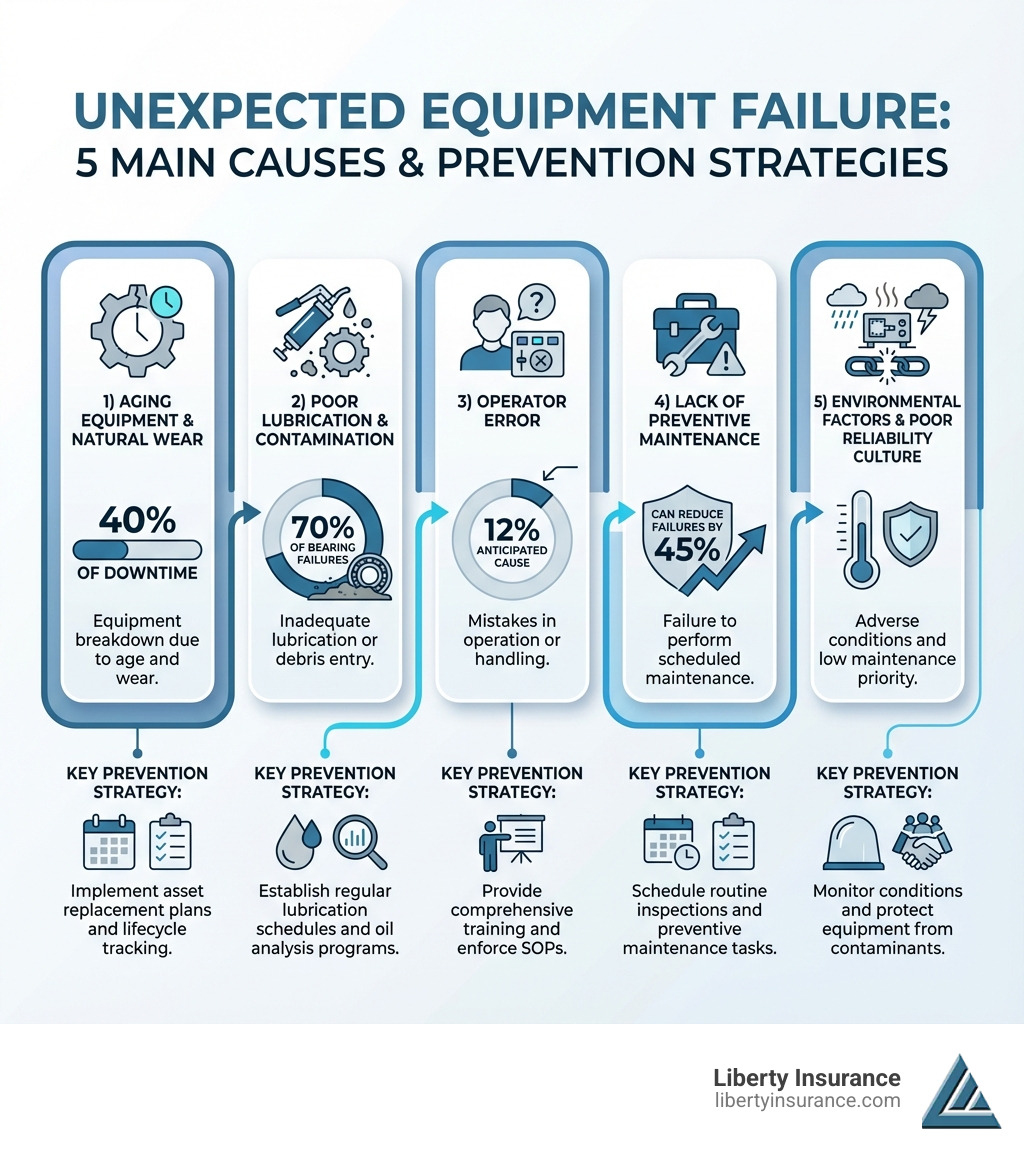
| Cause | Prevention Strategy |
|---|---|
| Aging Equipment | Implement asset replacement plans and lifecycle tracking |
| Poor Lubrication/Contamination | Establish regular lubrication schedules and oil analysis programs |
| Operator Error | Provide comprehensive training and enforce SOPs |
| Lack of Preventive Maintenance | Schedule routine inspections and preventive maintenance tasks |
| Environmental Factors | Monitor conditions and protect equipment from contaminants |
The numbers are staggering. Unplanned downtime costs manufacturers an estimated $260,000 per hour. The world’s 500 largest manufacturers lose $1.4 trillion every year to these disruptions—that’s 11% of their total revenue evaporating. For small and mid-sized businesses, even a few hours of downtime can mean the difference between profitability and closure.
But here’s the good news: most equipment failures are preventable. They don’t just happen out of the blue. Whether a failure seems sudden, gradual, or intermittent, there’s usually an underlying cause that can be traced back to specific root issues—issues you can identify and fix before disaster strikes.
In this guide, you’ll learn the five most common causes of unexpected equipment failure, understand their warning signs, and find practical strategies to prevent them. You’ll also learn how proper insurance coverage can protect your business when prevention isn’t enough.
I’m Andrew Harris, and through my work with business owners across New Jersey for over a decade, I’ve seen how unexpected equipment failure can devastate operations—and how the right combination of prevention and protection can save businesses from financial ruin. My experience helping manufacturers, contractors, and commercial property owners steer these challenges has shown me that knowledge and preparation are your best defenses.
Unexpected equipment failure terms explained:
The Staggering Financial and Operational Impact of Downtime
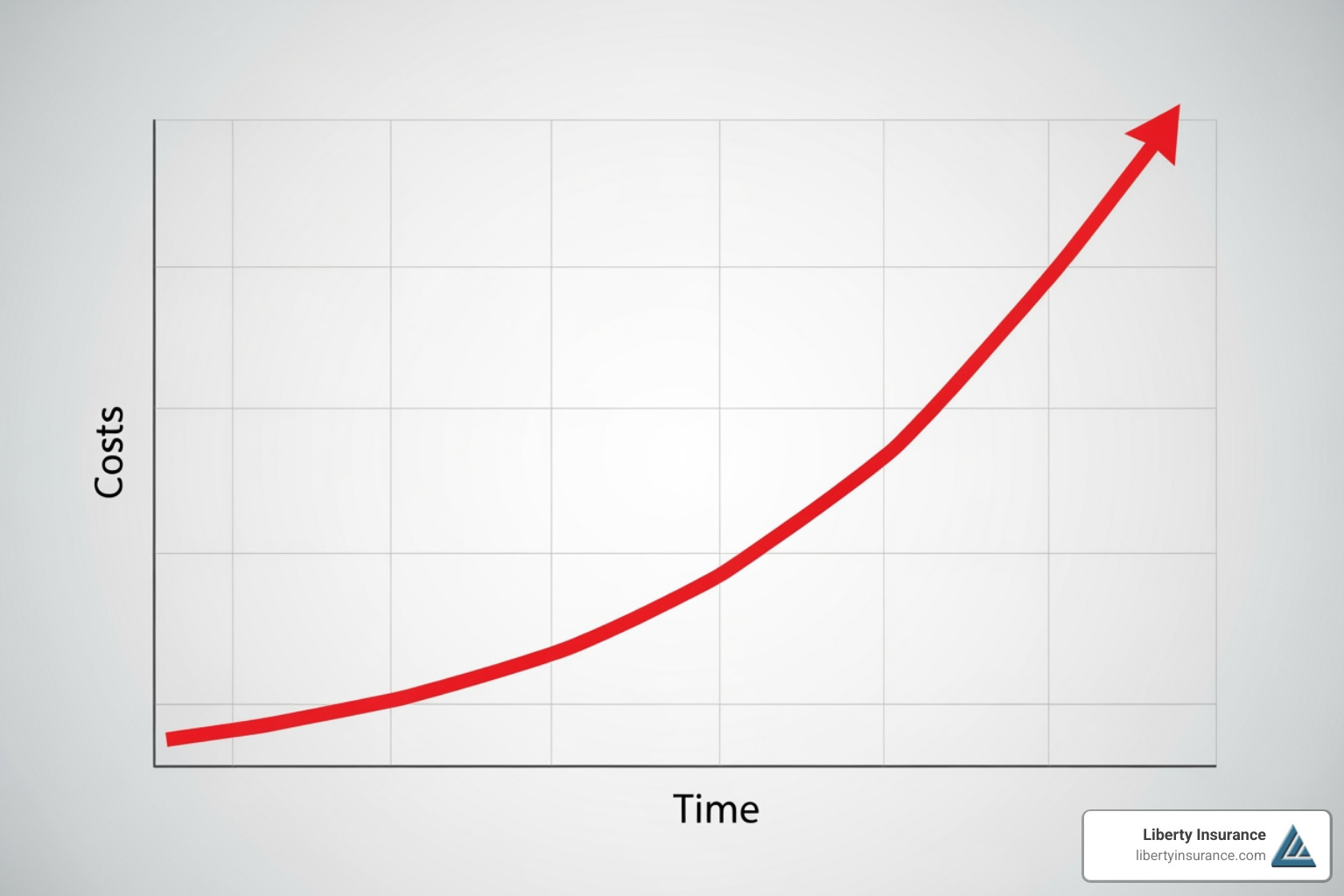
When a critical piece of equipment unexpectedly stops working, it’s not just a minor inconvenience; it’s a full-blown crisis for many businesses. The financial and operational impacts of unexpected equipment failure are far-reaching, affecting everything from daily production to long-term profitability.
The numbers don’t lie: unplanned downtime is incredibly costly. In 2024, the average cost of an hour of unplanned downtime hovers around $25,000 and can skyrocket to over $500,000 for larger organizations. For manufacturers in places like New Jersey, every hour counts. According to one report, unplanned downtime costs manufacturers an estimated $260,000 per hour. This level of financial risk underscores why equipment reliability is paramount.
Beyond the immediate repair costs, we see businesses grapple with lost productivity, revenue loss from missed orders, and significant expenses for emergency repairs and expedited parts. If you’ve ever experienced a critical machine going down, you know the scramble to get things back online.
The Ripple Effect on Operations
The impact of unexpected equipment failure extends far beyond the bottom line. It creates a ripple effect that disrupts almost every aspect of our operations:
- Production Schedules: A sudden breakdown throws carefully planned production schedules into disarray, leading to delays and missed deadlines.
- Quality Control: Rushed repairs or temporary fixes can compromise product quality, leading to rework or scrapped batches.
- Safety Hazards: Malfunctioning equipment can pose serious safety risks to our employees, potentially leading to accidents and injuries. For instance, an NJ man was fatally crushed by collapsed equipment at a work site, highlighting the tragic consequences when equipment fails.
- Wasted Labor & Emergency Overtime: Our skilled teams might sit idle during downtime or, conversely, work costly emergency overtime to catch up once repairs are complete.
- Delayed Shipments: When production halts, so do deliveries, which can strain relationships with customers and incur penalties.
- Reputational Damage: Consistently failing to meet deadlines or deliver quality products can severely damage our business’s reputation, making it harder to attract and retain clients.
- Supply Chain Disruption: A single point of failure can cascade through the entire supply chain, impacting partners and customers alike.
The scale of this issue is immense. The world’s largest manufacturers lose a staggering $1.4 trillion annually to downtime, representing 11% of their total revenue. For an average plant, downtime now costs upwards of $253 million annually. Factories lose anywhere from 5% to 20% of their productivity due to downtime – equivalent to thousands and even millions of dollars in some cases.
Quantifying the Cost
To truly understand the financial implications, we need to look beyond the obvious. The costs associated with unexpected equipment failure can be broken down into direct, indirect, and hidden categories:
| Cost Type | Examples of Costs |
|---|---|
| Direct Costs | Repair parts, labor for technicians, emergency repair services, expedited shipping for parts, replacement equipment. |
| Indirect Costs | Lost production revenue, delayed shipments, customer dissatisfaction, penalties for missed deadlines, wasted raw materials. |
| Hidden Costs | Employee morale impact, increased administrative burden, reputational damage, compliance fines, increased insurance premiums. |
We often focus on the direct costs of repair, but it’s the indirect and hidden costs—like lost revenue, diminished customer trust, and the strain on our team’s bandwidth—that truly add up. This is where comprehensive planning and the right insurance coverage become invaluable. Our Business Interruption Insurance and Loss of Revenue policies are designed specifically to help businesses in New Jersey mitigate these financial blows. For a holistic approach, exploring options like Manufacturing Insurance can provide a safety net against these unforeseen events.
The Root Causes of Unexpected Equipment Failure

While unexpected equipment failure can feel like a bolt from the blue, it rarely is. There’s almost always a root cause—or a combination of causes—that, if identified and addressed, could have prevented the breakdown. Understanding these underlying issues is the first step toward building a more resilient operation. This is where thorough root cause analysis comes into play.
Whether it’s mechanical wear, human error, inadequate maintenance strategies, or environmental factors, pinpointing the source of the problem helps us implement targeted solutions. For businesses in Millstone Township, Toms River, or anywhere in New Jersey, protecting our assets from these failures is crucial. This is why many businesses turn to Equipment Breakdown Insurance to safeguard against the financial fallout.
Let’s explore the five most common culprits behind equipment going rogue:
Cause 1: Aging Equipment and Natural Wear
Think of our equipment like us: with age comes natural wear and tear. Components degrade, materials fatigue, and corrosion sets in. This isn’t a surprise; it’s an inevitable part of the asset lifecycle. However, the natural deterioration of our machines can lead to unexpected equipment failure if not properly managed.
Aging equipment is the leading cause of equipment failure, accounting for 40 percent of unplanned downtime in plants. Assets that consistently run year after year require more frequent repairs over time. While we can’t stop time, we can certainly manage its effects. This involves implementing robust asset replacement plans, carefully tracking the lifecycle of our critical machinery, and being proactive about upgrades.
Regular inspections help us spot signs of mechanical degradation, such as cracks, fraying belts, or warped seals, long before they lead to a catastrophic failure. Investing in our equipment through timely replacements and upgrades is key to avoiding costly downtime. For businesses with significant investments in machinery, a robust Business Asset Protection Insurance plan can provide peace of mind.
Cause 2: Improper Lubrication and Contamination
If equipment is the body, then lubrication is the lifeblood. Without proper lubrication, friction increases, leading to excessive heat, rapid wear, and ultimately, component failure. Bearings, for example, are highly susceptible to lubrication issues. As much as 70 percent of machine bearing failures are due to lubrication issues—either ineffective lubrication or a complete lack thereof.
But it’s not just about applying lubricant; it’s about applying the right lubricant, in the right amount, at the right time, and ensuring it’s clean. Contaminated oil is a silent killer of machinery. Between 60 and 70 percent of oil-wetted component failures are caused by contaminated oil. Common contaminants include dirt, dust, moisture, and even other fluids used in the machine. Even microscopic silt particles in oil can cause significant damage.
Water, in particular, is a dangerous contaminant. It doesn’t lubricate; it emulsifies with oil, reducing film strength and causing pressure changes that can damage components. Implementing strict lubrication schedules and regular oil analysis programs can help us detect and address contamination before it causes an unexpected equipment failure.
Cause 3: The Human Factor: Operator Error
We’re all human, and to err is, well, human. However, in the context of industrial machinery, operator error can lead to significant and costly breakdowns. This cause encompasses a range of issues, from a lack of proper training to fatigue and deviations from standard operating procedures (SOPs).
According to the State of Industrial Maintenance 2024 report, 12% of maintenance professionals anticipate operator error as a leading cause of downtime in the next twelve months. Some sources even suggest human errors are responsible for approximately 80% of equipment failures. This highlights the critical role our operators play in equipment longevity and reliability.
Mitigating operator error involves several key strategies:
- Comprehensive Training: Ensuring all operators are thoroughly trained on each piece of equipment they use, including refreshers on safety protocols and startup/shutdown sequences. This isn’t just best practice; it’s often a regulatory requirement, with OSHA’s operator training requirements setting the standard for safety.
- Clear SOPs: Developing and strictly enforcing clear, easy-to-follow Standard Operating Procedures for all equipment.
- Addressing Fatigue: Implementing policies that address operator fatigue, as tired workers are more prone to making mistakes.
- Building Redundancy: Training workers on how to use machines they don’t normally operate can build redundancy and provide flexibility during staff shortages, reducing the likelihood of untrained personnel operating critical equipment.
Even with the best training, accidents can happen. That’s why having appropriate coverage, such as Manufacturing Workers Comp, is essential for businesses in New Jersey.
Cause 4: Lack of Preventive Maintenance
Perhaps the most straightforward cause of unexpected equipment failure is the absence of a proactive maintenance strategy. Operating under a “run-to-failure” philosophy means that equipment is used until it breaks down, with no scheduled inspections or servicing to catch developing issues. This reactive approach guarantees that failures will be unexpected and often catastrophic. The data is clear: implementing a preventive maintenance (PM) program can reduce equipment failure by as much as 45 percent. The inverse is also true: neglecting PM directly leads to a higher incidence of downtime. Without regular check-ups, minor issues like loose bolts, worn belts, or dirty filters inevitably escalate into major breakdowns that halt production and incur significant costs.
Cause 5: Environmental Factors
The environment in which equipment operates plays a critical role in its longevity and reliability. Often overlooked, external conditions can accelerate wear and tear, leading to premature failure. Key environmental factors include:
- Temperature and Humidity: Extreme heat can cause components to overheat and lubricants to lose viscosity, while extreme cold can make materials brittle. High humidity promotes rust and corrosion and can lead to electrical system failures.
- Contaminants: Airborne dust, dirt, chemicals, and other particulates can infiltrate machinery, clogging filters, contaminating lubricants, and causing abrasive wear on sensitive components.
- Vibration: Excessive vibration, whether from the machine itself or adjacent equipment, can loosen fasteners, cause cracks in structural components, and damage electronics over time.
- Power Quality: Unstable power, including surges, sags, and electrical noise, can wreak havoc on sensitive electronic controls and motors, a key reason why Electrical Surge Protection is so vital.
Failing to control these environmental variables is like leaving your equipment exposed to the elements. Proper facility design, climate control, and regular cleaning are essential lines of defense against this insidious cause of unexpected equipment failure.
Building a Fortress Against Failure: Proactive Prevention Strategies
Now that we understand the common culprits behind unexpected equipment failure, it’s time to talk solutions. The good news is that most breakdowns are preventable, and with the right proactive strategies, we can significantly reduce the risk and keep our operations running smoothly. It’s about building a “fortress” of reliability around our assets.
For businesses in New Jersey, from the busy factories of New Brunswick to the agricultural operations of Princeton, a comprehensive approach to equipment management is key. This includes not only robust maintenance practices but also considering the financial protection offered by a Complete Commercial Equipment Insurance Guide.
From Reactive to Proactive: Mastering Maintenance
For too long, many businesses operated on a “run-to-failure” model – if it ain’t broke, don’t fix it. But this reactive approach is a recipe for unexpected equipment failure and costly downtime. The shift to proactive maintenance is perhaps the most significant step we can take.
- Preventive Maintenance (PM): This involves regularly scheduled maintenance tasks, such as inspections, lubrication, adjustments, and component replacements, based on time or usage intervals. PM programs are highly effective, with studies suggesting they can reduce equipment failure by as much as 45 percent. In fact, PM can lower equipment failure rates by 75%, reduce downtime by 45%, and increase production rates by 35%—all while decreasing maintenance costs by 35%.
- Condition-Based Maintenance (CBM): Taking PM a step further, CBM uses real-time data from sensors to monitor equipment health and predict when maintenance is actually needed. This avoids the pitfalls of “over-maintenance” (see below) while ensuring timely intervention.
- Over-maintenance Risks: Believe it or not, too much maintenance can also lead to issues. Every time we open up a machine, we introduce a new set of risks, from accidental damage to improper reassembly. Over-maintenance can lead to faster depreciation, wasted technician time, and unnecessary inventory use. The goal is to find the “just right” amount, balancing PM with CBM.
To master maintenance, we need a structured approach. This means developing clear maintenance schedules and utilizing root cause analysis tools like The 5 Whys method and fishbone diagrams to deeply understand why failures occur, not just what happened.
Here’s a list of key items for an effective maintenance checklist:
- Regular visual inspections for wear, leaks, or damage.
- Scheduled lubrication and fluid checks.
- Cleaning and debris removal.
- Filter replacements (air, oil, fuel).
- Tightening of fasteners and connections.
- Calibration of sensors and controls.
- Testing of safety features.
- Verification of operational parameters against specifications.
- Documentation of all maintenance activities and findings.
The Digital Watchdog: How Monitoring Prevents Unexpected Equipment Failure
In today’s interconnected world, technology offers powerful tools to prevent unexpected equipment failure. Digital monitoring transforms our approach from reactive guesswork to proactive, data-driven decisions.
- IoT Sensors: These smart devices collect real-time data on everything from vibration and temperature to pressure and energy consumption.
- CMMS Software: Computerized Maintenance Management Systems (CMMS) act as the central hub, processing sensor data, scheduling maintenance tasks, managing spare parts inventory, and tracking maintenance history.
- Data Analytics & Predictive Analytics: By analyzing vast amounts of data, we can identify patterns, predict potential failures before they happen, and schedule maintenance precisely when it’s needed. Techniques like vibration analysis and thermal imaging can detect subtle changes that signal impending trouble.
This real-time monitoring allows us to move beyond scheduled maintenance to truly predictive maintenance, addressing issues before they escalate. If you’re still managing maintenance with pen and paper or Excel, it might be time to consider moving to a digital maintenance solution. And don’t forget, protecting these sophisticated digital systems is just as important; effective Electrical Surge Protection can prevent damage to sensitive electronics.
Fostering a ‘Reliability Culture’ to Stop Failures Before They Start
Technology and processes are only as good as the people and culture behind them. A ‘reliability culture’ is one where everyone, from the CEO to the front-line operator, understands the value of uptime and is committed to preventing unexpected equipment failure.
This culture is built on:
- Management Buy-in: Leadership must champion reliability as a core business value, allocating resources and supporting proactive initiatives.
- Employee Empowerment: Our operators and technicians are often the first to notice subtle changes in equipment behavior. Empowering them to report issues and contribute to solutions is crucial.
- Cross-Departmental Communication: Breaking down silos between operations, maintenance, and engineering ensures everyone is on the same page and working towards common reliability goals.
- Continuous Improvement: A reliability culture accepts learning from failures (through root cause analysis) and continuously refining processes and strategies. This often involves embracing change management principles to ensure new practices are adopted smoothly.
- Operator Feedback Loops: Creating channels for operators to provide feedback on equipment performance, maintenance effectiveness, and procedural clarity. This feedback is invaluable for identifying and addressing issues early.
A strong reliability culture ensures that every team member plays a role in preventing equipment breakdowns, making our operations more robust and resilient.
Frequently Asked Questions about Equipment Failure
What are the most common warning signs of impending equipment failure?
Catching warning signs early can save us from a major unexpected equipment failure. Here are some common indicators to watch out for:
- Unusual Noises: Grinding, squealing, clunking, or humming sounds that are outside the norm.
- Excessive Vibration: Any noticeable increase or change in vibration patterns.
- Increased Temperature: Components running hotter than usual, detectable by touch or thermal imaging.
- Leaking Fluids: Oil, coolant, or hydraulic fluid leaks can indicate seal failures or cracks.
- Intermittent Faults: Equipment that works fine one moment and malfunctions the next, often the most frustrating to diagnose.
- Performance Degradation: A noticeable drop in efficiency, speed, output quality, or increased cycle times.
- Visible Wear and Tear: Cracks, frays, corrosion, loose fasteners, or physical damage to components.
What is the difference between preventive and predictive maintenance?
While both are proactive strategies to avoid unexpected equipment failure, they differ in their approach:
- Preventive Maintenance (PM): This is a time-based or usage-based strategy. Maintenance tasks (e.g., oil changes, filter replacements, inspections) are performed at fixed intervals (e.g., every 500 operating hours, every 3 months) regardless of the equipment’s actual condition. It’s like changing the oil in your car every 5,000 miles, whether it looks dirty or not.
- Predictive Maintenance (PdM): This is a condition-based strategy. It uses real-time data from sensors and monitoring tools (like vibration analysis, thermal imaging, oil analysis) to assess the equipment’s actual condition and predict when a failure is likely to occur. Maintenance is then scheduled just before the predicted failure, optimizing uptime and minimizing unnecessary interventions. It’s like changing your car’s oil only when a sensor tells you its viscosity has degraded.
What should be included in an equipment failure response plan?
Even with the best prevention strategies, unexpected equipment failure can sometimes occur. A well-defined response plan is crucial to minimize impact and ensure safety. Our plan should include:
- Immediate Safety Protocols: Procedures for safely shutting down, isolating, and locking/tagging out the equipment to protect personnel.
- Failure Assessment Procedures: Steps to quickly and accurately diagnose the problem, including who is responsible for the initial assessment.
- Clear Communication Chain: Who needs to be notified (management, maintenance, operations, safety, customers) and through what channels.
- Spare Parts & Resources: A system for quickly identifying and sourcing necessary spare parts, potentially including pre-negotiated agreements with suppliers.
- Mitigation Steps: Actions to reduce the impact on production, such as rerouting work to other machines or implementing temporary solutions.
- Documentation for Analysis: Protocols for thoroughly documenting the failure, including symptoms, repairs made, and root cause findings, to prevent recurrence.
Conclusion: Protecting Your Operations from the Unexpected
Unexpected equipment failure is a formidable challenge for any business, threatening not just our productivity and profits, but also the safety of our teams and our reputation. However, by understanding the common causes—from aging equipment and lubrication issues to operator error and inadequate maintenance—we gain the power to prevent many of these costly breakdowns.
Implementing proactive strategies like robust preventive and predictive maintenance programs, fostering a strong reliability culture, and leveraging digital monitoring tools are our best defenses. These measures transform our operations from reactive firefighting to strategic, data-driven management, ensuring our equipment runs smoothly and reliably.
While prevention is the best strategy, not all failures can be avoided. Protecting your business’s financial health against the high costs of downtime is a critical part of a comprehensive risk management plan. Liberty Insurance offers specialized coverage to safeguard your assets and ensure business continuity. Learn more about our Systems Breakdown Insurance Complete Guide.

