
Protecting Your Wedding Investment: Understanding the Cost of Peace of Mind
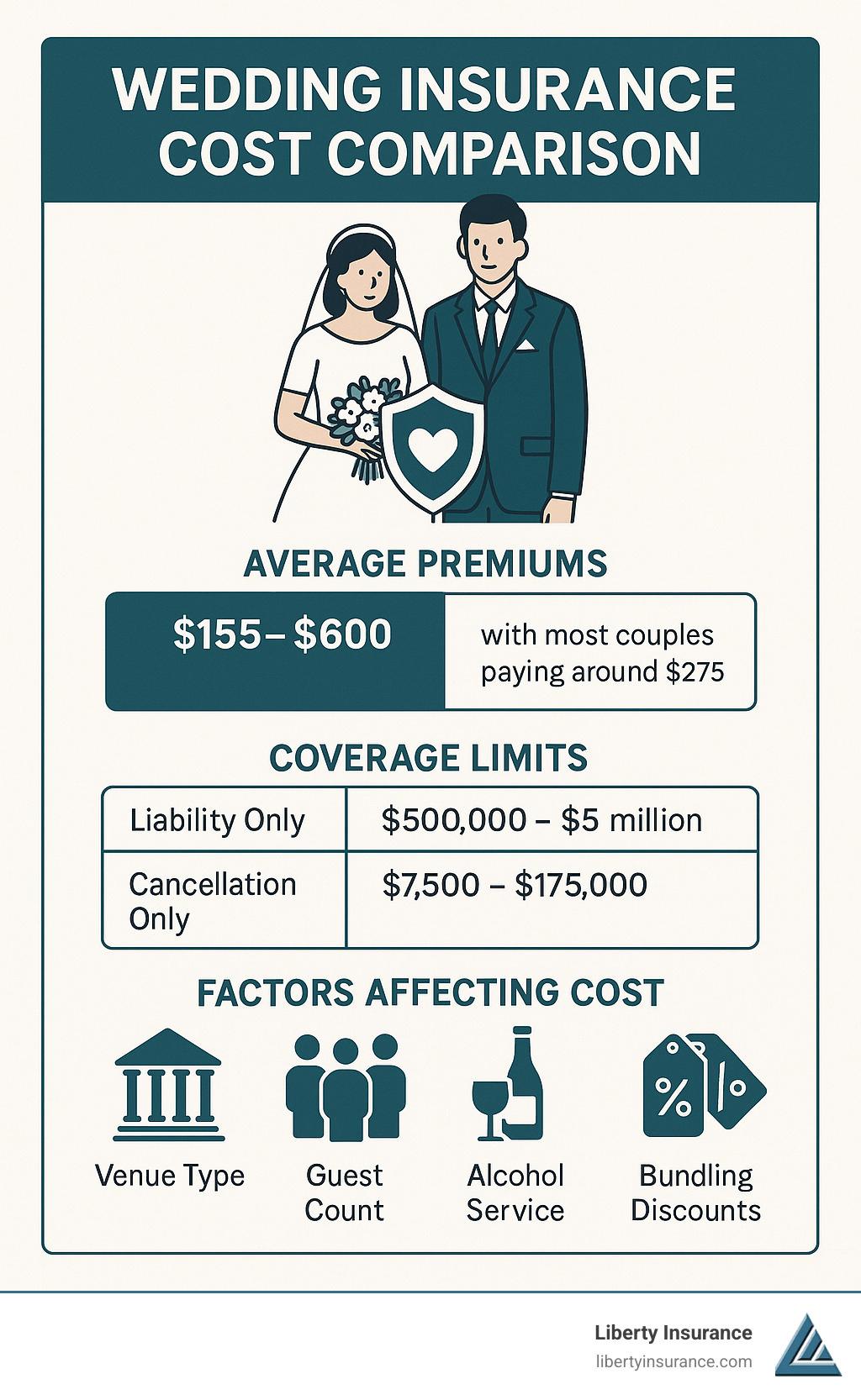
The average wedding event insurance cost ranges from $155 to $600 for basic coverage, with most couples paying around $275 for a comprehensive policy. Here’s what you need to know at a glance:
| Insurance Type | Average Cost | Typical Coverage Limits |
|---|---|---|
| Liability Only | $75-$235 | $500,000-$5 million |
| Cancellation Only | $95-$600 | $7,500-$175,000 |
| Combined Package | $250-$1,000 | Varies by provider |
| Save up to 15% by bundling both coverage types |
Your special day represents both an emotional milestone and a significant financial investment. With the average wedding in the United States costing over $20,000, protecting that investment makes practical sense. Wedding event insurance cost is influenced by several key factors including your guest count, venue location, whether alcohol will be served, and the coverage limits you select.
Think of wedding insurance as a financial safety net that covers everything from vendor no-shows to venue damage, protecting the thousands you’ve invested in deposits and non-refundable payments. For approximately the cost of adding one guest to your celebration, you can secure comprehensive protection against the unexpected.
As a Certified Insurance Counselor with over a decade of experience guiding couples through wedding event insurance cost considerations, I’ve seen how the right policy can save couples from financial devastation when the unexpected occurs. My work with the Professional Insurance Agents of New Jersey has given me unique insights into finding the perfect balance between coverage and cost.
Similar topics to wedding event insurance cost:
– event cancellation insurance
– wedding insurance
– event insurance
Wedding Event Insurance 101: Definitions, Types & Necessity
When you’re caught up in the whirlwind of wedding planning—tasting cakes, choosing flowers, and finding that perfect venue—insurance might be the last thing on your mind. Yet this often-overlooked detail could be the hero of your wedding story if things don’t go exactly as planned.
What Is Wedding Event Insurance?
Think of wedding event insurance as a safety net specifically designed for one of life’s biggest celebrations. It’s a special event policy that protects your financial investment—those deposits and payments that can quickly add up to thousands of dollars.
“But we’ve planned everything perfectly,” you might think. I hear this often, but after helping hundreds of couples steer wedding insurance, I’ve seen how unpredictable life can be. From sudden venue closures to vendor no-shows, this protection offers third-party coverage that steps in when the unexpected happens.
Unlike general insurance policies, wedding coverage is custom to the unique risks of matrimonial celebrations. It addresses specific concerns like damaged wedding dresses, vendor bankruptcies, and even those “what if” scenarios that keep you up at night before the big day.
For more comprehensive information about coverage options, you can explore more info about Wedding Event Insurance.
Why You Might Need It (Even for Backyard or Destination “I Do’s”)
You might wonder if insurance is really necessary for your intimate backyard ceremony or destination beach wedding. The answer, surprisingly often, is yes.
Venue mandates have become increasingly common, with nearly all professional venues now requiring proof of liability coverage before you can say “I do.” Even that beautiful backyard wedding at your parents’ home may not be covered by their homeowner’s policy—especially once you add a tent, catering staff, and dancing guests.
Home policy gaps can leave you vulnerable. Standard homeowner’s insurance typically wasn’t designed with 100-person celebrations in mind. The liability limits may be insufficient, particularly when alcohol is involved.
Travel risks multiply when you’re planning a destination wedding. From lost luggage containing your wedding attire to travel delays affecting your entire wedding party, the complexities of international celebrations bring additional concerns that specialized insurance can address.
One New Jersey couple I worked with planned a beautiful Bahamas wedding, only to have a hurricane threaten the island a week before their date. Their wedding insurance covered the costs of rescheduling, saving them over $20,000 in non-refundable deposits. That peace of mind is worth its weight in wedding cake!
Main Coverage Types at a Glance
Wedding insurance generally falls into two protective categories, each serving a different purpose for your special day:
Liability coverage protects you if someone gets injured or property gets damaged during your celebration. This includes that moment when Uncle Bob gets too enthusiastic on the dance floor and knocks over the ice sculpture, or when a guest slips on spilled champagne. Coverage typically ranges from $500,000 to $5 million, with most venues requiring at least $1 million in coverage.
Cancellation/postponement protection reimburses your non-refundable deposits and payments if unforeseen circumstances force you to reschedule. This could include vendor bankruptcy, extreme weather, sudden illness, or even military deployment. It won’t cover a change of heart (sorry, cold feet aren’t insurable!), but it will protect against many other scenarios beyond your control.
Extra expense coverage helps when you need to quickly replace a vendor who cancels last-minute, often at a premium price.
Jewelry and gifts protection covers lost or stolen wedding bands, engagement rings, and presents.
Weather coverage typically requires purchasing at least 15 days before your event and includes specific trigger conditions like mandatory evacuations or impassable roads.
Most couples find that combining liability and cancellation coverage provides the most comprehensive protection. And here’s a money-saving tip: bundling these coverages often results in a 15% discount on your premium.
For couples concerned about serving alcohol at their reception, understanding more info about Host Liquor Liability Insurance Policy can provide additional clarity on how you’re protected.
When you consider that the average wedding costs over $20,000, spending a few hundred dollars on wedding event insurance cost starts to look like a very wise investment. After all, you wouldn’t drive an uninsured $20,000 car—why leave your wedding day financially unprotected?
Wedding Event Insurance Cost: Average Prices & Key Drivers

When you’re already juggling catering quotes and venue deposits, the thought of adding wedding event insurance cost to your budget might make you wince. But just like those comfortable shoes hidden under your wedding gown, this investment pays off when you need it most.
Average Wedding Event Insurance Cost Numbers to Know
Let me break down what most couples are paying these days for peace of mind:
Most couples spend around $275 for a comprehensive policy that covers both liability and cancellation protection. If you’re looking at individual coverages, basic liability insurance typically runs between $75-$235 for your wedding day, while cancellation insurance ranges from $95-$600 depending on how much of your wedding budget you want to protect.
Some couples also consider specialty coverage like change-of-heart insurance (though it’s rare and usually starts around $170). To put this all in perspective, if your wedding costs $20,000, comprehensive insurance represents just 1-1.5% of your total budget. As I often tell couples, “You’re essentially adding one more guest to your celebration—but this guest could save you thousands if something goes wrong!”
For more detailed information about specific costs, you might want to check out How Much Does Wedding Insurance Cost? for the most current industry rates.
Factors That Influence Wedding Event Insurance Cost
Your wedding is unique, and your insurance premium will be too. Here’s what affects your rate:
Your guest count matters—insuring 50 friends is naturally less expensive than covering 300 dancing relatives. The venue type also plays a role; a historic mansion in Princeton might require higher coverage limits than a modern hotel ballroom in New Brunswick.
Alcohol service is another consideration. While host liquor liability is typically included in standard policies, the length of your open bar and whether you’re having a cash bar can impact your premium. Your state regulations matter too—insurance requirements in New Jersey might differ from neighboring states.
Your chosen coverage limits will significantly affect what you pay, as will any policy add-ons like covering your rehearsal dinner or post-wedding brunch. Some insurers even look at claim history for similar events in your area when setting rates.
I recently worked with a couple from Millstone Township who saved nearly $100 on their premium by purchasing their policy four months before their wedding instead of waiting until the last minute. Timing really can make a difference!
How Coverage Limits & Policy Options Affect Wedding Event Insurance Cost
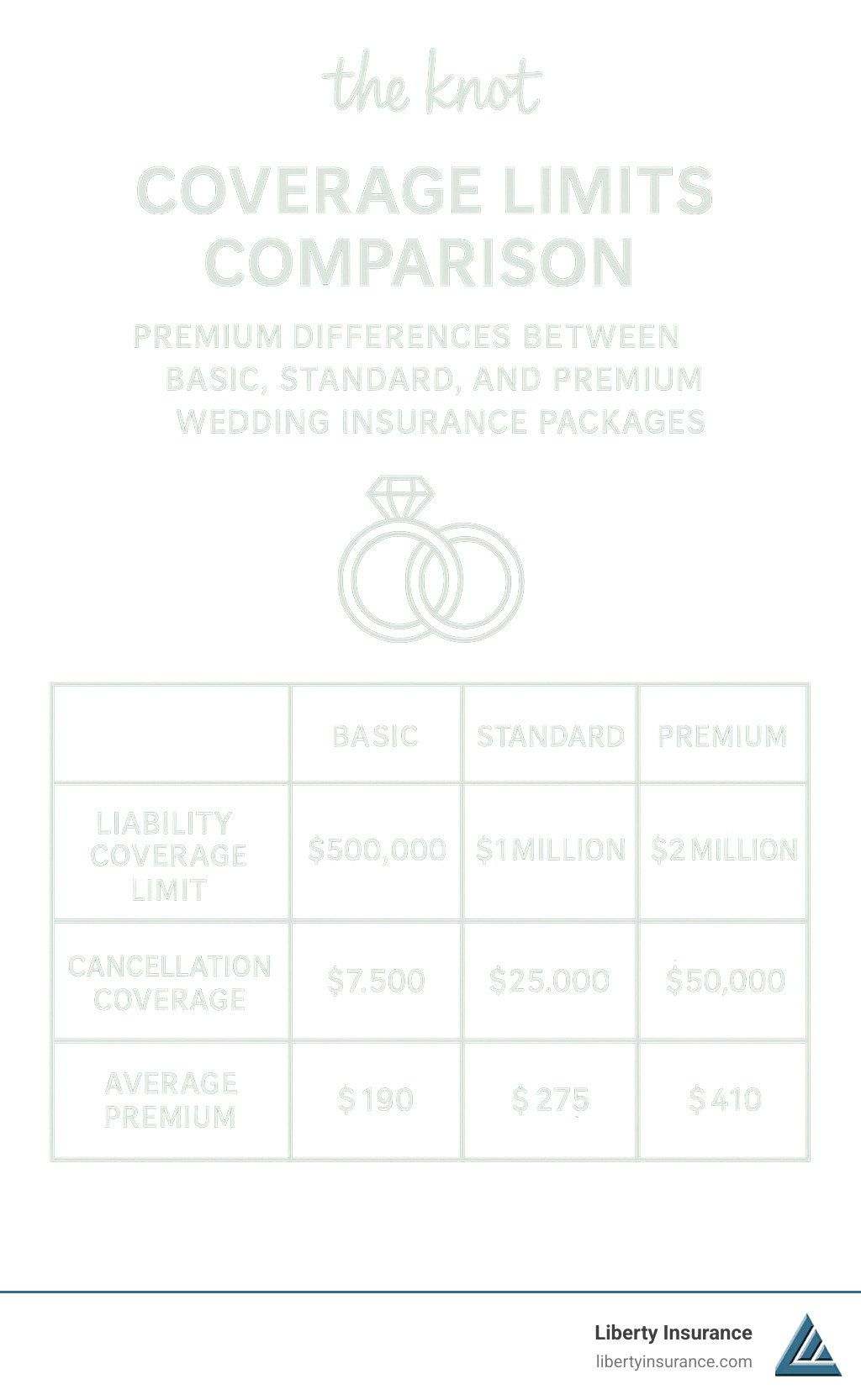
Understanding coverage options helps you balance protection with price. Most couples choose a $1 million per-occurrence/$2 million aggregate policy, which costs around $278 for one-day coverage. This means your insurance would pay up to $1 million for any single incident, with a maximum of $2 million for all claims combined.
Some upscale venues or historic properties might require higher limits—up to $5 million in some cases. Yes, these higher limits come with higher premiums, but they’re necessary for certain locations.
Your cancellation coverage should align with your non-refundable expenses. A backyard wedding with minimal deposits might only need $7,500-$15,000 in coverage, while a luxury celebration could require protection up to $175,000.
One of the smartest ways to save on your wedding event insurance cost is to bundle coverage types. You can save up to 15% by purchasing both liability and cancellation coverage together. Many policies also let you include your rehearsal dinner under the same coverage without a significant price increase.
If you’re serving alcohol (and let’s be honest, most weddings do), you’ll want to make sure you have Host Liquor Liability Insurance Policy protection. The good news is that adding this coverage typically doesn’t increase your premium but provides essential protection against alcohol-related incidents.
Buying Smart: Timing, Process & Documentation
Knowing when and how to purchase wedding insurance can be just as important as understanding what it covers. Let’s walk through the smart approach to securing the right policy at the right time.
When Should You Purchase?
The ideal time to purchase wedding insurance is as soon as you begin making deposits to vendors. Here’s why timing matters:
- Early purchase advantage: Buy as soon as you start making non-refundable deposits—often up to two years before the wedding
- Weather coverage deadline: Most policies require purchase at least 15 days before your wedding for extreme weather coverage
- Last-minute options: Some providers allow liability coverage purchase up to 24 hours before the event, but cancellation coverage typically requires more lead time (at least 14 days)
- Military deployment coverage: Must be purchased before deployment orders are received
- Change-of-heart coverage: The rare policies that offer this require purchase at least 15 months before the wedding
As one insurance expert notes: “The sooner you purchase, the sooner you’re protected. Many couples make their first significant deposits 12-18 months before their wedding date—that’s when your insurance should begin.”
Step-by-Step to Secure a Policy
Purchasing wedding insurance is a straightforward process that typically takes less than 30 minutes:
- Gather information: Before requesting quotes, compile details about your wedding:
- Date, time, and location
- Estimated guest count
- Total budget and breakdown of major expenses
- Vendor details and deposit amounts
Venue insurance requirements
Compare quotes: Request quotes from multiple providers to compare:
- Coverage limits and exclusions
- Deductible amounts
- Additional coverage options
Total premium costs
Choose appropriate limits: Select coverage that aligns with your wedding investment:
- Liability limits that meet or exceed venue requirements
- Cancellation coverage that matches your non-refundable deposits
Consider subcategory limits for attire, gifts, rings, etc.
List additional insureds: Many venues require being listed as an additional insured on your liability policy, which is typically available at no extra cost
Pay your premium: Wedding insurance is almost always a one-time payment rather than monthly installments
Receive documentation: You’ll receive a certificate of insurance immediately or within 24 hours, which you can provide to your venue
Store policy documents: Keep digital and physical copies of your policy in a safe place and share details with a trusted family member
Can You Get a Refund or Make Changes?
Life happens, and wedding plans sometimes change. Here’s what you need to know about policy modifications and refunds:
- Venue requirement guarantee: Some insurers offer a 100% refund if your policy doesn’t meet your venue’s requirements
- Date changes: Most policies allow you to transfer coverage to a new date if you postpone your wedding
- Coverage modifications: You can typically add coverage or increase limits after purchase (subject to timeframe restrictions)
- Cancellation policy: Most insurers allow cancellation before the effective date for a full refund
- Additional insureds: These can usually be added at any time at no extra cost
One unique feature we’ve seen from some providers is a paperless operation model that allows for faster service and lower costs. This means policy changes can often be processed quickly online without cumbersome paperwork.
Claims, Coverage Gaps & Money-Saving Tips
When it comes to protecting your big day, knowing what your policy covers—and what it doesn’t—can save you from heartache and financial strain. Let’s explore the practical side of wedding event insurance cost and how to get the most protection for your investment.
What’s Typically Covered vs. Not Covered
Your wedding insurance acts as a financial safety net, but like any net, it has specific areas it’s designed to catch.
Wedding policies typically cover vendor problems, which accounted for nearly half of all claims in 2023. Imagine this scenario: Two weeks before their wedding, a couple from New Brunswick finded their photographer had gone out of business. Their insurance not only reimbursed their $3,000 deposit but also covered the additional $1,200 needed to book a last-minute replacement. That’s the kind of protection that brings real peace of mind.
Property damage protection is another key benefit. At a Princeton wedding, a guest accidentally knocked over a candle that damaged an antique table at the venue. The couple’s liability insurance covered the $4,500 repair cost, saving them from an awkward post-honeymoon bill.
Serious illness or injury affecting the couple or immediate family members is covered too. A father of the bride from Toms River suffered a heart attack three days before the wedding, forcing a postponement. Insurance covered the $12,000 in non-refundable vendor payments, allowing the family to focus on recovery rather than financial loss.
Extreme weather events that make your venue inaccessible or prevent key participants from attending are typically covered. When a severe ice storm hit Trenton, one couple’s winter wedding had to be postponed, but insurance covered the $8,500 in vendor rescheduling fees.
Military deployment is another covered reason for postponement, specifically when leave is suddenly revoked. Many policies also protect special property like wedding attire, rings, gifts, and even photos or videos that are lost or damaged.
However, it’s equally important to understand what’s not covered. Most policies exclude “change of heart” cancellations—though specialized coverage does exist, it’s rare and costly. Problems that existed before you purchased the policy won’t be covered, nor will simple preference changes like wanting different flowers or vendors.
Financial issues that make you unable to afford your wedding aren’t covered, and most policies now explicitly exclude pandemics like COVID-19. Regular rain or poor weather isn’t covered unless it’s severe enough to prevent attendance or creates unsafe conditions. Pre-existing medical conditions typically require a special rider, and engagement ring loss usually falls under jewelry insurance or homeowner’s policies instead.
Top Tips Before You Buy
Before signing on the dotted line, take time to understand exactly what you’re getting for your wedding event insurance cost.
Read the fine print carefully. Insurance policies aren’t exciting reading, but understanding exclusions, deductibles, and claim procedures before purchasing is crucial. Look for zero-deductible options if possible, and check if there are sub-limits for specific categories like attire or gifts.
Match coverage to your actual budget. Your cancellation coverage should align with your total non-refundable expenses. Create a simple spreadsheet of all deposits and their refund policies, including travel expenses for destination weddings. This helps ensure you’re neither over-insured nor under-protected.
Verify if you already have some coverage through other policies. Your homeowner’s or renter’s insurance might provide some protection for home weddings. Some credit cards offer purchase protection that could cover vendor deposits. Also, ask your key vendors for certificates of their own insurance coverage.
Consider all wedding-related events when purchasing coverage. Make sure your policy extends to your rehearsal dinner, welcome events, post-wedding brunch, and even setup and takedown days if needed.
Bundle for significant savings. Combining liability and cancellation coverage can save you up to 15% on your premium. Some insurers offer additional discounts when bundled with other policies, so it’s worth asking about.
Understand alcohol liability implications. If you’re serving alcohol, ensure host liquor liability is included. This is typically part of the standard package at no extra cost, but it’s always wise to confirm.
Shop early for the best value. Purchase as soon as you begin making deposits, as this provides the longest coverage period for the same premium. Many couples begin making deposits 12-18 months before their wedding—that’s when your insurance should begin too.
Check venue requirements in writing. Obtain specific insurance requirements from your venue, including coverage limits, additional insured requirements, and certificate of insurance deadlines. This prevents last-minute scrambling or finding your policy doesn’t meet their standards.
Most Common Wedding Insurance Claims & How to Avoid Them
Learning from others’ experiences can help you steer potential pitfalls more effectively.
Vendor bankruptcy or no-shows account for 45% of all wedding insurance claims. While you can’t control a vendor’s business, you can reduce your risk by researching thoroughly, checking reviews and Better Business Bureau ratings. Your insurance should reimburse lost deposits and cover the cost of last-minute replacements if the worst happens.
Property damage makes up 18% of claims. Working with reputable vendors and discussing setup/breakdown procedures can minimize risks, but accidents happen. A good liability policy covers damage to the venue or rental items, preventing your security deposit from disappearing.
Illness or injury accounts for 14% of claims and is nearly impossible to predict. Your cancellation insurance should reimburse postponement costs if a key participant falls seriously ill. This protection allows you to focus on health concerns rather than financial ones.
Weather-related issues can derail even the most carefully planned wedding. While you can consider the season and location during planning, Mother Nature is unpredictable. Your policy should cover unavoidable postponement due to extreme weather that makes your venue inaccessible or dangerous.
Theft of gifts is unfortunately common. A couple from Millstone Township had $2,000 worth of gifts stolen from their reception, but their insurance replaced the value of the missing items. As a preventative measure, assign someone trustworthy to watch the gift table and secure gifts promptly.
By understanding these common claims, you can take preventative steps while ensuring your policy adequately covers these high-risk areas. The right coverage transforms your wedding event insurance cost from an expense into an investment in peace of mind.
For more information about protecting special events, check out Event Cancellation Insurance options that can provide additional security.
Frequently Asked Questions about Wedding Event Insurance Cost
Is Wedding Event Insurance Required by All Venues?
While not every single venue requires insurance, the reality is that almost all do these days. In fact, about 99.999% of venues now require couples to have liability coverage—it’s become as standard as asking for a deposit.
Even if your venue is in that tiny minority that doesn’t explicitly require insurance, getting coverage still makes good sense. Why? Because liability protection isn’t just about satisfying venue requirements—it’s about protecting your financial future from potential lawsuits or claims.
Here’s something many couples don’t realize: even if your venue has its own insurance policy, that coverage protects the venue, not you. You could still be personally responsible if a guest is injured or property is damaged during your celebration.
Planning a backyard wedding at your parents’ home? Don’t assume their homeowner’s policy has you covered. Most standard homeowner’s policies have significant limitations when it comes to event liability, especially once alcohol enters the picture or your guest count exceeds a certain number.
“We assumed my parents’ homeowner’s policy would cover our backyard wedding,” shared one New Jersey bride. “Thankfully, our insurance agent flagged this misconception before our celebration—their policy specifically excluded events with more than 25 guests where alcohol was served.”
Does It Cover Destination Weddings or Cruise-Ship Ceremonies?
Dreaming of saying “I do” with your toes in the sand or on the deck of a cruise ship? Good news—many wedding insurance policies do extend beyond your hometown:
Most standard policies cover weddings throughout the United States without any additional premium. Many also extend coverage to popular international destinations including Canada, Mexico, and most Caribbean islands. Some policies specifically include coverage for cruise ship ceremonies, which is particularly valuable given the unique logistics involved.
If you’re planning a wedding in other international locations, you’ll want to specifically ask about geographic coverage limits before purchasing. Some insurers offer worldwide coverage, while others may require a specialized policy or rider.
For destination weddings, consider these additional insurance considerations:
Be sure to understand how your policy handles travel delays that might impact your wedding timeline. Check whether the policy covers deposits paid to foreign vendors, and how currency exchange affects your coverage limits. You might also want to explore whether adding travel insurance makes sense to protect your honeymoon investment, especially if your wedding and honeymoon are part of the same trip.
One New Brunswick couple shared: “Our destination wedding in Punta Cana was delayed when a hurricane grounded flights. Our wedding event insurance cost included coverage for weather-related postponements, which saved us over $12,000 in non-refundable vendor deposits.”
Will My Policy Reimburse COVID-19 Cancellations?
This is perhaps the biggest change in wedding insurance since 2020, and I need to be straightforward with you: generally speaking, the answer is no.
Following the unprecedented impact of the COVID-19 pandemic, most wedding insurance policies now explicitly exclude pandemics, epidemics, and infectious diseases from coverage. This exclusion typically applies to government restrictions on gatherings, travel limitations related to infectious disease, illness caused by a known pandemic, and vendor cancellations directly attributed to pandemic conditions.
However, there are some nuances worth understanding. Some policies may still cover individual illness from COVID-19 (if not specifically excluded as a known condition). They might also cover vendor bankruptcy, even if that bankruptcy was indirectly caused by pandemic-related economic pressures. And if your venue closes for reasons unrelated to government mandate, you might still have coverage.
If pandemic coverage is particularly important to you, have a direct conversation with your insurance provider about specific scenarios, and get any assurances in writing. The insurance landscape continues to evolve, and policies purchased today may have different terms than those available earlier in the pandemic.
“When we postponed our Princeton wedding due to COVID restrictions, our policy didn’t cover the rescheduling costs,” one groom told us. “But when our photographer went out of business before our new date—partly due to the economic impact of the pandemic—our policy did cover finding a replacement, since vendor bankruptcy was still included in our coverage.”
For the most current information about wedding insurance options that might provide some form of pandemic protection, you can explore wedding insurance options that fit your specific needs and concerns.
Conclusion & Next Steps

Your wedding day isn’t just about saying “I do” – it’s the celebration of your love story and, let’s be honest, a significant financial commitment too. With the average wedding event insurance cost ranging from $155 to $600, you’re looking at spending less than the price of your wedding cake to protect your entire celebration. When you think about it that way, the value becomes crystal clear.
Throughout this guide, we’ve explored how wedding insurance works as your financial guardian angel, stepping in when vendors unexpectedly close shop or when Mother Nature decides to release a blizzard on your spring wedding day. The right policy transforms potential disasters into minor bumps in the road.
Here at Liberty Insurance, we’ve helped countless New Jersey couples protect their special days. From beachfront ceremonies in Toms River to historic venue celebrations in Princeton, we understand that every wedding has its own unique considerations. That’s why we don’t believe in one-size-fits-all policies – your love story is unique, and your insurance should be too.
As you wrap up your wedding planning journey, keep these essential insights in mind:
The early bird gets peace of mind – secure your policy as soon as those first deposits leave your bank account, even if your wedding is two years away. The wedding event insurance cost doesn’t increase with earlier purchase, but your protection period does.
Smart couples bundle their coverage, combining liability and cancellation protection to save up to 15% while ensuring comprehensive protection. It’s like getting the protection of two policies for less than the cost of adding one extra guest.
Your coverage should mirror your investment – if you’ve put down $15,000 in non-refundable deposits, your cancellation coverage should reflect that amount. There’s no need to over-insure, but being underinsured can leave painful gaps in protection.
Understanding what’s not covered is just as important as knowing what is. Be particularly mindful of pandemic exclusions and change-of-heart situations, which standard policies typically don’t cover.
Don’t assume anything about venue requirements – get their insurance specifications in writing, including coverage limits and additional insured requirements. This small step can prevent last-minute scrambling.
The wedding event insurance cost represents a tiny fraction of your overall wedding budget, yet it delivers immeasurable peace of mind. Instead of worrying about what might go wrong, you can focus on what really matters – celebrating the beginning of your life together.
Ready to cross “protect our wedding investment” off your planning checklist? We’d love to help. Our wedding insurance specialists at Liberty Insurance can walk you through your options and craft a policy that fits your celebration perfectly. With offices throughout New Jersey – including Millstone Township, Princeton, New Brunswick, Trenton, and Toms River – we’re always close by to provide personalized service.
For more information about protecting your special day, visit our wedding insurance page or explore our related coverage options like event cancellation insurance and event insurance.
Your wedding day should be filled with joy, laughter, and love – not worry about what-ifs. With the right insurance in place, you can focus on creating those once-in-a-lifetime memories, confident that your investment is protected no matter what surprises come your way.

