
Why Protecting Your Wedding Investment Matters
Wedding insurance what is it? It’s a type of special event insurance that protects your financial investment in your wedding day. If something unexpected happens—like a vendor going out of business, extreme weather forcing cancellation, or a guest getting injured at your reception—wedding insurance can reimburse you for non-refundable deposits and cover liability costs.
Quick Answer:
- What it covers: Non-refundable deposits, venue damage, guest injuries, vendor no-shows, extreme weather cancellations, damaged attire/gifts
- Two main types: Liability insurance (protects against lawsuits from injuries or property damage) and Cancellation insurance (reimburses costs if you must postpone or cancel)
- Average cost: $75-$550, typically 1% or less of your total wedding budget
- When to buy: As soon as you start making deposits to vendors
Your wedding day represents one of the biggest financial investments you’ll likely make—with the average wedding costing over $20,000, according to recent industry studies. You’ve spent months planning every detail, signed contracts with multiple vendors, and put down thousands of dollars in non-refundable deposits. But what happens if a hurricane shuts down your venue? If your photographer goes out of business the week before your wedding? If a guest is injured at your reception and decides to sue?
These aren’t pleasant scenarios to consider, but they’re real risks that couples face. Wedding insurance provides a financial safety net for circumstances beyond your control. Think of it like insuring any other significant investment—your car, your home, or your business.
The wedding industry traditionally operates on non-refundable contracts. Once you’ve paid that deposit to secure your venue, caterer, or photographer, that money is gone if something goes wrong. Wedding insurance helps protect those investments and gives you peace of mind to actually enjoy your engagement and wedding planning process.
As Andrew Harris, a Certified Insurance Counselor with experience in special event coverage through Liberty Insurance, I’ve helped countless couples understand wedding insurance what is it and how it protects their big day. Whether you’re planning an intimate backyard ceremony or a grand celebration at a prestigious venue, understanding your insurance options is a crucial step in wedding planning.
Simple guide to wedding insurance what is it terms:
Wedding Insurance: What Is It and Why Do You Need It?
Planning a wedding is an exciting journey, filled with dreams of perfect moments and lifelong memories. Yet, even the most carefully planned events can face unexpected problems. That’s where wedding insurance steps in, acting as your financial safety net, protecting your significant investment, and allowing you to breathe a little easier. We’re here to help you understand this vital coverage, especially for those celebrating in New Jersey, from Millstone Township to Trenton, Toms River, New Brunswick, and Princeton.
Imagine putting down a substantial deposit for your dream venue, only for it to unexpectedly close its doors weeks before your big day. Or perhaps a sudden, severe storm makes your outdoor ceremony impossible. Without wedding insurance, these unforeseen circumstances could lead to not only heartbreak but also significant financial loss. This special event insurance is designed to reimburse non-refundable deposits and cover costs associated with unforeseen circumstances, providing much-needed peace of mind.

Wedding Insurance What Is It: A Simple Definition
At its core, wedding insurance what is it? It’s a contractual agreement where you pay a one-time premium in exchange for financial protection against potential losses related to your wedding. This can include coverage for cancellation or postponement, as well as liability for incidents that occur during your event. It’s essentially a specialized form of event insurance custom to the unique risks of a wedding ceremony and reception. This one-day insurance policy is typically in effect during the wedding, reception, and any setup or take-down period immediately before or after the event. It is designed to cover unforeseen events, not issues that were known or predictable when the policy was purchased.
Why Wedding Insurance is a Smart Investment
With the average wedding budget often hovering around $20,000 or more, the financial stakes are incredibly high. Most vendors operate with non-refundable deposits, meaning if something goes wrong, that money is simply gone. Wedding insurance helps mitigate this risk.
Consider these real-world scenarios, expanded to show the true value of coverage:
- Vendor Failure: You’ve paid a 50% deposit to a highly-rated caterer. Six weeks before your wedding, you see a news report that the company has declared bankruptcy and ceased operations. That $5,000 deposit is gone. Wedding insurance can reimburse you for that lost deposit and even cover the difference if your new, last-minute caterer costs more than the original.
- Venue Damage: Your wedding is scheduled at a historic barn venue. A month before your date, a severe thunderstorm causes a fire, rendering the venue unsafe and unusable. Your policy can reimburse the non-refundable venue fee and help cover the costs of securing a new, comparable location, even if it’s at a premium due to the short notice.
- Extreme Weather: You’re planning a beautiful coastal wedding in New Jersey. Three days before the event, a hurricane is officially forecast, and mandatory evacuation orders are issued for the area. It becomes impossible for you, your vendors, or your guests to reach the venue. Wedding cancellation insurance can cover the costs of postponing the entire event to a new date, including new invitations and rescheduling fees.
- Accidents & Injuries: During the reception, a guest slips on a spilled drink on the dance floor and breaks their wrist. They require medical attention and decide to hold you responsible for their medical bills and lost wages. Your liability coverage can step in to cover these costs and any associated legal fees, protecting your personal assets from a potentially devastating lawsuit.
These are just a few examples of how wedding insurance can protect your investment. The cost of one-day event insurance for a wedding is usually 1% or less than the cost of your wedding budget, making it a surprisingly affordable safeguard against potentially thousands of dollars in losses. As one expert noted, “If you cannot afford the costs associated with a lawsuit then it is smart to transfer the risks of your wedding to an insurance policy.” It’s a small price to pay for significant protection and the peace of mind to focus on saying “I do.”
The Two Main Types of Wedding Insurance
When we talk about wedding insurance, we’re generally referring to two primary types of coverage: liability insurance and cancellation/postponement insurance. Understanding the difference is key to choosing the right policy for your celebration. Often, couples opt for a combination of both to ensure comprehensive protection, sometimes referred to as a comprehensive or bundled policy.
What is Wedding Liability Insurance?
Wedding liability insurance is designed to protect you, the couple, and often your venue, from financial responsibility if someone is injured or property is damaged during your wedding day. This coverage is frequently required by venues, especially in areas like New Jersey, where event spaces want to ensure they’re protected against unforeseen incidents. Think of it as protection against “what if” scenarios involving your guests and the venue property.
Here’s what it typically covers in more detail:
- Bodily Injury: If a guest is injured at your event, this covers their medical expenses. For example, if an elderly relative trips over a poorly placed speaker wire from the DJ’s setup and fractures a hip, this coverage can pay for their ambulance ride, hospital stay, and rehabilitation, preventing a lawsuit against you.
- Property Damage: Should a guest (or even a member of the wedding party) accidentally damage the venue’s property, this coverage can pay for repairs. Imagine a groomsman, in a moment of celebration, knocks over a valuable statue in the venue’s lobby. This coverage would handle the cost of repair or replacement.
- Host Liquor Liability: This is one of the most critical components, especially if you’re serving alcohol. It protects you from claims arising from alcohol-related incidents. For instance, if a guest is over-served at your open bar, leaves the reception, and causes a car accident, you (as the host) could be held liable. Many states, including New Jersey, have “dram shop” or social host liability laws that can place legal responsibility on those who serve alcohol. This coverage is essential protection against such scenarios and is almost always required by venues if alcohol is present.
- Medical Payments: This is a smaller, no-fault coverage that can quickly pay for minor medical expenses if someone is injured at your event, regardless of who was at fault. This can be a goodwill gesture to prevent a larger claim, for instance, covering the cost of stitches if a child cuts their hand.
- Legal Defense Costs: In the unfortunate event that a lawsuit is filed against you due to an incident at your wedding, this insurance can cover the often-exorbitant costs of your legal defense, even if the suit is ultimately found to be without merit.
Many venues, particularly in high-volume wedding locations like those found across New Jersey, require a certificate of insurance (COI) proving you have event liability coverage, often with limits up to $1 million or more. They may also ask to be named as an “additional insured” on your policy, extending protection to them as well.
What is Wedding Cancellation & Postponement Insurance?
This type of insurance is your safety net for the significant financial investment you’ve made in your wedding. It reimburses you for non-refundable deposits and other expenses if your wedding needs to be canceled or postponed due to circumstances beyond your control.
Key areas of coverage include:
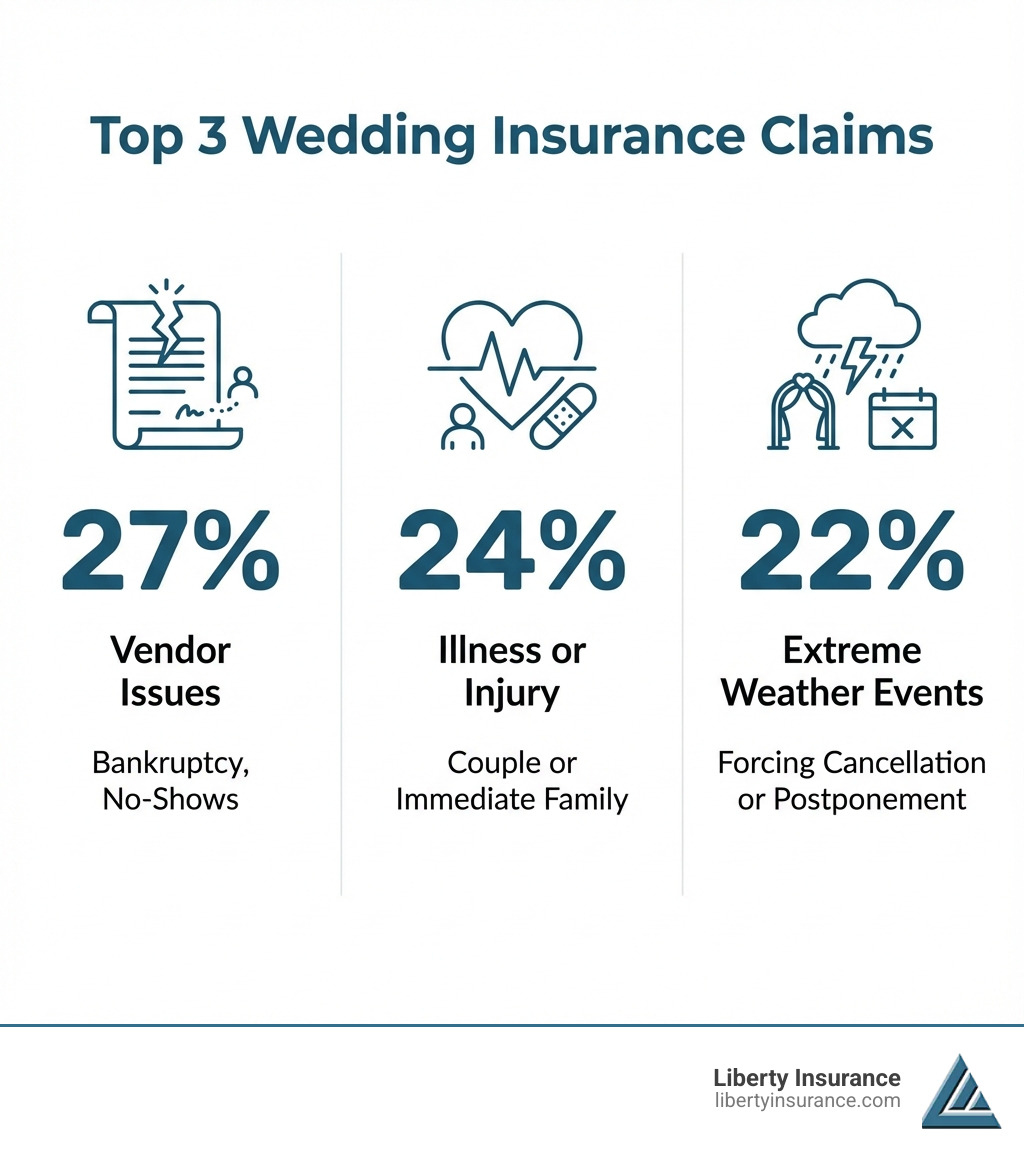
- Vendor Failure: If a key vendor (caterer, florist, photographer, DJ) goes out of business, fails to show up, or otherwise breaches their contract, this covers lost deposits and the potentially higher cost of last-minute replacements. This is one of the most common types of claims.
- Extreme Weather: This covers severe weather events like hurricanes, blizzards, or floods that make the venue inaccessible or prevent the couple, their immediate family, or a majority of guests from attending. A simple rainy day for an outdoor wedding is not covered; the weather must be severe enough to make holding the event impossible or unsafe.
- Sudden Illness or Injury: If the bride, groom, or an immediate family member (typically defined as parents, grandparents, siblings, and children of the couple) suffers a sudden, life-threatening illness or serious injury that prevents the wedding from proceeding. Pre-existing conditions are typically not covered, and the illness must be unforeseen.
- Military Deployment or Job Transfer: If the bride or groom is in the armed forces and has their leave revoked or is unexpectedly deployed, the policy can cover postponement costs. Some policies also extend this coverage to an unexpected, mandatory job transfer for the couple that requires them to move a significant distance.
- Venue Issues: If your ceremony or reception site becomes unusable due to damage (e.g., fire, flood, power outage, structural damage) or unexpected closure (e.g., bankruptcy, double booking), this coverage protects your investment.
- Lost Investments: Reimbursement for other non-refundable costs such as wedding attire, flowers, cake, and sometimes even non-refundable honeymoon expenses if the wedding’s cancellation directly causes the honeymoon to be canceled.
This coverage protects your dreams and your bank account, ensuring that even if the unexpected happens, your financial future isn’t derailed.
What Wedding Insurance Covers (and What It Doesn’t)
Understanding the specifics of your wedding insurance policy is crucial. While it offers broad protection, it’s not a magic wand for every possible mishap. We encourage all couples to read the fine print, understand their coverage limits, and be aware of any deductibles. This helps manage expectations and ensures you’re truly prepared.
Common Inclusions in a Wedding Policy
Most comprehensive wedding insurance policies will cover a range of potential issues, acting as a buffer against many common wedding day disasters. Here’s a more detailed list of typical inclusions:
- Special Attire & Jewelry: This coverage protects your wedding gowns, tuxedos, and wedding rings (often excluding engagement rings, which usually need separate insurance) from loss, theft, or damage. For example, if an airline loses the luggage containing your custom-made wedding dress, or your wedding bands are stolen from the getting-ready suite, this coverage helps with the cost of replacement or repair.
- Lost Deposits: A lifesaver if a vendor goes out of business, declares bankruptcy, or is a complete no-show on your wedding day. This reimburses you for non-refundable payments you’ve made to vendors who fail to provide their contracted services.
- Photos & Videos: If your photographer’s memory cards are corrupted and your wedding photos are lost, or the videographer has an equipment failure and captures no usable footage, this coverage can help pay for the cost to re-stage the event. This may include renting attire again, re-hiring some vendors (like hair and makeup), and paying the photographer for a re-shoot.
- Wedding Gifts: This can cover the repair or replacement of wedding gifts that are stolen or damaged at the venue. For example, if your gift table is located near an exit and a box of valuable gifts is stolen during the reception, this coverage can reimburse you for the loss, up to the policy limit.
- Additional Expenses: Sometimes, an unexpected event doesn’t cancel your wedding but creates additional, unavoidable costs. For instance, if the band’s van breaks down on the way to your venue, this coverage could help pay for a last-minute DJ to ensure your reception still has music.
- Venue Issues: If your ceremony or reception site becomes damaged, inaccessible, or unexpectedly closes down, this covers the costs associated with finding an alternative location or rescheduling. This is crucial protection for your single largest wedding expense.
- Professional Counseling: In the unfortunate event that your wedding has to be canceled or postponed for a covered traumatic reason (like a sudden illness or death in the immediate family), some policies will provide a benefit to help cover the cost of professional counseling.
What is Typically NOT Covered?
While incredibly helpful, wedding insurance does have its limitations. It’s important to understand what your policy won’t cover to avoid disappointment:
- Change of Heart / Cold Feet: This is the most common exclusion. Insurance is designed to cover unforeseen, external events. If you or your partner simply decide not to get married, the policy will not reimburse you for any costs. This is considered a voluntary decision, not an insurable risk.
- Known Circumstances: You cannot buy insurance for a fire that is already burning. If you purchase a policy knowing about a potential issue (e.g., a hurricane is already named and forecast to hit your venue, a vendor has already told you they are in financial trouble, or a family member has a pre-existing medical condition that is likely to cause a cancellation), any claim arising from that issue will be denied. The event must be unforeseen at the time of purchase.
- Minor Weather Changes: A rainy day that moves your outdoor ceremony under a tent, or a hotter-than-expected day, is disappointing but not a covered reason for cancellation. Policies require severe, extreme weather conditions that make the event impossible or unsafe to hold, as determined by authorities or the insurer.
- Engagement Rings: Most wedding insurance policies cover wedding bands but not the engagement ring. An engagement ring is considered personal property worn daily and should be insured separately under a valuable personal property rider on your homeowners/renters policy or a standalone jewelry insurance policy.
- Dissatisfaction with Services: If your flowers aren’t the exact shade of pink you envisioned, or you simply don’t like your wedding photos, that’s not covered. Insurance covers financial loss due to a vendor’s complete non-performance or damage, not subjective matters of taste or aesthetic preference.
- COVID-19 and Pandemics: Since early 2020, virtually all new wedding insurance policies explicitly exclude coverage for cancellations or postponements due to pandemics, communicable diseases, or government-mandated shutdowns related to them. While some specialized policies may exist, you should assume a standard policy does not cover COVID-19-related issues.
- A Small Number of Guests Canceling: If a few guests can’t make it due to travel issues or minor illness, this is not a covered reason to postpone the entire wedding. Cancellation coverage typically requires that the couple, immediate family, or a significant percentage (e.g., 50% or more) of guests are unable to attend due to a covered peril.
The Practicalities: Cost, Timing, and How to Buy
Now that we understand wedding insurance what is it and what it covers, let’s talk about the practical aspects: how much it costs, when you should buy it, and where you can get it. Budgeting for this protection is a smart move in your overall wedding planning.
Wedding Insurance What Is It: Understanding the Cost
The cost of wedding insurance is generally quite affordable, especially when compared to your overall wedding budget.
- Average Cost Statistics: While specifics can vary, a basic policy in the U.S. typically costs anywhere from $75 to $550. For example, some liability policies can start around $114, and cancellation policies can start as low as $80.
- Percentage of Budget: Many experts suggest that the cost of wedding insurance is usually 1% or less of your total wedding budget. This small percentage can save you thousands.
- Factors Influencing Price: Several elements will influence the final premium:
- Number of Guests: More guests mean a higher potential for liability claims (injuries, property damage), which can increase the cost of liability coverage.
- Total Wedding Budget: For cancellation coverage, the premium is directly tied to the amount of coverage you need. You should calculate all non-refundable deposits and payments to determine your total financial exposure.
- Coverage Limits: Choosing higher liability limits (e.g., $2 million instead of the standard $1 million often required by venues) or adding optional riders (like for gifts or professional counseling) will increase the cost.
- Location: The specific location of your wedding can affect risk. A venue in a hurricane-prone area might have a slightly higher premium for cancellation coverage. An outdoor wedding with many potential hazards could cost more to insure than a standard indoor ballroom.
- Deductibles: Like other insurance, choosing a higher deductible (the amount you pay out-of-pocket before coverage kicks in) can lower your premium. Be sure you are comfortable with the deductible amount for different types of claims.
To give you a general idea, here’s a simplified comparison:
| Coverage Level | Estimated Cost Range (General) | What it Typically Covers |
|---|---|---|
| Liability Only | $75 – $200 | Bodily injury, property damage, host liquor liability (often required by venues) |
| Cancellation Only | $80 – $500 | Reimbursement for non-refundable deposits due to covered reasons (e.g., vendor failure) |
| Comprehensive (Liability + Cancellation) | $150 – $550+ | Combines both, often with discounts for bundling |
When and Where to Purchase Your Policy
Timing is everything, especially when it comes to wedding planning.
- Purchase Timeline: We recommend purchasing your wedding insurance as soon as you start putting down deposits and signing contracts. Some policies allow you to get coverage up to two years in advance, and this is ideal because it protects your initial investments immediately. For example, if you book a venue a year out and pay a deposit, you’re covered if something happens to that venue between now and your wedding date. Remember, you can’t insure against a problem you already know about, so buying early provides the broadest protection against unforeseen events.
- Last-Minute Policies: While it’s always best to plan ahead, some providers offer last-minute liability policies, sometimes even up to 24 hours before the wedding. However, cancellation coverage often has a waiting period (e.g., 14-15 days) before certain perils like extreme weather are covered, making early purchase essential.
Where to Buy:
- Directly from Liberty Insurance: As your trusted local insurance partner in New Jersey, we understand the unique needs of our community. We can help you steer the options and find a policy that fits your wedding plans, whether you’re in Millstone Township, Trenton, Toms River, New Brunswick, or Princeton.
- Through your existing insurance agent: Sometimes, your current homeowners or auto insurance agent can also assist you with wedding insurance, and you might even get a better rate. It’s always a good idea to start by asking us.
- Via Liberty Insurance’s online portal: For convenience, many policies can be quoted and purchased quickly online, allowing you to secure coverage from the comfort of your home.
Frequently Asked Questions about Wedding Insurance
We know you have questions, and we’re here to answer them! Here are some of the most common inquiries we receive about wedding insurance, along with some new ones to provide a more complete picture.
Who can purchase wedding insurance?
Anyone with a financial stake in the wedding can typically purchase wedding insurance. This ensures that the person or people paying for the event are the ones protected.
- The Couple: Most commonly, the bride and groom purchase the policy.
- Parents: If parents or guardians are contributing financially to the wedding, they can also be the policyholders.
- Other Relatives or Financial Contributors: Any individual who has contributed significant money to the wedding fund is generally eligible to apply for wedding insurance.
Are there specific venue requirements I should know about?
Absolutely! Many wedding venues, especially those in popular areas across New Jersey, will have specific insurance requirements. It’s crucial to check your venue contract carefully.
- Certificate of Insurance (COI): Your venue will likely require you to provide a COI, which is a document from your insurance provider that verifies you have the necessary coverage.
- Minimum Liability Limits: Venues often specify a minimum amount of liability coverage you must have, commonly $1 million or even $2 million.
- Naming the Venue as “Additional Insured”: Most venues will require you to list them as an “additional insured” on your policy. This extends some of the policy’s protection to the venue itself, covering them if a claim arises from an incident at your wedding.
- Liquor Liability Requirements: If you plan to serve alcohol, your venue will almost certainly require host liquor liability coverage. This protects against claims arising from alcohol-related incidents.
How does wedding insurance differ from a vendor’s insurance?
This is an excellent question. While many vendors carry their own liability insurance, it’s for their business operations, not to protect your financial investment.
- Vendor Insurance Protects the Vendor’s Business: A vendor’s policy covers them if their equipment causes damage or their staff causes an injury. It protects their assets.
- Your Wedding Insurance Protects Your Financial Investment: Your policy is designed to cover your losses. If a vendor fails to show up or goes out of business, your policy can reimburse you for the money you’ve lost in deposits.
How do I file a claim if something goes wrong?
If you need to file a claim, it’s important to act quickly and be organized. Follow these steps:
- Contact Your Insurance Provider Immediately: As soon as a problem arises, notify your insurance agent or the claims department. They will guide you on the specific process and what documentation is needed.
- Document Everything: Take photos and videos of any damage. Get written statements from vendors or witnesses if possible. Keep a log of all communications (emails, phone calls) with vendors and your insurer.
- Gather Your Paperwork: You will need to provide copies of all relevant contracts, receipts, and proof of payment for any deposits or expenses you are claiming.
- Mitigate Your Losses: You have a duty to take reasonable steps to prevent the loss from getting worse. For example, if a vendor cancels, you should make a good-faith effort to find a replacement, even if it’s last minute. Your policy may cover the additional cost.
- File a Police Report if Necessary: For any losses due to theft or vandalism (e.g., stolen gifts, damaged property), you must file a police report and provide a copy to your insurer.
Does wedding insurance cover a destination wedding?
Yes, many companies offer coverage for destination weddings, but you must confirm the details. Be sure to check if the policy has any geographical limitations. Some policies may only cover weddings in the U.S., Canada, and their territories, while others may offer worldwide coverage. Also, clarify how claims will be handled in different currencies. It’s crucial to be upfront with your insurance provider about your wedding’s location to ensure you have the proper coverage.
Is the honeymoon covered?
Generally, wedding insurance does not cover the honeymoon. You should purchase separate travel insurance for that. However, there is one key exception: some cancellation policies will reimburse you for non-refundable honeymoon costs if you have to cancel the trip because the wedding itself was canceled for a covered reason. For example, if a hurricane forces you to cancel your wedding, and as a result, you cannot go on your non-refundable honeymoon the next day, the cost of the trip may be covered. Always check the policy wording for this specific benefit.
Conclusion: Secure Your Investment and Your Peace of Mind
Your wedding day is a once-in-a-lifetime event, a celebration of love and commitment. While it’s natural to hope for everything to go perfectly, life often throws curveballs. Wedding insurance offers a practical, affordable way to protect the significant financial and emotional investment you’ve made in your big day.
From unexpected vendor issues and severe weather to unforeseen accidents, having the right coverage means you can focus on enjoying every moment, rather than worrying about what could go wrong. In the grand scheme of wedding expenses, the cost of a policy is a small price for such significant protection and the invaluable peace of mind it provides.
At Liberty Insurance, we’re dedicated to helping couples in New Jersey, including those in Millstone Township, Trenton, Toms River, New Brunswick, and Princeton, plan for a joyous and stress-free wedding. Don’t let unforeseen circumstances overshadow your celebration.
Learn more about protecting your big day with wedding insurance.

