
Why Wedding Liability Insurance Coverage Is Essential for Your Big Day
Wedding liability insurance coverage protects you from financial responsibility if guests are injured or property is damaged during your wedding celebration. Here’s what you need to know:
Key Coverage Areas:
- Bodily injury – Guest slips, falls, or other accidents
- Property damage – Damage to venue property or equipment
- Host liquor liability – Alcohol-related incidents involving your guests
- Legal defense costs – Attorney fees and court costs
- Medical payments – Immediate medical expenses for injured guests
Average Cost: $105 – $350 USD for basic one-day coverage
When to Buy: As soon as you book your venue (up to 2 years in advance)
Why It Matters: Many venues require proof of liability insurance before allowing you to host your event
Planning your dream wedding involves a significant financial commitment—the typical U.S. celebration now tops $30,000. While you’re choosing flowers and tasting cake, one overlooked detail could turn your special day into a financial nightmare.
Picture this: a guest slips on the dance floor or someone knocks over an expensive centerpiece. Without coverage, you could be on the hook for thousands of dollars in damages and legal fees.
Most venues across the country now insist that couples carry liability insurance as part of their rental agreement. This protects the venue, but—more importantly—it protects your savings and future from lawsuits that could arise from accidents during your celebration.
I’m Andrew Harris, a Certified Insurance Counselor with more than 15 years of experience helping couples steer wedding liability insurance coverage. As PIA National’s 2020 Agent of the Year, I’ve seen how the right policy lets couples enjoy their big day with genuine peace of mind.
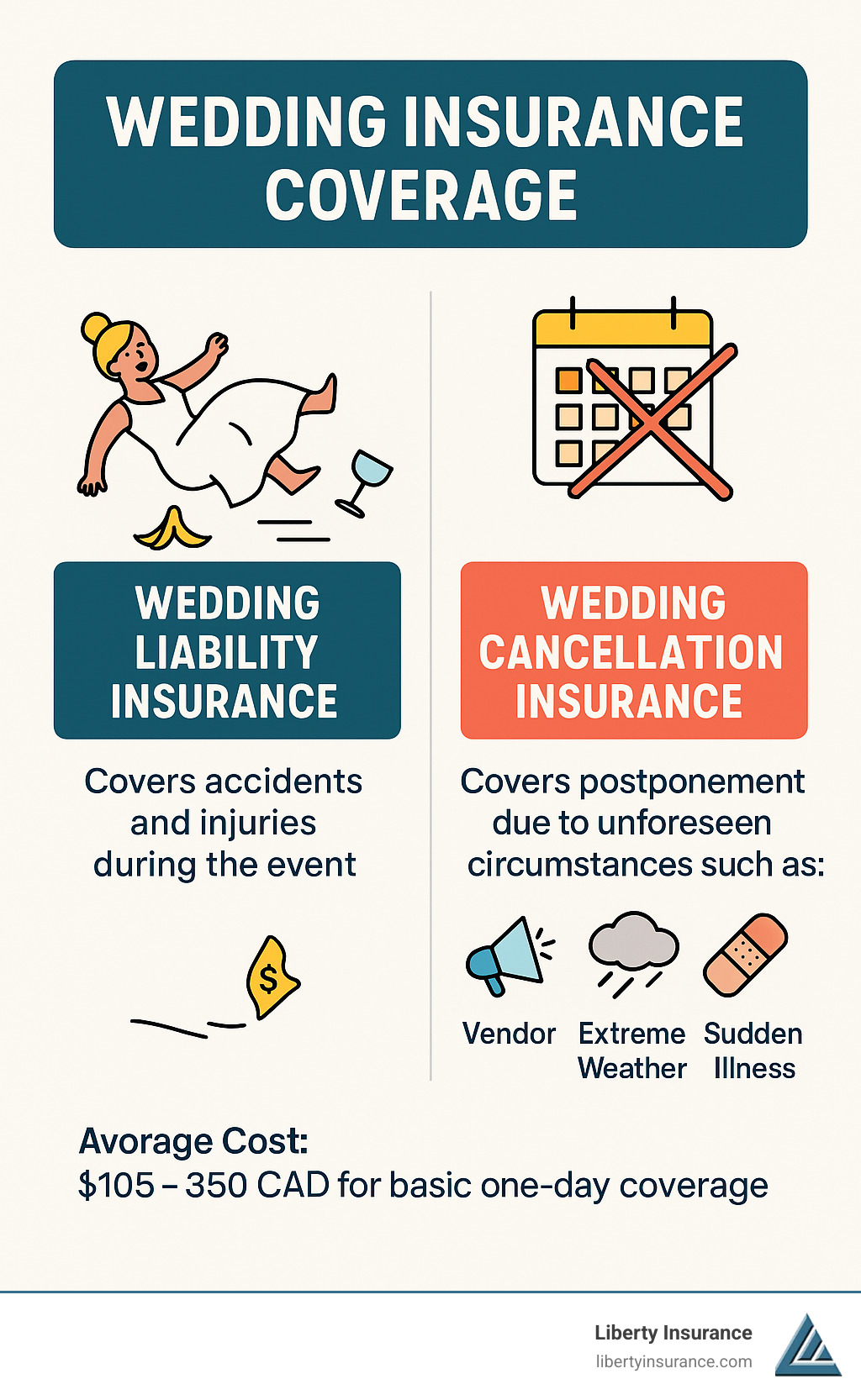
Wedding liability insurance coverage definitions:
Understanding Your Wedding Liability Insurance Coverage
Picture this: you’re at your dream wedding venue, everything looks perfect, and you’re finally ready to celebrate. But do you know exactly what your wedding liability insurance coverage protects you against? More importantly, do you know what it doesn’t cover? Let’s walk through the details together so there are no surprises on your big day.
What Does Wedding Liability Insurance Coverage Typically Include?
Think of your wedding liability insurance coverage as your financial safety net. When accidents happen (and they sometimes do), you’ll be glad you have this protection in place.
Bodily injury protection is the heart of your coverage. If Uncle Bob slips on the dance floor or Aunt Sarah trips over a decoration, your policy steps in to handle the medical bills. We’re talking about everything from emergency room visits to ongoing rehabilitation costs. One couple we worked with had a guest break their ankle during the reception – the medical expenses hit $15,000. Without coverage, that would have been a devastating financial blow.
Property damage coverage protects you when accidents happen to the venue or equipment. Red wine on white carpets, broken mirrors, damaged rental equipment – these things happen more often than you’d think. The venue’s insurance won’t cover damage your guests cause, so this protection is essential.
Here’s something many couples don’t realize: host liquor liability is absolutely crucial if you’re serving alcohol. If a guest drinks too much at your wedding and causes an accident afterward, you could be held responsible. This coverage protects you from those potentially massive liability claims.
Legal defense costs are covered too, which is a huge relief. Even if a lawsuit against you is completely groundless, defending yourself can cost tens of thousands of dollars. Your policy handles attorney fees, court costs, and investigation expenses.
Medical payments coverage works differently – it pays for immediate medical expenses regardless of who’s at fault. This means if someone gets hurt, they can get treatment right away without waiting for fault to be determined. Most policies cover $2,500 per person up to $25,000 total.
Your coverage also extends to third-party claims from various scenarios. Food poisoning from the catered meal, injuries during setup the day before, or accidents at your rehearsal dinner (if it’s within 48 hours of the wedding) are typically covered.
For complete protection when serving alcohol, check out our guide on How to Get Liquor Liability Insurance for a Wedding.
What Isn’t Included in Standard Wedding Liability Insurance Coverage?
Now here’s where many couples get confused. Wedding liability insurance coverage protects against accidents during your event, but it doesn’t cover everything that could go wrong with your wedding plans.
Wedding cancellation or postponement isn’t covered by liability insurance. If a hurricane hits your outdoor venue, your caterer goes bankrupt, or you have a family emergency, standard liability coverage won’t help. These are completely different types of risks that require separate protection.
Vendor no-shows and problems fall outside liability coverage too. If your photographer doesn’t show up, your flowers arrive wilted, or your DJ’s equipment fails, you’re on your own with standard liability insurance. Same goes for lost deposits when vendors go out of business.
Your personal belongings aren’t protected either. Damaged wedding attire, lost wedding rings, or stolen gifts aren’t covered by liability insurance. These items need separate coverage if you want protection.
Here’s something that surprises many couples: bad weather that forces you to cancel isn’t covered by liability insurance. Neither is a change of heart – no insurance policy covers couples who simply decide not to get married.
The key thing to remember is that liability insurance covers accidents that happen to other people during your event. It doesn’t cover problems with your wedding plans themselves.
If you need protection against cancellation and postponement, you’ll want to explore Event Cancellation Insurance as a separate policy.
Understanding these differences helps you make smart decisions about protecting your wedding investment. Liability coverage is essential, but it’s just one piece of the puzzle.
The “Why, When, and How Much” of Wedding Liability Insurance
Navigating the practicalities of purchasing your policy is easy once you know the essentials.
Why You Need It: Is It Required?
Most venues in the United States require liability insurance. They’ve invested heavily in their property and want assurance that any damage or injury will be covered. Minimum limits of $1 million are standard; premium venues may insist on $2 million or more.
Your personal assets are exposed without coverage. Medical bills, repair costs, and legal fees can soar past $50,000 after a single mishap. A modest premium transfers that risk to your insurer.
Legal defense is included. Even baseless lawsuits are expensive to fight. A policy pays for attorneys and court costs, sparing you from draining savings or taking on debt.
How Much Does It Cost?
For most weddings, basic one-day coverage runs $105 – $350. Factors that influence your premium include:
- Guest count (larger guest lists = higher risk)
- Venue type and location (historic sites or outdoor spaces may cost more)
- Alcohol service (host liquor liability adds a small surcharge)
- Coverage limits ($2 million typically costs only 20-30 % more than $1 million)
Even a 300-guest reception with a full bar at an upscale venue rarely exceeds $400—less than 1 % of the average wedding budget.
For a deeper dive, see our Wedding Liability Insurance Cost guide.
When Should You Buy It?
- Purchase as soon as you book your venue. You’ll have the venue details handy and can meet any contract deadlines.
- Policies can be bought up to 24 months in advance, letting you lock in today’s rates.
- Avoid last-minute stress. Some carriers let you purchase 24 hours before the event, but aim for at least a week ahead so your certificate reaches the venue on time.
Many policies automatically extend to cover setup 24 hours before and breakdown 24 hours after, giving you seamless protection for the entire wedding weekend.
For broader event options, visit our Wedding Event Insurance page.
Liability vs. Cancellation: Protecting Against Different Disasters
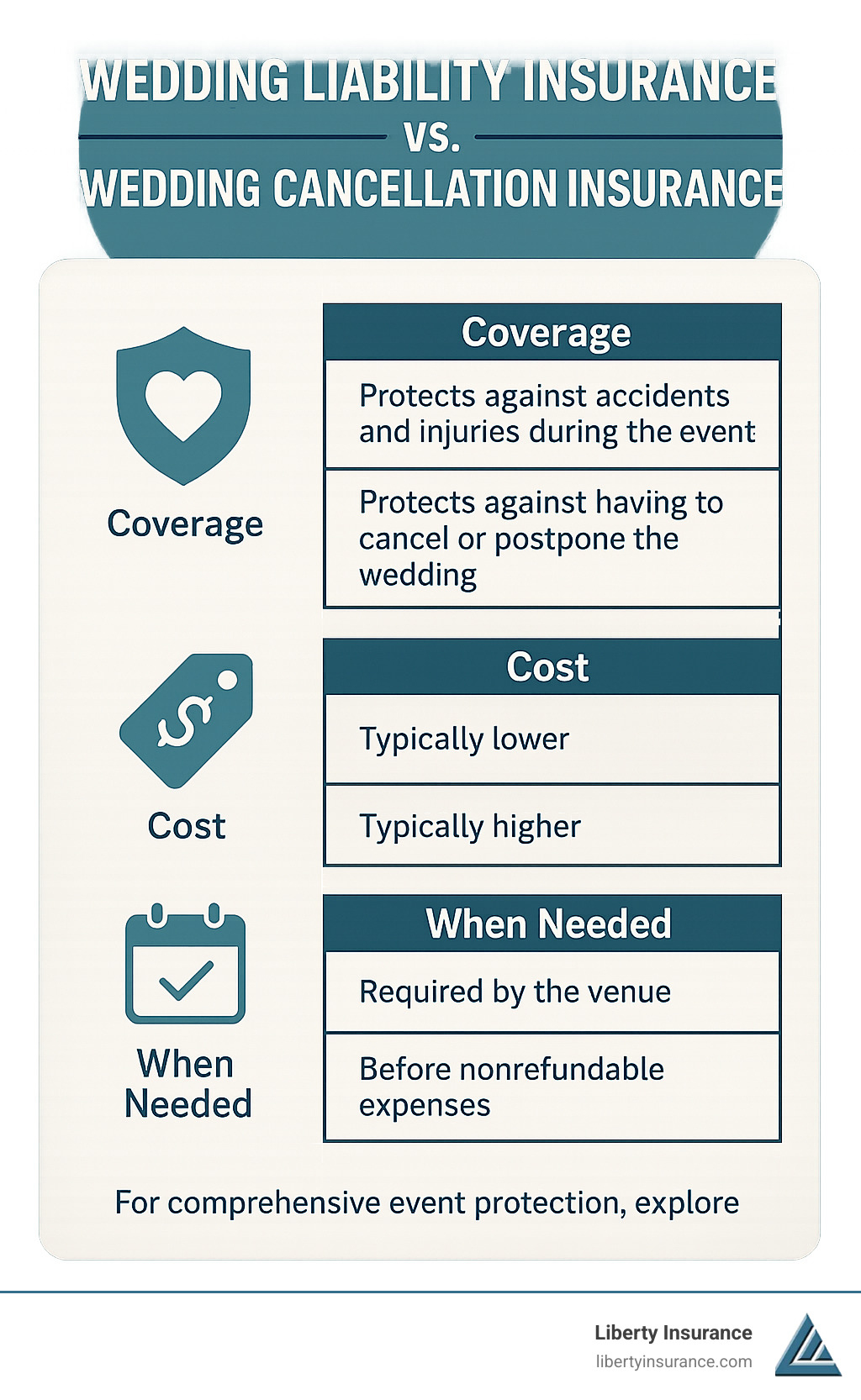
Think of wedding liability insurance coverage as the safety net for accidents during your party, while cancellation insurance is the backup plan if the party can’t start at all.
Wedding Liability Insurance handles guest injuries, property damage, and host liquor issues on the day.
Wedding Cancellation Insurance reimburses non-refundable deposits if extreme weather, sudden illness, or vendor bankruptcy forces you to postpone.
| Aspect | Liability Insurance | Cancellation Insurance |
|---|---|---|
| Primary Purpose | Protects against accidents and injuries during the event | Reimburses costs if the wedding is cancelled or postponed |
| Covers | Bodily injury, property damage, host liquor liability, legal defense | Lost deposits, vendor failure, extreme weather, sudden illness |
| Doesn’t Cover | Postponement, vendor issues, personal property | Day-of accidents, guest injuries, property damage |
| Best For | Meeting venue requirements, shielding personal assets | Protecting large, non-refundable deposits |
| Average Cost | $105-$350 | $125-$550 |
A real-world example: when the nationwide Alfred Angelo bridal chain abruptly closed in 2017, thousands of couples lost dress deposits—but those with cancellation coverage recovered their money.
Conversely, we helped a New Jersey couple whose guest slipped on spilled champagne and broke a wrist. Their liability policy paid the $32,000 medical and legal bill, turning a potential disaster into a footnote.
Frequently Asked Questions about Wedding Liability Policies
Here are quick answers to some of the most common questions couples have about wedding liability insurance coverage.
What are common liability limits for wedding insurance policies?
When choosing your wedding liability insurance coverage, you’ll encounter three main coverage limits that most couples consider. Understanding these options helps you pick the right protection for your situation.
The $1,000,000 Standard
This is the most common minimum requirement you’ll see. Most venues across Canada require at least $1,000,000 in liability coverage before they’ll let you host your wedding. It’s become the industry standard because it provides solid protection without breaking the bank.
The $2,000,000 Sweet Spot
Many premium venues prefer this level of coverage, and for good reason. The extra million dollars of protection only costs about 20-30% more than the basic coverage. For most couples, this represents the best value – significant additional protection for a relatively small increase in cost.
The $5,000,000 Maximum
This top-tier coverage is typically reserved for large events, high-risk venues, or couples with significant personal assets to protect. While it sounds like overkill, it’s surprisingly affordable for the peace of mind it provides.
Choosing What’s Right for You
Your guest count plays a big role in determining your needs. More guests naturally means more potential for accidents. The venue’s value matters too – if you’re getting married somewhere with expensive art or fixtures, higher property damage limits make sense.
Don’t forget to consider your personal financial situation. If you have significant assets like a home or business, you need more protection than someone just starting out. The good news is that higher coverage limits are usually worth the small additional cost.
For even broader liability protection beyond your wedding day, consider our Umbrella Liability Insurance options.
Does wedding liability insurance cover alcohol-related incidents?
Yes, most wedding liability insurance coverage includes what’s called host liquor liability – and this is absolutely crucial if you’re serving alcohol at your wedding.
What Host Liquor Liability Covers
This coverage protects you when things go wrong because of alcohol at your wedding. If a guest drinks too much and injures someone else, you could be held responsible. The same goes if an intoxicated guest damages property or causes an accident after leaving your event.
We’ve seen real cases where couples faced massive lawsuits because a guest who’d been drinking at their wedding caused a car accident on the way home. One couple we know faced a $75,000 lawsuit that their host liquor liability coverage handled completely – including legal defense and the final settlement.
The Reality of Alcohol Liability
Here’s something many couples don’t realize: it doesn’t matter who actually serves the alcohol. Whether you’re providing an open bar, the venue is serving, or guests are bringing their own drinks, you can still be held liable as the host. The coverage applies to beer, wine, and spirits equally.
Important Limitations
Your policy won’t cover everything alcohol-related. Professional liquor liability isn’t included – that’s only if you’re actually selling alcohol. Criminal acts by intoxicated guests aren’t covered either. And in most cases, injuries to the intoxicated person themselves aren’t covered, though this varies by policy.
Licensing Still Matters
Even with great insurance coverage, you still need to follow provincial liquor laws. Some venues handle licensing for you, but if you’re hosting at a private residence, you might need your own permits. Check your local requirements – insurance doesn’t replace proper licensing.
For detailed guidance on liquor liability costs and requirements, visit our How Much is Liquor Liability Insurance for a Wedding page.
Who is responsible for purchasing wedding liability insurance?
The simple answer is: whoever is hosting the wedding needs to buy the insurance. But like most things with weddings, the details can get a bit more complicated.
Usually, It’s the Couple
In most cases, the couple getting married purchases their own wedding liability insurance coverage. This makes sense because you’re the ones planning the event, signing contracts with vendors, and ultimately responsible if something goes wrong.
Sometimes, It’s the Parents
If parents are paying for the wedding or officially hosting it, they should be the ones buying the insurance. The key is that whoever has the financial responsibility and whose name is on the venue contract should be the named insured on the policy.
What About Venue Insurance?
Here’s a common misconception: the venue’s insurance doesn’t protect you. Their policy covers their property and their liability, but if your guest gets injured or your uncle accidentally damages their expensive chandelier, that’s on you. The venue requires you to have insurance specifically because their policy won’t cover incidents caused by your guests.
Your Homeowner’s Policy Isn’t Enough
Many couples assume their homeowner’s insurance will cover wedding-related incidents, but most policies have limitations for large events. Don’t rely on your existing coverage for something this important.
Getting the Certificate
Whoever purchases the policy receives the certificate of insurance. You’ll need to provide this certificate to your venue, rental companies, and sometimes vendors. Make sure you get the certificate well before your wedding day – venues often require it 30 days in advance.
Shared Hosting Situations
If multiple parties are contributing significantly to the wedding, consider adding them as additional insureds on the policy. This ensures everyone with financial involvement has proper protection.
The bottom line: whoever signs the venue contract and would be held financially responsible for wedding-related incidents should purchase the coverage. When in doubt, it’s better to have too much protection than not enough.
Conclusion: Securing Peace of Mind for Your Big Day

Your wedding day should be about celebrating your love story—not worrying about what might go wrong. Wedding liability insurance coverage lets you dance, laugh, and make memories without fear of a financial hangover.
For less than the price of many wedding shoes, you can protect every dollar you’ve invested. When the average U.S. wedding costs about $30,000, spending $200 on solid coverage is a no-brainer.
Visit our Wedding Insurance page to explore coverage options custom to celebrations in Millstone Township, Trenton, Toms River, New Brunswick, Princeton, and across New Jersey.
Let Liberty Insurance handle the what-ifs so you can focus on the I dos.

