
Why Understanding Wedding Venue Insurance Cost Matters for Your Big Day
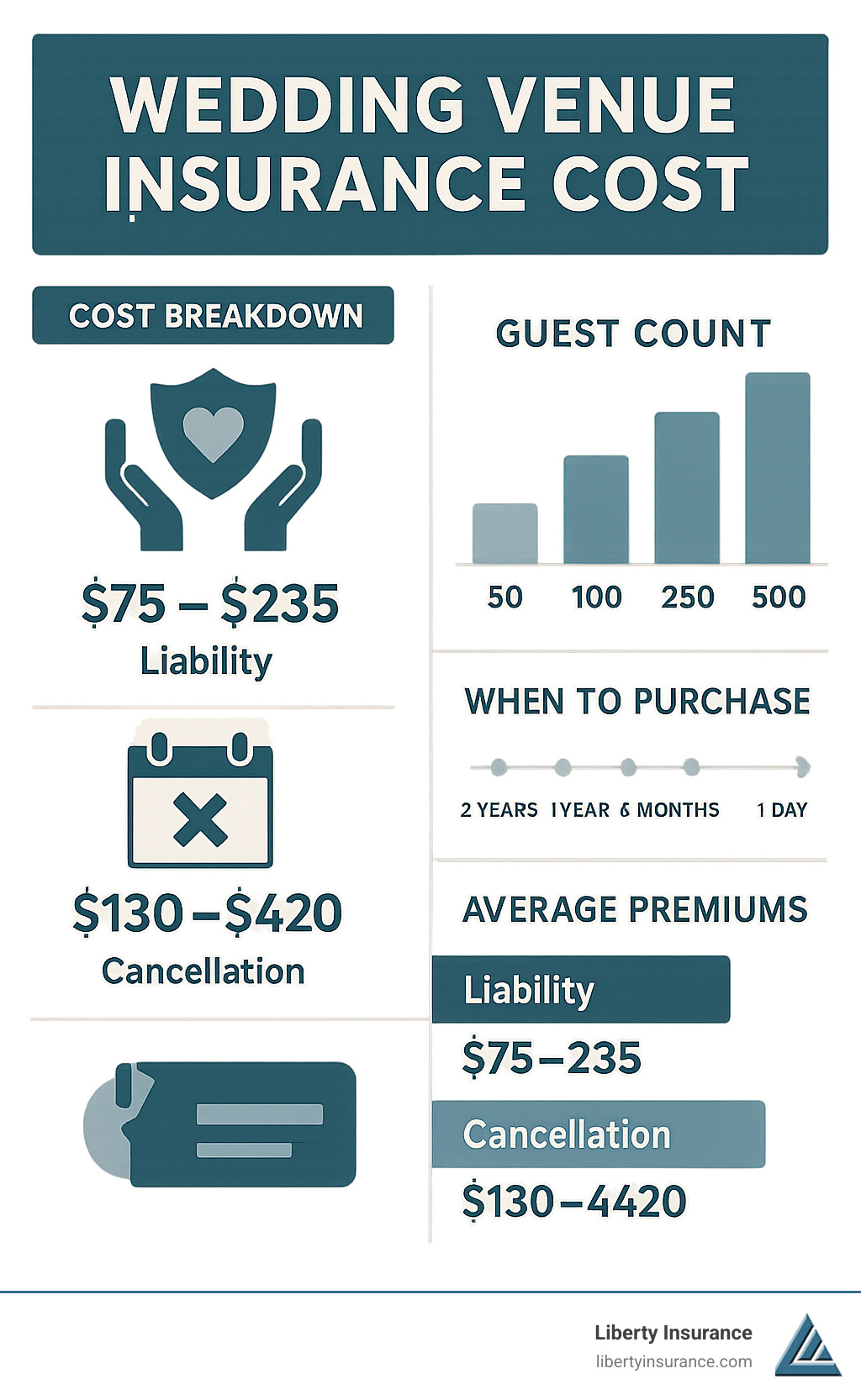
Wedding venue insurance cost typically ranges from $75 to $550 for basic coverage, with most couples paying around $150-$235 for $1 million in liability protection. Here’s what you need to know:
Quick Cost Breakdown:
– Liability Insurance: $75-$235 (covers guest injuries, property damage)
– Cancellation Insurance: $130-$420 (covers vendor no-shows, weather, illness)
– Bundle Discount: Save up to 15% when combining both policies
– Payment: One-time premium, not recurring monthly fees
Planning your dream wedding involves countless decisions, but one choice that often catches couples off guard is wedding venue insurance. As one wedding planner noted in our research: “It’s one of the cheapest things you’ll buy for your wedding” – yet it protects your biggest investment.
Most venues now require proof of insurance before you can book, making this coverage essential rather than optional. Whether you’re planning an intimate backyard ceremony or a grand ballroom celebration, understanding insurance costs helps you budget properly and avoid last-minute surprises.
The good news? Wedding venue insurance is surprisingly affordable compared to your other wedding expenses. A typical policy costs less than most wedding cakes but provides protection against vendor bankruptcies, severe weather, guest injuries, and property damage.
I’m Andrew Harris, a Certified Insurance Counselor (CIC) and 2020 PIA National Agent of the Year with over 15 years of experience helping couples steer wedding venue insurance cost decisions. My expertise in special event coverage has helped hundreds of couples protect their celebrations without breaking their budgets.
Key terms for wedding venue insurance cost:
– event cancellation insurance
– event insurance
– wedding insurance
Wedding Venue Insurance 101: What It Is & Why Venues Demand It
Picture this: you’re three weeks away from your dream wedding when your venue calls with an unexpected requirement. They need proof of wedding venue insurance before you can use their space. Don’t panic – this is actually great news for your wallet and peace of mind.
Wedding venue insurance is essentially a liability policy that acts as your financial bodyguard on your big day. Think of it as an umbrella that protects you when Murphy’s Law decides to crash your party. Whether it’s a guest slipping on the dance floor or accidentally damaging the venue’s prized chandelier, this coverage has your back.
Here’s why venue requirements have become so common: venues learned the hard way that their own insurance won’t cover accidents caused by your celebration. When Aunt Martha trips over a centerpiece and breaks her ankle, the venue doesn’t want to foot the medical bills. That’s where your policy steps in to save the day (and everyone’s bank account).
Most venues now require minimum coverage of $1 million per occurrence, with fancier locations often demanding $2 million or more. The beauty of wedding insurance is the one-time premium structure – you pay once and you’re protected for your entire event period, typically 24 hours.
Property damage protection covers those “oops” moments that happen at every celebration. Maybe someone spills red wine on white carpet, or a groomsman accidentally knocks over an expensive vase during the reception. These incidents are more common than you’d think, especially when there’s an open bar involved.
Guest injury coverage is equally important. Medical bills from a simple slip and fall can easily reach $15,000 or more. Without insurance, you’re personally liable for these costs plus any legal fees if the injured guest decides to sue.
Host liquor liability deserves special attention because it protects you from alcohol-related incidents. If a guest drinks at your wedding then causes an accident on their way home, you could be held responsible. The good news? This coverage is often included at no extra cost in modern policies.
More info about Event Insurance
Core Coverages Every Couple Should Know
General liability forms the backbone of any solid wedding insurance policy. This coverage handles bodily injury to guests and property damage to your venue. Standard limits range from $500,000 to $5 million, with $1 million being the sweet spot that satisfies most venue requirements without breaking your budget.
Cancellation and postponement insurance swoops in when life throws you curveballs. This coverage reimburses your lost deposits and non-refundable expenses when you must cancel or reschedule due to covered reasons like vendor bankruptcy, severe weather, military deployment, or serious illness of key wedding participants.
Liquor liability protection is non-negotiable if you’re serving alcohol. Many venues specifically require this coverage because general liability policies sometimes exclude alcohol-related incidents. Since most couples serve some form of alcohol, this protection is essential for both venue compliance and your financial security.
Attire and jewelry protection covers damage to wedding dresses, tuxedos, and wedding rings. While coverage limits are typically modest ($1,000-$5,000), they can save you from significant out-of-pocket expenses if your dress gets damaged during transport or your rings go missing on the big day.
What’s Not Covered (Cold Feet & Other Exclusions)
Let’s talk about the elephant in the room: change of heart situations. When one partner gets cold feet and calls off the wedding, standard policies won’t reimburse your expenses. Some insurers offer “change of heart” coverage as a separate add-on, but it must typically be purchased a year in advance and costs extra.
Pandemics and epidemic exclusions became standard after COVID-19 turned the wedding industry upside down. Most policies now specifically exclude coverage for infectious diseases, government-mandated shutdowns, or guest fears about disease transmission. This exclusion significantly impacted wedding venue insurance cost considerations for many couples.
Quality complaints won’t trigger coverage either. If you’re unhappy with your photographer’s artistic vision or the caterer’s seasoning choices, insurance won’t help. The vendor must completely fail to show up or provide contracted services for coverage to apply.
Intentional acts and criminal behavior are always excluded from coverage. If someone deliberately damages property or starts a fight, your policy won’t provide protection. Insurance is designed to cover accidents, not intentional bad behavior.
Weather-related exclusions can be tricky to steer. Light rain or overcast skies typically don’t qualify for cancellation coverage. The weather must be severe enough to prevent key participants or the majority of guests from safely attending your celebration.
The Real Numbers: Wedding Venue Insurance Cost Breakdown

Let’s talk real numbers. When couples ask about wedding venue insurance cost, I tell them to expect anywhere from $75 to $550 for basic coverage. Most end up paying between $150-$300, which honestly isn’t bad when you consider what you’re protecting.
The wide price range isn’t random – it reflects what you actually need. A cozy backyard wedding with 50 guests costs much less to insure than a grand celebration with 300 people at a luxury venue. Your coverage limits and deductible choices also play a big role in the final premium.
Here’s what the numbers look like in real life. For liability coverage, you’ll pay around $75-$120 for $500,000 in protection, jumping to $150-$235 for the standard $1 million that most venues require. If your venue demands $2 million in coverage, expect to pay $200-$350.
Cancellation coverage follows a different pattern since it’s based on your wedding budget. Protection for $15,000 worth of expenses runs $130-$180, while $25,000 coverage costs $200-$235. If you’re planning a bigger celebration, $50,000 limits cost $300-$350 and $100,000 protection reaches $450-$555.
The sweet spot for most couples? That $1 million liability policy at $150-$235. It meets venue requirements without breaking the bank, representing just 0.5-1% of the average wedding budget.
| Coverage Type | $1M Liability | $2M Liability |
|---|---|---|
| 50-100 guests | $150-$185 | $200-$250 |
| 101-200 guests | $175-$210 | $225-$285 |
| 201+ guests | $200-$235 | $260-$350 |
Average Liability Premiums Explained
When it comes to wedding venue insurance cost for liability coverage, guest count drives the biggest price differences. I’ve seen premiums jump from $120 for an intimate 50-person gathering to $235 for a 300-guest celebration. It makes perfect sense – more people means more chances for accidents.
The good news? Most $1 million policies fall right in that $150-$235 range, and they usually include host liquor liability at no extra cost. That’s huge savings compared to the old days when alcohol coverage required separate add-ons costing $50-$100 more.
Your venue location matters too, though not as much as you might think. Urban venues in high-litigation areas might see slightly higher premiums than rural locations, but we’re usually talking about differences of $20-$40, not hundreds of dollars.
One thing I love about modern policies is the guarantee that they’ll meet venue requirements. Many providers offer full refunds if your certificate doesn’t satisfy your venue’s needs, which takes the guesswork out of buying coverage.
Average Cancellation & Bundle Pricing
Cancellation insurance typically costs more than liability coverage, with wedding venue insurance cost ranging from $130-$420 depending on how much financial protection you need. The key is matching your coverage to your actual expenses.
A helpful rule of thumb? Cancellation insurance usually costs about the same as one guest’s share of your wedding budget. If you’re spending $200 per person, expect cancellation coverage to run around $200-$250.
Here’s where smart shopping pays off. Bundle discounts can save you up to 15% when you buy both liability and cancellation coverage together. For a couple paying $200 for liability and $300 for cancellation, that bundle discount saves $75 – enough for a nice dinner out.
The biggest mistake I see couples make? Under-insuring their cancellation coverage. If your wedding costs $30,000 but you only buy $15,000 in coverage, you’re still on the hook for half your expenses if something goes wrong. Budget alignment means matching your coverage limit to your total non-refundable costs, giving you real peace of mind.
According to research on wedding expenses, understanding these cost breakdowns helps couples make informed decisions about protecting their investment.
Factors That Influence How Much You’ll Pay
When it comes to wedding venue insurance cost, your guest count acts like the master key that open ups your pricing tier. Think of it this way: insurance companies see 50 guests as a quiet dinner party, while 300 guests looks more like a small festival. More people naturally means more chances for someone to trip, spill wine on expensive furniture, or accidentally back into the venue’s prized sculpture.
The venue location you choose makes a surprisingly big difference in your premium. Outdoor venues face Mother Nature’s unpredictability – sudden storms, muddy conditions, and uneven terrain all spell higher risk in insurance terms. Meanwhile, indoor venues with their controlled environments and professional lighting typically earn you lower rates.
Alcohol service remains one of the trickiest factors affecting your costs. Events with open bars see premium bumps of 10-20% because, let’s face it, people make different decisions after a few cocktails. The good news? Many modern policies now include host liquor liability coverage at no extra charge, which is a nice change from the old days of paying separately for every add-on.
Your coverage limits create the most dramatic swings in pricing. Jumping from $1 million to $2 million in liability coverage can easily double your premium. It’s like choosing between economy and first-class tickets – you get more protection, but you’ll definitely feel it in your wallet.
Deductible selection works just like your car insurance – choose a higher deductible and your premium drops, but you’ll pay more out-of-pocket if something goes wrong. A $500 deductible might save you $50 upfront, but remember you’ll need that money available if you actually file a claim.
Add-on coverages stack up quickly when you start customizing your policy. Special jewelry protection, photography equipment coverage, or extending your event duration each tack on another $25-$75 to your base premium. It’s tempting to add everything, but focus on what you actually need.
More info about Event Cancellation Insurance
Special Situations That Spike Costs
Destination weddings enter a whole different pricing universe. When you’re getting married in another country or remote location, insurers start worrying about things like different legal systems, emergency response times, and whether they can even investigate claims properly. Don’t be shocked if your premium doubles for that dreamy beach wedding in Belize.
Multi-day events turn your simple 24-hour coverage into an extended protection plan. Adding rehearsal dinners, welcome parties, and farewell brunches can bump your premium up by 50-100%. Each additional day means more opportunities for things to go sideways.
If you’re planning to wear high-value jewelry, the standard coverage limits might leave you seriously exposed. Most policies cap jewelry coverage around $2,500, so if your engagement ring cost $25,000, you’ll need to purchase additional protection or risk a major financial hit.
Unique entertainment choices like fireworks displays, live animals, or trip activities require specialized endorsements that can add $100-$500 to your costs. Insurance companies get nervous about anything involving flames, four-legged guests, or activities where people might get hurt showing off.
Historic or high-value venues often demand premium coverage limits that can significantly increase your wedding venue insurance cost. That gorgeous museum or mansion might require $5 million in liability coverage instead of the standard $1 million, which means substantially higher premiums for the privilege of celebrating somewhere truly special.
How to Buy & Save: Timing, Bundling, and Fine-Print Hacks
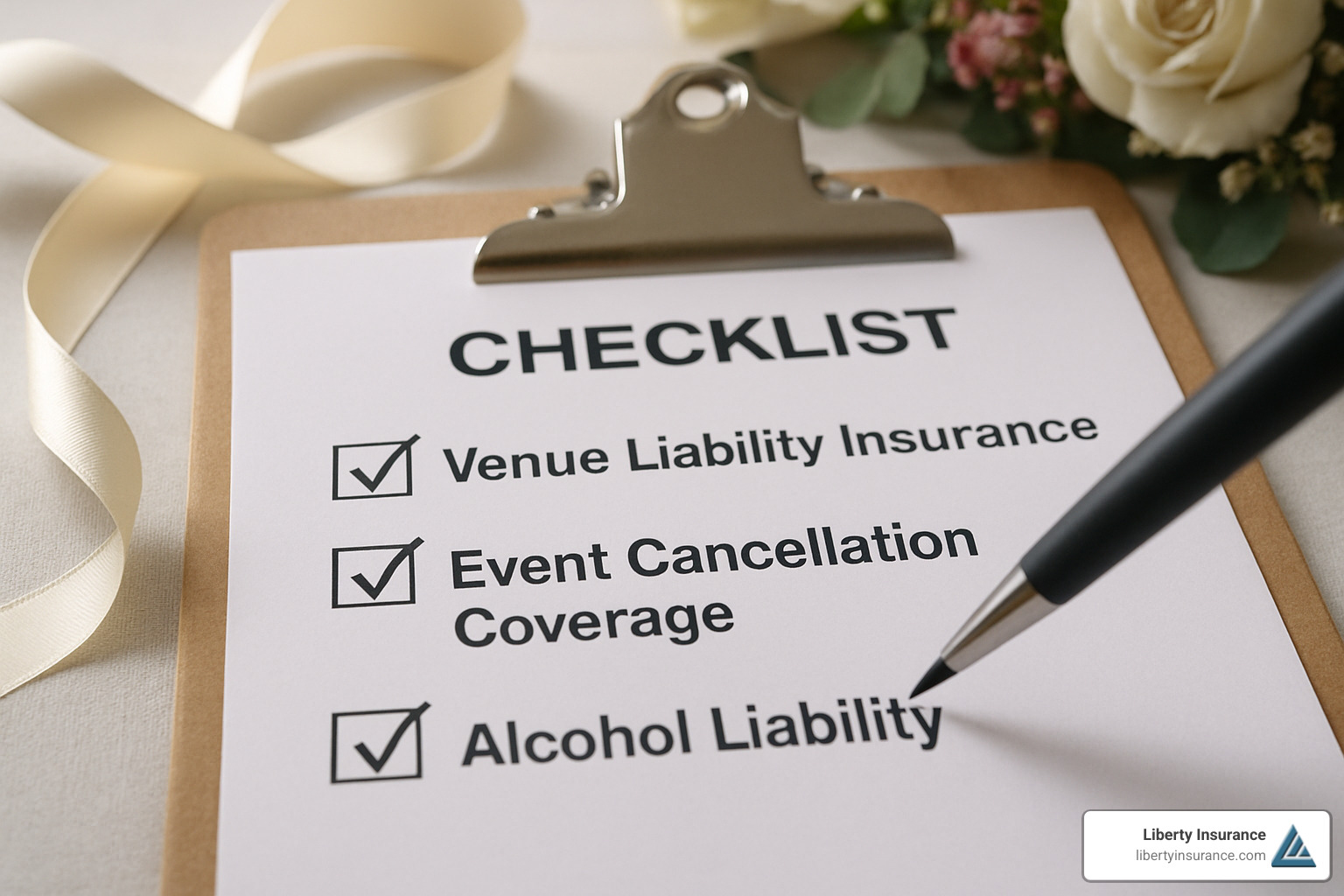
Smart couples know that when you buy wedding venue insurance matters just as much as what you buy. The moment you put down your first vendor deposit, you should be shopping for coverage. Why? Because that’s when your financial risk begins.
Here’s something most couples don’t realize: the 14-day weather rule can make or break your cancellation coverage. If you wait until two weeks before your outdoor wedding to buy insurance, you might find yourself excluded from weather-related claims entirely. Hurricane season weddings require especially early planning.
Bundling liability and cancellation coverage isn’t just convenient – it’s financially smart. Most insurers offer a 15% discount when you combine both policies. That could save you $75-$100 on your total wedding venue insurance cost, money that’s better spent on your honeymoon.
One insider tip that can save you headaches later: add your venue as an additional insured on your policy. This simple endorsement usually costs nothing extra but makes your certificate more acceptable to venues. It shows you understand the insurance game.
Don’t forget about policy extensions for related events. Adding your rehearsal dinner to your existing policy typically costs much less than buying separate coverage. It’s one of those small details that can prevent big problems.
More info about Wedding Venue Insurance
Step-by-Step Purchase Guide
Getting the right coverage doesn’t have to be complicated. Start by quoting online with basic details about your wedding date, guest count, and venue. Most companies provide instant quotes, making comparison shopping easy.
When comparing coverage limits, resist the urge to focus only on price. Make sure your liability limits actually meet your venue’s requirements – there’s nothing worse than finding your $500,000 policy doesn’t satisfy their $1 million minimum requirement.
Reviewing exclusions might be boring, but it prevents nasty surprises later. Pay special attention to how your policy defines “severe weather” and what constitutes vendor failure. These details matter when you’re filing a claim.
Once you purchase, secure your certificate of insurance immediately. Most insurers provide instant certificates, but double-check that your venue’s name is spelled correctly and all requirements are met. A typo can cause delays when you need the certificate most.
Finally, remember to update your guest count if numbers change significantly. Most policies allow adjustments right up to your event date, and significant increases might require higher coverage limits to maintain adequate protection.
Adjusting Coverage After Purchase
Life happens, and sometimes wedding plans change. The good news is that endorsements allow you to modify your policy after purchase without starting over. Common changes include updating guest counts, shifting event dates, or adding coverage for newly planned events.
Date changes are usually handled without penalty if you notify your insurer promptly. However, moving from a low-risk winter wedding to a hurricane season celebration might require a premium adjustment. It’s always better to communicate early.
Adding rehearsal dinner coverage typically costs 25-50% of your base premium. This makes sense if you’re hosting an expensive rehearsal with significant non-refundable costs. The math is simple: if your rehearsal costs $3,000 and coverage costs $100, it’s probably worth it.
Coverage increases are often possible up to certain limits. If your wedding budget grows from $25,000 to $40,000 after buying insurance, you can usually increase your cancellation limits to match your new financial exposure. Just remember that higher limits mean higher premiums.
Frequently Asked Questions about Wedding Venue Insurance Cost
How far in advance should I buy coverage?
The sweet spot for purchasing wedding insurance is as soon as you start putting down deposits – which could be anywhere from six months to two years before your big day. Think of it this way: the moment you have money at risk, you want protection in place.
Here’s what’s interesting about timing: you can actually buy liability coverage as late as the day before your wedding if you’re in a pinch. But cancellation coverage has that important 15-day rule for weather claims. If you wait until two weeks before your outdoor summer wedding to buy coverage, you might find yourself without weather protection right when you need it most.
Early buyers get the best deal on peace of mind. When couples purchase coverage early in their planning process, they’re protected if their photographer suddenly goes out of business or their venue closes unexpectedly. These things happen more often than you’d think, especially in today’s unpredictable business climate.
Is the premium a one-time payment or recurring?
Good news here – wedding venue insurance cost is a one-time payment, not another monthly bill to add to your budget. You pay once when you purchase the policy, and you’re covered for your entire event period.
This makes wedding insurance refreshingly simple compared to your other insurance policies. No monthly premiums to remember, no annual renewals to worry about, and no surprise rate increases. You pay your premium upfront – whether that’s $150 or $350 – and you’re done.
The coverage typically lasts for a 24-hour period around your event, though you can extend this if needed for multi-day celebrations. Once your wedding weekend is over, the policy expires naturally. It’s like buying a ticket for the ultimate peace-of-mind experience.
Can homeowners insurance cover a backyard wedding?
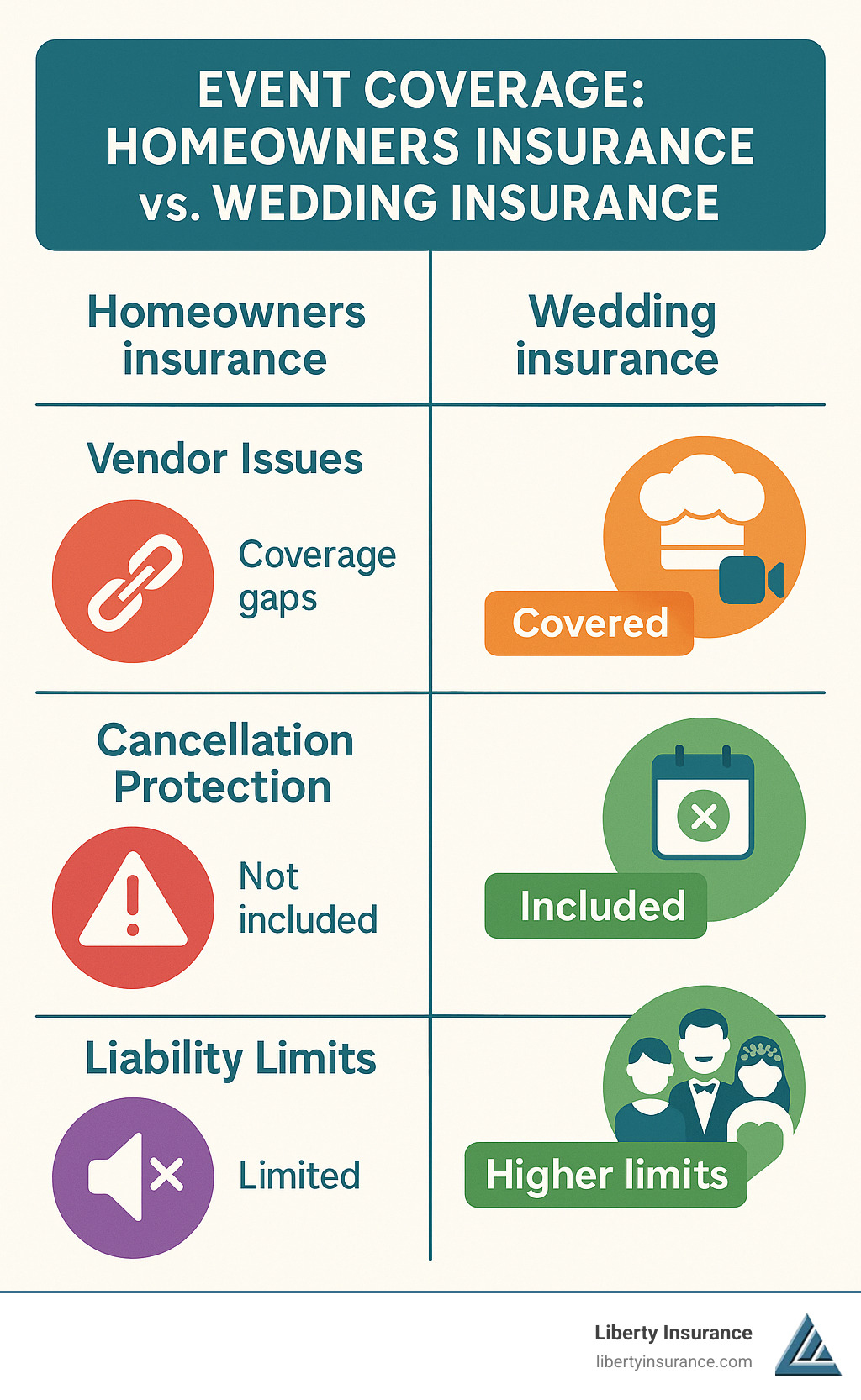
This is where things get tricky, and honestly, it’s one of the most misunderstood aspects of wedding planning. Your homeowners insurance might provide some coverage for a small backyard gathering, but it’s rarely enough for what most couples consider a “real” wedding.
Here’s the reality: most homeowners policies start getting nervous when you have organized events with professional vendors, catering, or more than a handful of guests. They’re designed to cover your cousin’s birthday barbecue, not your 100-person wedding with a DJ, caterer, and open bar.
The coverage gaps can be significant. Your homeowners policy probably won’t cover you if your wedding photographer fails to show up, or if you need to cancel due to illness. It also might not provide adequate liability limits if someone gets seriously injured during your celebration.
Some insurance companies offer homeowners policy extensions for special events, typically costing $60-$100. While this sounds cheaper than dedicated wedding insurance, you’re getting much less protection. No cancellation coverage, no vendor failure protection, and often limited liability coverage.
For backyard weddings with professional services and significant guest counts, dedicated wedding insurance provides much better value. You get comprehensive protection that’s specifically designed for wedding scenarios, often for just slightly more than a homeowners extension.
Conclusion
Planning your dream wedding involves countless decisions, but understanding wedding venue insurance cost shouldn’t be one that keeps you up at night. With liability coverage typically starting around $150 and cancellation protection from $130, wedding insurance represents one of your smartest wedding investments – costing less than most centerpieces while protecting your entire celebration.
Think of it this way: you’re probably spending more on flowers than you would on comprehensive insurance coverage. Yet that insurance protects thousands of dollars in deposits, vendor payments, and venue fees that could vanish if things go wrong.
The most important money-saving strategies include purchasing coverage as soon as you start paying deposits, bundling liability and cancellation coverage for that valuable 15% discount, and carefully matching your coverage limits to your actual financial exposure. Don’t let fear drive you to over-insure, but don’t try to save pennies on coverage that could cost you thousands later.
At Liberty Insurance, we’ve seen too many couples learn the hard way that hoping for the best isn’t a financial strategy. Our experience helping families across New Jersey has taught us that the right coverage at the right price provides something invaluable: the ability to actually enjoy your wedding day instead of worrying about what could go wrong.
Wedding venue insurance cost isn’t just about checking a box for your venue’s requirements. It’s about protecting the significant investment you and your families have made in celebrating your love. When you consider that the average couple spends $30,000 or more on their wedding, spending a few hundred dollars to protect that investment makes perfect financial sense.
Your wedding day should be about celebrating your future together, not stressing about potential disasters. Proper insurance coverage lets you focus on what really matters – each other, your families, and the joy of starting your married life together.
Ready to protect your celebration without breaking your budget? Our team understands that every couple’s situation is unique, and we’re here to help you find the coverage that fits both your needs and your wallet.

