
Understanding Your Alcohol-Related Risks
A liquor liability policy is insurance coverage that protects businesses that sell, serve, or distribute alcohol from claims of bodily injury or property damage caused by intoxicated patrons. This specialized insurance fills the critical gap left by general liability policies, which typically exclude alcohol-related incidents.
What is a liquor liability policy?
– Definition: Insurance that covers third-party claims resulting from alcohol service
– Coverage: Legal costs, settlements, medical bills, and property damage repairs
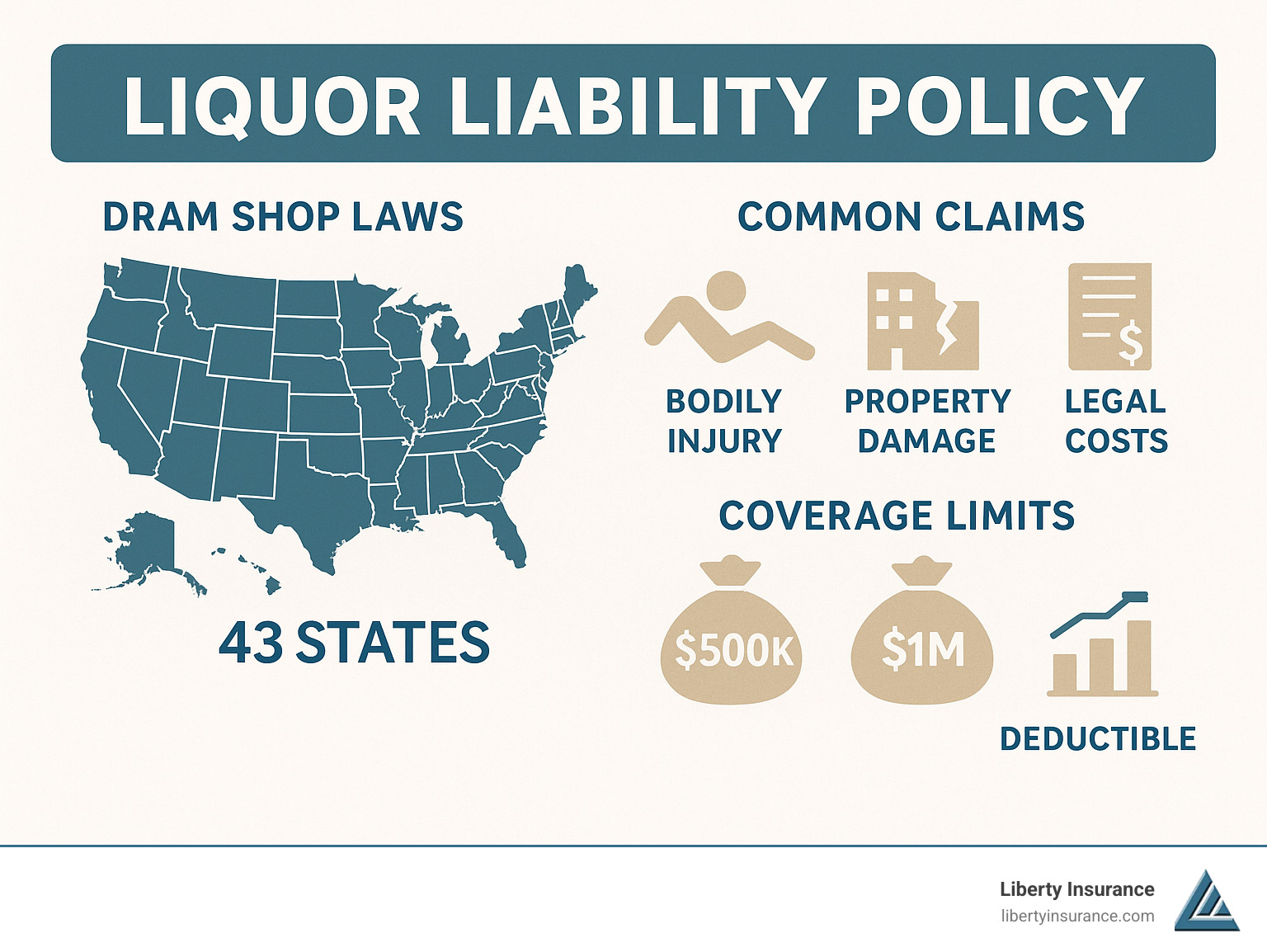
– Necessity: Required in 43 states with dram shop laws
– Cost: Averages $55/month for small businesses
– Who needs it: Bars, restaurants, caterers, liquor stores, breweries, and event hosts
When serving alcohol, the risks extend beyond spilled drinks. An intoxicated patron causing an accident could result in a lawsuit potentially costing hundreds of thousands of dollars. These claims are specifically excluded from standard general liability policies.
Dram shop laws, which exist in 43 states and DC, can hold your business legally responsible for damages caused by customers you’ve served alcohol to. Without proper coverage, one incident could threaten everything you’ve built.
I’m Andrew Harris, a Certified Insurance Counselor with over a decade of experience helping businesses protect themselves with properly structured liquor liability policy coverage.
Common liquor liability policy vocab:
– bartender liability insurance
– host liquor liability insurance policy
– general and liquor liability insurance
What Is a Liquor Liability Policy?
A liquor liability policy is your business’s safety net when serving drinks. It’s specialized insurance designed for establishments that sell, serve, or distribute alcoholic beverages. The name “dram shop insurance” comes from historical taverns that sold alcohol by the dram (a small unit of liquid).
When you serve that extra cocktail to a customer who later causes an accident, your liquor liability policy covers the potential financial fallout – from legal expenses and court costs to medical bills and settlements. It’s designed for those moments when someone becomes intoxicated at your establishment and causes harm.
Your standard general liability policy specifically excludes alcohol-related incidents if you’re in the business of selling or serving alcohol. Without a liquor liability policy, you’re facing a massive gap in your protection.
Dram Shop Laws Explained
Across America, 43 states plus DC have enacted dram shop laws that can hold your business legally responsible when alcohol service goes wrong. These laws vary by state but generally create liability in two key scenarios:
- When you serve someone who’s visibly intoxicated and they later cause harm
- When you serve minors who subsequently cause damage or injury
The financial consequences can be staggering, with settlements regularly reaching hundreds of thousands or even millions of dollars. Research from the National Conference of State Legislatures shows these laws have reduced alcohol-related crashes by making establishments more careful about serving practices.
In states like New York and Michigan, you can’t even get a liquor license without proof of liquor liability insurance.
Liquor Liability Policy vs General Liability Insurance
One dangerous misconception is believing general liability covers all risks, including alcohol service. Here’s a simple comparison:
| Coverage Type | General Liability | Liquor Liability |
|---|---|---|
| Slip and fall accidents | ✓ | ✗ |
| Property damage (non-alcohol related) | ✓ | ✗ |
| Advertising injury | ✓ | ✗ |
| Injuries caused by intoxicated patrons | ✗ | ✓ |
| DUI accidents after alcohol service | ✗ | ✓ |
| Assault and battery (alcohol-related) | ✗ | ✓ |
| Legal defense for alcohol-related claims | ✗ | ✓ |
These policies work together – general liability handles everyday risks like a customer slipping, while your liquor liability policy addresses the unique risks of serving alcohol.
Liquor Liability Policy vs Host Liquor Liability
Host liquor liability is designed for businesses that occasionally serve alcohol but don’t sell it as part of regular operations – like an accounting firm hosting a holiday party or a tech company celebrating with champagne.
The key distinction is in how you handle alcohol. If you’re selling drinks or your business revolves around alcohol service, you need a full liquor liability policy. If you’re occasionally hosting events where alcohol is served but not sold, host liquor liability (usually added as an endorsement to general liability) might be sufficient.
Host liquor coverage is typically more limited and often less expensive, which makes sense since the exposure is less frequent.
Who Needs Liquor Liability Insurance?

If your business is in the business of alcohol—whether making, selling, serving, or distributing it—you need this coverage. That includes:
- Neighborhood bars and pubs
- Restaurants serving alcohol
- Nightclubs and entertainment venues
- Breweries, wineries, and distilleries
- Liquor stores and retail outlets
- Grocery and convenience stores selling alcohol
- Caterers providing bar service
- Food trucks offering alcoholic beverages
- Event venues with bar service
- Hotels with restaurants or bars
- Bowling alleys and recreational facilities serving alcohol
Your need for coverage isn’t one-size-fits-all. It depends on your specific business model, location, and how much revenue comes from alcohol sales. A bar making 90% of its money from drinks faces different risks than a restaurant where wine and cocktails make up just 30% of sales.
State & Local Requirements
The legal landscape for liquor liability varies widely. Some states, like New York and Michigan, won’t issue a liquor license without proof of a liquor liability policy. Even if your state doesn’t explicitly require coverage, local ordinances or licensing boards might have their own requirements. Many commercial landlords and event venues will demand proof of coverage before you can serve alcohol on their property.
Here in New Jersey, where Liberty Insurance has offices in Millstone Township, Trenton, Toms River, New Brunswick, and Princeton, liquor license holders must demonstrate financial responsibility—which typically means having appropriate insurance coverage.
High-Risk vs Low-Risk Operations
When it comes to insurance, all alcohol-serving establishments aren’t created equal. Your risk profile affects both coverage availability and cost.
High-risk operations include:
– Bars and nightclubs open past midnight
– Venues with dance floors
– Establishments catering primarily to the just-turned-21 crowd
– Businesses with previous alcohol-related claims or violations
– Operations where alcohol makes up more than half of total sales
Lower-risk operations include:
– Fine dining establishments where food is the star
– Retail stores selling packaged liquor for off-premises consumption
– Breweries and wineries focused on tastings and appreciation
– Catering businesses serving alcohol at controlled events
– Establishments that close before midnight
Understanding where your business falls on this spectrum helps you anticipate insurance costs and identify ways to manage risks.
Coverage Deep Dive: Inclusions, Exclusions & Add-Ons
Knowing exactly what your liquor liability policy covers can make all the difference between sleeping soundly at night or worrying about potential financial disaster.
What Your Liquor Liability Policy Covers
Your coverage typically includes:
- Medical expenses for injuries caused by intoxicated patrons
- Legal defense costs if you’re sued
- Attorney fees, court costs, and other defense expenses
- Settlements or judgments up to your policy limits
- Property damage caused by intoxicated patrons
- Some policies even cover emotional distress claims
What Your Policy Does NOT Cover
Understanding the gaps in your coverage is crucial:
- Employee injuries (covered by workers’ compensation)
- Intentional acts of harm
- Product liability issues like serving contaminated alcohol
- Damage to your own property
- Defamation claims like libel and slander (typically covered by general liability)
- Many policies exclude incidents involving underage drinking if you knowingly served minors
Optional Endorsements & Higher Limits
Consider these valuable add-ons to your basic policy:
- Assault and battery coverage – Particularly important for bars and nightclubs
- Cyber liability – Protects if there’s a data breach of customer payment information
- Trailer endorsement – For food trucks or mobile bartending services
- Excess liability – Provides additional coverage beyond primary limits (typically up to $5 million)
Typical Limits & Deductibles
Most liquor liability policies start with limits of $1 million per occurrence and $2 million aggregate. This means your policy covers up to $1 million for a single event, with a total cap of $2 million during your policy year.
For businesses in states with particularly strict dram shop laws or those with higher risk profiles, consider higher limits. A single serious incident can easily exceed standard coverage.
Deductibles typically range from $1,000 to $5,000—this is your responsibility before insurance kicks in. Higher-risk establishments might face higher deductibles. Some policies use a self-insured retention (SIR) structure instead, requiring you to handle defense costs up to the SIR amount before coverage activates.
Cost, Limits & Smart Ways to Save on Your Liquor Liability Policy
The cost of a liquor liability policy varies based on several key factors:
- Your location – states with tougher dram shop laws typically have higher premiums
- Business type – a late-night bar will generally pay more than a family restaurant
- Alcohol sales percentage – higher alcohol sales relative to food means higher premiums
- Claims history – previous incidents will increase your rates
- Coverage limits – higher limits mean higher premiums
How Much Does Liquor Liability Insurance Cost?
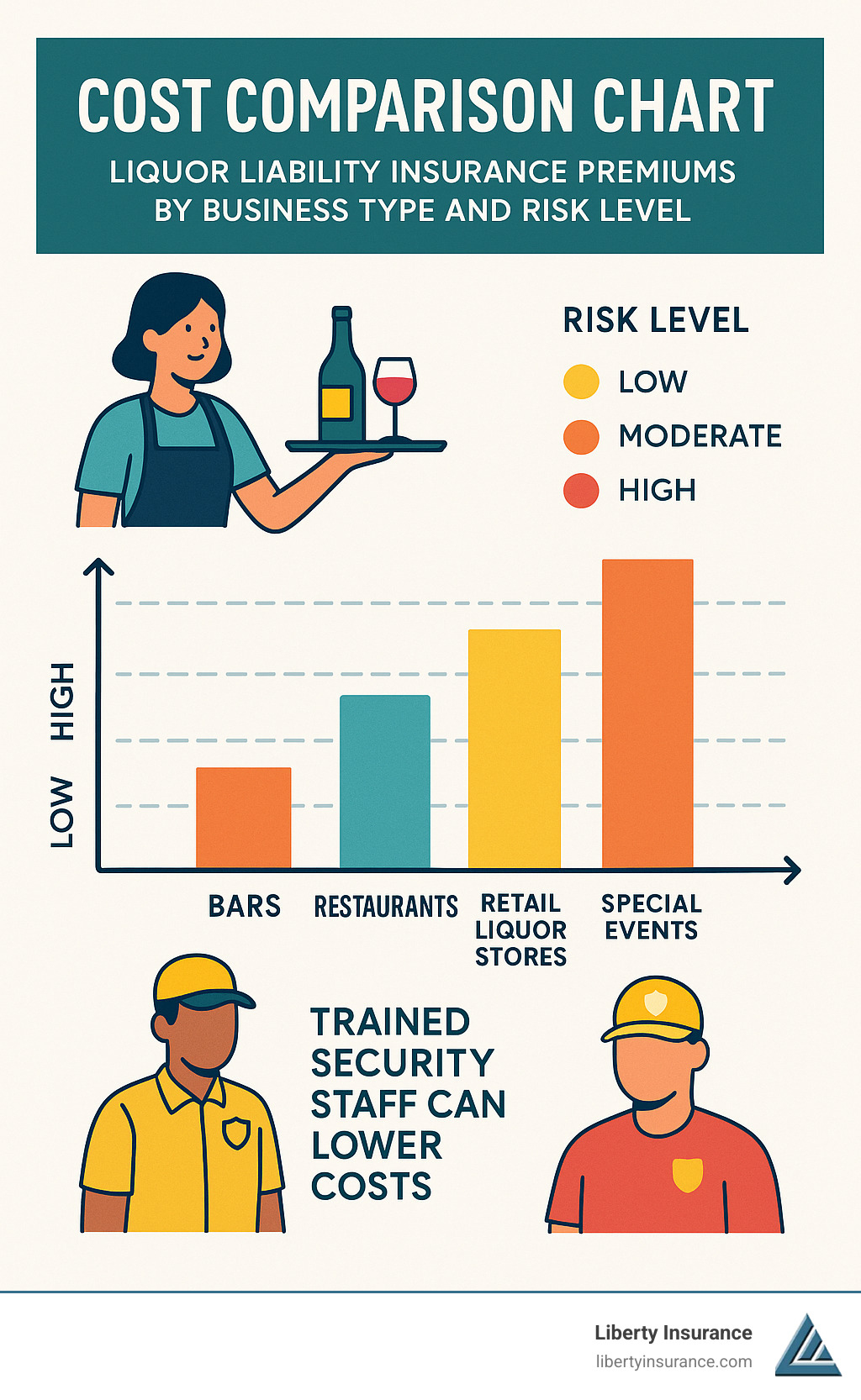
Most small businesses pay around $55 per month ($660 annually) for a liquor liability policy, but your actual costs might differ:
- Bars and nightclubs: $1,000-$2,500 annually
- Restaurants with moderate alcohol sales: $500-$1,250 annually
- Retail liquor stores: $250-$750 annually
- Special event coverage: Starting around $275 for 1-3 days
At Liberty Insurance, we work with multiple carriers to find competitive rates for New Jersey businesses.
Strategies to Lower Premiums
There are several proven ways to trim your costs without sacrificing protection:
- Employee training programs like TIPS (Training for Intervention Procedures) can earn discounts
- ID verification technology shows insurers you’re committed to preventing underage drinking
- Written service policies document procedures for alcohol service, including when to cut off intoxicated patrons
- Pay your premium annually instead of monthly for potential discounts
- Bundle your policies together for multi-policy discounts
- Maintain a claim-free history for lower premiums year after year
Getting a Quote & Info You’ll Need
When applying for a liquor liability policy, have this information ready:
- Basic business details – name, address, years in operation, ownership structure
- Liquor license information
- Gross annual sales figures (broken down by food, alcohol, and other categories)
- Hours of operation (especially closing time)
- Security measures in place
- Employee training programs
- Claims history for the past 3-5 years
- Desired coverage limits and deductibles
At Liberty Insurance, we’ve made this process simple. Our team will guide you through each step, explaining factors affecting your premium in plain English. Get your Liquor Liability Insurance Quote today.
Claims & Risk Management Under a Liquor Liability Policy

Even the most careful business owners can face alcohol-related incidents. Understanding how to handle claims and implement smart risk management strategies is essential for protecting your business.
Common Claim Scenarios
Real-world examples illustrate when your liquor liability policy activates:
Bar fights: When tensions rise between patrons and a physical altercation leaves someone injured, resulting in a lawsuit claiming your establishment continued serving an obviously intoxicated person.
DUI accidents: A customer enjoys several drinks at your restaurant before driving home and causing an accident. Under dram shop laws, the injured party sues your business for negligently over-serving the driver.
Alcohol poisoning: A young patron celebrating their 21st birthday consumes excessive amounts of alcohol and requires emergency medical treatment. Their family files a lawsuit alleging your staff encouraged dangerous drinking behavior.
Property damage: An intoxicated patron stumbles into a neighboring business’s storefront, breaking an expensive display window. The business owner seeks compensation, citing your responsibility under local dram shop laws.
According to the Mayo Clinic, alcohol poisoning is a serious and sometimes deadly consequence of drinking large amounts of alcohol in a short period.
How to File and Manage a Claim
When the unexpected happens, follow these steps:
Document everything immediately – Record date, time, location, names and contact details of everyone involved, including witnesses. Obtain police reports if applicable.
Notify your insurance carrier right away – Most policies require notification within 24-48 hours. Waiting too long could jeopardize coverage.
Preserve all potential evidence – Save security footage, receipts showing purchases, employee time records, and incident reports.
Work closely with your adjuster – Be honest, thorough, and prompt in providing requested information.
Implement a litigation hold if necessary – Ensure all potentially relevant documents and evidence are preserved.
Let your insurer guide the legal process – Your policy includes a “duty to defend,” meaning your insurance company will provide legal representation.
Proactive Risk-Reduction Best Practices
The best claim is the one that never happens. Implement these strategies:
Card consistently – Verify ID for anyone who appears under 30. Train staff to recognize fake IDs.
Train staff to recognize intoxication signs – Slurred speech, impaired coordination, and mood changes should trigger service refusal.
Offer food and non-alcoholic options – Complimentary water and food items help slow alcohol absorption.
Ensure safe transportation options – Partner with rideshare services or local taxis to provide alternatives to driving.
Maintain proper security presence – Well-trained security staff can de-escalate tense situations.
Document service refusals – Keep a log of instances where staff refused to serve intoxicated individuals.
Avoid risky promotions – “All you can drink” specials and drinking contests encourage excessive consumption.
Install security cameras – Video evidence can be invaluable in defending against claims.
These practices not only protect your business legally but often qualify you for premium discounts on your liquor liability policy.
Frequently Asked Questions About Liquor Liability Policies
Let’s address some common questions about liquor liability policies that business owners frequently ask.
Is liquor liability insurance required by law everywhere?
No, liquor liability insurance isn’t a universal legal requirement. However, 43 states plus DC have dram shop laws that can hold your business legally responsible for alcohol-related incidents. Some states like New York and Michigan require proof of a liquor liability policy before issuing a liquor license.
Even without a state mandate, many local municipalities, landlords, and event venues require coverage. In New Jersey, liquor license holders must demonstrate financial responsibility – typically through appropriate insurance coverage.
Even without legal requirements, the financial protection a liquor liability policy provides makes it essential to your business. One lawsuit without coverage could devastate your operation.
Does a liquor liability policy cover off-premises events?
It depends on your specific policy. Some liquor liability policies naturally extend to cover off-site locations, while others strictly limit coverage to your primary business address.
If your business regularly caters events, participates in festivals, or serves alcohol at client locations, ensure your policy explicitly includes this coverage. For one-time special events, a separate event policy might make more financial sense than modifying your standard coverage.
Can I buy liquor liability without general liability?
Yes, technically you can purchase a standalone liquor liability policy without carrying general liability insurance, but this approach is rarely recommended.
General liability covers everyday risks not related to alcohol service – like customer slip-and-fall accidents, product liability claims, or advertising injuries. Operating without this basic coverage leaves your business vulnerable to common incidents.
Most business owners find that carrying both policies provides comprehensive protection. Many insurance carriers offer package policies that combine general and liquor liability at better rates than purchasing them separately.
Conclusion
When it comes to serving alcohol at your business, hope is not a strategy—but a liquor liability policy is.
This specialized coverage is your financial shield against the unpredictable nature of alcohol service, protecting everything you’ve worked so hard to build. Without it, one unfortunate incident involving an intoxicated patron could potentially wipe out years of business success.
At Liberty Insurance, we’ve seen how the right coverage brings peace of mind to bar owners, restaurant managers, and event hosts across New Jersey. Our team understands that your business is unique—a neighborhood pub faces different challenges than a catering company or craft brewery.
We take the time to understand your specific operation, evaluating factors like location, alcohol sales percentage, and risk management practices. This personalized approach allows us to design a liquor liability policy that provides robust protection without unnecessary costs.
Our New Jersey roots run deep, with local offices in Millstone Township, Trenton, Toms River, New Brunswick, and Princeton. This means we understand the specific regulations and risks affecting businesses in our state.
Beyond just providing insurance, we’re committed to helping you implement effective risk management strategies that can both reduce your premiums and prevent incidents before they occur. From staff training programs to written service policies, these preventative measures create a safer environment while potentially lowering your insurance costs.
Don’t wait for a wake-up call in the form of a lawsuit. The time to secure proper coverage is now, before an incident occurs. Our team makes the process simple, explaining your coverage options in plain English—no insurance jargon.
Ready to protect your business with a comprehensive liquor liability policy designed specifically for your needs? Reach out today for a free, no-obligation quote and consultation.
Learn more about our alcohol liability insurance options
When serving spirits is your business, we’ll help you serve with confidence.

