
Why Frame Construction Insurance Matters for Your Project
Frame construction insurance protects buildings under construction that use wood or light-gauge metal framing—the most common and cost-effective method for residential and commercial projects. Here’s what you need to know:
Key Points:
- What it is: Specialized insurance for projects classified as ISO Construction Code 1 (Frame)—the least fire-resistive building type
- Why it’s different: Frame construction faces higher risks from fire, weather, theft, and vandalism compared to steel or concrete buildings
- Core coverage: Builders Risk insurance protects your project during construction, plus General Liability and Workers’ Compensation for contractors
- Cost factors: Premiums are higher for frame projects due to fire risk, but can be reduced through strong safety programs and site security
- Coverage limits: Many insurers cap frame project coverage at $25-35 million per structure due to liftd risk
Wood frame construction remains the building material of choice across much of North America. It’s sustainable, financially feasible, and allows projects to move quickly in competitive markets. But this speed and affordability comes with a trade-off: frame construction is considered the highest-risk building type by insurance carriers.
Fire is the greatest threat. Once a fire starts in a wood frame structure, it spreads rapidly and can easily become a total loss. Add in exposure to theft of materials, vandalism on unsecured sites, and damage from wind or water during construction, and you’re looking at a complex risk profile that demands specialized insurance solutions.
The challenge? Many insurers are reluctant to write policies for large-scale frame construction projects. Limited capacity, restrictive warranties, and high premiums have become the norm, leaving contractors and developers scrambling to find adequate coverage.
This guide will walk you through what makes frame buildings different from an insurance perspective, the key risks underwriters evaluate, essential coverage types, and practical strategies to protect your project while managing costs.
I’m Andrew Harris, a Certified Insurance Counselor (CIC) with Liberty Insurance. I’ve spent years helping contractors and developers in New Jersey steer the complexities of frame construction insurance for projects of all sizes. My goal is to help you understand these risks so you can build with confidence.
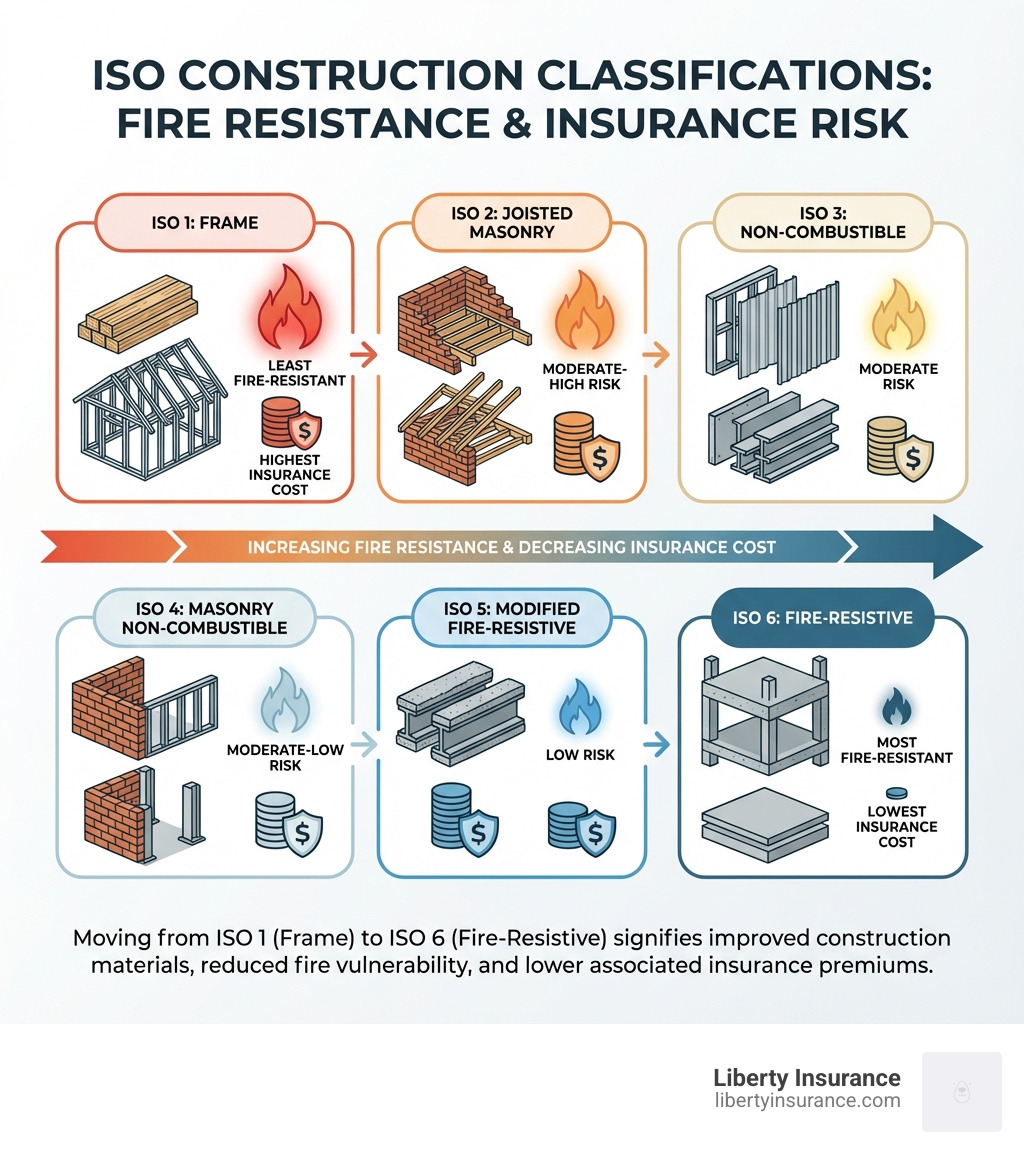
Basic frame construction insurance vocab:
What is Frame Construction? An Insurance Perspective
When we talk about frame construction in the context of insurance, we’re not just describing a building method; we’re referring to a specific classification system established by the Insurance Services Office, Inc. (ISO). This classification is crucial because it directly influences how insurance companies assess risk and, consequently, how they price commercial property insurance.
ISO uses its Commercial Lines Manual (CLM) to categorize building construction types based on their susceptibility to damage, particularly by fire. This system helps us understand the inherent risks associated with different structures. For insurance purposes, frame construction falls into the ISO Construction Code 1 category. This ranking isn’t a badge of honor; it signifies that frame construction is considered the least fire-resistive among the six categories.
If you want to explore the broader background of how construction classes are used in property insurance, ISO’s system is discussed in resources like the Insurance Services Office overview, which provides helpful context on how these classifications support rate development.
The implications for your commercial property insurance rates are significant. A building classified as ISO Code 1 indicates a higher potential for fire damage, which translates to a higher perceived risk for insurers. This liftd risk often results in higher premiums for frame construction insurance compared to structures built with more fire-resistive materials. The ISO classification system helps quantify these risks and develop appropriate rates, ensuring that the cost of insurance accurately reflects the potential for loss.
Defining Frame Construction Materials
So, what exactly constitutes frame construction according to ISO? It’s more specific than just “wood.” The CLM describes frame construction (Construction Code 1) as structures with exterior walls of:
- Wood
- Light-gauge metal
- Brick veneer
- Stone veneer
- Stucco on wood
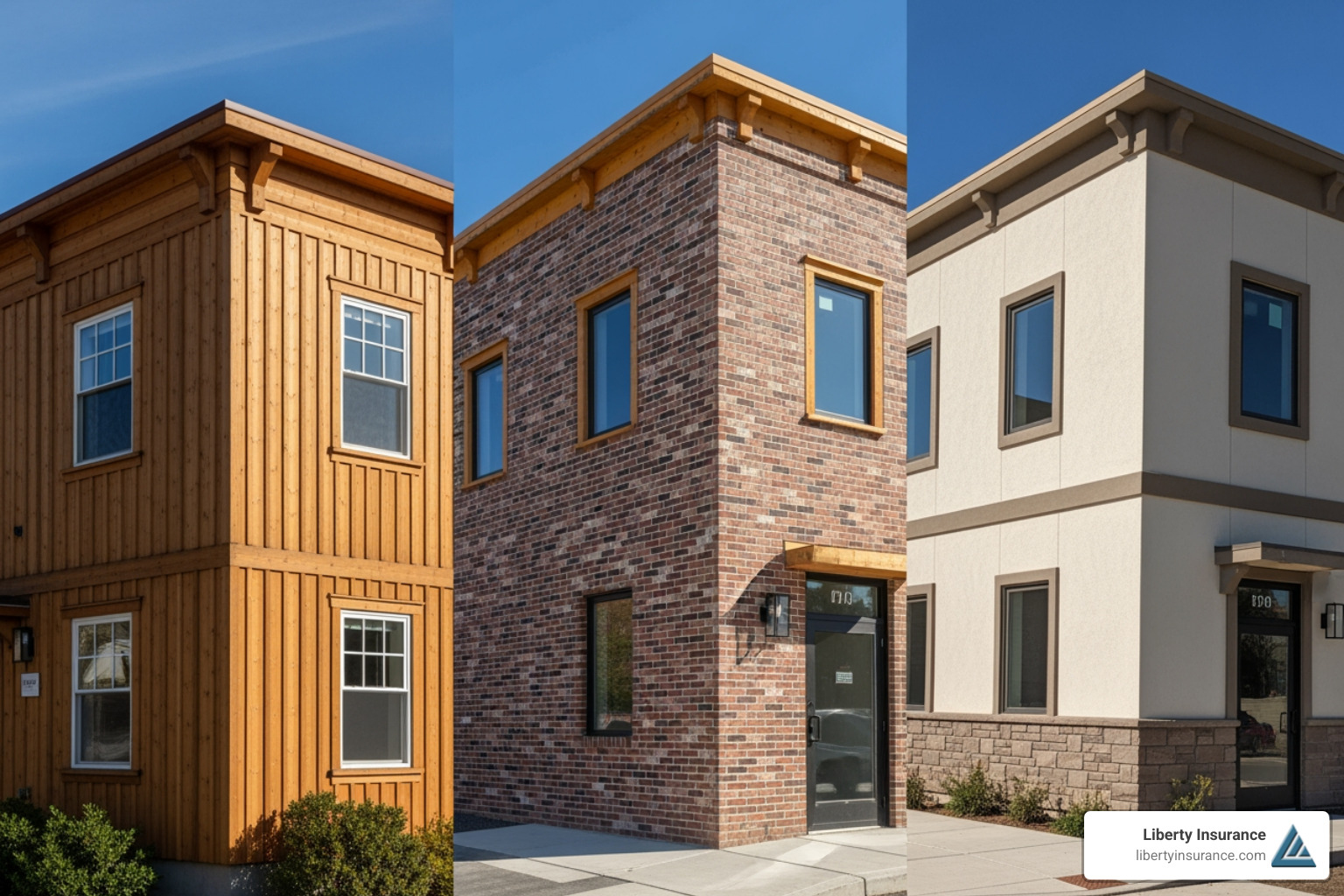
This means that even if a building has an attractive brick or stone exterior, if its structural support and bearing walls are primarily wood or light-gauge metal, it’s still classified as frame construction for insurance purposes. It’s the underlying structure that matters most to insurers when assessing fire risk.
How ISO Classification Impacts Your Insurance Rates
The ISO construction codes (ranging from 1 to 6) are essentially a fire-resistance ranking. Code 1, which is assigned to frame construction, represents the highest risk due to its inherent combustibility and the rapid spread of fire within such structures. As we move up the scale to Code 6 (Fire-Resistive), the fire resistance increases, and the insurance risk generally decreases.
This classification has a direct and profound impact on how your frame construction insurance premiums are calculated. Because frame construction is deemed to have a higher susceptibility to damage and a greater potential for total loss in the event of a fire, insurers typically charge higher rates. It’s a straightforward risk-reward equation: higher risk for the insurer means higher cost for the policyholder.
Understanding this industry standard is vital for any contractor or developer in New Jersey working with frame projects. It helps us anticipate insurance costs and explains why our insurance professionals ask detailed questions about building materials and construction methods.
Key Risks & Underwriting Considerations for Frame Projects
Let’s face it, frame construction carries a certain “high-risk” perception among insurers. While wood remains a sustainable and financially feasible choice for many projects, especially in the competitive New Jersey market, its inherent vulnerabilities mean that securing comprehensive frame construction insurance can be more challenging than for other construction types.
We’ve observed that there’s a limited appetite among some insurers for large frame projects. For example, while some Builders Risk plans can insure new construction up to $75 million for “superior construction,” their appetite for single-structure frame projects might be capped at $25 million (all-in). This limited capacity and the high-risk nature of the occupation often lead to higher premiums and limited coverage options. This is why our underwriting process for frame projects requires specific attention and expertise.
For a neutral overview of how underwriters think about property risk in general, you can also review the Property insurance entry, which explains how perils, construction type, and location come together in the underwriting process.
Primary Perils Associated with Frame Construction
When we evaluate a frame construction project for insurance, several primary perils stand out due to the nature of the building materials and the construction process itself:
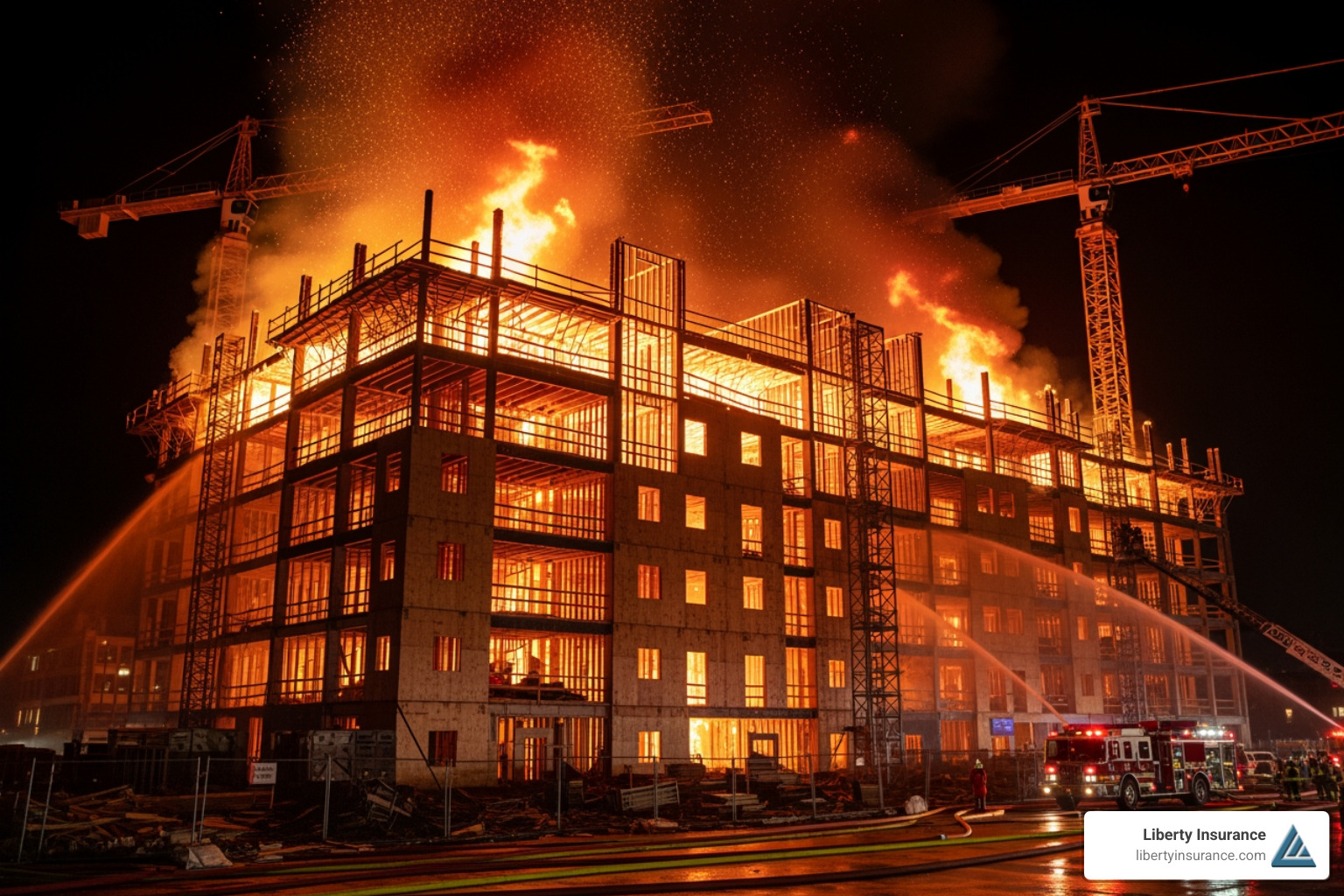
- Fire: This is possibly the greatest threat to frame construction projects. Once a fire begins in a wood frame structure, it spreads rapidly and can easily become a total loss. The combustibility of wood, coupled with the open spaces during construction, creates a perfect storm for rapid fire propagation.
- Water Damage: Whether from unexpected heavy rainfall, burst pipes, or issues with temporary plumbing systems, water can cause significant damage to wood framing, leading to mold, rot, and structural compromise, especially before the building is fully enclosed.
- Weather Events: New Jersey is no stranger to severe weather. Strong winds, heavy snow, and hail can cause considerable damage to partially completed frame structures, tearing off temporary coverings, dislodging framing elements, or even causing collapses.
- Theft of Materials and Equipment: Construction sites, particularly those with valuable materials like lumber, copper wiring, and tools, are attractive targets for thieves. The open nature of a frame construction site makes it particularly vulnerable.
- Vandalism: Unsecured sites can attract vandals, leading to costly damage, graffiti, or intentional destruction of property.
- Structural Collapse During Construction: While less common, the structural integrity of a frame building is most vulnerable during its construction phases, particularly before all load-bearing elements and bracing are in place.
What Underwriters Evaluate in a Frame Project
When our underwriters at Liberty Insurance assess a frame construction project for insurance, we conduct a thorough evaluation to understand the unique risk profile. Here’s what we typically look for:
- Project Value and Replacement Cost: The total “all-in” value of the project, including hard and soft costs.
- Location and Fire Protection: The project’s proximity to fire hydrants and stations, and the local fire protection rating.
- Catastrophe Exposure: Whether the site is in an area prone to high winds, floods, or other natural disasters.
- Builder’s Experience and Track Record: Your history with similar frame projects, safety record, and past claims.
- Construction Schedule: The projected timeline for completion, as longer schedules increase risk exposure.
- Site Security and Fire Prevention: Detailed plans for securing the site against theft and vandalism, along with fire prevention protocols (e.g., debris removal, hot work permits).
- Use of Temporary Heat Sources: How and where temporary heating is used on site.
- Neighboring Exposures: The proximity of other structures that could be damaged or pose a risk to your project.
To gather this crucial information, a detailed application is essential. This allows us to build a complete picture of your project and provide the most appropriate frame construction insurance.
Essential Insurance Policies for Frame Construction Projects
For any frame construction project in New Jersey, having the right insurance policies isn’t just a good idea; it’s a necessity. These policies are designed to protect your significant investment, meet legal requirements, and satisfy the demands of clients and lenders. We understand that navigating these options can be complex, so let’s break down the essential coverages you’ll need for your frame project.
Here are the essential insurance policies for framing contractors and developers:
- Builders Risk (Course of Construction) Insurance: Protects the physical structure and materials during construction.
- Commercial General Liability (CGL) Insurance: Covers third-party bodily injury and property damage.
- Workers’ Compensation Insurance: Provides benefits for employee injuries.
- Contractor’s Equipment Insurance: Protects your tools and machinery.
- Commercial Auto Insurance: Covers vehicles used for business purposes.
- Installation Floater: Insures materials awaiting installation.
Builders Risk (Course of Construction)
This is arguably the most critical policy for any frame construction project. Builders Risk insurance, also known as Course of Construction (COC) insurance, protects the actual building and structure while it’s being built. Given the high fire risk associated with frame construction, this policy is non-negotiable.
It typically covers:
- The physical structure under construction.
- Materials and equipment stored on the job site.
- Materials in transit to the job site.
Builders Risk policies protect against a range of perils, including fire, theft, vandalism, and certain weather events like wind and hail. Without this coverage, a significant event could lead to devastating financial losses, potentially halting your project indefinitely.
Commercial General Liability (CGL)
Even the most meticulous contractors can face unforeseen circumstances. Commercial General Liability (CGL) insurance is your safety net for claims arising from third-party bodily injury or property damage. For frame construction, where activities can impact surrounding areas and individuals, CGL is indispensable. It’s also crucial to ensure that any subcontractors you hire carry their own adequate liability insurance and name your company as an additional insured on their policy. This creates a critical layer of protection.
This policy covers:
- Claims of bodily injury to a third party (e.g., a passerby injured by falling debris).
- Claims of property damage to a third party (e.g., damage to a neighboring building caused by your construction activities).
- Completed operations coverage, which protects you after the project is finished, in case your completed work causes injury or damage.
CGL also covers your legal defense costs, which can quickly add up, even if you’re not found liable. Understanding the specific liability needs of framing contractors is key to securing the right policy.
Workers’ Compensation and Other Key Coverages
Beyond Builders Risk and CGL, several other insurance types are vital for protecting your frame construction business and employees in New Jersey:
- Workers’ Compensation Insurance: A legal requirement in New Jersey for businesses with employees, this policy provides medical and wage benefits for work-related injuries or illnesses. Given the hazardous nature of construction, this coverage is essential for employee well-being and legal compliance. It’s important to note that the classification codes for carpentry and framing are among the most expensive for Workers’ Compensation due to the high frequency and severity of injuries, making a strong safety program a key factor in controlling these mandatory costs.
- Contractor’s Equipment Insurance: Protects your owned or rented tools and machinery (e.g., power tools, forklifts) against damage, theft, or loss on-site, in storage, or in transit.
- Commercial Auto Insurance: Essential for any business-owned vehicles used to transport materials, equipment, or workers. It covers liability for accidents and damage to your vehicles.
- Installation Floater: This specialized inland marine policy insures materials and equipment while they are in transit or awaiting installation at the job site. It fills a potential gap by protecting items like HVAC units, cabinetry, or high-value fixtures before they are permanently installed and become part of the structure covered by the main Builders Risk policy.
Builders Risk Deep Dive: Coverages, Exclusions, and Comparisons
When it comes to frame construction insurance, Builders Risk is the star of the show. It’s designed to protect your physical investment during the construction phase. Most reputable Builders Risk policies are written on an “all-risk” basis, meaning they cover all claims unless specifically excluded. However, it’s paramount to remember that these policies are not written on a standard form like Commercial General Liability, so the devil is truly in the details. Always read your specific policy carefully!
Understanding the difference between “soft costs” and “hard costs” is also crucial for frame construction projects. Hard costs are the direct construction expenses—labor, materials, and equipment. Soft costs, on the other hand, are indirect expenses that continue even if construction is delayed, such as architectural fees, engineering costs, permits, legal fees, and marketing expenses. A comprehensive Builders Risk policy should offer extensions to cover these vital soft costs.
Typical Coverages and Extensions
A robust Builders Risk policy for frame construction will include:
- Building and Structure Under Construction: The core coverage for the physical structure.
- On-site and Stored Materials: Protects materials like lumber and windows stored on-site or in transit.
- Debris Removal: Covers the cost of clearing the site after a covered loss.
- Soft Costs: A critical extension for indirect expenses like loan interest, legal fees, and permits that continue during a project delay.
- Delay-in-Completion Coverage: Covers lost income or additional expenses if a covered loss delays project completion.
- Expediting Expenses: Pays for extra costs to speed up repairs and get the project back on schedule, such as overtime labor.
These extensions provide a safety net for the financial side of your project, ensuring comprehensive business protection.
Common Exclusions in Frame Construction Insurance Policies
While “all-risk” sounds comprehensive, be aware of what your frame construction insurance policy typically excludes. These are standard exclusions across many Builders Risk policies:
- Defective Workmanship and Faulty Design or Materials: Builders Risk policies generally do not cover the cost to repair or replace the faulty work itself. This is considered a business risk that falls under professional or general liability. However, it’s critical to check if your policy includes an ‘ensuing loss’ or ‘resulting damage’ provision. This can provide coverage for damage caused by the faulty work. For example, if faulty wiring (which is excluded) causes a fire (a covered peril), the cost to repair the fire damage may be covered, even though the cost to fix the wiring itself is not.
- Mold and Pollution: Damage caused by mold, fungus, or various types of pollution is usually excluded. Specialized endorsements might be available for some of these risks.
- Earth Movement and Flooding: Perils like earthquakes, landslides, and floods are typically excluded from standard Builders Risk policies. If your New Jersey project is in an area prone to these events, you’ll need to purchase separate coverage or specific endorsements.
- Expected Settling or Cracking: Normal wear and tear, or the natural settling and cracking that can occur in any new structure over time, is not covered.
- Wear and Tear from Normal Use: This refers to the gradual deterioration of materials over time, which is not an insurable event.
Comparing Insurance for Frame vs. Other Construction Types
To truly appreciate the unique aspects of frame construction insurance, it helps to compare it with other common construction types. This table highlights key differences in how insurers view various building methods:
| Feature | Frame (ISO 1) | Masonry (ISO 2) | Steel Frame (ISO 4/5) |
|---|---|---|---|
| Primary Material | Wood, Light-gauge metal | Brick, Concrete Block | Structural Steel |
| Fire Risk | High | Moderate | Low |
| Insurance Premium | Highest | Moderate | Lower |
| Underwriting Focus | Fire prevention, Site security | Wall stability, Water damage | Structural integrity, Fireproofing |
| Typical Deductible | High | Moderate | Low |
As you can see, the choice of construction material has a direct correlation with the perceived risk and, consequently, a higher cost for frame construction insurance. Our team at Liberty Insurance works diligently to help you steer these differences, ensuring your New Jersey project has the right level of protection.
Controlling Costs: Premiums, Influencing Factors, and Risk Mitigation
We know that for many contractors and developers in New Jersey, managing costs is paramount. While frame construction insurance premiums can be higher due to the inherent risks, we believe that proactive risk management can significantly influence these costs. By demonstrating a strong commitment to safety and loss prevention, you can present a more attractive risk profile to insurers, potentially leading to better rates.
The high-risk nature of the job automatically makes framing contractor insurance premiums higher. However, this doesn’t mean you’re powerless.
Factors That Influence Your Frame Construction Insurance Premiums
Several key factors beyond the ISO classification directly influence the cost of your frame construction insurance:
- Project Value and Scope: Larger, more complex projects with higher total “all-in” values will naturally have higher premiums because the potential for financial loss is greater.
- Location and Climate Risks: A project located in a high-crime area or a region with a history of severe weather events (like hurricanes or heavy snow in parts of New Jersey) will face higher premiums. The local fire protection class also plays a significant role.
- Construction Duration and Timeline: The longer your project is under construction, the longer it’s exposed to potential perils. Extended timelines can increase premium costs.
- Contractor’s Claims History and Business Experience: A history of frequent or severe claims will signal a higher risk to insurers, leading to increased premiums. Conversely, a clean claims record and experience in frame construction can work in your favor.
- Chosen Deductibles and Policy Limits: Opting for higher deductibles can lower your premium, but it means you’ll pay more out-of-pocket in the event of a claim. Conversely, choosing lower deductibles or higher policy limits will increase your premium.
How to Mitigate Risks and Lower Your Premiums
The good news is that you have significant control over many risk factors. Implementing robust risk mitigation strategies can not only protect your project but also potentially lead to lower frame construction insurance premiums. Here’s what we advise:
- Implement a Comprehensive Site Security Plan: Deter theft and vandalism with fencing, secure gates, lighting, and security cameras or personnel.
- Enforce a Strict No-Smoking Policy: A non-negotiable rule given the high fire risk.
- Daily Removal of Debris and Waste: Regularly remove wood scraps and other flammable debris that can fuel a fire.
- Proper Storage of Flammable Materials: Store all flammable liquids and materials in approved, secured containers away from the main structure.
- Maintain Temporary Power Sources: Ensure all temporary electrical systems are properly installed and inspected to prevent faulty wiring, a major fire ignition source.
- Consult Experts for Best Practices: Consulting with safety professionals or experienced surveyors can help identify and address unique risks on your site, demonstrating a commitment to professional risk management.
- Robust Employee Safety and Training Program: A well-trained workforce that understands and follows safety protocols reduces the likelihood of accidents and injuries, which can lower your Workers’ Compensation premiums. Regular safety meetings, proper use of PPE, and training on fire prevention are essential.
By actively managing these risks, you not only create a safer environment for your workers and project but also demonstrate to insurers that you are a responsible and proactive builder, making your project a more attractive risk to underwrite.
Conclusion
Navigating frame construction insurance requires knowledge and a proactive approach to protect your investments. As we’ve explored, frame construction (ISO Code 1) carries a higher risk profile, particularly from fire, which is the cornerstone of how insurers view these projects.
We’ve highlighted the critical policies you’ll need, from Builders Risk and Commercial General Liability to Workers’ Compensation. Understanding the nuances of these policies, including key coverages like soft costs and common exclusions, is vital.
Most importantly, you have significant power to mitigate risks and control costs. Implementing rigorous site security, enforcing fire prevention measures, and prioritizing job site safety are smart business decisions that resonate with insurers.
At Liberty Insurance, we specialize in providing custom frame construction insurance solutions for contractors and developers throughout New Jersey. Our team understands the unique challenges you face and is dedicated to helping you secure comprehensive coverage that fits your project’s specific needs. Don’t let the complexities of insurance frame your project in uncertainty. Partner with us to ensure your next frame construction endeavor is built on a solid foundation of protection.

