
Why Understanding Vehicle Coverage Under Inland Marine Insurance Matters
Can inland marine insurance cover automobiles? Generally, no—standard vehicles designed for highway use require a commercial auto insurance policy. However, inland marine insurance can cover mobile equipment (like bulldozers or forklifts) that isn’t classified as an “auto,” as well as property or equipment being transported inside vehicles.
Quick Answer:
- Standard vehicles (cars, vans, trucks): Need commercial auto insurance, not inland marine
- Mobile equipment (not highway-licensed): Physical damage covered by inland marine; liability by general liability
- Property inside vehicles in transit: Covered by inland marine insurance
- Permanently attached equipment: May be covered depending on policy definitions
The name “inland marine insurance” confuses many business owners. Despite its aquatic-sounding title, this coverage has nothing to do with boats or water—it’s actually designed to protect property that moves from place to place over land. This confusion often leads to dangerous gaps in coverage, especially when business owners assume their commercial property policy or inland marine policy covers company vehicles, or vice versa.
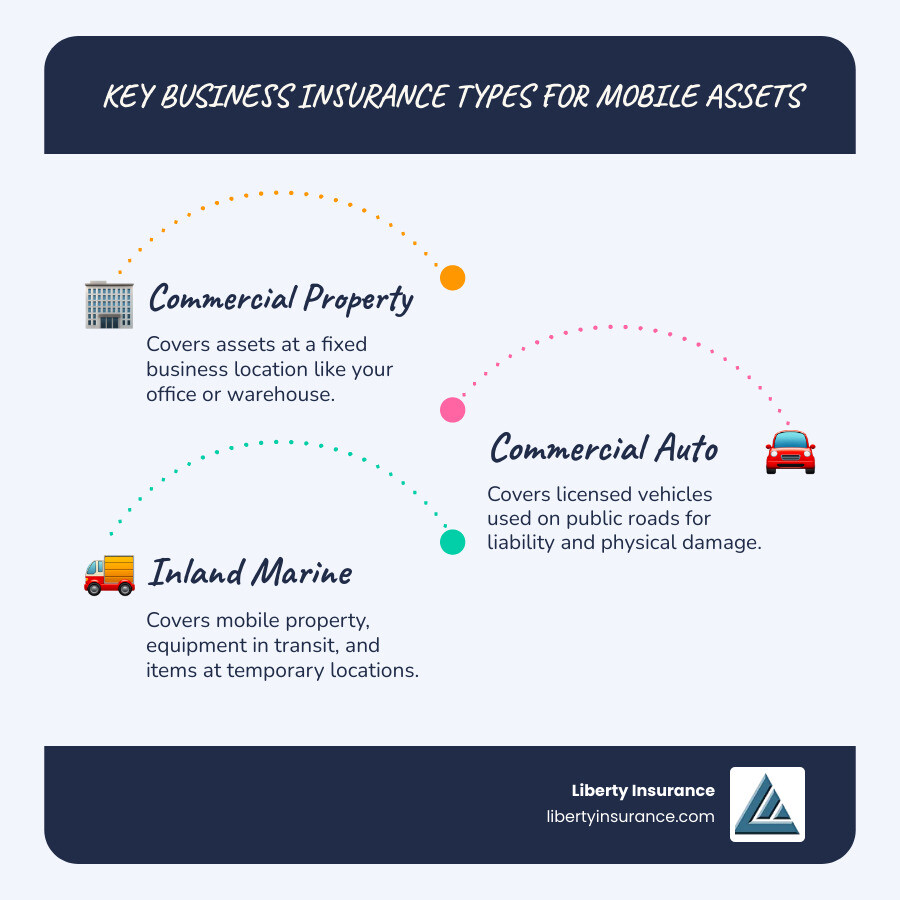
The distinction between what inland marine insurance covers versus what requires a commercial auto policy isn’t always clear-cut. A business auto policy covers your vehicles themselves—the cars, trucks, and vans you use on public roads. Inland marine insurance, on the other hand, acts as a “floater policy” that protects the tools, equipment, inventory, and other business property you transport in those vehicles or use at various locations.
For small business owners who lease office space and transport valuable equipment, inventory, or tools between locations, understanding this distinction is critical. Without the right combination of coverage, you could face significant out-of-pocket expenses if your delivery van is stolen (that’s commercial auto), or if the $50,000 worth of specialized equipment inside that van is damaged in transit (that’s inland marine).
I’m Andrew Harris, a Certified Insurance Counselor who has helped hundreds of businesses steer the complexities of can inland marine insurance cover automobiles and related equipment coverage questions through my work with Liberty Insurance and service on industry boards. My experience with the Professional Insurance Associates of New Jersey and consulting with elite agents nationwide has shown me that this particular coverage distinction trips up even experienced business owners.
Can inland marine insurance cover automobiles vocab explained:
What is Inland Marine Insurance and What Does It Protect?
Despite its historical name, inland marine insurance is a specialized form of property insurance that has nothing to do with oceans or seas. Its roots trace back to ocean marine insurance, which protected goods transported across water. As new forms of transportation like railroads and motor vehicles emerged, the need for similar protection for property moving over land became evident, giving rise to “inland” marine insurance. This coverage fills a crucial gap left by standard commercial property insurance, which typically only covers assets at a fixed location, such as your office or warehouse.
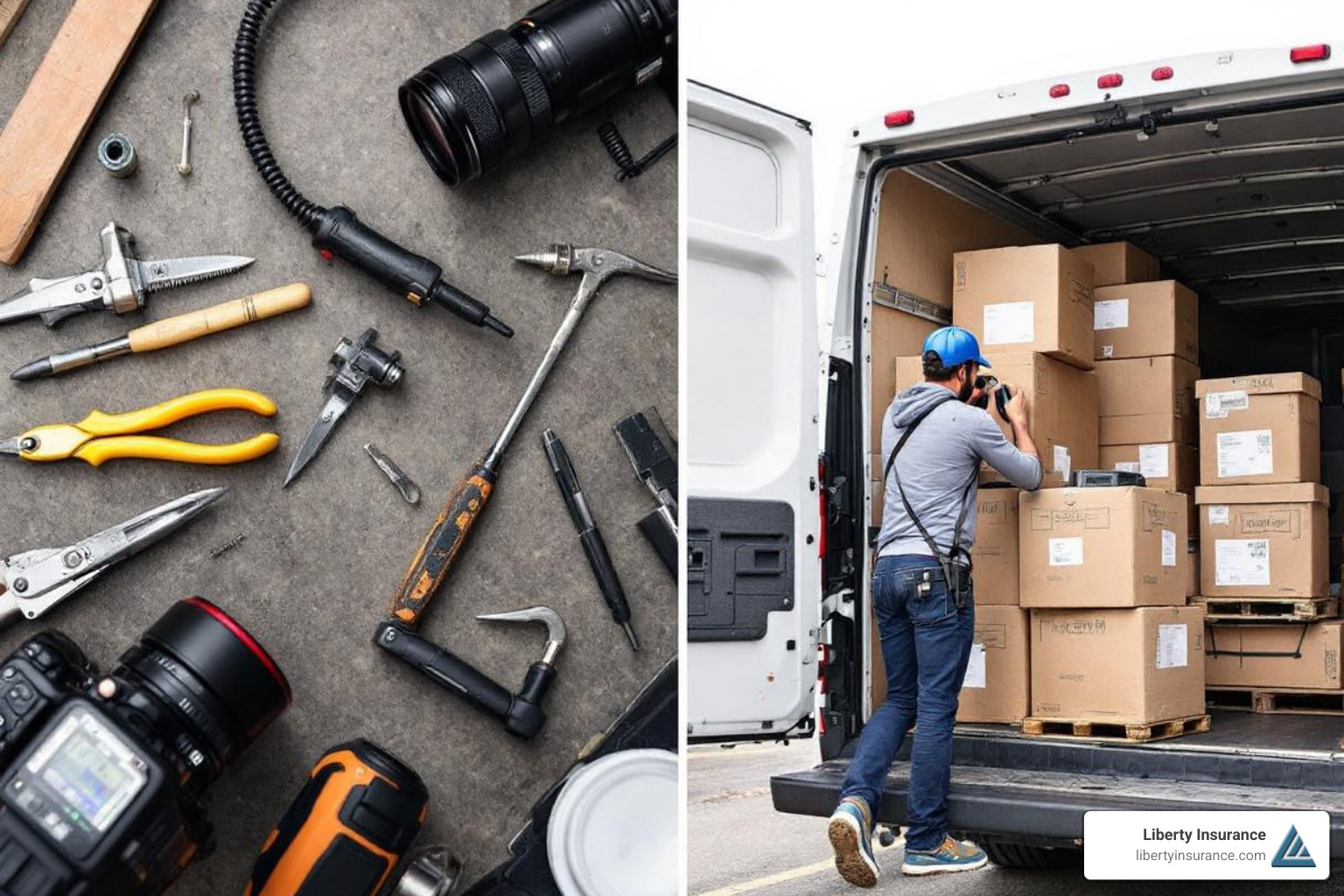
At its core, inland marine insurance is often called a “floater policy” because the coverage “floats” with your property wherever it goes, rather than being tied to a specific location. This makes it ideal for businesses in New Jersey that frequently move valuable equipment, materials, or products.
What does it protect? Inland marine insurance provides financial protection for a business’s property that is transported on land or is otherwise mobile. This includes coverage for property that is in transit, at a temporary job site, or even temporarily stored in a third-party warehouse while en route to its destination. It’s designed to protect against common risks such as:
- Theft: If your valuable tools are stolen from a job site or your inventory is pilfered during transit.
- Fire: Damage to your equipment or goods due to a fire while being transported or at an off-site location.
- Transit Damage: Protection against collision damage, accidental drops, or mishandling of property during loading, unloading, or transportation.
- Vandalism: If your equipment is vandalized at a temporary location.
- Other Perils: Depending on your policy, it can also cover risks like wind, hail, and water damage. Some policies even offer unique protections like “Mysterious Disappearance” (property missing where the cause of loss cannot be finded) or “Accidental Drop and Damage.”
Essentially, if your business property isn’t bolted down at your primary location, inland marine insurance is designed to keep it protected.
Typical Property Covered
Inland marine insurance is incredibly versatile, designed to cover a broad spectrum of movable property. This specialized coverage ensures that your crucial business assets are protected, even when they’re away from your main premises. Here’s a list of property types commonly covered by inland marine insurance:
- Contractor’s Tools and Equipment: For construction businesses in New Jersey, this is vital. It covers everything from hand tools to heavy machinery like excavators, bulldozers, and forklifts that are moved between job sites. In fact, Contractor’s Tools and Equipment coverage often applies to mobile tools and equipment less than five years old and worth less than $10,000.
- Computers and Electronics: Laptops, servers, specialized electronic data processing (EDP) equipment, and other tech gear that travels with your team or is shipped to clients.
- Medical and Scientific Equipment: Valuable and often delicate instruments used by healthcare providers or research facilities when they are mobile or off-site.
- Photography Gear: For photographers and videographers, cameras, lenses, lighting equipment, and drones used for on-location shoots are prime candidates for this coverage.
- Fine Art and Collectibles: Galleries, museums, or businesses dealing with valuable artworks need protection for pieces being transported to exhibitions, auctions, or client homes.
- Goods and Merchandise in Transit: Products, raw materials, and finished goods being shipped by truck or train to customers, suppliers, or other business locations.
- Trade Show Exhibits: Booth materials, demonstration products, and promotional items transported to conventions and trade shows.
- Installation Floaters: Coverage for materials, supplies, and equipment from the time they leave your premises until they are installed and accepted at a job site, common for contractors.
- Builder’s Risk: Protection for structures and materials during new construction or renovations, covering them until the project is completed or occupied.
- Accounts Receivable Records: Covers the cost of reconstructing your accounts receivable records if they are damaged or destroyed, and the inability to collect on invoices due to such an event. For example, one claim involved an uncollectible invoice of $25,000 due to customer bankruptcy.
Property of Others in Your Care
Many businesses in New Jersey handle property that doesn’t belong to them but is temporarily in their possession. Think of a repair shop fixing a client’s machinery, a storage facility holding goods for another company, or even a dry cleaner processing garments. This is where Bailee’s Customer Coverage, a specialized form of inland marine insurance, becomes indispensable.
Bailee’s customer coverage protects property owned by others that is in your business’s care, custody, or control. If this property is damaged or lost due to a covered peril (like fire, theft, or transit damage), this coverage helps reimburse your client for their loss. It’s crucial because standard general liability policies typically exclude coverage for property in your care, custody, or control. Without it, your business could be held legally liable for the damage, leading to significant financial strain and potential damage to your reputation. This type of coverage ensures you can fulfill your responsibilities to your clients, even if unforeseen circumstances lead to a loss.
So, Can Inland Marine Insurance Cover Automobiles?
This is the million-dollar question, and the answer, like many things in insurance, isn’t a simple yes or no. Can inland marine insurance cover automobiles? The short answer for standard vehicles is generally no. The long answer involves understanding critical distinctions in how insurance policies classify different types of vehicles and equipment.
The key distinction lies between what is legally defined as an “auto” and what is considered “mobile equipment” in insurance. Policy definitions are critical here, and misunderstanding them can leave your business with dangerous coverage gaps. While standard automobiles are typically excluded from inland marine policies, there are specific circumstances where inland marine insurance can provide coverage for certain types of mobile equipment or even for vehicles when they are considered “cargo.”
The General Rule: Why Standard Autos Need a Separate Policy
For most businesses in New Jersey, if you operate cars, vans, or trucks on public roads, these vehicles are considered “autos.” As such, they are required to be covered by a dedicated business or Commercial Auto Insurance policy. This policy provides essential coverage for:
- Liability Coverage: Protects your business if your vehicle causes bodily injury or property damage to others in an accident. This is compulsory for vehicles licensed for public roads.
- Physical Damage Coverage: Covers damage to your own business vehicles, including collision (damage from an accident), comprehensive (damage from non-collision events like theft, vandalism, fire, or natural disasters), and sometimes uninsured/underinsured motorist coverage.
Inland marine policies, including those we offer at Liberty Insurance, explicitly exclude coverage for standard automobiles. This is a consistent industry practice, reinforced by regulatory guidelines like the Nationwide Inland Marine Definition, which often specifies exclusions for “motor vehicles designed for highway use.” The reason is simple: commercial auto policies are specifically designed and rated to cover the unique risks associated with operating vehicles on public roads, including traffic accidents, liability to other drivers, and the regulatory requirements for vehicle registration and licensing.
The Exceptions: When Can Inland Marine Insurance Cover Automobiles or Related Equipment?
While the direct answer to can inland marine insurance cover automobiles (meaning the vehicle itself) is generally no for highway-licensed vehicles, the situation becomes more nuanced when we talk about “mobile equipment” or when vehicles are treated as “cargo.” This is where the specialized nature of inland marine insurance truly shines, addressing needs that a standard commercial auto policy cannot.
The critical distinction is between a vehicle that is an “auto” (designed for highway use and subject to compulsory auto insurance laws) and “mobile equipment” (often used off public roads and not subject to these laws).
What About Mobile Equipment That Isn’t an “Auto”?
This is a significant area where inland marine insurance steps in. As highlighted in our research, if you have mobile equipment that is not subject to compulsory insurance laws and used primarily off public roads, it is not considered an “auto” in the insurance sense. Therefore, it would not be covered by a standard business auto policy for physical damage.
Consider common examples for businesses in New Jersey:
- Bulldozers and Excavators: A bulldozer valued at $150,000, used at construction sites, is a prime example. If it’s damaged by fire or theft at a job site, its physical damage would be covered by an inland marine policy.
- Forklifts: Essential for warehouses and manufacturing facilities, forklifts move materials around a property but typically don’t operate on public roads.
- Cherry Pickers and Scissor Lifts: Used for maintenance, construction, or utility work, these pieces of equipment are mobile but not classified as highway vehicles.
- Farm Machinery: Tractors, harvesters, and other agricultural equipment used on farms.
- Golf Carts: While some might be street-legal, many are used exclusively on private property or golf courses.
For such mobile equipment, an inland marine policy is essential to cover physical damage from a wide range of perils, including theft, fire, vandalism, or even damage during transit to a job site. For instance, if a landscaping company’s backhoe is damaged by fire at a construction site, an inland marine policy would cover the cost of repairs or replacement. It’s important to note the separation of coverages here: while inland marine covers the physical damage to this mobile equipment, the liability arising from its operation (e.g., if a bulldozer accidentally damages a third party’s property) would typically be covered under your general liability policy, not the inland marine policy itself. This dual approach—inland marine for property damage and general liability for operational liability—ensures comprehensive protection for your valuable, non-highway mobile assets.
Furthermore, inland marine insurance can also cover:
- Vehicles as Cargo: If your business transports other vehicles (e.g., a car dealership shipping new cars on a car carrier, or a towing company transporting a customer’s disabled vehicle), the vehicles being transported are considered cargo. In this scenario, your inland marine policy (specifically a motor truck cargo coverage form) could protect these vehicles against damage or theft during transit. However, the truck doing the transporting would still require a commercial auto policy.
- Permanently Attached Equipment: This is a critical area where coverage can be complex. While the truck or van chassis itself requires a commercial auto policy, the valuable, specialized equipment that is permanently attached to it often needs separate coverage under an inland marine policy. Think of a contractor’s truck with a permanently mounted crane, a service vehicle with a built-in welding unit, or a mobile pet grooming van with installed tubs and drying stations. The auto policy covers the van, but if the expensive grooming equipment is damaged in a non-auto accident (like a fire while parked), the inland marine policy would respond. This is because the equipment’s value and risk profile are distinct from the vehicle itself. It’s essential to ensure your policy specifically lists this attached equipment to avoid any coverage disputes.
Understanding these distinctions is crucial for businesses in New Jersey, especially those in construction, landscaping, manufacturing, or any industry relying on mobile equipment. It’s not about whether can inland marine insurance cover automobiles, but rather understanding the specific function and classification of the equipment in question. Our Complete Commercial Equipment Insurance Guide can provide more insights into protecting all your specialized gear.
Inland Marine vs. Commercial Auto: A Head-to-Head Comparison
Navigating the complexities of business insurance means understanding the distinct roles of different policies. For businesses with mobile assets, distinguishing between inland marine and commercial auto insurance is paramount. These two types of coverage serve entirely different, yet complementary, purposes, and confusing them can lead to dangerous coverage gaps and significant financial exposure. It’s not a question of which one is “better,” but rather which one addresses your specific risk.
Commercial auto insurance is fundamentally about protecting your vehicles themselves and the risks associated with their operation on public roads. It covers the vehicle as an asset and the liability it can create. Inland marine insurance, on the other hand, is designed to protect the “stuff” – your tools, equipment, inventory, and other property – that is either mobile, in transit, or temporarily located away from your primary business premises.
Think of it this way: your commercial auto policy protects the shell of the delivery van and the consequences if it gets into an accident. Your inland marine policy protects the valuable electronics, construction materials, or retail goods inside that van. Without both, your New Jersey business could be partially exposed.
Understanding the difference between these two coverages is key to protecting your full operational risk and ensuring that whether your assets are stationary, in transit, or mobile, they are appropriately covered. This is also why it’s important to differentiate from Is Inland Marine the Same as Cargo Insurance?, which has its own specific distinctions.
Comparing Inland Marine and Commercial Auto Insurance
To clarify the roles of these vital coverages, let’s look at a direct comparison:
| Feature | Inland Marine Insurance | Commercial Auto Insurance |
|---|---|---|
| Primary Purpose | Covers mobile property and goods in transit over land. | Covers vehicles used for business purposes on public roads. |
| What’s Covered | Tools, equipment, materials, products, mobile equipment (e.g., forklifts, bulldozers), property of others in your care, accounts receivable, fine art. | The vehicle itself (cars, trucks, vans) for physical damage and liability. |
| Key Perils | Theft, fire, water damage, collision (to the property, not the vehicle), mysterious disappearance, accidental drop. | Collision, theft of the vehicle, vandalism, liability for accidents causing bodily injury or property damage to third parties. |
| Typical Scenario | Tools stolen from a job site; a shipment of goods damaged in a truck accident; a photographer’s camera gear damaged while on location. | A delivery van gets into an at-fault accident, causing injury to another driver and damage to both vehicles. |
| Why You Need It | Your property is mobile, leaves your premises, or is not considered a “fixed” asset. | Your business owns or leases vehicles used for work on public roads. |
| Example Exclusions | Vehicles designed for highway use, wear and tear, employee dishonesty, property at a fixed location. | Property being transported in the vehicle, mobile equipment not classified as an “auto,” wear and tear to the vehicle. |
Key Considerations for Your Business’s Mobile Assets
For any business in New Jersey, especially those with equipment, tools, or products constantly on the move, proactive risk management is not just a good idea—it’s essential. Ensuring you have the right mix of insurance policies is a critical part of this. When asking can inland marine insurance cover automobiles or related equipment, the answer often hinges on a thorough understanding of your operations and assets.
At Liberty Insurance, we believe in helping you customize your coverage to fit your unique needs. This starts with a clear understanding of what you own, where it goes, and what risks it faces.
Identifying Your Risks and Industries in Need
While every business has unique needs, certain industries inherently face higher risks related to mobile property and thus benefit significantly from inland marine insurance:
- Construction Industry: Contractors constantly move valuable tools, machinery, and building materials between job sites in and around New Jersey. A stolen or damaged bulldozer, a cherry picker, or even a trailer full of tools can halt a project and incur massive costs. Our Contractor’s Tools and Equipment Insurance for Construction Businesses is specifically designed for these needs.
- Technology and IT: Businesses developing prototypes, providing on-site IT support, or showcasing demo units often transport high-value, sensitive electronic equipment.
- Healthcare and Medical Equipment: Mobile clinics, home healthcare providers, or labs that transport delicate medical and scientific instruments require specialized protection.
- Photographers and Videographers: Their livelihood depends on expensive cameras, lighting, and audio equipment that travels to various locations for shoots.
- Art Galleries and Museums: Transporting valuable art pieces for exhibitions, sales, or restoration exposes them to significant risks during transit.
- Transportation and Logistics: Companies that transport goods for others (e.g., trucking companies) need motor truck cargo coverage, a form of inland marine, to protect the cargo they carry.
- Manufacturers and Retailers: If you ship raw materials to your facility or finished goods to your customers, those products are vulnerable during transit.
If your business falls into any of these categories, or if you simply have valuable property that regularly leaves your primary premises, you likely need to explore Inland Marine Insurance for Business.
How to ensure you have the appropriate inland marine coverage for your specific needs
Ensuring you have adequate coverage for your mobile assets requires a systematic approach. Here are key steps we recommend at Liberty Insurance to help you secure the right inland marine protection:
- Conduct a Property Audit: Make a comprehensive list of all your business property that regularly leaves your primary premises. This includes tools, equipment, inventory, display items, and even specialized computers. Don’t forget mobile equipment that isn’t considered an “auto,” like forklifts or excavators.
- Determine the Value of Your Mobile Property: Assign an accurate replacement value to each item. This helps us establish appropriate coverage limits. Many inland marine policies operate on an “all-risk” basis, covering any cause of loss not explicitly excluded, but they still have coverage limits.
- Understand Policy Definitions: Familiarize yourself with the definitions used in your insurance policies, especially the distinction between an “auto” and “mobile equipment.” This is crucial for answering can inland marine insurance cover automobiles in your specific context.
- Review Your Current Commercial Property Insurance for Limitations: Standard Commercial Property Insurance policies typically have very limited, if any, coverage for property once it leaves your fixed business location. Understand these exclusions to identify where inland marine coverage is needed.
- Work with an Experienced Agent to Identify Gaps: This is perhaps the most critical step. Our experienced agents at Liberty Insurance in New Jersey can help you map where your property travels, assess the risks it faces, and identify any gaps in your current coverage. We can then tailor an inland marine policy that complements your existing Business Insurance portfolio, ensuring comprehensive protection for all your assets, whether they’re stationary or on the move. Don’t leave your valuable assets exposed—let us help you build a robust insurance strategy.
Conclusion: Driving Home the Right Coverage for Your Business
The question, “can inland marine insurance cover automobiles,” reveals a common point of confusion for many business owners. As we’ve explored, the answer is nuanced: while inland marine insurance generally steers clear of covering standard vehicles licensed for public roads, it is absolutely essential for protecting the mobile equipment, tools, and inventory that travel within or outside those vehicles.
The key takeaway is that inland marine and commercial auto insurance are not interchangeable; rather, they are partners in a comprehensive risk management strategy. Commercial auto insurance protects the “how”—the vehicle itself and its operation on the road. Inland marine insurance protects the “what”—the valuable property that moves. Misunderstanding this fundamental difference can lead to uninsured losses that could severely impact your business’s financial health.
For businesses across New Jersey, from the busy streets of Trenton to the expanding industrial zones of Millstone Township, a comprehensive review of your operations and assets is essential. Whether you’re a contractor moving heavy machinery, a retailer shipping goods, or a photographer traveling with expensive gear, understanding these distinctions ensures you’re properly protected.
At Liberty Insurance, we are dedicated to helping businesses like yours secure their assets, whether they are stationary in your facility or on the move across the Garden State. Don’t let confusion about insurance terminology leave your business vulnerable. Contact Us today for expert guidance and customized insurance solutions.
Learn more about protecting your transported goods with our Inland Cargo Insurance solutions.

