
Understanding Builders Risk Insurance Coverage for Your Construction Project
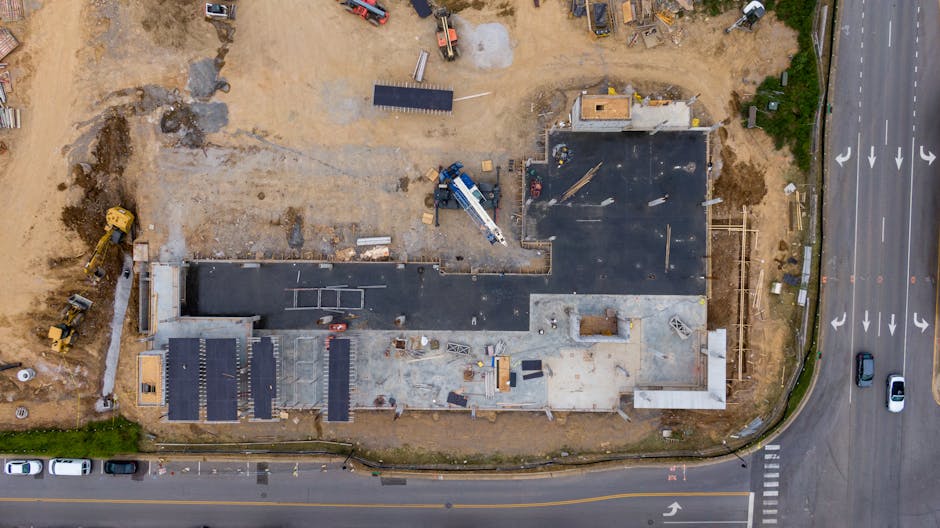
Even the most carefully planned construction project faces risks. A fire could destroy materials, theft could delay your timeline, or severe weather could damage work in progress. Standard commercial property insurance typically won’t cover these exposures during the construction phase, creating a critical gap in protection.
That’s where builders risk insurance comes in. This specialized property coverage is designed for buildings under construction or renovation, protecting the structure and the materials that will become part of it. Whether you’re a general contractor, property owner, or developer, understanding what builders risk insurance coverages include—and what they don’t—is essential for protecting your investment.
I’m Andrew Harris, a Certified Insurance Counselor (CIC) and Accredited Advisor in Insurance (AAI) with extensive experience helping contractors and property owners steer builders risk insurance for projects throughout New Jersey. My work with national insurance councils and as PIA National’s 2020 Agent of the Year has given me deep insight into the specific coverage needs of construction projects.
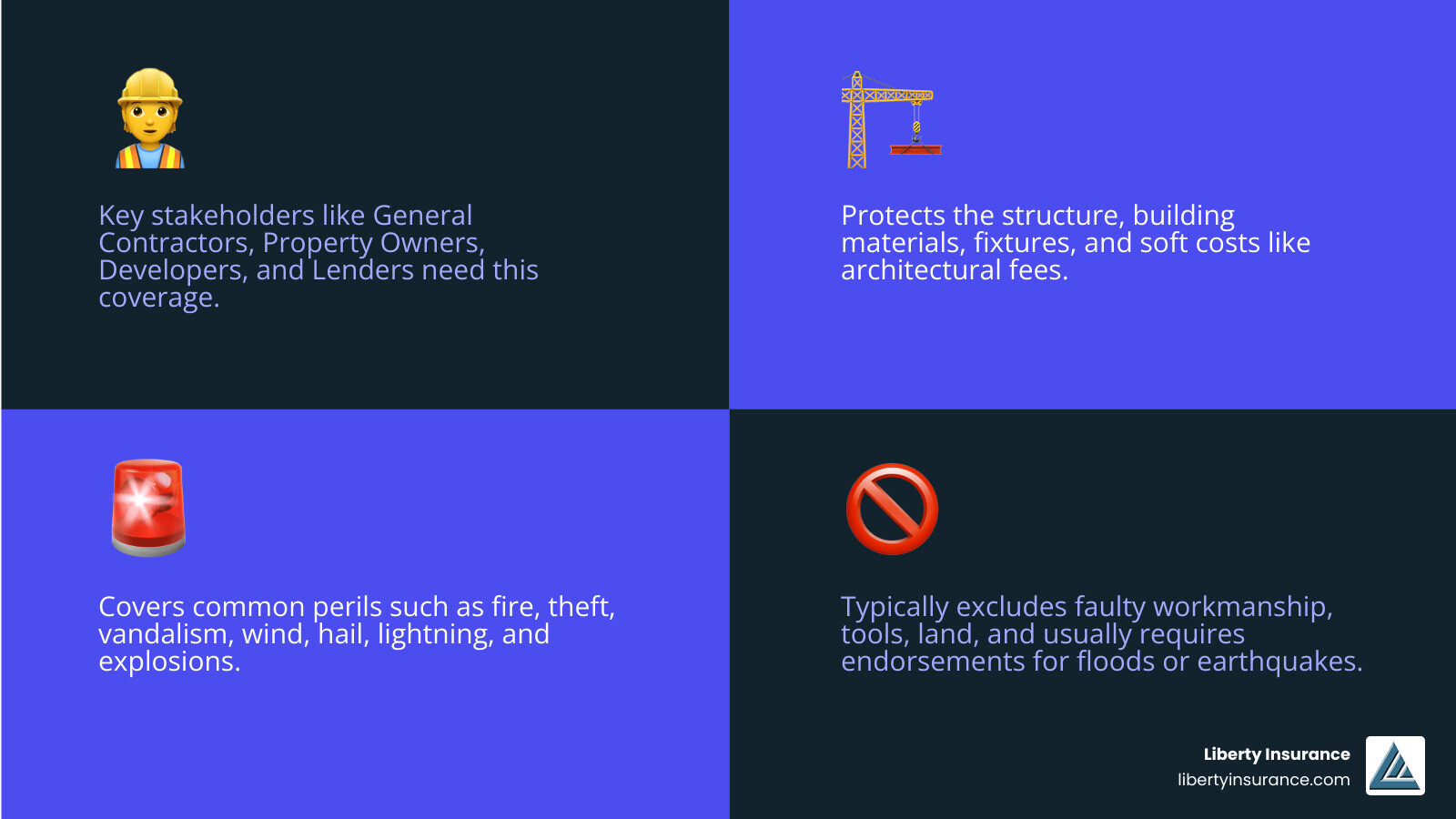
Builders risk insurance coverages word roundup:
What is Builders Risk Insurance and Who Needs It?
At its core, builders risk insurance, often called “course of construction” insurance, is a specialized form of property insurance. It protects a building, materials, and equipment while under construction or renovation. Unlike standard Commercial Property Insurance for a finished structure, it’s custom for the dynamic environment of a construction site.
A building under construction is exposed to theft, weather, and accidental damage. Without builders risk coverage, a significant loss could derail your project and budget. Our goal at Liberty Insurance is to help you understand these unique exposures so you can build with confidence across New Jersey, from Millstone Township to New Brunswick.
Who Needs This Coverage?
Anyone with a financial stake in a construction project needs this coverage. A loss during construction can impact anyone invested in the project’s success. Key parties include:
- General Contractors: They bear significant responsibility for the project and need to protect their work and materials.
- Property Owners: The owner has the ultimate financial interest in the completed structure, whether it’s a home or a commercial complex in Trenton.
- Developers: A comprehensive policy is essential to protect investments across multiple construction sites.
- Subcontractors: Those with valuable materials on-site may need to be named as an insured on the main policy.
- Lenders: Financial institutions providing construction loans almost always require it to protect their investment.
- Architects and Engineers: Their financial interest can be tied to the project’s successful completion.
It’s best practice for all parties with an “insurable interest” to be listed on the policy. This ensures everyone is protected and simplifies the claims process if a loss occurs on a project in a place like Toms River.
Builders Risk vs. Contractor General Liability
It’s common to confuse builders risk with contractor general liability insurance, but they cover very different risks.
Builders Risk Insurance is first-party property coverage. It protects the construction project itself—the structure, materials, and fixtures. If a fire on your Princeton job site destroys framing and lumber, your builders risk policy would cover the repairs. It protects your project.
Contractor General Liability Insurance is third-party liability coverage. It protects you from claims of bodily injury or property damage to others caused by your operations. If a visitor is injured on your New Brunswick site, or you damage a neighboring property, your General Liability Insurance NJ would cover the legal and medical costs. It protects you from claims from others.
Here’s a simple table to illustrate the difference:
| Feature | Builders Risk Insurance | Contractor General Liability Insurance |
|---|---|---|
| What it covers | Damage to the actual construction project (structure, materials) | Bodily injury or property damage to third parties |
| Whose property it protects | The insured’s property (the building under construction) | Others’ property, and others’ bodily well-being |
| Examples of claims | Fire damages new framing, materials stolen from site | Visitor slips on site, worker damages neighbor’s fence |
| Coverage type | Property insurance | Liability insurance |
Both policies are indispensable. You need builders risk to protect your project and general liability to protect your business from external claims.
A Deep Dive into Builders Risk Insurance Coverages
Let’s explore the specifics of what builders risk insurance coverages actually protect. Policies are designed to cover “hard costs” (direct construction expenses) and, with endorsements, “soft costs” (indirect expenses from delays).
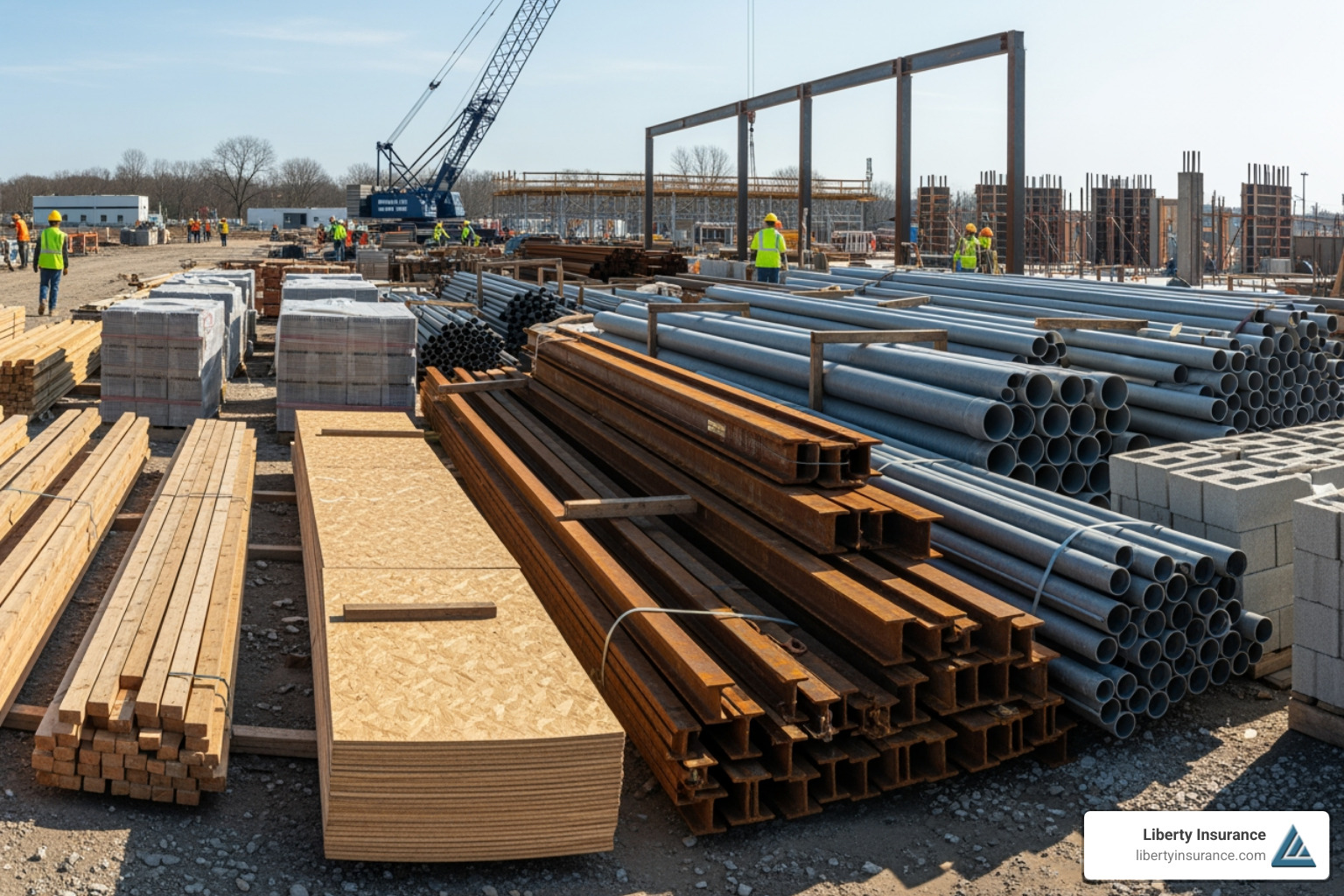
Understanding these components, along with the difference between “all-risk” and “named perils” coverage, is key to protecting your New Jersey project. This specialized Construction Risk Insurance is paramount.
Covered Property: Hard Costs
“Hard costs” are the tangible expenses of building the structure. They form the core of what builders risk insurance protects.
Here’s what typically falls under hard costs:
- The Structure Itself: The foundation, framing, walls, roof, and other permanent components.
- Building Materials and Supplies: All materials intended to become a permanent part of the structure, whether on-site, in transit, or stored off-site.
- Fixtures and Machinery: Items like HVAC systems, elevators, and built-in appliances that will be permanently installed.
- Labor Costs: The cost of redoing work due to a covered peril is typically included.
- Temporary Structures: Scaffolding, temporary fencing, and on-site offices vital to the construction process.
- Debris Removal: The cost to clear away damaged materials after a covered loss is often included, which can be a significant expense.
Coverage for materials stored off-site or in transit is particularly important. If custom windows for a home in Millstone Township are damaged en route, your builders risk policy, often with an Inland Marine Insurance Guide component, could cover the loss.
Additional Coverages: Soft Costs and Extensions
Construction delays from a covered loss can lead to significant “soft costs”—indirect expenses that accumulate when work stops. Many policies offer endorsements to cover these financial losses.
These often include:
- Architectural and Engineering Fees: To redraw plans or reassess structural integrity after damage.
- Legal and Accounting Fees: For complications arising from delays.
- Loan Interest: Interest payments on construction loans that continue during a work stoppage.
- Real Estate Taxes: Property taxes that accrue regardless of construction status.
- Permit and Inspection Fees: For new permits or re-inspections required after a loss.
- Contract Penalties: Some policies offer coverage for fines or legal fees due to construction delays.
- Expediting Expenses: To pay extra for rushing new materials or hiring more labor to get back on schedule.
- Valuable Papers and Blueprints: Coverage for recreating essential documents like schematics and blueprints.
- Delay-in-Completion / Loss of Business Income: For commercial projects, this coverage, similar to Business Interruption Insurance, can compensate for lost rental income or revenue.
Soft costs are often added via an optional endorsement, so they are not standard in every policy. We recommend discussing these potential costs to customize your policy for your project’s needs in New Jersey.
Understanding Your Policy: ‘All-Risk’ vs. ‘Named Perils’
You’ll typically encounter two main policy types: ‘all-risk’ and ‘named perils.’
- ‘All-Risk’ Coverage (Special Form): This is the most comprehensive option. It protects against all causes of loss except those specifically listed as exclusions. If a peril isn’t excluded, it’s covered. This provides a broad safety net, making it the preferred choice for most construction projects.
- ‘Named Perils’ Coverage (Basic/Broad Form): This policy is more restrictive, covering only losses from perils explicitly listed in the policy. Common named perils include fire, theft, vandalism, wind, hail, lightning, explosions, and collapse. If a loss occurs from an unlisted cause, it is not covered.
The source What is Builder’s Risk Insurance? – NASBP emphasizes that ‘all-risk’ is generally the minimum standard to aim for. While more expensive, the broader protection it offers often outweighs the cost, especially for complex projects. We advise our clients across New Jersey to review their policy language carefully to understand what is covered.
Common Exclusions and Key Policy Considerations
No insurance policy covers everything. Understanding what’s excluded from your builders risk insurance coverages is as important as knowing what’s included. These exclusions often represent risks better covered by another policy or can be added back through endorsements.
When we help you secure Contractors Insurance New Jersey, we highlight these limitations and help you fill any critical gaps.
What’s Typically Not Included in Builders Risk Insurance Coverages?
Common exclusions include:
- Faulty Workmanship, Defective Design, or Materials: The policy covers accidental losses, not errors in design, construction, or defective materials.
- Mechanical Breakdown, Wear and Tear: Normal aging or deterioration of equipment is not covered. This may be covered by Equipment Breakdown Insurance.
- Employee Theft: Theft by your own employees is often excluded unless specific coverage is added.
- Contractor’s Tools and Equipment: Your movable tools and machinery are not covered. They require a separate Inland Marine policy (Contractor’s Equipment Floater).
- Work Vehicles: These are covered by commercial auto insurance.
- Land and Landscaping: The land itself and landscaping elements are excluded.
- Earthquakes and Floods: These catastrophic events are almost always excluded from standard policies but can often be added back.
- War, Government Seizure, and Nuclear Hazards: These are universally excluded.
Understanding these exclusions helps you identify gaps in your insurance program.
Optional Endorsements for High-Risk Events
Many policies offer optional endorsements to broaden coverage, which is especially important in New Jersey for specific natural disaster risks.
- Earthquake Coverage: While less common in New Jersey, adding Earthquake Coverage can be a wise decision for certain projects.
- Flood Coverage: With its extensive coastline, New Jersey is susceptible to flooding. For projects in flood zones near Toms River or New Brunswick, adding Flood Insurance is often a critical necessity.
- Windstorm/Hail Deductibles: In coastal areas, policies may have higher deductibles for wind and hail, which you may be able to adjust.
- Testing Coverage: An endorsement can cover damage that occurs during the testing phase of complex machinery or systems.
These endorsements allow you to tailor your builders risk insurance coverages to your project’s specific risks.
Determining Your Coverage Limit and Policy Duration
Setting the correct coverage limit and policy duration is critical to avoid being underinsured.
- Coverage Limit: Your policy limit should equal the “total completed value” of your project, including all hard and soft costs. This ensures that if a total loss occurs near completion, you have enough coverage to rebuild.
- Policy Duration (Term): Policies are temporary, with terms typically ranging from three to eighteen months. The term should align with your anticipated project completion date.
- Policy Extensions: Delays are common. Most insurers allow for policy extensions, usually in monthly increments, though this may incur additional premiums. It’s crucial to communicate delays to your insurer to ensure continuous coverage.
- When Coverage Ends: Coverage typically terminates upon the earliest of several events: project completion, owner acceptance, issuance of a certificate of occupancy, the property being put to its intended use, policy expiration, or project abandonment (usually after 30-60 days of inactivity).
Once the project is complete, the builders risk policy must be transitioned to a permanent Commercial Property Insurance policy. We can help manage this transition smoothly. For more insights, see our guide on Best Builders Risk Insurance Companies.
How to Secure and Price Your Builders Risk Policy
Navigating builders risk insurance coverages can be complex. An experienced insurance broker is an indispensable guide, helping you find the right policy for your project. The cost isn’t one-size-fits-all; it’s determined by factors unique to each construction endeavor.
The Role of an Insurance Broker
An insurance broker acts as your project’s insurance architect, designing the right protection plan. Our role is to:
- Steer Complex Policies: We understand the nuances of different insurer forms and can explain them in plain language.
- Compare Quotes: With access to multiple carriers, we compare quotes to find competitive rates for your New Jersey project.
- Customize Coverage: We identify your specific risks and recommend necessary endorsements to create a custom policy.
- Identify All Insured Parties: We ensure everyone with an insurable interest is listed on the policy to prevent disputes.
- Ensure Compliance: We make sure your policy meets all contractual and lender requirements.
Working with us at Liberty Insurance means you have an expert advocating for your best interests. Ready to get started? Get Business Insurance Quote today.
Factors That Determine the Cost of Builders Risk Insurance
The cost of builders risk insurance coverages varies significantly, as premiums are calculated based on a range of risk factors. According to industry statistics, premiums typically range from 1% to 5% of the total construction budget. While this is a general guideline, your specific project in New Jersey will have its own unique cost.
Primary factors influencing your premium include:
- Total Project Value: The higher the completed value of the project (including hard and soft costs), the higher the premium.
- Type of Construction Project: The risk profile differs for residential vs. commercial, new construction vs. renovation, and simple vs. complex builds.
- Location of the Project: Projects in areas prone to natural disasters (like coastal New Jersey) or high crime will likely have higher premiums.
- Construction Materials: The materials used affect risk. A wood-frame structure may have a different risk profile than one built with steel and concrete.
- Project Timeline: Longer construction periods mean longer exposure to risk, leading to higher premiums.
- Contractor’s Experience and History: A seasoned contractor with a good safety and claims record may qualify for better rates.
- Security Measures on Site: Fencing, surveillance, and on-site security can help reduce risks and potentially lower premiums.
- Deductible Amount: Choosing a higher deductible can lower your premium, but it increases your out-of-pocket cost in a claim.
We analyze these factors for your New Jersey project to provide transparent quotes and help you understand your insurance cost.
Frequently Asked Questions about Builders Risk Insurance Coverages
Here are answers to common questions we hear from contractors and property owners across New Jersey about builders risk insurance coverages.
Can I get builders risk insurance for a project that has already started?
While it’s best to secure a policy before breaking ground, some insurers may cover projects already underway. This often requires a thorough underwriting review of the project’s current state. Be aware that insurers will likely “retro-rate” the policy, charging premiums back to the project’s start date to account for the full period of risk exposure. If you’re in this situation, contact us to explore your options.
Does builders risk cover my tools and equipment on the job site?
Generally, no. Builders risk covers the structure and materials that become part of it. It does not cover your movable tools, machinery, or equipment. These items require separate coverage, typically through an Inland Marine policy (often called a “Contractor’s Equipment Floater”) or a Business Personal Property Insurance policy. We recommend reviewing your policies to ensure your valuable equipment is protected on any job site, from Princeton to Toms River.
When does a builders risk policy officially end?
A builders risk policy is temporary and ends at the earliest of several events, which is critical to know to avoid coverage gaps. Termination triggers include:
- Project Completion: The structure is substantially finished and ready for use.
- Owner Acceptance: The owner formally accepts the completed work.
- Certificate of Occupancy (CO) Issuance: The local authority issues a CO.
- Occupancy: The property is occupied or put to its intended use, even partially.
- Policy Expiration: The end date stated on your policy.
- Project Abandonment: Construction ceases for a specified period, typically 30 to 60 days.
Once the policy terminates, the property needs permanent coverage, like a commercial property or homeowner’s policy. We can help you manage this transition seamlessly.
Conclusion
Understanding builders risk insurance coverages is about safeguarding your investment, managing risks, and ensuring the successful completion of your construction projects in New Jersey. Construction is fraught with perils like fire, theft, and severe weather that can cause substantial financial losses.
This guide has covered the core components of builders risk, from hard and soft costs to the differences between ‘all-risk’ and ‘named perils’ policies. We’ve also highlighted common exclusions and crucial endorsements like flood coverage, which is particularly relevant in New Jersey. An experienced insurance broker is vital for navigating these complexities, setting accurate coverage limits, and understanding cost factors.
At Liberty Insurance, we are committed to providing the knowledge and custom solutions you need to build with confidence. Don’t let unexpected events derail your project. To ensure your next build is fully protected, explore your options for NJ Builders Risk Insurance. Let us help you secure the peace of mind that comes with comprehensive coverage, so you can focus on building the future of New Jersey.

